Fly Atlas Classic Salmon Feather-Wing The Black Ranger
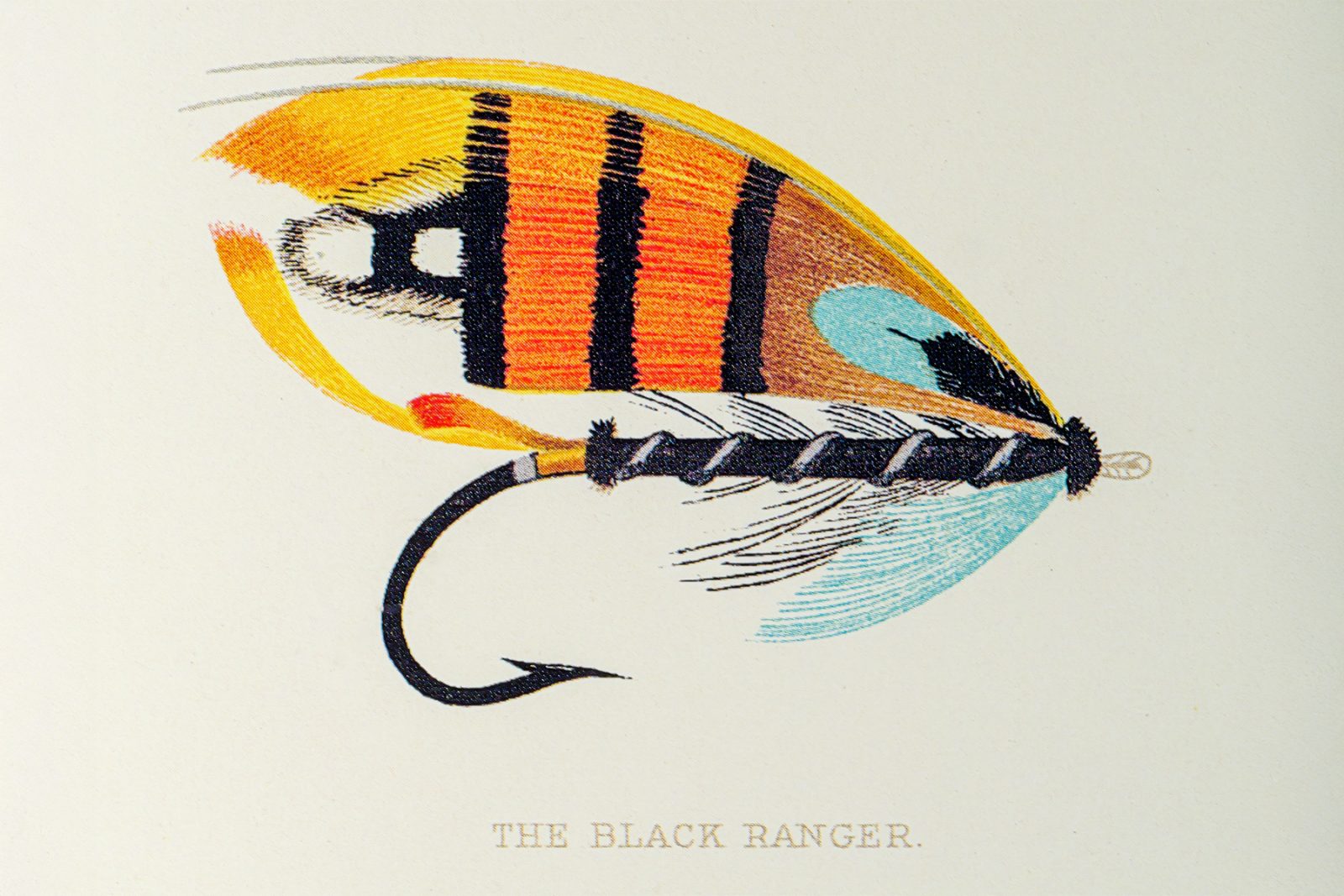
The Black Ranger
Feather-Wing familysign in or join free to save flies to your bench.
The dressing · tail → head
sign in or join free to use “with my substitutes”, which reads the materials you have recorded — “all substitutes” works for everyone.
No dressing has been transcribed for this fly yet.
Click a numbered marker on the plate, or a row here, for purpose, proportion and the common errors.
No source reading has been transcribed for this fly yet.
No material on this dressing has been linked to the registry yet.
No tying sequence has been written for this fly yet. The dressing above is the record; the steps are still to come.
The Black Ranger is one of the important early members of the Victorian Ranger family of Atlantic salmon flies and is traditionally attributed to James Wright of Sprouston, the celebrated nineteenth-century fly dresser of the River Tweed. The pattern was already in use by about 1860, and Francis Francis included the Black Ranger in A Book on Angling in 1867, making it one of the earlier Rangers documented in salmon-fly literature.
By the late nineteenth century the fly had become firmly established. In The Salmon Fly (1895), George M. Kelson specifically credited the Black Ranger to Wright and described it as being well known throughout the United Kingdom. Kelson's dressing combined a black silk body and black hackle with silver ribbing, a light-blue throat, golden-pheasant tippet wings, Jungle Cock, Chatterer cheeks, and Blue Macaw horns—producing the striking contrast characteristic of Victorian full-dress salmon flies.
Although later patterns such as the Durham Ranger became better known, the Black Ranger occupies an important place in the development of the Ranger style. Its distinctive use of paired golden-pheasant tippets, brilliant exotic feathers, and a dark body helped establish a visual formula that would be repeated and elaborated upon in several later Ranger patterns.
No member has shared a photograph of this fly yet.
sign in or join free to share your tie. Photographs are reviewed before publishing.
The Feather-Wing family
variants and relatives — same architecture, different dress