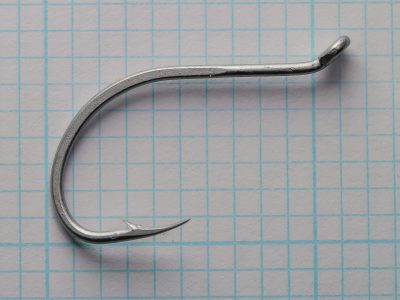
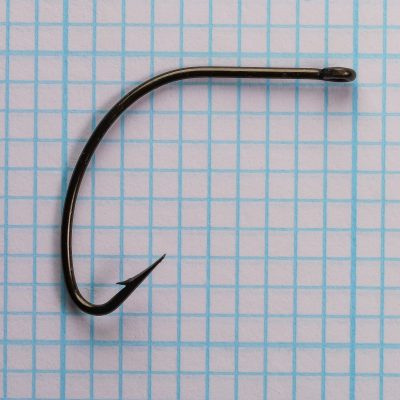
VMC is one of the longest-established names still active in modern fish-hook manufacture, but its history is more complicated than the familiar “since 1796” date sometimes associated with the brand. The roots of VMC lie in the French metalworking firm Viellard Migeon & Compagnie, whose industrial ancestry reaches back to the late eighteenth century. Fishing hooks, however, did not become part of the company’s business until 1910. From those beginnings in eastern France, VMC developed into an internationally important hook manufacturer and became particularly influential in the production of treble hooks.
From Ironworks to Viellard Migeon & Compagnie
The company’s story begins in 1796, when Jean-Baptiste Migeon and Jean-Baptiste Dominé took over the operation of the forges at Morvillars in the Territoire de Belfort region of eastern France. The enterprise produced wire and an expanding assortment of metal goods, including chains, bolts, screws and other hardware.
The Viellard family became connected with the business through the 1835 marriage of Juvénal Viellard and Laure Migeon. The industrial and family interests became increasingly intertwined, and in 1856 the business took the name Viellard Migeon & Compagnie. By then it was an established producer of drawn wire and manufactured metal products rather than a fishing-tackle company.
This metalworking background would later prove important. Hook manufacture requires considerable control over wire drawing, forming, hardening and finishing, and Viellard Migeon already possessed much of the industrial infrastructure needed to enter the trade.
The Beginning of Hook Production
Viellard Migeon entered fish-hook manufacture in 1910 under the direction of Charles Viellard.
At the time, one of the world’s great centers of hook manufacture was Redditch, England, where generations of specialized workers had developed the skills needed to form, harden, point and finish hooks. Rather than attempting to develop the craft entirely from scratch, Viellard recognized the value of this established expertise.
According to VMC’s company history, approximately ten families from the Redditch area were brought to France to help establish the new hook-making department. Production was initially centered at Grandvillars, near the company’s historic Morvillars operations. The first hooks were marketed under the French brand La Bouée, meaning “The Life Ring” or “The Buoy.”
This transfer of English hook-making knowledge to a French industrial company represents one of the more interesting connections in European hook history. Redditch techniques that had developed during Britain’s dominance of the nineteenth-century hook trade became part of a new Continental manufacturing tradition.
The initials VMC, derived from Viellard Migeon & Compagnie, eventually became the identity under which the hooks were known internationally.
The Morvillars Hook Factory
Hook manufacture proved successful enough that in 1938 the company established a factory dedicated to fish-hook production at Morvillars. The site became the long-term center of VMC hook manufacture and remains associated with the company today.
By the middle of the twentieth century, VMC had become a major French hook producer. The company states that approximately 450 people were employed in the hook factory around 1950, when VMC occupied a leading position in the French market. A French industrial heritage inventory records production reaching approximately 10 million hooks per month by 1958.
The following decade was considerably more difficult. Competition from imported hooks increased while changes in international markets and problems obtaining suitable raw materials placed additional pressure on the business. Like many European manufacturers built around relatively labor-intensive production methods, VMC also faced the growing challenge of producing hooks economically on a very large scale.
Automation and the Rise of the VMC Treble Hook
A major turning point came around the beginning of the 1970s under Christophe Viellard. The company’s strategy increasingly centered on two objectives: greater automation and expansion into international markets.
Treble hooks became particularly important.
Factory director Norbert Heyer and engineer Roger Billet developed specialized automatic manufacturing machinery within the company. One of the most significant developments was an automated system for producing treble hooks. By 1974 the new machinery had increased daily treble-hook production from roughly 5,000 pieces to about 60,000.
This was more than a simple increase in manufacturing speed. Producing a treble hook involves forming and joining several components while maintaining consistent geometry, temper and alignment. Automating those operations allowed VMC to combine industrial-scale output with the consistency demanded by lure manufacturers.
In 1973 VMC Pêche was established as a separate fishing-hook company controlled by the Viellard Migeon family holding company. The restructuring allowed the hook operation to concentrate more directly on fishing tackle while the larger family enterprise continued its other industrial interests.
The emphasis on automated treble-hook manufacture eventually became one of VMC’s greatest competitive advantages.
Expansion into the United States and World Markets
Increasing production made international expansion both possible and necessary. During the 1970s and 1980s VMC moved beyond its traditional European markets and developed a much larger export business.
An important step came in 1981 with the establishment of VMC Inc. in the United States. Additional sales organizations later appeared in other international markets, while VMC hooks increasingly became components used by lure manufacturers as well as products sold directly to anglers.
The company’s international strategy was particularly well suited to treble hooks. Unlike many specialized fishing hooks, trebles were required in enormous quantities by manufacturers of plugs, spoons and other artificial lures. Supplying those manufacturers could therefore produce volumes far beyond those generated by packages sold individually through tackle shops.
By the 1990s VMC had become one of the dominant names in this segment of the hook industry.
Hook Technology and Product Development
VMC’s later history has been closely associated with the engineering of both hook shapes and manufacturing processes. The company developed or marketed a succession of proprietary technologies and treatments including Cone Cut, Vanadium, Fastgrip, Barbarian, Perma Steel, Spark Point and SpinShot, among others.
Underlying these branded technologies is a highly industrialized manufacturing process involving wire forming, heat treatment, sharpening and surface finishing. Rapala VMC has described VMC’s manufacturing expertise as combining automated mechanical forming with steel heat treatment and chemical or electroplated finishes.
Although VMC manufactures single and double hooks as well, the company’s reputation has become especially closely associated with the treble hook, both for retail tackle and as original equipment supplied to lure manufacturers.
VMC and Rapala
Another major chapter began in 2000, when VMC and the Finnish lure company Rapala joined forces.
The combination was particularly logical. Rapala was one of the world’s best-known manufacturers of fishing lures, while VMC had developed into a major supplier of the treble hooks fitted to those lures. The relationship helped create what became the Rapala VMC group.
The connection did not end the historical involvement of the Viellard family. Viellard Migeon & Compagnie subsequently increased its investment in Rapala VMC and became its principal shareholder, preserving an unusual degree of continuity between the eighteenth-century ironworking enterprise and the modern international fishing-tackle group.
More Than a Century of French Hook Manufacture
In 2010, VMC celebrated 100 years of fish-hook production. That same year VMC Pêche received France’s Entreprise du Patrimoine Vivant, or Living Heritage Company, designation. The French government awards the distinction to companies possessing exceptional industrial or traditional manufacturing expertise.
The designation is particularly appropriate in VMC’s case because hook production has remained centered at Morvillars, France, despite the globalization of the fishing-tackle industry.
Today VMC remains part of the Rapala VMC organization and continues to manufacture hooks in France. The company reports a catalog containing more than 10,000 references, exports to more than 90 countries and has production capacity measured in millions of hooks per day. Rapala VMC identifies VMC as the world market leader in treble hooks.
VMC’s Place in Hook History
VMC occupies an unusual position in the history of the fishing hook.
Its origins connect the company to the old ironworking traditions of eastern France, while the beginning of its hook business connects it directly to the specialized manufacturing knowledge of Redditch, the center of the British hook industry. During the twentieth century, VMC then made the transition from skilled labor-intensive production to highly automated manufacture without abandoning its original French manufacturing base.
For collectors, this long history also means that VMC hooks can document several distinct periods of the modern tackle industry: the early French development of an industry once dominated by English makers, the enormous expansion of European tackle manufacture after the Second World War, the move toward automated hook production during the 1960s and 1970s, and finally the emergence of international fishing-tackle groups supplying a global market.
More than a century after Viellard Migeon first entered the hook trade in 1910, VMC remains one of the comparatively rare historic European hook manufacturers whose original manufacturing tradition continues as an active industrial operation.