
Pflueger
- Founded
- 1880USA
- Documented entries
- 23Catalog records
- Categories
- 6By application
- Era range
- 1900–196522 dated entries
Phase 1: The Luminous Beginning (1880 – 1900)
The story begins with Ernest F. Pflueger in Akron, Ohio. In 1880, he founded the Enterprise Manufacturing Company. While they produced various goods, their core innovation was in fishing tackle.
- The Crystal Minnow & The Hook Patent: In 1883, Ernest patented a phosphorescent paint (luminous paint). He applied this to artificial lures and hooks, creating “luminous bait” that glowed in the dark. This was a revolution for night fishing and deep-water angling.
- American Fish Hook Company: To secure his supply chain and dominance, Pflueger acquired the American Fish Hook Company of New Haven, Connecticut (originally established in 1864). By absorbing this entity in 1886, Enterprise Manufacturing didn’t just sell hooks—they became a manufacturing juggernaut.
- Scale of Production: By the late 1800s, the Akron plant was churning out millions of hooks annually. Their hook quality during this era was high-carbon steel, often japanned (lacquered black) or tinned to resist rust, setting a standard for American-made terminal tackle.
Phase 2: The “Four Brothers” and Expansion (1900 – 1950s)
After Ernest F. Pflueger’s passing, his son Ernest A. Pflueger took the helm, though not without some family friction that eventually resolved into a unified business powerhouse.
- Four Brothers Brand: You will often see vintage hook packets branded as “Four Brothers”. This was a Pflueger trade name (referencing the four Pflueger sons running the business) used for their mass-market hooks and terminal tackle.
- The Bull Dog Trademark: They adopted the famous Bull Dog logo, symbolizing the tenacity and strength of their hooks and tackle.
- The Shift to Reels: In 1916, Pflueger released the Supreme baitcasting reel. This marked the beginning of a slow shift where the mechanical complexity of reels began to overshadow the simple utility of their hooks. However, hook production remained massive. They manufactured treble hooks for their own lures (like the Pal-O-Mine minnow) and sold individual hooks to the trade.
Phase 3: The Corporate Era (1960s – 2000s)
By the mid-20th century, the specialized manufacturing of fish hooks began to shift globally (moving largely to Norway’s Mustad and eventually Japan and China). Pflueger’s dominance in manufacturing hooks domestically began to wane as they refocused on being a premium reel brand.
- 1966 Acquisition: The family-owned Enterprise Manufacturing Company was sold to the Shakespeare Company. This was a major consolidation in American tackle.
- Ceasing Domestic Hook Production: Under Shakespeare, the massive Akron manufacturing capabilities were eventually wound down. The production of hooks was outsourced, and the brand “Pflueger” became almost exclusively associated with rods and reels.
Phase 4: The Present Day (2000s – Now)
Today, Pflueger is no longer a standalone “hook making company” in the manufacturing sense.
- Pure Fishing: The brand is currently owned by Pure Fishing, a massive conglomerate that also owns Berkley, Abu Garcia, and Penn.
- Current Status: If you buy a “Pflueger” hook today, it is likely a branded product manufactured in global facilities (mostly China), rather than forged in the fires of Akron, Ohio. The brand now serves as Pure Fishing’s mid-to-high-tier reel specialist. The “Pflueger hook” as a distinct, American-made metallurgical entity is a thing of history, highly prized by collectors.
Catalog by application
Complete index
23 entries
| Model | Name | Specification | Application | Era | Collectability | |
|---|---|---|---|---|---|---|
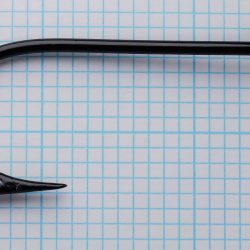
|
3121-J | Limerick | LimerickStd1XLJapanned | Bait SW | c. 1935–1965 | |

|
3221-Br | Kirby | KirbyStdBronzed | Bait | c. 1930-1960 | |
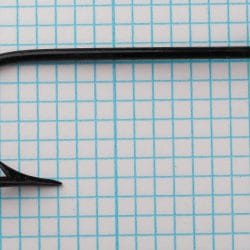
|
3221-J | Pflueger Kirby | KirbyHeavyJapanned | Bait | c. 1920-1960 | |
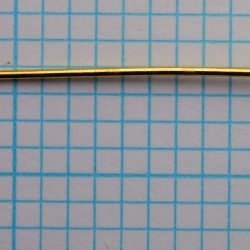
|
3320-G | Carlisle Pelican | SproatHeavyXXLGilt | Bait | c. 1920-1945 | |

|
3321 | Carlisle | Std4XLGilt | Streamer Bait | c. 1930-1950 | |
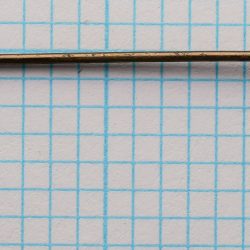
|
3321-Br | Carlisle | Fine4XLBronzed | Bait SW | c. 1900-1940 | |
|
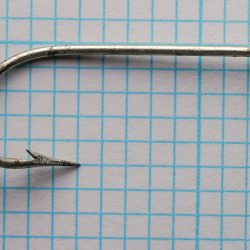
3421-BT | Cincinnati Bass | O'ShaughnessyStd1XLBright | Bait | c. 1900-1950 | |
|
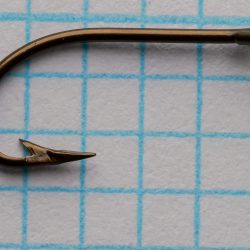
3521-Br | Sproat | SproatStdBronzed | Sea trout Bait SW | c. 1920s-1950s | |
|
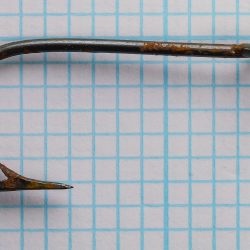
3621-B | Virginia Fish Hooks | RoundHeavyBlued | Bait | c. 1930-1945 | |
|
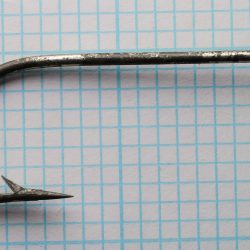
5212-T | Pflueger Deluxe Limerick | LimerickHeavyTinned | Bait SW | c. 1950-1965 | |

|
5321 | Sheepshead Fish Hooks | OtherXHTinned | Bait SW | c. 1910-1950 | |
|
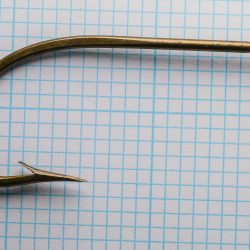
5511-Br | O'Shaughnessy | O'ShaughnessyHeavyBronzed | SW Bait | Undated | |
|
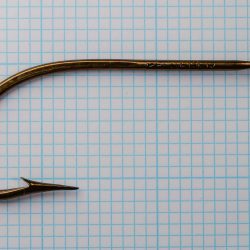
5515 | Pflueger #5515 O'Shaughnessy Dublin Needle Eyed | O'ShaughnessyStdBronzed | Salmon Sea trout SW | c. 1920s–1960s | |

|
5621-Br | Pflueger Sneck | SneckHeavyBronzed | Bait | c. 1920-1955 | |

|
7631-Br | Pflueger Treble Spear Point Ringed | SproatStd1XSBronzed | Bait | c. 1940-1960 | |

|
8515T | Sobey | O'ShaughnessyHeavy1XSTinned | SW | c. 1920s-1940s | |
|
8921 | Bulldog Carlisle | FineXXLBronzed | Bait SW | c. 1920s-1966 | |
|
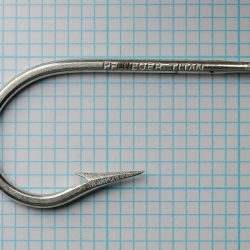
10015T | Pflueger Titan | OtherHeavyTinned | SW | — | |
|
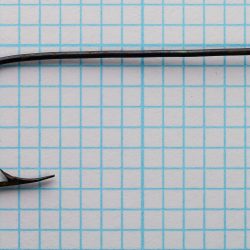
15120-B | Aberdeen Pelican | AberdeenXFBlued | Bait | c. 1965 | — |

|
15521 | Pflueger O'Shaughnessy | O'ShaughnessyFineBronzed | Bait SW | c. 1950–1965 | |
|
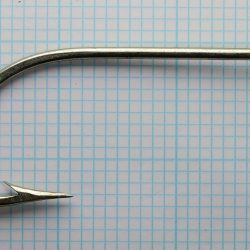
15521-T | O'Shaughnessy | O'ShaughnessyStdTinned | Sea trout Bait SW | c. 1940-1960 | |

|
25521-T | O'Shaughnessy | O'ShaughnessyHeavy1XSTinned | Sea trout Bait SW | c. 1945-1965 | |

|
Not documented on specimen | Martu | OtherHeavySpecTinned | SW | c. 1920-1940 |