
S. Allcock & Co.
- Founded
- 1803Redditch
- Documented entries
- 35Catalog records
- Categories
- 8By application
- Era range
- 1880–196035 dated entries
S. Allcock & Co.: The Industrial Engine of the Angling World
For over a century, S. Allcock & Co. was not merely a tackle company; it was the industrial engine of the global angling trade. Based in Redditch, Worcestershire, the sprawling “Standard Works” factory at its peak employed hundreds of skilled craftsmen and exported millions of hooks, rods, and reels to every corner of the world. From a humble needle-maker’s shop, Allcock grew into a global powerhouse, proudly operating under the famous “Stag” trademark. Though the original factories are now gone, the Allcock name remains a cornerstone of angling history, representing an era when British manufacturing set the global standard.
The company’s origins are deeply tied to the metallurgical heritage of Redditch, a town already famous as the needle-making capital of the world. The exacting skills required to temper, point, and bend fine steel wire for sewing needles were perfectly suited for manufacturing fishing hooks. In 1803, Polycarp Allcock—who had apprenticed in the needle trade—officially founded the company, initially producing hand-forged fish hooks as a sideline business. For the first few decades, this remained a modest, labor-intensive regional operation. However, when Polycarp’s son, Samuel Allcock, took the helm in 1848, he brought a fierce entrepreneurial vision that would transform the workshop into an empire, aggressively expanding their catalog to include everything an angler could possibly need.
The true cornerstone of Allcock’s dominance, however, was its absolute mastery of hook making. A pivotal moment came in 1856 when Allcock acquired the business of George Andrews, a highly respected local hook maker. This strategic purchase brought specialized tooling and seasoned labor into the Allcock fold, elevating their manufacturing capabilities. In the 19th century, crafting a reliable hook was an exact science. Allcock’s craftsmen understood that microscopic details—such as the “gutters” being formed precisely by the barb of the hook rather than the shank—dictated the strength, penetration, and reliability of the final product. This dedication birthed the legendary “Model Perfect” range. Today, the unique temper and profile of these vintage Allcock hooks remain highly sought after by artisan tyers, particularly those utilizing traditional methods to dress classic Atlantic salmon and steelhead flies.
As the 20th century dawned, Allcock operated as the central hub for the entire “Redditch System.” While they maintained their own massive factory output, they functioned almost like a shadow conglomerate, absorbing the masterful work of smaller, independent craftsmen. The most famous example of this was their partnership with J.W. Young & Sons, who manufactured the iconic Allcock Aerial reel. Surviving two World Wars by converting their machinery to produce precision springs for the military, Allcock emerged in the post-war era with modernized tooling, allowing them to mass-produce their world-renowned hooks with even greater consistency.
By the 1960s, the historic Redditch firms faced intense pressure from foreign imports and the advent of new materials like fiberglass. In a bid for survival, S. Allcock & Co. merged with local rivals J.W. Young & Sons and Lee of Redditch in 1963 under the Cope Allman investment group, forming an entity known as “Top Tackle.” This consolidation was short-lived; in 1965, the American tackle giant Shakespeare acquired the group, officially ending Allcock’s 160-year run of independence. A few years later, a devastating fire destroyed much of the original Standard Works factory on Clive Road, a tragic blaze that historians view as the literal and symbolic end of the Victorian tackle industry in Redditch.
- 1803
- Polycarp Allcock officially founds the company in Redditch, leveraging his needle-making background to begin manufacturing fish hooks.
- 1848
- Samuel Allcock takes control of the business, initiating a massive expansion from a regional workshop into a global tackle supplier.
- 1856
- Allcock acquires the George Andrews hook business, securing specialized tooling and expert labor that would heavily influence their future hook designs.
- 1880
- S. Allcock & Co. proudly claims the title of "The World's Oldest and Largest Manufacturers of Fishing Tackle," distributing gear globally under the "Stag" trademark.
- 1945
- Entering the post-WWII era, Allcock’s "Model Perfect" hook solidifies its status as a worldwide brand leader, celebrated for its exceptional temper and reliable wire.
- 1963
- In a bid to consolidate the struggling British tackle industry, Allcock merges with J.W. Young & Sons and Lee of Redditch to form "Top Tackle" under the Cope Allman group.
- 1965
- The American tackle corporation Shakespeare acquires the Top Tackle group (operating as Noris Shakespeare in Europe), ending S. Allcock & Co. as an independent, family-rooted entity.
- 1969
- A massive fire breaks out at the Standard Works factory on Clive Road, destroying much of the historic facility and signaling the end of an era for Redditch tackle manufacturing.
Catalog by application
Complete index
35 entries
| Model | Name | Specification | Application | Era | Collectability | |
|---|---|---|---|---|---|---|

|
180 F | No. 180 F Kirby | Std1XLJapanned | Salmon Sea trout Bait | c. 1880–1930 (with production possibly continuing into 1940s) | |

|
184 | 184 Superfine | LimerickStd1XLJapanned | Salmon Sea trout Bait | c. 1930-1955 | |

|
185 | Limerick Hook No. 185 | LimerickFine3XLBronzed | Salmon Sea trout Bait | c. 1920-1945 | |

|
194M | No. 194M Sneck Hooks | SneckStd2XLJapanned | Salmon Sea trout Bait | c. 1890-1930 | |
|
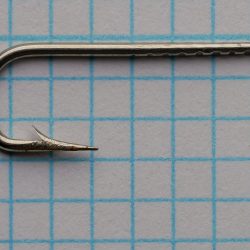
195 | Kendal Sneck | SneckXH1XLNickelled | Bait | c. 1900-1940 | |

|
198 | Samuel Allcock 198 Flatted Eye | KirbyXHBlued | Sea trout Salmon Bait | c. 1890-1920 | |

|
663 | Kensey | OtherFine1XLJapanned | Salmon Sea trout Bait | c. 1935-1965 | |

|
667 | Chestertown 667 | OtherStd2XLJapanned | Salmon Sea trout Bait | c. 1900–1930 | |

|
679 | Allcock 679 | XF4XLBlued | Salmon Sea trout Bait | c. 1950-1965 | |
|
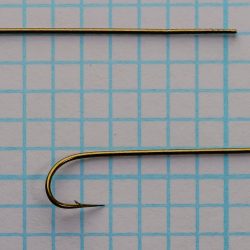
692 M | S. Allcock & Co. 692 M Carlisle | StdXXLBronzed | Streamer Bait | c. 1935-1955 | |

|
777 | No. 777 First Quality Hollow Point Sproat | SproatFine4XLBronzed | Sea trout Salmon Bait | c. 1920s-1940s | |
|
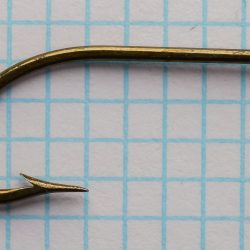
790 | T.D.E. Forged O'Shaughnessy Limerick Hook | O'ShaughnessyHeavyBronzed | Wet Nymph | c. 1920s-1940s | |
|
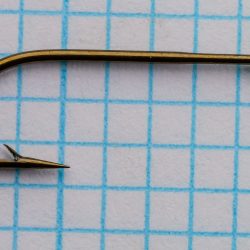
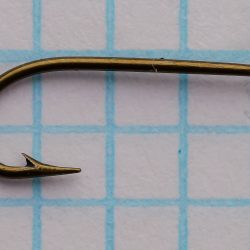
1810 TDE | 1810 TDE | LimerickXH1XLBronzed | Wet Nymph Salmon | c. 1920s-1960s | |
|
1810 TUE | Best Hollow Point Sproat | SproatStdBronzed | Dry Wet Nymph | c. 1920-1950 | — |

|
1904 | 1904 M Hook | SproatFineBronzed | Salmon Sea trout Bait | c. 1890-1920 | |

|
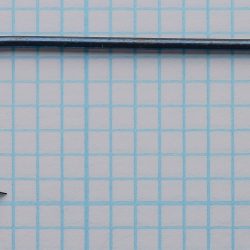
1904 R | 1904 R Sproat | SproatStdBronzed | Wet Nymph | c. 1900-1915 | |
|
3736M | Spear Point Long Shank Kirby Carlisle | KirbyFineSpecBlued | Salmon Sea trout Bait | c. 1945-1960 | |
|
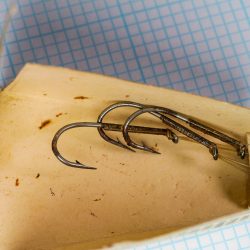
4555B | Cinning Bass Gut Hook | SproatStdTinned | Bait | c. 1920-1950 | |
|
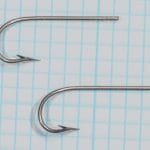
5002M | 5002M | Heavy1XLPolished | Bait | c. 1910-1935 | |

|
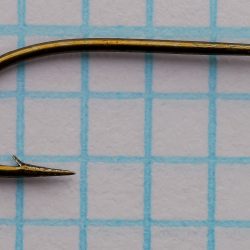
5887 | No. 5887 Sproat Hook | SproatHeavy2XLBronzed | Wet Nymph Salmon | c. 1930s-1950s | |
|
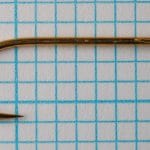
6812 | Best Hollow Point | SproatStdBronzed | Wet Salmon Sea trout | c. 1945-1955 | |
|
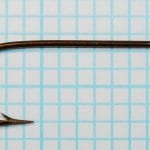
L220 | L220 Gilt | SproatStd1XLGilt | Salmon Sea trout | Undated | |
|
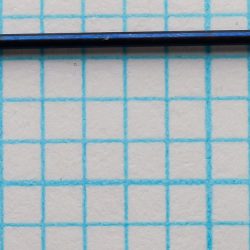
No. 195 | Kendal Sneck | SneckStd1XLBronzed | Salmon Sea trout Bait | c. 1900-1930 | |
|
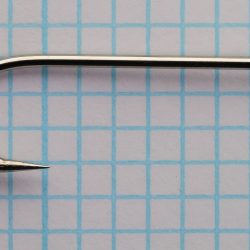
No. 1770 | Kirby Carlisle Hooks | StdXXLBlued | Salmon Sea trout Bait | c. 1950-1960 | |
|
S216 | S216 Sproat Hook | SproatStd3XLGilt | Wet Nymph Sea trout | c. 1950-1975 | |

|
S217 | S217 Sproat | SproatHeavy3XLNickelled | Wet Nymph Sea trout | c. 1955–1975 (E) | |

|
S 220 | S 220 Tapered T.D.E. Model Perfect | Fine1XLBronzed | Dry Wet Nymph | c. 1950–1965 | |

|
S222 | S222 Sproat Hook | SproatStd3XLNickelled | Wet Nymph Sea trout | c. 1950-1975 | |
|
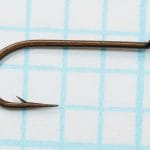
W172 | Allcocks W172 | StdBronzed | Dry Wet | c. 1950-1965 | |
|
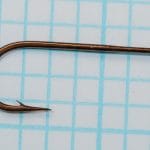
W173 | W173 TDE Tapered Eye | Std1XLBronzed | Dry Wet Nymph | c. 1930-1960 | |

|
W175 | W175 Tapered Eye Model Perfect | Fine1XLBronzed | Dry Wet Nymph | c. 1920s-1940s | |

|
W 205 | Sproat Hook | SproatHeavyBronzed | Wet Nymph | c. 1955-1965 | |

|
W208 | W208 Gilt | SproatHeavy2XLGilt | Wet Nymph | c. 1960s-1970s | |

|
W210 | W210 | SproatStdBronzed | Dry Wet Nymph | c. 1920-1950 | |

|
Z174 | Z174 3X Long | Fine3XLBronzed | Streamer Salmon Sea trout | c. 1950-1965 |