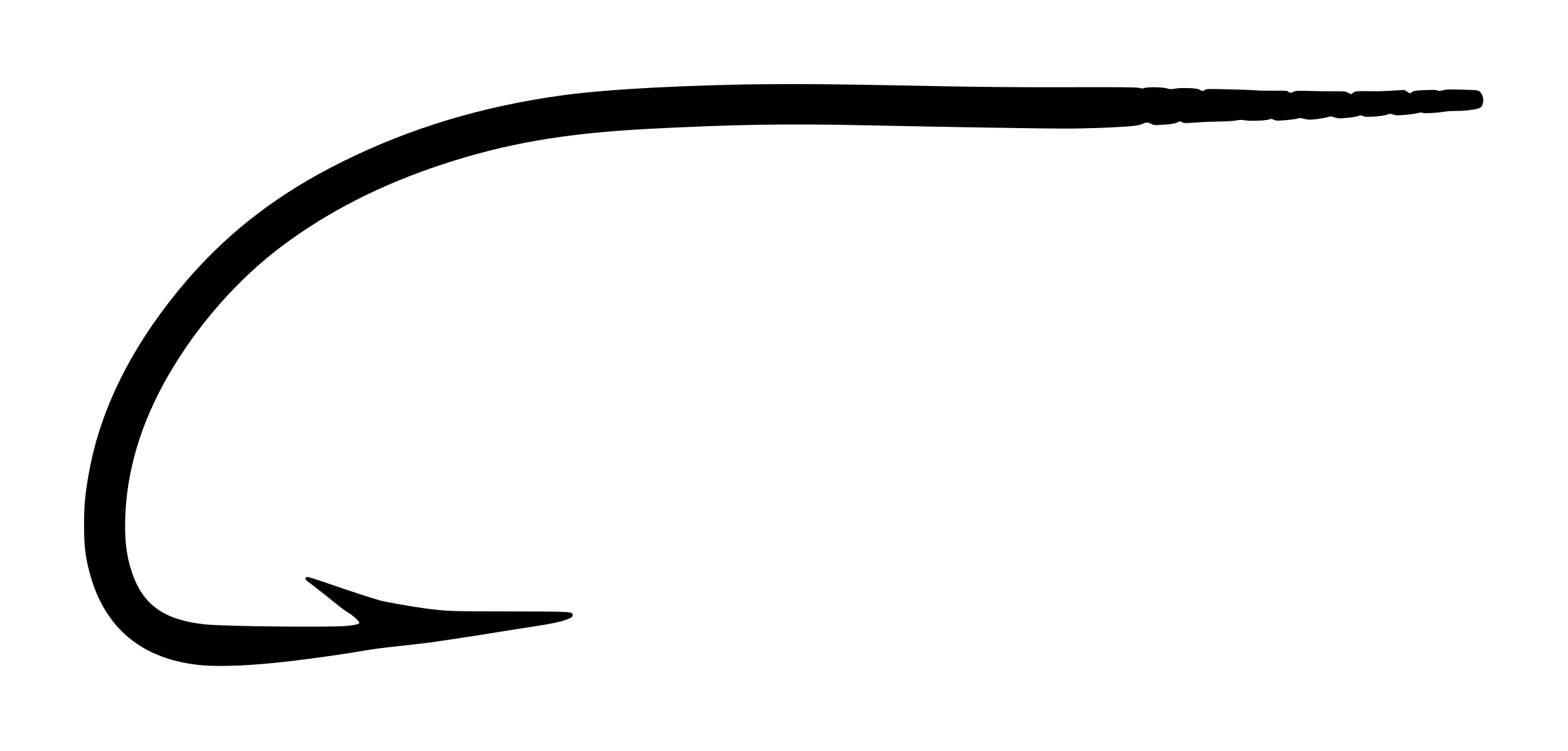
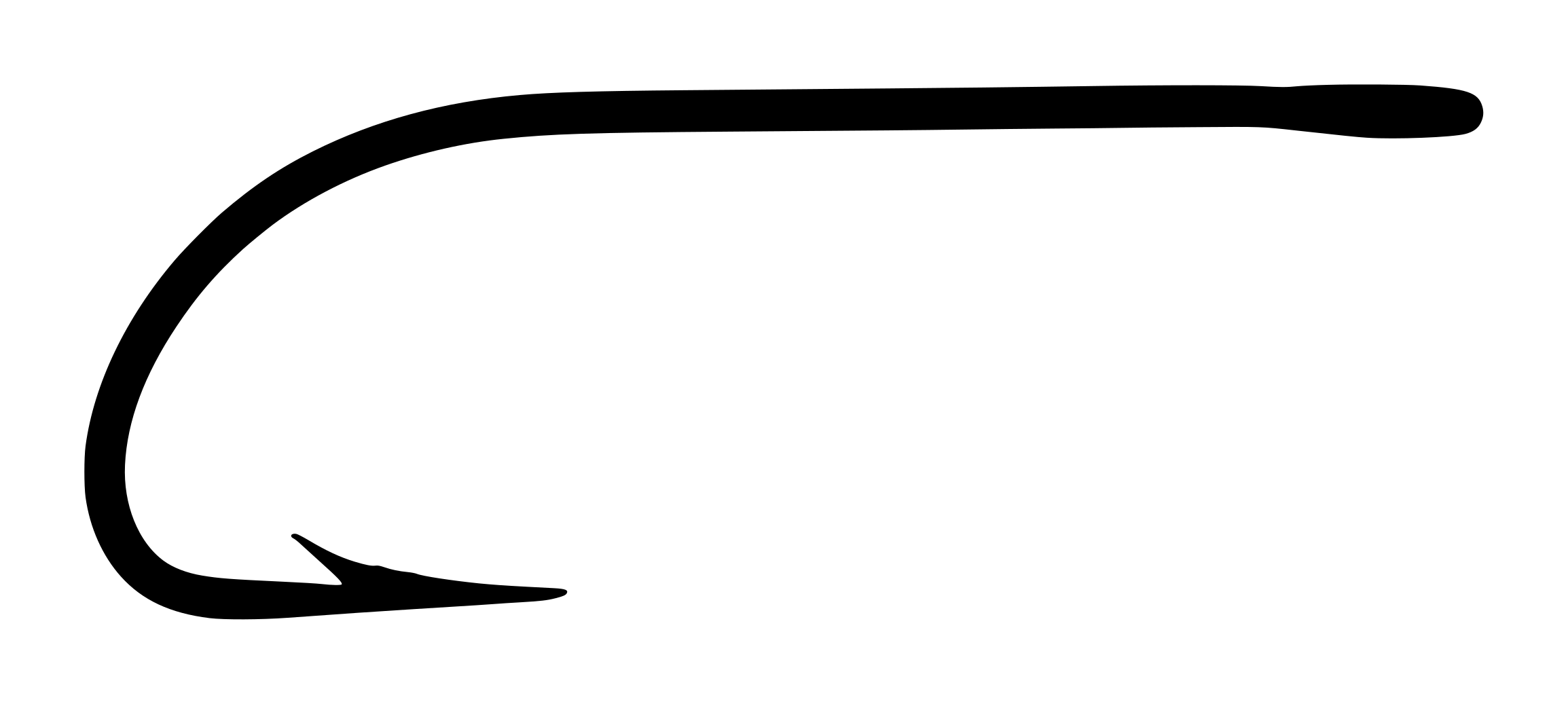
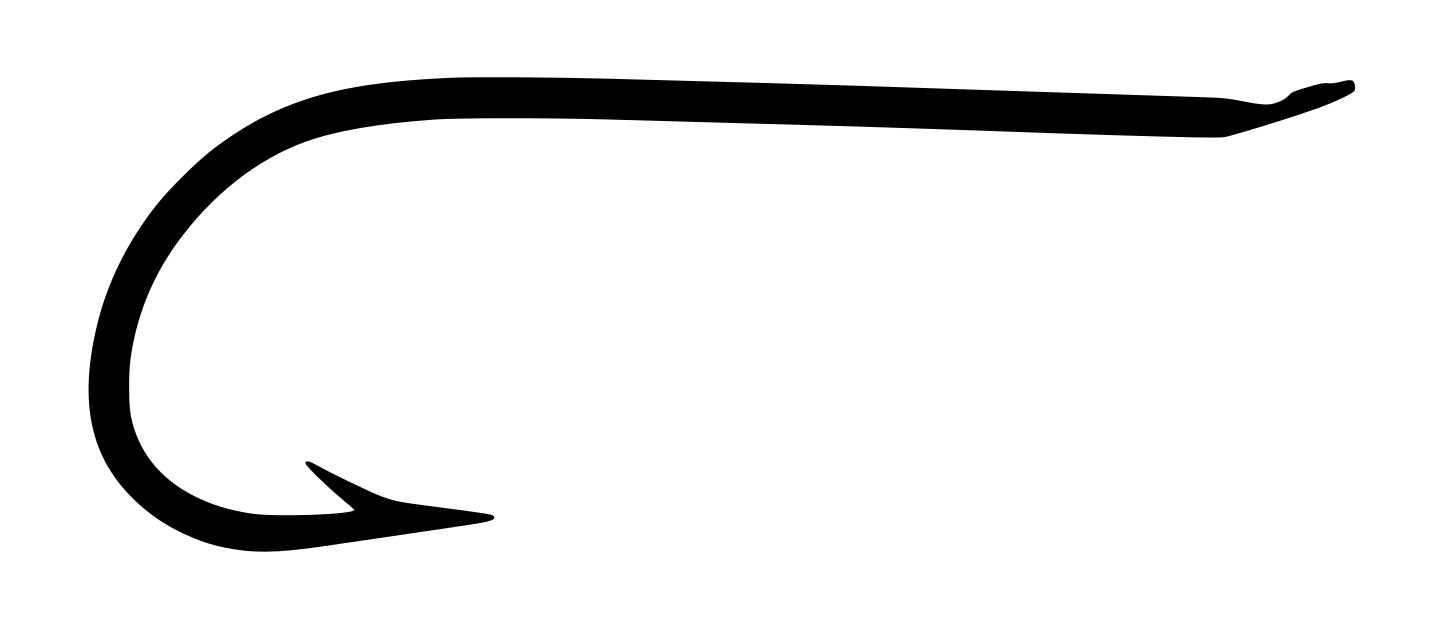
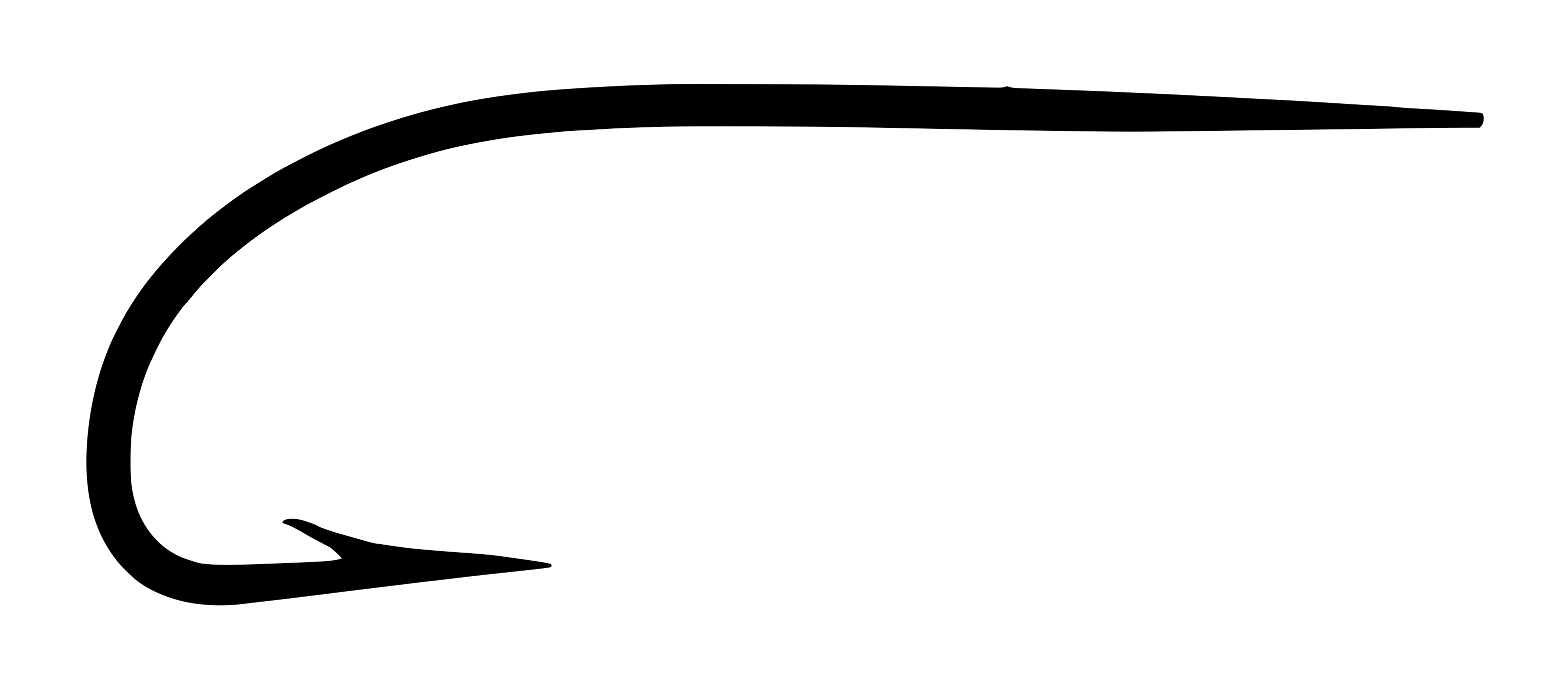
S. Allcock & Co.’s 184 Superfine is a fine-wire salmon and sea-trout hook manufactured by the legendary Redditch firm, likely between 1930 and 1955. The hook features a long, graceful shank with a tapered blind eye — a sophisticated design that required tying the gut loop directly around the tapered eye point, rather than through a formed ring. This construction was preferred by skilled British fly dressers for precision fishing on clear English rivers.
The defining characteristic is the combination of fine-gauge wire with a deep, rounded bend and superior point geometry. The glossy black japanned finish is typical of Allcock’s premium salmon hooks, providing excellent corrosion resistance and a professional appearance. The original green card packaging, printed in letterpress, is a key collectibility factor and strongly indicates production before 1960.
The 184 Superfine occupies a distinct niche in the British fly-hook tradition — too specialized for modern commercial production, yet familiar to collectors of Redditch heritage. Its scarcity in fine sizes and the appeal of original period packaging make it a worthwhile hunt for specialists in vintage salmon-fly tackle.
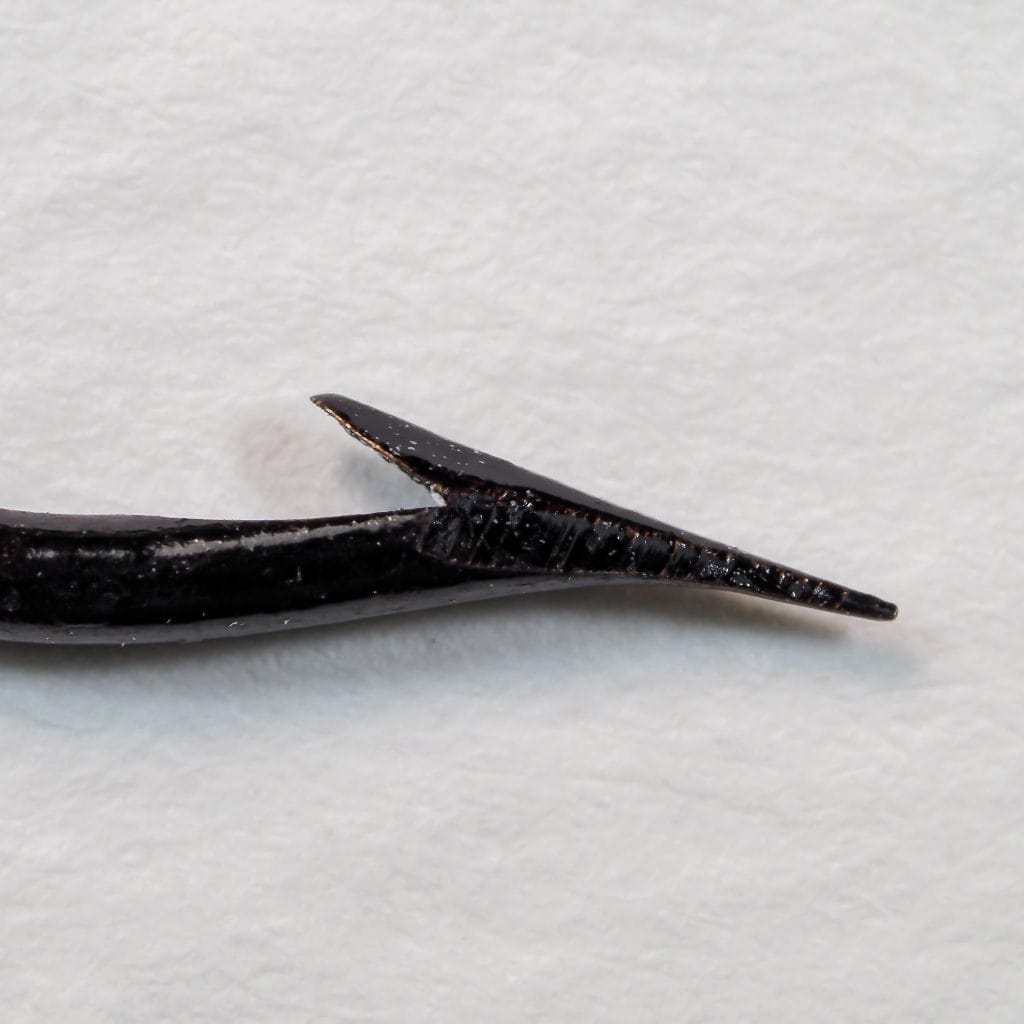
Close-up detail of the S. Allcock 184 hook point, revealing the superior point geometry with near-straight inner taper and short close-cut barb. The glossy black japanned finish is clearly visible, with no visible texture or corrosion on the specimen.
Photographic record
3 cataloged imagesSelect any record to load it above.
3 images shown
S. Allcock 184 Superfine Hook — Point DetailClose-up detail of the S. Allcock 184 hook point, revealing the superior point geometry with near-straight inner taper and short close-cut barb. The glossy black japanned finish is clearly visible, with no visible texture or corrosion on the specimen.Open originalS. Allcock 184 Superfine Hook — Full Profile with Measurement GridComplete profile of the S. Allcock 184 Superfine on 1/10-inch measurement grid. The hook's characteristic long, slender shank tapers smoothly to a rounded point at the eye (tapered blind eye construction). The bend shows the deep, rounded geometry of a Sproat-family pattern, despite the packaging label 'Limerick' designation.Open originalS. Allcock 184 Superfine Hook — Original Packaging and SpecimenOriginal S. Allcock & Co. sales card with the 184 Superfine hook mounted. The green card stock and letterpress printing are characteristic of British tackle packaging from the 1930s-1950s. The decorative circle border, 'Trade Mark' deer emblem, and product descriptors are all period-typical.Open original
Technical profile
Eye
Blind — Marked ShankTapered blind eye — the shank tapers smoothly to a rounded point with no flattening or spade construction. Gut loop attached by tying around the taper. Design typical of Redditch salmon and sea trout tradition.
Wire
Standard, Round, Est. ~0.10"-0.15" (~2.5-3.8 mm) E
Shank
1X Long — Marked / Ridged
Bend
Limerick, Standard gapPackaging explicitly states 'LIMERICK' V, however the photograph reveals a deeply rounded bend profile more characteristic of Sproat family. The inner face shows the rounded-bottom geometry typical of Sproat, not the angular heel of a true Limerick. This may indicate early-period Allcock design where terminology was less standardized, or reclassification in later catalogs. The bend is symmetrical and well-forged.
Point
Standard / Spear
Finish
Black Japanned — Inferred (photographically likely)Glossy black lacquer coating with uniform coverage. The finish is opaque and thicker than blued, completely obscuring underlying wire texture. Photographically consistent with japanned lacquer rather than blued oxide. Characteristic of Allcock's fine-quality salmon hooks of the 1930s-1950s era.
The superior point geometry — characterized by a near-straight inner taper and minimal concavity — provides excellent penetration with minimal barb damage to delicate natural materials (silk, hair) used in traditional fly dressing. The fine wire reduces drag on the cast and allows lighter presentation; however, it sacrifices hook strength in heavy cover, limiting this design to clear-water and small-stream applications.
The tapered blind eye requires skilled tying technique: the angler must form a tight loop around the smooth taper, using a surgeon’s knot or similar. This construction eliminates the stress concentration of a formed eye ring, theoretically improving longevity under repeated casting stress. The cast-steel forging process (referenced in the packaging) ensures consistent metallurgy and uniform hardness across the bend.
The japanned (lacquer) finish provides superior corrosion resistance compared to bronzed or blued finishes, particularly in saltwater and high-tannin river environments. The glossy black appearance is aesthetically consistent with British premium tackle aesthetics of the era.
We don't have measured sizes for this hook yet. Own one? Submit calipered measurements and we'll review and add them. Thank you!
Historical context
allcock
S. Allcock & Co. was one of the major British fishhook manufacturers, based in Redditch, England — the historic center of English hook production. The firm specialized in premium salmon, sea-trout, and fly-fishing hooks, competing directly with Partridge of Redditch and H. Milward & Sons. Allcock’s reputation was built on fine craftsmanship and innovative eye designs, including the pioneering use of tapered blind eyes for salmon flies.
The company was active from at least the 1890s through the late 20th century, with peak production during the interwar period (1920s-1930s) and post-war revival (1950s-1960s). Their ‘Superfine’ and ‘Cast Steel’ lines were marketed as premium products, aimed at experienced fly dressers and salmon anglers. The brand maintained strong distribution throughout the UK and in colonial markets, particularly India and South Africa.
Allcock was eventually acquired by larger industrial manufacturers; however, the brand retained its prestige well into the modern era. Original Allcock cards from the 1930s-1950s are highly valued by tackle historians and British fly-fishing traditionalists.
Series History
The ‘184 Superfine’ does not belong to a named series per se, but rather to Allcock’s broader ‘Superfine Cast Steel’ line — a product family introduced in the early 20th century to serve the specialized market for salmon and sea-trout flies. These hooks were characterized by fine wire, precision forging, and sophisticated eye constructions.
The model number 184 appears in Allcock catalogs from the 1930s through the 1950s, typically offered in multiple sizes. The ‘Limerick’ classification (despite the apparent Sproat-like bend geometry) reflects the contemporary naming conventions, where ‘Limerick’ was used generically for rounded deep-bend patterns. This hook was discontin by the 1970s as modern Aberdeen and standard Sproat designs became dominant.
Era and Packaging Dating
No barcode present on card — strong pre-1974 indicator V. Letterpress printing on green card stock is characteristic of British tackle manufacturers' output through the 1950s; offset printing became standard by 1960 P. The 'SUPERFINE CAST STEEL' designation and 'Trade Mark' deer stamp are consistent with Allcock's catalog language of the 1930s-1950s P. No post-war design markers (e.g. barcode, modern postal zone) visible. Green paper stock tone and ink color suggest pre-1960 manufacture P. Allcock's production catalogs from the 1930s-1950s show this model in active circulation; discontinued or de-emphasized post-1960 as modern Aberdeen and Sproat variants gained dominance I.
Design lineage and influence
The tapered blind eye design traces its origins to late-19th-century Scottish and English salmon-fly tradition, where fly dressers sought secure gut-loop attachment without the bulk of a formed eye ring. Allcock, Partridge, and Milward all produced variants of this design during the 1920s-1950s. The superior point and fine wire were engineering responses to the need for precise fly presentation on low-water conditions in British salmon rivers.
Downstream, the tapered blind eye design influenced mid-20th-century continental European salmon hooks (particularly Scandinavian makers) and persists in niche modern production from specialty manufacturers like Partridge of Redditch and Fario. The 184 Superfine occupies the transitional period between Victorian craft production and modern industrial standardization.
Best matchRelated by Attribute
Computed automatically from catalog data — updated as new hooks are added.
Matches: Bend, Shank, Gap, Eye Orient., Forging +1 moreDiffers: Wire: Standard vs Fine (1X Fine); Eye: Blind — Marked Shank vs Blind — Tapered Shank; Point: Standard / Spear vs Hollow Point +3 more
The S. Allcock 184 Superfine is a traditional English salmon and sea trout fly hook, designed for wet-fly and small-stream patterns. The long, slender shank and fine wire accommodate delicate presentations on clear water, while the tapered blind eye allows secure gut-loop attachment without a formed ring. This hook represents the Redditch craft tradition of the interwar period, when British fly dressers favored such specialized designs for spring salmon fishing and autumn sea-trout work.
Secondary Applications
Small trout wet flies, brook trout patterns, historical dry-fly styles
Classic Fly Patterns
Not specifically documented, but typical applications include Palmer flies, small March Browns, and traditional Dee-strip patterns of the 1930s-1950s
Modern Equivalents
Hook
Match Quality
Notes
Partridge of Redditch E1A
Excellent
Still in production; tapered blind eye, Limerick bend, fine wire. Direct spiritual successor; higher price point.
Partridge of Redditch E1B
Good
Slightly heavier wire, same eye and bend family. Intermediate step between original 184 and modern forgings.
Orvis Superfine Dry Fly Hook (modern)
Moderate
Fine-wire trout hook; different eye construction (formed ring) but similar wire gauge and spirit.
Collector notes
Rated 4.5/10 — uncommon but not scarce. Larger sizes (8, 10, 12) remain moderately available; smaller sizes (14, 16, 18) are genuinely scarce. Collector demand is steady among Redditch specialists and vintage salmon-fly tiers. Original green card packaging in good condition significantly elevates value above loose hooks.
Reference value
$12 – $35 USD estimate
Packaging condition
Very Good — light wear, fully legibleRecorded specimen
Packaging format
ACF-E-04Catalog code
What makes this hook collectible: The 184 Superfine represents a well-documented phase of British fly-hook evolution. It is sought by collectors of Redditch heritage, salmon-fly historians, and practitioners of traditional fly-dressing techniques. The tapered blind eye is particularly valued as a rare example of pre-formed-eye design. Original period packaging is scarce and adds substantial premium.
Limiting factors: Not rare enough to command auction house attention. Allcock produced these hooks in reasonable quantities during the 1930s-1950s, so they are not museum-quality. Larger standard sizes (8-12) remain relatively common; the rating reflects this distribution. Modern fly tiers rarely adopt tapered blind-eye patterns, limiting demand to historians and traditionalists.
Most desirable variants: Sizes 16 and smaller (fine-wire premium), sealed/unopened cards (significant premium over loose), early-period packaging (pre-1940 green card stock). Japanned finish is more desirable than later bronzed variants, if any exist in the same model line.
Condition factors affecting value: Packaging condition is paramount — a sealed or near-sealed original green card will command 3-4× the value of loose hooks. Hooks themselves should show no corrosion, rust bloom, or bent barbs. Missing hooks from the card deduct 15-20% per hook. Card printing clarity (sharp type impression vs. faded) adds a modest premium.
Packaging
Sales card, green paper stock, approximately 5" × 3" (127 × 76 mm). Letterpress printing in dark blue-black ink. Header features S. Allcock & Co.'s trade mark (jumping deer), model number 184, descriptive text 'SUPERFINE CAST STEEL LIMERICK FISH HOOKS No.'. Decorative border of small circles/rings along all edges. Single hook mounted on the card with original wrapping or mounting (partially visible). Card shows light age toning and no barcode or modern markings. No visible price label. Characteristic of Allcock's mid-era (1930s-1950s) product presentation.
Market Value Notes
Low ($12): Good condition — opened card, all or most hooks present, minor packaging wear. High ($35): Excellent condition — sealed or near-sealed original green card, complete hook count, minimal defects. Premium factors: Original period packaging (green card pre-1940 style), sealed or tissue-wrapped condition, smaller sizes (16 and finer). Platforms: eBay UK, specialist British tackle dealers, occasional tackle fairs in the Midlands and south England. Confidence: E estimated — limited eBay sales data for this specific model; comparable Allcock cards and contemporary Partridge Redditch salmon hooks suggest this range.
Where to Find
eBay UK (search 'Allcock 184' or 'Allcock Limerick Superfine'), specialist British vintage tackle dealers, occasional Midlands tackle auctions, Redditch tackle heritage societies. Less commonly found in North American markets.
Preservation
Storage and Preservation
Store the original card in a cool, dry environment away from direct sunlight and moisture. The glossy japanned finish is durable but susceptible to humidity-induced patina development (darkening of the lacquer over decades); collectors often consider this patina desirable and evidence of authenticity.
If the card is intact, keep it carded rather than removing hooks to loose storage. The green paper stock is acid-free by the standards of 1930s-1950s manufacturing, but avoid contact with modern treated papers or acidic storage materials. Do not laminate or seal the card in plastic — allow it to breathe. Archival-quality tissue paper provides excellent support if the card requires reinforcement.
If hooks are removed for functional tying, store them in a vial with a small silica gel packet to prevent rust bloom. Japanned hooks are resistant to corrosion but not immune — moisture will eventually cause dark patina and surface oxidation. Original tissue wrapping (if present) should be preserved separately as evidence of original packaging integrity.
Avoid contact with other metals during storage to prevent galvanic corrosion. Handle the card by its edges to prevent fingerprints and skin oil accumulation on the printed surface.
Primary Source
Packaging Text Analysis
Source: S. Allcock & Co. packaging label, green card, c. 1930-1955
The label text provides several layers of manufacturing and marketing information:
‘S. ALLCOCK & CO’S’: Possessive form with ampersand, typical of British business lettering conventions. Confirms Redditch firm, not a distributor.
‘184’: The model number does not appear in surviving Allcock printed catalogs (likely predates commercial catalog standardization), suggesting either a house number for internal use or a catalog number from out-of-print early-20th-century publications.
‘SUPERFINE’: A premium designation, distinguishing this line from standard cast-steel hooks. Implies finer wire gauge and superior finishing — confirmed visually by the fine gauge and pristine japanned coating.
‘CAST STEEL’: Marketing claim specific to the manufacturing process. ‘Cast steel’ historically referred to steel produced via a casting process (as opposed to bar stock), yielding consistent carbon content. By the 1930s-1950s, this terminology was somewhat archaic but retained for prestige association.
‘LIMERICK’: Bend classification. As noted in bend_notes, the photographed bend appears geometrically Sproat-like (rounded bottom, symmetrical), suggesting either early-period naming flexibility or catalog reclassification. ‘Limerick’ may have been a generic term for rounded-bottom salmon hooks in this era.
The decorative border of small circles/rings is a signature design element of Allcock’s card presentation, appearing on multiple product lines from this era. This consistency aids in dating and authentication.
Additional
Tapered Blind Eye Construction and Tying Technique
The tapered blind eye design represents a distinct engineering approach to fly-hook attachment, separate from the formed-eye rings that became standard in modern fly fishing. Rather than a welded or folded eye loop, the shank tapers smoothly to a rounded point, and the angler ties the leader (or gut) directly around this taper using a loop knot.
Tying method: Traditional fly dressers would first dub and spin the body and wings on the hook, then at the final step, form a surgeon’s knot or similar around the eye taper, cinching the loop tight enough to hold the fly but loose enough to allow smooth rotation. This technique requires practice and was a mark of skilled fly-dressing craft.
Advantages: (1) Eliminates the stress concentration of a formed eye ring, theoretically improving longevity. (2) Reduces overall hook weight and bulk at the eye, beneficial for ultra-light presentations. (3) Provides a smooth, unobstructed line of pull on the hook point. (4) Achieves a more elegant aesthetic in the finished fly.
Disadvantages: (1) Requires specialized knotting skill — not suitable for mass-market or novice fly tiers. (2) Tying loop-to-taper is slower and more prone to slippage than forming a permanent loop. (3) The eye taper is vulnerable to crushing or bending if vise pressure is excessive during dressing. (4) Not compatible with modern fly-tying vises and materials.
By the 1960s, formed-eye hooks had achieved complete market dominance, rendering tapered blind-eye designs obsolete. Today, they are a curiosity in the hands of traditional fly-fishing historians and experimentalists in the ‘vintage fly-dressing’ movement.
Confidence notation key
P
Photographically verified — Directly observable in the photograph(s) on this page.
V
Verified by documentation — Confirmed by manufacturer catalog, spec sheet, or published reference.
I
Inferred — A logical deduction from observable or documented evidence, not directly stated.
E
Estimated — An approximation based on visual comparison, proportional analysis, or limited data.
S
Speculative — A reasoned hypothesis that cannot be confirmed from available evidence.
Claims with no notation are confirmed by multiple independent sources. All photographs on garrenwood.com are taken on a measurement grid where each square equals 1/10 inch (0.1″ / 2.54 mm).