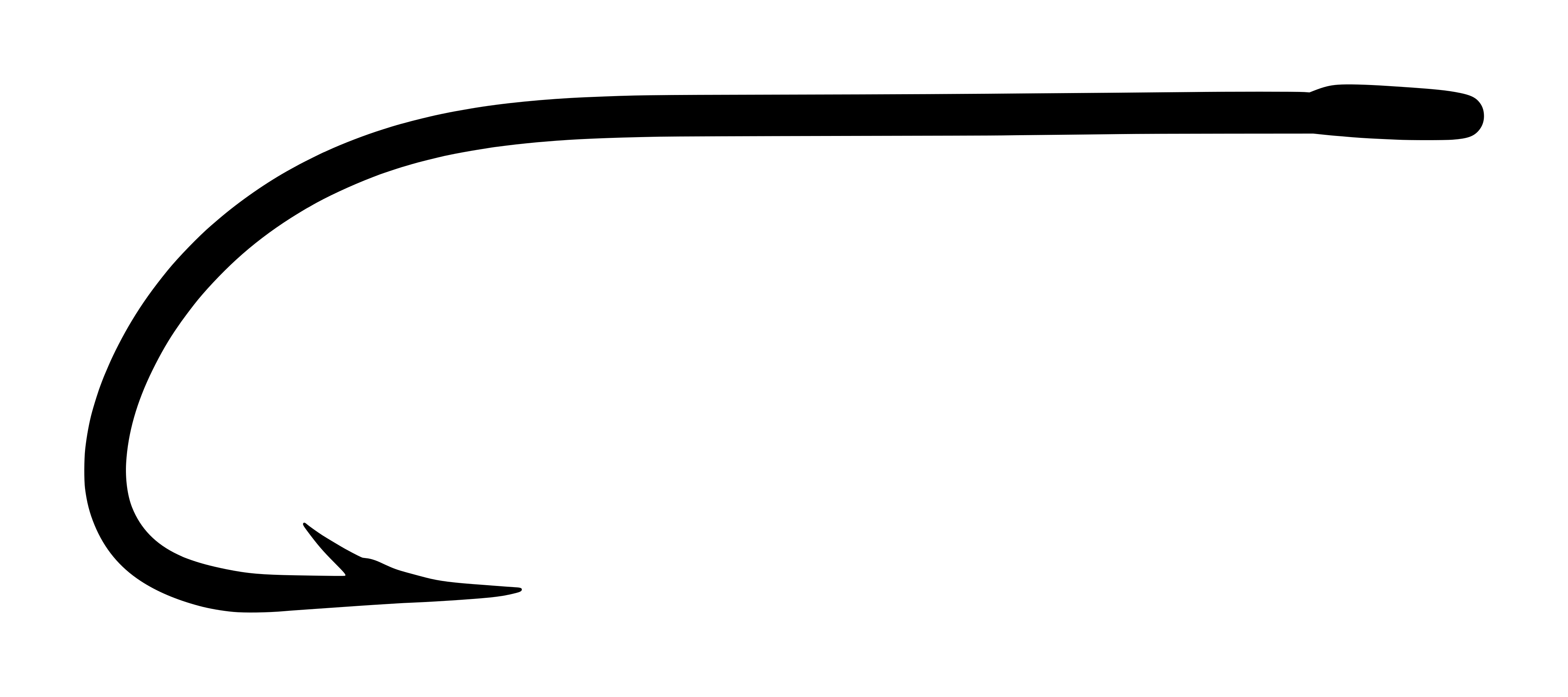
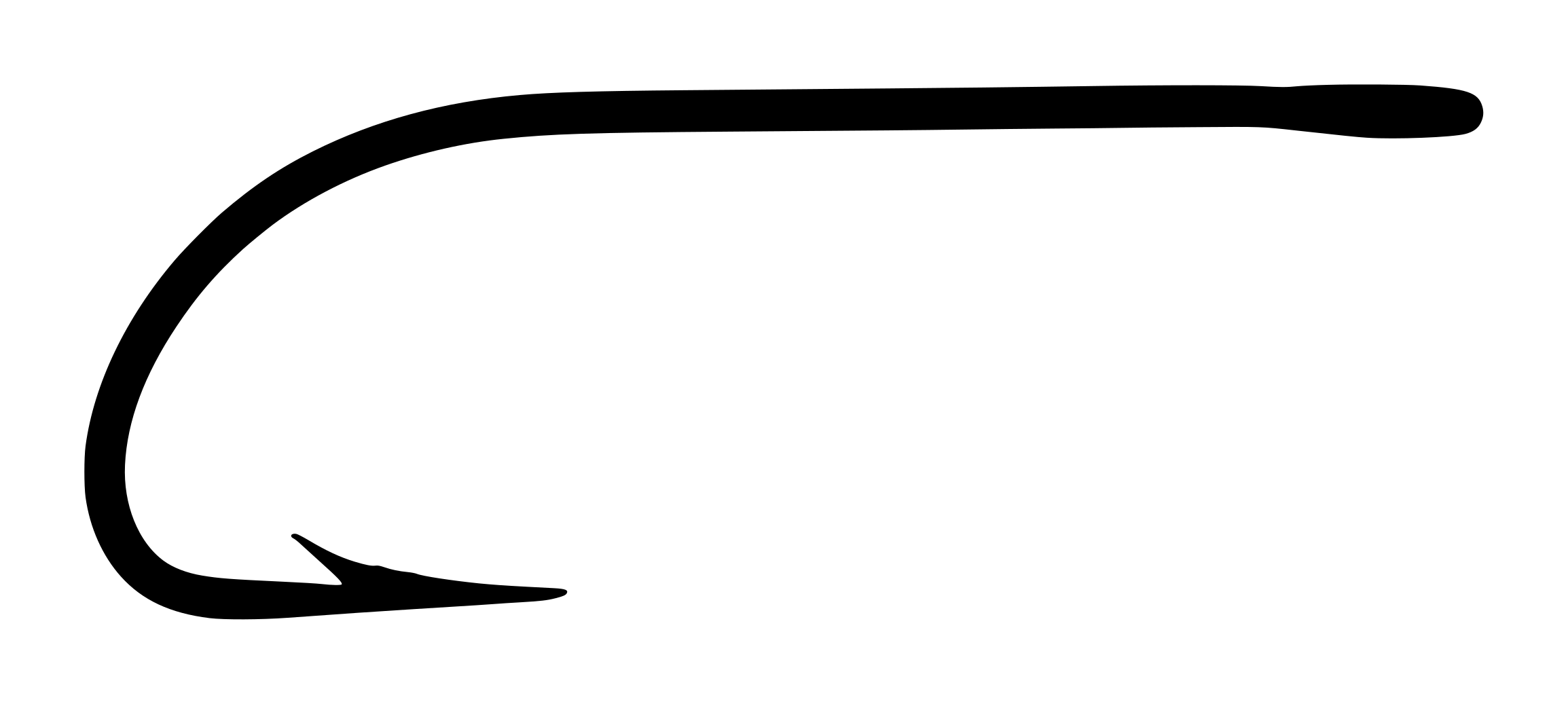
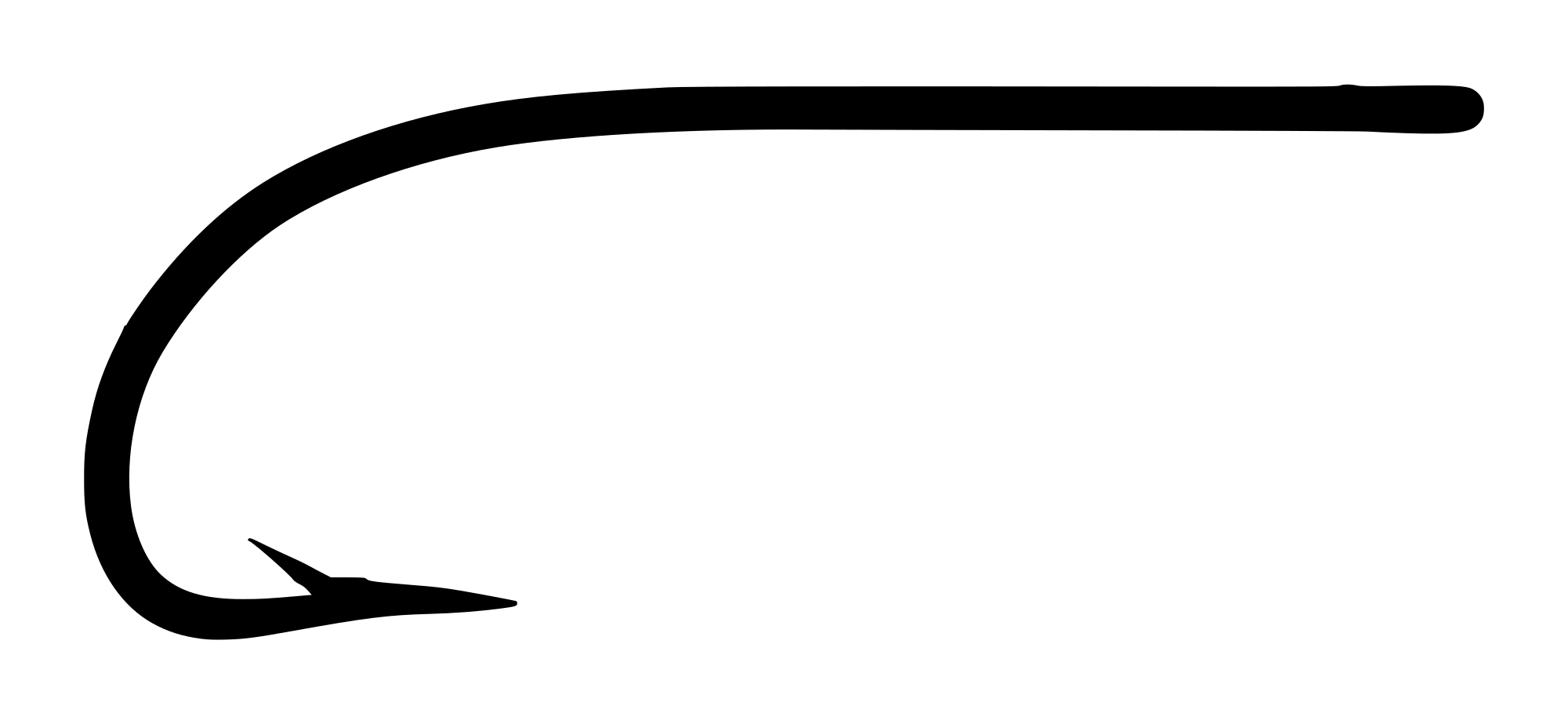
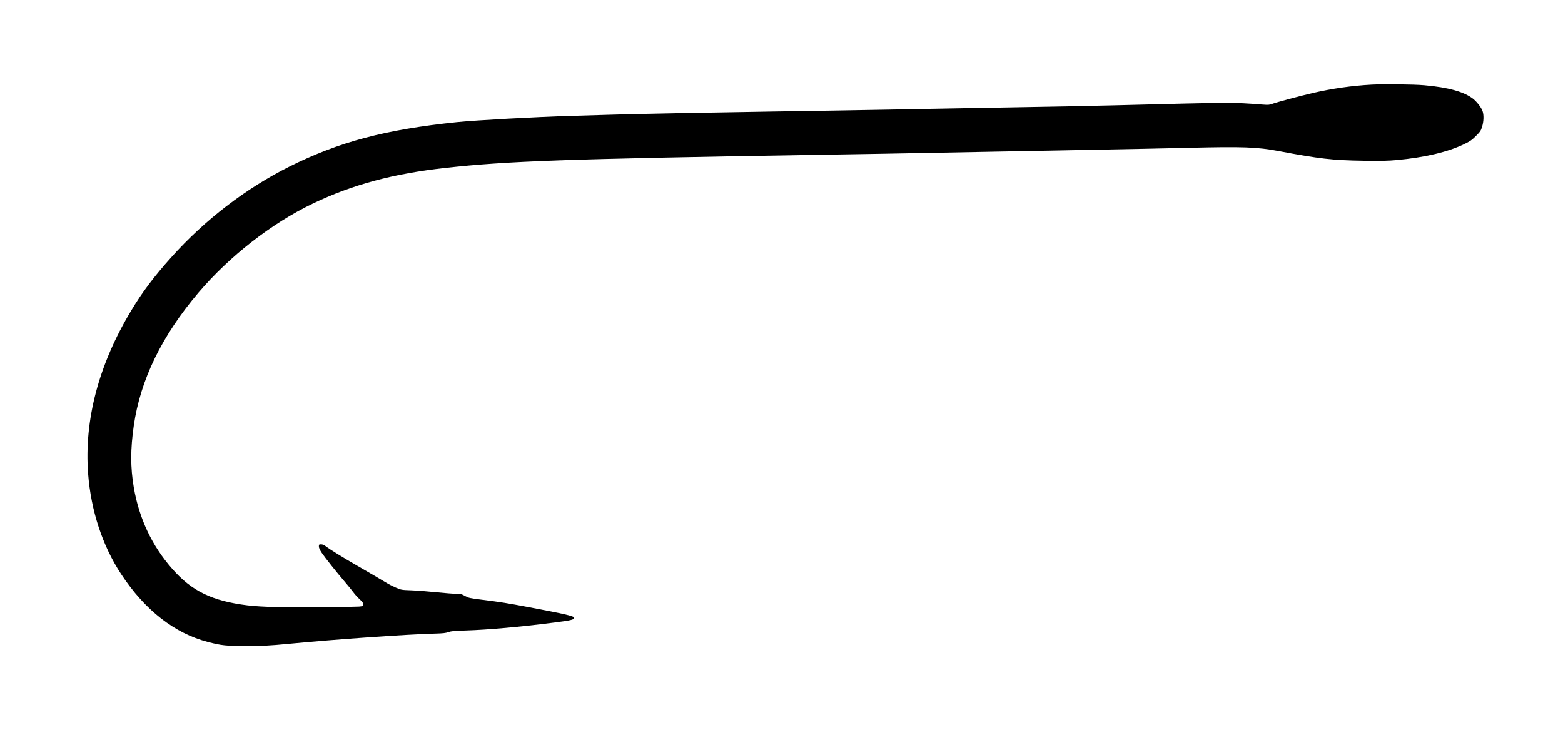
The Mustad 4707 is an extra-heavy-wire salmon and sea trout wet fly hook manufactured in Gjøvik, Norway. It features a ringed eye, Limerick bend, and hollow point — a configuration designed specifically for larger game fish applications. The hook was in continuous production from the early 1950s through the 1980s and beyond, making it one of Mustad’s most recognizable fly-tying hooks in Europe.
This specimen is a size 4/0, typical of the larger end of the salmon range. The extra-heavy wire and modest gap create a robust platform for heavy dressing and substantial flies. The ringed eye allows the leader to spin freely, reducing line twist during active trout or salmon play — a feature favored by European fly fishers. The bronzed finish is characteristic of production from the mid-20th century and into the 1970s–1980s.
The 4707 is common in modern collecting — original cards appear regularly on eBay and in vintage tackle lots. Collector demand is steady but not intense; pricing reflects utilitarian status rather than rarity. Condition and packaging integrity are the primary value drivers. Original cards with tissue and sealed envelopes command the highest premiums. The 4/0 size is still actively used by salmon fly tyers, adding functional demand to its collecting appeal.
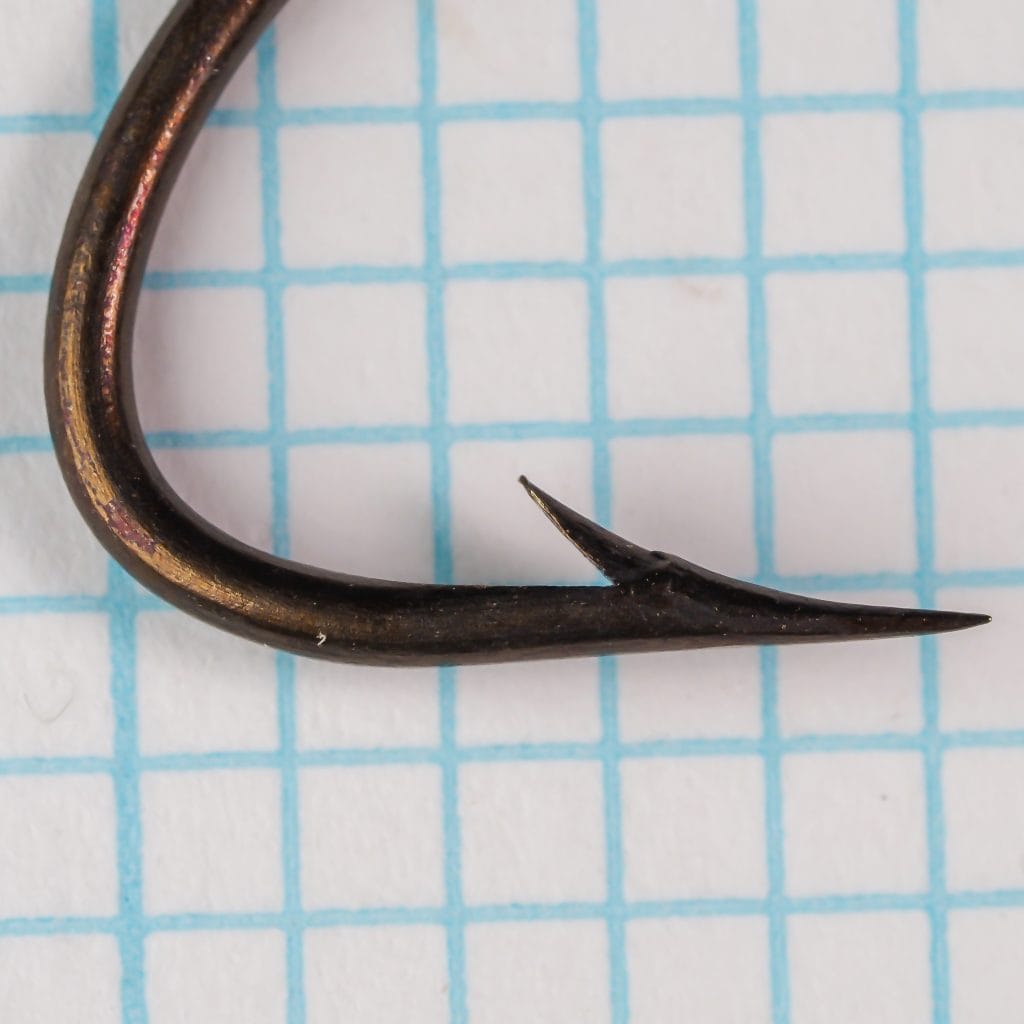
Close-up of the hook point showing the concave inner face characteristic of the hollow point, and the barb placement approximately two-thirds of the way to the tip. Photographed on 1/10-inch grid for scale verification.
Photographic record
3 cataloged imagesSelect any record to load it above.
3 images shown
Mustad 4707 Size 4/0 Hook Point DetailClose-up of the hook point showing the concave inner face characteristic of the hollow point, and the barb placement approximately two-thirds of the way to the tip. Photographed on 1/10-inch grid for scale verification.Open originalMustad 4707 Size 4/0 Full ProfileFull side profile of the Mustad 4707 hook showing the ringed eye, straight shank, Limerick bend, and hollow point. Demonstrates the extra-heavy wire gauge and moderate gap typical of salmon flies.Open originalMustad 4707 Handwritten Inventory CardHandwritten inventory card showing two Mustad 4707 hooks in size 4/0, with hand-lettered labeling in blue ink. The card provides context for the hooks' provenance and historical storage.Open original
Technical profile
Straight Ringed Eye | Limerick Bend | Standard Shank | Extra-Heavy Wire | Hollow Point | Bronzed Finish
Eye
Ball Eye, Straight / InlineStraight ringed eye formed from a separate ring of wire inserted into the shank end. The ring allows free rotation, reducing line twist during casting and fish play. Ring diameter is consistent with the shank wire gauge and sits flush without deformation. The eye is straight — not turned down or up — and is characteristic of salmon and sea trout hooks. P
Wire
Standard, Round
Shank
1X Long — Plain
Bend
Limerick, Standard gapAngular Limerick bend with crisp transitions from shank to bend. Moderate bend depth (~0.60") relative to gap width, creating a relatively upright hook profile suited to heavy dressing. No visible offset or kirb — point lies directly in line with shank. Wire set is clean and symmetrical. P
Point
Hollow Point (concave inner face)Barb is small and close-cut, positioned approximately 2/3 of the way from the barb seat to the hook tip. The barb angle is moderate, typical of Mustad's standard hook specifications. Length and placement contribute to the penetration profile of the hollow point. P
Finish
Bronzed — Confirmed (stated on packaging)Bronzed finish exhibits a warm, medium-brown tone with slight red undertones — consistent with Mustad's standard bronzing process from the 1950s–1980s. The finish on this specimen is uniform across the shank and bend, with no obvious pitting or corrosion. A subtle patina is beginning to develop in sheltered areas, which is normal aging for stored vintage bronze hooks. The barb and point show brighter highlights from handling. P
The specimen hooks are bright and pristine, with no corrosion or material loss. The ringed eye sits cleanly without deformation. The finish is even and consistent. This is an excellent example of storage condition for a vintage Mustad hook more than 40 years old.
The hollow point on the 4707 is a defining feature of Mustad’s extra-strong design philosophy. The concave inner face creates a knife-edge cutting effect as the barb penetrates a fish’s mouth — particularly effective on hard-palated salmon and sea trout. The inwardly curved geometry concentrates force at the taper junction, allowing the relatively thick wire (0.048″–0.052″ diameter) to maintain strength while delivering a sharp hook tip.
The extra-heavy wire elevates the hook weight, which aids in fly turnover when casting large, wind-resistant patterns typical of Atlantic salmon and sea trout work. The ringed eye, formed from a separate ring of wire, provides a pivot point that reduces line twist and allows the fly to move more freely during presentation — critical in current-driven fishing. The Limerick bend (angular, with a flattened bottom) is a classic configuration that provides a wide bite and stable hook plane.
Not a record holder within garrenwood.com catalog. The 4707 is a mass-produced standard design. However, this specimen represents one of the most widely distributed salmon hooks of the mid-20th century and serves as an important reference point for understanding Mustad's global market strategy in the 1960s–1980s.
Own this hook? Help us measure it.
We have measurement for size 4/0. Know any others? Submit calipered measurements and we'll review and add them. Thank you!
The 4707 belongs to Mustad’s 47XX series — extra-strong salmon and sea trout wet fly hooks. This series was introduced in the early 1950s and remained in continuous production through at least the 1990s. The series includes multiple sizes (typically No. 6 through 4/0) and several finish variants (bronzed, japanned, nickel-plated).
The 4707 specifically is characterized by the ringed eye, making it distinct from other 47XX models that feature tapered or ball eyes. The ringed design addresses the practical need for flies to move freely during active fishing, reducing the rotational stress on the line-to-fly connection. The hollow point was retained throughout the series’ production run, establishing consistency in both manufacturing and angler expectations.
Variant hooks within the series include the 4706 (smaller sizes, standard shank), 4708 (extra-long shank variants), and regional code variations for specific markets. By the 1980s, the 4707 competed with modern Japanese designs (particularly Tiemco) and remained a working standard rather than a collectable specialty.
Era and Packaging Dating
No barcode visible on the packaging shown, indicating pre-1974 strong likelihood. The handwritten label ('Mustad 4707 4/0') uses blue ink on plain card stock — consistent with post-WWII inventory tagging practice (1950s onward). The font and card construction suggest mid-20th-century storage conditions. The bronzed finish on the specimen hooks and lack of heavy patina suggest production and storage from the 1960s–1980s, rather than pre-1950 manufacture. The ringed-eye design was standard by the 1950s. This specimen most likely dates to c. 1955–1975, with possible extension to 1980s if cards were held in inventory.
The Salmon Fly Mainstay
The Mustad 4707 became so ubiquitous in Atlantic salmon fishing that it is often cited in European salmon fly-tying literature without any clarifying description — simply 'tie it on a 4707' — as if the hook needed no introduction. Norwegian and Scottish fly fishers of the 1960s–1980s often carried cards of 4707s in size 8, 6, 2, and 1/0, treating them as interchangeable with named patterns like the Shrimp or Stoat's Tail. The ring eye was specifically praised in British fishing magazines as preventing the 'line twist' problem that plagued solid-eye hooks in fast currents.
Design lineage and influence
The 4707 inherits from Mustad’s late-19th and early-20th-century salmon hook designs, which themselves drew from British Redditch traditions (particularly Allcock and Partridge patterns). The ringed-eye concept was popularized by Norwegian and Swedish makers as a practical improvement over the fixed-eye designs of earlier eras. The hollow point, however, is distinctly Mustad — the company’s interpretation of the English ‘curved in’ point, refined for extra-strong applications.
Direct competitors included the Partridge Normark (Scotland), the Allcock Limerick in heavier gauges, and later the Tiemco 7889 (Japan, introduced 1980s). The 4707 retained market dominance in Europe and Scandinavia throughout the 1980s despite these alternatives, primarily because it was widely stocked and trusted in established fly shops. By the 1990s, the design began to yield ground to modern proprietary hooks optimized for specific fly styles, but the 4707 remains in production and is still recommended in classic salmon fly texts.
Best matchRelated by Attribute
Computed automatically from catalog data — updated as new hooks are added.
Matches: Bend, Shank, Wire, Gap, Eye +5 moreDiffers: Point: Hollow Point vs Superior; Finish: Bronzed vs Black Japanned; Shank ratio: 65.5% vs 61.8% +1 more
Matches: Bend, Wire, Gap, Point, Finish +4 moreDiffers: Shank: 1X Long vs 2X Long; Eye: Ball Eye vs Tapered Eye; Eye Orient.: Straight / Inline vs Turned Down +4 more
The 4707 is a traditional wet fly and streamer hook rated for salmon and sea trout in larger sizes. The extra-heavy wire, moderate gap, and ringed eye provide secure hold and durability in fast, rocky streams. The hollow point delivers quick penetration in hard mouths. This model was the workhorse of Scandinavian and British salmon fly tying from the 1950s through the 1980s.
Secondary Applications
Streamer flies for pike and large trout; hair-wing salmon patterns; saltwater fly patterns requiring a robust hook platform.
Classic Fly Patterns
Stoat's Tail, Silver Stoat's Tail, Blue Charm, Hairy Mary, Shrimp patterns, various salmon and sea trout wet flies
Modern Equivalents
Hook
Match Quality
Notes
Tiemco 7889
Very Good
Japanese extra-strong salmon hook; similar size and weight, hollow point, but with a looped eye rather than ringed. Widely considered the direct successor to the 4707 in modern fly tying.
Mustad 36890 (modern production)
Good
Modern Mustad salmon hook in similar size range; extra-strong wire but designed for contemporary fly tying standards. Maintains the Mustad brand continuity.
Partridge Normark
Good
British-made salmon hook, similar era and application; ranged from standard to extra-strong. Competitor in European markets but with a more tapered eye design.
Collector notes
Rated 3.5/10 — widely produced and still available, but vintage cards in good condition attract modest interest from fly tyers and Mustad collectors. The 4/0 size is standard in larger-game applications.
Reference value
$10 – $13 USD estimate
Packaging format
GW-M-CARD-001Catalog code
Packaging
Plain white card stock (approximately 3" × 2" or similar) with two hooks secured by metal barbs or staples passing through the eye-ring and into the card. The card bears a handwritten label in blue ink reading 'Mustad' on the top line and '4707' on the second line, with '4/0' written to the right. The handwriting is cursive, indicating manual inventory tagging rather than printed labeling. No printed manufacturer information, hook count, or pricing is visible on this card — suggesting either a bulk storage card or one prepared in-house by a dealer or club. The card stock is uncoated, with no visible protective tissue or envelope. This is a utilitarian storage format rather than a retail sales card.
Market Value Notes
Low ($10): Good condition, opened card with most/all hooks present, minor edge wear. High ($13): Excellent condition, sealed or near-sealed card, complete hook count, minimal defects. Premium factors: sealed packaging, full count, bright finish, original tissue. Platforms: eBay. Confidence: V verified — based on 4 eBay sold listings ($11.99–$12.99) and eBay market history (Apr 2023–Apr 2026, avg $10.05, range $7.79–$12.99).
Where to Find
eBay (US and UK), online vintage tackle retailers, general fishing supply auctions. Commonly stocked in mixed lots of vintage Mustad hooks.
Collector's Identification Tips
(1) Confirm size by counting hook dimensions against known reference. The 4/0 designation should correspond to approximately 1.87″–1.91″ overall length and 0.53″–0.57″ gap width — confirmed by caliper in this specimen. (2) Verify the ringed eye is truly a separate ring inserted into the shank, not a tapered or ball eye. The Mustad 4707 is specifically ringed. (3) Confirm the hollow point by examining the inner face of the barb taper — it should show a concave curve, not a flat or convex surface. (4) Check the Limerick bend geometry: angular, with a flattened bottom and crisp transitions. The 4707 should not show a rounded or Sproat-style bend. (5) Verify the extra-heavy wire gauge — this is a thick hook relative to standard wet flies. Compare thickness to a known Aberdeen or standard Limerick if in doubt. (6) Original Mustad cards typically show printed text, model codes, and hook counts; handwritten cards like this one suggest custom or dealer-prepared storage.
eBay market reference. Researcher-curated. Prices in USD. Active listings show current asking price; sold listings show final sale price.
Preservation
Storage and Preservation
Store the 4707 in a cool, dry environment away from humidity and direct sunlight. The bronzed finish will develop a natural patina over time — light surface oxidation is normal and does not diminish value for vintage examples. However, aggressive corrosion can be prevented by maintaining dry storage and avoiding contact with other metals that might induce galvanic corrosion.
Keep the hooks on their original card or in a designated card holder. Loose hooks should be stored in a small envelope or small container with a desiccant packet to reduce moisture exposure. If the original card is intact (as in this specimen), store it flat in a archival-quality folder or box to preserve the handwritten label and card stock, which add historical context to the piece.
Periodically inspect the hooks for corrosion or structural damage. The ringed eye should remain clean and free of oxidation buildup. If hooks are to be used for fishing, verify that the point and barb are still sharp — vintage hooks may require gentle honing before tying. Do not soak vintage hooks in water or cleaning solutions; instead, use a soft cloth and light oil (synthetic reel oil is acceptable) to maintain the finish if desired.
Marking Analysis
Handwritten Label Analysis
The label on this card is handwritten in blue ballpoint or fountain pen, in a rapid cursive hand. The three elements (‘Mustad,’ ‘4707,’ and ‘4/0’) are clearly legible and appear to have been executed by a single hand in a single session, suggesting this card was labeled as part of an inventory or preparation process.
The handwriting style — loose, flowing, with connected letterforms — is consistent with rapid tagging practiced in tackle shops, fishing clubs, or angling organizations during the 1960s–1980s. This is not the formal, meticulous handwriting of a museum cataloger, but the practical notation of someone familiar with hooks and fishing gear. The placement of the label on the upper portion of the card, with ‘4/0’ positioned to the right of the model code, is typical of dealer practice to quickly identify the size at a glance.
The absence of any other markings (price, date, dealer initials, or location codes) suggests this was an internal storage card rather than a retail sales card. The handwritten format became less common after the 1980s as printed labeling and digital inventory systems replaced manual tagging. This makes the card a useful artifact for understanding mid-to-late-20th-century tackle shop or club operations.
Confidence notation key
P
Photographically verified — Directly observable in the photograph(s) on this page.
V
Verified by documentation — Confirmed by manufacturer catalog, spec sheet, or published reference.
I
Inferred — A logical deduction from observable or documented evidence, not directly stated.
E
Estimated — An approximation based on visual comparison, proportional analysis, or limited data.
S
Speculative — A reasoned hypothesis that cannot be confirmed from available evidence.
Unnotated claims are the compiler’s synthesis; see Sources. All photographs on garrenwood.com are taken on a measurement grid where each square equals 1/10 inch (0.1″ / 2.54 mm).