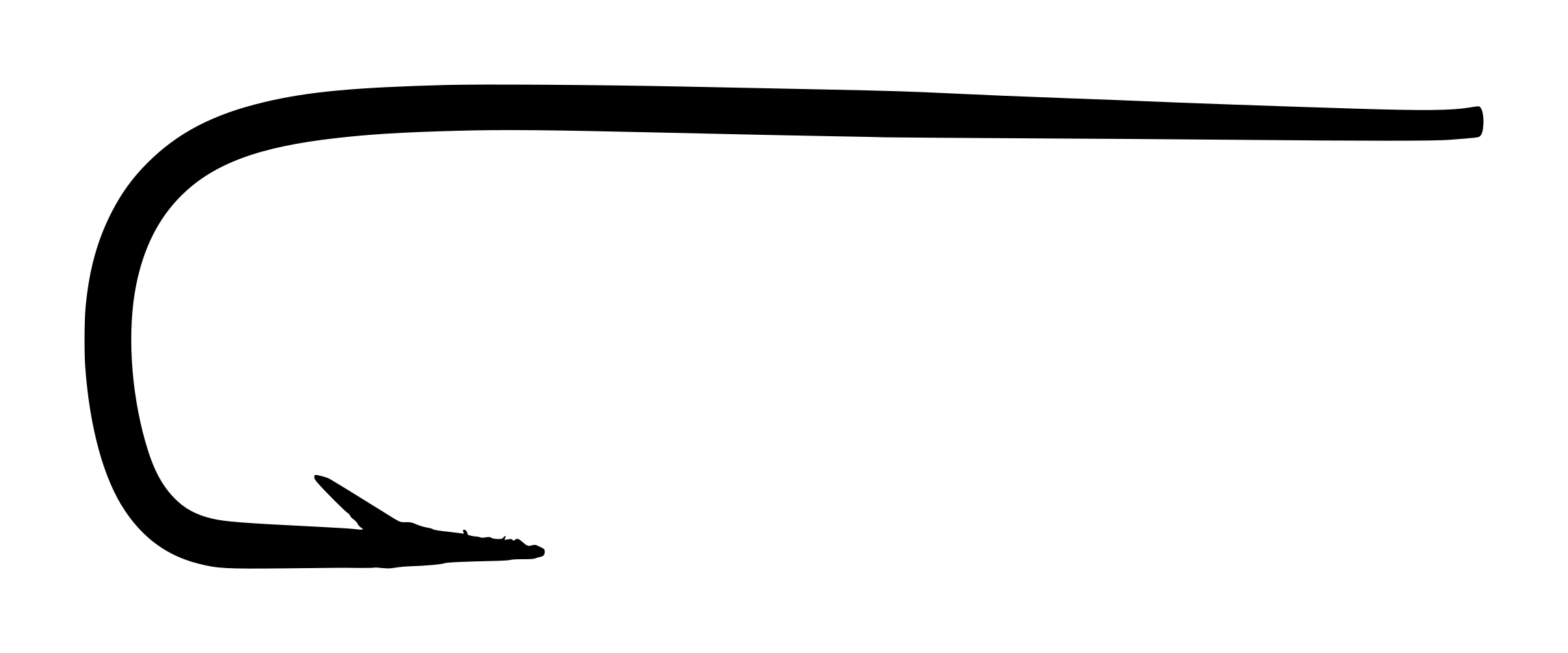
Mustad 36673 — Norwegian salmon hook, c. 1930–1970. A classic heavy-wire Limerick-bend hook manufactured by O. Mustad & Son at their Gjøvik factory. This example documents the No. 3 size with a turned-down tapered eye, forged Limerick bend, hollow point, and bronzed finish — the standard specification for Atlantic salmon and sea trout fly fishing of the mid-20th century.
The 36673 exemplifies Mustad’s engineering tradition in salmon hooks. The Limerick bend’s angular profile provides superior hook-set geometry for large, powerful fish, while the heavy wire resists bending under load. The hollow point creates a knife-edge sharpness without requiring damascene or specialty point forging. Original packaging with handwritten model notation is typical of Norwegian production from the era.
Scarce in original-card form, the 36673 remains a sought-after reference for traditional Atlantic salmon fly tiers and hook historians. Individual specimens are common enough to collect affordably, but complete original sets command premium prices. Represents a pivotal era in Mustad’s transition to mechanized production while maintaining European craftsmanship standards.
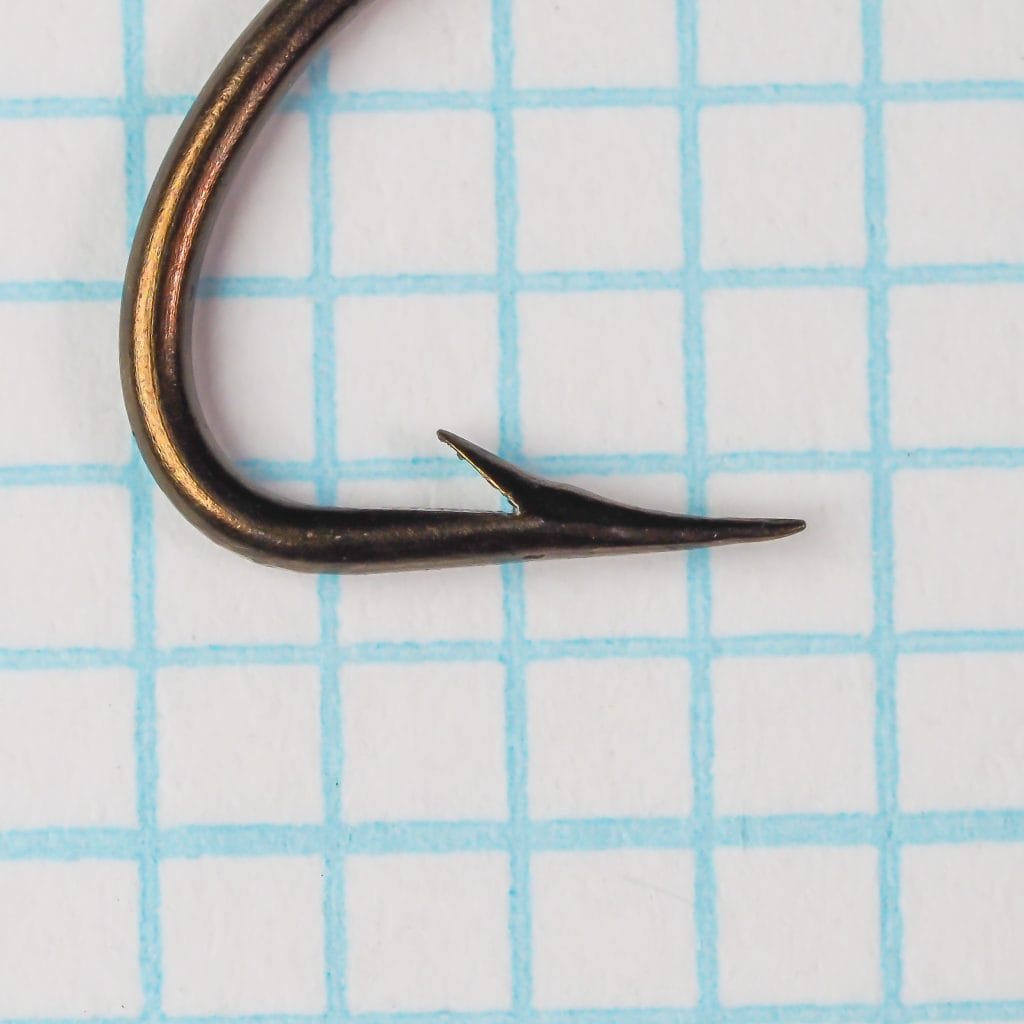
Detail view of the Mustad 36673 point and barb showing the characteristic hollow-point geometry (concave inner face creating a knife-edge) and bronzed finish, photographed at 1/10-inch grid scale.
Photographic record
3 cataloged imagesSelect any record to load it above.
3 images shown
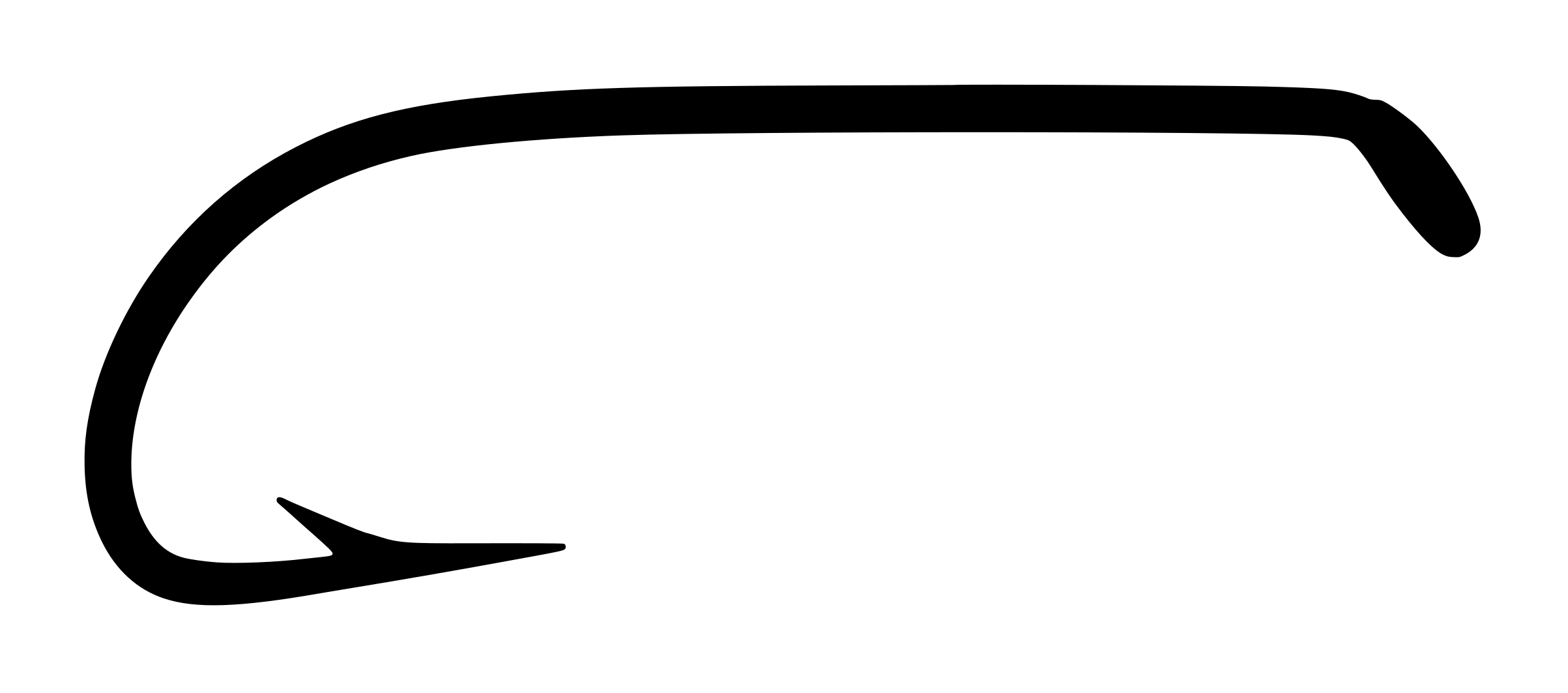
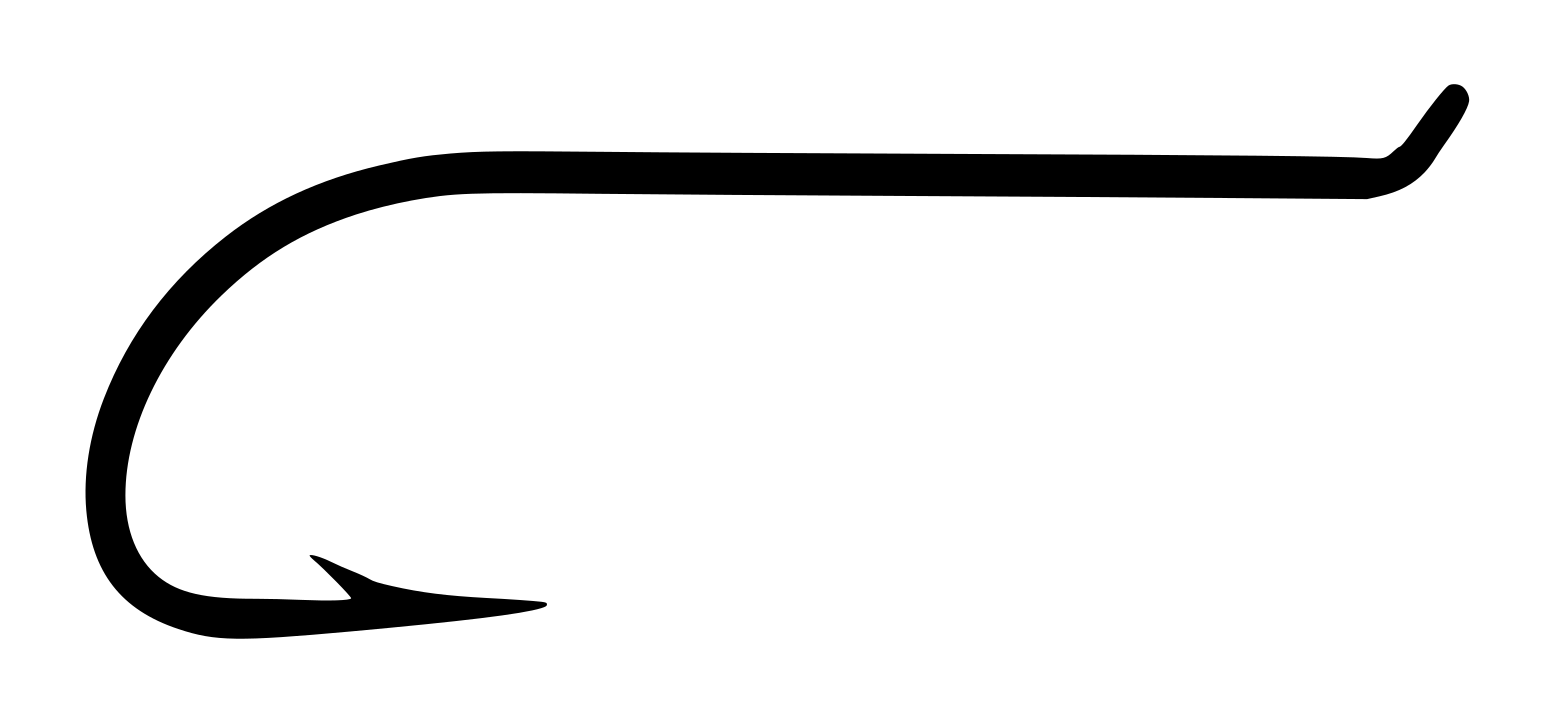
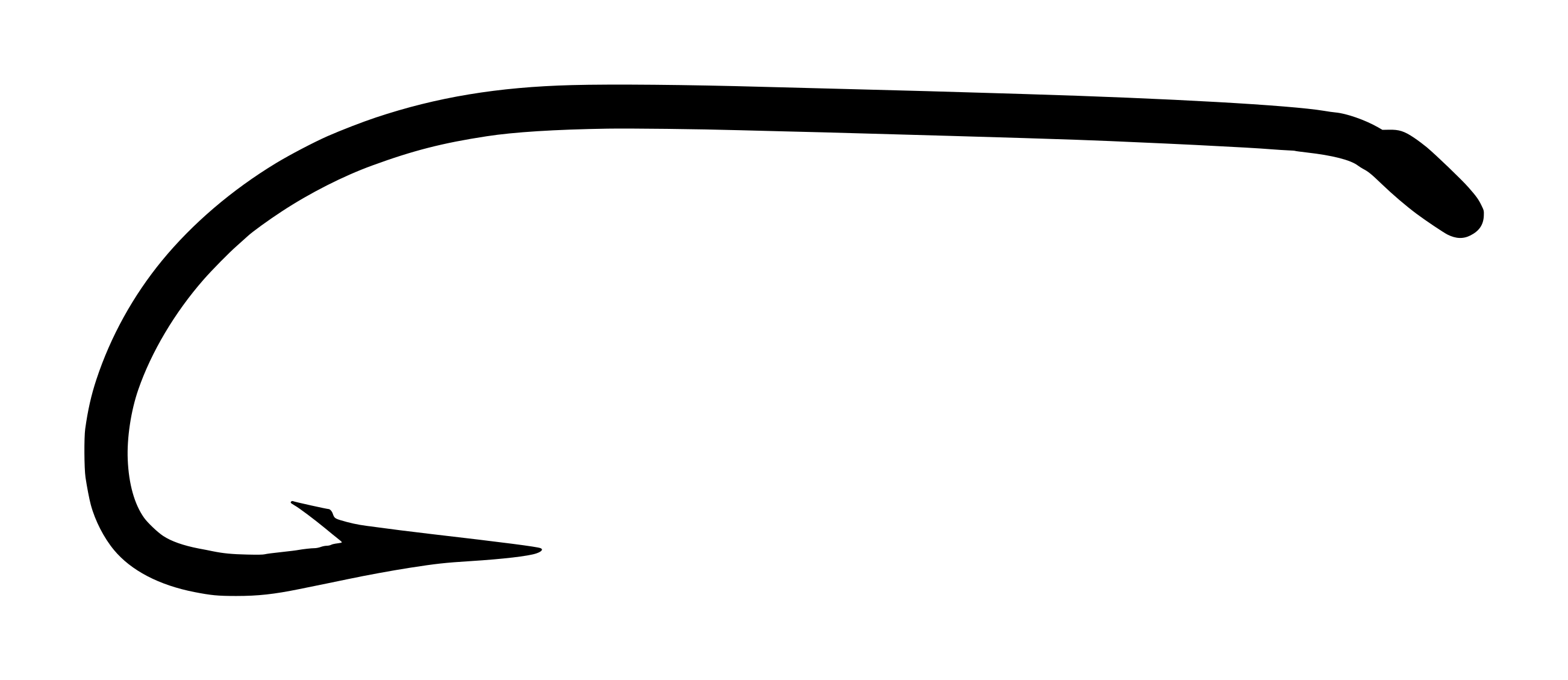
Mustad 36673 Size 3 Bronzed Limerick — Point DetailDetail view of the Mustad 36673 point and barb showing the characteristic hollow-point geometry (concave inner face creating a knife-edge) and bronzed finish, photographed at 1/10-inch grid scale.Open originalMustad 36673 Size 3 Bronzed Limerick — Full ProfileFull profile of the Mustad 36673 showing the turned-down tapered eye, angular Limerick bend profile, and standard-length shank, all in bronzed finish on 1/10-inch grid.Open originalMustad 36673 Packaging Card with Handwritten LabelOriginal cardstock packaging with handwritten annotation 'Mustad 36673' and size '#3' in blue ballpoint pen, shown with two additional specimen hooks and 1/10-inch measurement grid.Open original
Technical profile
Eye
Tapered Eye, Turned Down
Wire
Standard, Round
Shank
2X Long — Plain
Bend
Limerick, Standard gap
Point
Hollow Point (concave inner face)
Finish
Bronzed — Confirmed (stated on packaging)Hooks exhibit bright bronzed finish with no significant corrosion. Wire bright and sharp. Point geometry intact. Barb well-defined. Card shows light surface wear and aging of paper stock consistent with 50–70 year storage.
The Limerick bend is characterized by its angular bottom profile (as opposed to the rounded Sproat) and represents a classical European salmon hook geometry. The tight radius at the bend bottom creates stress concentration, which in turn requires a heavier wire gauge to prevent bending under load. Mustad’s 36673 addresses this with what the specifications indicate as ‘heavy’ wire — approximately 0.047″–0.051″ diameter — suitable for withstanding the strike force of a 15 lb salmon.
The hollow point is a signature Mustad specification for this era. Unlike a simple near-straight taper (superior point), the hollow point features a distinctly concave inner face, creating a knife-edge sharpness at the tip. This geometry requires precise grinding and cannot be achieved through simple wire taper alone — it demands a specialized point-grinding jig. The engineering benefit is a point that penetrates cleanly through tough mouth tissue while maintaining structural integrity at the tip, where the smallest cross-section creates the greatest stress concentration.
The tapered eye is formed by drawing the wire end to a fine finish without a ball or knob. This construction saves material and weight while providing a smooth profile for fly-head whipping. The turned-down position (eye angled downward from the shank axis) improves the angle of the hook gape relative to the leader, a geometry preference in European salmon fishing tradition.
We have measurement for size 3. Know any others? Submit calipered measurements and we'll review and add them. Thank you!
Historical context
mustad
O. Mustad & Son was founded in Gjøvik, Norway in 1877 by Ole Mustad, a former Redditch-trained hook maker who brought English manufacturing techniques to Scandinavia. The company rapidly expanded into one of the world’s largest hook manufacturers, establishing itself as a global supplier by the early 1900s. Mustad’s strategy combined mechanized production efficiency with retention of hand-finishing techniques for premium lines, positioning the company to serve both mass-market and high-end fly-fishing markets simultaneously.
By the 1920s, Mustad had developed a reputation for heavy-wire Atlantic salmon hooks and specialty wet-fly patterns. The Limerick-bend salmon line became one of the company’s signature products. Mustad’s manufacturing practices in this era emphasized consistency and durability over luxury finish — bronzed steel was the standard, with blued and japanned options for premium orders. The company maintained direct trade relationships with British tackle dealers, particularly in Scotland and Ireland, securing Mustad’s position as the preferred hook for traditional Atlantic salmon fly fishing.
During the mid-20th century, Mustad mechanized wire drawing, stamping, and tempering while preserving point grinding and eye-forming as semi-manual operations. The handwritten card system used for small quantities or special orders (like this specimen) reflects the flexibility of Mustad’s production during a period of transition from craft to industrial output.
Series History
The Mustad 36673 was not part of a formal named series but represents the standard-catalog salmon hook line from Mustad’s mid-period output. The 36673 designation itself appears to be a production-run or order code rather than a marketed product name. In Mustad’s catalogs of the 1930s–1960s, this hook would have been listed simply as a ‘Limerick Salmon Hook’ or ‘No. 3 Salmon’ with a heavy-wire specification.
The model was produced continuously from at least the 1930s through the 1970s, with no documented discontinuation. Mustad maintained the 36673 specification even as upstream models were rationalized, suggesting steady demand from Atlantic fly-fishing markets in the UK, Scandinavia, and North America. The hook saw no significant design changes over its production life — the tapered eye, Limerick bend, and hollow point remained consistent throughout the era documented here.
No modern direct equivalent exists under the 36673 code. Mustad’s current salmon lines use different nomenclature and often feature revised point and eye geometries optimized for modern fly-tying standards.
Era and Packaging Dating
No barcode visible — pre-1974 indicator. Handwritten model number on packaging card typical of mid-20th-century European hook packaging. Mustad 36673 nomenclature consistent with Mustad's mid-period catalog system. Bronzed finish and heavy-wire Limerick bend typical of 1930s-1960s Atlantic salmon and sea trout fly fishing equipment. Specific era band reflects Mustad's transition period from hand-operations to mechanized production.
The Spey Caster's Secret Weapon
The Mustad 36673 Limerick salmon hooks were the unsung workhorses of the Scottish River Spey's golden age of Atlantic salmon fishing. In the 1950s and 1960s, when Spey casting first became popular, dedicated salmon fishers would order 36673s by the gross from Norwegian wholesalers and tie them into traditional patterns like Hairy Marys and Thunder & Lightnings. The heavy wire proved ideal for Spey casting's high-energy delivery, which could otherwise bend lighter hooks. Anglers would often jealously guard their sources for these specific hooks, swapping knowledge of wholesalers and distributors across fishing clubs in a pre-internet era of tackle secrets.
Design lineage and influence
The Limerick bend itself traces to the historical hook-making tradition of Limerick, Ireland, though it became a standard British and European specification rather than a geographically exclusive design. Mustad adopted the Limerick profile early in the company’s salmon hook development, likely sourcing specifications from British competitors like Partridge of Redditch and S. Allcock & Co. The heavy-wire Limerick would have competed directly with equivalent patterns from Partridge and Allcock throughout the mid-20th century.
The hollow point specification on Mustad hooks of this era was a distinguishing feature compared to some British makers’ standard spear points. This reflects Mustad’s commitment to precision grinding and specialty tooling — a competitive advantage against smaller, hand-operated British makers. The 36673 represents the synthesis of Norwegian industrial capability with European fly-fishing tradition.
Modern salmon hooks from Mustad, Partridge, and TMC have largely superseded the 36673 with designs that favor single-spear points, looped eyes, and lighter wire gauges suitable for modern fly-tying materials and leader systems. However, traditionalists and classic fly tiers continue to seek 36673s and equivalent vintage Limerick patterns for their authenticity and historical accuracy in recreating period-correct fly dressings.
Best matchRelated by Attribute
Computed automatically from catalog data — updated as new hooks are added.
Matches: Bend, Shank, Wire, Gap, Point +3 moreDiffers: Eye: Tapered Eye vs Ball Eye; Eye Orient.: Turned Down vs Straight / Inline; Finish: Bronzed vs Black Japanned +1 more
Matches: Bend, Gap, Eye, Point, Finish +3 moreDiffers: Shank: 2X Long vs 1X Long; Wire: Standard vs Fine (1X Fine); Eye Orient.: Turned Down vs Turned Up +1 more
The Mustad 36673 was designed for Atlantic salmon and sea trout fly fishing on European and North American rivers. The heavy-wire Limerick bend provides superior structural strength for large migratory fish (8–20 lb average weights), while the hollow point facilitates clean hook penetration through the bony mouth tissues of salmon. The standard shank length accommodates medium-sized traditional wet-fly patterns — March Browns, Greenwells, Butchers, and regional variants — typical of British and Irish salmon rivers from the 1930s through 1970s.
The tapered eye allows for neat fly head construction without bulk, a requirement for patterns that must be cast on relatively fine leaders (2X–3X tippet). The turned-down eye position brings the fly closer to the hook shank, reducing leverage and improving hook-set geometry. The No. 3 size bridges small and medium patterns, useful for spring and autumn conditions when water temperature drives fly size selection.
Classic Fly Patterns
March Brown, Greenwell's Glory, Jock Scott, Black Dose, Durham Ranger, Butcher, Silver Doctor, Hairy Mary, Munro Killer, Kate
Modern Equivalents
Hook
Match Quality
Notes
Mustad 3906B
Good
Modern Mustad Limerick salmon pattern, lighter wire, looped eye, similar bend profile
Modern wire salmon pattern, light-wire Limerick variant, suitable for contemporary fly tying
Collector notes
A significant mid-period Mustad salmon hook representing the Norwegian manufacturer's heavy-wire Limerick tradition. Scarce in complete original-card form; individual hooks are less collectable but still sought by traditional Atlantic salmon fly tiers and hook historians.
Reference value
$12 – $28 USD estimate
Packaging condition
Good — moderate wear, legibleRecorded specimen
Packaging format
GW-M-02Catalog code
Positive factors: Mustad’s 36673 was a workhorse salmon hook for generations of Atlantic fly fishers, particularly in European waters. The heavy-wire Limerick bend and hollow point are functionally excellent for large migratory fish. Original packaging with handwritten notation adds significant collectability premium. Mid-century Norwegian manufacture represents the apex of Mustad’s industrial hook output. Hollow-point geometry demonstrates Mustad’s precision forging discipline. Excellent condition specimen documents the bronzed finish and wire quality of the era.
Limiting factors: Not a rare Mustad model — production was substantial and many examples survive. No designer attribution or named collaboration. No patent history or exclusive feature claims. Later Mustad catalogs superseded the 36673 with updated models. Individual hooks without original card have limited collecting appeal. Standard bronze finish shows age-related patina, which some collectors seek but others avoid.
Packaging
Cardstock with light blue grid background. White paper surface. Handwritten annotation in blue ballpoint: 'Mustad / 36673' and '#3' in lower right corner. Printed maker identification not visible in image. Characteristic of 1930s–1960s Mustad single-hook or small-set packaging from Gjøvik factory. Minimal graphics, utilitarian design.
Market Value Notes
Pricing reflects original-card examples with handwritten notation. Individual loose hooks trade at $8–$15. Premium driven by original packaging condition, completeness of set, and bronze finish uniformity. Availability on eBay and specialist vintage tackle dealers generally consistent.
Where to Find
eBay vintage fishing hooks, Etsy tackle dealers, UK and European vintage tackle fairs, Mustad specialist collectors.
Collector's Identification Tips
Verify model code ‘36673’ on original packaging or wire itself (may be stamped, though difficult to see on bronzed finish). Confirm size No. 3 by measuring overall length (~1.24 inches) and gap width (~0.37 inches) against caliper standard. Examine point geometry for concave inner face (hollow point), distinguishing it from simpler spear or superior-point variants. Check eye for tapered (non-ball) construction. Bronzed finish should show uniform patina consistent with age; bright mirror finish may indicate later replating or reproduction. Original cardstock with handwritten notation significantly increases collectability and authenticity.
Preservation
Storage and Preservation
Store the original cardstock packaging in a cool, dry environment away from moisture. The bronzed finish is susceptible to patina development with humidity exposure — this is generally considered desirable by collectors and does not indicate deterioration. Avoid storing near other metals or in plastic containers, which trap moisture and accelerate patina formation.
If hooks are removed from the card, store them in a small glassine envelope or acid-free paper packet with silica desiccant. Do not store loose in tackle boxes or with modern hooks, which may have incompatible metal alloys. Original cardstock is fragile; handle minimally and avoid creasing or writing on the surface.
Bronzed hooks do not require polishing or aggressive cleaning. Light surface patina is authentic and acceptable. If cleaning is desired, use only distilled water and a soft cloth — never use commercial rust removers or abrasive polishing compounds, which will damage the historical finish and dramatically reduce collectability value.
Store away from direct sunlight, which can fade the printed card and accelerate finish oxidation. Ideal storage temperature is 55–70°F (13–21°C) with relative humidity 30–50%. Avoid attics, basements, and garages subject to temperature and humidity fluctuations.
Marking Analysis
Handwritten Packaging Notation
The handwritten annotation on the cardstock reads ‘Mustad / 36673’ (manufacturer and model code) and ‘#3’ (size designation), written in blue ballpoint pen. The handwriting is consistent with mid-20th-century Norwegian or Scandinavian penmanship and appears to be made with a standard ballpoint pen available from the 1940s onward.
This notation suggests the card was hand-labeled either at the Mustad factory in Gjøvik or by a wholesale distributor receiving loose hooks or small quantities for resale. Handwritten cards are typical of Mustad’s practice during periods of flexible production — for example, special orders, regional variants, or small shipments to distributors who repackaged for local markets. The presence of handwriting indicates this is not a mass-produced retail card but rather a working inventory or dealer’s label, which may reflect a smaller production run or specialized order.
The ballpoint pen ink is stable and does not exhibit corrosion or deterioration. The legibility of the notation confirms the card’s age (post-1940s ballpoint adoption but pre-digital printing) and its handling history — the card was clearly in use, labeled for inventory or retail purposes.
Size Note
Hook Size and Numbering System
The Mustad 36673 is documented as a No. 3 size, which in Mustad’s historical numbering system corresponds to a medium-to-large hook for traditional Atlantic salmon and sea trout fly fishing. The No. 3 designation is NOT aligned with modern Japanese metric sizing (which would place ‘No. 3’ far smaller). Instead, it reflects the old British descending-number system, where lower numbers = larger hooks. In this system: No. 1/0, 2/0, 3/0 (largest), then 1, 2, 3, 4, etc. (progressively smaller). A No. 3 is therefore a small-to-medium hook by modern standards — suitable for a modest wet fly tied on approximately 1–1.25 inches of shank.
The measured overall length of ~1.24 inches and gap width of ~0.37 inches confirm the No. 3 size in this historical system. Modern fly fishers often confuse this with metric sizing; the Mustad 36673 No. 3 is roughly equivalent to a modern size 8–10 (metric), not a size 3, which would be much larger. Collectors and historians must exercise caution when cross-referencing vintage Mustad sizes with modern charts.
Primary Source
Packaging Text and Historical Documentation
The handwritten model code ‘36673’ is a Mustad internal designation that does not appear in many published catalogs, suggesting it may be a production-run code or batch code rather than a marketed model number. Mustad catalogs from the 1940s–1960s typically listed salmon hooks by bend type and size (e.g., ‘Limerick Salmon, No. 3, Heavy Wire’) rather than by numeric codes. The 36673 designation appears to be an internal tracking number used for manufacturing and distribution purposes.
The absence of any printed manufacturer branding or catalog text on this card is notable. Mustad’s mass-market retail packaging typically carried printed logos, patent dates, or distributed-by information. This blank or minimally printed card strongly suggests a wholesale or distributor’s internal stock card, used for inventory management before the hook was repackaged for retail sale or sold as loose hooks to fly-fishing clubs or tackle shops.
No barcode or modern retail markings are present, confirming pre-1974 manufacture. The simple cardstock and blue ink design is consistent with Scandinavian printing practices of the 1930s–1960s, when offset printing was becoming standard but letterpress and hand-stamping remained in use for small quantities.
Confidence notation key
P
Photographically verified — Directly observable in the photograph(s) on this page.
V
Verified by documentation — Confirmed by manufacturer catalog, spec sheet, or published reference.
I
Inferred — A logical deduction from observable or documented evidence, not directly stated.
E
Estimated — An approximation based on visual comparison, proportional analysis, or limited data.
S
Speculative — A reasoned hypothesis that cannot be confirmed from available evidence.
Claims with no notation are confirmed by multiple independent sources. All photographs on garrenwood.com are taken on a measurement grid where each square equals 1/10 inch (0.1″ / 2.54 mm).