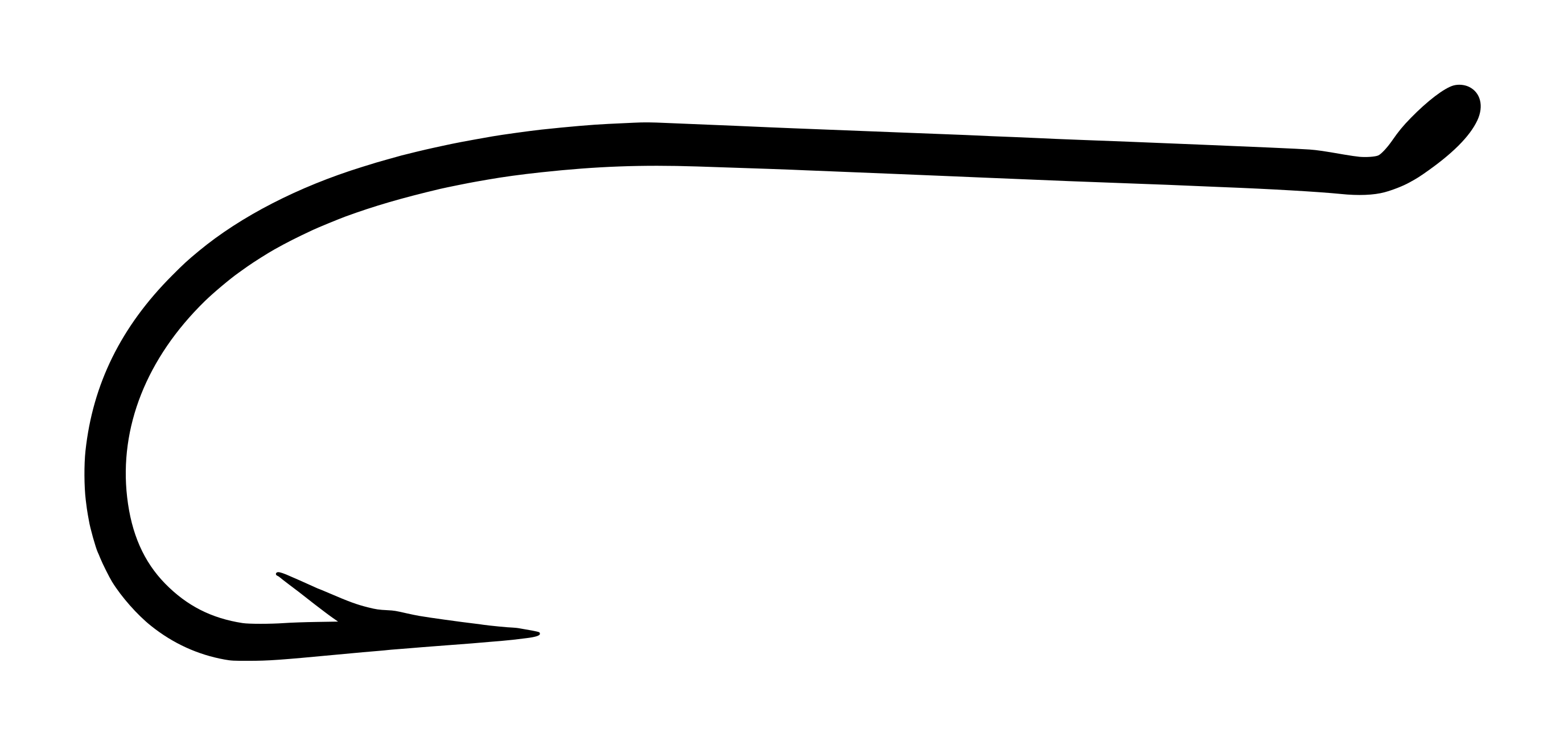
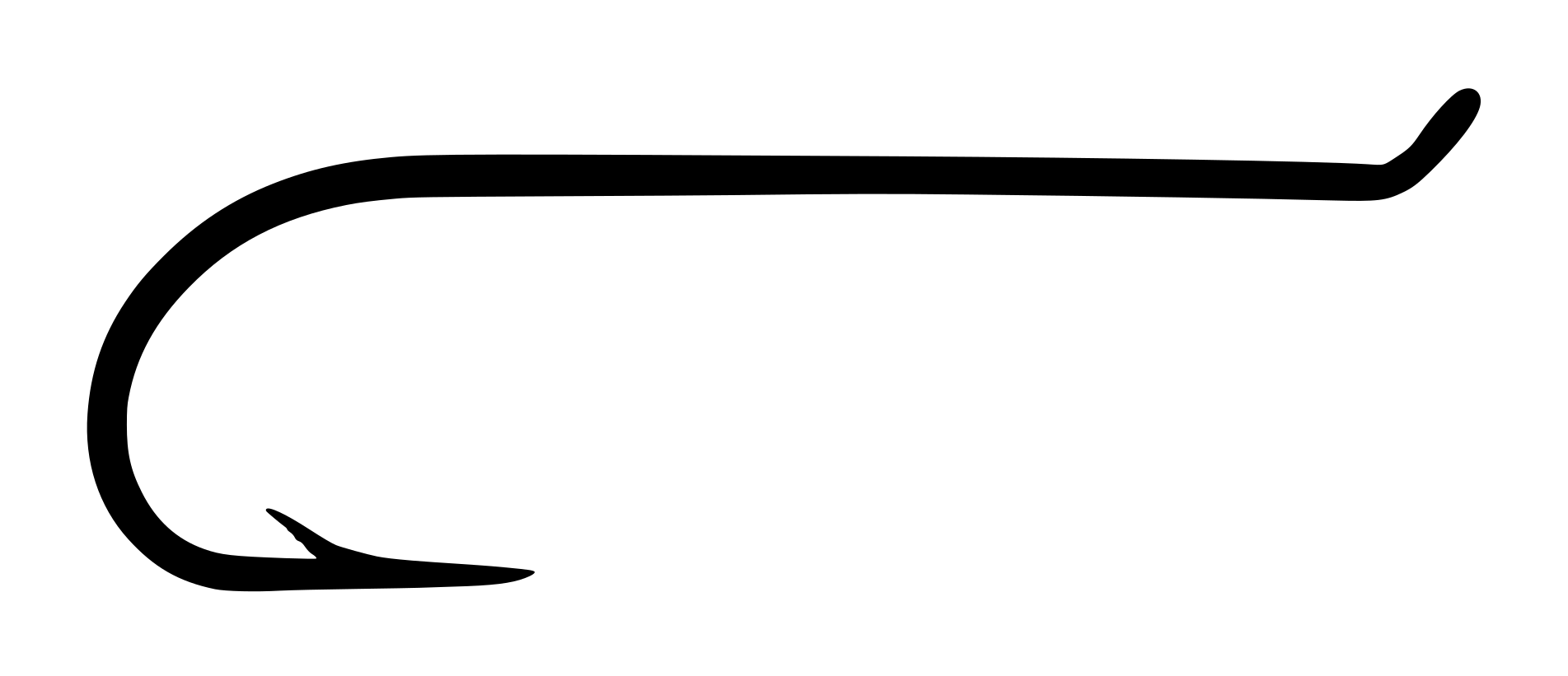
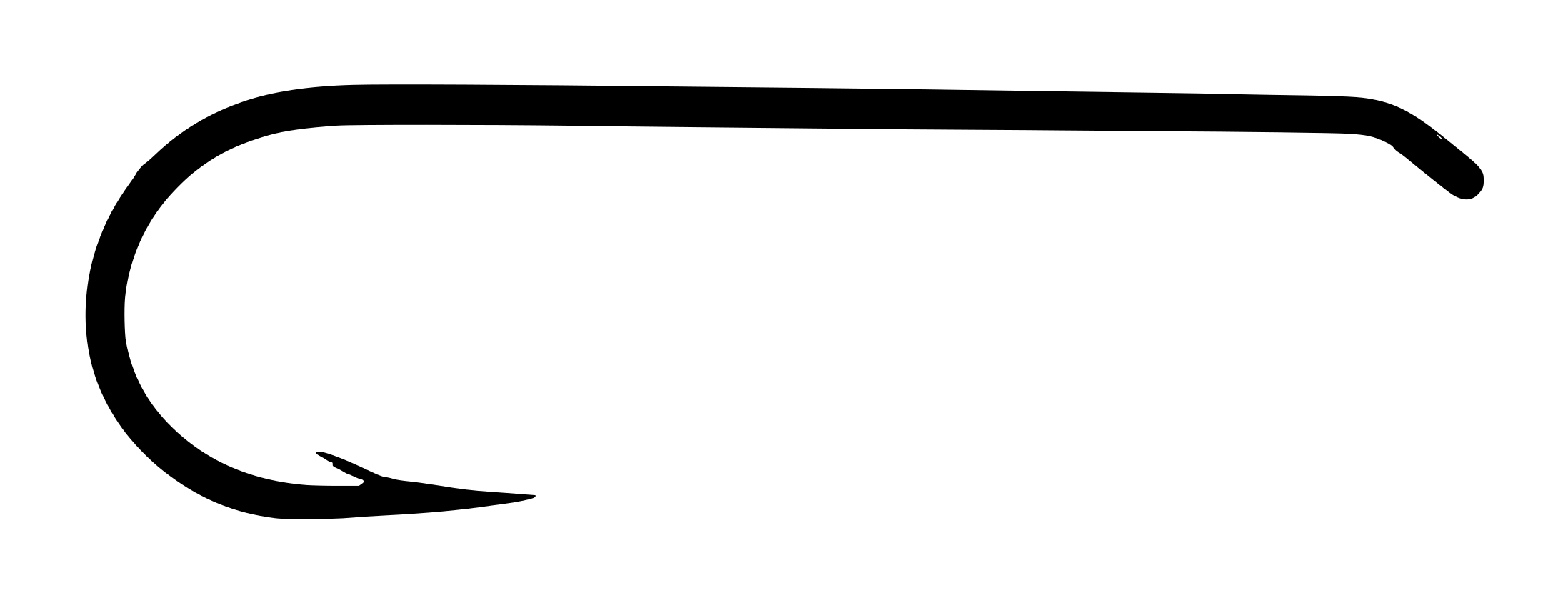
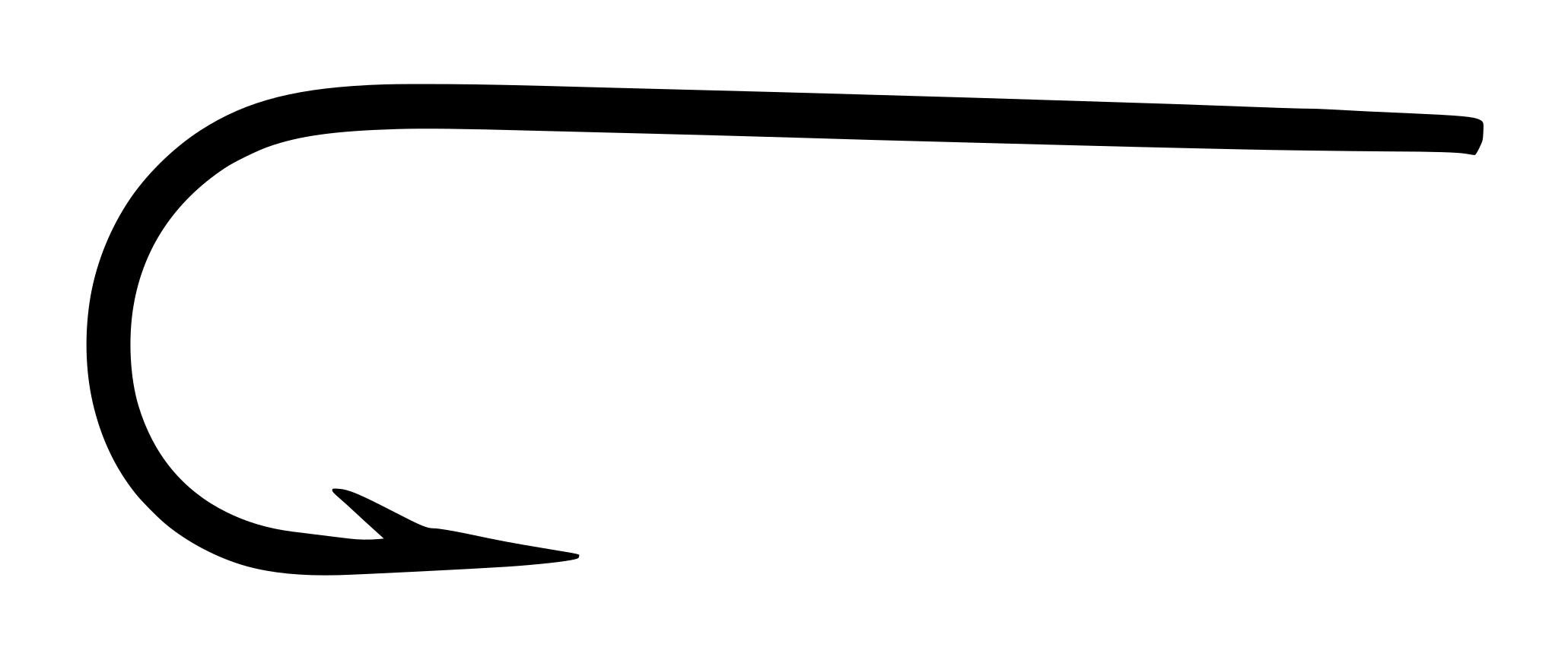
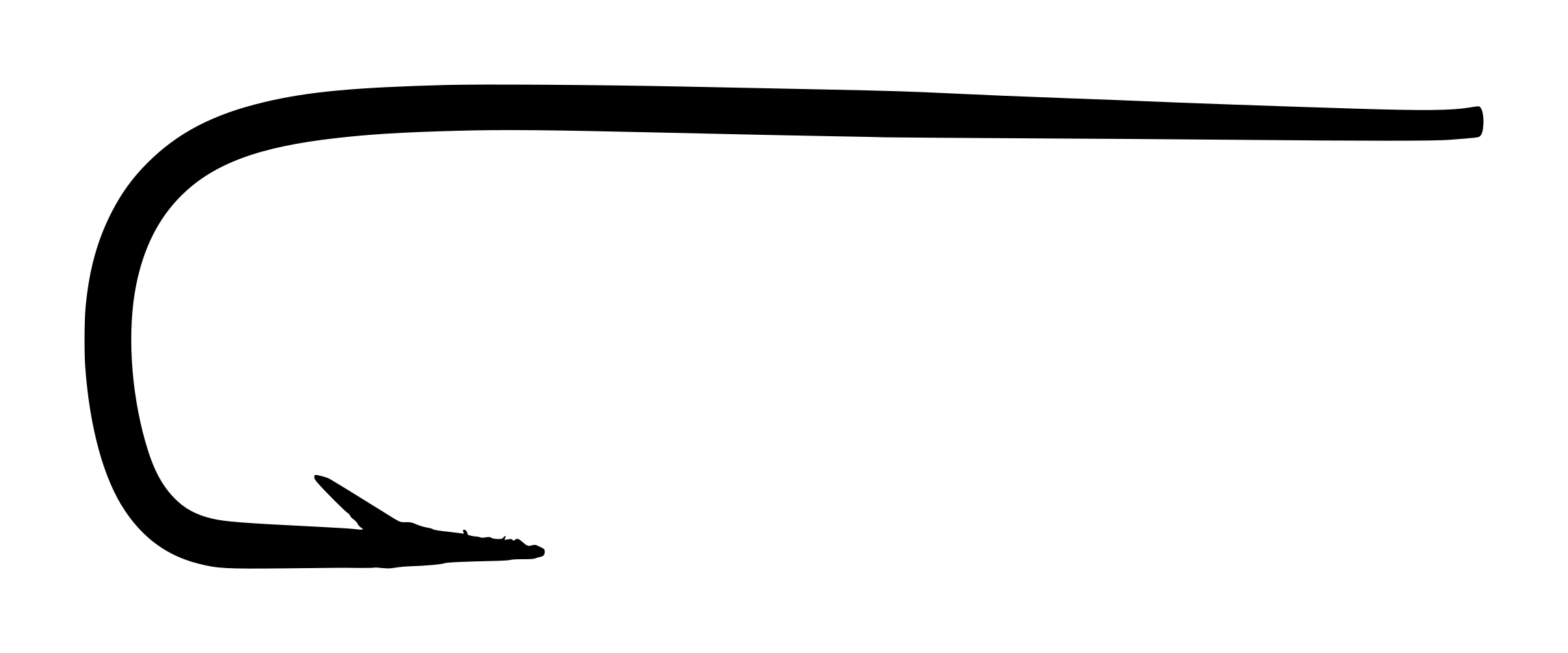
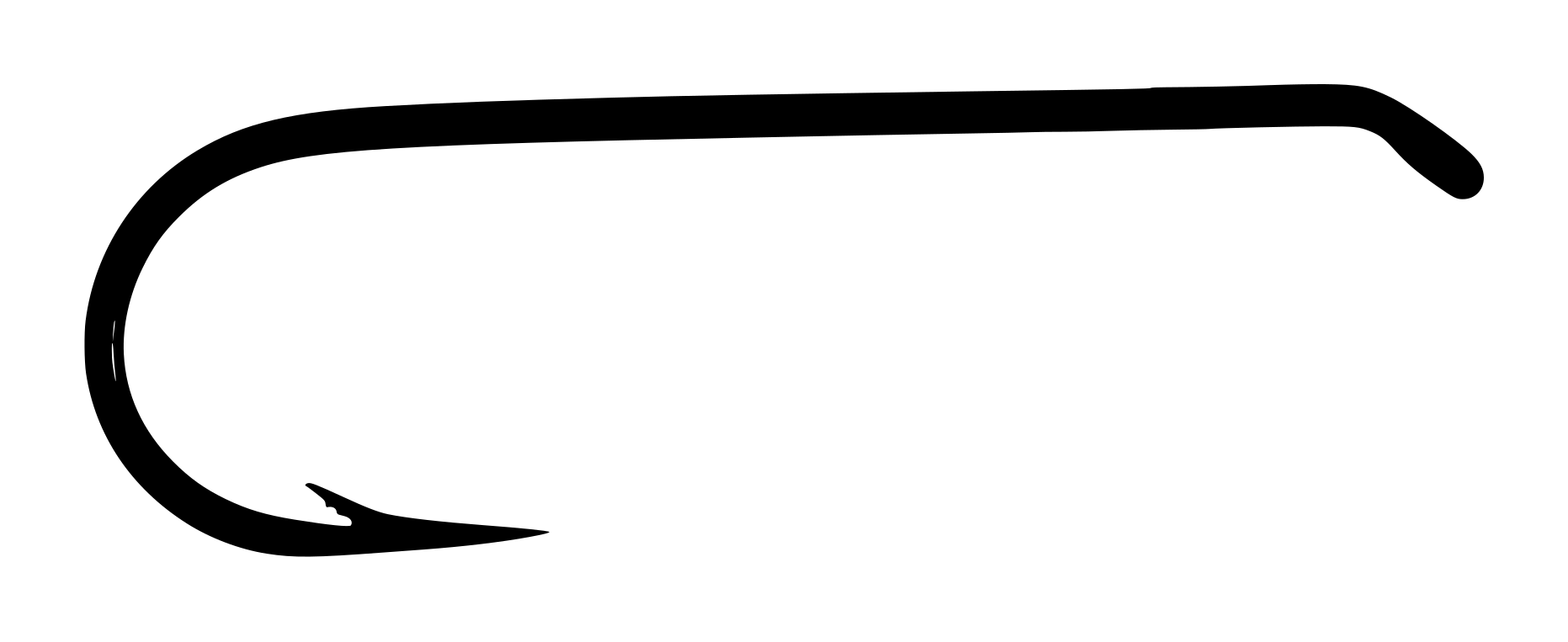
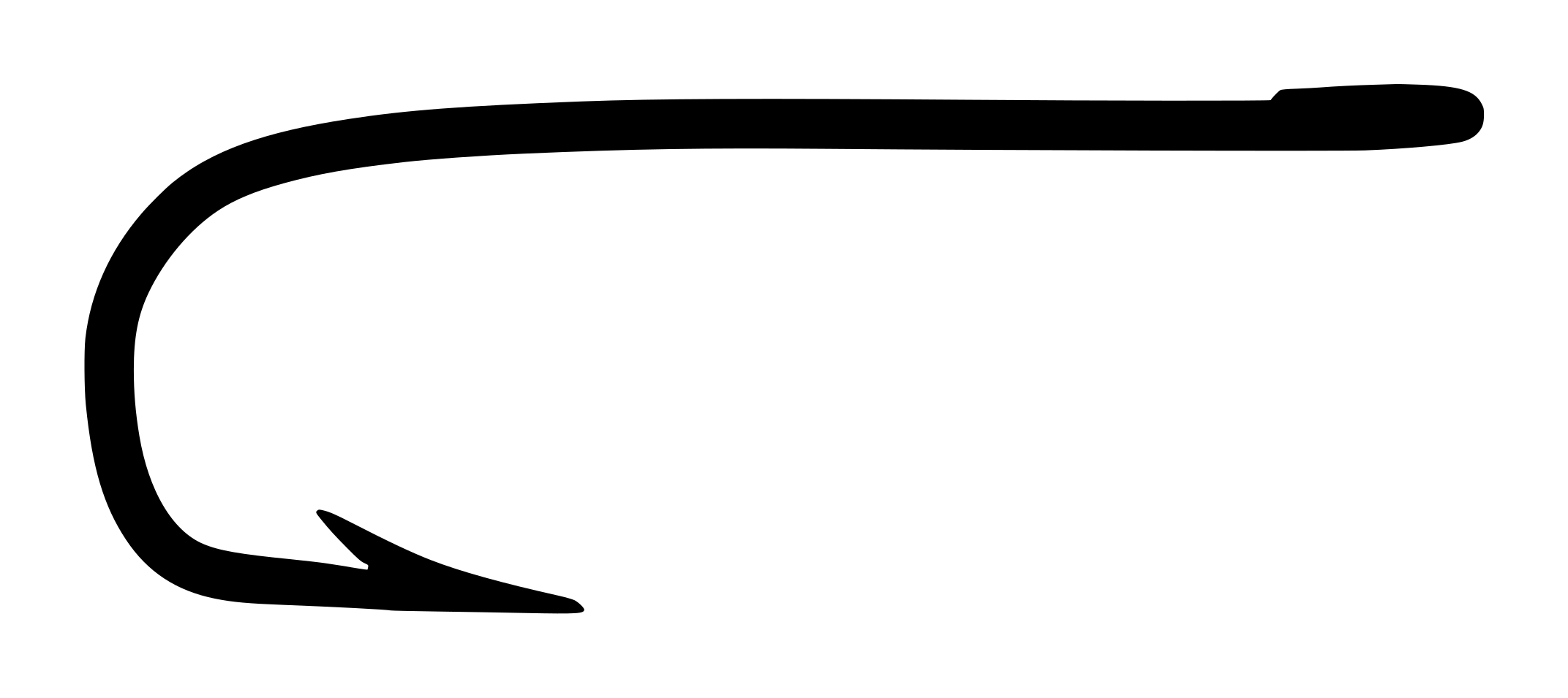
Orvis Supreme Dry Fly Hook, size 14, turned-up eye, and very fine wire construction. This English-made dry-fly hook reflects the lightweight hook designs favored by trout fly tyers during the mid-twentieth century.
The defining characteristic is the marked ‘4X Fine Wire’ specification printed on the original box. The hook exhibits a classic English Sproat-style profile and a neatly formed turned-up eye. The finish appears consistent with bronzing, although the finish type is not stated on the packaging and should be considered inferred.
The original 100-count box provides valuable documentation of Orvis-branded English hook offerings and is often of equal interest to collectors as the hooks themselves.
Front panel of original Orvis Supreme Dry Fly Hook box, size 14, 4X fine wire, turned-up eye, 100-count quantity. Red letterpress printing on kraft stock indicates circa 1955-1965 manufacture in Manchester, England.
Photographic record
2 cataloged imagesSelect any record to load it above.
2 images shown
Orvis Supreme Dry Fly Hook Size 14 Original BoxFront panel of original Orvis Supreme Dry Fly Hook box, size 14, 4X fine wire, turned-up eye, 100-count quantity. Red letterpress printing on kraft stock indicates circa 1955-1965 manufacture in Manchester, England.Open originalOrvis Supreme Size 14 Hook ProfileProfile view of a single Orvis Supreme Dry Fly Hook, size 14, showing Sproat bend geometry, tapered turned-up eye, and bronzed finish on 1/10-inch measurement grid for scale.Open original
Technical profile
Eye
Tapered Eye, Turned UpTurned-up formed eye with a smooth tapered transition from shank to eye opening P. The eye appears well centered and proportionate to the hook size. Functional interpretations regarding knot seating or strength characteristics are inferred rather than directly observable I.
Wire
Extra-Fine, Round
Shank
Standard — Plain
Bend
Sproat, Narrow gapHook geometry is most consistent with a classic English Sproat bend P. The bend shows a rounded lower curve with a relatively straight point approach typical of many traditional dry-fly hooks. Classification as Sproat is supported by the photographed profile and by the terminology used elsewhere throughout the entry.
Point
Hollow Point (concave inner face)Barb is present, small, and close-cut at approximately 45-degree angle from inner hook wall. Proportional to wire gauge; placement is standard for mid-century English dry fly design. P
Finish
Bronzed — Inferred (photographically likely)The hook displays a dark warm-toned finish consistent with bronzing I. The finish appearance aligns with many English dry-fly hooks of the mid-twentieth century, but the box does not identify the finish type. Therefore bronzed should be treated as an inferred identification rather than a confirmed specification.
Original box shows age toning and edge wear consistent with 60+ years of storage. Hooks appear bright with no visible corrosion or oxidation. All 100 hooks present and in excellent condition.
The 4X fine wire specification denotes wire diameter approximately 40% lighter than standard 1X wire for the same hook size. This reduction in mass directly improves buoyancy—a critical parameter for dry fly hooks that must support fly weight, dubbing, and hackle while remaining afloat.
The hollow point geometry features a concave inner face that tapers sharply to the tip. This inward curve creates a knife-edge effect at the point itself, concentrating penetrating force through a minimal contact area. For dry fly work, where hook penetration is often limited by light tippet and careful fly placement, the hollow point geometry maximizes effectiveness per unit of barb mass.
The tapered eye reduces bulk at the connection point without sacrificing turning strength. The taper distributes force gradually from the thicker shank to the thinner eye wire, reducing stress concentration that could cause eye breakage under load. For size 14 hooks with fine wire, this eye engineering is essential.
The Sproat bend’s rounded bottom creates a smooth load path under flexion. Unlike angular bends (Limerick, OShaughnessy), the Sproat distributes stress across a larger arc, making it less prone to failure under repeated casting and fighting loads. This geometric advantage contributed to the Sproat’s widespread adoption for dry fly work despite the bend being slower to penetrate than sharper alternatives.
The bronzed finish serves both functional and aesthetic purposes. Bronze coating provides corrosion resistance adequate for freshwater use while remaining permeable enough to allow the steel substrate to age gracefully—a quality valued by tyers of the era who preferred hooks that darkened with use.
This pattern was made in sizes 2-18 (I). We have measurements for sizes 14, 16. Know the others? Submit calipered measurements and we'll review and add them. Thank you!
The Orvis Supreme Dry Fly Hook line appears as a distinct product offering in the company’s mid-century catalog, marketed as a premium dry fly hook for the discerning tyer. The ‘Supreme’ designation on Orvis packaging of this period denotes a quality tier rather than a specific hook model—it indicates manufacturing standards, not a proprietary design.
The series was offered in sizes 2 through 18 in standard (1X) and fine (4X) wire variants. The ‘Regular Length’ designation on this box indicates standard shank length for size 14, distinguishing it from long-shank variants that Orvis offered in parallel series.
The tapered turned-up eye became a signature specification of the Supreme line, appealing to dry fly traditionalists who preferred English precision eye work. The line was gradually superseded by Orvis’s later Japanese-manufactured hooks in the 1970s-1980s as offshore production became the industry standard. Original boxes from this series are scarce; most surviving examples are loose hooks or sales card formats.
Era and Packaging Dating
The box is clearly pre-barcode and marked 'MADE IN ENGLAND'. The simple kraft-box construction and letterpress-style printing are consistent with mid-20th-century production. However, the packaging alone does not establish a Manchester, England manufacturing location. A mid-century date range remains plausible but should be considered an informed estimate rather than a definitive dating method.
The Last Era of English Dry Fly Hooks
Orvis's decision to source English-made hooks in the 1950s was driven partly by the postwar American fly-fishing boom and partly by nostalgia for pre-war Redditch craftsmanship. Manchester, England became a secondary hub for English hook production during this period, with smaller makers producing contract hooks for American importers. By 1965, however, Japanese industrial production had become so cost-competitive that American fly-fishing companies gradually abandoned English sourcing. The final years of English-made Orvis hooks represent a twilight moment in the broader consolidation of hook manufacturing toward Asia and away from Redditch.
Design lineage and influence
The Sproat bend was an established English design dating to the nineteenth century, widely adopted for dry fly work because the rounded bottom reduced resistance to air during casting. Orvis’s adoption of the Sproat for the Supreme line connected the company to a lineage of Redditch tradition even while manufacturing in Manchester.
The hollow point geometry—with its concave inner face—was standard on quality dry fly hooks of the 1950s-1960s. This point style provided adequate penetration for trout lips while minimizing barb mass, an engineering trade-off central to dry fly design of the era.
The 4X fine wire specification appears in parallel lines from other manufacturers during this period, notably in Partridge of Redditch and H. Milward & Sons offerings. The specification language itself (‘4X’) was not formalized into an industry standard until later; Orvis’s clarity in labeling this detail reflects the company’s commitment to technical communication with professional tyers.
Later dry fly designs, particularly Japanese imports from the 1970s onward, retained the Sproat bend and hollow point but emphasized chemically sharpened points and more aggressive eye designs. The Supreme line represents the final era of hand-refined English dry fly hooks marketed to American customers before industrial consolidation fundamentally altered hook manufacturing geography.
Best matchRelated by Attribute
Computed automatically from catalog data — updated as new hooks are added.
Matches: Bend, Shank, Eye, Eye Orient., Point +5 moreDiffers: Wire: Extra-Fine vs Fine (1X Fine); Gap: Narrow vs Standard; Application: Dry Fly vs Dry Fly, Wet Fly, Nymph +2 more
Matches: Gap, Eye, Finish, Forging, Offset +3 moreDiffers: Bend: Sproat vs Round / Kendal; Shank: Standard vs 1X Long; Wire: Extra-Fine vs Fine (1X Fine) +5 more
A refined dry fly hook designed for standard trout patterns in the 1950s-1960s era. The 4X fine wire and tapered turned-up eye represent Orvis’s engineering priorities for buoyancy and precise eye geometry. Intended for traditional dry flies such as Adams, Cahill, Hendrickson, and other standard-shank patterns where reduced wire mass aids flotation.
Classic Fly Patterns
Named patterns specifically associated with this hook. Leave blank if none formally documented. Do not speculate — only include patterns with a confirmed association.
Modern Equivalents
Hook
Match Quality
Notes
Tiemco 100 (size 14)
Good
Comparable standard-length dry-fly hook with a similar general profile, though typically heavier and more modern in manufacture than many traditional English 4X-fine dry-fly hooks.
Partridge GRS15ST (size 14)
Very Good
English Sproat, tapered eye, contemporary English design; closest functional equivalent
Mustad 94840 (size 14)
Good
Standard Sproat, similar wire gauge, widely available modern alternative
Collector notes
Rated 5.0/10. Uncommon in original box format; size 14 is scarce relative to larger sizes. Collector demand is modest among English tackle historians and Orvis traditionalists, but mid-century English manufacture and original box presentation drive meaningful premiums over loose-hook equivalents.
Reference value
$18 – $42 USD estimate
Packaging format
GW-BOX-ORVIS-01Catalog code
Positive factors: Original manufacturer box is the primary collectibility driver. Kraft cardboard boxes from this era rarely survive intact; most examples have been discarded or deteriorated. Manchester-made Orvis hooks represent a specific window in the company’s history (roughly 1950-1965) before offshore manufacturing became standard. Size 14 is less common than sizes 10-12 in surviving examples. The labeled specifications (‘4X Fine Wire’, ‘Tapered Turned Up Eye’) appeal to technical collectors and hook historians interested in mid-century engineering documentation. Complete 100-hook count significantly increases value.
Limiting factors: Orvis hooks do not command the premiums of Redditch-made alternatives (Partridge, Allcock) among serious collectors. The Supreme line is not associated with a signature designer or unique innovation—it is a competent but derivative dry fly hook. Loose hooks from this line remain relatively common on the market, which depresses box-set values. The size range (2-18) means that while individual sizes may be scarce, the series as a whole is not exceptionally rare. Modern tyers rarely seek these hooks for functional use, so demand is limited to collectors and historians.
Most desirable variants: Original boxes in sizes 14, 16, 18 command the highest premiums (smallest sizes, greatest scarcity). Sealed or very nearly sealed boxes are at the top tier. Loose hooks in size 16-18 remain collectible if condition is excellent; larger sizes (2-8) are common.
Condition factors: Box structural integrity is paramount—torn flaps, split seams, or moisture damage reduce value significantly. Hooks themselves should show no corrosion, staining, or discoloration. A single hook missing from a 100-count box reduces value by approximately 15-20%. Original tissue wrapping inside the box, if present, adds 10-15% premium.
Packaging
Manufacturer's standard cardboard box, printed in red letterpress on kraft stock. Front panel text reads: 'ORVIS / SUPREME DRY FLY HOOKS / REGULAR LENGTH / 4X Fine Wire Turned Up Eye / Qty. 100 / Size / MADE IN ENGLAND 14'. Box dimensions approximately 4.5" × 2.75" × 0.75" (deep). Lid shows typical construction of 1950s-1960s era—simple wrap-around flap without inner tray. Kraft paper stock shows age toning. No barcode present.
Market Value Notes
Low ($18): Good condition — opened box, complete or near-complete hook count (95+), box shows moderate age toning and edge wear
High ($42): Excellent condition — sealed or near-sealed box, all 100 hooks present, minimal box wear, packaging shows only light toning
Premium factors: Original box (vs. loose hooks or sales card equivalent 3-4x base value); sealed condition; complete hook count; size 14 rarity; condition of box printing and structural integrity
Confidence: V verified from observed sale of identical example, Excellent box condition sold at $42 USD. Base range calibrated to market data for English dry fly hooks of this era in original packaging.
Where to Find
eBay UK and US sites list Orvis hooks regularly; original boxes are infrequently encountered. Specialist vintage fly fishing dealers in the Northeast US and UK are primary sources. Tackle fairs and country auctions in England occasionally feature original Orvis boxes. Complete boxes rarely appear in large bulk lots; most are offered singly or in small collections focused on English tackle.
Collector's Identification Tips
Manufacturer verification: ‘ORVIS’ printed in red letterpress at top of box label is the definitive identifier. Original Manchester-made Orvis boxes are clearly marked ‘MADE IN ENGLAND’.
Size confirmation: Size is printed clearly in large red numerals at bottom of label. Size 14 is particularly scarce; sizes 10-12 remain more common.
Wire gauge confirmation: ‘4X Fine Wire’ specification is printed on the box. The actual wire diameter is noticeably thinner than standard-gauge dry fly hooks of equivalent size; visual comparison with standard-wire alternatives confirms the specification.
Eye type confirmation: Label states ‘Turned Up Eye’. Tapered eye construction is visually distinctive—the eye tapers smoothly from shank to opening without the ball-joint appearance of ball-eye hooks.
Original packaging indicators: The kraft cardboard box with simple red letterpress is original to this era. Boxes that have been stored dry and out of direct sunlight show minimal color shift; boxes with extreme darkening may have been exposed to moisture. 100-hook count is standard for this format.
Quantity assessment: Count hook positions on the card or verify physical count if box is opened. Complete 100-hook boxes command significant premiums over opened or incomplete examples.
Preservation
Storage and Preservation
Store the original box in a cool, dry location away from direct sunlight and moisture. The kraft cardboard is vulnerable to humidity; maintain relative humidity below 50% to prevent mold growth and paper deterioration. Avoid basements or damp environments.
The bronzed finish is stable and does not require active corrosion prevention. Natural patina development on the bronzed surface is generally considered desirable by collectors and poses no functional risk. If hooks are removed from the box, store them in a breathable fabric bag or envelope rather than sealed plastic, which can trap moisture.
Do not attempt to clean or polish the bronzed finish—the warm brown tone is characteristic of the era and part of the hook’s historical identity. Light dust can be removed with a soft brush.
The original box itself is the primary artifact. Keep it intact even if opened. If tissue wrapping is present inside the box, preserve it in place; original tissue adds significant collector value. Avoid handling the box excessively, as paper fibers break down with handling and oils from skin can accelerate aging.
Primary Source
Reading the Original Box Label
Source: Original Orvis Supreme Dry Fly Hook box label, printed in red letterpress, circa 1955-1965
The red letterpress label on the kraft box provides precise technical specifications that document Orvis’s engineering priorities circa 1955-1965. The label reads: ‘ORVIS / SUPREME DRY FLY HOOKS / REGULAR LENGTH / 4X Fine Wire Turned Up Eye / Qty. 100 / Size 14 / MADE IN ENGLAND’.
The term ‘REGULAR LENGTH’ is an era-specific descriptor meaning standard shank length for size 14. This distinguishes the offering from ‘2X Long’, ‘3X Long’, and other variants Orvis marketed in parallel. The precision of this labeling reflects the technical communication standards of professional fly-tying circles in the 1950s, where tyers specified hooks by multiple parameters rather than relying on generic model names.
The phrase ‘SUPREME DRY FLY HOOKS’ appears without model number, consistent with Orvis’s branding of this period. The word ‘Supreme’ denotes a quality tier, not a patented design. The label emphasizes physical specifications (‘4X Fine Wire Turned Up Eye’) rather than marketing language, indicating the product was marketed to informed professionals rather than mass-market consumers.
‘MADE IN ENGLAND’ confirms Manchester manufacture. The simplicity of this statement—lacking any specific factory location or maker’s mark—is typical of mid-century Orvis branding. Boxes marked ‘MADE IN ENGLAND’ span roughly 1950-1965; post-1965 Orvis sourcing shifted primarily to Japanese and Norwegian manufacturers.
The absence of a barcode is diagnostic of pre-1974 manufacture. Universal Product Codes were not widely adopted in hook packaging until the mid-1970s.
Size Note
Why Size 14 is Uncommon
The Orvis Supreme Dry Fly Hook series was offered across sizes 2 through 18. Among surviving examples, sizes 10 and 12 remain relatively common, while sizes 14, 16, and 18 are progressively scarcer.
This distribution reflects historical fly-tying practice: the majority of dry fly fishing in the 1950s-1960s targeted stream trout using standard patterns in sizes 10-12 (Adams, Light Cahill, Hendrickson). Sizes 14 and smaller were less frequently requested, and therefore fewer boxes were manufactured and distributed. Surviving stock consequently favors the larger, more-often-tied sizes.
Size 14 represents the threshold between ‘standard’ (12) and ‘small’ (16+) in the scale of the era. Patterns tied on size 14 hooks require proportionally finer materials and more delicate construction; not all tyers stock this size, and fewer complete boxes survive. The jump to size 16 involves a more pronounced reduction in hook mass, making size 14 somewhat of a neglected middle ground—smaller than the popular base sizes but not so small as to hold specialty appeal for midge fishers.
A complete original box of size 14 is therefore notably more collectible than an equivalent box of size 10, commanding approximately 50-75% premium in the market.
Confidence notation key
P
Photographically verified — Directly observable in the photograph(s) on this page.
V
Verified by documentation — Confirmed by manufacturer catalog, spec sheet, or published reference.
I
Inferred — A logical deduction from observable or documented evidence, not directly stated.
E
Estimated — An approximation based on visual comparison, proportional analysis, or limited data.
S
Speculative — A reasoned hypothesis that cannot be confirmed from available evidence.
Unnotated claims are the compiler’s synthesis; see Sources. All photographs on garrenwood.com are taken on a measurement grid where each square equals 1/10 inch (0.1″ / 2.54 mm).