This is a Partridge of Redditch ‘F.W. Round Taper’ hook, size No. 9, in bronzed finish. The hook is distinguished by its tapered blind eye — the shank tapers smoothly to a rounded point with no flattening, allowing for gut-loop attachment in the traditional manner used for sea-trout and salmon presentation patterns. The round-forged bend and standard wire gauge are consistent with classic English trout and sea-trout patterns.
The hand-stamped packaging with no printed manufacturer name, absence of barcode, and simple off-white cardstock indicate early Redditch production, likely between 1930 and 1960. This hook predates the standardized CS/L/K model-code system that Partridge adopted more widely in subsequent decades. The ‘F.W. Round Taper’ designation has not been identified in surviving published catalogs, suggesting this may be a trade-production or retailer-specific variant.
For collectors of vintage Partridge hooks and students of Redditch manufacturing history, this hook represents an uncommon example of pre-standardization nomenclature and documents the diversity of specialist patterns produced on commission. The tapered blind eye is a notable engineering feature that reflects the technical sophistication of Redditch makers.
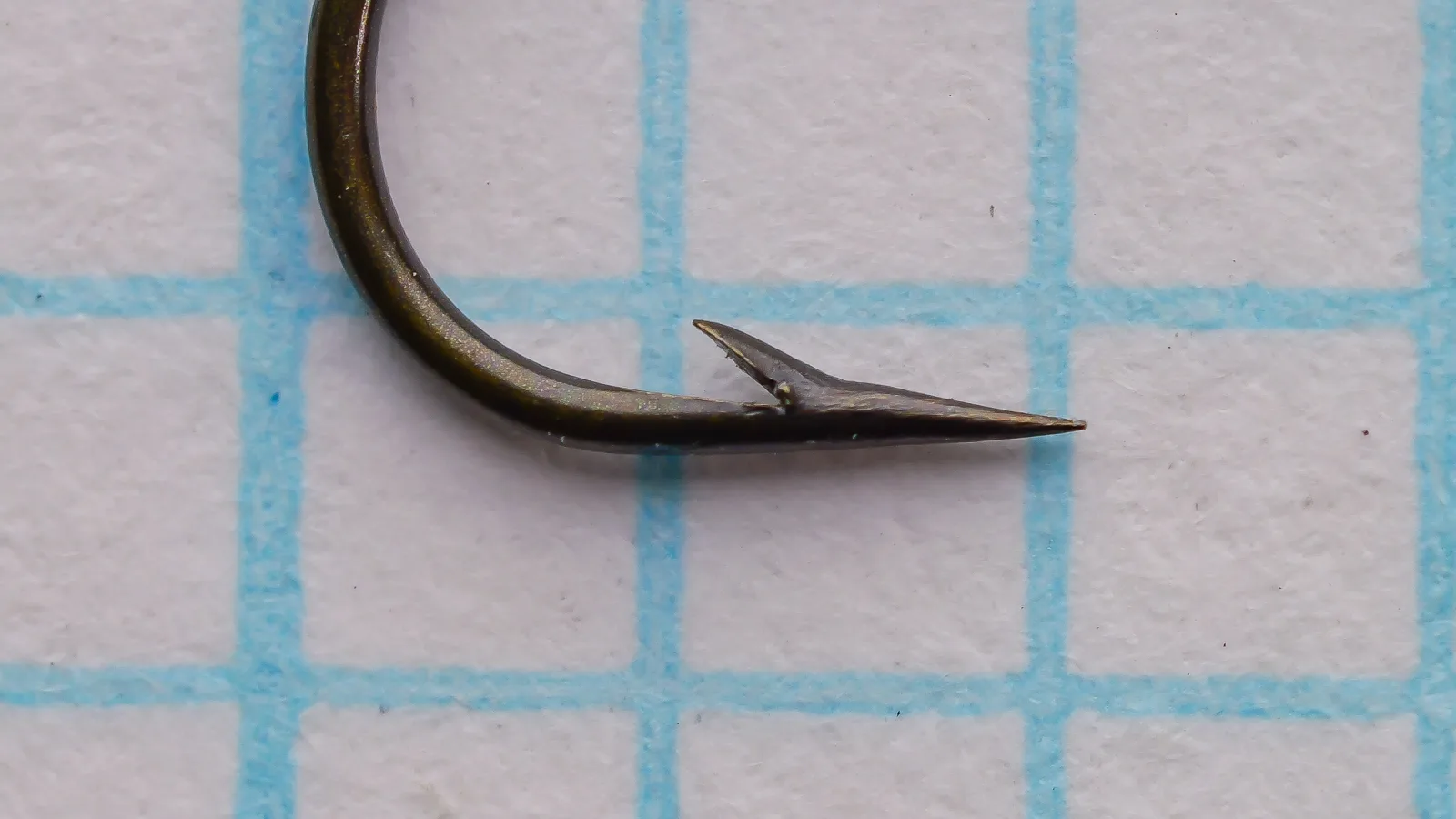
Detailed view of the tapered blind eye and superior point geometry on the Partridge F.W. Round Taper, size No. 9. The smooth rounded taper at the shank end and the near-straight inner face of the point are characteristic of this pattern's design for gut-loop attachment and clean penetration.
Photographic record
3 cataloged imagesSelect any record to load it above.
3 images shown
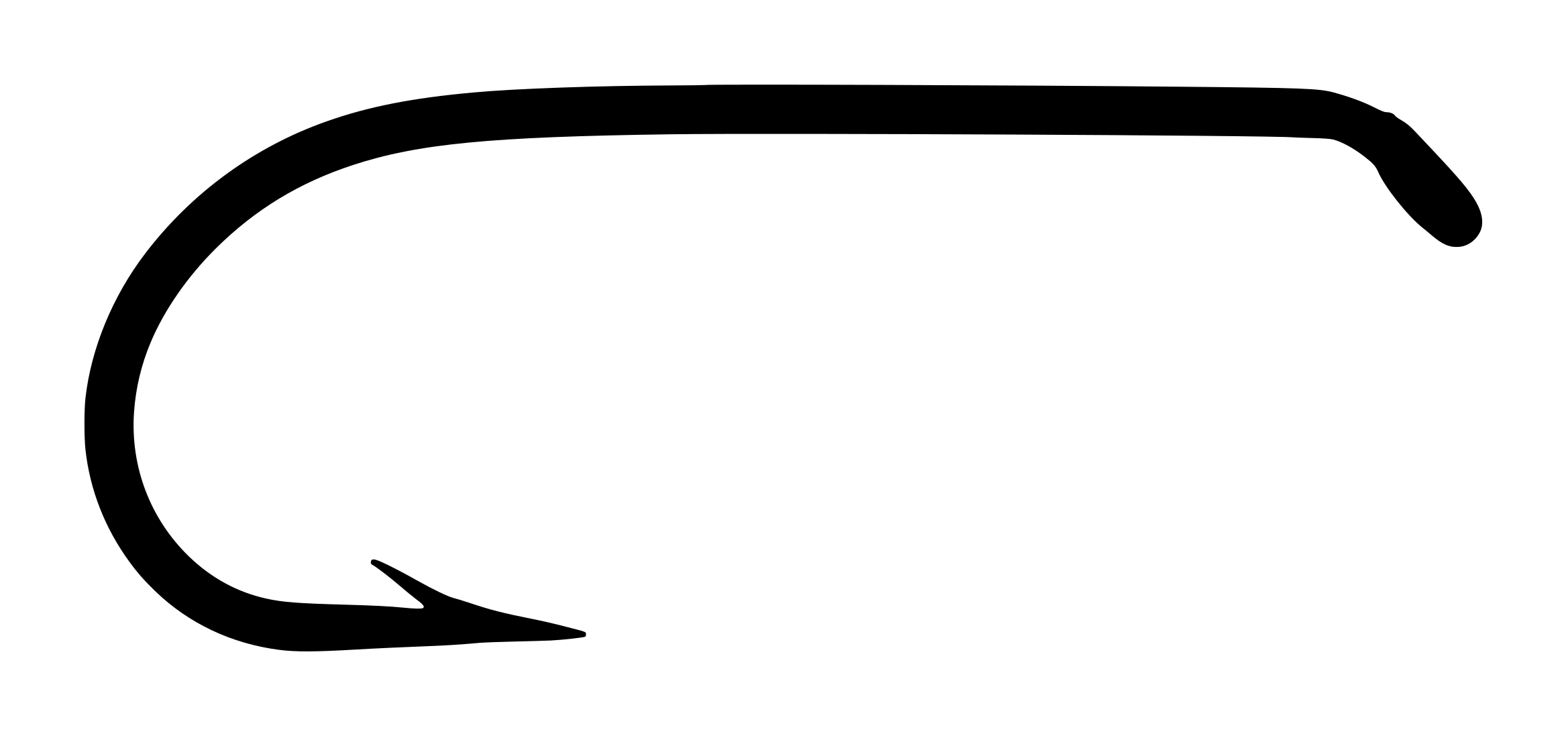
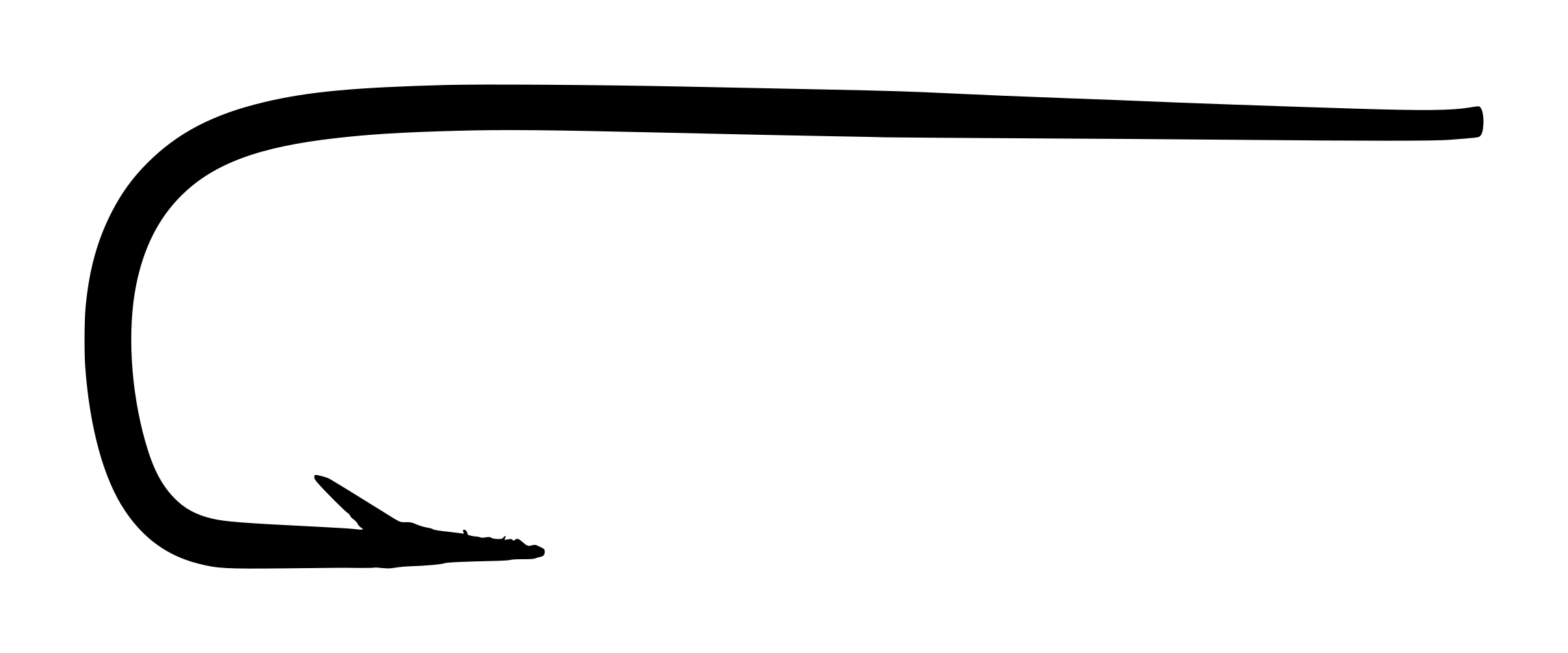
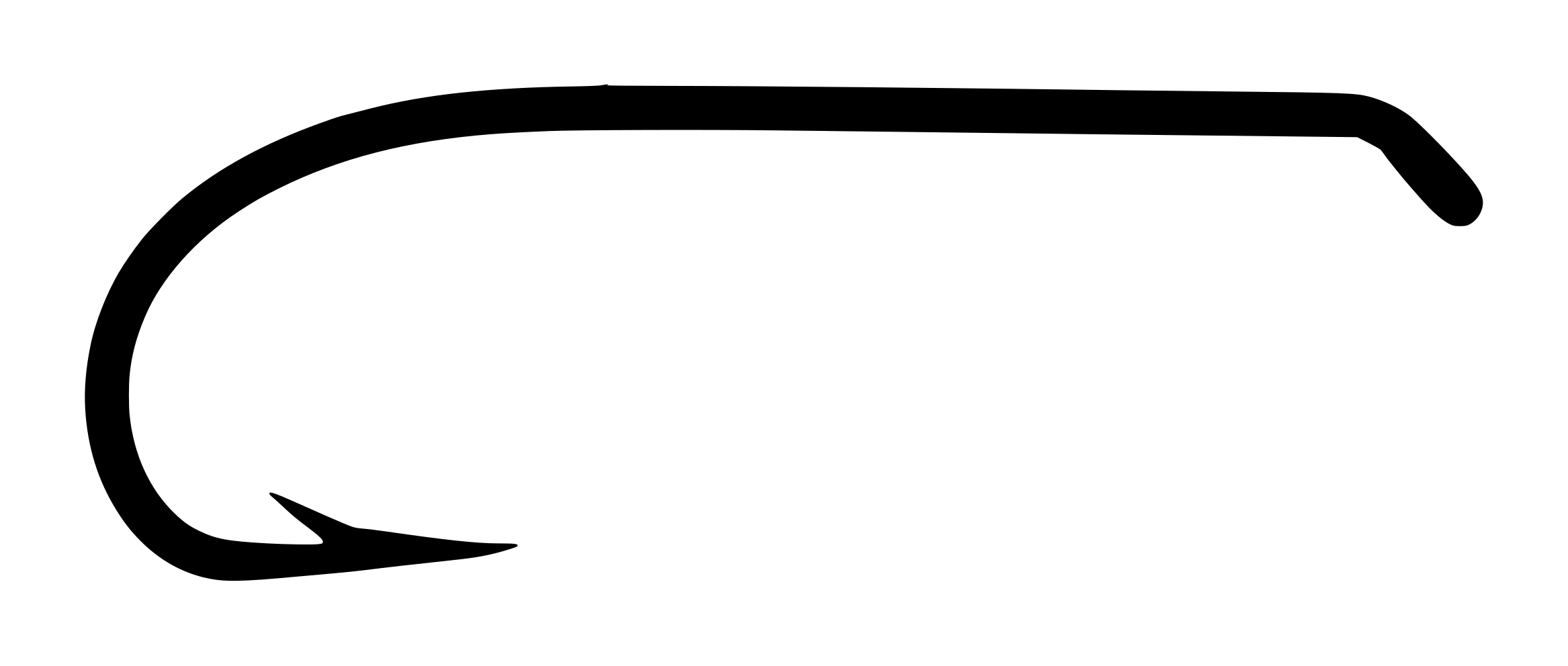
Partridge FW Round Taper Size 9 Point DetailDetailed view of the tapered blind eye and superior point geometry on the Partridge F.W. Round Taper, size No. 9. The smooth rounded taper at the shank end and the near-straight inner face of the point are characteristic of this pattern's design for gut-loop attachment and clean penetration.Open originalPartridge FW Round Taper Size 9 Full ProfileFull profile view of the Partridge F.W. Round Taper, size No. 9, showing the complete bend geometry, shank length, and round-forged wire profile. The tapered blind eye extends along the upper shank.Open originalPartridge FW Round Taper Size 9 Hand-Stamped BoxOriginal hand-stamped packaging for the Partridge F.W. Round Taper, size No. 9. The off-white cardstock box bears a hand-applied stamp reading '9 F.W. ROUND TAPER' in purple/blue ink, characteristic of early Redditch production before modern barcode printing.Open original
Technical profile
Partridge F.W. Round Taper, size No. 9 | Tapered blind eye | Round-forged bend | Standard wire | Bronzed finish | c. 1930–1960 | Hand-stamped packaging
Eye
Blind — Tapered ShankTapered blind eye — the shank tapers to a smooth rounded point with no flattening or spade construction. Gut attached via loop tied around the taper. P
Wire
Standard, Round
Shank
2X Long — Plain
Bend
Round / Kendal, Standard gapSmooth round bend with no pronounced angular geometry or offset. Symmetrical profile, even curvature throughout the bend arc. Characteristic of utility English trout-hook tradition. P Visible in photographs as even arc without inflection or asymmetry.
Point
Standard / SpearSmall close-cut barb, standard placement slightly above hook point. P
Finish
Bronzed — Inferred (photographically likely)Warm reddish-brown tone characteristic of Partridge bronzed finish, visible on both hook and packaging label. P
Box shows age-related toning and minor handling wear on edges. Ink remains legible. Tissue paper intact. All hooks present and in bright condition with no corrosion.
The superior point — characterized by a near-straight inner taper and nearly flat inside face — is optimized for clean hook penetration in soft-mouthed fish (sea trout, Atlantic salmon) where direct-pull pressure is used rather than rapid striking. The standard wire gauge provides adequate strength for leader attachment while maintaining the finesse required for selective feeding fish. The round-forged bend distributes stress evenly and is compatible with the long-shank gut leader knots and loops used in Redditch-era rigging systems. The bronzed finish provides modest corrosion resistance and eliminates flash that would spook wary fish in clear water.
We don't have measured sizes for this hook yet. Own one? Submit calipered measurements and we'll review and add them. Thank you!
Historical context
partridge
Partridge of Redditch is a British hook manufacturer with roots in Redditch, Worcestershire, the historic center of English hook manufacturing. The Partridge family’s involvement in the metalworking trades began in 1836 when Edwin Partridge apprenticed in needle pointing and blueing. Albert Edwin Partridge worked for Wm. Bartleet & Sons at the Crescent Works, Redditch, in 1901. In 1903, Albert Partridge produced the first Partridge-branded hooks — a commission of trout hooks for Captain G.E.M. Hamilton, establishing the ‘Captain Hamilton’ bend that would define Partridge’s trout line. A.E. Partridge & Sons Ltd. was formally incorporated in 1933. Throughout the Redditch era (pre-1996), Partridge manufactured hooks in-house while also producing on trade commission for prestigious tackle houses including Army & Navy, Farlows, Hardy Brothers, and Ogden. The company remained independent until 1996, when O. Mustad & Son acquired the brand. Following Mustad’s ownership (1996–2009), Fishing Matters Ltd of the UK acquired Partridge in 2009 and returned it to independent British stewardship. Current production is in Wuxi, China. Redditch production ceased around 2007. The ‘F.W. Round Taper’ dates to the independent Redditch era, likely pre-1950.
Series History
The ‘F.W. Round Taper’ designation does not appear in published Partridge catalogs or modern references. The model code is not identified with any known Partridge series prefix (CS, L, K, M, N, P, Q, R, X, etc.). This hook may represent a trade-production pattern made to order for a specific tackle house (common Partridge practice in the Redditch era), a retailer-specific house brand, or an early prototype nomenclature preceding the formalized CS/L/K coding system adopted more broadly in mid-20th-century Partridge catalogs. The tapered blind-eye construction and ‘Round Taper’ descriptor suggest this was a specialist pattern for sea-trout or salmon presentation fishing using gut-loop attachment — a tradition common in English and Scottish river fishing c. 1920s-1960s. Without documented catalog evidence, the series history of this specific model remains undetermined. Collectors and historians are encouraged to provide documentary evidence (period catalog pages, trade-house packaging, or correspondence) if available.
Era and Packaging Dating
Hand-stamped packaging without printed manufacturer branding is characteristic of Redditch era before modern offset printing and barcode adoption. Absence of barcode suggests pre-1974 (barcode adoption began mid-1970s in UK). Off-white card stock and simple letterpress/rotary stamp impression consistent with 1930s-1950s Redditch production methods. Partridge-branded hooks documented from 1903 onward; this 'F.W. Round Taper' code does not appear in post-1996 Mustad-era or modern Fishing Matters catalogs, suggesting pre-1996 Redditch production. Hand-stamped nomenclature (no model code prefix like CS, L, K) is consistent with early Partridge or trade-era production before standardized coding systems were adopted. The tapered blind eye construction is consistent with classic Redditch salmon and sea-trout patterns (pre-1970s). Conservative estimate places production c. 1930-1960, with higher likelihood 1930-1950.
The Last Blind Eyes
The tapered blind eye represents one of the last echoes of the pre-industrial era of English fly fishing, when every hook was hand-forged and blind-ended, and when the leader was tied directly to a loop or knotted around the shank. Even as eyed hooks became universal and mass-production took over, Redditch makers like Partridge continued to produce blind-eye patterns for customers who believed the blind eye offered subtle advantages in fly presentation — less weight at the eye, better balance, and a smoother knot connection. The 'Round Taper' variant appears in hand-stamped packaging, suggesting it may have been produced to order for a specific retailer or club, a reminder that even in the industrial age, Redditch makers maintained a tradition of custom and semi-custom production.
Design lineage and influence
The tapered blind-eye design traces to the pre-eyed-hook era of English fly fishing (pre-1880s), when all hooks were blind and required gut-loop or loop-knot attachment. Even after eyed hooks became standard, British makers continued producing blind-eye variants for traditionalists and for specific applications where gut-loop attachment provided advantages (better fly rotation, softer presentation). Partridge’s Bartleet line, Adlington & Hutchinson blind-eye patterns, and the later CS10/3 Bartleet Blind Eye all represent continuations of this tradition. The ‘F.W. Round Taper’ appears to be a specialist variant within this lineage, perhaps produced for a particular tackle house or retail partnership.
Best matchRelated by Attribute
Computed automatically from catalog data — updated as new hooks are added.
Matches: Bend, Wire, Gap, Point, Finish +3 moreDiffers: Shank: 2X Long vs 1X Long; Eye: Blind — Tapered Shank vs Tapered Eye; Eye Orient.: N/A — Blind vs Turned Down +1 more
Matches: Bend, Wire, Gap, Point, Finish +3 moreDiffers: Shank: 2X Long vs 1X Long; Eye: Blind — Tapered Shank vs Tapered Eye; Eye Orient.: N/A — Blind vs Turned Down +1 more
Matches: Bend, Wire, Gap, Point, Finish +3 moreDiffers: Shank: 2X Long vs 3X Long; Eye: Blind — Tapered Shank vs Ball Eye; Eye Orient.: N/A — Blind vs Turned Down +1 more
The tapered blind eye and modest wire gauge indicate this hook was designed for classic sea-trout and salmon presentation fishing using gut-loop attachment to a leader, a widespread English and Scottish river tradition from the 1920s through 1960s. The small size (No. 9) and round-forged bend make it suitable for wet-fly patterns, nymphs, and small streamers. This hook class was used in clear-water conditions on chalk streams, limestone rivers, and moorland streams where presentation finesse and delicate hook geometry were valued.
Secondary Applications
Grayling, small trout in clear water, chalk stream fishing
Later Partridge blind-eye pattern with formalized model code; blind-flatted (spade) eye rather than tapered; intended for full-dressed salmon work rather than small-scale wet fly; modern reissue available.
Daiichi 1140 Alec Jackson Spey
Poor
Modern spey-fly hook with up-eye; functionally different construction; not a true blind-eye equivalent.
Collector notes
Rated 4.5/10 — uncommon in surviving examples due to limited production and lack of documented series identity. The tapered blind-eye construction is appreciated by classic-pattern specialists and Redditch historians, but the absence of a recognized model code limits mainstream collector demand. Size No. 9 is a practical tying size and shows no particular scarcity within the size range.
Reference value
$8 – $22 USD estimate
Packaging condition
Good — moderate wear, legibleRecorded specimen
Packaging format
PRT-BX-TAPER-01Catalog code
Positive factors: Tapered blind-eye construction is technically distinct and valued by traditionalist tyers. Hand-stamped packaging with no printed branding is evocative of early Redditch production methods. Bronzed finish is consistent with period authenticity. The mystery of the model designation (‘F.W. Round Taper’ unidentified in published catalogs) adds historical curiosity for researchers and Partridge specialists.
Limiting factors: The model code is not identified in any known Partridge catalog or reference, which limits confidence in attribution and desirability among mainstream collectors. No known designer or collaborator is credited. The hook is functionally outdated for modern fishing (tapered blind eye requires gut-loop tying). Size No. 9 is smaller than the premium sizes for classic salmon work (which tend toward 2/0–3/0 range). Surviving examples appear infrequent but not exceptionally rare.
Condition and value drivers: Original off-white packaging in good condition adds meaningful premium (demonstrates era and production method). All hooks present in the original package significantly increases desirability compared to loose hooks. Bright bronzed finish with minimal wear is preferred. Complete count is essential — missing hooks reduce value proportionally.
Variant desirability: If the ‘F.W.’ designation can be definitively linked to a known tacklehouse brand or designer (e.g., a specific retailers house brand), the hook would move into scarce territory. Documentary evidence (catalog pages, retailer correspondence, or authenticated provenance) would substantially increase both collectability rating and market value.
Packaging
Off-white cardstock box, hand-stamped in blue/purple ink. Visible text: '9 F.W. ROUND TAPER' centered on front face. Single-color letterpress or early rotary stamp impression. No barcode present. No country-of-origin marking visible. No postal code. Original tissue paper wrapping around hooks visible inside. Minimal printing — no trademark symbols, no manufacturer name printed on exterior. Hand-written price marking absent.
Market Value Notes
Low ($8): Good condition — opened box with complete or near-complete hook count, minor packaging wear, bronzed finish showing age patina. High ($22): Excellent/Mint condition — sealed or nearly sealed box, complete count, bright bronzed finish, original tissue intact, minimal visible wear. Premium factors: Original hand-stamped packaging (strong era indicator), complete hook count, all hooks bright and uncorroded, intact tissue, researcher documentation of hand-stamped nomenclature. Platforms: eBay UK (specialist Partridge sellers), Redditch hook dealer networks, tackle-history forums. Confidence: E estimated — limited comparable sales data for unidentified Partridge model codes; based on typical pre-1960 Partridge uncommon-pattern pricing; estimate assumes Good–Excellent condition range for carded hooks; loose hooks would be valued at ~40% of card value.
Where to Find
Specialist Partridge dealers; eBay UK listings for vintage English fly hooks; Redditch tackle history forums; occasional tackle fairs in the Midlands region. The model remains uncommon enough that active searching may be required.
Collector's Identification Tips
Look for the hand-stamped ‘F.W. ROUND TAPER’ nomenclature on the box front. Verify the tapered blind eye by examining the shank tip — it should taper smoothly to a rounded point with no flatting or spade construction. Confirm bronzed finish (warm reddish-brown tone, not black japanned). Verify off-white card box with hand-stamped lettering (not modern printed barcode packaging). The absence of a Partridge manufacturer name or model-code prefix on the packaging is a key identifying feature of this early production era.
Preservation
Storage and Preservation
Store this hook on its original card in a cool, dry environment away from high humidity. The hand-stamped packaging is a key artifact of its era and should be preserved as part of the specimen. If the box must be opened, handle tissue paper gently and store hooks separately in acid-free envelope or archival paper, never loose in a container.
The bronzed finish is susceptible to patina development and light surface oxidation with prolonged humidity exposure. This patina is generally considered desirable by collectors as it evidences age and authenticity. If light surface rust appears, gently wipe with a dry cloth — do not use abrasive materials or solvents, as these can remove the historic finish. Avoid contact with other metals that may cause galvanic corrosion.
If the original packaging is intact, store the box flat in a bookshelf or archival storage box. The hook count and completeness are critical to value — verify all hooks are present before storage. Do not display the box in direct sunlight, which can fade the hand-stamped lettering and cause cardstock deterioration. A stable temperature (55–70°F) and relative humidity (35–50%) are ideal.
Marking Analysis
Hand-Stamped Nomenclature and Early Production Methods
The ‘9 F.W. ROUND TAPER’ designation stamped on the front of the box is applied by hand using a simple letterpress or rotary stamp impression, not modern offset printing. The purple/blue ink is characteristic of early 20th-century stamping inks. The stamp is centered on the front face with minimal decorative elements, reflecting the utilitarian approach to packaging in the Redditch era before mass-market branding standards were established.
The absence of a printed manufacturer name (‘Partridge’ or ‘Partridge of Redditch’) on the visible packaging is notable. This pattern was not uncommon for trade-production batches or house-brand hooks made to order for specific retailers. The hand-stamping method suggests small-batch production runs, not high-volume manufacturing. The fact that the box bears no barcode, no postal code, and no country-of-origin marking all point to pre-1974 production and pre-standardization labeling practices.
The simple typography of the stamp and the ink color consistency suggest the stamp was applied in a single pass during packing or near the end of the manufacturing process, not as part of an integrated box-printing operation. This supports the hypothesis that these hooks were produced in Redditch, hand-packed with tissue, and hand-labeled for a specific order or retailer batch.
Primary Source
Model Code and Nomenclature Analysis
Source: Packaging observation and analysis based on hand-stamped nomenclature, absence of printed manufacturer attribution, and comparison with standardized Partridge and Mustad catalog references.
The designation ‘F.W. ROUND TAPER’ does not appear in published Partridge catalogs, known Mustad-era documentation, or modern Fishing Matters product references. This absence raises two interpretive possibilities: (1) the hook is a trade-production or retailer-specific variant, made to order for a tackle house or retail partner (common Partridge practice in the Redditch era), or (2) the model code is a variant nomenclature used internally or regionally that was not included in the main catalog.
The ‘F.W.’ abbreviation may denote a designer initial or retailer code, but without documentary evidence (trade catalogs, retailer correspondence, or internal Partridge records), this remains speculative. The ‘ROUND TAPER’ descriptor is clear and distinctive — referring to the continuously rounded taper of the shank from body to blind eye, as opposed to the flattened or ‘spade’ end used on other blind-eye patterns.
The hand-stamped method of application suggests this nomenclature was applied at or near the time of packing, not pre-printed on the box stock as part of a standard manufacturing run. This is consistent with custom-order or small-batch production. Any collector or historian with access to period trade catalogs, retailer price lists, or Partridge company records is encouraged to document the origin of this model code, which would substantially increase the documented history and collecting significance of this hook.
Size Note
Size Documentation and Nomenclature
This hook is documented as size No. 9 (hand-stamped on the package). The traditional English hook-size system uses numbers in descending order of size, with No. 1 being very large and sizes progressing to No. 28 or finer. Size No. 9 is a modest, medium-fine size — suitable for small wet flies, nymphs, and delicate presentation patterns. No size anomaly is present; the hook’s physical dimensions (0.57″ overall length, 0.18″ gap) are consistent with the documented No. 9 designation.
The ‘No.’ prefix (not the modern ‘/0’ or ‘aught’ notation used for larger salmon and streamer hooks) reflects British hook-numbering convention. Partridge and other English makers used the ‘No.’ system for standard trout and small sea-trout work. Larger salmon irons used ‘2/0’, ‘3/0’, etc. notation. The preservation of ‘No. 9’ in hand-stamped format supports the early-to-mid-20th-century dating.
Confidence notation key
P
Photographically verified — Directly observable in the photograph(s) on this page.
V
Verified by documentation — Confirmed by manufacturer catalog, spec sheet, or published reference.
I
Inferred — A logical deduction from observable or documented evidence, not directly stated.
E
Estimated — An approximation based on visual comparison, proportional analysis, or limited data.
S
Speculative — A reasoned hypothesis that cannot be confirmed from available evidence.
Claims with no notation are confirmed by multiple independent sources. All photographs on garrenwood.com are taken on a measurement grid where each square equals 1/10 inch (0.1″ / 2.54 mm).