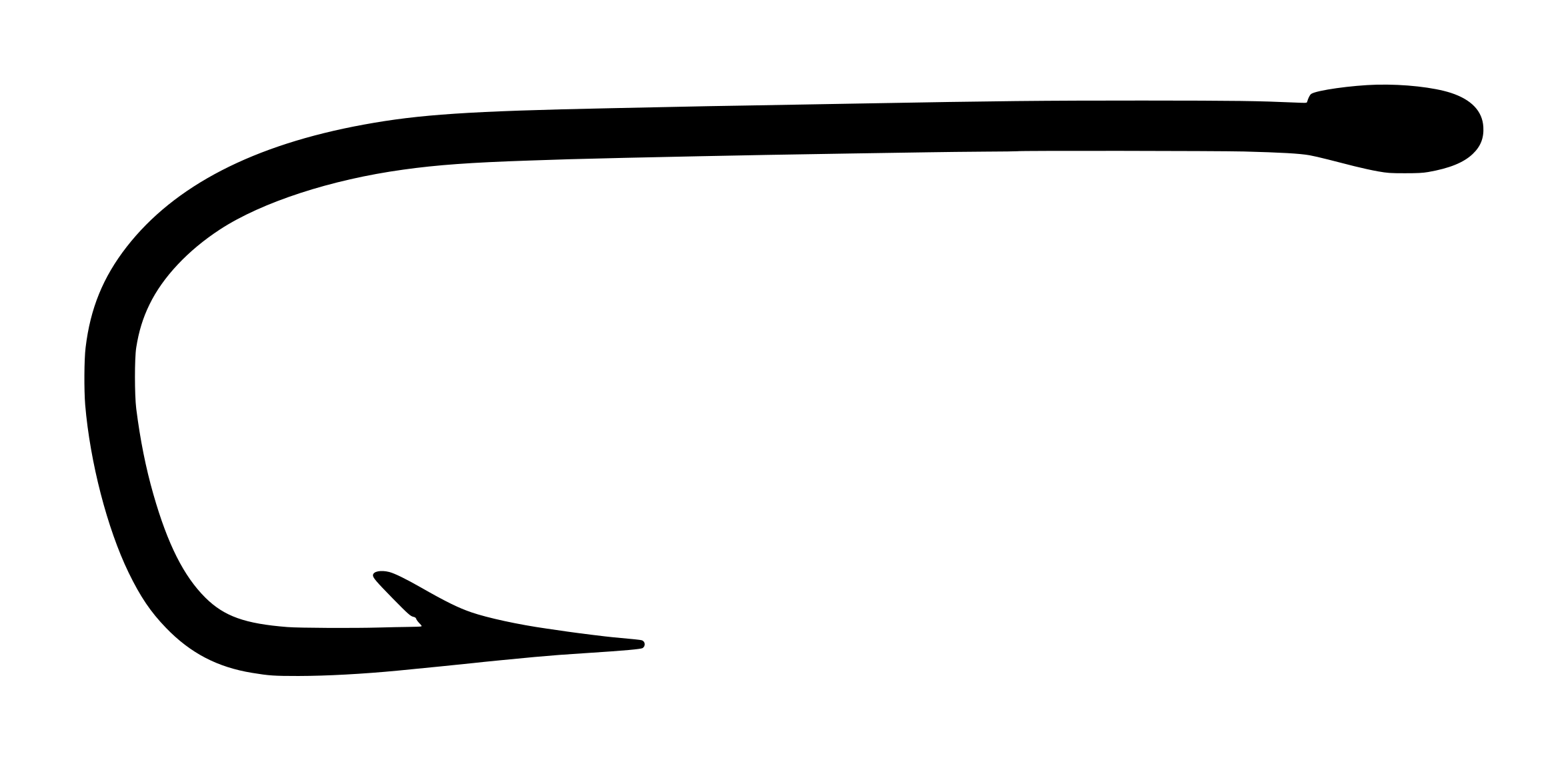
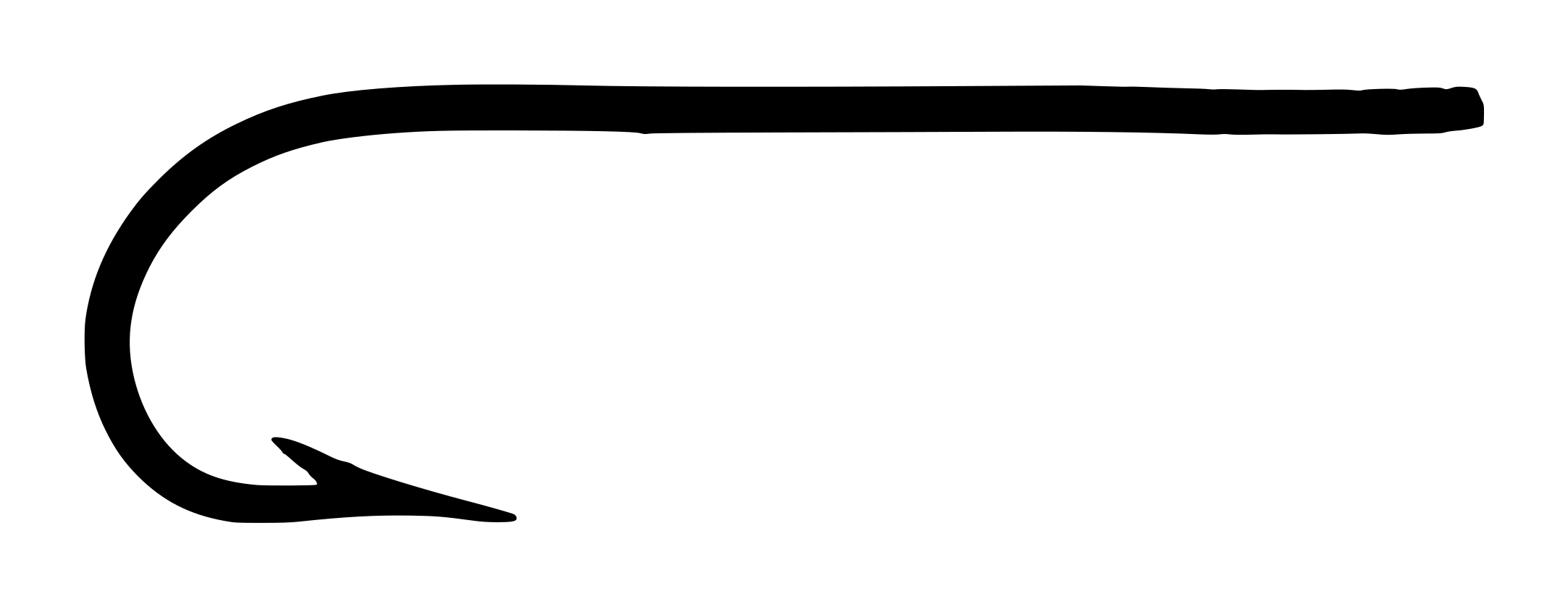
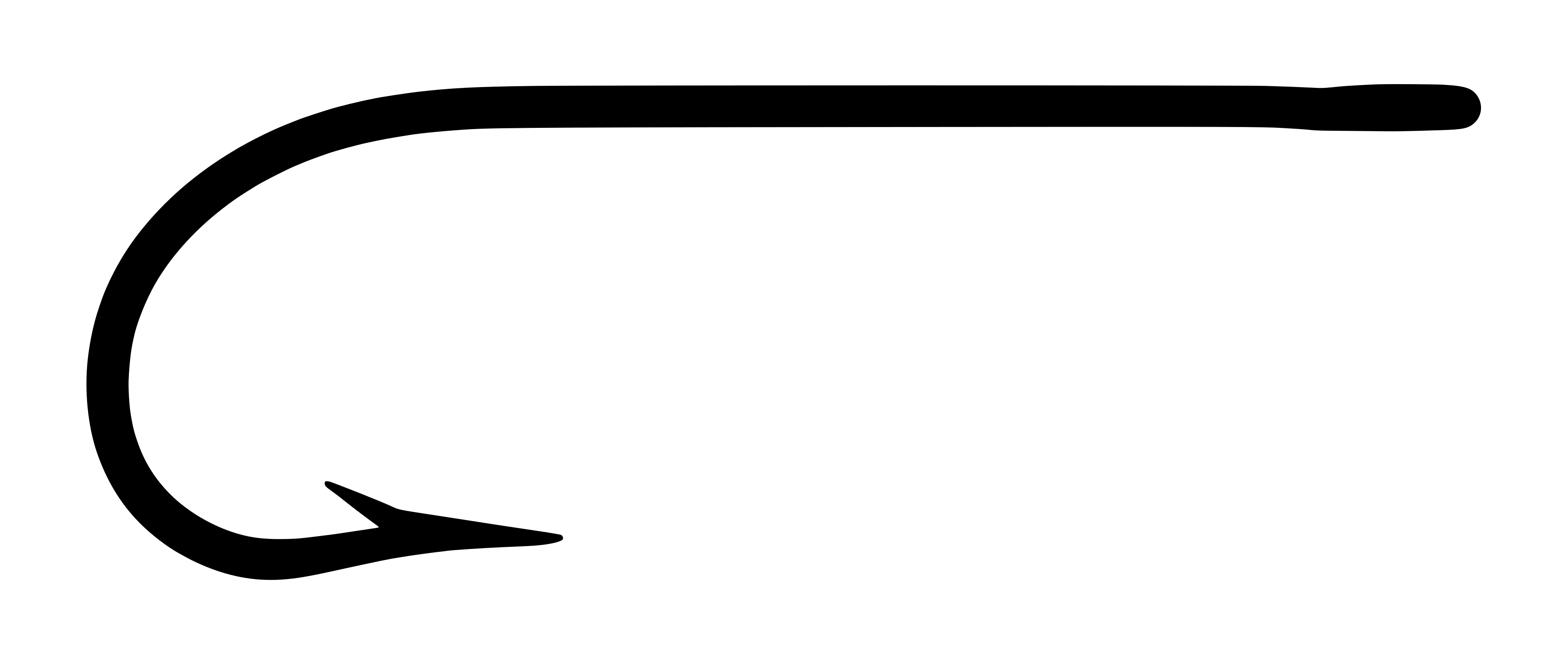
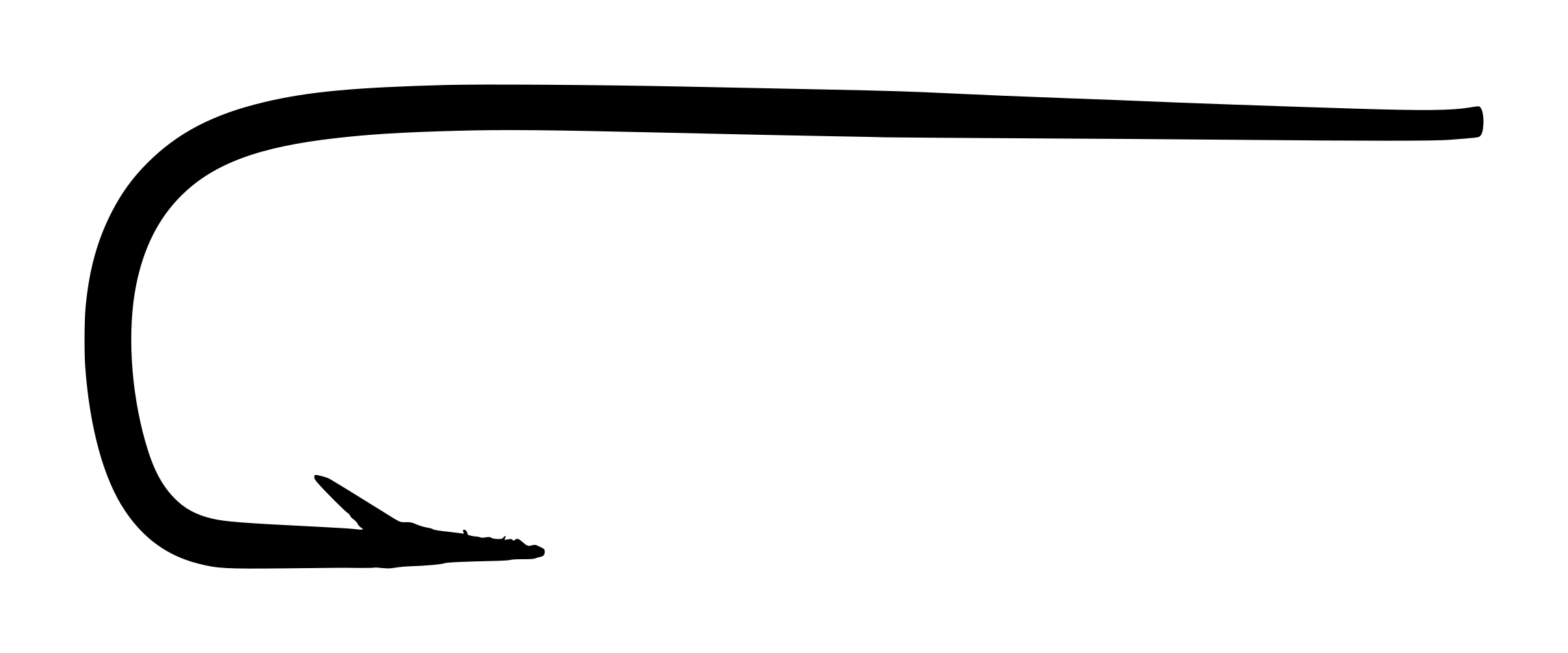
The Mustad 3331 is a classic Sneck bend fish hook produced by O. Mustad & Søn of Gjøvik, Norway — one of the most distinctive and historically significant hook patterns in British and Scandinavian tackle history. Offered in bronzed, ringed configuration and labeled under Mustad’s line, this No. 1 example dates to the 1950s–1960s era of Mustad’s iconic green Key Brand export packaging.
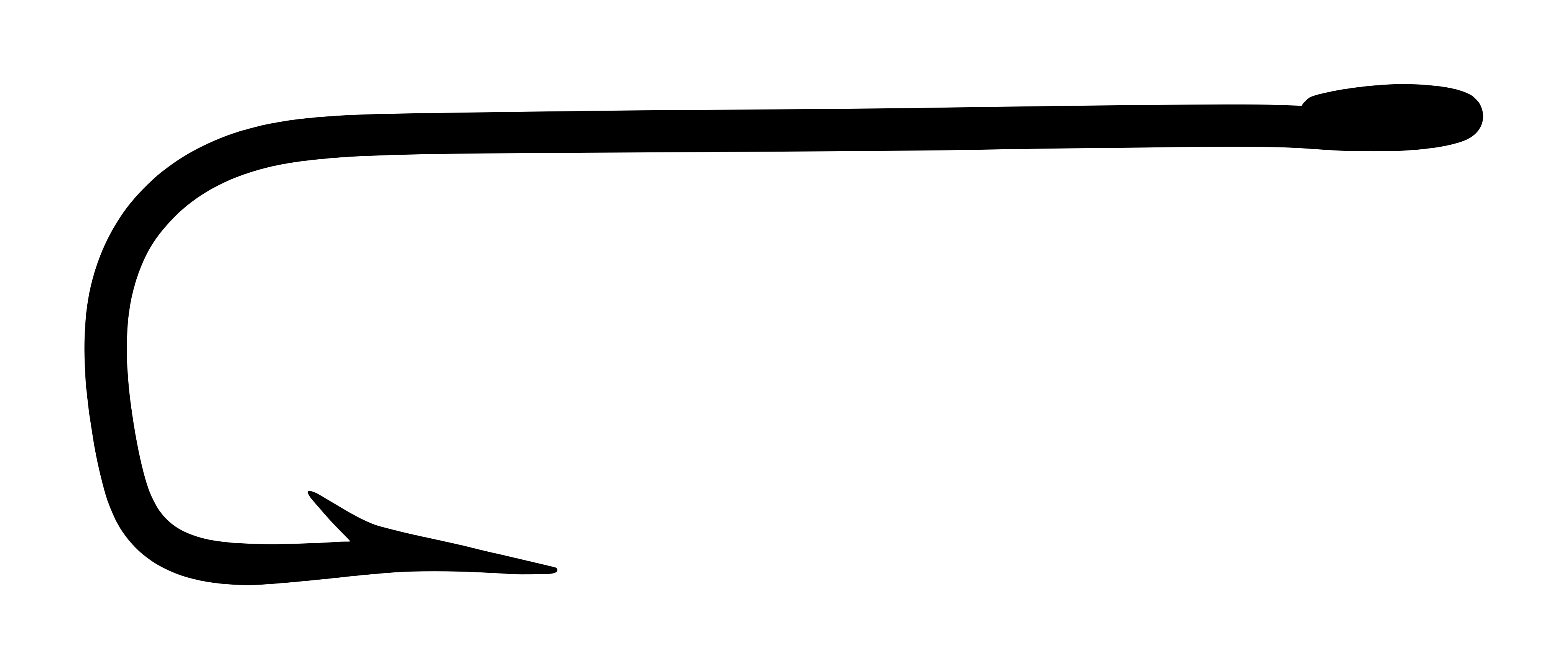
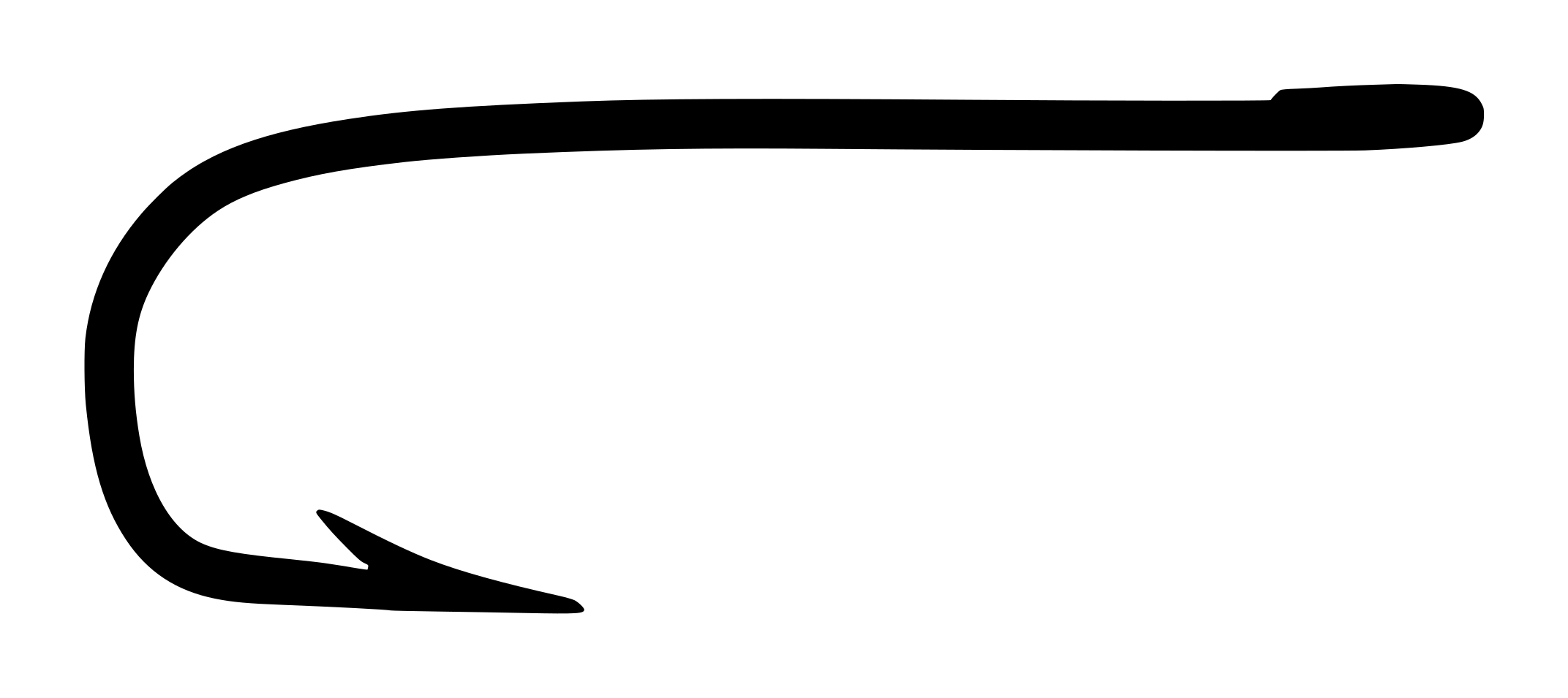
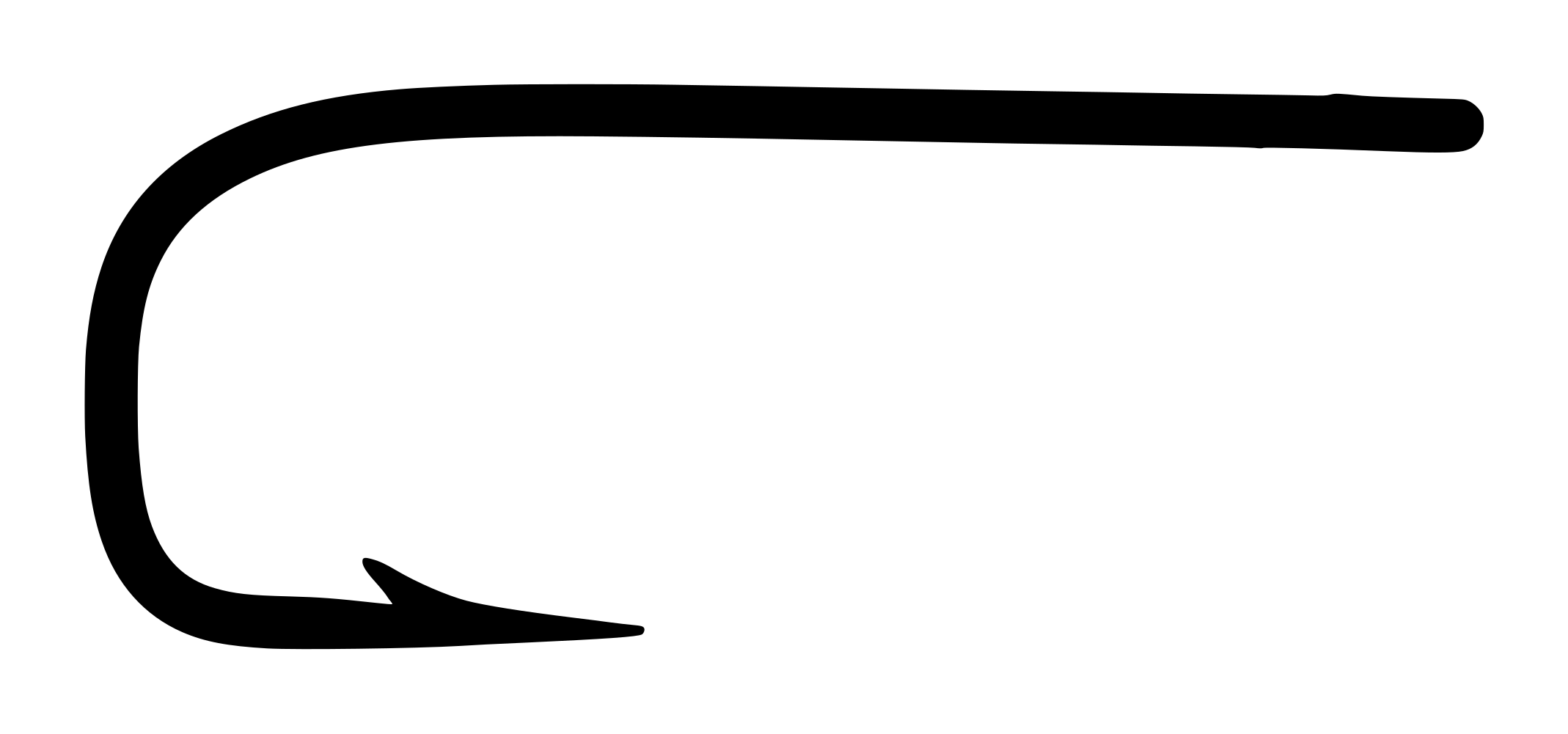
The Sneck bend is defined by its unmistakable squared, angular profile — a near-rectangular geometry at the bend that sets it apart from every other hook bend family. Named from the old Scottish word for a latch or catch, the pattern originated with Scottish fly fishermen who found the angular geometry well-suited to wet fly construction and traditional coarse fishing applications.
This specimen carries P confirmation of overall length at 1.10–1.12 inches and gap width at 0.38–0.40 inches via physical caliper measurement. The ringed eye is characteristic of Mustad’s vintage nomenclature for a straight, turned-down eye formation. The bronzed finish displays warm brown coloration consistent with mid-20th-century lacquer work.
The Mustad 3331 is genuinely rare in modern production, making surviving examples highly sought after by vintage Mustad collectors, traditionalist fly tiers, and fishing historians. The combination of the distinctive Sneck profile, quality-line designation, intact green Key Brand packaging, and documented production era make this one of the most recognizable and collectible Mustad patterns.
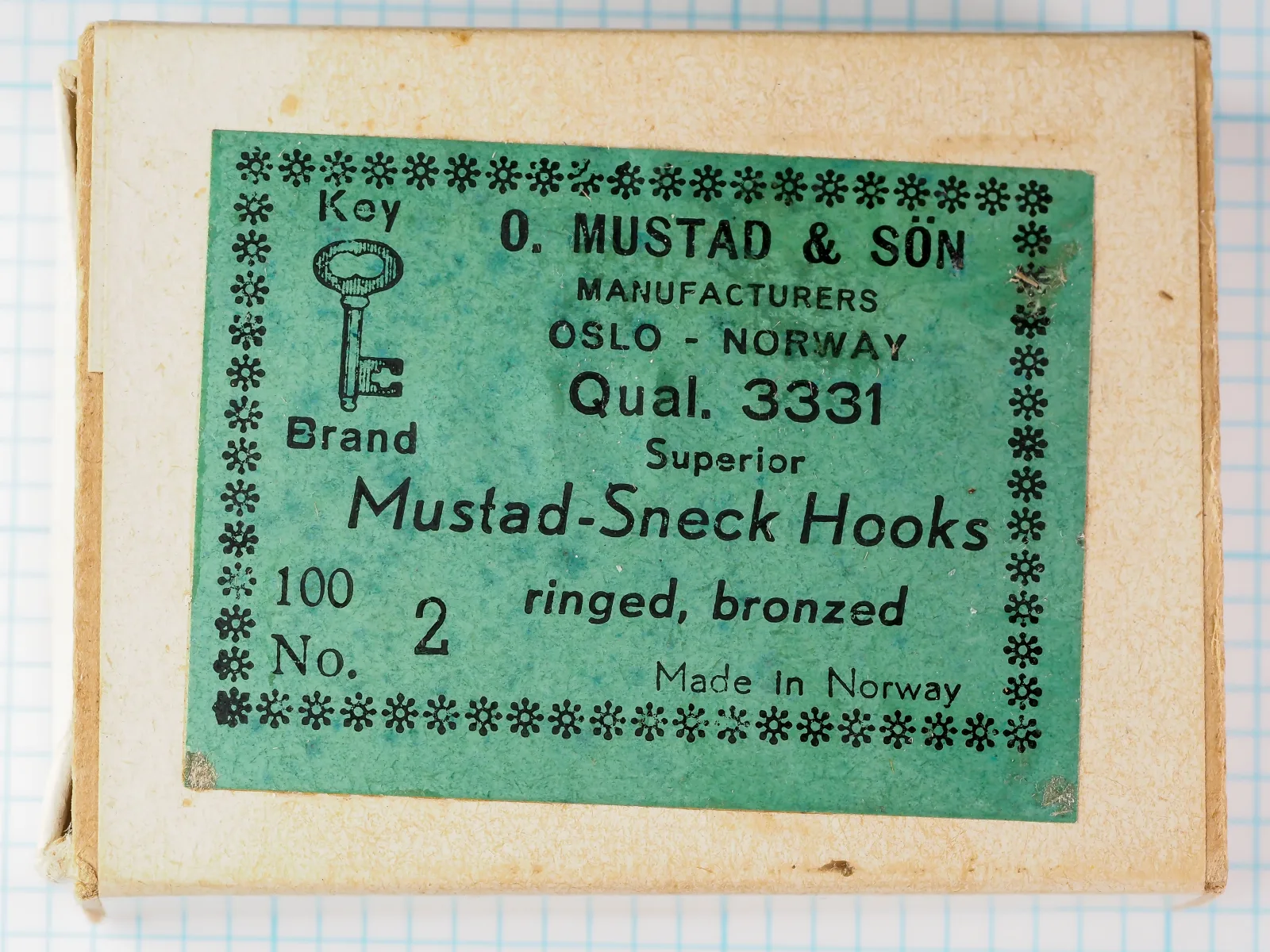
The distinctive green Key Brand label of the Mustad 3331 package, printed in black letterpress with decorative floral asterisk border. Labels like this are iconic markers of 1950s–1960s Mustad export packaging.
Photographic record
11 cataloged imagesSelect any record to load it above.
8 images shown
Mustad 3331 Size 2 Green Key Brand Package LabelThe distinctive green Key Brand label of the Mustad 3331 package, printed in black letterpress with decorative floral asterisk border. Labels like this are iconic markers of 1950s–1960s Mustad export packaging.Open originalMustad 3331 Sneck Point Close-Up Size 2Close-up detail of the Mustad 3331 point geometry, showing the barb position and the characteristic squared bend profile. Photographed on measurement grid for scale reference.Open originalMustad 3331 Sneck Profile Size 2Side profile of the Mustad 3331 showing the characteristic squared Sneck bend profile and ringed (straight) eye formation. The angular bend geometry is immediately recognizable and distinguishes the Sneck from all other bend families.Open originalMustad 3331 Hooks Size 2 Pair ComparisonTwo specimens of the Mustad 3331 Sneck Hook, size 2, showing consistency in manufacture across the package lot. Both hooks display identical eye and bend geometry, confirming Mustad's production standards.Open originalMustad 3331 Box and Label size 1Mustad 3331 Box and Label size 1Open originalMustad 3331 Hook Point size 1Mustad 3331 Hook Point size 1Open originalMustad 3331 Hook size 1Mustad 3331 Hook size 1Open originalMustad 3331 Hooks size 1Mustad 3331 Hooks size 1Open originalMustad-3331-Box-and-Label-Size-8-0Mustad-3331-Box-and-Label-Size-8-0Open originalMustad-3331-Hook-Size-8-0Mustad-3331-Hook-Size-8-0Open originalMustad-3331-Hook-Point-Size-8-0Mustad-3331-Hook-Point-Size-8-0Open original
Technical profile
Turned-Down Ringed Eye, Sneck Bend, Standard Shank, Standard Wire, Bronzed Finish, Made in Norway
Eye
Ball Eye, Straight / InlineRinged (straight) eye formation characteristic of Mustad's vintage terminology. The eye is formed as a simple turn-down with wire ends lapped together, creating a loop suitable for direct knotting. No ball or taper visible at the eye termination P.
Wire
Standard, Round
Shank
Standard — Plain
Bend
Sneck, Standard gapThe bend displays the characteristic squared, angular profile that defines the Sneck family. The corner at the base of the bend is sharp and clearly defined, creating a near-rectangular geometry when viewed in profile. The bend is symmetrical with no visible offset or twist P.
Point
Standard / SpearShort, close-cut barb positioned on the inside face of the bend. The barb is proportionate to the hook size and wire gauge, with a moderate angle and minimal undercut P.
Finish
Bronzed — Confirmed (stated on packaging)Bronzed finish displaying warm brown coloration characteristic of mid-20th-century lacquer work over carbon steel. The finish is even and uniform across the specimen with no flaking or corrosion visible. The tone is warm rather than cool, typical of Mustad's bronzing process P.
Hooks are bright and uncorroded with original lacquer intact. Packaging (green Key Brand label) shows light toning and minor edge wear consistent with age, good condition for a 1950s–1960s example.
The Sneck bend’s defining engineering characteristic is its sharply squared corner at the bend base — a near-rectangular geometry fundamentally different from the smooth curves of round, Sproat, or Limerick bends. This squared profile requires different forging and forming techniques than round-bend patterns, as the wire must be shaped to create a clear angular transition rather than a smooth curve.
The standard wire gauge and round profile of the Mustad 3331 provide robust strength for both fly tying and bait fishing without the weight penalty of a forged (flattened) wire. The bronzed finish — a traditional brown lacquer over carbon steel — offers corrosion resistance suitable for freshwater and light saltwater use, though not for sustained saltwater exposure.
The ringed eye (straight turn-down formation) is well-suited to direct knotting with monofilament, silk, or traditional gut — accommodating the materials and techniques that were standard at the time of manufacture. The lack of a ball or tapered eye formation simplifies construction and reduces stress concentration at the eye.
The Sneck bend is one of the oldest named hook patterns in existence. By 1823, Sneck hooks were already well established in British tackle shops alongside Limerick, Aberdeen, Sproat, and Kirby patterns, competing designs from the hook makers of Redditch, Dublin, Kendal, and Aberdeen. The pattern is widely credited to Scottish fly fishermen who valued the angular squared bend for wet fly and spate river work.
O. Mustad & Søn included Sneck patterns in their product range from the company’s earliest decades, recognizing the pattern’s importance in both British and Scandinavian fly-fishing traditions. The 3331 became Mustad’s standard Sneck offering in their line, produced across multiple generations of packaging formats and wire gauges.
The Sneck’s squared profile — fundamentally different from the rounded Sproat or smooth Limerick curves — gave traditional wet flies a distinctive silhouette in the water. British fly-fishing writers and stream-side practitioners of the mid-20th century argued that this subtle geometric difference produced meaningful changes in fly behavior and fish response on pressured chalk streams and spate rivers, making the Sneck a specialist’s choice rather than a general-purpose pattern.
By the 1970s, as plastic slide-boxes replaced paper card packaging and modern hook designs gained market share, true Sneck-bend hooks began to disappear from mainstream tackle shops. Today, surviving examples like the Mustad 3331 in intact packaging are increasingly rare, making them valuable to collectors and historians seeking period-correct irons.
Era and Packaging Dating
The green Key Brand label with floral asterisk border is characteristic of Mustad's mid-20th-century export packaging, documented to the 1950s–1960s period. The label format, letterpress printing method, use of Oslo–Norway address (sales office, not factory), absence of a barcode (universal product codes not adopted until 1974), and paper stock all indicate this era. The card is glued (not stapled or machine-stitched) and shows the color degradation consistent with early offset printing on aged stock. No printed price appears, which is typical of export packaging intended for resale through tackle retailers. The combination of these elements points to 1950–1970 as the production window, with 1950s–1960s as the most probable era.
The Luderick Hook That Wouldn't Die
While largely forgotten in North American and European fly shops, the Sneck bend remains actively used in Australia, where a variation known as the Needle Sneck is considered the gold standard hook for targeting Luderick — a small, weed-dwelling freshwater fish colloquially known as Blackfish. Australian fly tiers have maintained an unbroken tradition of Sneck-bend use for Luderick weed flies that stretches back to British colonial settlement, making Australia's tackle market one of the few places where true Sneck patterns never disappeared from shelves. This uniquely Australian freshwater tradition has kept demand for authentic Sneck-bend hooks alive long after they vanished from Western tackle shops, and contemporary Australian fly-dressing suppliers continue to stock Sneck patterns specifically for Luderick fishing. Vintage British and Mustad Sneck hooks exported to Australia during the 1950s–1970s are now highly prized by Australian collectors for their historical connection to this distinctive regional fishing heritage.
Design lineage and influence
The Sneck bend traces its origins to early Scottish fly-fishing practice, where the squared profile was valued for wet fly construction. As a named pattern, it appears consistently in British hook catalogs from the 1820s onward, competing alongside Aberdeen, Limerick, and Sproat bends. Unlike the rounded Sproat or smooth Limerick curves, the Sneck’s angular geometry represents a distinctly different manufacturing and functional philosophy.
Mustad’s adoption of the Sneck pattern reflects the company’s strategy to encompass all major British and European hook families within their product range. The 3331 belongs to the same lineage as Partridge of Redditch’s Sneck offerings and historical English makers’ Sneck patterns, maintaining the original squared geometry while benefiting from Mustad’s advanced manufacturing precision.
The Sneck has remained in continuous but limited production into the present day. Modern alternatives include the Partridge K2B Traditional Wet Fly Sneck, which maintains the correct angular geometry, and various coarse fishing hooks used as functional substitutes, though few retain the true Sneck profile.
Best matchRelated by Attribute
Computed automatically from catalog data — updated as new hooks are added.
Matches: Bend, Shank, Gap, Eye, Eye Orient. +5 moreDiffers: Wire: Standard vs Heavy (1X Heavy); Point: Standard / Spear vs Superior; Application: Wet Fly, Sea Trout, Bait vs Bait +3 more
The Mustad 3331 Sneck is historically associated with traditional British and Scandinavian wet fly fishing, particularly for sea trout, brown trout on spate rivers, and loch-style work. The squared bend geometry lends itself naturally to classic winged and soft-hackle wet fly patterns — North Country spiders, Scottish loch flies, and traditional hairwing patterns for larger fish.
The pattern’s secondary strength lies in coarse and bait fishing traditions, where the corner of the bend acts as a natural seat for worm, paste, and maggot baits. Sizes No. 1 and No. 2, as documented here, are particularly well-suited to large sea trout wet flies and robust bait presentations where good gape and strong wire are essential.
Secondary Applications
Coarse fishing with worm and maggot baits; sea trout and larger wet fly work requiring robust gape and strong wire
Classic Fly Patterns
Not typically associated with specific named patterns; used as a general-purpose wet fly hook for traditional patterns including North Country spiders, Scottish loch flies, and classic winged wet flies
Modern Equivalents
Hook
Match Quality
Notes
Partridge K2B Traditional Wet Fly Sneck
Excellent
Modern production Sneck-bend hook maintaining the original squared geometry and suitable for traditional wet fly patterns
Drennan Carbon Match (larger sizes)
Moderate
Functional substitute for coarse fishing and bait applications, though not a true Sneck profile
Collector notes
The Mustad 3331 is rated 7 (Rare, strong collector demand). Positive factors: distinctive Sneck bend geometry, designation, intact green Key Brand packaging, documented 1950s–1960s production era, and genuine scarcity in modern production. Limiting factors: relatively high production volume, no designer attribution, and Sneck pattern remains a specialist interest rather than universal appeal.
Reference value
$18 – $45 USD estimate
Packaging condition
Good — moderate wear, legibleRecorded specimen
Packaging format
GW-MUS-01Catalog code
Factors Elevating Collectability: The Sneck bend is genuinely rare in modern production — true Sneck-bend hooks have largely vanished from mainstream tackle shops since the 1970s, making surviving vintage examples highly sought. The green Key Brand label is instantly recognizable and iconic among Mustad collectors. The designation indicates premium manufacturing. The 1950s–1960s era documented by packaging evidence places this hook in a recognized golden age of vintage tackle. Size No. 1 is larger than most common fly hook sizes and more useful for sea trout and bait fishing, broadening appeal beyond specialist tiers.
Factors Limiting Collectability: The 3331 was produced in substantial volume (100 per package) across multiple years, making it less rare than patterns with documented low production runs. No named designer or collaborator is credited on the packaging, which limits historical narrative appeal. The Sneck bend remains a specialist choice — traditionalist fly tiers and Australian Luderick anglers represent the primary collector base, whereas hooks from broader markets command wider collector interest. The ringed eye construction is less visually distinctive than ball or tapered eyes, which appeal more to casual collectors. Loose hooks without original packaging are commonplace and command minimal premium.
Packaging
Green Key Brand label glued to cardboard backing. Label measures approximately 4.5 × 3.75 inches. Printed in black letterpress on green colored stock. Features decorative floral asterisk border on all four sides. Text layout: Key Brand logo with key graphic at top left; O. Mustad & Son Manufacturers, Oslo – Norway at center top; Qual. 3331, Superior at center; Mustad-Sneck Hooks in italic script; 100, No. 2, ringed, bronzed at lower center; Made in Norway at bottom. Paper shows light toning and foxing consistent with age. No printed price or barcode. Cardboard backing is cream colored with natural aging patina.
Market Value Notes
Pricing based on condition and completeness of original packaging. New Old Stock examples with intact green Key Brand labels in good condition typically sell between $18–$45 USD at specialty dealers and auction sites. Loose hooks without original packaging fetch $8–$15. Premium pricing ($40+) is driven by: (1) intact original Key Brand packaging; (2) Sneck bend rarity in modern production; (3) collectors' demand for vintage Mustad patterns; (4) size (No. 1 and No. 2 are more sought than smaller sizes). Factors limiting value: (1) not signed by a named designer; (2) production volume was substantial (100 per package suggests common packaging format); (3) Sneck pattern remains niche compared to Sproat or Aberdeen. Market venues: eBay vintage fishing section, specialist fly-tying suppliers, fishing memorabilia dealers, UK and European tackle fairs.
Where to Find
Surviving examples most commonly appear on eBay under vintage fishing hooks and Mustad auctions. Specialist dealers in British and Scandinavian tackle history stock NOS and used examples. European fishing memorabilia fairs, particularly in the UK and Scandinavia, occasionally feature intact packaged examples. Australian fly-fishing suppliers maintain interest due to the Luderick (Blackfish) tradition. Rarer to find in North American tackle shops.
Collector's Identification Tips
Identify the Mustad 3331 by: (1) Green Key Brand label with distinctive floral asterisk border and Oslo–Norway address; (2) Model code printed as Qual. 3331; (3) designation printed on label; (4) Ringed, bronzed configuration specified as ringed, bronzed on packaging; (5) Characteristic squared Sneck bend profile distinguishable at a glance from any other bend family; (6) Quantity marking 100 per package; (7) Absence of barcode (pre-1974 packaging standard).
Preservation
Storage and Preservation
Store in a cool, dry environment away from moisture and humidity. The bronzed finish is susceptible to patina development with humidity exposure — some collectors consider age-appropriate patina desirable, while others prefer to prevent further oxidation using archival acid-free tissue wrapping. Keep hooks in original packaging on the card rather than loose in containers, as the original green Key Brand label and cardboard backing add significant collectible value and help stabilize the hooks mechanically.
If the card must be stored loose, wrap it in acid-free tissue paper and place in a acid-free paper box away from direct light, which can fade the green label color over time. Avoid contact with other metals to prevent galvanic corrosion, and keep away from saltwater environments unless the specimen is documented as a saltwater variant (this bronzed Sneck is intended for freshwater use).
Handle with clean, dry hands. Do not attempt to polish or refinish the bronzed surface, as the patina contributes to the hook’s historical authenticity and collectible character. If corrosion is present, consultation with a specialized tackle conservator is recommended before any treatment.
Primary Source
Packaging Text and Historical Documentation
Source: Mustad 3331 Green Key Brand label, front face
The green Key Brand label documents several key facts through its printed text. The designation Qual. 3331 indicates the quality grade and model number in Mustad’s system — this represents the Superior tier of production. The label text ringed, bronzed specifies the exact configuration of this package lot and is the primary source for confirming eye type and finish. The marking Made in Norway establishes factory origin with certainty, while the separate Oslo – Norway address on the label refers to Mustad’s continental European sales and export office, not the primary manufacturing facility in Gjøvik.
The absence of a barcode is diagnostic — the Universal Product Code system was not adopted for mass-market packaging until 1974, placing all barcode-free Mustad Key Brand packaging into the pre-1974 era with high confidence. The letterpress printing method visible in the label’s text reproduction — with characteristic ink impression and slight irregularity — is consistent with mid-20th-century European commercial printing, reinforcing the 1950s–1960s era. The quantity marking 100 indicates this was a standard wholesale package format for retail tackle shops.
Additional
The Sneck Bend Geometry and Fishing Logic
The Sneck bend’s defining characteristic — its squared, angular profile — is not merely aesthetic. The sharp corner at the bend base creates a fundamentally different geometry than smooth-curved bends, and this difference was argued by British fly-fishing practitioners to affect how the fly sits in the water and how it responds to current and line tension.
Traditional fly-dressing texts from the mid-20th century describe the Sneck as particularly suited to wet fly work on spate rivers and Scottish lochs, where the angular profile was thought to present a subtly different silhouette in broken water. The squared geometry also affects how thread wraps seat on the bend during fly construction — thread lies in the corner of the bend rather than wrapping around a smooth curve, potentially changing how a hackle or wing dressing drapes and moves.
For coarse fishing with bait, the squared corner functioned as a natural seat for the bait — worm, paste, or maggot would settle more securely in the angular corner than on a smooth rounded bend, reducing the need for additional retention knots or binding. This practical advantage, combined with the pattern’s traditional association with Scottish and British practice, ensured the Sneck’s survival in those markets long after it faded in North America.
Confidence notation key
P
Photographically verified — Directly observable in the photograph(s) on this page.
V
Verified by documentation — Confirmed by manufacturer catalog, spec sheet, or published reference.
I
Inferred — A logical deduction from observable or documented evidence, not directly stated.
E
Estimated — An approximation based on visual comparison, proportional analysis, or limited data.
S
Speculative — A reasoned hypothesis that cannot be confirmed from available evidence.
Unnotated claims are the compiler’s synthesis; see Sources. All photographs on garrenwood.com are taken on a measurement grid where each square equals 1/10 inch (0.1″ / 2.54 mm).