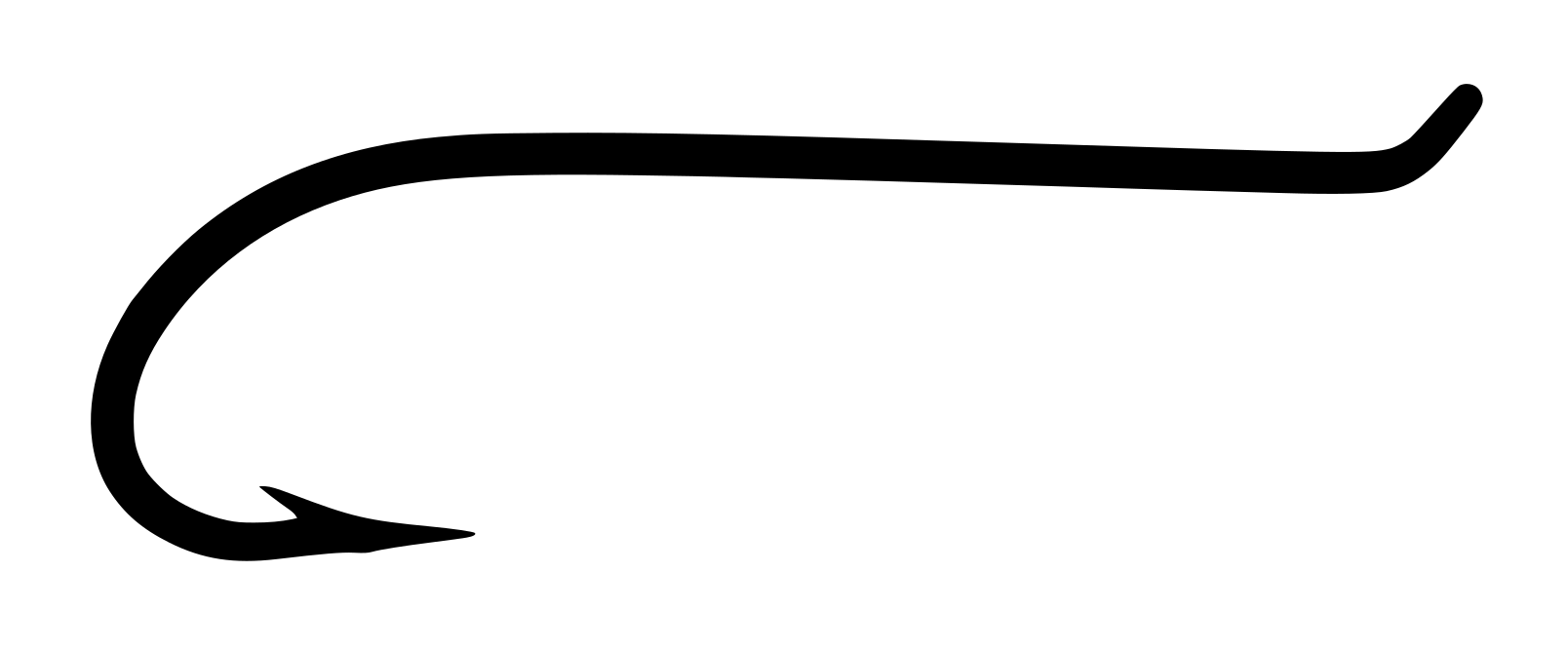
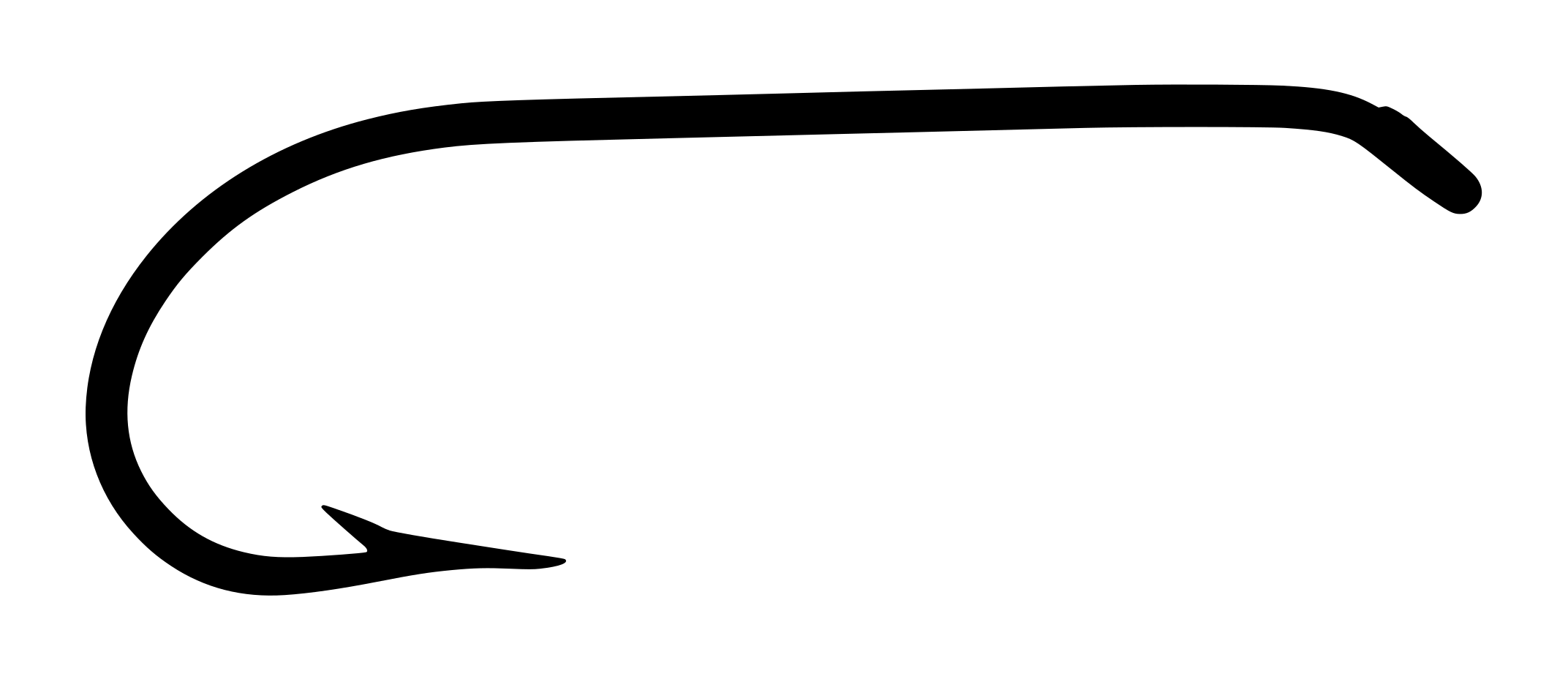
The Mustad 3136, a Norwegian-made bait hook from approximately 1950–1970, was designed for saltwater species requiring heavy tackle and secure hook sets. The hook features a pronounced Kirby bend with lateral point offset, a straight ring eye, heavy wire construction, and bronzed finish—geometry that prevented the hook from pulling straight through tissue without engagement. Its ubiquity across the mid-20th century fishing market and subsequent adoption by manufacturers worldwide established it as the standard expression of the Kirby bend principle in saltwater bait work.
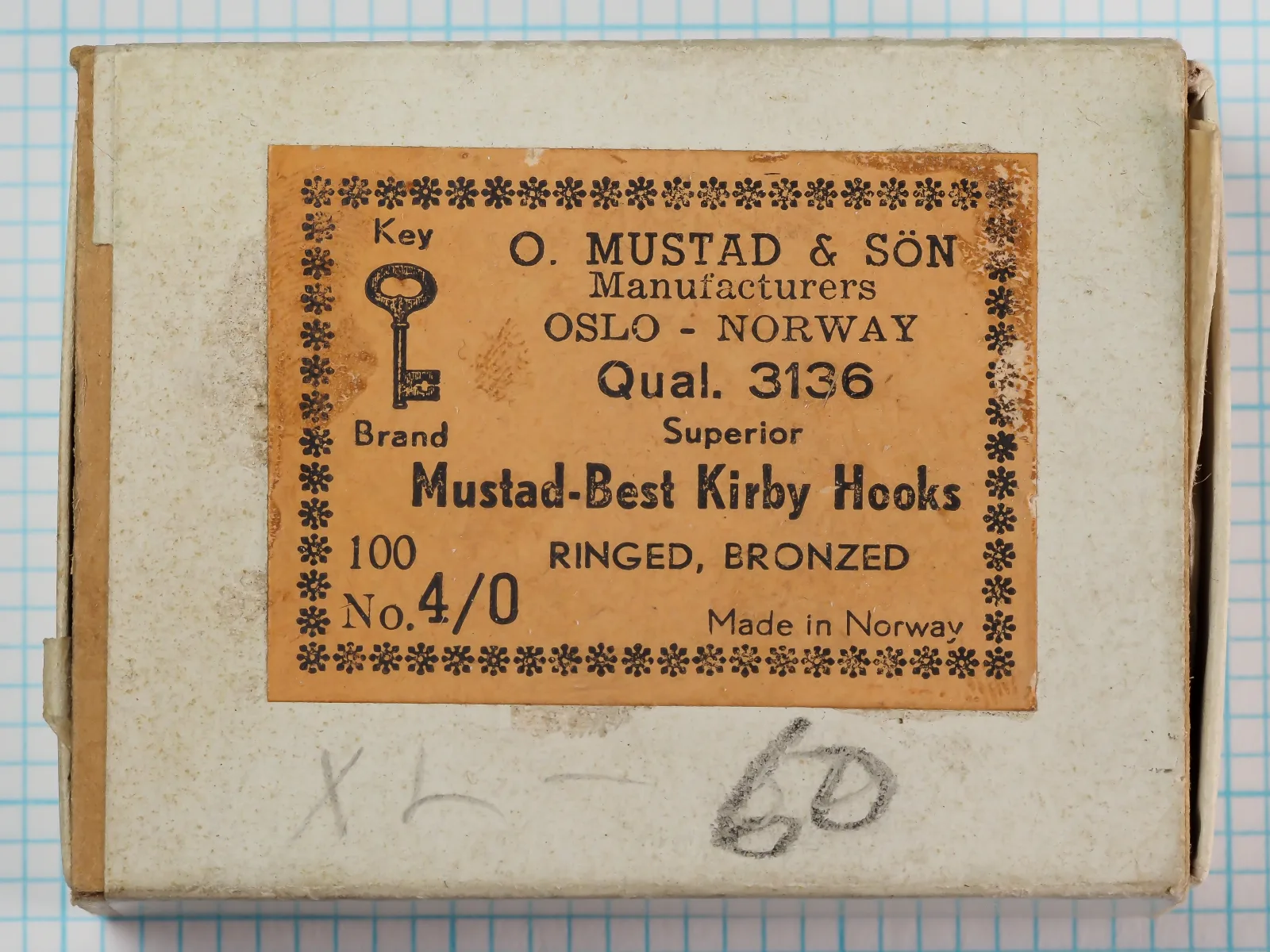
Original cardboard packaging showing the distinctive Key Brand label design with decorative star border and Oslo, Norway address.
Photographic record
11 cataloged imagesSelect any record to load it above.
8 images shown
Mustad 3136 Key Brand Box Size 4/0Original cardboard packaging showing the distinctive Key Brand label design with decorative star border and Oslo, Norway address.Open originalMustad 3136 Superior Point Detail Size 4/0Close-up of the superior point showing the characteristic near-straight inner taper and sharp tip geometry.Open originalMustad 3136 Full Profile Size 4/0 BronzedComplete hook showing the classic Kirby bend geometry with straight ring eye and heavy wire construction.Open originalMustad 3136 Hook Comparison Size 4/0Two hook specimens showing consistency in manufacturing and the scale reference provided by the measurement grid.Open originalMustad 3136 Box and Label Size 5-0Mustad 3136 Box and Label Size 5-0Open originalMustad 3136 Hook Point Size 5-0Mustad 3136 Hook Point Size 5-0Open originalMustad 3136 Hook Size 5-0Mustad 3136 Hook Size 5-0Open originalMustad 3136 Hooks Size 5-0Mustad 3136 Hooks Size 5-0Open originalMustad-3136-Salecard-Hook-PointMustad-3136-Salecard-Hook-PointOpen originalMustad-3136-Salescard-Label-InfoMustad-3136-Salescard-Label-InfoOpen originalMustad-3136-SalescardMustad-3136-SalescardOpen original
Technical profile
Eye
Ball Eye, Straight / Inline
Wire
Standard, Round, Est. ~0.04"-0.05" (~1.0-1.3 mm) E
Shank
2X Long — Plain
Bend
Kirby (offset), Standard gap, Offset / kirbedClassic Kirby geometry with pronounced lateral offset visible in profile view P. The offset angle appears consistent with traditional Kirby specifications, approximately 15-20 degrees from shank centerline E
Point
Superior (near-straight inner taper)
Finish
Bronzed — Confirmed (stated on packaging)Bronze finish shows characteristic brown coloration with slight metallic sheen P. This lacquered bronze provided corrosion resistance suitable for freshwater and light saltwater use, though not as durable as later nickel-plated finishes I.
Hook specimens show excellent condition with intact bronze finish and sharp points. Packaging shows light age toning but remains structurally sound with clear printing.
The Kirby bend’s defining characteristic is the lateral offset of the point relative to the shank plane, visible when viewed from above P. This offset creates a ‘self-setting’ action that prevents the hook from pulling straight through tissue without engaging. The superior point features a near-straight inner taper that provides excellent penetration while maintaining strength at the tip P. Heavy wire construction was essential for the large fish species this hook was designed to handle, particularly in saltwater applications where corrosion resistance was also critical.
Represents one of the highest-volume hook patterns in the garrenwood.com catalog, illustrating the scale of mid-century industrial hook production.
Own this hook? Help us measure it.
We have measurements for sizes 2/0, 3, 7, 4, 4/0. Know any others? Submit calipered measurements and we'll review and add them. Thank you!
Historical context
mustad
O. Mustad & Sön was founded in 1832 by Ole Mustad in Gjøvik, Norway, and grew to become the world’s largest fishhook manufacturer. By the mid-20th century, the company was producing an estimated 50% of all fishhooks used globally. The Key Brand trademark, visible on this packaging, was Mustad’s primary export brand for quality hooks sold internationally. The company’s Norwegian operations represented the gold standard in hook manufacturing, using high-carbon steel wire and traditional forging techniques that made Mustad hooks prized by serious anglers worldwide.
Series History
The 3136 was part of Mustad’s core bait hook lineup for nearly a century, representing their standard Kirby bend pattern. The Kirby design itself dates to the 18th century but was perfected and industrialized by Mustad in the late 1800s. This pattern remained largely unchanged through multiple generations of packaging updates, testament to its functional excellence. The Quality 3136 designation indicated Mustad’s premium grade within the series, distinguishing it from economy versions sold under other model numbers.
Era and Packaging Dating
Cardboard box construction with glued paper label typical of mid-20th century Mustad packaging. Key Brand logo and 'Oslo - Norway' address format predates modern postal codes. Typography and brown/orange label design consistent with 1950s-1970s Mustad export packaging before transition to plastic slide boxes.
The Norwegian Hook Empire
At its peak in the 1960s, Mustad's Norwegian factories were producing over 3 billion hooks annually, with the 3136 being one of their most popular patterns. The company's dominance was so complete that 'Mustad hook' became synonymous with quality fishing tackle across five continents, much like 'Kleenex' for tissues.
Design lineage and influence
The Kirby bend traces its origins to 18th-century English hook making, named after Charles Kirby who is credited with developing the offset point concept. Mustad industrialized and perfected this hand-forged design, creating the template that dozens of other manufacturers would copy throughout the 20th century. The 3136’s proportions and bend angle became the de facto standard for Kirby-style bait hooks worldwide.
Best matchRelated by Attribute
Computed automatically from catalog data — updated as new hooks are added.
Matches: Bend, Shank, Gap, Eye, Eye Orient. +5 moreDiffers: Wire: Standard vs Heavy (1X Heavy); Point: Superior vs Standard / Spear; Finish: Bronzed vs Nickelled
Designed for heavy bait fishing applications P. The Kirby offset bend prevents the hook from pulling straight out of a fish’s mouth, while the ringed eye accommodates heavy leader material. Primary use was bottom fishing for large freshwater species like catfish and carp, or saltwater fishing for cod, haddock, and other bottom feeders V.
Secondary Applications
Large streamer flies for pike and musky when heavy wire is desired
Classic Fly Patterns
Not typically used for fly tying
Modern Equivalents
Hook
Match Quality
Notes
Mustad 92647
Moderate
Modern production but long shank baitholder differs from classic pattern
Eagle Claw 84
Good
Direct Kirby bend equivalent from US manufacturer
VMC 7106
Good
Contemporary Kirby bait hook with similar proportions
Collector notes
Moderately collectible due to Norwegian manufacture and classic Key Brand packaging, but limited by the common nature of the pattern itself.
Reference value
$15 – $35 USD estimate
Packaging condition
Very Good — light wear, fully legibleRecorded specimen
Packaging format
MUS-CB-02Catalog code
Positive factors include the desirable ‘Made in Norway’ provenance during Mustad’s quality peak, complete original packaging with the classic Key Brand label design, and representation of a foundational bait hook pattern. The cardboard box format is increasingly scarce as most examples were discarded after use.
Limiting factors include the extremely common nature of the 3136 pattern itself – millions were produced over decades. The large 4/0 size, while practical, lacks the appeal of smaller vintage sizes. The bronzed finish, while period-correct, is less visually striking than nickelled or blued alternatives from the same era.
Packaging
Cardboard box approximately 4" x 2.5" x 0.75" with glued paper label. Label features brown/orange color scheme with decorative star border pattern. Key Brand logo prominently displayed left side. Typography includes 'O. MUSTAD & SÖN Manufacturers OSLO - NORWAY' and 'Qual. 3136 Superior' with 'Mustad-Best Kirby Hooks' tagline. Box construction typical of 1950s-1970s era before plastic packaging adoption.
Market Value Notes
Values driven primarily by packaging completeness and condition. Loose hooks worth $5-10, complete boxes in excellent condition command premium. Norwegian manufacture adds 30-50% over later imports.
Where to Find
Estate sales, tackle shop closeouts, Norwegian fishing heritage collections. Complete boxes increasingly rare on general market.
Collector's Identification Tips
Key identifiers: Key Brand logo on label, ‘Oslo – Norway’ address format, cardboard box construction, ‘Qual. 3136’ model designation. Later production moved to ‘Gjøvik, Norway’ address. Plastic slide boxes indicate 1980s+ production.
Preservation
Storage and Preservation
Store in a cool, dry environment to prevent corrosion of the bronzed finish. The cardboard packaging is particularly vulnerable to moisture damage and should be kept in protective sleeves or archival boxes. Avoid handling the hooks directly as oils from skin can accelerate patina development. The bronze finish will naturally develop a darker patina over time, which many collectors consider desirable as evidence of age and authenticity.
Original packaging significantly increases collectible value – keep hooks mounted on the original card rather than storing loose. If displaying, avoid direct sunlight which can fade the colorful label graphics. Store boxes flat to prevent warping of the cardboard structure.
Marking Analysis
Box Markings
The handwritten ’50’ marking visible on the lower right corner of the box likely indicates dealer inventory or pricing notation P. This type of handwritten annotation is common on mid-century tackle packaging and provides additional authentication of the era. The numeral style and ink tone are consistent with period marking practices by tackle dealers or distributors.
Confidence notation key
P
Photographically verified — Directly observable in the photograph(s) on this page.
V
Verified by documentation — Confirmed by manufacturer catalog, spec sheet, or published reference.
I
Inferred — A logical deduction from observable or documented evidence, not directly stated.
E
Estimated — An approximation based on visual comparison, proportional analysis, or limited data.
S
Speculative — A reasoned hypothesis that cannot be confirmed from available evidence.
Claims with no notation are confirmed by multiple independent sources. All photographs on garrenwood.com are taken on a measurement grid where each square equals 1/10 inch (0.1″ / 2.54 mm).