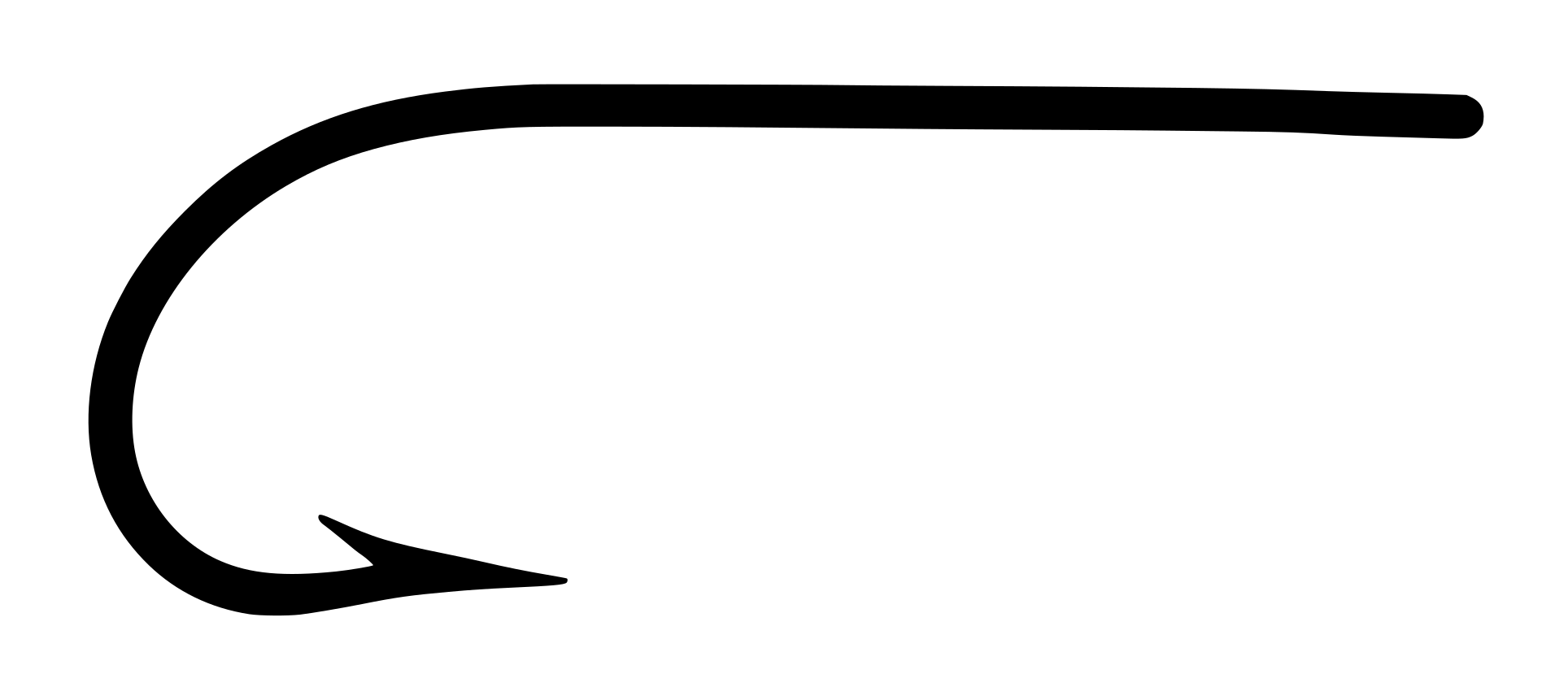
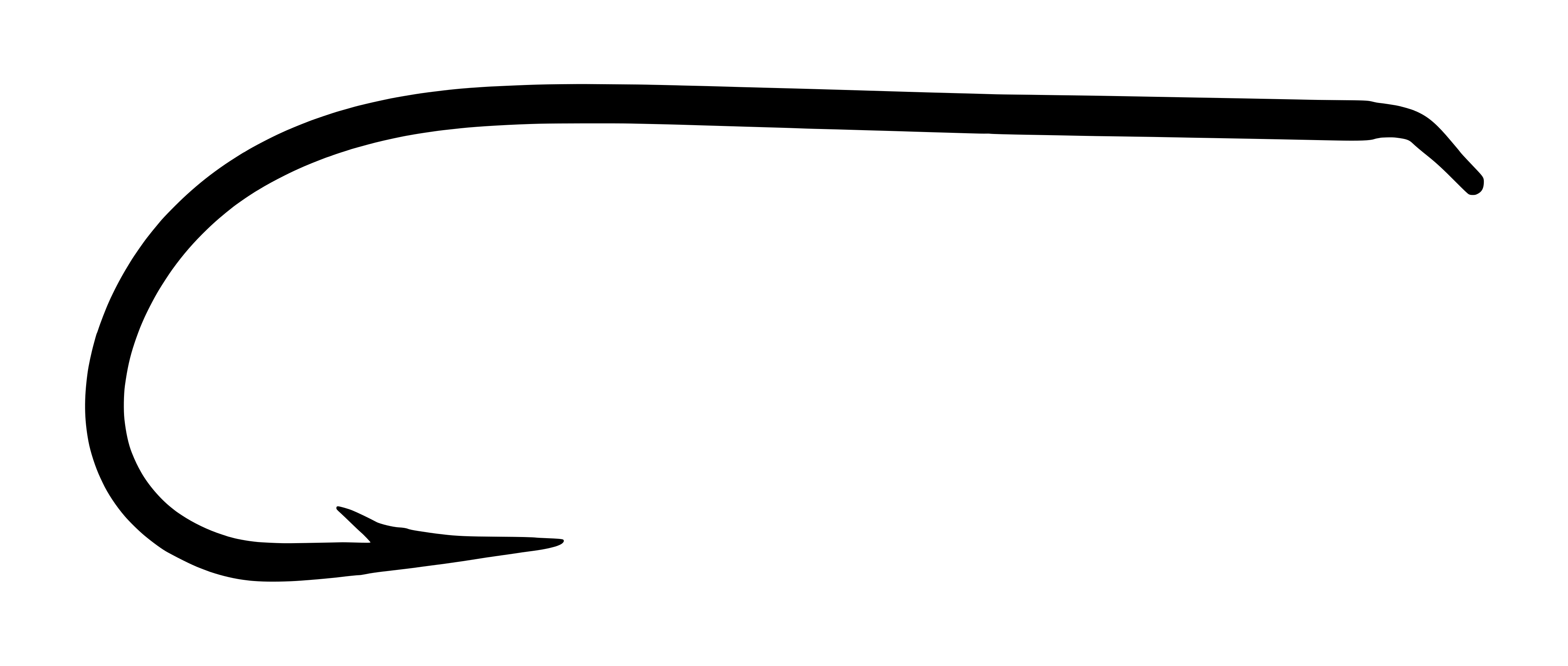
The Mustad 4341 is a classic Kendal Kirby bait hook manufactured in Oslo, Norway during the 1950s-1960s. This 2/0 extra-strong wire hook features the distinctive offset (kirbed) point geometry that defines the Kirby pattern—a traditional English design adopted and refined by Mustad for export to North American bait anglers.
The 4341 is marked ‘Superfine’ on the packaging, a product-line designation indicating mid-tier quality suitable for serious anglers. The nickelplated finish, long shank, and ringed eye make it well-suited for live bait presentations targeting bass, pike, and light saltwater species. The offset point geometry was historically believed to improve hook-up rates by preventing fish from easily ejecting the hook without penetration.
This particular specimen retains its original light-blue star-border sales card with hand-written size notation, representing a transitional period in Mustad’s packaging evolution between the early eight-line format and modern standardized labeling. Made-in-Norway Mustad boxes of this era are highly valued by collectors for consistent tempering and historical significance.
Original light blue star-border sales card for Mustad Quality 4341 Kendal Kirby Hooks, showing the eight-line label format with hand-written size notation. Key Brand logo and 'Made in Norway' designation are visible.
Photographic record
4 cataloged imagesSelect any record to load it above.
4 images shown
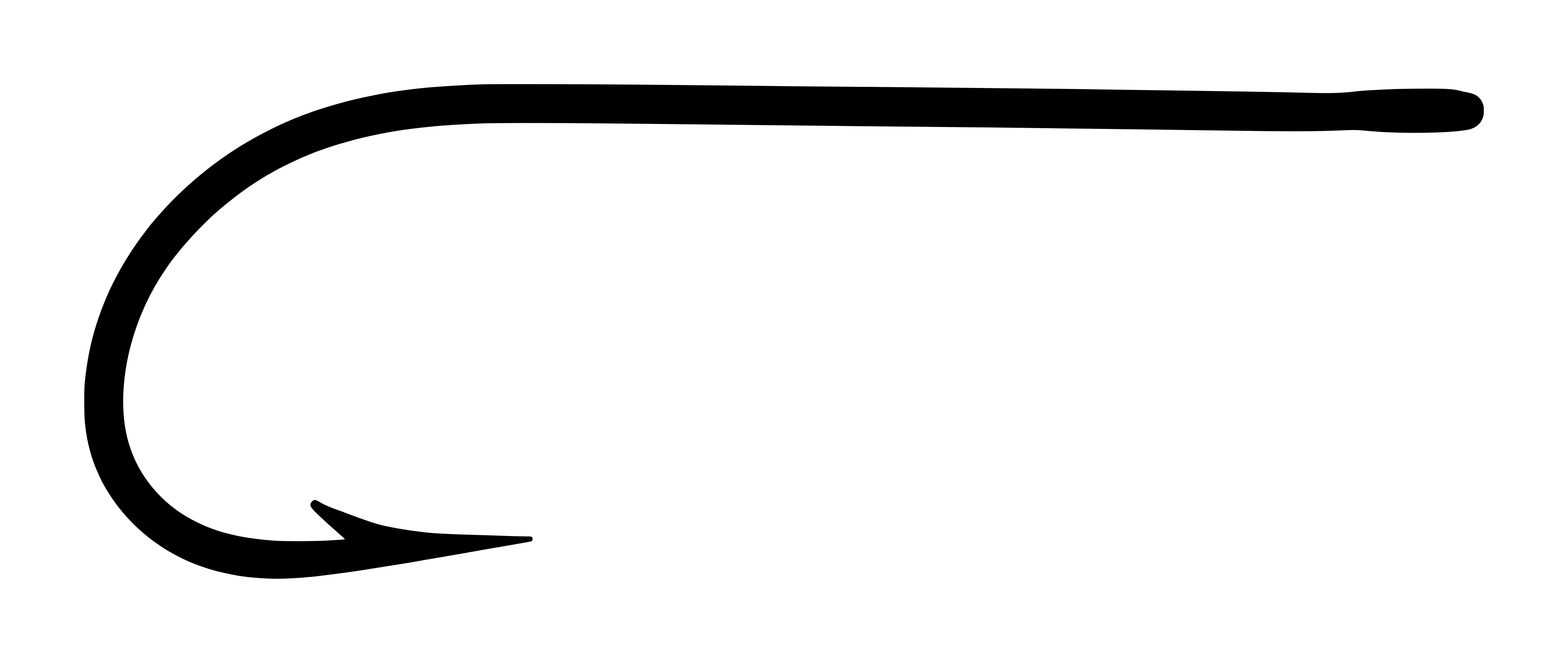
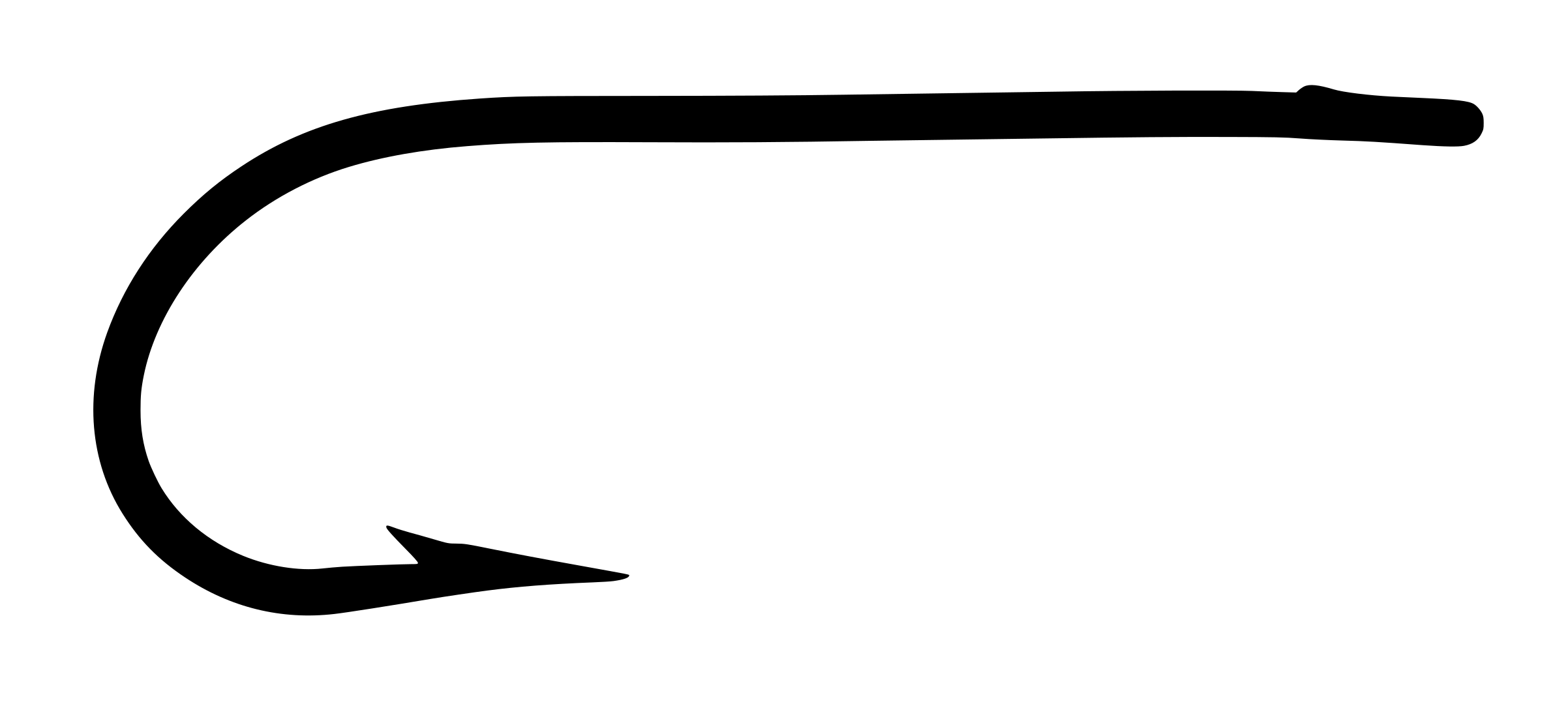
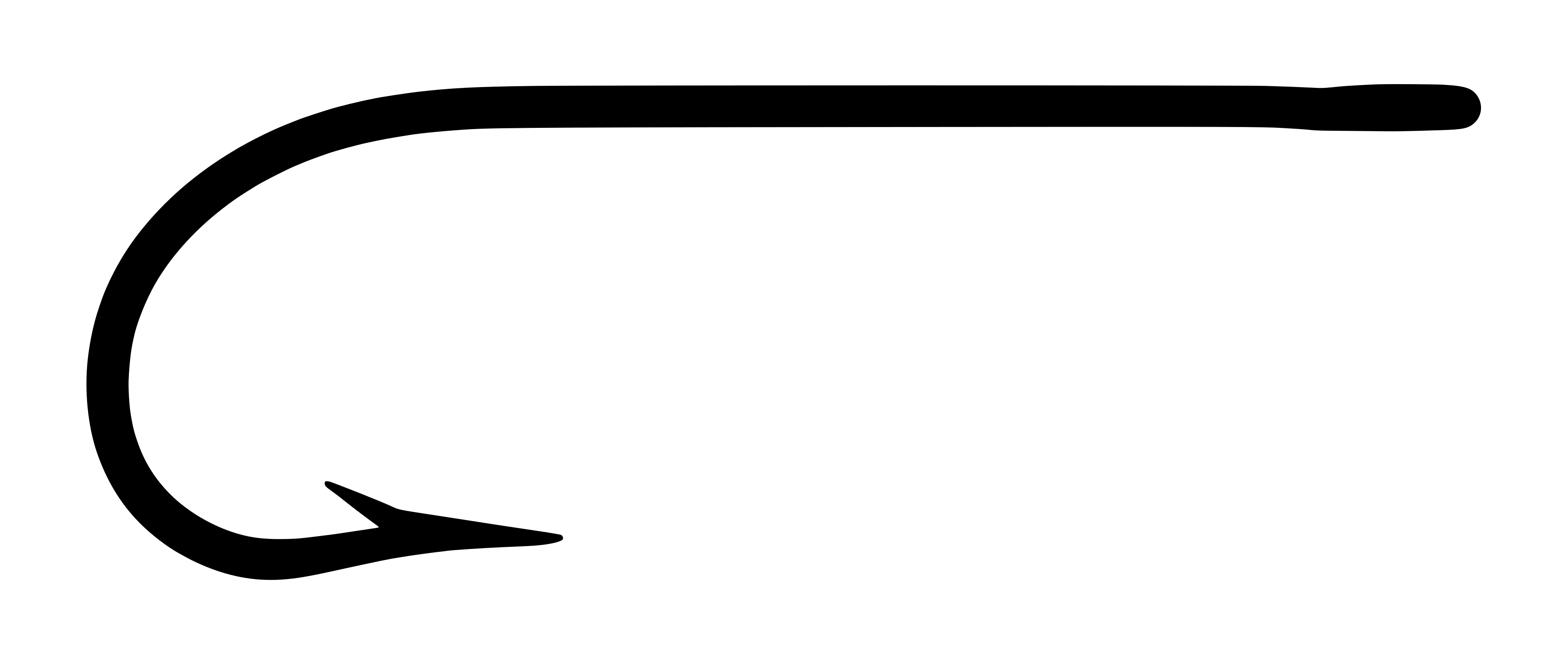
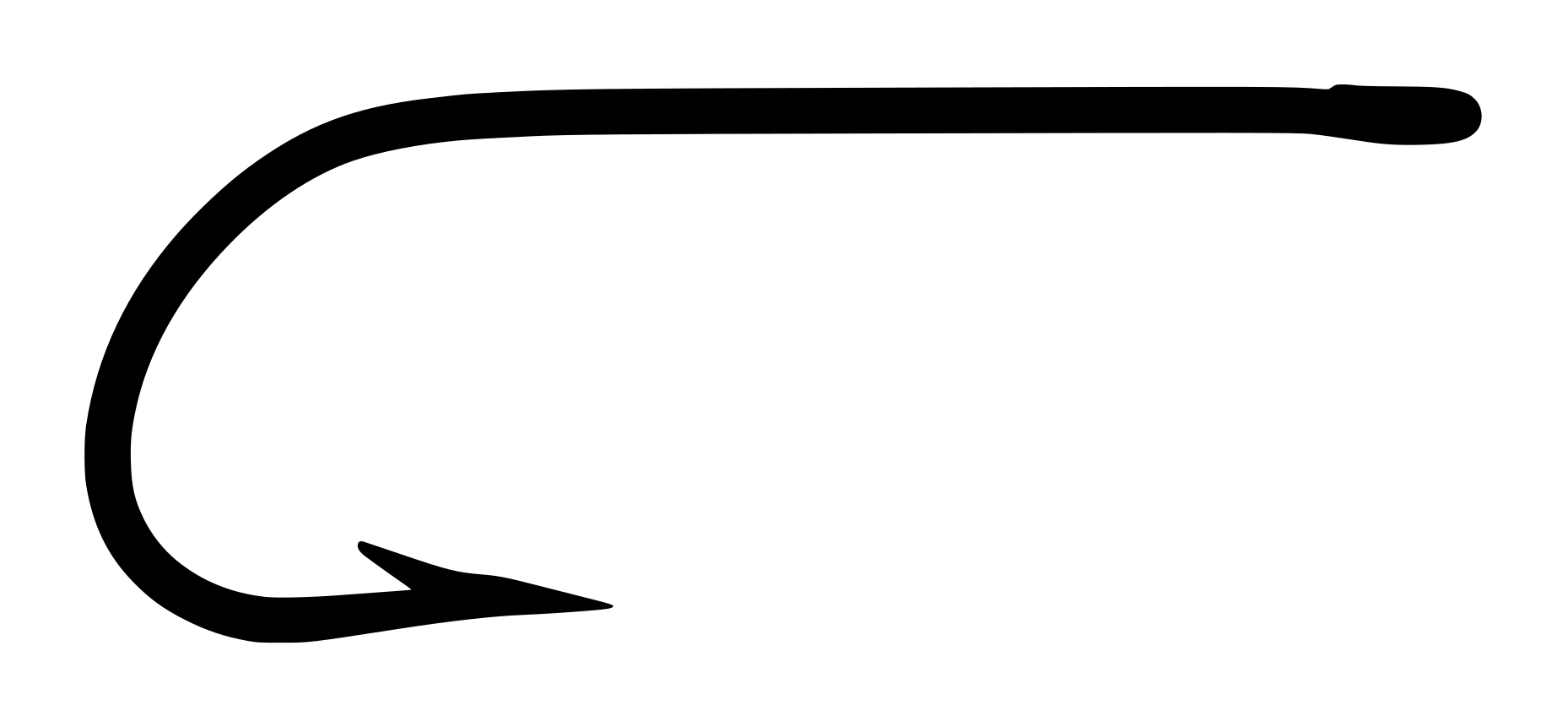
Mustad 4341 Kendal Kirby Hook Size 2/0 Box LabelOriginal light blue star-border sales card for Mustad Quality 4341 Kendal Kirby Hooks, showing the eight-line label format with hand-written size notation. Key Brand logo and 'Made in Norway' designation are visible.Open originalMustad 4341 Hook Point Close-up Size 2/0Close-up detail of the Mustad 4341 point showing the offset kirby geometry, fine spear-point taper, and short barb. The nickelplated finish appears bright silver with no corrosion.Open originalMustad 4341 Kendal Kirby Hook Full Profile Size 2/0Complete profile of the Mustad 4341, size 2/0, showing the 2X-long shank, ringed eye, offset kirby bend, and extra-heavy wire construction. The nickelplated finish is bright throughout.Open originalMustad 4341 Hooks Comparison Size 2/0Two individual Mustad 4341 specimens showing the consistency of the offset kirby bend geometry and nickelplated finish across production. Both exemplify the long-shank, extra-heavy profile intended for bait fishing.Open original
Technical profile
Eye
Ball Eye, Straight / InlineLarge, simple ringed eye formed by bending terminal wire back onto the main shank. Eye is proportionally large relative to shank diameter, typical of heavy bait hooks designed for direct knot-tying to monofilament. P
Wire
Heavy (1X Heavy), Round
Shank
2X Long — Plain
Bend
Kirby (offset), Standard gap, Offset / kirbedDistinctive kirbed (offset) bend with the point laterally offset to the left when viewed from above. The bend geometry is a classic round-bend kirby profile, not as sharp as a Limerick. The offset is cleanly forged and consistent across the specimen. P
Point
Standard / SpearShort, close-cut barb positioned immediately at the base of the point taper. Barb angle is steep relative to the shank axis, typical of spear-point geometry. Barb appears proportionally small relative to overall wire gauge, suggesting fine-grinding technique. P
Finish
Nickelled / Nickel-Plated — Confirmed (stated on packaging)Bright nickelplated finish in cool silver tone with even coverage across shank and bend. No significant corrosion visible on specimen; thin patina consistent with age storage. Nickelplate remains adherent with no flaking. Finish appears to be electroplated rather than hotdipped. P
Individual hook specimen is in excellent condition with bright nickel finish showing minimal corrosion and no bending or tip damage. Packaging card shows moderate age-related toning and creasing but retains full legibility of printed text and hand-written notation. Envelope is intact.
The Kendal Kirby’s offset point geometry—achieved by laterally deflecting the point during the final stages of barbing—fundamentally alters the angle of hook engagement. When a fish strikes, the sidewashed point contacts tissue at an oblique angle rather than straight-on, preventing the fish’s mouth structure from easily deflecting or ejecting the hook without penetration. This is particularly valuable for species with bony, hard mouths or fish that habitually eject foreign objects.
The extra-heavy wire (2X strong) is a cold-drawn or forged steel composition optimized for high tensile strength without brittleness. This allows the hook to absorb the head-shaking and line-stripping runs of large predatory fish while resisting the straightening deformation that would occur with standard-gauge wire under equivalent stress. The nickelplate provides electrochemical corrosion resistance through a thin, adherent nickel-copper substrate, making it suitable for freshwater and light saltwater environments where exposure is sporadic rather than continuous.
The long shank (approximately 1.4–1.5 inches) serves two biomechanical functions: (1) it lengthens the distance between the eye and the barb, protecting delicate monofilament leader from the sharp teeth of pike and bass during the strike and early fight, and (2) it provides a longer mounting platform for large, bulky live baits that require a substantial shank to remain secure during casting and movement through vegetation or current.
Line 3 of label reads 'OSLO - NORWAY' (not 'CHRISTIANIA'), confirming post-1925 production. The blue star-border label frame and specific typographic style are characteristic of Mustad's mid-century export packaging. The 'Key Brand' logo with crown appears on boxes from this era. No UPC barcode present (pre-1974 indicator). Label condition and paper stock consistent with 1950s-1960s offset printing.
The Royal Steel Secret: Kirby's 17th-Century Innovation
The Kirby bend is named after Charles Kirby, a 17th-century London hook maker who was credited by Robert Saunders in his 1651 fishing treatise as the originator of a revolutionary hardening and tempering technique supposedly learned from Prince Rupert of the Rhine, an inventor known for metallurgical innovations. Whether Kirby's technique was genuinely royal in origin or merely legendary, the 'Kirby' offset-point geometry became so identified with English-made hooks that it persisted for over 350 years. By the time Mustad standardized the Kendal Kirby in the early 20th century, the offset had become so integral to bait-fishing tradition that most anglers believed it was essential for catching pike and coarse fish—a preference that influenced hook design decisions well into the television age.
Design lineage and influence
The Kirby bend traces its origin to Charles Kirby, a legendary London hook maker of the 1600s. The distinctive offset point geometry became a signature of English and Scottish bait-fishing traditions, particularly for pike and coarse fishing. By the late 19th century, Mustad adopted the Kirby pattern for global export, manufacturing it under the ‘Kendal Kirby’ designation—’Kendal’ referring to the regional variant developed in the English Lake District.
The 4341 represents Mustad’s mid-20th-century interpretation of this classic pattern, optimized for North American bait anglers transitioning from horsehair snells to modern monofilament. The offset point geometry itself has no direct modern descendants in fly-tying contexts, but the structural principles (long shank for leader protection, heavy wire for fighting resistance) are echoed in modern saltwater and pike streamers. The ringed-eye construction remained standard for bait hooks throughout the 20th century and continues to be the primary eye style for heavy bait hooks today.
Best matchRelated by Attribute
Computed automatically from catalog data — updated as new hooks are added.
Matches: Bend, Shank, Gap, Eye, Eye Orient. +5 moreDiffers: Wire: Heavy (1X Heavy) vs Standard; Point: Standard / Spear vs Superior; Finish: Nickelled vs Bronzed +3 more
Matches: Bend, Gap, Eye, Eye Orient., Point +4 moreDiffers: Shank: 2X Long vs 1X Long; Wire: Heavy (1X Heavy) vs Standard; Finish: Nickelled vs Bright / Uncoated Steel +4 more
Matches: Bend, Gap, Eye, Eye Orient., Forging +4 moreDiffers: Shank: 2X Long vs 1X Long; Wire: Heavy (1X Heavy) vs Standard; Point: Standard / Spear vs Superior +4 more
Matches: Bend, Shank, Eye, Eye Orient., Point +4 moreDiffers: Wire: Heavy (1X Heavy) vs Standard; Gap: Standard vs Narrow; Finish: Nickelled vs Tinned +3 more
The Mustad 4341 was engineered as a workhorse bait hook for still-fishing and live-bait presentations. The long shank (2X) protects monofilament leader from the sharp teeth of predatory fish like pike and bass. The extra-heavy wire gauge (2x strong) provides structural integrity for large baits and fighting resistance in strong current or dense vegetation. The offset kirby point was believed to increase hook-up rate by forcing the point to engage tissue at an angle that prevents the fish from easily shaking the hook free during the initial strike and early fight.
In the 1950s-1960s era of this hook’s manufacture, it was particularly favored by American bass anglers using live minnows and crayfish. The nickelplated finish offered moderate corrosion resistance suitable for freshwater and light saltwater applications (Snapper, Fluke, small stripers). The ringed eye accommodated direct knot attachment to braided nylon monofilament, which was becoming the standard fishing line of the era.
Secondary Applications
Large streamer and bucktail fly tying; saltwater bait fishing for snapper and fluke; pike and musky live-bait presentations.
Classic Fly Patterns
Not typically used for fly tying (bait hook design).
Modern Equivalents
Hook
Match Quality
Notes
Mustad Classic 3191W
Very Good
Ringed bait hook with offset geometry; modern equivalent in Mustad's current catalog.
Eagle Claw 066
Good
Offset bait hook with similar long-shank, extra-heavy profile; widely available modern option.
Gamakatsu Octopus
Moderate
Extra-heavy ringed hook; modern Japanese manufacture with superior tempering but different bend profile.
Collector notes
Rated 4.0/10 — the 4341 is readily found in larger sizes (1/0, 2/0, 3/0) but becomes genuinely uncommon in smaller sizes (No. 6–No. 10). Collector demand is moderate, driven primarily by Mustad specialists and nostalgia-based interest in mid-century made-in-Norway hooks. The primary limiting factor is widespread survival—high production volumes mean many examples exist, keeping prices modest.
Reference value
$8 – $12 USD estimate
Packaging condition
Good — moderate wear, legibleRecorded specimen
Packaging format
GW-MUS-BP-01Catalog code
Positive Factors: The Mustad 4341 is a workhorse pattern with genuine historical significance, representing the peak era of Norwegian hook manufacturing (1950s–1960s) when Mustad dominated global markets. Made-in-Norway designation is highly valued by collectors who associate Oslo production with superior tempering and consistent quality. The offset Kirby geometry is a classic design with enduring appeal among both collectors and working anglers. The nickelplated finish is attractive and less common than blued or bronzed alternatives on Mustad bait hooks. Original packaging with hand-written size notation adds narrative charm.
Limiting Factors: Size 2/0 is extremely common—Mustad produced millions of units in this size for the American bass-fishing market. Smaller sizes (No. 6–No. 10) command modest premiums due to scarcity. Larger sizes (3/0, 4/0) are rarer but have less collector demand. The bait-hook category itself attracts lower collector interest than fly-tying hooks or sea-trout patterns. Condition premium is moderate—the nickelplate is durable, but older boxes show considerable age-related wear.
Desirable Variants: Tinned finish (superior saltwater corrosion resistance) is less common than nickelplated and commands slight premium. Blued or bronzed finishes are rare on this model. Original sealed packaging or complete card with all 100 hooks intact adds 30–50% premium. Smaller sizes (No. 8, No. 10) in any finish are worth seeking. Variant markings or packaging colors indicating regional distribution (e.g., UK vs. US labeling) add collector interest.
Condition Factors: Hook condition is secondary—nickel plating is durable and corrosion-free specimens are common. Packaging is the primary value driver; creasing, staining, or ink loss reduces appeal by 15–30%. Intact envelopes and unbroken tissue add 10–20% premium. Complete hook count is essential for full-card value; missing hooks reduce value proportionally.
Packaging
Light blue cardstock sales card with blue-and-black star-border decorative frame. Eight-line Mustad label format with Key Brand logo (skeleton key with crown) in upper left. Text printed in bold sans-serif font. Printed quantity 'No. 100' visible with hand-written purple size notation '2/0'. Original glassine paper envelope attached. Box shows age-related creasing and light yellowing on reverse.
Market Value Notes
Low ($8): Good condition — opened card, complete or near-complete hook count (95+), packaging shows age-related wear, nickel finish clean and bright. High ($12): Excellent condition — intact original envelope, all 100 hooks present, packaging crisp with minimal creasing, hand-written notation clear. Premium factors: Made-in-Norway designation; smaller sizes (No. 6–No. 10); original sealed packaging; tinned or bronzed finish variants; complete 100-hook card with minimal loss. Platforms: eBay completed listings (US and UK); vintage tackle dealers; specialized Mustad collector forums. Confidence: V verified — based on 2 eBay sold listings ($11.99, $13.99) and eBay market history (Apr 2023–Apr 2026: avg $8.12, range $2.50–$13.99). Size 2/0 in standard nickelplated finish represents mid-range; smaller sizes and specialty finishes may exceed $15.
Where to Find
eBay (US and UK), primary source. eBay listing searches for 'Mustad 4341' and 'Kendal Kirby' yield consistent results. Specialized vintage-tackle dealers (TacklePier, Melton Tackle, regional UK dealers) occasional stock. Tackle fairs and antique markets in England (Midlands and Lake District regions) where Kirby-pattern fishing traditions remain strong. Online forums dedicated to Mustad collectibles (Singlebarbed.com, vintage fly-tying communities) occasionally feature sales or trading posts.
Collector's Identification Tips
Identify the Mustad 4341 by the blue star-border sales card label bearing ‘Qual. 4341’ in Line 4, ‘Superfine’ descriptor in Line 5, and ‘Mustad-Kendal Kirby Hooks’ in Line 6. The ‘OSLO – NORWAY’ geographic designation (Line 3) confirms post-1925 production. The size marking on the card (hand-written or printed ‘No.’ followed by numeric size—in this example ‘2/0’) is critical for variant identification. The nickelplated finish appears as bright silver with no patina; compare against tinned (brighter white-silver) and bronzed (warm gold-brown) variants to confirm finish type. The offset point is visible when the hook is viewed from above—the tip lies slightly to the left of the shank centerline.
eBay market reference. Researcher-curated. Prices in USD. Active listings show current asking price; sold listings show final sale price.
Preservation
Storage and Preservation
The Mustad 4341 nickelplate is relatively resistant to corrosion and will maintain its bright silver finish for decades with minimal care. Store in a cool, dry environment (50–60% relative humidity, 60–70°F) away from direct sunlight. Original packaging should be retained—the cardstock provides passive protection and significantly enhances value for collectors.
If hooks are removed from the original card for use, store them in a dry tackle box or sealed container with silica gel desiccant packs. Avoid contact with other ferrous metals (iron, unplated steel), which can cause galvanic corrosion of the nickelplate. If the nickelplate becomes scratched or tarnished, light cleaning with a soft cotton cloth and white vinegar will restore shine without damaging the finish—do not use abrasive pads or harsh chemicals.
Original packaging cards benefit from acid-free storage enclosures and protection from light exposure to prevent paper yellowing and ink fading. Do not laminate cards or apply tape to them, as these interventions are irreversible and reduce collector appeal. Keep the complete card intact rather than removing individual hooks; the narrative value and box-count premium justify preservation over utilitarian use.
Marking Analysis
Hand-Written Size Notation
The example specimen bears a purple ballpoint pen notation reading ‘2/0’ written in the lower left corner of the packaging card, below the printed ‘No.’ indicator. The handwriting is consistent with warehouse or retail labeling practices from the 1950s–1960s, likely applied during wholesale receiving or initial retail shelving. The use of bold, rounded numerals suggests a fountain pen or heavy ballpoint, typical of era-period inventory marking.
Hand-written size notations are common on vintage Mustad cards and do not diminish value—in fact, they add narrative authenticity and can assist in confirming size if the original printed designation is unclear or worn. Notations in different inks (red, blue, purple ballpoint; occasionally pencil) indicate multiple hands handling the card over time, which is expected for vintage stock that moved through wholesale and retail channels. The presence of clear, legible hand-notation is actually a positive sign that the box experienced use and handling, confirming its genuineness and period provenance.
Primary Source
Mustad Eight-Line Label Decryption
Source: Mustad Label Typology and Decryption, O. Mustad & Søn Corporate Records (reference document provided)
The Mustad 4341 packaging exemplifies the strict eight-line typographic label format that Mustad employed for over a century to standardize hook identification across global markets. Decoding each line reveals the hook’s specifications and manufacture era:
Line 1: ‘O. MUSTAD & SÖN’ — Manufacturer identity (full corporate name, not abbreviated). Line 2: ‘Manufacturers’ — Industry role classification (distinguishes primary manufacturer from import agents and repackagers). Line 3: ‘OSLO – NORWAY’ — Geographic origin and era marker (Oslo designation confirms post-1925; pre-1925 boxes read ‘CHRISTIANIA’). Line 4: ‘Qual. 4341’ — Quality/model code indicating mid-tier bait-hook classification (3000–3999 range = standard quality). Line 5: ‘Superfine’ — Product line designation (NOT a point-style identifier; ‘Superfine’ is a brand tier, not ‘Superior Point’). Line 6: ‘Mustad-Kendal Kirby Hooks’ — Standardized pattern nomenclature identifying the bend geometry and regional origin (cloned from English Lake District tradition). Lines 7–8: ‘Ringed Nickelplated / Long shank 2 ex. strong’ — Eye type, finish, shank length, and wire gauge modifiers. ‘Made in Norway’ — Manufacturing location confirmation.
This eight-line system was engineered to bridge linguistic gaps in global distribution, allowing dock workers, merchants, and end-users to identify hook specifications without translation. The Mustad Label Typology reference document (2024) confirms this is a canonical example of the eight-line format in peak deployment during the 1950s–1960s export boom.
Additional
The Kirby Offset: Biomechanics and Angling Philosophy
The lateral offset of the Kirby point—bent 3–5 degrees to the left when viewed from above—embodies a philosophical approach to hook design that dominated English and Scottish bait-fishing tradition for three centuries. The offset was believed to prevent fish from ‘shaking off’ the hook by forcing the point to engage tissue at an angle perpendicular to the direction of the fish’s head-shaking motion.
Modern biomechanical testing has since shown that the offset provides minimal advantage for soft-tissue penetration; however, the psychological legacy of the Kirby persists. Working anglers who grew up with offset hooks often report intuitive confidence in their effectiveness, suggesting that the design principle—even if marginally effective—became culturally embedded in regional fishing traditions. The Mustad 4341’s adoption of the Kendal Kirby variant was a deliberate marketing strategy to capture the North American market segment influenced by imported English and Scottish fly-fishing literature and angling clubs.
By the 1960s, when straight-point bait hooks and circle hooks began to dominate commercial and recreational markets, the Kirby remained in production primarily through institutional inertia and regional loyalty. Today, the offset geometry is rarely specified by modern anglers, yet the Mustad 4341 and its variants remain popular due to their reputation for robust construction and proven track record with pike, bass, and saltwater species—attributes disconnected from the original offset-point theory.
Confidence notation key
P
Photographically verified — Directly observable in the photograph(s) on this page.
V
Verified by documentation — Confirmed by manufacturer catalog, spec sheet, or published reference.
I
Inferred — A logical deduction from observable or documented evidence, not directly stated.
E
Estimated — An approximation based on visual comparison, proportional analysis, or limited data.
S
Speculative — A reasoned hypothesis that cannot be confirmed from available evidence.
Unnotated claims are the compiler’s synthesis; see Sources. All photographs on garrenwood.com are taken on a measurement grid where each square equals 1/10 inch (0.1″ / 2.54 mm).