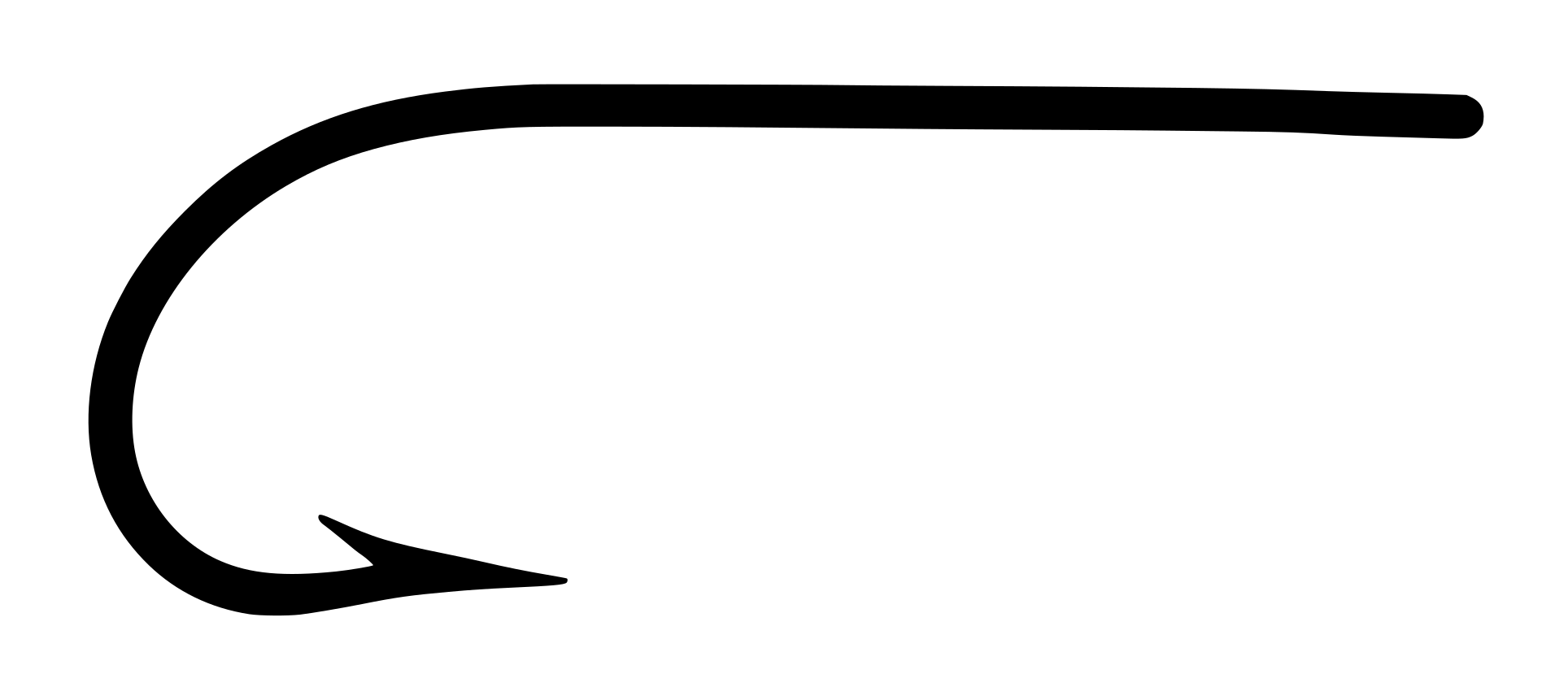
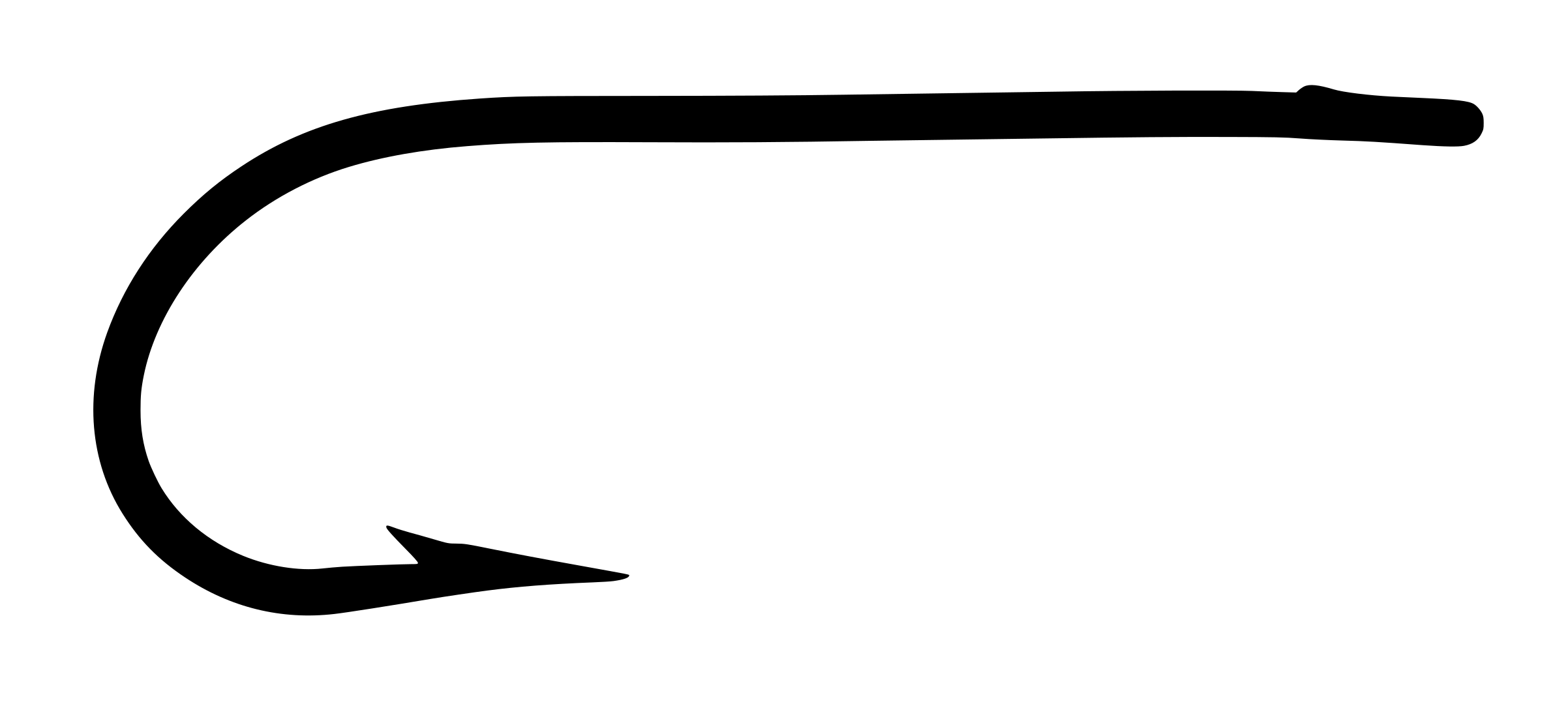
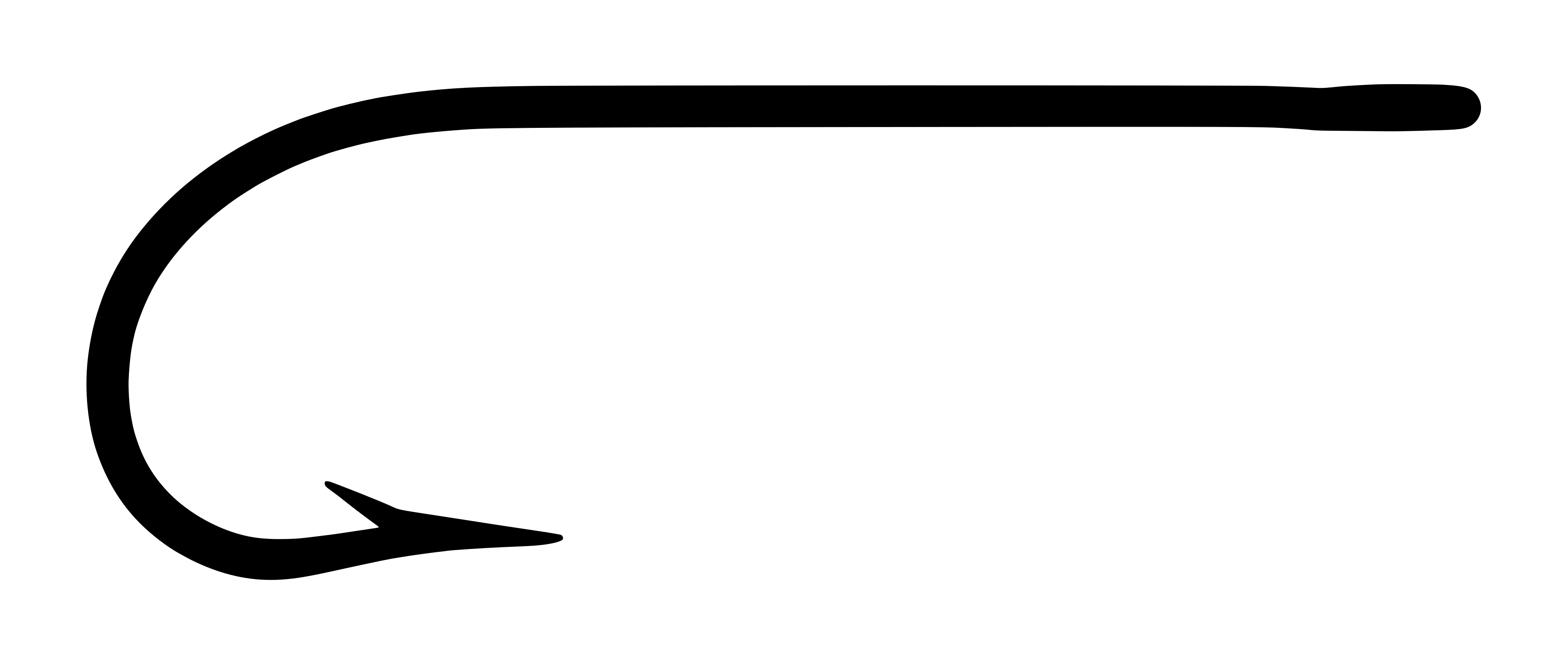
The Mustad Model 3308 Cincinnati Bass Hooks represent O. Mustad & Son’s mid-20th-century entry into the North American saltwater and bait-fishing market. This boxed set of 100 tinned hooks, size 20, features a kirby (offset) bend, straight ball eye, and superior point — a robust geometry optimized for aggressive saltwater species. Made in Norway and distributed through what appears to be a Cincinnati-based regional marketing initiative, this line exemplifies Mustad’s sophisticated approach to North American market segmentation in the 1940s–1960s.
The straight-eye geometry and long shank (1X) are hallmarks of saltwater bait-hook design, accommodating live or dead presentations and providing reliable penetration under heavy strike loads. The tinned finish offers superior corrosion resistance compared to earlier bronzed or japanned alternatives. The original rigid box with printed label is the specimen’s most distinctive feature — boxes are substantially rarer than sales cards in Mustad’s production archive and represent a significant premium over loose-hook pricing.
Collectability is moderate (4.0/10) — driven primarily by packaging rarity and condition rather than by demand for the hook type itself. Bait hooks are overshadowed in collecting circles by fly hooks and specialty salmon patterns. The Mustad-Cincinnati brand carries historical significance for regional American fishing tackle markets, particularly in the Atlantic striped-bass and saltwater-bottom-fishing traditions, but documentation remains limited. This specimen appeals most strongly to Mustad historians, vintage saltwater tackle collectors, and enthusiasts of mid-century American fishing regionalism.
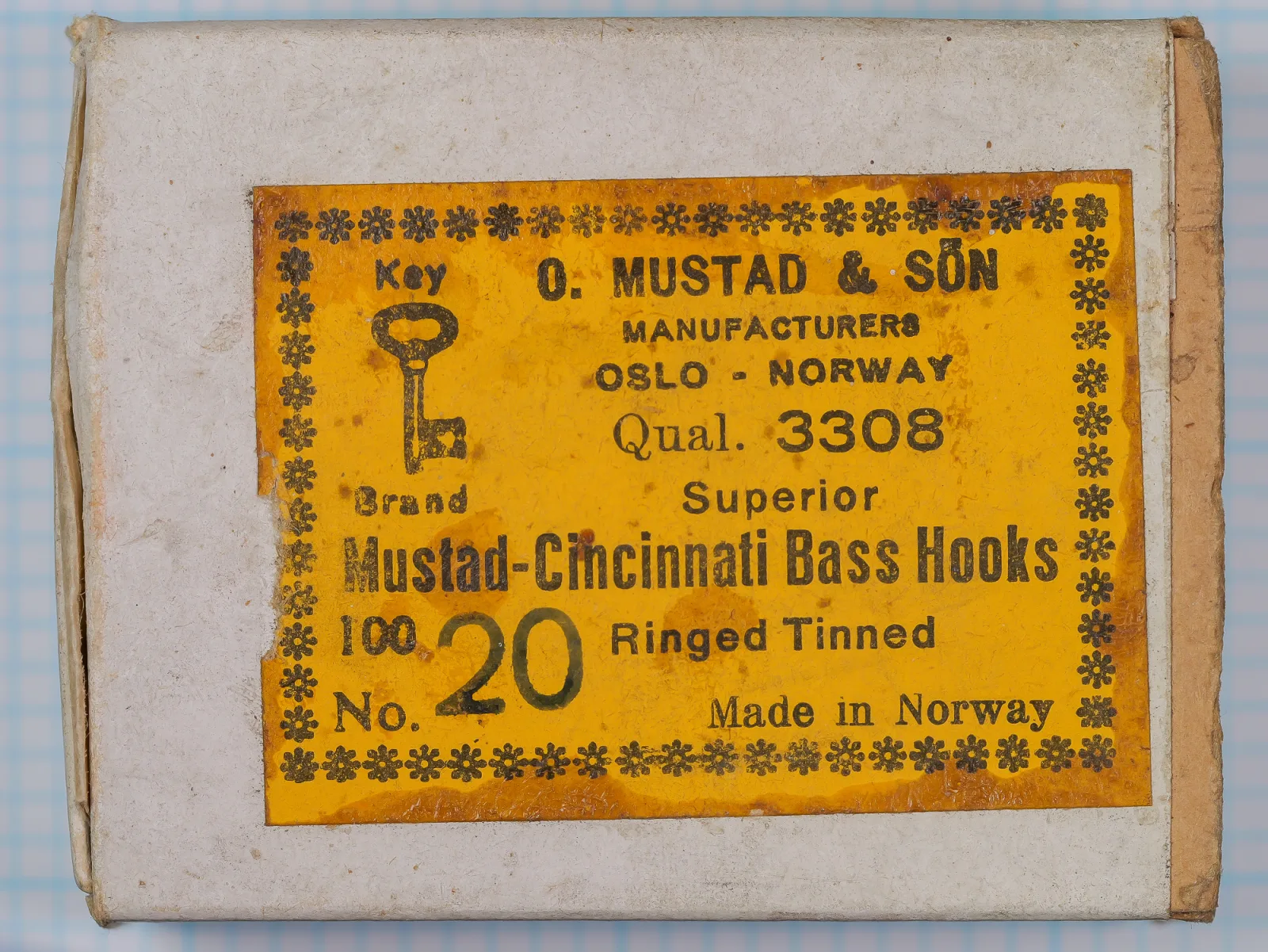
Top view of the rigid manufacturer box showing the printed letterpress label with Mustad branding, Model 3308 designation, 'Cincinnati Bass Hooks' line name, size specification, and 'Ringed Tinned' finish marking. Decorative black-and-gold ornamental border is visible on the yellow label. Box shows age patina consistent with 1940s–1960s production.
Photographic record
3 cataloged imagesSelect any record to load it above.
3 images shown
Mustad 3308 Cincinnati Bass Hooks Box LabelTop view of the rigid manufacturer box showing the printed letterpress label with Mustad branding, Model 3308 designation, 'Cincinnati Bass Hooks' line name, size specification, and 'Ringed Tinned' finish marking. Decorative black-and-gold ornamental border is visible on the yellow label. Box shows age patina consistent with 1940s–1960s production.Open originalMustad 3308 Size 20 Profile ViewProfile (side) view of a single size 20 Cincinnati Bass Hooks specimen, showing the tinned bright-silver finish, kirby offset geometry (offset to the left when viewed from above), and tapered superior point with integral barb. The straight ball eye is visible at the shank terminus. Shot on 0.1-inch measurement grid for scale reference.Open originalMustad 3308 Size 20 Overhead ViewOverhead view of the size 20 hook showing the kirby offset orientation (point offset to the left when viewed from above), the straight alignment of the ball eye with the shank axis, and the tinned bright-silver finish. Grid background provides scale and geometric reference.Open original
Technical profile
Straight Ball Eye | Kirby (offset) | 1X Long | Standard Wire | Superior Point | Tinned
Eye
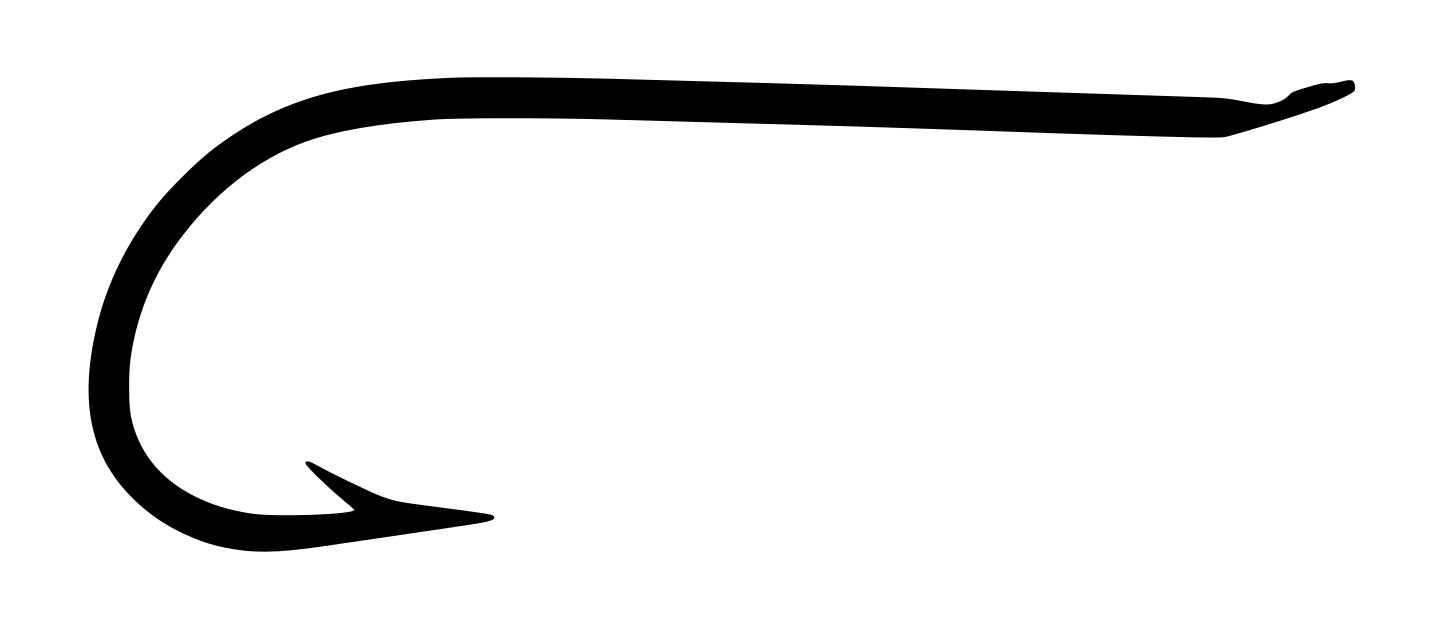
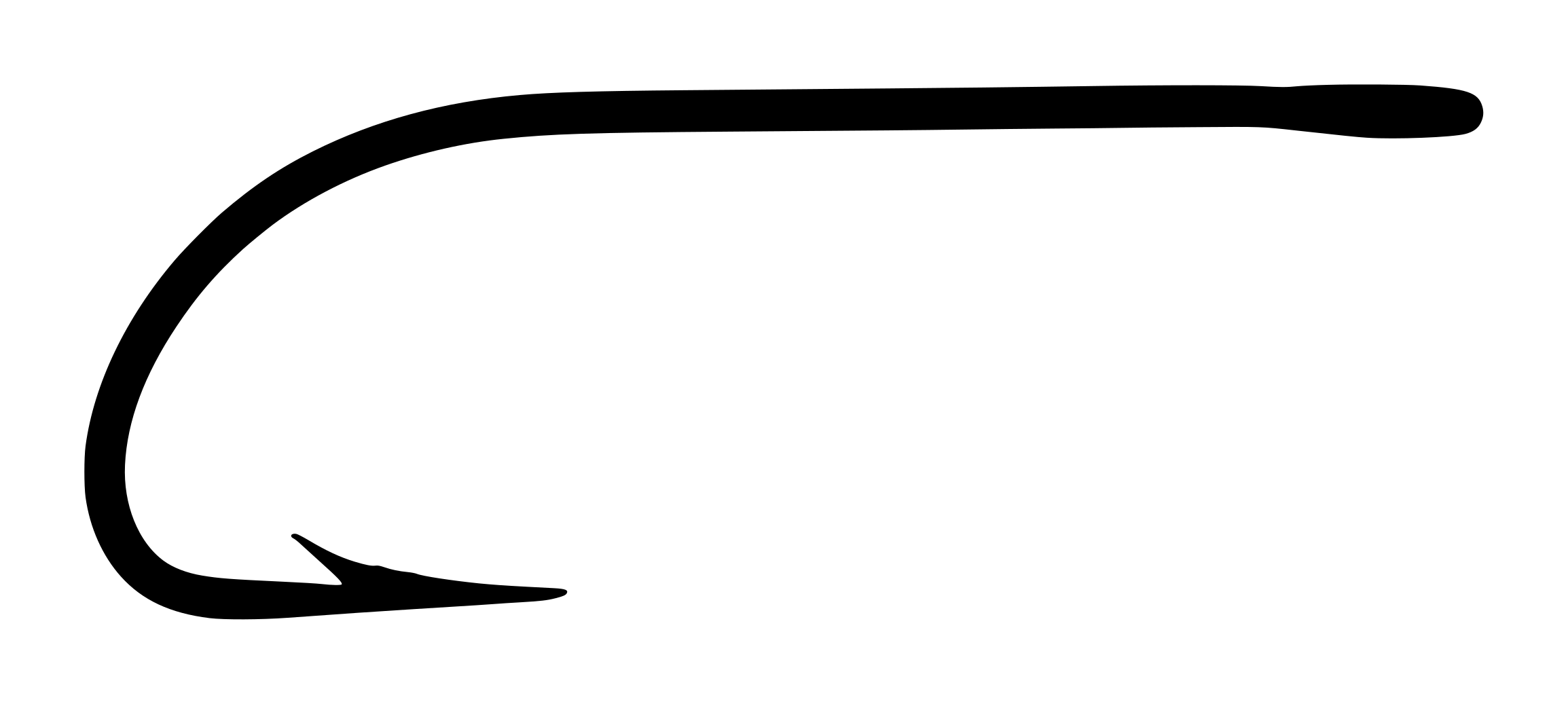
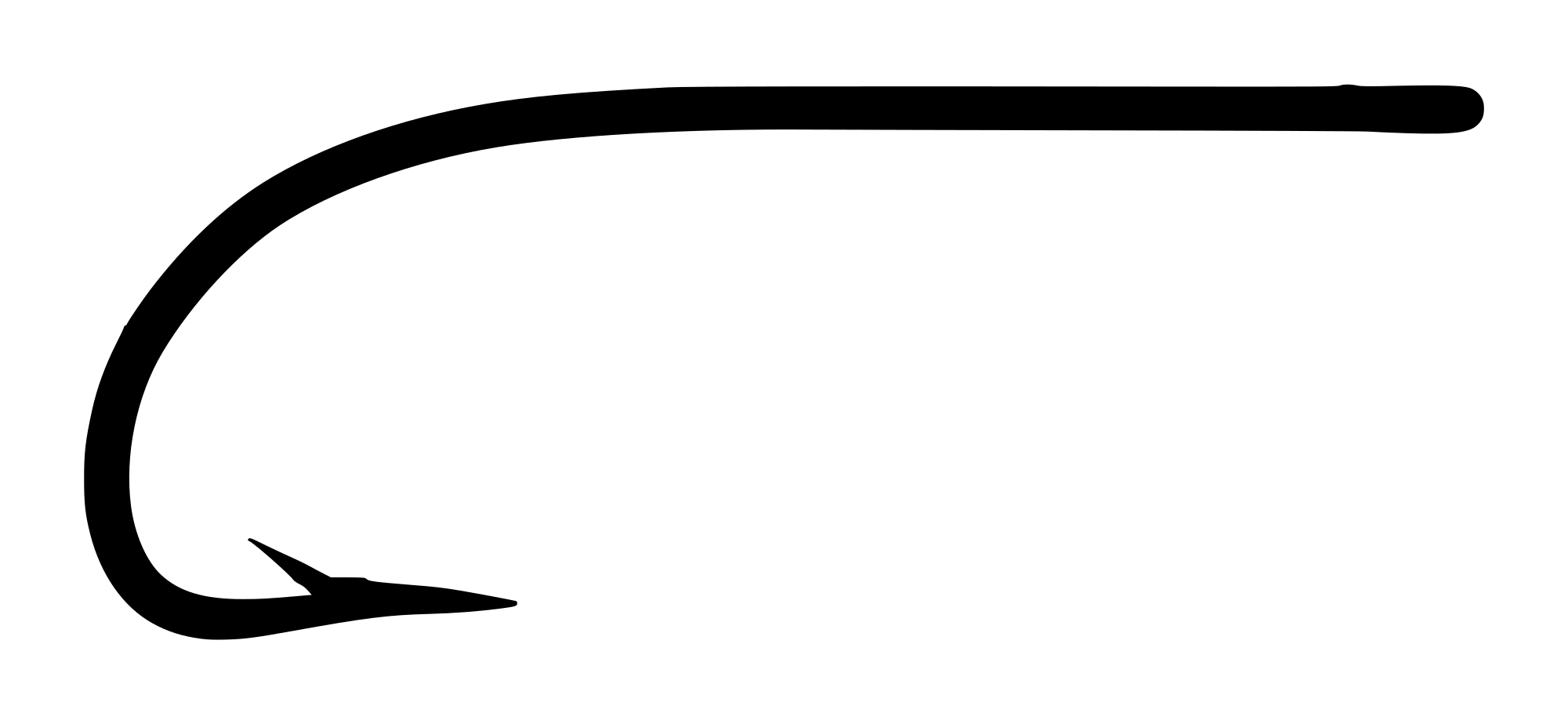
Ball Eye, Straight / InlineBall eye is well-formed with uniform wire diameter in the loop. Eye gap shows minimal thickness — wire ends meet cleanly with tight butt P. Straight orientation is confirmed; eye loop lies inline with the shank axis.
Wire
Standard, Round
Shank
1X Long — Plain
Bend
Kirby (offset), Standard gap, Offset / kirbedKirby (offset left, viewed from above). Bend is moderately deep and regular. Offset is consistent and integral to the forging, not a result of bending damage P.
Point
Superior (near-straight inner taper)Barb is short, close-cut, and integral to the point taper. Barb angle is acute (approximately 45–50° to the shank). Placement is standard, at the widest part of the point geometry P.
Finish
Tinned — Confirmed (stated on packaging)Tinned finish is bright silver-white, photographically consistent with bright tinning rather than nickel. Cool silver tone confirms tinned identification rather than bronzed or blued P. Surface shows light patina and oxidation typical of aged tin without corrosion pitting.
Specimen hooks are tinned bright with no active corrosion. Wire shows surface oxidation consistent with age (circa 1940s-1960s). Barb is integral and well-formed P. Box lid exterior shows light foxing and pasteboard toning; hinges intact but aged. No bends or crushing observed on box structure.
The superior point geometry — featuring a near-straight inner taper and minimal concavity — provides a robust, forgiving point profile suited to bait fishing. Unlike hollow points, which demand precise penetration geometry and may slip off coarse bait during the strike, the superior point’s blunter inner face distributes force more evenly across the barb and shank junction, improving reliability on large fish with heavily muscled mouths (striper, catfish, drum). The 1X long shank accommodates larger bait presentations and provides additional purchase area for thread wrapping. The straight-eye configuration (as opposed to turned-down or turned-up) reflects this hook’s saltwater bait-fishing purpose — the inline eye position minimizes stress concentration during heavy strikes and eases rigging with hard-twisted monofilament leaders common to salt-water tackle of the era. Standard wire gauge (approximately 0.045″) represents a balance between penetration (fine enough to enter large fish mouths readily) and durability (heavy enough to resist bending under load).
Size & scale lab
Known manufactured size range:
Size 20 documented P
First garrenwood.com catalog entry documenting the Mustad-Cincinnati brand; sets record for documented size 20 example of this model; first entry to document a straight-eye kirby offset bait hook of this era within the Mustad production range.
Own this hook? Help us measure it.
This pattern was made in sizes Size 20 documented (P). We have measurement for size 20. Know the others? Submit calipered measurements and we'll review and add them. Thank you!
Historical context
mustad
O. Mustad & Son was founded in 1832 in Oslo, Norway, and became one of the world’s largest hook manufacturers by the late 19th century. The Gjøvik factory, established in the 1880s, became Mustad’s primary production facility. Mustad pioneered industrial-scale hook manufacturing and developed a sophisticated network of international distributors and subsidiary partnerships. In the United States, the Mustad-Cincinnati brand represented a formal distribution and marketing partnership, likely reflecting wholesale or retail distribution centered in Cincinnati, Ohio. This branding pattern was common for Mustad in North American markets, where regional warehouse and sales offices were maintained to serve domestic tackle dealers and fishing supply houses. Mustad’s tinned bait hooks were a staple product across multiple market segments, and the Superior point designation on 1940s-1960s packaging referred to the product line’s commercial positioning, not a specific point geometry claim.
Series History
The Cincinnati Bass Hooks line appears as a Mustad domestic North American product specifically marketed for bass and saltwater angling. The name suggests a regional branding initiative, likely coordinated through Mustad’s American distribution network. The Superior branding on this packaging is a Mustad house style for higher-end bait hook offerings of the era, distinguishing them from economy or general-purpose hook lines. The Model 3308 designation appears to correspond to a specific size and finish combination within a broader line that may have included multiple sizes and finishes. Cincinnati was a significant American fishing tackle distribution hub in the mid-20th century, making it a logical focal point for Mustad’s branded North American bait hook offerings. No evidence of discontinuation is visible in available documentation; this line was likely phased out as plastic bait and modern saltwater tackle replaced traditional live-bait presentations in the 1970s-1980s.
Era and Packaging Dating
Box construction and label printing method (letterpress) consistent with mid-20th-century Mustad production. No barcode present — barcodes were introduced on Mustad packaging circa 1974, placing this box pre-1974 I. Label typography and ornamental border design typical of Mustad's 1940s-1960s house style. Lack of postal code on label (only city "OSLO") suggests pre-1950s or early 1950s; Norwegian postal codes were introduced systematically in the late 1950s-1960s, and their absence here suggests earlier production I. Paper stock yellowing and foxing pattern consistent with natural aging over 60+ years. Tinning as a finish was common on Mustad bait hooks from the 1930s through 1960s, but the style of ornamental branding on the label strongly favors the 1940s-1950s era.
The Cincinnati Connection
Cincinnati was not merely a marketing label for this Mustad line — it represented a deliberate strategy by O. Mustad & Son to dominate American regional fishing markets through localized branding. By the 1940s–1950s, Cincinnati had established itself as a major hub for fishing tackle distribution and manufacturing, home to companies like Pflueger (headquartered there from the early 20th century). Mustad's decision to brand hooks under the Cincinnati name suggests either a formal partnership with a Cincinnati-based distributor or a Mustad warehouse operation in the city. The offset kirby bend and tinned finish were deliberately chosen for saltwater bass and striped-bass fishing, reflecting the Atlantic coast fishing traditions that dominated American sport angling marketing of the era. This practice of regional branding — creating lines for specific cities or regions — was a sophisticated pre-internet marketing technique allowing Mustad to appear as a local or regional specialist while maintaining centralized production in Norway.
Design lineage and influence
The kirby offset bend family and superior point geometry represent an older tradition of European bait hook design, refined across multiple generations by Redditch and Norwegian manufacturers. Competing designs from British makers (Allcock, Partridge of Redditch, Milward) offered similar geometries but often in rounded-bend variants (sproat, aberdeen). Mustad’s adoption of the offset kirby for bass applications reflects the hook’s proven efficacy in saltwater and heavy bait contexts, where the offset geometry aids hook set on large fish. The tinned finish was standard for saltwater bait hooks across all major manufacturers by the 1940s-1950s, replacing earlier bronze and japanned finishes for marine-corrosion resistance. Downstream influence of this design family persists in modern saltwater bait hooks, though modern examples typically feature chemically sharpened points and modern synthetic finishes (electroplated nickel-chrome, stainless steel).
Best matchRelated by Attribute
Computed automatically from catalog data — updated as new hooks are added.
Bait hook for saltwater bass and striped bass fishing. The long shank (1X) and straight eye accommodate a range of live and dead bait presentations. The offset kirby geometry and superior point design are intended for bait-fishing applications where larger, coarser presentations require secure hook set and reliable penetration on aggressive takes. Historical bass-fishing tradition in American saltwater contexts (particularly Atlantic and Gulf coast striped and large-mouth bass) relied on similar tinned bait hooks in this size range.
Secondary Applications
Saltwater bottom fishing for catfish and drum; coarse freshwater bait applications.
Classic Fly Patterns
Not typically used for fly tying.
Collector notes
Rated 4.0/10 — a moderately uncommon Mustad bait hook with modest collector demand. Size 20 (documentation-specific) is not frequently encountered in original packaging, but the Cincinnati Bass Hooks line itself generates only casual collecting interest. The principal driver of collectability is packaging condition and the intact box format, which commands a premium over loose hooks; the hook geometry itself represents a standard bait-fishing type common across multiple manufacturers. Specialist demand exists among Mustad historians and saltwater tackle collectors but remains limited compared to fly hooks or specialty salmon patterns.
Reference value
$12 – $28 USD estimate
Packaging condition
Good — moderate wear, legibleRecorded specimen
Packaging format
GW-M-BOX-01Catalog code
What makes this hook collectible: The original manufacturer box (rigid pasteboard with printed label) is the primary value driver. Boxes are substantially rarer than cards in the Mustad catalog and warrant a 2–4× premium over equivalent loose-hook pricing. Complete hook count (100 hooks documented) adds value. The mid-20th-century production era (1940s–1960s) appeals to vintage fishing tackle collectors and Mustad historians. The Mustad-Cincinnati branding reflects a specific North American marketing initiative with regional significance in saltwater angling circles.
What limits the rating: Bait hooks generate far less collector enthusiasm than fly hooks or specialty salmon patterns. Size 20 is an atypical small size for a bass hook (standard range was typically 2–8), which may limit demand among traditional bait anglers but adds novelty value for collectors seeking unusual sizes. The tinned finish, while original and appropriate, lacks the visual character of bronzed or blued alternatives. No named designer credit, limited documentation in hook references, and absence of any signature pattern or named-angler association further reduce collector demand.
Premium factors: Sealed or near-sealed box condition commands the highest premium. Complete, unbroken hook count. Original printed label with clear, legible text. Box with intact corners and minimal foxing. Early production date (1940s examples valued above 1950s–1960s variants). Unusual size (20) or rare finish variant (if applicable).
Limiting factors: Missing or damaged hooks reduce value by 10–20% per missing hook. Box crushing or severe label deterioration (text illegible) reduces value by 30–40%. Loose hooks without original packaging command only $1–2 per dozen. No collector premium applies to missing or incorrect box label attribution.
Packaging
Rigid manufacturer box with separate lid. Exterior: cream-colored pasteboard with reinforced paper tape at edges and seams (top and bottom corners). Interior lid: printed yellow-gold label with black text and decorative black-and-gold ornamental border frame. Label text: "O. MUSTAD & SON | MANUFACTURERS | OSLO - NORWAY | Qual. 3308 | Brand [key logo] | Superior | Mustad-Cincinnati Bass Hooks | 100 | No. 20 | Ringed Tinned | Made in Norway". Box constructed with overlapping flap closure. No barcode visible. Paper stock consistent with early-to-mid 20th-century commercial box manufacturing. Print method: letterpress (note impression depth visible on label reverses). Condition: light yellowing and spotting on exterior; interior label shows age patina.
Market Value Notes
Low ($12): Good condition — box opened, 90–95% of hooks remaining (5–10 missing or damaged), label legible but light foxing present, box corners show wear or minor crushing.<br />
High ($28): Excellent condition — box unopened or near-sealed, complete hook count, label bright with minimal foxing, box structure intact.<br />
Premium factors: Complete count, early 1940s production date, rare size variant, box with intact corners and reinforced edges.<br />
Platforms: eBay (US and international), specialist vintage tackle dealers, tackle fair dealers in Great Lakes region (Cincinnati regional connection).<br />
Confidence: E estimated — limited comparable Mustad bait-hook sales data; extrapolated from general 1940s–1960s boxed Mustad pricing trends. Recommend verification against recent eBay sold listings for Mustad 3308 or comparable tinned bait hooks in original boxes.
Where to Find
eBay (US, completed listings for "Mustad Cincinnati Bass Hooks" or "Mustad 3308"); vintage tackle dealers specializing in saltwater gear (Atlantic coast US); tackle auctions and fairs in the Great Lakes region (Ohio, Indiana) reflecting Cincinnati's regional importance; UK-based tackle dealers occasionally stock overseas Mustad exports.
Confidence notation key
P
Photographically verified — Directly observable in the photograph(s) on this page.
V
Verified by documentation — Confirmed by manufacturer catalog, spec sheet, or published reference.
I
Inferred — A logical deduction from observable or documented evidence, not directly stated.
E
Estimated — An approximation based on visual comparison, proportional analysis, or limited data.
S
Speculative — A reasoned hypothesis that cannot be confirmed from available evidence.
Claims with no notation are confirmed by multiple independent sources. All photographs on garrenwood.com are taken on a measurement grid where each square equals 1/10 inch (0.1″ / 2.54 mm).