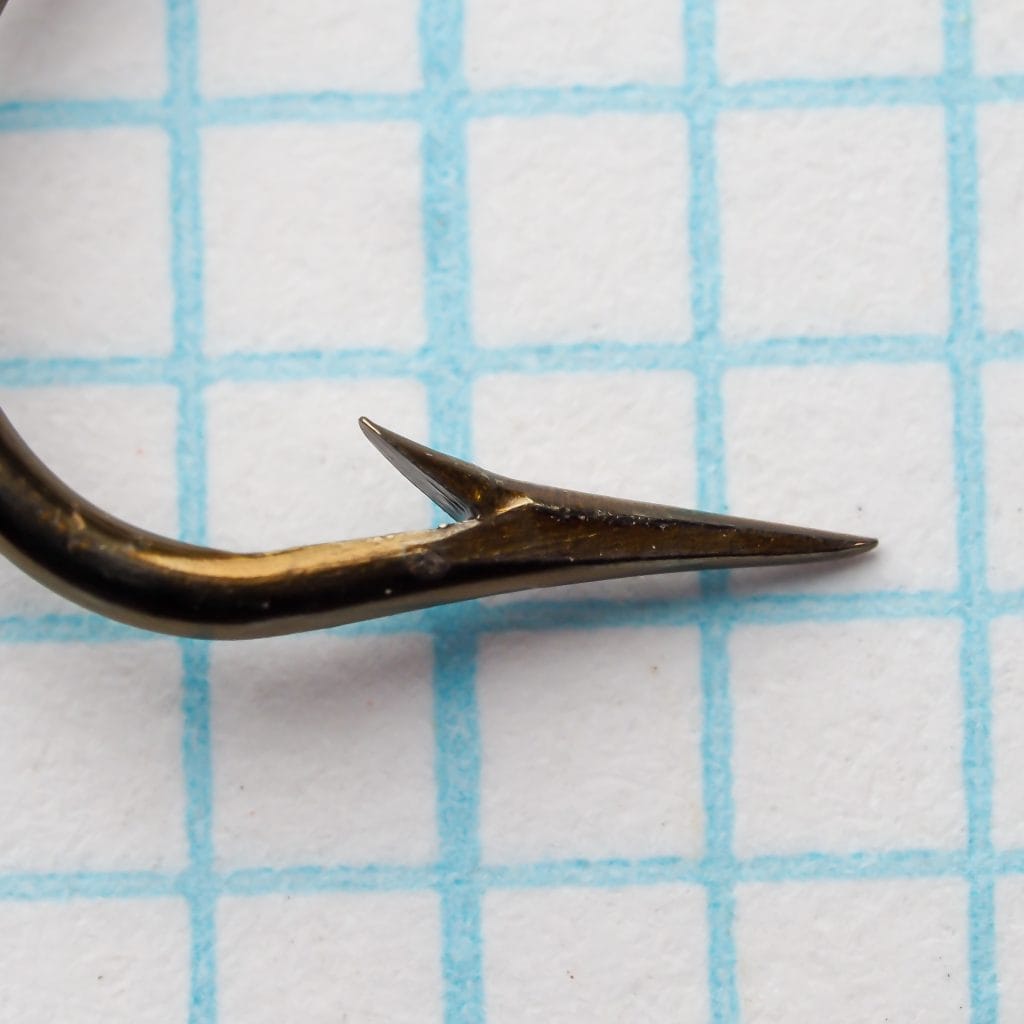
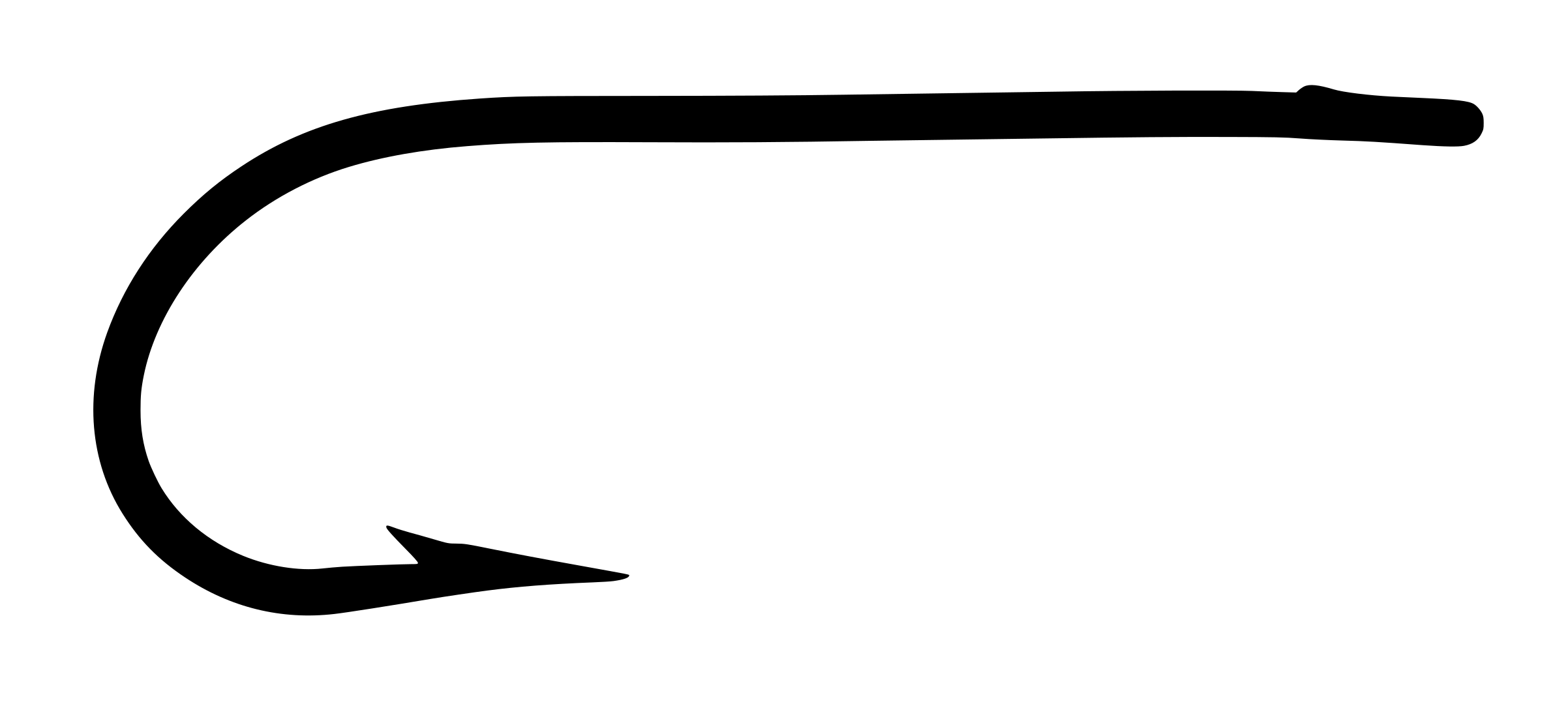
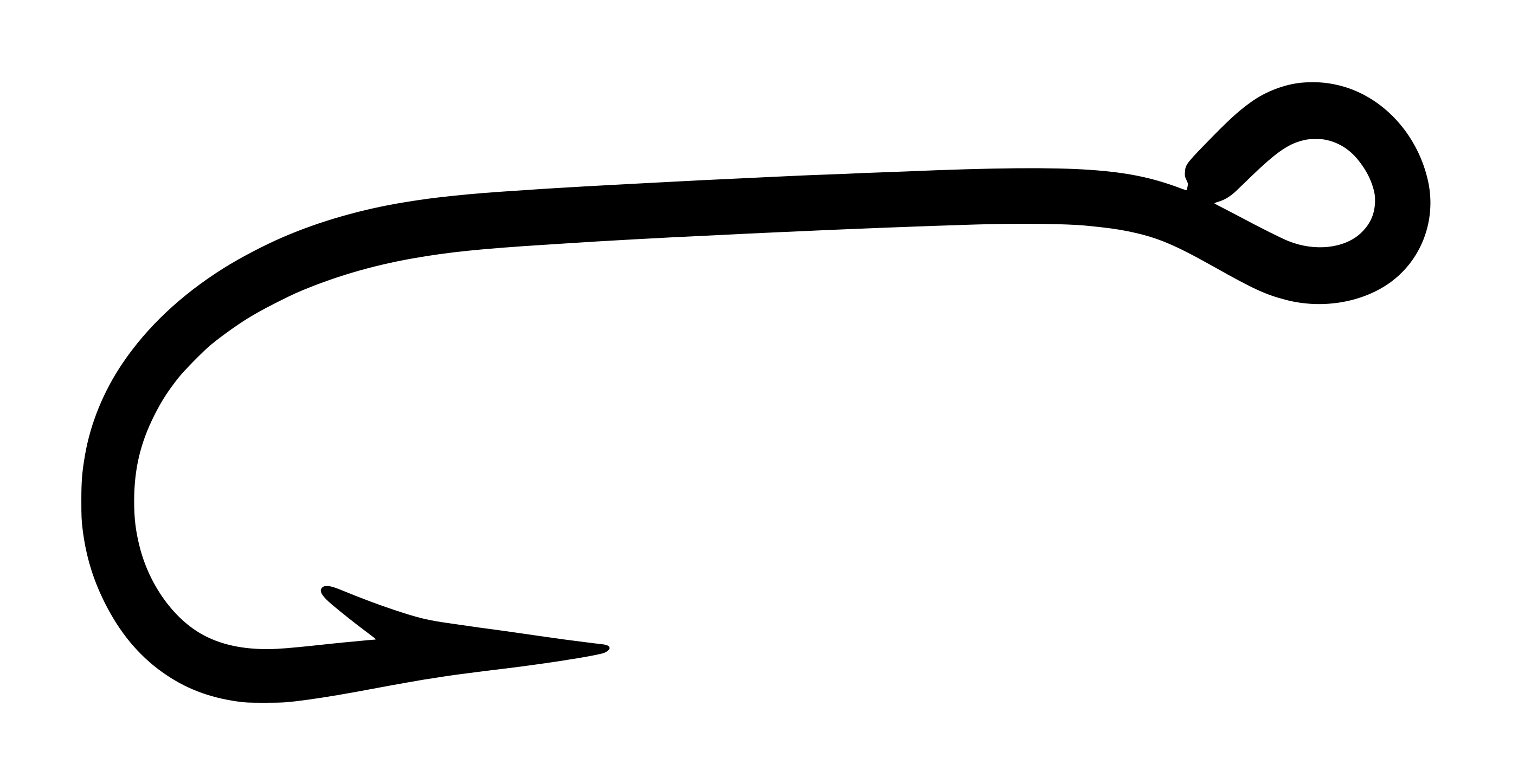
The Mustad 3164 A is a classic mid-20th century bait fishing hook that exemplifies the Norwegian manufacturer’s dominance in American tackle distribution. This size #2 specimen features the traditional kirby bend with offset point that made the 3164 series popular among bass and walleye anglers P.
Manufactured circa 1950-1970, the 3164 A represents Mustad’s mass-market approach to freshwater bait hooks, combining heavy wire construction with a bronzed finish for durability P. The turned-down ball eye and superior point geometry reflect period fishing preferences for reliable bait presentation P.
While common in vintage tackle collections, the 3164 A holds historical significance as a representative example of post-war fishing tackle standardization. Its widespread distribution through hardware stores and sporting goods dealers makes it an accessible entry point for vintage hook collecting I.
Mustad 3164 A Hook Point
Photographic record
3 cataloged imagesSelect any record to load it above.
3 images shown
Mustad 3164 A Hook PointMustad 3164 A Hook PointOpen originalMustad 3164 A HookMustad 3164 A HookOpen originalMustad 3164 A HooksMustad 3164 A HooksOpen original
Technical profile
Eye
Ball Eye, Turned Down
Wire
Standard, Round
Shank
1X Long — Plain
Bend
Kirby (offset), Standard gap, Offset / kirbedKirby bend shows pronounced offset to the right when viewed from above, typical of period Mustad production. Bend proportions are moderate, neither particularly deep nor shallow P
Point
Superior (near-straight inner taper)
Finish
Bronzed — Confirmed (stated on packaging)Bronzed finish shows warm brown tone with slight golden highlights. Surface appears uniform with no visible wear or corrosion on specimen P
Hooks show bright finish with sharp points intact. Handwritten notation clear and legible.
The kirby bend with offset point represents centuries-old English hook design adapted for modern mass production. The offset angles the point slightly away from the shank plane, increasing the likelihood that pressure on the line will drive the point into fish tissue rather than allowing it to slide along bone or cartilage.
The superior point geometry provides a compromise between sharpness and durability, with the nearly straight inner taper offering good penetration while resisting deformation under pressure. Heavy wire construction was essential for the intended species – bass, walleye, and large panfish – that required hooks capable of withstanding strong runs and heavy tackle.
We have measurement for size 2. Know any others? Submit calipered measurements and we'll review and add them. Thank you!
Historical context
mustad
O. Mustad & Son, established in 1877 in Gjøvik, Norway, became the world’s largest fishhook manufacturer through industrial innovation and global distribution. Founded by Ole Mustad, the company revolutionized hook production with mechanized manufacturing processes that could produce thousands of hooks daily while maintaining consistent quality standards.
By the mid-20th century, Mustad dominated American tackle distribution through partnerships with major retailers and hardware chains. Their systematic approach to hook coding and packaging made them the preferred supplier for mass-market fishing tackle, with the 3164 series representing their successful penetration of the American bait fishing market.
Series History
The Mustad 3164 series was introduced in the 1940s as part of the company’s expansion into American freshwater bait fishing markets. The series featured kirby bends in various point configurations, with the ‘A’ designation indicating the superior point style preferred for general bait fishing applications.
This series was designed to compete directly with established American manufacturers like Wright & McGill and Pflueger by offering consistent quality at competitive prices. The 3164 became a staple in tackle shops and hardware stores throughout the 1950s and 1960s, often sold pre-snelled in paper packets for convenience fishing.
Era and Packaging Dating
Handwritten notation style and paper quality suggest mid-20th century production. Model code format 3164 A aligns with Mustad's mass-market bait hook lines from this era.
The Kirby Legacy
The kirby bend takes its name from the Kirby family of London hook makers who developed the offset point design in the 1600s. When Charles Kirby first bent hook points sideways, other manufacturers ridiculed the innovation as unnecessary complication. However, the improved hooking rates soon made kirby bends the preferred choice for serious anglers, and the design became so fundamental that it's now considered a basic hook geometry rather than a specialty pattern.
Design lineage and influence
Best matchRelated by Attribute
Computed automatically from catalog data — updated as new hooks are added.
Matches: Bend, Gap, Eye, Eye Orient., Finish +4 moreDiffers: Shank: 1X Long vs 2X Long; Wire: Standard vs Heavy (1X Heavy); Point: Superior vs Hollow Point
Matches: Bend, Shank, Gap, Eye, Point +4 moreDiffers: Wire: Standard vs Heavy (1X Heavy); Eye Orient.: Turned Down vs Straight / Inline; Finish: Bronzed vs Tinned +1 more
Matches: Bend, Shank, Gap, Eye, Point +4 moreDiffers: Wire: Standard vs Heavy (1X Heavy); Eye Orient.: Turned Down vs Straight / Inline; Finish: Bronzed vs Blued +1 more
Matches: Bend, Shank, Wire, Gap, Point +4 moreDiffers: Eye: Ball Eye vs Looped Eye; Eye Orient.: Turned Down vs Turned Up; Finish: Bronzed vs Blued +1 more
Matches: Bend, Wire, Gap, Point, Forging +3 moreDiffers: Shank: 1X Long vs Standard; Eye: Ball Eye vs Cross Eye; Eye Orient.: Turned Down vs Straight / Inline +2 more
Classic freshwater bait fishing hook designed for bass, walleye, and large panfish. The kirby bend with offset point increases hooking efficiency when fish mouth the bait. Heavy wire construction provides strength for fighting larger fish while the turned-down ball eye facilitates secure knot attachment P.
Secondary Applications
Occasionally used for large streamers and bucktails when heavy wire is desired for fast-sinking patterns
Classic Fly Patterns
Not typically used for fly tying
Modern Equivalents
Hook
Match Quality
Notes
Mustad 92553
Good
Modern bait hook with similar proportions but different point style
Gamakatsu Baitholder
Moderate
Contemporary heavy wire bait hook but with baitholder shank features
Collector notes
Common vintage bait hook with modest historical interest due to its role in mid-20th century tackle distribution.
Reference value
$2 – $8 USD estimate
Packaging condition
Good — moderate wear, legibleRecorded specimen
The Mustad 3164 A represents the backbone of American tackle shops from the 1950s through 1970s, making it common but historically significant. Positive factors include its role in popularizing offset kirby bends for bait fishing and its association with the golden age of hardware store fishing sections. However, high production volumes and wide distribution limit scarcity value.
Market Value Notes
Individual hooks $2-4, complete vintage cards or boxes $5-8. Premium for original packaging or retailer markings.
Where to Find
eBay, vintage tackle shows, estate sales, old tackle boxes
Preservation
Storage and Preservation
Store in a cool, dry environment away from moisture to preserve the bronzed finish. The bronze coating provides natural corrosion resistance but can develop attractive patina over time that many collectors value. Keep hooks in original packaging or mounting to maintain historical context and value.
Avoid handling the points unnecessarily to preserve sharpness. If displaying, use acid-free backing materials and keep away from direct sunlight which can fade handwritten notations. Original tackle shop or retailer markings add significant historical value.
Marking Analysis
Handwritten Documentation
The handwritten notation ‘Mustad 3164 A #2’ appears to be period documentation, likely from a tackle dealer or serious angler’s inventory system. The ink color and writing style are consistent with mid-20th century fountain pen or ballpoint pen usage.
Such handwritten records often indicate hooks that were part of a larger collection or inventory system, potentially adding provenance value. The clear, careful lettering suggests this was part of an organized cataloging effort rather than casual marking.
Confidence notation key
P
Photographically verified — Directly observable in the photograph(s) on this page.
V
Verified by documentation — Confirmed by manufacturer catalog, spec sheet, or published reference.
I
Inferred — A logical deduction from observable or documented evidence, not directly stated.
E
Estimated — An approximation based on visual comparison, proportional analysis, or limited data.
S
Speculative — A reasoned hypothesis that cannot be confirmed from available evidence.
Claims with no notation are confirmed by multiple independent sources. All photographs on garrenwood.com are taken on a measurement grid where each square equals 1/10 inch (0.1″ / 2.54 mm).