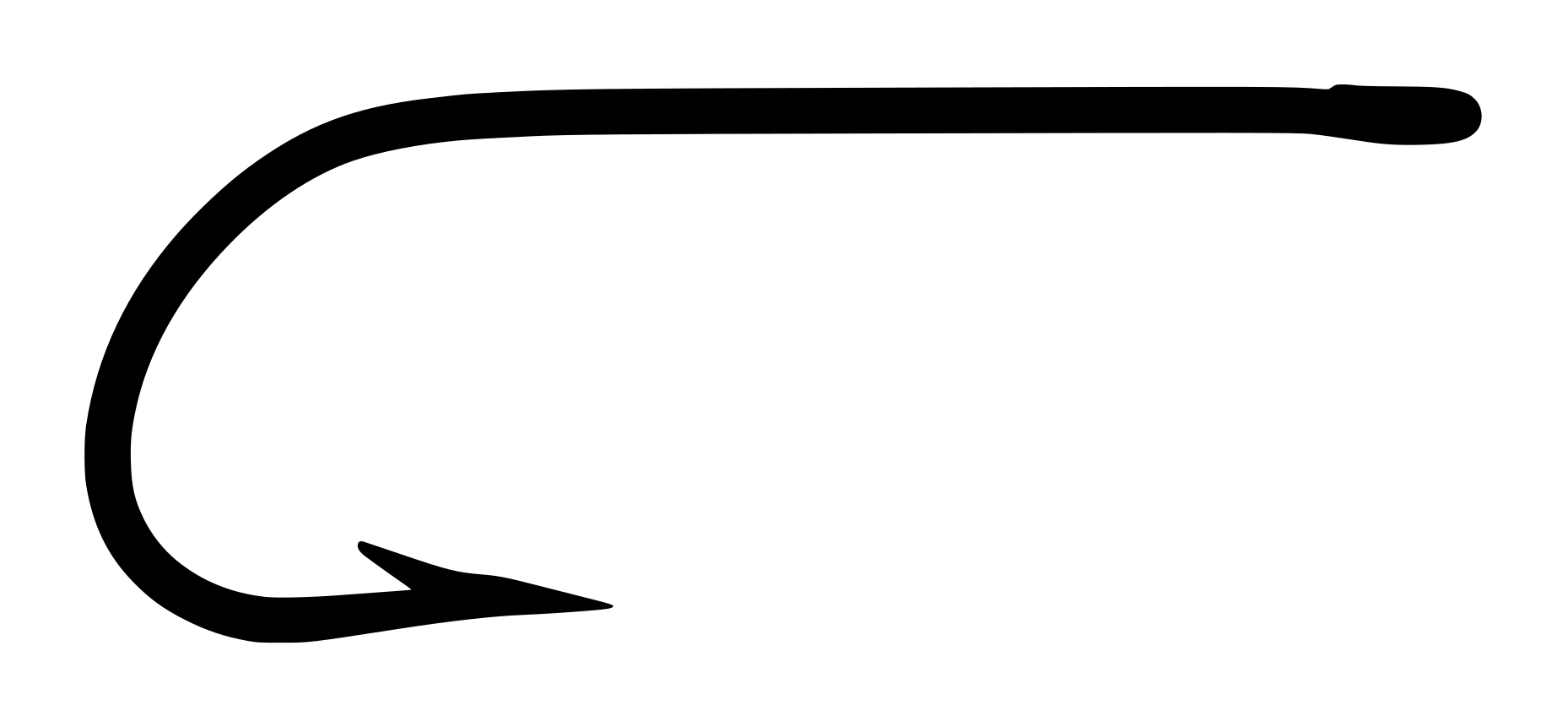
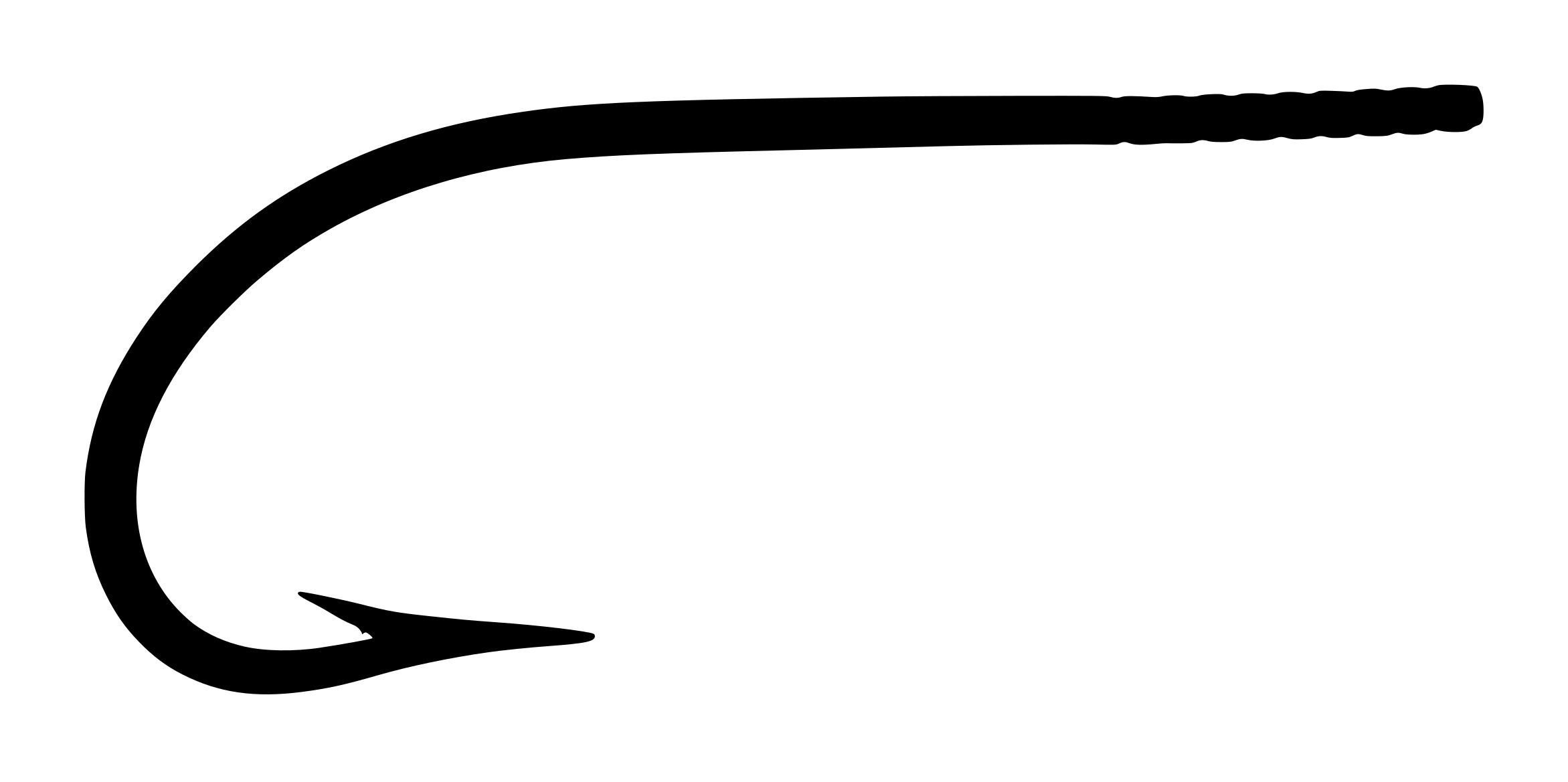
The Mustad 3389 is a mid-twentieth-century Norwegian-manufactured long-shank Sproat hook, size 8, with a ringed straight eye and superior point geometry. Finished in bronzed lacquer, it exemplifies the golden age of Mustad production (1950s–1960s) when the Oslo factory dominated global hook manufacturing with vertically integrated efficiency and proprietary automated machinery. The Original pink cardstock label displays the classic eight-line format: manufacturer identity, quality code (Qual. 3389), point designation (Superior), pattern name (Mustad-Sproat Hooks), and finish specifications.
The Sproat bend—a parabolic curve engineered to distribute tensile stress evenly—has proven one of the most versatile and mechanically sound hook geometries in angling history. This particular example was designed for streamer and wet-fly tying (especially woolly buggers and bait-imitation patterns) and for general freshwater bait fishing where the extended 1X-long shank protects the leader from sharp-toothed species. The superior point offers a balanced compromise between rapid penetration (suitable for delicate presentations) and structural durability (essential for repeated casting and heavy fish).
Collectability centers on the vintage Norwegian origin, original packaging, and mid-century era. The hook represents a snapshot of Mustad’s most confident period, when the company’s automated technology and steel tempering were considered benchmarks of quality globally. Surviving examples with intact packaging command modest premiums from traditionalist fly tyers and Norwegian fishing heritage enthusiasts.
Original pink cardstock label from a vintage box of Mustad 3389 hooks, showing the classic eight-line typography format with Oslo designation, Qual. 3389 model code, Superior point, and Mustad-Sproat Hooks pattern name.
Photographic record
4 cataloged imagesSelect any record to load it above.
4 images shown
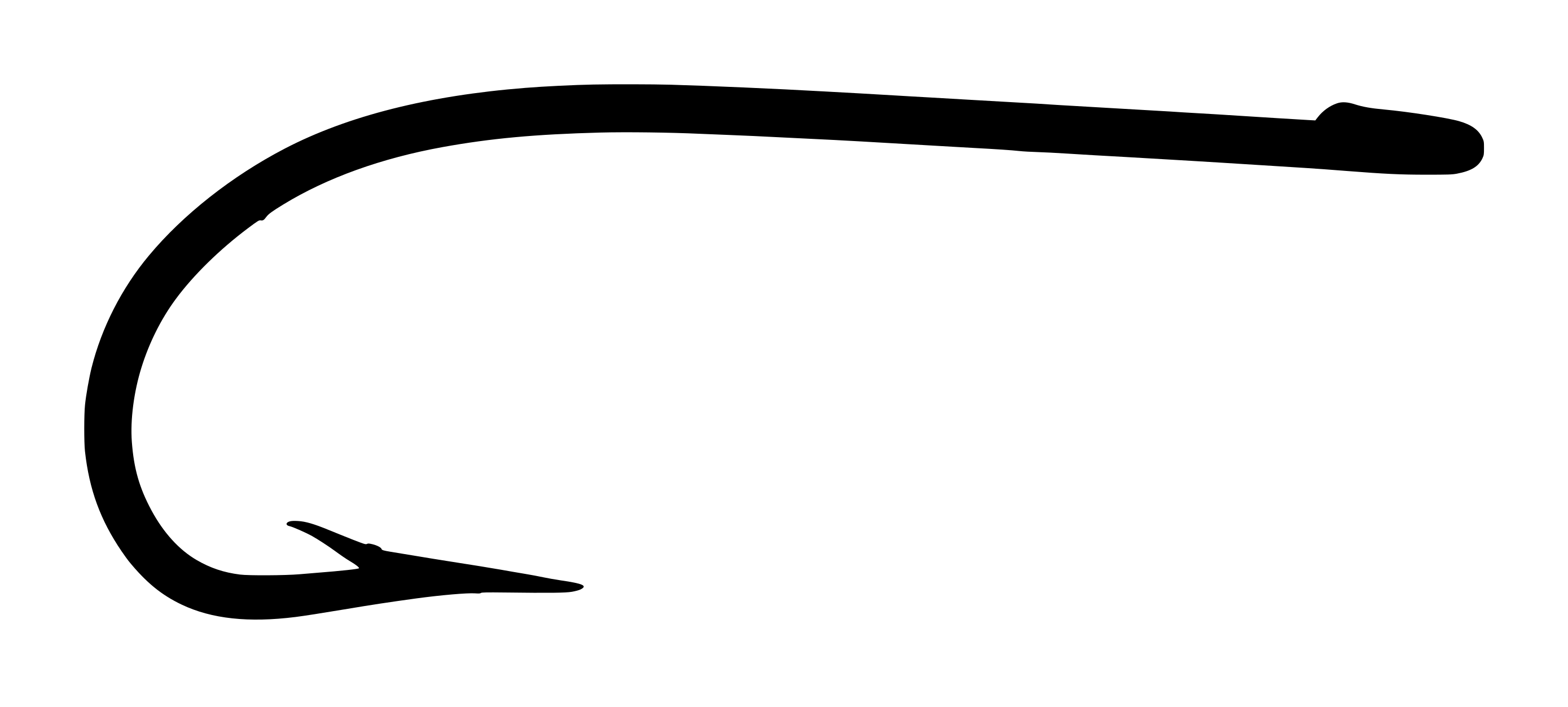
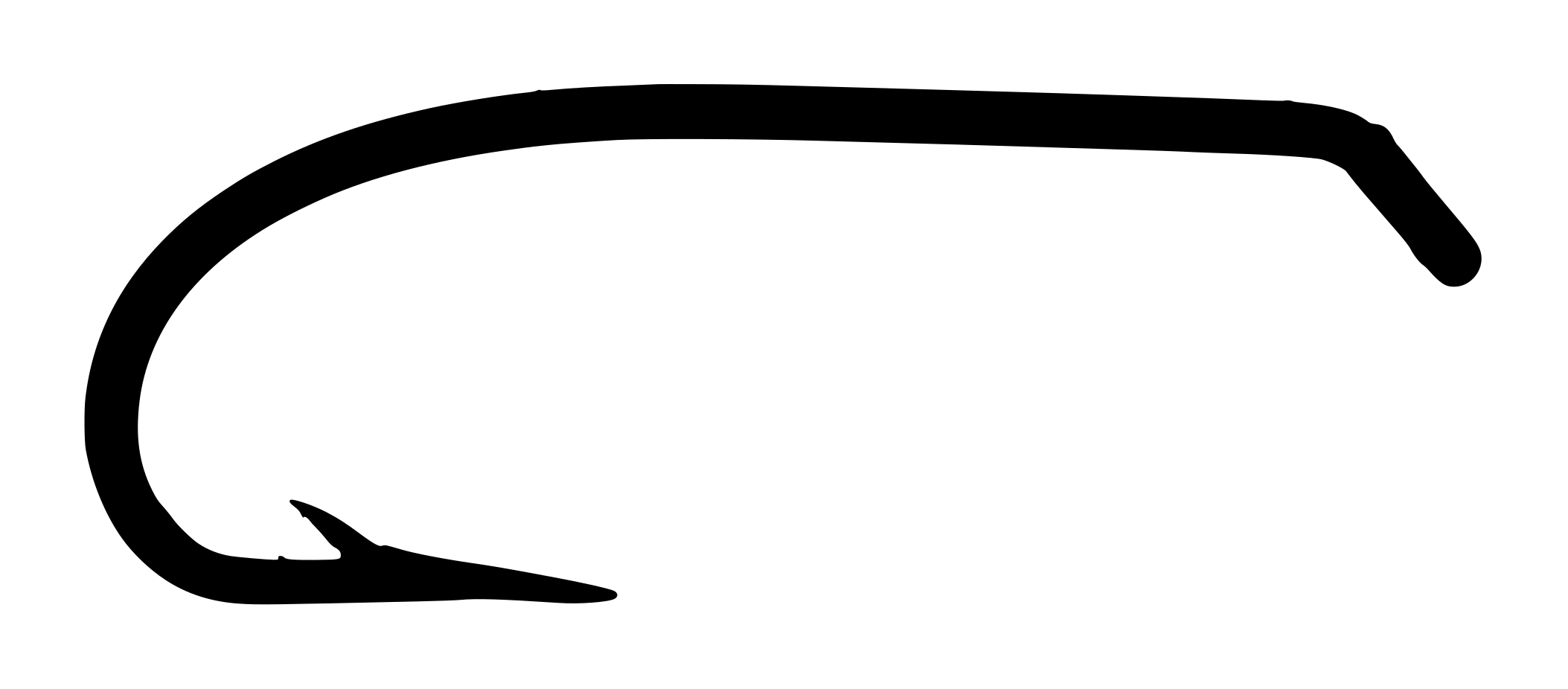
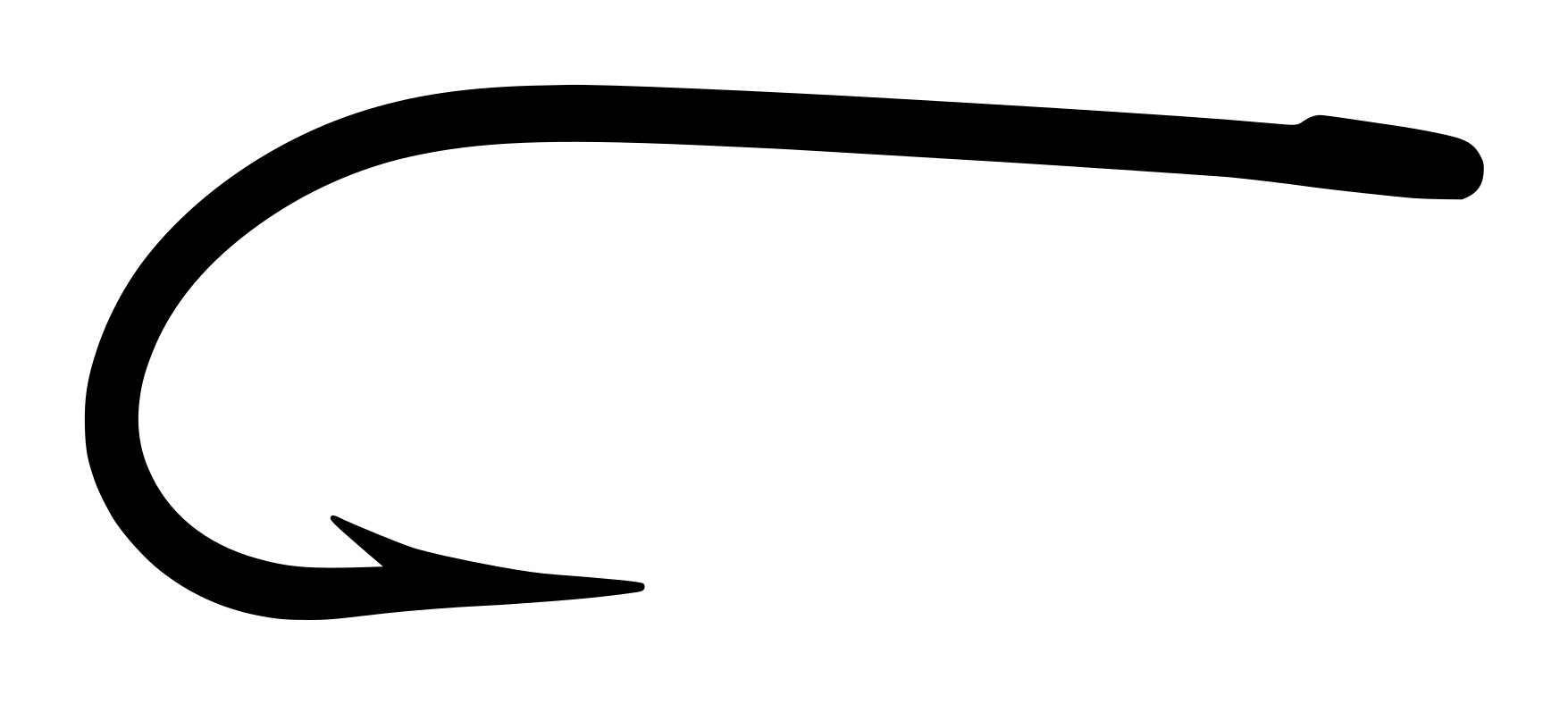
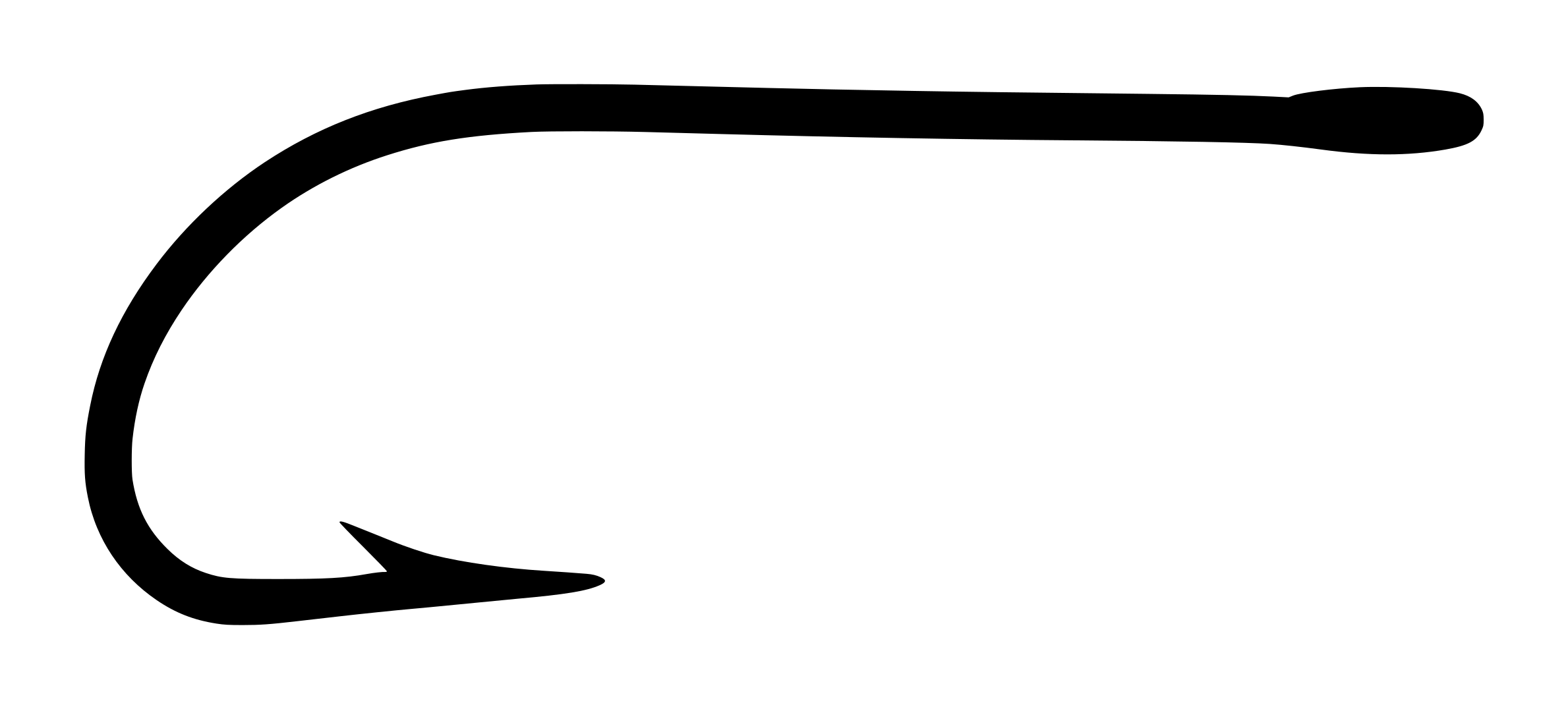
Mustad 3389 Vintage Box Label Size 8Original pink cardstock label from a vintage box of Mustad 3389 hooks, showing the classic eight-line typography format with Oslo designation, Qual. 3389 model code, Superior point, and Mustad-Sproat Hooks pattern name.Open originalMustad 3389 Hook Point Detail Size 8Side profile of the Mustad 3389 hook point, revealing the near-straight inner taper geometry characteristic of the superior point classification. The fine barb and tapering are clearly visible against the measurement grid.Open originalMustad 3389 Hook Overhead Profile Size 8Overhead profile of the Mustad 3389 hook, displaying the characteristic parabolic Sproat bend and ringed straight eye. The extended shank is clearly visible, confirming the 1X-long configuration.Open originalMustad 3389 Twin Hooks Comparative Size 8Two Mustad 3389 hooks displayed side by side on measurement grid, demonstrating manufacturing consistency in bend geometry, shank length, and bronzed finish application across examples from the same vintage box.Open original
Technical profile
Ringed | Sproat | Long Shank | Standard Wire | Superior Point | Bronzed
Eye
Ball Eye, Straight / Inline
Wire
Extra-Heavy (2X+), Round
Shank
1X Long — Plain
Bend
Sproat, Standard gap
Point
Superior (near-straight inner taper)
Finish
Bronzed — Confirmed (stated on packaging)
The Superior point designation on vintage Mustad packaging was reserved exclusively for Line 5 and denoted a near-straight inner taper that concentrates penetration force at the tip while maintaining structural strength. Unlike the delicate Hollow Point (concave inner face, suitable for soft-mouthed species), the Superior point offered an all-purpose compromise between rapid penetration and blunt-force durability—essential for commercial and sport angling where hook reliability and repeated use mattered more than microscopic finesse. The round wire profile (non-forged) provides ample flexibility for tying and knot work; the standard gauge offers strength sufficient for trout and pike without the brittleness of extra-heavy wire in smaller sizes. The bronzed finish—a baked-on lacquer compound mimicking bronze hue—was chosen for its muted, stealthy presentation in clear freshwater. The ringed eye (straight, uniform diameter) is optimized for direct knotting onto tippet or leader, a practical requirement as nylon monofilament became the standard line material in the 1950s–1960s.
The Mustad 3389 belongs to the ‘Superior’ product line—a mid-tier commercial series within Mustad’s quality-coded catalog system. This series, produced from the 1950s through the 1970s, represented the ‘working angler’ tier: hooks manufactured to exacting dimensional and tempering standards (superior to economy models numbered 1000–2999) but positioned below the ultra-premium 4000+ range reserved for specialized dry fly hooks and saltwater big game patterns. The 3389 specifically occupied the long-shank Sproat category, ideal for streamers and general utility fly tying. Line 5 of the original label reads simply ‘Superior,’ a designation that on vintage Mustad cards functioned as both a product-line identifier and a point-style descriptor. The Sproat bend was ubiquitous across this series in multiple sizes (1–12, 1/0–8/0) and was produced continuously through the 1960s and into the 1970s before Mustad initiated its corporate transition away from arbitrary numerical model codes toward the ‘Signature Series’ nomenclature (beginning circa 2001). The 3389 was ultimately discontinued as Mustad simplified its catalog, though the Sproat bend itself remains in production under modern designations.
Era and Packaging Dating
Oslo designation (post-January 1, 1925) combined with pink label stock, elaborate star/floral border, and offset printing style are consistent with mid-twentieth-century Mustad production. No barcode present—strong indicator of pre-1974 manufacture. The specific label design, typography, and pink card stock are hallmarks of the 1950s–1960s golden era of Norwegian hook manufacturing. The Qual. 3389 model number appears in documented Mustad catalogs from this period.
The Golden Age of Mustad—When Hook Numbers Were Cultural Memory
The Mustad 3389 emerged during what fly-fishing historians call the 'Golden Age of Mustad,' when the Norwegian manufacturer controlled approximately 50% of global hook production. By the 1950s, Mustad's Gjøvik factory was producing over 200 million hooks annually using the fully automated machinery originally invented by Mathias Topp in 1877—a mechanical system so proprietary that Mustad never patented it, relying instead on factory secrecy and trade restrictions. Fly tyers of the era would memorize hook numbers as cultural knowledge; mentioning a '3389' instantly communicated 'long-shank Sproat, superior point, standard wire' without explanation. This hook helped establish the Sproat as the universal workhorse pattern across both saltwater and freshwater traditions.
Design lineage and influence
The Sproat bend traces its origins to early English blacksmiths who favored a parabolic curve intermediate between the perfectly round Aberdeen and the sharp-angled Limerick. The Sproat was engineered specifically to distribute tensile stress evenly across the bend, making it mathematically superior to simpler geometries when fighting large fish. Mustad’s industrial adoption of the Sproat pattern in the late nineteenth century transformed it from a regional English specialty into a global standard. The 3389 represents a direct lineage from Victorian-era Sproat designs, refined through Norwegian industrial precision. Contemporary competitors included the Partridge Wilson-style Sproat (UK) and various Japanese domestic hooks, but Mustad’s manufacturing efficiency secured market dominance. The 3389’s design influenced modern iterations such as the Tiemco 5262 and contemporary Mustad Signature Series ‘R50’ (round bend, standard weight, standard shank).
Best matchRelated by Attribute
Computed automatically from catalog data — updated as new hooks are added.
Matches: Bend, Gap, Eye, Eye Orient., Point +5 moreDiffers: Shank: 1X Long vs Standard; Wire: Extra-Heavy (2X+) vs Heavy (1X Heavy); Application: Wet Fly, Streamer, Bait vs Bait, Saltwater
Matches: Shank, Wire, Gap, Eye, Eye Orient. +3 moreDiffers: Bend: Sproat vs Round / Kendal; Point: Superior vs Standard / Spear; Finish: Bronzed vs Bright / Uncoated Steel +3 more
The Mustad 3389 Sproat is a versatile long-shank hook historically designed for streamer and wet fly tying, particularly suited to woolly buggers, articulated patterns, and elongated bait-imitation designs. The extended shank provides ample room for body dubbing and wing materials. In freshwater bait fishing, the long shank prevents sharp-toothed species such as pike and large trout from easily severing the leader while casting. The superior point geometry and Sproat bend offer reliable hook-sets across a broad range of target species and presentations.
Secondary Applications
General freshwater fly tying (soft-hackle wet flies, nymphs); live bait fishing for pike, perch, and large trout; traditional streamer patterns.
Modern high-carbon steel long-shank Sproat equivalent. Tapered eye (vs. vintage ringed), but bend geometry and shank length are functionally identical.
Mustad 9671
Very Good
Modern Mustad 9671 nymph hook — long shank, standard wire, similar applications, but turned-down eye vs. vintage ringed eye.
Daiichi 1760
Good
Japanese Daiichi 1760 — 2X long Sproat, similar bend and shank length, but slightly heavier wire and forged construction.
Collector notes
The Mustad 3389 occupies an appealing intersection of historical significance and practical utility. Vintage Norwegian-made Mustad hooks from the 1950s–1960s command modest to moderate collector interest, particularly when still on original cardstock packaging. The Superior point designation, though somewhat ambiguous (line 5 on vintage Mustad labels was strictly reserved for point geometry), adds intrigue for researchers decoding the label system. Limiting factors include the hook's relative abundance compared to specialty patterns and its later production era (compared to pre-1925 Christiania examples).
Reference value
$18 – $45 USD estimate
Packaging condition
Very Good — light wear, fully legibleRecorded specimen
Packaging format
GW-M-01-pinkCatalog code
Positive factors: Confirmed vintage Oslo-era production (post-1925). Original pink cardstock packaging intact and legible. Size 8 Sproat is a foundational pattern with enduring fly-tying appeal. Superior designation on Line 5 reflects original Mustad quality-coding taxonomy. Made in Norway provenance carries strong appeal to traditional fly tyers and Norwegian fishing heritage enthusiasts. Excellent hook steel tempering compared to modern mass-produced equivalents.
Limiting factors: Not as rare as pre-1925 Christiania examples or highly specialized patterns (e.g., Dublin Point, Knife Edge). Sproat bend is common across multiple manufacturers and eras. Size 8 is a standard size with lower premium than very small (size 16+) or very large (3/0+) specimens. Pink label variant may be less sought than other color formulations. Condition of original packaging is good but not mint—some toning and edge wear visible.
Packaging
Original pink cardstock label with elaborate floral/star border printed in black ink. Eight-line format per Mustad standard: Key Brand logo (upper left), O. MUSTAD & SÖN / Manufacturers / OSLO – NORWAY / Qual. 3389 / Superior / Mustad-Sproat Hooks / Ringed, bronzed, long shank / Made in Norway. Bottom left: 100 No. 8. Offset lithography on smooth cardstock. Minimal foxing; border graphics intact. Vintage untouched condition.
Market Value Notes
Pricing for vintage unopened Mustad 3389 boxes on secondary markets (eBay, specialist dealers) typically ranges $18–$45 USD depending on label condition, rarity of size, and presence of all 100 hooks. Mint unused original packaging commands premium; open boxes or loose hooks with card sell at bottom of range. Norwegian-made Mustad hooks from this era have seen modest appreciation among traditional fly-tying communities. Condition of cardstock, legibility of printing, and completeness of hook count are primary value drivers.
Where to Find
eBay vintage fishing tackle section; UK and Scandinavian tackle fairs; specialist vintage fly-fishing dealers (particularly those focused on Norwegian heritage); occasional appearance in estate sales of deceased fly tyers.
Preservation
Storage and Preservation
Original Packaging: Store the hook card in a cool, dry environment away from direct sunlight and fluctuating humidity. The pink cardstock is susceptible to acid degradation; acid-free storage boxes or archival sleeves are recommended for long-term preservation. Avoid contact with plastic bags, which can trap moisture.
Bronzed Finish Care: The bronzed lacquer finish will develop a natural patina with age and humidity exposure. This patina is generally considered desirable by collectors and adds to the historic character. However, if you wish to maintain the original tone, periodically inspect for moisture intrusion and ensure storage humidity remains below 60%. Do not attempt to polish or refinish vintage bronzed hooks, as this destroys both the original finish and the collectible value.
Hook Condition: Store hooks on the original cardstock rather than loose. If individual hooks must be stored separately, wrap them in acid-free tissue. Avoid contact with copper, brass, or other dissimilar metals, which can induce galvanic corrosion. Inspect periodically for rust or oxide formation; minimal surface oxidation is normal and acceptable.
Display: If displayed in open-air environments (fly-tying shop, collector cabinet), position away from maritime air, industrial pollution, or high humidity. A stable room-temperature environment (60–70°F, 30–50% RH) is ideal. Avoid glass-fronted display cases without climate control, as temperature cycling accelerates corrosion.
Primary Source
Decoding the Mustad Eight-Line Label System
Source: O. Mustad & Søn vintage documentation; Mustad-Guide.pdf; A Comprehensive Typology and Decryption of Vintage O. Mustad & Søn Hook Labels
The pink cardstock label on the Mustad 3389 box exemplifies the standardized eight-line typographic format that Mustad pioneered to communicate technical specifications across global export markets. This rigid labeling system functioned as a universal technical language, bridging linguistic barriers and enabling wholesalers, retailers, and end-users to instantly decode the hook’s metallurgical properties, geometric specifications, and intended use.
Line 1: ‘O. MUSTAD & SÖN’ — Establishes ultimate corporate authority and manufacturer identity.
Line 2: ‘Manufacturers’ — Critically important distinction: Mustad differentiated itself from import agents and repackagers who saturated the late-nineteenth and early-twentieth-century tackle market. By cementing their role as primary manufacturers, Mustad ensured brand loyalty directly from end-users regardless of distribution network.
Line 3: ‘OSLO – NORWAY’ — Geographic origin and chronological bracket. The ‘Oslo’ designation (post-January 1, 1925) indicates production post-1925; hooks bearing the earlier ‘Christiania’ designation date conclusively to 1924 or earlier. This single line serves as one of the most reliable dating tools for vintage Mustad boxes.
Line 4: ‘Qual. 3389’ — Quality/model code reflecting Mustad’s numeric tier system: economy models (1000–2999), standard quality (3000–3999), and premium models (4000+). The 3389 sits squarely in the mid-tier quality range, representing reliable, exacting standards suitable for commercial and serious amateur angling.
Line 5: ‘Superior’ — Denotes the hook point classification. On vintage Mustad labels, Line 5 was exclusively reserved for defining the geometric shape of the point—Hollow, Superior, Knife Edge, Dublin, Spear, Needle, or Curved-In. The Superior point nomenclature describes a near-straight inner taper with minimal concavity, optimized for balanced penetration and structural durability across diverse species and presentations.
Line 6: ‘Mustad-Sproat Hooks’ — Identifies the overarching bend pattern and shank geometry. The Sproat—a parabolic curve—represents one of Mustad’s most successful cloned regional patterns, originally favored by English blacksmiths but industrially perfected and globalized by Mustad’s manufacturing efficiency.
Lines 7–8: ‘Ringed, bronzed, long shank / Made in Norway’ — Specifies eye type (ringed straight), metallurgical finish (bronzed lacquer), and shank modification (long, i.e., 1X standard length). The ‘Made in Norway’ designation affirms Gjøvik/Oslo production and serves as a quality and provenance signal in vintage tackle markets.
This label structure demonstrates how Mustad transformed a dense technical specification into a legible, hierarchical text format—a model that influenced tackle packaging globally and established the template for modern hook nomenclature systems.
Additional
The Sproat Bend: Engineering a Parabolic Curve for Maximum Stress Distribution
The Sproat bend represents one of the most mathematically elegant hook geometries ever engineered. Unlike simpler curves (Aberdeen’s perfect roundness, Limerick’s sharp angle), the Sproat features a parabolic profile—a shape that distributes tensile stress evenly across the entire bend structure. This geometric advantage made it the preferred pattern for both commercial fishing and sport angling wherever reliable hook-sets and long-term durability mattered more than microscopic finesse.
Engineering Principle: When a fighting fish pulls on the line, stress loads concentrate most heavily at the lowest point of the bend (the deepest part of the curve). A perfectly round bend (Aberdeen) distributes stress evenly by definition—good for general purpose, but the curve’s symmetry means no single region bears the full load. A sharp-angled bend (Limerick) creates stress concentration at the angular junction, making it prone to crack initiation under sustained tension. The Sproat’s parabolic curve (mathematically, the shape of a hanging cable under its own weight—the catenary curve) naturally distributes load progressively along the entire bent section, minimizing peak stress and maximizing resistance to straightening or fracturing under heavy, sudden loads.
Practical Outcome: The Sproat became the universal workhorse for large freshwater and saltwater species where anglers could not afford hook failure mid-fight. A pike or large salmon exerts enormous tensile force; the Sproat’s geometry ensured the hook would absorb that force without permanent deformation. Mustad’s industrial adoption of the Sproat design in the late nineteenth century, coupled with their superior steel tempering and manufacturing precision, transformed it from a regional English specialty into a global standard. The 3389 represents this tradition at its technological peak—Norwegian industrial precision applied to a Victorian-era design principle.
Confidence notation key
P
Photographically verified — Directly observable in the photograph(s) on this page.
V
Verified by documentation — Confirmed by manufacturer catalog, spec sheet, or published reference.
I
Inferred — A logical deduction from observable or documented evidence, not directly stated.
E
Estimated — An approximation based on visual comparison, proportional analysis, or limited data.
S
Speculative — A reasoned hypothesis that cannot be confirmed from available evidence.
Unnotated claims are the compiler’s synthesis; see Sources. All photographs on garrenwood.com are taken on a measurement grid where each square equals 1/10 inch (0.1″ / 2.54 mm).