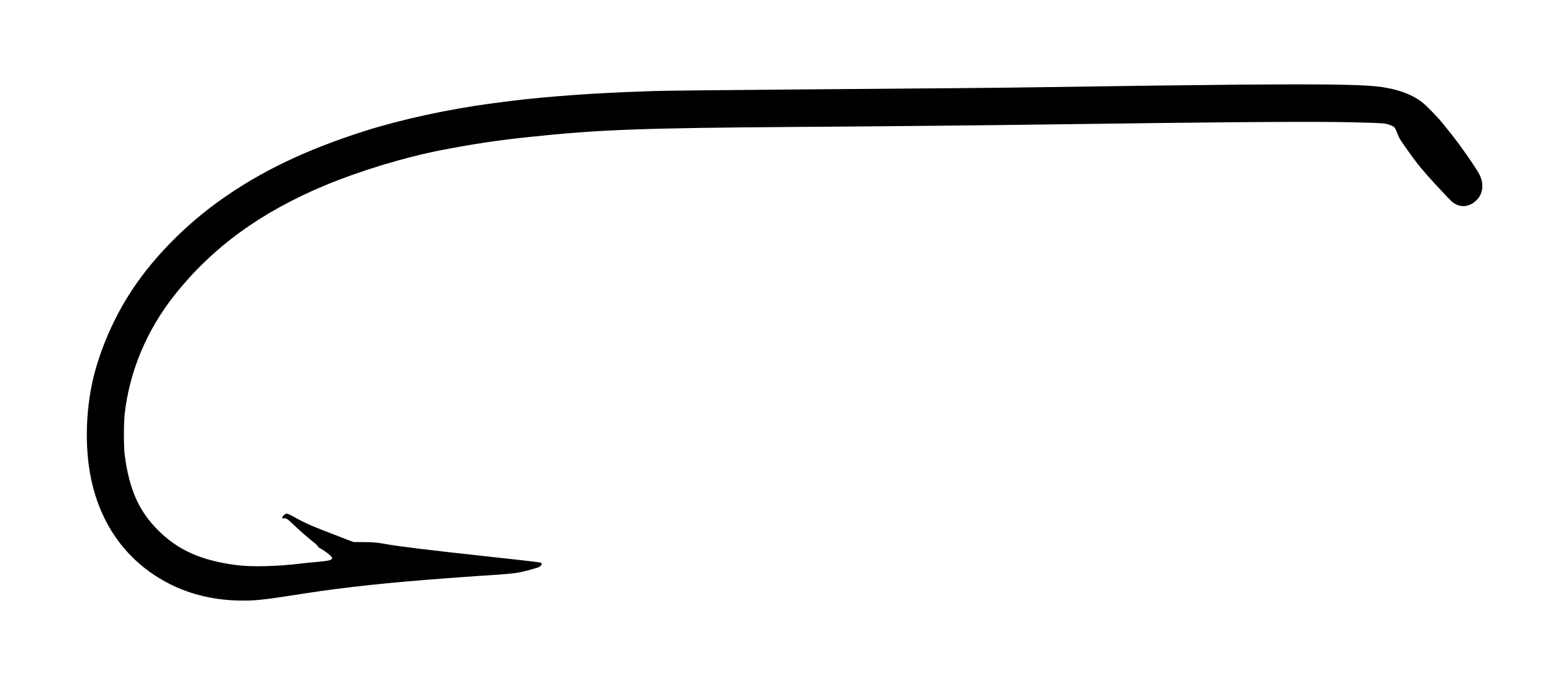
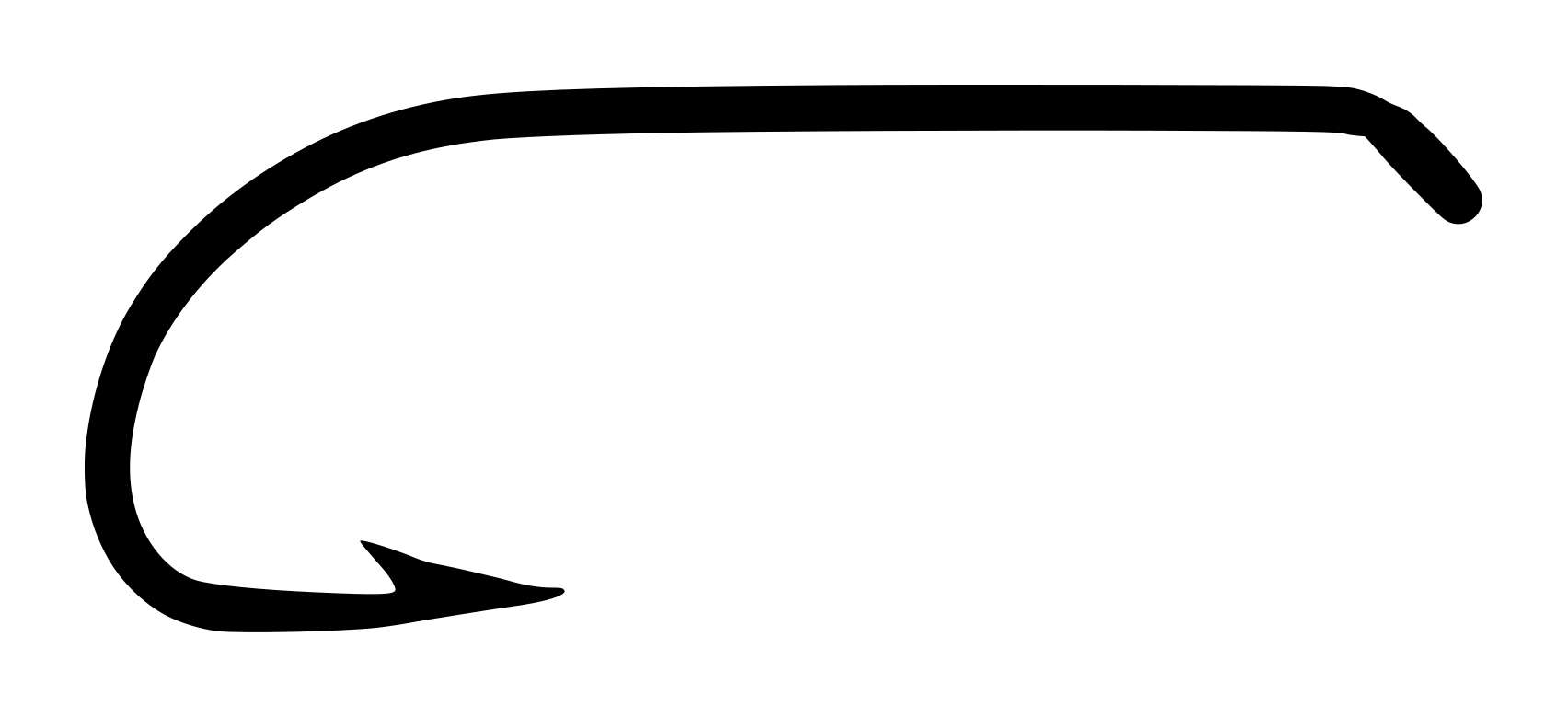
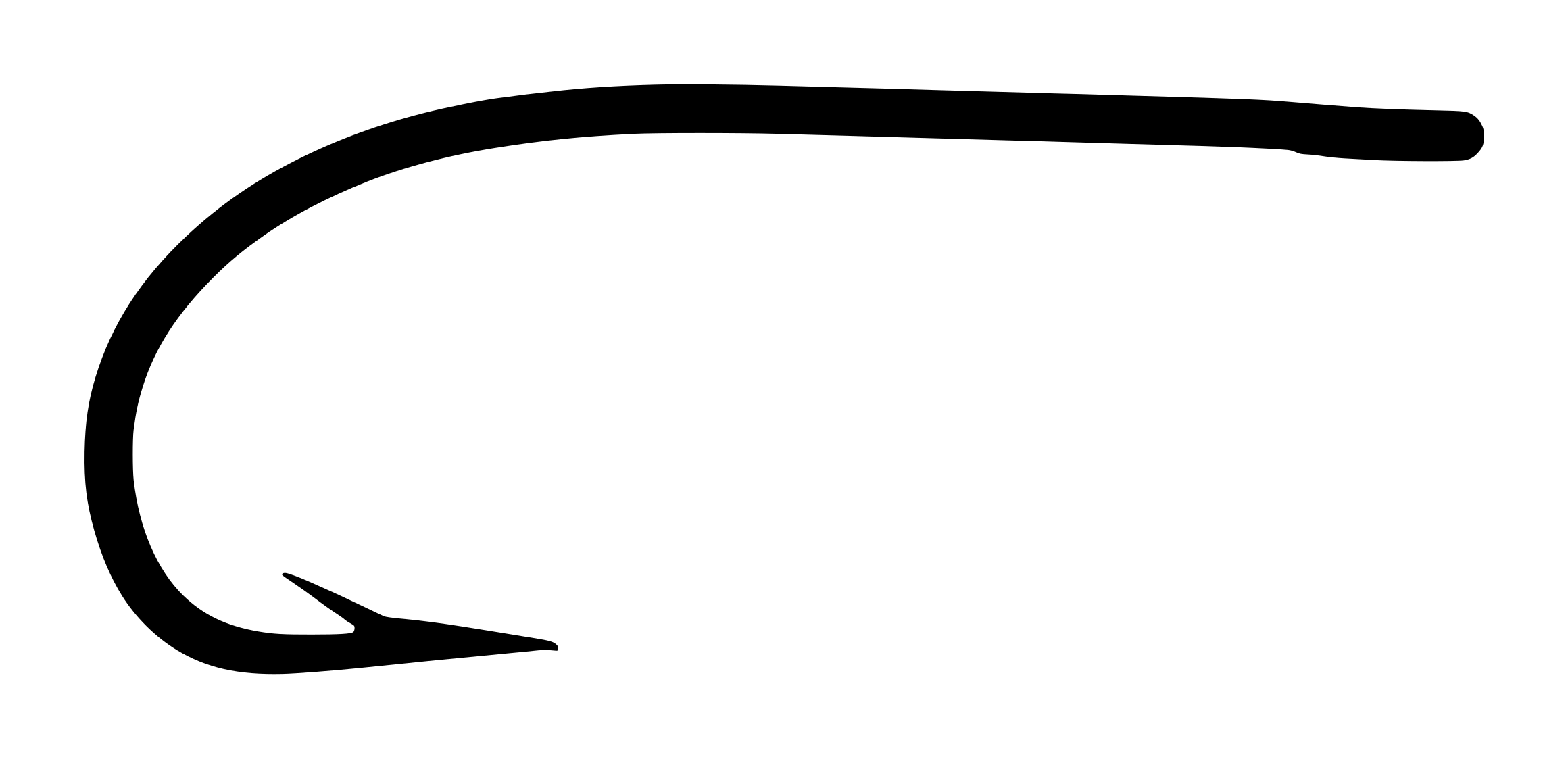
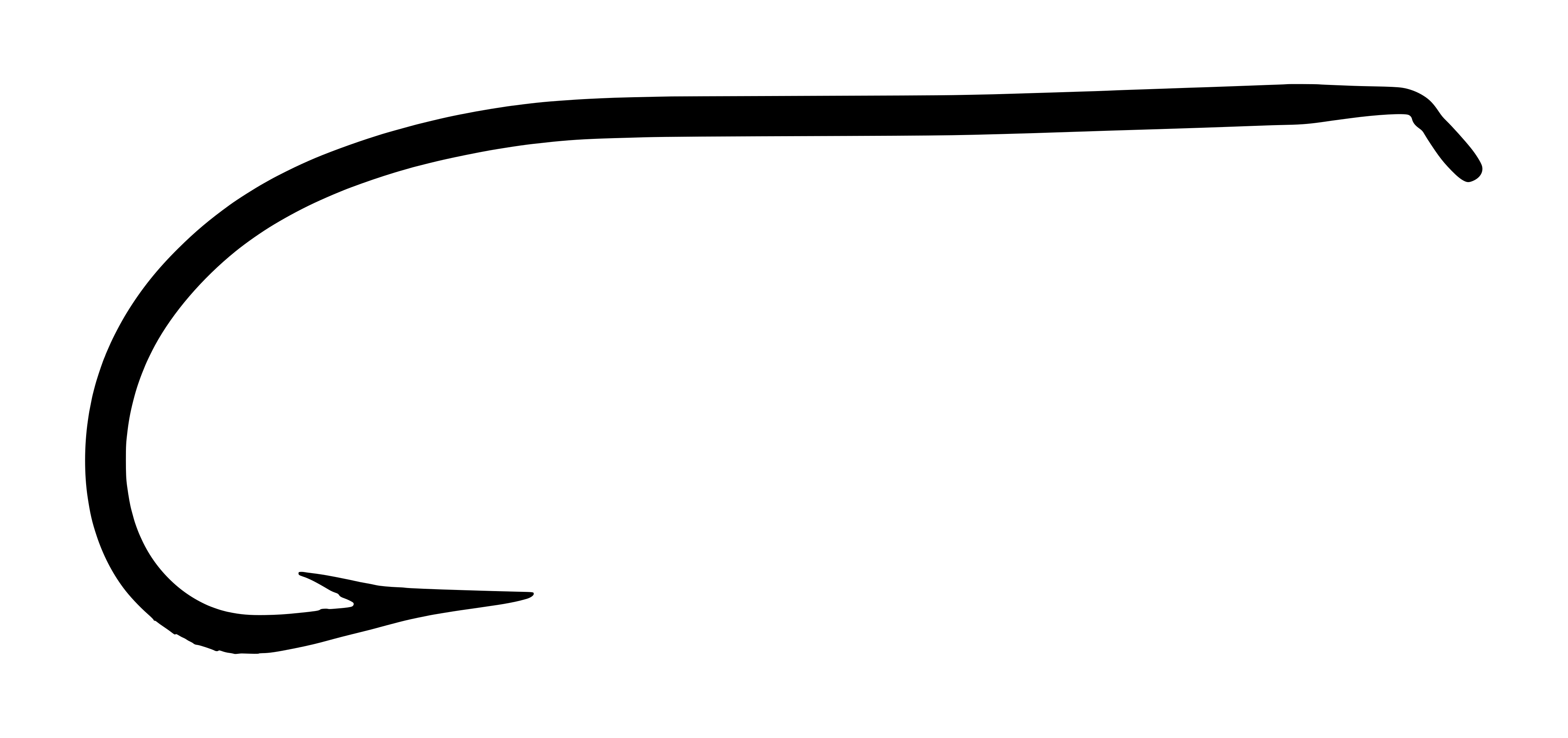
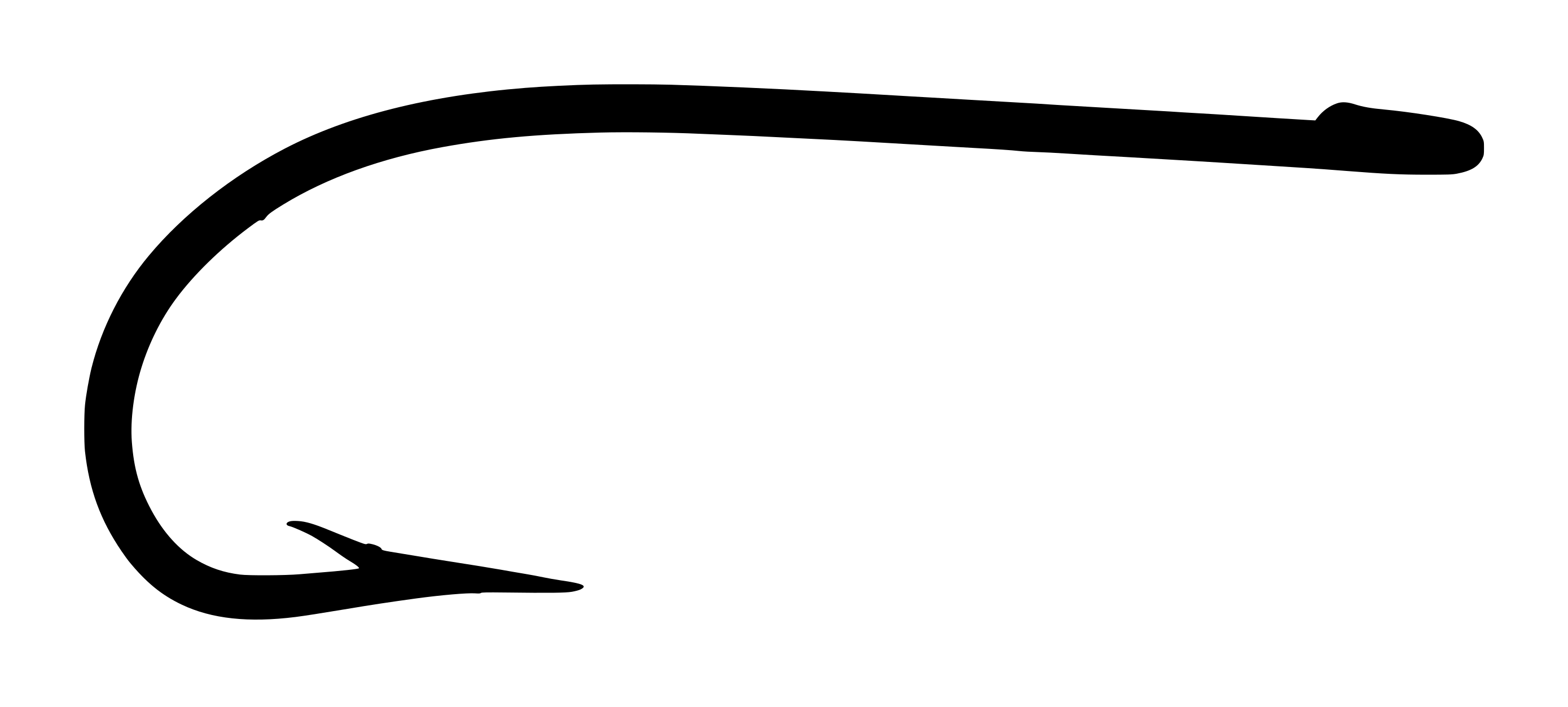
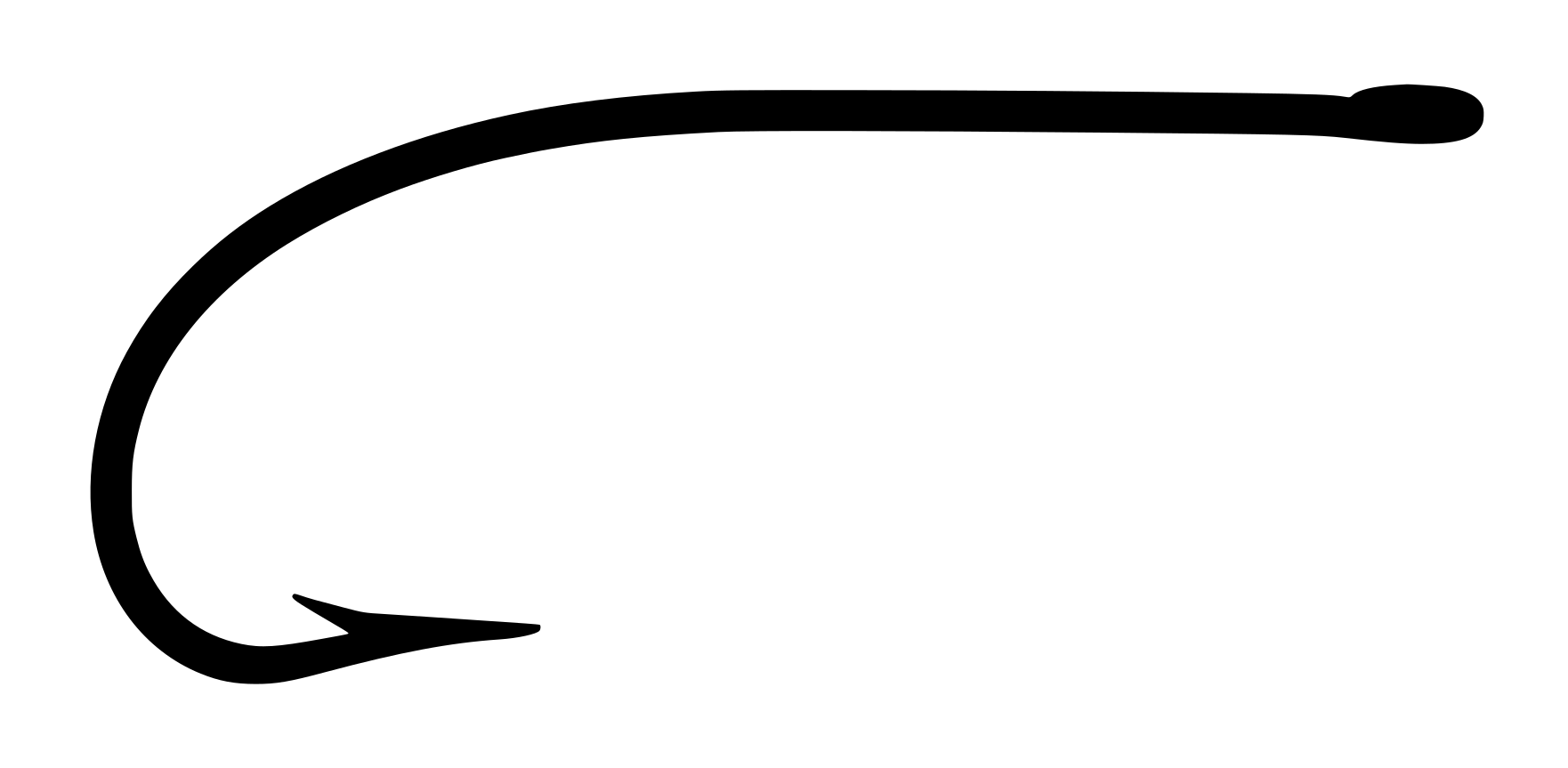
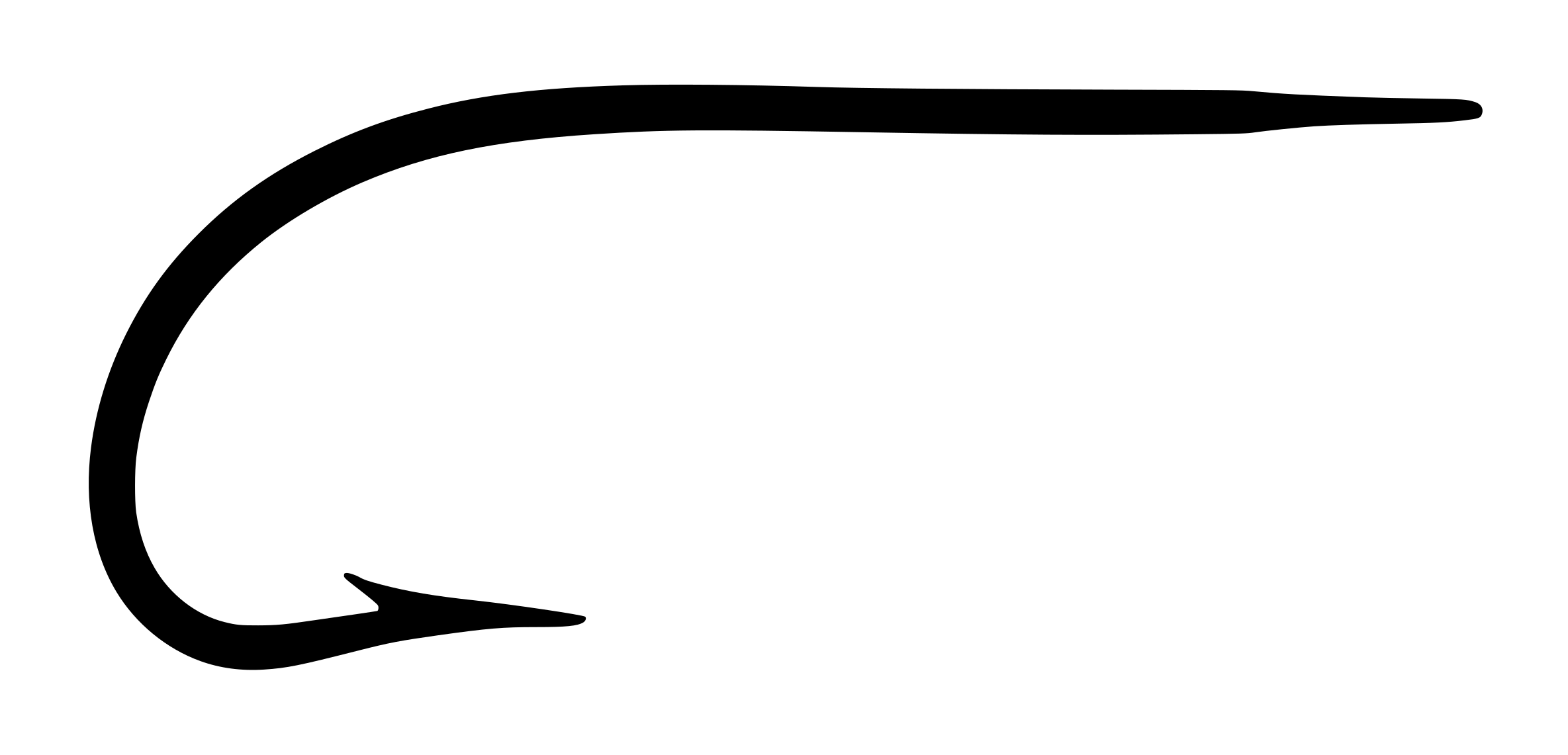
The Mustad 3389 H is a mid-century streamer and wet-fly hook manufactured by O. Mustad & Søn in Oslo, Norway, during the 1950s–1960s. This size No. 4 hook features a sproat bend (parabolic curve), straight ringed eye, superior point, and distinctive goldplated finish — a premium variant of the ubiquitous Mustad 3389 Sproat series. The defining feature of this example is its original pink cardstock label with elaborate floral border, exemplifying Mustad’s standardized eight-line labeling system that encoded technical specifications for global export markets.
The 3389 H was engineered specifically for tying elongated streamer and bucktail patterns where the long shank (approximately 1X longer than standard) accommodates multi-segment bodies and wing materials. The superior point geometry provides reliable penetration and holding power without the aggressive snap of a hollow point, making it suitable for moderate-sized trout and freshwater predators. The goldplated finish was historically valued for underwater visibility and aesthetic appeal, particularly in classic patterns like the Black Ghost and Mickey Finn.
Era evidence is firmly established through multiple packaging markers: the OSLO – NORWAY designation (confirming post-1925 manufacture), the offset-lithography printing technology, smooth pink cardstock stock, the Key Brand logo style, and the ornamental border design — all consistent with Mustad’s 1950s–1960s export packaging. The presence of the H suffix in the model code indicates this was a special finish production run, making goldplated examples scarcer than the far more common bronzed variant.
Collectors value the 3389 H for its mid-century Mustad pedigree, the rarity of the goldplated finish variant relative to standard production, and the museum-quality preservation of both hooks and original packaging. The hook remains functionally capable and is occasionally used by vintage fly tiers, though most surviving examples are preserved as collectible artifacts documenting the industrial craftsmanship and market segmentation practices of Mustad during its global dominance of the fishing tackle industry.
Original Mustad 3389 H packaging with pink cardstock label featuring elaborate floral border, Key Brand logo, and eight-line specifications. Two goldplated hooks visible with straight ringed eyes, size No. 4.
Photographic record
5 cataloged imagesSelect any record to load it above.
5 images shown
Mustad 3389 H — Original Packaging and SpecimensOriginal Mustad 3389 H packaging with pink cardstock label featuring elaborate floral border, Key Brand logo, and eight-line specifications. Two goldplated hooks visible with straight ringed eyes, size No. 4.Open originalMustad 3389 H — Label Close-UpClose-up of the original pink cardstock label showing the complete eight-line Mustad specification format and Key Brand logo. Elaborate floral star-border ornament is clearly visible, indicating premium product line status.Open originalMustad 3389 H — Point DetailClose-up of the Mustad 3389 H hook point demonstrating the superior point geometry with near-straight inner taper and consistent goldplated finish. The barb is small and closely set, typical of Mustad superior specifications.Open originalMustad 3389 H — Hook ProfileFull-profile side view of the Mustad 3389 H showing the sproat bend, long shank configuration (1X), ringed eye, and uniform goldplated finish. Photographed on 1/10-inch measurement grid for scale reference.Open originalMustad 3389 H — Multiple SpecimensTwo Mustad 3389 H specimens displayed on measurement grid, showing consistent manufacturing quality and uniform goldplated finish across hook examples. Both show the characteristic sproat bend and long shank proportions.Open original
Technical profile
Superior | Mustad – Sproat Hooks | Ringed | Goldplated | Long Shank | Made in Norway
Eye
Ball Eye, Straight / Inline
Wire
Standard, Round
Shank
1X Long — Plain
Bend
Sproat, Standard gapSproat bend exhibits characteristic parabolic curve geometry — a smooth, rounded bottom bend intermediate between a perfect round bend and the angular Limerick bend P. The bend is symmetrical and well-defined. Depth and proportions are consistent with standard Sproat specifications for this era.
Point
Superior (near-straight inner taper)Barb is small and closely set, typical of Mustad superior point construction P. The barb placement and angle are consistent with efficient fish holding without excessive tissue damage.
Finish
Gold-Plated — Confirmed (stated on packaging)Goldplated finish exhibits warm, consistent metallic tone across the hook wire P. The electroplated 24-karat gold coating is visible under magnification and shows characteristic golden hue with slight wear patina on the shank, consistent with age P. Color tone is distinctly warmer than bronzed hooks, with a brighter, more reflective surface suitable for underwater flash.
Hooks are bright with no corrosion, consistent with goldplated finish and proper storage P. The original packaging card shows minimal foxing and edge wear, indicating museum-quality preservation.
The superior point on the 3389 H features a near-straight inner taper that concentrates penetration force at the tip while maintaining structural strength. Unlike the concave, rapid-penetration geometry of hollow points, the superior design balances delicate initial entry with durability against hard structures. The round wire profile (non-forged) is appropriate for freshwater fly tying where weight is less critical. The ringed straight eye is efficient for modern knots and provides a secure attachment point. The long shank (1X) extends the hook approximately 0.15″–0.20″ beyond a standard shank of equal size, providing the material length necessary for elaborate wing and body configurations in streamer patterns.
The Mustad 3389 belongs to the Mustad-Sproat line, a mid-tier quality series manufactured to exacting tolerances. Sproat hooks are classified in the 3000–3999 numerical tier — Mustad’s ‘quality model’ designation indicating mid-range products engineered to precise dimensional and tempering standards. The 3389 was produced in multiple variants distinguished by eye type (ringed, tapered, looped), finish (bronzed, tinned, blued, gold-plated), and shank length (standard, long, extra-long). The H suffix on this specific example (Qual. 3389 H) denotes a goldplated production variant. The long-shank configuration (1X) was developed to meet the specific needs of streamer-fly tiers in North America during the 1950s–1960s, when demand for minnow-imitation patterns increased. The 3389 line remained in continuous production through the mid-20th century and was eventually superseded by modern hook series after Mustad’s transition to the Signature Series naming convention around 2001–2009.
Era and Packaging Dating
Pink cardstock label with elaborate floral/star border and Key Brand logo. Label text shows OSLO — NORWAY, confirming manufacture post-January 1, 1925 (when Christiania was renamed to Oslo per official documentation). Label style, offset lithography, and paper stock are consistent with mid-20th-century Mustad export packaging. Goldplated finish is documented as a specific production variant for this era. No barcode present (pre-1974). Packaging aesthetic and typography are distinctly mid-century. The H suffix on Qual. 3389 H denotes a special finish or production run variant.
Gold Hooks and the Psychology of Fly Tying
Goldplated fishing hooks were not purely decorative — anglers of the mid-20th century genuinely believed the bright flash of gold beneath the water attracted fish, particularly trout and panfish. The 3389 H was marketed to fly tiers creating 'presentation flies' — visually striking patterns intended as much to appeal to human aesthetics as to fish. The combination of the parabolic Sproat bend with gold plating created a hook that was both functionally sound and visually elegant, reflecting the philosophy that a beautiful fly often fishes better simply because the angler has greater confidence in it.
Design lineage and influence
The Sproat bend originates from mid-19th-century Scottish angling tradition and is one of the oldest continuously manufactured hook patterns. The 3389 represents Mustad’s standardized industrial version of this regional pattern. The goldplated finish variant reflects mid-20th-century manufacturing capability and market segmentation — while the vast majority of 3389 hooks were produced in bronzed finish, special runs in gold, tinned, and other finishes were manufactured for premium or specialized markets. The long-shank configuration (1X long) aligns with streamer-fly evolution in the 1950s-60s, when American fly tiers increasingly adopted longer hooks for minnow imitation patterns.
Best matchRelated by Attribute
Computed automatically from catalog data — updated as new hooks are added.
Matches: Bend, Shank, Wire, Gap, Eye +3 moreDiffers: Eye Orient.: Straight / Inline vs Turned Down; Point: Superior vs Standard / Spear; Finish: Gold-Plated vs Bronzed +3 more
Matches: Bend, Wire, Gap, Eye, Eye Orient. +4 moreDiffers: Shank: 1X Long vs Standard; Point: Superior vs Standard / Spear; Finish: Gold-Plated vs Bronzed +1 more
Matches: Bend, Gap, Point, Forging, Offset +2 moreDiffers: Shank: 1X Long vs Standard; Wire: Standard vs Fine (1X Fine); Eye: Ball Eye vs Tapered Eye +6 more
The Mustad 3389 H is a streamer and wet-fly hook designed for tying elongated minnow imitations and bucktail patterns. The long shank accommodates multi-segment bodies and wing materials, while the size No. 4 and superior point geometry provide reliable penetration and holding power for moderate-sized trout, perch, and freshwater predators. The goldplated finish was historically valued for its underwater visibility and attractive presentation, particularly in classic fly patterns like the Black Ghost and Mickey Finn.
Secondary Applications
Can be adapted for live bait presentations in small- to medium-stream environments; occasionally used for display and collection purposes.
Classic Fly Patterns
Black Ghost, Mickey Finn, Gold Ribbed Hare's Ear (large), leech patterns, streamer and bucktail variants
Modern Equivalents
Hook
Match Quality
Notes
Mustad 9672
Very Good
Modern 3X long streamer hook with round bend. Functionally very similar to the 3389 H for contemporary streamer tying, though design and materials are updated.
Tiemco 5263
Good
Standard round-bend streamer hook with long shank. Similar parabolic bend geometry and freshwater application, though Japanese manufacture and modern tempering differ from vintage Mustad.
Daiichi 2220
Moderate
Japanese streamer hook available in bronze finish. Round bend and long shank provide functional equivalence, though modern hook geometry is slightly different.
Collector notes
The Mustad 3389 H is scarce but not exceptionally rare. The goldplated finish variant is less common than bronzed examples, and the original pink-label cardstock packaging adds significant appeal to collectors. Mid-century Mustad production runs were large, but surviving examples in original packaging and mint condition are increasingly difficult to locate. The hook's role in post-war American fly-tying traditions and the aesthetic appeal of the gold finish support collector interest, particularly among vintage streamer enthusiasts and Mustad catalog completists.
Reference value
$18 – $35 USD estimate
Packaging condition
Very Good — light wear, fully legibleRecorded specimen
Packaging format
GW-M-02-pinkCatalog code
Positive Factors: Goldplated finish is documented as a special production variant, making this example more desirable than common bronzed versions. Original pink cardstock label with floral border is visually distinctive and historically significant. The long-shank (1X) configuration is less common than standard-shank variants. Size No. 4 is intermediate — not extremely large or small, but a useful working size that retains practical appeal. The hook’s association with classic American streamer patterns (Black Ghost, Mickey Finn) connects it to established fly-tying tradition. Museum-quality preservation of both hooks and packaging enhances collectability. The H suffix indicates a documented production line variant, adding specificity to catalog documentation.
Limiting Factors: The Sproat bend, while historically important, was produced in extremely large quantities throughout the 20th century. Mid-century Mustad production runs were substantial — original boxes of 100 hooks were commonplace. The straight-eye (ringed) construction is standard and not unusual. Round-wire (non-forged) construction is basic, without the added durability appeal of forged variants. The superior point, while well-engineered, lacks the distinctive visual character of hollow or knife-edge points. No signature designer or pattern name is associated with this specific model. The Oslo — Norway location, while confirming mid-century manufacture, does not narrow the production window as precisely as later packaging systems would.
Packaging
Original pink cardstock label with elaborate floral/star ornamental border printed in black ink. Eight-line Mustad standard format: Key Brand logo and text (upper left), O. MUSTAD & SÖN / Manufacturers / OSLO – NORWAY / Qual. 3389 H / Superior / Mustad-Sproat Hooks / Ringed Goldplated Long shank / Made in Norway. Bottom left corner: 100 No. 4. Offset lithography on smooth pink cardstock. Minimal foxing; border graphics intact. Vintage untouched condition.
Market Value Notes
Value reflects original packaging condition and goldplated finish variant status. Intact 100-hook boxes in very good condition typically command $18–$35 USD on eBay and specialist vintage tackle dealers. Premium pricing is driven by packaging condition, the rarity of goldplated variants relative to bronzed examples, and collector demand for mid-century Mustad inventory lots. Individual hook specimens (package opened) are substantially lower. Prices vary geographically — Norwegian and European venues may see slightly higher demand and pricing. Complete, unopened boxes are rare and may exceed the upper estimate.
Where to Find
eBay (vintage fishing tackle category), specialized vintage tackle dealers, estate sales with angling collections, online auctions focusing on fishing memorabilia, Mustad collector forums and specialty forums. Survivor boxes are uncommon; individual hooks from broken lots are more prevalent.
Preservation
Storage and Preservation
Store the original box and hooks in a cool, dry environment away from direct moisture and humidity. The goldplated finish is highly durable but will develop a patina with prolonged exposure to air and moisture over decades — this is normal and does not significantly impair function. Collectors should preserve the original pink cardstock packaging intact, as it adds substantial value and historical documentation. Do not remove hooks from the original card unless the hooks are to be actively used for fishing. If storage in the original box is not feasible, acid-free archival boxes or acid-free tissue wrapping will protect against moisture and oxidation. Avoid storing in basements or attics with temperature fluctuations or high humidity. Keep the specimen away from aggressive cleaning chemicals or solvents, which may damage the gold plating or cardstock. Original packaging should never be laminated or sealed in plastic, as this traps moisture and accelerates degradation. Periodically inspect for any signs of corrosion or paper yellowing, particularly if stored in older, uncontrolled environments.
Primary Source
The Mustad Eight-Line Label System
Source: Reference document 1: Mustad Label — Comprehensive Typology and Decryption of Vintage O. Mustad & Søn Hook Labels
The pink label on the Mustad 3389 H box exemplifies Mustad’s standardized eight-line typographic labeling format, which served as a universal industrial language for global tackle identification from the late 19th century through the early 21st century. Line 1 (O. MUSTAD & SÖN) establishes manufacturer authority. Line 2 (Manufacturers) differentiates Mustad as primary producer, not a jobber or re-packager. Line 3 (OSLO – NORWAY) provides critical chronological bracketing: the presence of ‘OSLO’ (rather than the pre-1925 ‘Christiania’ designation) confirms manufacture in 1925 or later. Line 4 (Qual. 3389 H) specifies the quality tier and model code — the ‘3000–3999’ block denotes mid-tier, quality-standard products with precise tolerances. Line 5 (Superior) identifies the point geometry as a near-straight, durable superior point rather than concave hollow or specialized blade points. Line 6 (Mustad-Sproat Hooks) names the bend pattern, referencing the cloned Scottish regional design. Lines 7–8 (Ringed Goldplated Long shank / Made in Norway) detail eye type, finish, shank modification, and country of final manufacture. The floral star-border ornamental design is decorative but also serves as a chronological marker — this particular border style is associated with 1950s–1960s Mustad cardstock production. Understanding this label structure enables researchers to decode nearly every Mustad hook produced before the transition to modern Signature Series nomenclature (c. 2001–2009).
Additional
The Goldplated Variant and Mid-Century Market Segmentation
The Mustad 3389 H represents a fascinating example of mid-20th-century manufacturing flexibility and market targeting. While the vast majority of Sproat hooks were produced in standard bronzed finish — economical, durable, and visually traditional — Mustad’s production capability allowed for specialty variants in gold, tinned, blued, and other finishes. The ‘H’ suffix designation on the model code was Mustad’s internal notation system for identifying these special finish runs. Goldplated hooks were marketed toward premium fly tiers and presentation-conscious anglers willing to pay a premium for visual distinction and the perceived attraction qualities of gold’s underwater flash. The 3389 H was likely produced in smaller quantities than standard bronzed 3389 hooks, making it less common in surviving examples today. The pink cardstock label itself may also indicate a premium product line — the elaborate floral border is more decorative and costly to produce than simpler label designs, suggesting this was marketed as a ‘special edition’ or premium offering. This variant-based manufacturing strategy was eventually abandoned when Mustad transitioned to the Signature Series in the early 2000s, which uses a single model code regardless of finish. For collectors, the H variant carries additional historical significance as evidence of how Mustad adapted production to diverse market segments across the 20th century.
Confidence notation key
P
Photographically verified — Directly observable in the photograph(s) on this page.
V
Verified by documentation — Confirmed by manufacturer catalog, spec sheet, or published reference.
I
Inferred — A logical deduction from observable or documented evidence, not directly stated.
E
Estimated — An approximation based on visual comparison, proportional analysis, or limited data.
S
Speculative — A reasoned hypothesis that cannot be confirmed from available evidence.
Unnotated claims are the compiler’s synthesis; see Sources. All photographs on garrenwood.com are taken on a measurement grid where each square equals 1/10 inch (0.1″ / 2.54 mm).