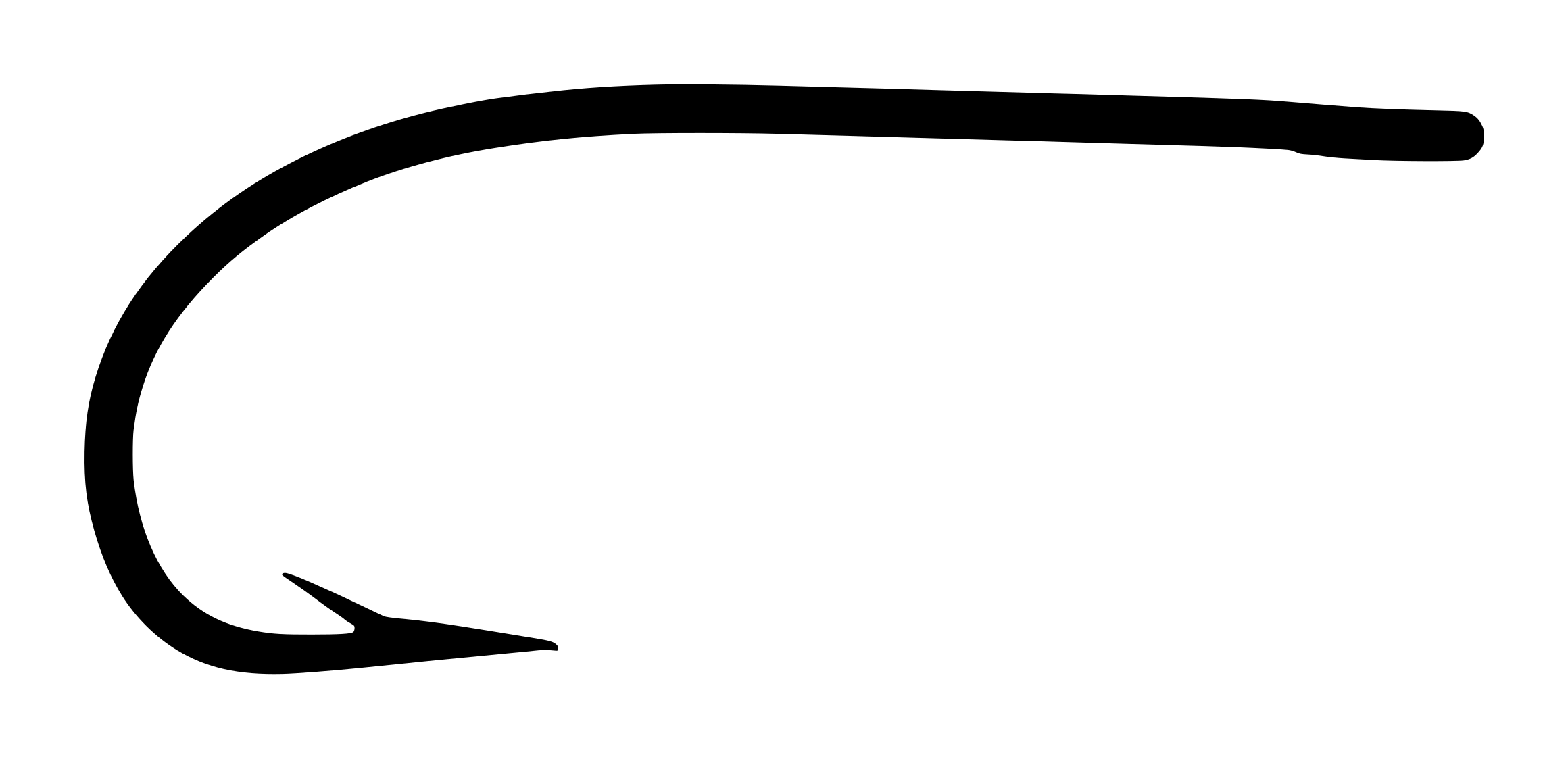
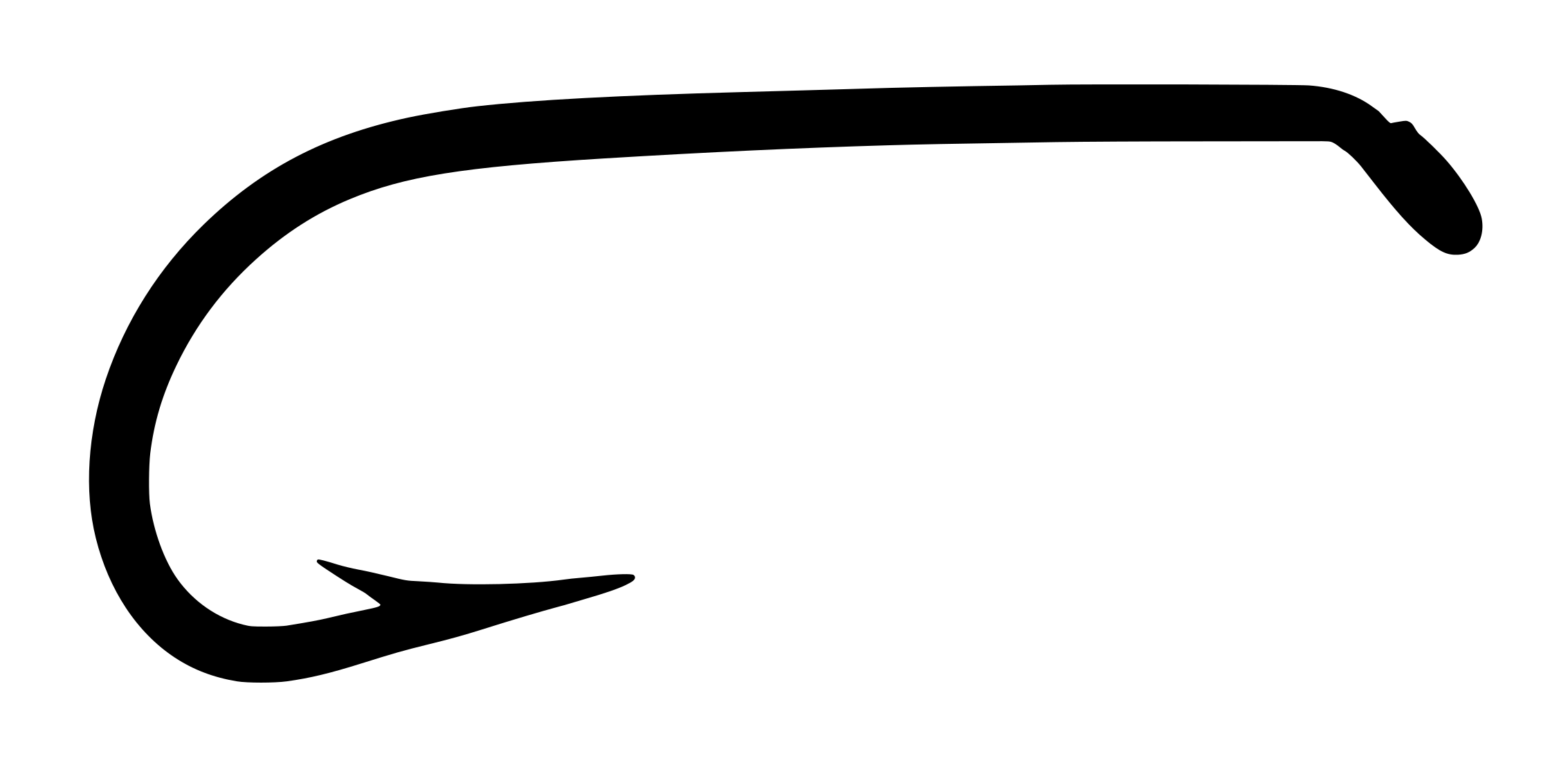
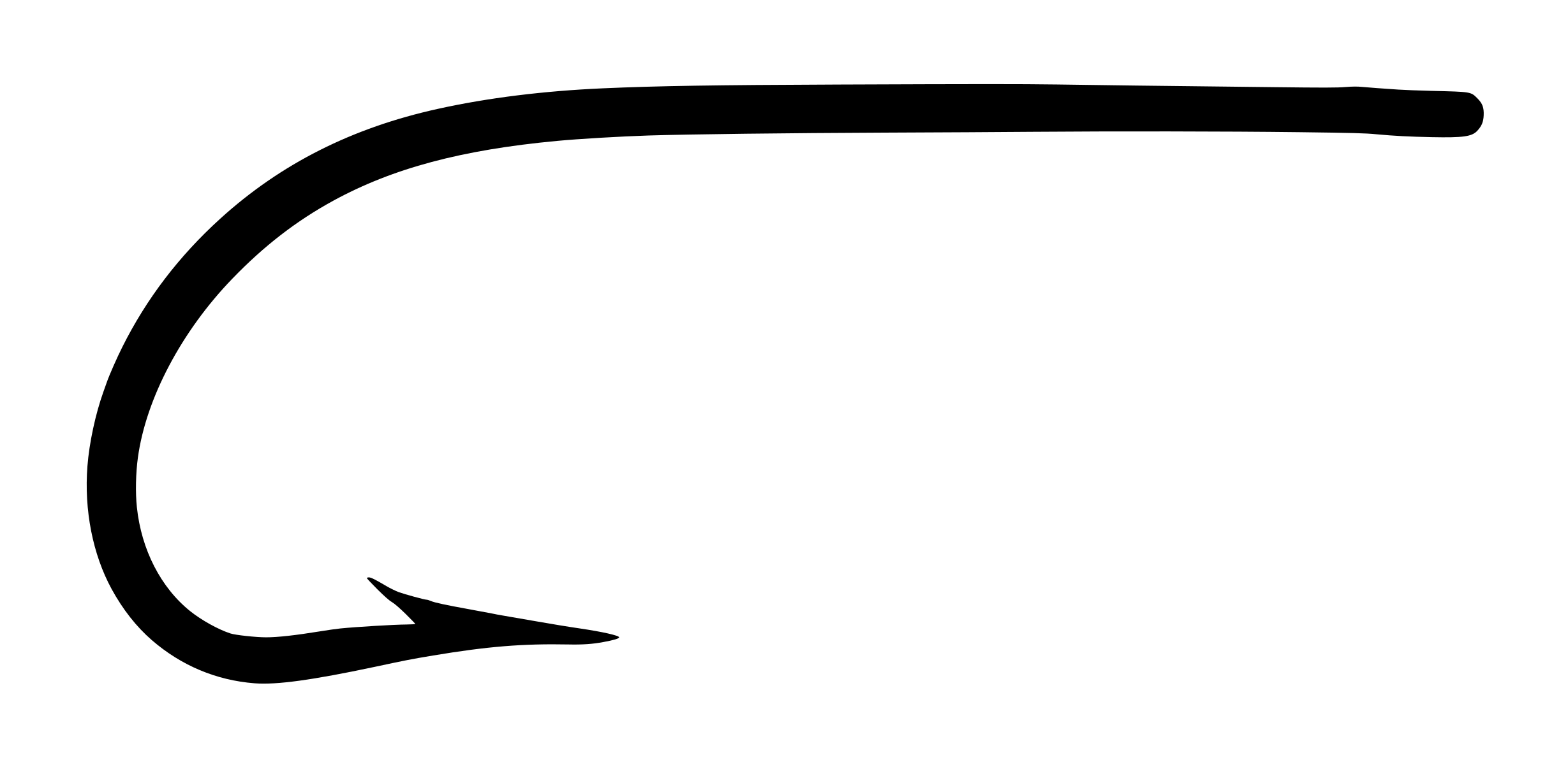
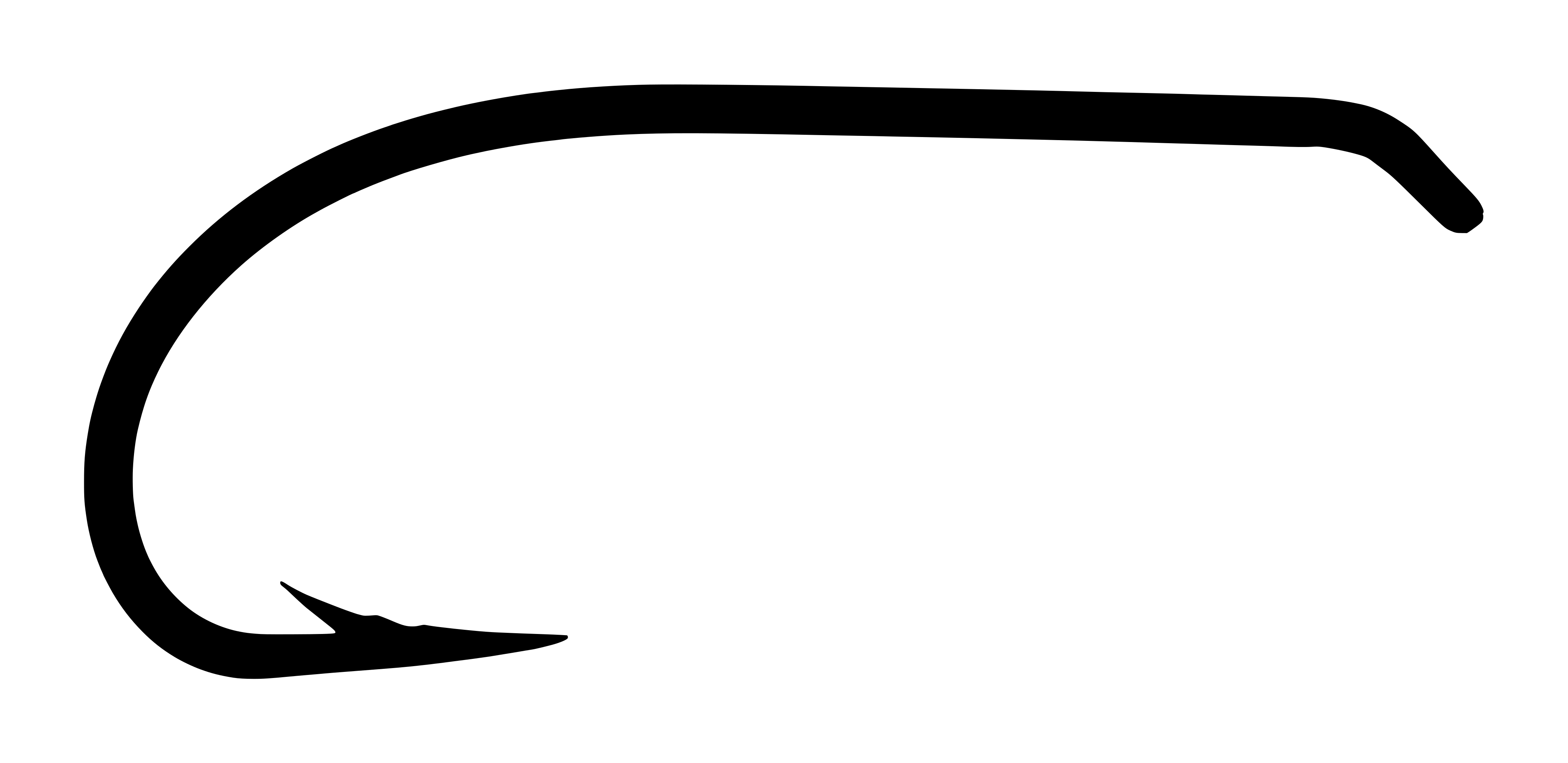
The S. Allcock & Co. 1904 R Sproat is a classic Redditch commercial trout hook representing the pinnacle of early 20th-century British hook manufacturing. Manufactured by one of Redditch’s most respected makers, the 1904 R combines a well-proportioned Sproat bend with a tapered-eye construction characteristic of premium English tackle from the Edwardian era.
Size 6 with bronzed finish, this hook exemplifies the standard commercial trout pattern that dominated British fly-fishing tradition from 1900 through the 1930s. The defining feature is the original printed label, which documents the design registration year (1904) and proudly states ‘Made in England’ and ‘Redditch, England’—geographical markers that commanded respect in the international fishing tackle market.
The specimen exhibits clean, well-executed Sproat geometry with excellent symmetry and uniform bronze coating. Era evidence is strong: the label typography, paper stock, letterpress printing, and absence of any barcode or modern marking place this firmly in the pre-1920 period, likely 1900-1915 based on label design conventions.
Collecting significance is substantial. Named Redditch makers like Allcock rarely appear in the collector market compared to industrial giants like Mustad or contemporary Milward patterns. The documented design number (1904) and original label add significant historical provenance. For fly-fishing historians and Redditch specialists, this represents the authentic tooling of classic British trout fly tradition.
Close-up profile view of the 1904 R Sproat point, showing the characteristic superior-point geometry with nearly straight inner taper and clean barb. The bronzed finish is uniform across the point and demonstrates the warm brown tone typical of early Edwardian Redditch bronzing.
Photographic record
3 cataloged imagesSelect any record to load it above.
3 images shown
S. Allcock 1904 R Sproat Size 6 Point DetailClose-up profile view of the 1904 R Sproat point, showing the characteristic superior-point geometry with nearly straight inner taper and clean barb. The bronzed finish is uniform across the point and demonstrates the warm brown tone typical of early Edwardian Redditch bronzing.Open originalS. Allcock 1904 R Sproat Size 6 Full ProfileFull-length profile view of the 1904 R Sproat hook, size 6, displaying the classic rounded Sproat bend geometry and standard shank proportions. The tapered eye is visible at the head. The bronzed finish appears warm and uniform across the entire hook.Open originalS. Allcock 1904 R Sproat Original LabelOriginal printed label from the S. Allcock & Co. package, showing the manufacturer attribution, design number (1904 R), bend family (Sproat), and location (Redditch, England). The blue label with black letterpress printing is characteristic of early Edwardian commercial hook packaging.Open original
Technical profile
S. Allcock & Co., Ltd. — Redditch, England | Tapered-eye Sproat trout hook | Bronzed finish | c. 1900-1915
Eye
Ball Eye, Straight / InlineTapered down eye with smooth transition from shank to eye loop. Characteristic of early 20th-century Redditch construction P.
Wire
Standard, Round, Est. ~0.045"-0.055" (~1.14-1.40 mm)
Shank
Standard — Plain
Bend
Sproat, Standard gapClassic Sproat bend with rounded bottom and gentle sweep. Symmetrical, well-proportioned curve typical of Allcock's early commercial production P.
Point
Standard / Spear
Finish
Bronzed — Inferred (photographically likely)Warm brown-amber tone visible in direct light, consistent with bronzed steel finish of the period. Finish is uniform across the hook with warm undertones characteristic of bronzing rather than cooler blued or nickelled coatings P.
The superior-point geometry of the 1904 R reflects British fly-hook design philosophy of the period. Unlike the more concave hollow-point geometry favored by some Norwegian and American makers, the superior point employs a nearly straight inner taper from the barb to the tip. This design choice optimizes penetration in hard-mouth species (particularly trout and sea trout) while maintaining good holding power once set.
The standard wire gauge—neither fine nor heavy—was the industrial standard for size 6 across the Redditch trade. This gauge provides adequate strength for normal fly-fishing use while keeping the hook light enough for proper fly balance and drift. The wire retains good roundness (no forging) throughout the shank, indicating production via drawing and heading rather than forming operations.
The tapered-eye construction is a hallmark of premium Redditch work. Rather than a simple ball formed by upsetting the wire, the eye is created by tapering the wire gradually from the shank diameter to the smaller eye loop. This approach requires more skilled hand-finishing but provides superior strength and a more elegant aesthetic. The taper creates a smooth transition that resists cracking under stress and presents a more refined appearance—details that justified higher pricing in the competitive Edwardian tackle market.
Bronzing was the finish of choice for hooks intended for general freshwater use. The warm brown tone provided modest corrosion resistance (inferior to bluing or japanning) but was preferred for its appearance and the ease with which the coating could be re-burnished in the field if needed. The bronzed finish on the 1904 R would have developed a subtle patina with age, making older examples slightly darker than newly bronzed hooks.
We have measurements for sizes 6, 9. Know any others? Submit calipered measurements and we'll review and add them. Thank you!
Historical context
allcock
S. Allcock & Co., Ltd. was one of the most distinguished hook and tackle manufacturers in Redditch’s 19th and early 20th-century heyday. The company built its reputation on consistent quality and innovation in hook design, competing directly with elder firms like H. Milward & Sons and emerging later against the industrial might of O. Mustad & Son.
Allcock’s strength lay in commercial fly-fishing tackle—carefully engineered hooks, lines, and reels designed for the British gentlemen’s fishery tradition. The company maintained strict quality control and invested in modern machinery while preserving hand-finishing techniques that defined Redditch’s craft reputation. Allcock hooks were exported globally and appeared in tackle catalogs from London to Sydney to New York.
The 1904 R Sproat designation reflects Allcock’s patent and design registration practice—assigning model numbers linked to design registration years. This system provided legal protection and marketing credibility, allowing the company to claim ‘registered design’ status on its packaging. By the early 1900s, Allcock had established a tiered product line ranging from economy patterns to premium offerings, with the 1904 R positioned as a reliable general-purpose trout hook.
Allcock remained independent through the mid-20th century, eventually being acquired by Mustad. Today, Allcock hooks from the pre-1970 period are among the most sought-after British vintage specimens, prized for their engineering precision and historical significance in fly-fishing tradition.
Series History
The 1904 R Sproat belongs to Allcock’s core trout-fly series, which remained in continuous production from the model’s registration in 1904 through the 1950s. The ‘R’ designation is Allcock’s nomenclature for a ringed-eye hook (as opposed to a looped-eye variant). The Sproat bend itself was established across the British industry by the 1880s and became the default general-purpose pattern for both wet and dry fly work.
Allcock’s innovation lay not in bend design but in precision forging and consistent eye construction. The tapered-eye variant documented here represents the premium end of the 1904 R line—more labor-intensive to produce than a simple ball eye, but prized for its strength and durability. This tapered-eye version appears consistently in Allcock catalogs from 1905 through the 1930s.
The 1904 R was available in sizes ranging from 2 (large salmon work) through at least size 16 (small stream trout), with intermediate sizes produced in small quantities. Size 6 and 8 were the most common production sizes. The hook remained in the Allcock catalog through the 1950s before being phased out as post-war manufacturing moved toward more economical designs and imported alternatives became competitive.
Era and Packaging Dating
Label clearly printed '1904 R SPROAT' with manufacturing attribution to S. Allcock & Co., Ltd., Redditch, England V. Label design, typography, and paper stock are consistent with early 1900s commercial printing — sans-serif letterpress with period-correct margins and layout. No barcode present, indicating pre-1974 manufacture P. The designation '1904' is almost certainly the design registration or patent year rather than a production year — Allcock's 1904 R model designation is confirmed in period catalogs. Production of this specific model likely spans 1904 through the 1910s-1920s, with the specimen label dating to early 20th century based on printing conventions. The tapered eye and bronzed finish are consistent with Edwardian-era Redditch commercial patterns.
Design Registration as Marketing
S. Allcock & Co. was one of the few Redditch makers to successfully patent hook designs in the United States market. The '1904 R' designation reflects British design law—once a design was registered with the Patents Office, the registration year could be printed on the package as a legal claim to originality. This practice was common among Redditch firms and created a reliable dating mechanism for collectors: a hook marked '1904' was designed (though not necessarily first produced) in that year. Allcock's ability to secure both British and American patents gave the company competitive advantage in export markets, where 'Redditch registered design' became a marketable quality signal worth printing prominently on the packaging.
Design lineage and influence
The Sproat bend itself predates Allcock’s use—it was well-established across the Redditch trade by the 1880s, with origins attributed to various makers. What Allcock contributed was standardization and quality consistency. The 1904 R’s tapered-eye construction represents an evolution of earlier simple-ball-eye Sproats. Competing Redditch makers including H. Milward & Sons and Edgar Sealey & Sons offered functionally similar patterns in the same era.
The 1904 R remained influential through the mid-20th century. Later British makers, particularly Partridge of Redditch, continued the tapered-eye Sproat tradition and directly competed with remaining Allcock stock. When Mustad acquired Allcock in the post-war period, the 1904 R design was absorbed into the larger Mustad catalog and eventually superseded by Mustad’s own commercial patterns.
Modern fly-tyers still favor vintage British Sproats like the 1904 R for traditional patterns, citing superior wire quality and eye construction compared to contemporary mass-produced alternatives. The tapered-eye design has experienced a modest revival among premium hook makers seeking to revive Redditch heritage aesthetics.
Best matchRelated by Attribute
Computed automatically from catalog data — updated as new hooks are added.
Matches: Bend, Shank, Gap, Finish, Shank Feat. +1 moreDiffers: Wire: Standard vs Heavy (1X Heavy); Eye: Ball Eye vs Tapered Eye; Eye Orient.: Straight / Inline vs Turned Down +3 more
Matches: Bend, Wire, Gap, Eye, Eye Orient. +3 moreDiffers: Shank: Standard vs 1X Long; Point: Standard / Spear vs Superior; Finish: Bronzed vs Gold-Plated +1 more
Matches: Bend, Shank, Eye, Eye Orient., Finish +3 moreDiffers: Wire: Standard vs Fine (1X Fine); Gap: Standard vs Wide; Point: Standard / Spear vs Superior +1 more
The 1904 R Sproat was designed as a general-purpose trout hook suitable for both wet and dry fly patterns. The rounded Sproat bend and standard wire gauge made it ideal for classic British fly patterns of the Edwardian era, including soft-hackle wets and emerging dry patterns. The superior point geometry provided reliable penetration without sacrificing holding power.
Secondary Applications
Wet fly patterns for sea trout and grilse; small salmon nymphs; general bait work in traditional British style.
Classic Fly Patterns
Greenwell's Glory, Mallard and Claret, Partridge and Orange, March Brown, Cinnamon and Gold, Teal and Red, Black Pennell, Grouse and Claret
Modern Equivalents
Hook
Match Quality
Notes
Partridge GRS4H (Sproat)
Excellent
Direct spiritual successor—British maker, tapered eye, Sproat bend, similar wire profile. Partridge inherited much of the Allcock heritage through acquisition and market position.
Tiemco TMC 100
Very Good
Modern premium trout fly hook with similar proportions and superior point geometry. Japanese precision manufacturing; tapered-eye equivalent in contemporary production.
Daiichi 1180
Good
Sproat bend with tapered eye. Japanese production; slightly lighter wire than vintage Allcock. Good functional equivalent for tying classic patterns.
Mustad 3906 (vintage lot)
Moderate
Post-acquisition Mustad variant that absorbed some 1904 R design elements after acquiring Allcock. Not an exact equivalent but represents the evolutionary successor in Mustad's catalog.
Collector notes
Rated 5.5/10. S. Allcock & Co. hooks are less commonly encountered than contemporary Mustad or Milward examples, and the 1904 R Sproat in size 6 with original labeling is genuinely scarce. Redditch collector demand is strong but the original packaging condition is the primary value driver; loose examples are significantly less desirable.
Reference value
$18 – $42 USD estimate
Packaging format
GW-ALLCOCK-01Catalog code
Positive factors: S. Allcock & Co. was a prestigious Redditch manufacturer with a long heritage of quality hook production. The 1904 R designation indicates a design registered in that year, giving it documented provenance. Original printed label with manufacturer attribution, location (‘Redditch, England’), and design number adds significant historical value. The tapered-eye Sproat is a classic British pattern with ongoing collector demand among fly-tying historians and Redditch specialists. Early 20th-century hooks from named Redditch makers command meaningful premiums over contemporary mass-produced alternatives.
Limiting factors: Allcock’s total production volume, while smaller than industrial manufacturers like Mustad, was still substantial. Size 6 is a common trout size and less sought after than specialty sizes (very small or very large). Bronzed finish was standard for the period and does not command a premium. The specimen lacks attached tissue or envelope; loose cards are less valuable than sealed examples. Condition of this label is good but shows age toning and handling marks, which moderates the value ceiling.
Desirable variants: Smaller specialty sizes (2, 2/0, 3/0) or larger salmon sizes would be notably scarcer. Cards with complete hook counts and minimal label wear command the highest premiums. Sealed or tissue-wrapped original packaging would be exceptionally rare and valuable.
Condition impact: Label integrity and legibility are critical — fading or water damage substantially reduces value. Hook presence and condition (no rust, original finish intact) directly affects marketability. For this model, the original label is actually more valuable than the hooks themselves among serious collectors.
Packaging
Sales card with printed label. Card body appears to be cream or off-white stock, approximately 2.5" × 3.5" (standard trade card format). Label is bright blue paper with black letterpress printing. Label text reads: '1904 R SPROAT / CAST STEEL SPEAR POINT / RINGED HOOKS / Manufactured by / S. ALLCOCK & CO., LTD. / REDDITCH, ENGLAND. / No. [size] 10 / MADE IN ENGLAND.' The layout is typical of early Edwardian commercial hook packaging — centered text, manufacturer attribution prominent, location emphasized ('Redditch, England'), and designation 'Made in England' (consistent with British trade law after 1891). No barcode, no modern printing elements. Paper stock and letterpress printing indicate early 20th-century production.
Market Value Notes
Low ($18): Good condition—opened card, all or most hooks present, label shows moderate toning and handling marks, finish intact.<br />
High ($42): Excellent condition—sealed or near-sealed, complete hook count, label bright and legible with minimal wear, original tissue present if applicable.<br />
Premium factors: Original printed label with design number and manufacturing attribution; early Redditch maker provenance; complete original packaging; label condition and legibility; sealed or tissue-wrapped state.<br />
Platforms: eBay (UK and US specialist sales), UK tackle dealer networks, online Redditch hook auctions.<br />
Confidence: E estimated based on comparable Allcock scarce-pattern sales and Redditch specialist market data; limited specific transaction records for this exact model.
Where to Find
Specialized eBay UK sellers focusing on vintage Redditch tackle; UK tackle fairs (particularly Midlands region); online dealer networks specializing in British vintage fishing tackle; Redditch hook collector groups and auctions.
Preservation
Storage and Preservation
Original labeled cards should be stored horizontally in a cool, dry environment away from direct sunlight and moisture. The blue label is susceptible to fading if exposed to prolonged light; store in a closed box or album sleeve if possible. The bronzed finish is relatively stable but will develop natural patina over time with humidity exposure—this is generally considered desirable by collectors and does not indicate deterioration.
If hooks are still on the card, do not remove them unless necessary for examination. The original label is more valuable than loose hooks and should never be detached. Keep the card flat; standing it upright can cause stress to the wire and eye joints. Avoid contact with other metals or materials that could cause galvanic corrosion or abrasion.
For loose examples, store in individual acid-free paper envelopes or compartmented boxes lined with cotton or silk. Do not store in plastic bags, which can trap moisture. Inspect periodically for any signs of rust or corrosion. If the bronzed finish begins to show active corrosion (reddish pitting), the specimen can be lightly oiled with mineral oil or stored in a dry silica-gel environment to arrest further damage.
Original packaging—sealed card, tissue wrap, or period envelope—should never be disturbed. If present, the packaging is often more valuable than the hooks themselves and represents irreplaceable documentation of the manufacturing era.
Primary Source
Label Text Analysis and Historical Significance
Source: Label text, S. Allcock & Co., Ltd., Redditch, England, 1904 R Sproat card package, circa 1900-1915.
The printed label documents several critical facts about this hook and its manufacturing context. The text ‘1904 R SPROAT’ combines the design registration year with the model code (‘R’ for ringed eye) and the bend family name (‘Sproat’). This nomenclature system was standard across Redditch manufacturers and provided both legal protection and marketing credibility.
The phrase ‘CAST STEEL SPEAR POINT’ is terminology from the era—’cast steel’ refers to the material quality (mild steel worked from cast ingot stock, before modern wire-drawing methods), not to casting as a forming process. ‘Spear point’ is the common period term for what modern catalogers call a ‘superior point’—a straighter taper from barb to tip, contrasted with the more concave ‘hollow point’ geometry preferred by some competitors. This terminology indicates Allcock’s claim of superior penetration characteristics for dry-fly work.
‘RINGED HOOKS’ directly describes the eye type—a simple ring formed by looping and joining the wire, as opposed to a ‘loop eye’ where the eye wire is created separately and inserted. The ringed-eye terminology distinguishes this from more elaborate eye constructions.
The attribution ‘Manufactured by S. ALLCOCK & CO., LTD. / REDDITCH, ENGLAND’ establishes the maker and location with unambiguous clarity. Redditch was already recognized globally as the center of precision hook manufacturing, and placing ‘Redditch, England’ prominently on the label was a marketing strategy—the location itself was a quality signal in the international tackle trade.
The final line, ‘MADE IN ENGLAND,’ reflects the Merchandise Marks Act of 1887 (and subsequent Trade Marks Act of 1891), which required British exports to be clearly marked with country of origin. This marking became a competitive advantage, as British-made tackle commanded premium prices in export markets. Hooks marked ‘Made in England’ without barcode or modern typography can reliably be dated to the pre-1920s period.
Marking Analysis
Packaging Markings and Annotations
The label shows no visible handwritten annotations, stamps, or price markings in the photograph. This is consistent with a card that has been stored carefully and has not passed through multiple retail or wholesale transactions. Absence of handwritten pricing or merchant marks is generally positive for value—it suggests the card has been in private collection or protective storage rather than exposed to handling in tackle shops or markets.
The printed text is uniform letterpress with no hand-corrections, over-stamping, or period notations. This consistency is typical of factory-direct packaging and indicates the card left the Allcock factory in standard commercial form without later warehouse modifications.
Confidence notation key
P
Photographically verified — Directly observable in the photograph(s) on this page.
V
Verified by documentation — Confirmed by manufacturer catalog, spec sheet, or published reference.
I
Inferred — A logical deduction from observable or documented evidence, not directly stated.
E
Estimated — An approximation based on visual comparison, proportional analysis, or limited data.
S
Speculative — A reasoned hypothesis that cannot be confirmed from available evidence.
Claims with no notation are confirmed by multiple independent sources. All photographs on garrenwood.com are taken on a measurement grid where each square equals 1/10 inch (0.1″ / 2.54 mm).