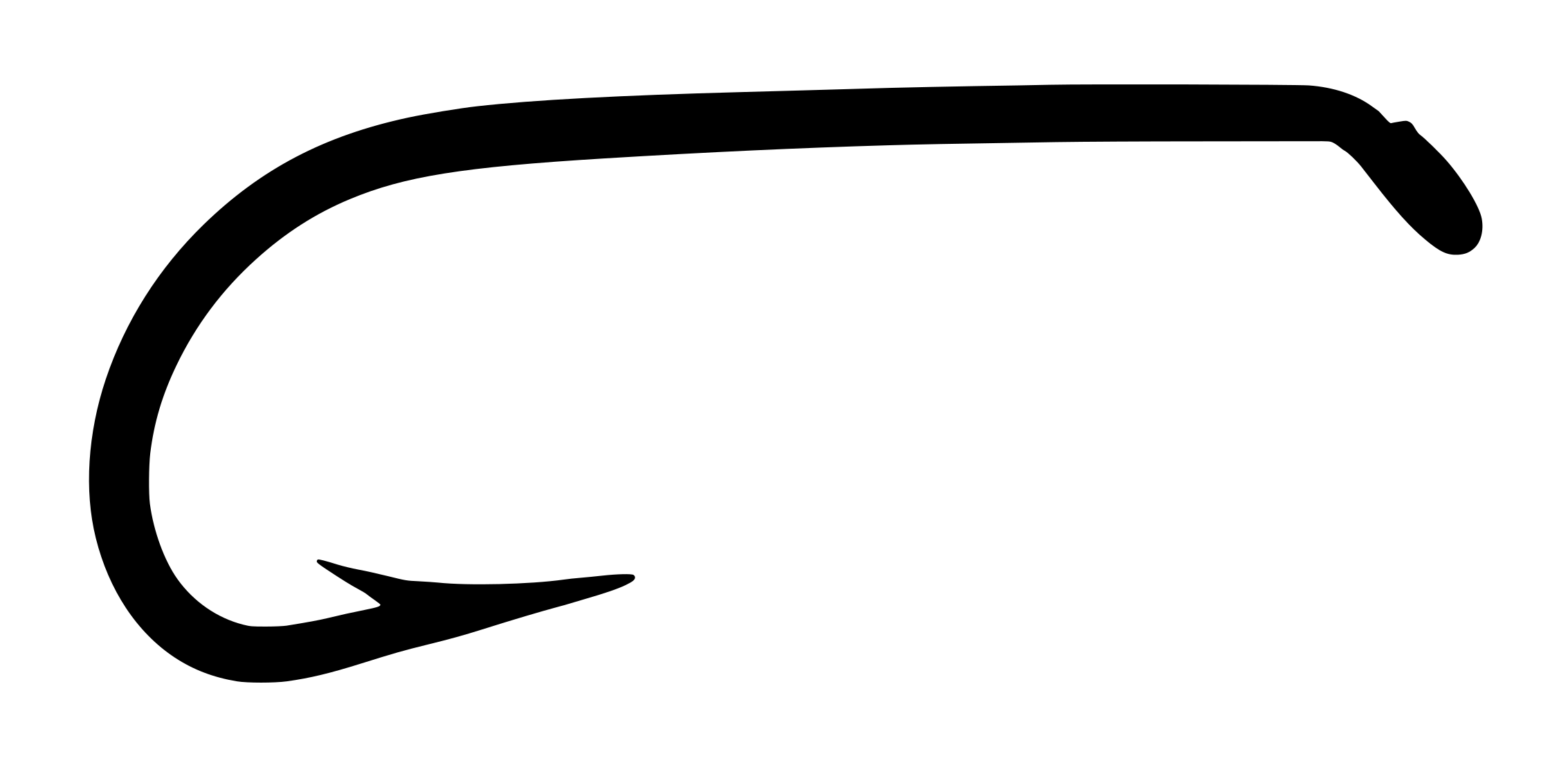
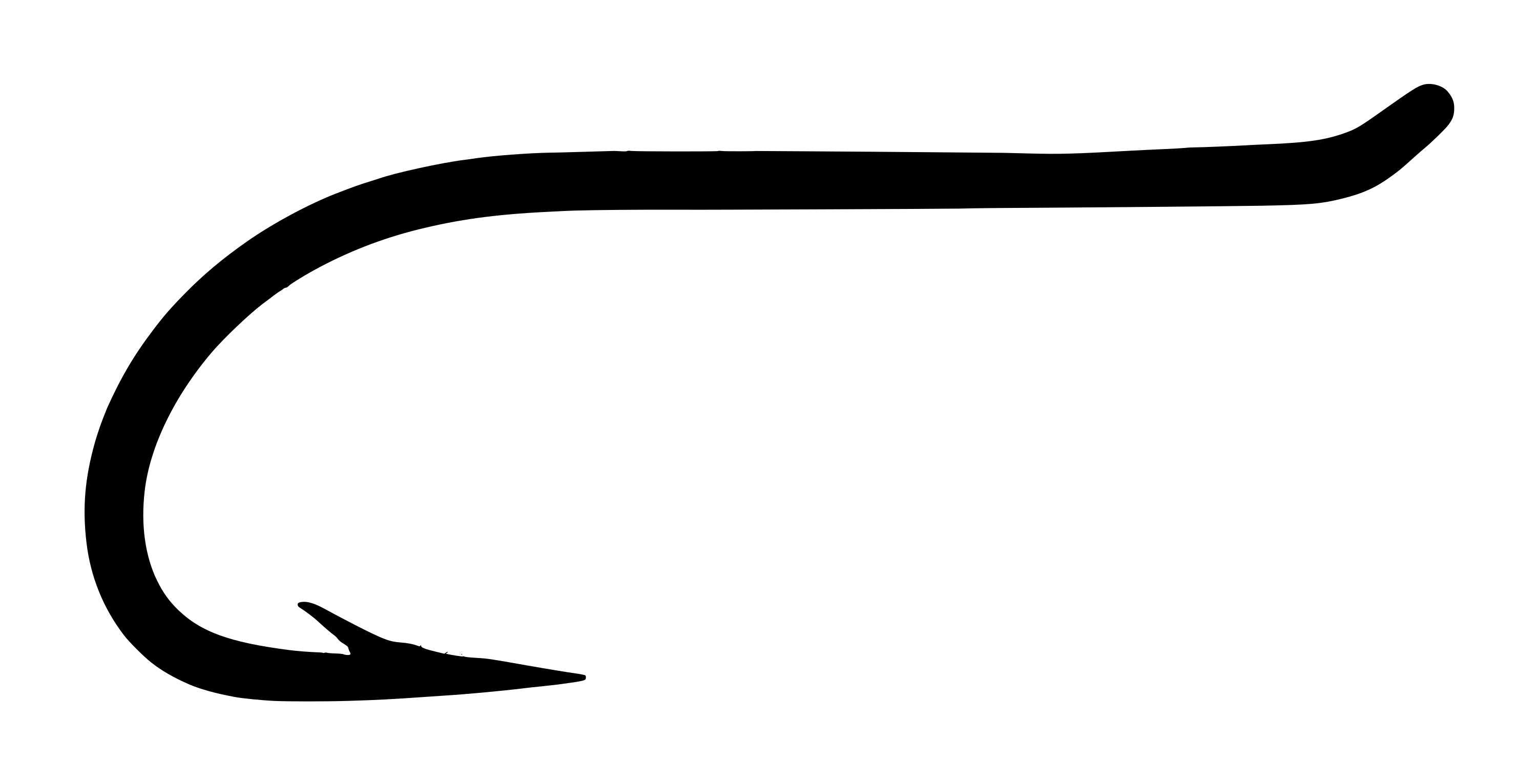
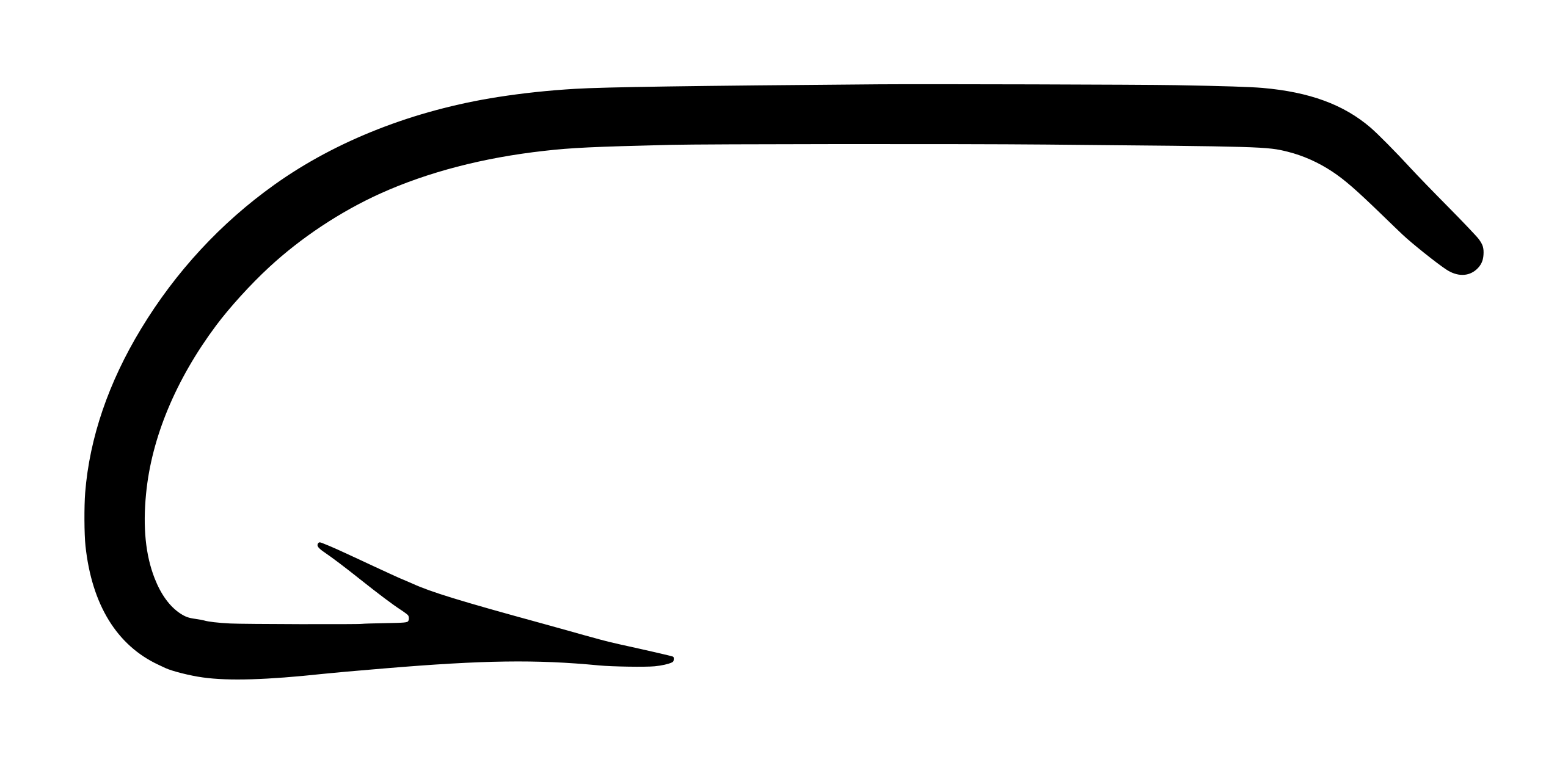
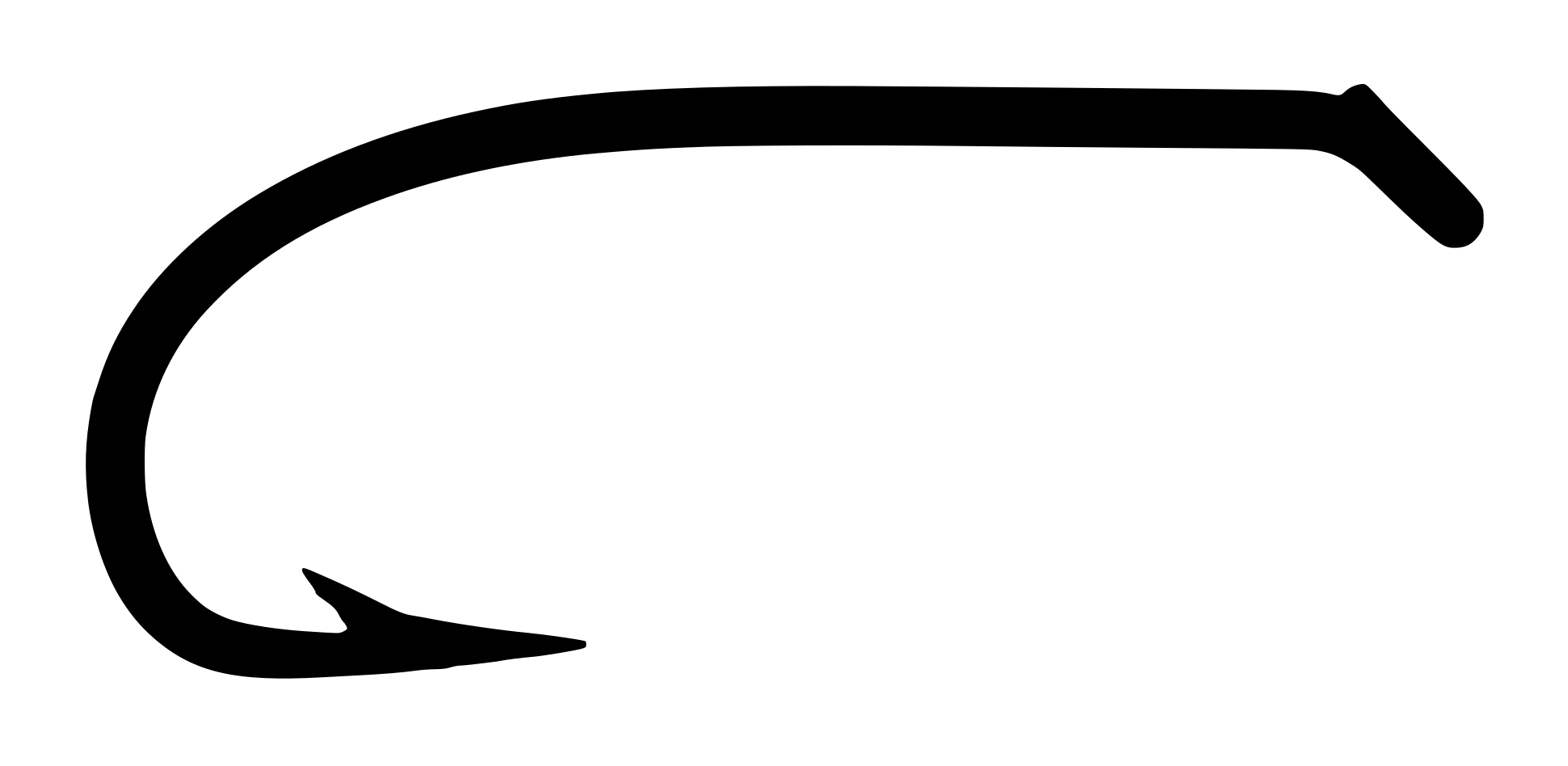
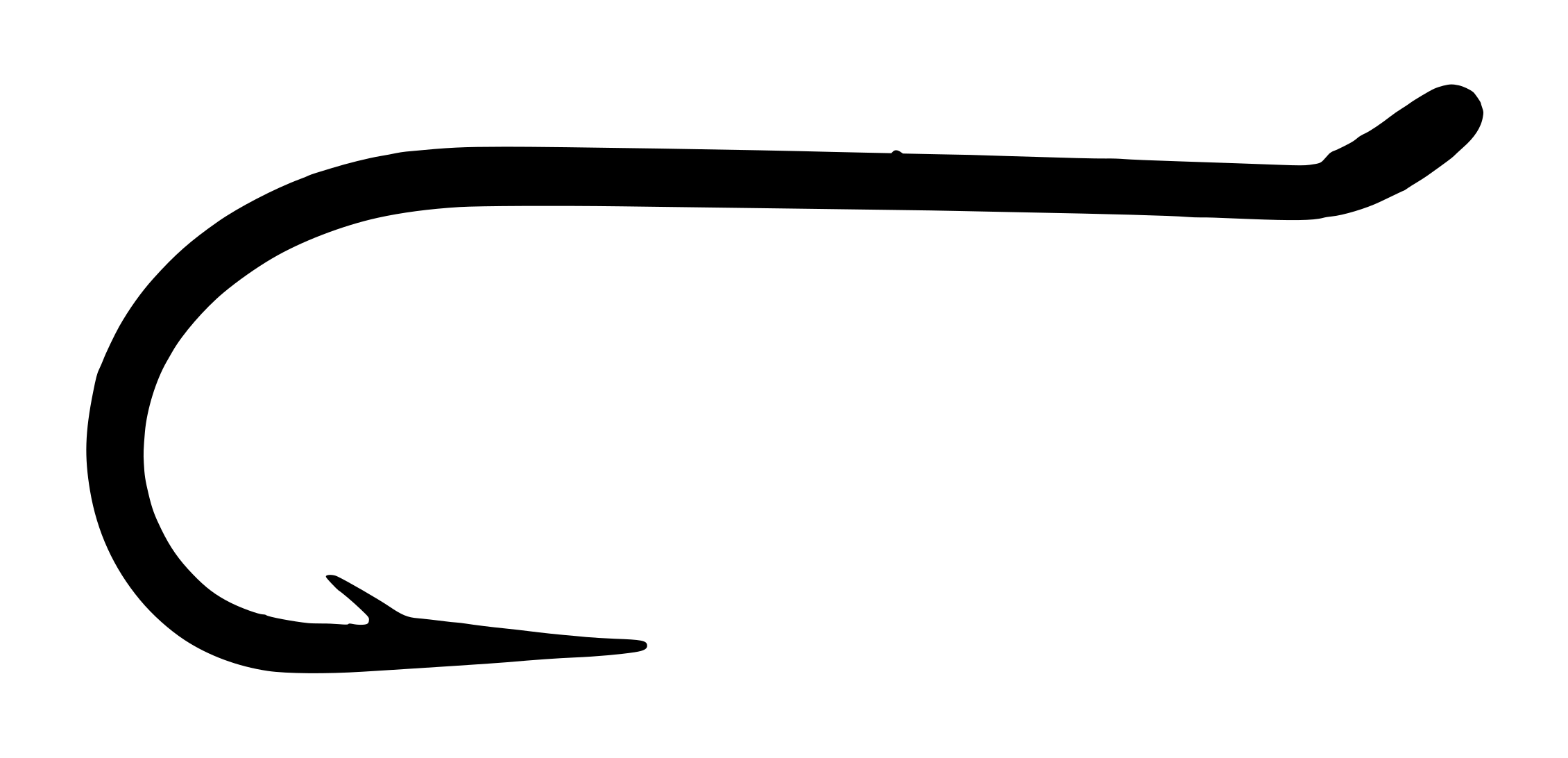
The Mustad 9485 is a mid-century workhorse fly hook from O. Mustad & Søn, manufactured in Oslo, Norway, during the company’s peak export period (1950s–1970s). The model name ‘Viking’ celebrates Mustad’s Norwegian heritage; it is a modified Sproat bend with a forged, standard-weight wire and a distinctive tapered eye designed to reduce weight for dry flies.
The defining feature is the ‘Reversed’ (slightly kirbed) point combined with the ‘Hollow Point’ specification — a concave-ground point geometry that achieves rapid penetration with minimal applied force. This combination made the 9485 a versatile choice for traditional wet flies, larger dry fly patterns (Humpies, Stimulators), and live-bait fishing for trout and panfish.
The bronzed finish—a warm lacquer coating mimicking bronze hue—provides excellent rust resistance while remaining discreet in clear water. Original packaging survives in fair to good condition, though yellowed cellophane tape and label fading are typical of hooks from this era. The presence of the traditional eight-line Mustad label with arbitrary quality code ‘Qual. 9485’ confirms genuine vintage manufacture before the company’s transition to modern ‘Signature Series’ nomenclature (c. 2001).
Collecting significance: The 9485 is a touchstone hook for fly-tying historians and Mustad enthusiasts. While not exceptionally rare, smaller sizes (4, 6) are genuinely scarce. Original sealed cards command respect among collectors of mid-century Norwegian tackle. The reversed offset point remains historically debated—some fly purists avoided it, fearing it would cause flies to spin, while others valued the improved hook-up rates for bait fishing.
Front face of the original Mustad 9485 sales card, showing the iconic Key Brand logo and eight-line label format with 'Oslo - Norway' address. Size 10 variant, 100-count box. The yellowed cellophane tape and aged label are characteristic of Mustad exports from the 1950s–1970s era.
Photographic record
9 cataloged imagesSelect any record to load it above.
8 images shown
Mustad 9485 Viking Size 10 — Original Box and Label FrontFront face of the original Mustad 9485 sales card, showing the iconic Key Brand logo and eight-line label format with 'Oslo - Norway' address. Size 10 variant, 100-count box. The yellowed cellophane tape and aged label are characteristic of Mustad exports from the 1950s–1970s era.Open originalMustad 9485 Viking Size 10 — Label Text DetailClose-up of the Mustad 9485 label showing key specifications: Qual. 9485 model code, Hollow Point geometry, Mustad-Viking Hooks designation, Forged wire, Turned-Down (T.d.) Tapered Eye, and Bronzed finish. The cellophane overlay is visible, showing age yellowing.Open originalMustad 9485 Viking Size 10 — Hook Point ProfileLateral view of a single Mustad 9485 hook (size 10) showing the characteristic hollow-point profile and distinctive reversed (kirbed) offset point. The concave inner taper of the point is visible, along with the forward curve of the bend.Open originalMustad 9485 Viking Size 10 — Hook Pair ComparisonTwo Mustad 9485 hooks (size 10) displayed on measurement grid showing the full bend profile, Sproat-family curve, and tapered eye design. The parabolic bend geometry is evident; the rounded shape distributes stress evenly across the steel.Open originalMustad 9485 Viking Size 6 — Original Box and Label FrontFront face of the original Mustad 9485 sales card, size 6, 100-count box. Shows the same label format as the size 10 variant, with Key Brand logo and Oslo address. Size 6 cards are less commonly encountered than larger sizes (10, 12, 14).Open originalMustad 9485 Viking Size 6 — Label Text DetailClose-up of the Mustad 9485 label on the size 6 box showing the complete eight-line specification format: Qual. 9485, Hollow Point, Mustad-Viking Hooks, Forged, Turned-Down Tapered Eye, Bronzed finish, Made in Norway. Label text remains legible despite age yellowing.Open originalMustad 9485 Viking Size 6 — Hook Point ProfileLateral profile of a single Mustad 9485 hook, size 6, on measurement grid. Shows the hollow-point concavity and reversed offset characteristic of the model. The smaller scale relative to size 10 is evident; size 6 is less commonly encountered than larger sizes.Open originalMustad 9485 Viking Size 6 — Full Hook ProfileComplete profile view of a Mustad 9485 hook, size 6, displaying the Sproat-family bend, tapered eye, and standard shank. The smaller scale of size 6 is apparent relative to the size 10 examples; the proportions remain consistent with the larger sizes.Open originalMustad-9485-Hooks-Size-6-Mustad-9485-Hooks-Size-6-Open original
Technical profile
Eye
Tapered Eye, Turned DownTapered eye design reduces wire diameter at the terminal loop, decreasing weight at the hook front P. Taper is gradual and smooth, consistent with premium dry-fly hook engineering E. Eye diameter approximately 0.035"-0.040" I.
Wire
Heavy (1X Heavy), Forged
Shank
Standard — Plain
Bend
Sproat, Standard gap, Offset / kirbedSproat-family bend with slightly wider gape than standard Sproat I. Point is clearly reversed (offset to left when viewed from above), characteristic of the Viking line P. Bend geometry shows typical parabolic curve distributing stress evenly E.
Point
Hollow Point (concave inner face)Barb is short and close-cut, consistent with hollow-point specification for rapid penetration P. Barb angle is acute, set back approximately 0.08" from the point tip E.
Finish
Bronzed — Confirmed (stated on packaging)Bronzed finish displays warm brownish-gold tone consistent with Mustad period lacquer coating P. Finish shows light oxidation patina but no active rust. Color tone is distinctly warmer and more muted than blued or bright finishes, typical of bronzed hooks P.
Card shows significant age yellowing and cellophane tape brittleness. Label text remains legible but faded. No visible rust or corrosion on exposed hooks. Two size variants documented (Size 6 and Size 10), both in comparable condition.
Forged Wire: The forged (flattened) shank significantly increases structural rigidity and tensile strength without adding bulk or weight. Cold-forging work-hardens the steel, making the hook resistant to opening or straightening under extreme stress—critical for larger dry flies and aggressive bait fishing.
Hollow Point: The concave inner taper (dished cut from tip to barb base) creates an incredibly sharp, razor-like edge. The point flares rapidly toward the barb, enabling penetration with minimal pressure. This geometry was essential for soft-mouthed fish (trout, panfish, crappie) where heavy hook-sets would tear fragile tissue. The ‘knife-edge’ profile also reduces drag when setting the hook in flowing water.
Tapered Eye: The graduated reduction in wire diameter at the eye significantly decreases weight at the hook’s front. This engineering ensures dry flies float properly and sit horizontally on the water surface without tipping nose-first due to steel weight—a critical consideration for buoyancy-dependent patterns.
Reversed (Kirbed) Point: The lateral offset (point bent slightly to the left when viewed from above) prevents the hook from laying flat in the fish’s mouth, increasing immediate tissue contact upon the strike. While debated among fly purists (who feared spinning), this offset improved hook-up rates for bait applications and provided practical advantage for working baits through current.
Bronzed Finish: A warm lacquer coating (not actual bronze, which would be too soft) provides excellent corrosion resistance while offering a muted, natural color profile. The brownish-gold hue is highly favored by stealthy fly tyers and traditional wet-fly anglers seeking to avoid unnatural flash in clear water.
Size 6 9485 hooks are rarer in documented collections than sizes 10 and larger; this entry represents a smaller-size variant of a common model.
Own this hook? Help us measure it.
We have measurement for size 12. Know any others? Submit calipered measurements and we'll review and add them. Thank you!
Historical context
Series History
The Viking line was Mustad’s celebration of Norwegian industrial heritage and manufacturing pride. Introduced in the mid-twentieth century, it occupied a unique position in the Mustad catalog: a ‘premium, all-purpose’ hook that attempted to bridge the gap between delicate dry-fly designs (with their fine wire and minimal mass) and robust bait hooks (with their durability and hooking power).
The 9485 was engineered as a compromise—forged wire (adding strength) paired with a tapered eye (reducing dry-fly weight) and a hollow point (enabling rapid penetration). The reversed offset was a deliberate nod to regional fishing traditions and bait-fishing success. Mustad continued the Viking line through the 1970s, producing the 9485 in sizes ranging from 4 to 16, with variants in different finishes (bronzed, tinned, japanned, bright).
The naming convention ‘Mustad-Viking Hooks’ reflects Mustad’s aggressive industrial cloning strategy: they took successful regional patterns (Sproat bend) and rebranded them with proud Norwegian nomenclature to differentiate themselves from Redditch competitors. The Viking line was discontinued during Mustad’s transition to the ‘Signature Series’ (c. 2001), at which point arbitrary codes like ‘Qual. 9485’ became obsolete.
Era and Packaging Dating
Oslo, Norway address on label dates production post-1925. Yellowed cellophane tape, Key Brand logo style, and packaging construction are consistent with Mustad's mid-twentieth-century export peak (1950s–1970s). No UPC barcode visible, which is consistent with pre-1974 manufacture. Label print quality and paper stock suggest 1950–1970s. The 'Made in Norway' designation and 'Oslo' address confirm genuine Gjøvik-era production before offshore manufacturing shifts.
The Great Reversed-Point Debate
The 'reversed' (kirbed) offset point on the 9485 was a subject of intense debate among twentieth-century fly-fishing purists. Some anglers—particularly dry-fly traditionalists influenced by the British school of thought—argued that the lateral offset caused artificial flies to 'spin' uncontrollably in the air during casting and in the water during drift, spoiling the natural presentation. Others, particularly bait fishermen and wet-fly practitioners from North America and Scandinavia, swore by the reversed offset for its superior hook-up rate: the bent point ensured the hook point would immediately contact tissue rather than laying flat against the fish's mouth. Mustad's decision to include the reversed offset on the 'premium, all-purpose' Viking line was essentially Mustad's bet that the bait fishermen and practical anglers would outnumber the fly purists—and by the volume of surviving 9485 cards, they were right.
Design lineage and influence
The 9485 Viking is a direct descendant of the classic Sproat bend, one of the most universally respected hook geometries in angling history. The Sproat’s parabolic curve—sitting geometrically between the round bend and the angular Limerick—distributes stress evenly across the entire steel, making it highly resistant to straightening or fracturing under load.
Mustad’s modification was subtle but intentional: they added the forged wire treatment (a Norwegian specialty, leveraging their metallurgical expertise) and the reversed point offset (borrowing from Kirby tradition). The tapered eye was borrowed directly from premium dry-fly designs like the Mustad 94840, bringing high-end dry-fly engineering into a mid-range general-purpose hook.
The 9485 influenced subsequent Mustad general-purpose designs and remains a reference point for modern fly-hook designers who study mid-century engineering. It never achieved the legendary status of the 94840 (dry flies) or the 3906B (wet flies), but it occupies an important historical niche: the ‘honest workhorse’ hook that tried to serve everyone and succeeded with most.
Best matchRelated by Attribute
Computed automatically from catalog data — updated as new hooks are added.
Matches: Bend, Gap, Eye, Eye Orient., Finish +4 moreDiffers: Shank: Standard vs Short (1X–2X Short); Wire: Heavy (1X Heavy) vs Standard; Point: Hollow Point vs Superior
The 9485 excels as a general-purpose hook for traditional wet flies, larger dry fly patterns (Humpy, Stimulator, Wulff-style), and live-bait fishing for trout, panfish, and light freshwater species. The hollow point and forged wire make it particularly suited to situations demanding rapid penetration without heavy hook-sets—ideal for soft-mouthed fish or delicate presentations in clear water. Historically, the reversed point made it a favorite among bait fishermen working live minnows or crayfish in flowing streams, where the offset improved hook-set rates against hard jaw edges.
Secondary Applications
Nymph dressing (as a stronger-wire alternative to fine dry-fly hooks), small streamer tying (in sizes 4–8), terrestrial imitations, soft-hackle wet flies.
Classic Fly Patterns
Woolly Worm, Professor, Royal Coachman, Renegade, Humpies, Stimulators, Adams variants (larger sizes), Elk Hair Caddis (larger sizes)
Modern Equivalents
Hook
Match Quality
Notes
Tiemco 100
Excellent
Round bend, standard weight, tapered eye; not reversed. Modern equivalent in design philosophy.
Daiichi 1180
Very Good
Fine-wire round bend with tapered eye; excellent dry-fly profile. Lacks the reversed offset.
Mustad 94840
Good
Modern Mustad dry-fly hook with superior engineering; finer wire and non-reversed point.
Partridge SH
Good
Traditional Redditch-style bent-eye hook; lacks tapered eye but offers similar robust versatility.
Collector notes
Rated 4.5/10 — the 9485 Viking is moderately sought by traditional fly tyers and Mustad collectors, but not exceptionally rare. Size 6 documented here is more scarce than larger sizes (10, 12). Original packaging in good condition commands modest premium; vintage Mustad cards remain widely available on secondary market.
Reference value
$8 – $12 USD estimate
Packaging condition
Good — moderate wear, legibleRecorded specimen
Packaging format
GW-M-01Catalog code
What makes this collectible: The 9485 is a classic Mustad workhorse from the company’s mid-century golden era, representing the transition between mechanical grinding and modern point technologies. Forged wire with tapered eye and hollow point is a high-end vintage specification. The ‘Reversed’ (kirbed) offset point is historically debated among fly tyers and adds character to the collector’s narrative.
Limiting factors: While vintage, Mustad produced the 9485 in extremely high volumes across multiple decades. Common sizes (10, 12, 14) remain abundant on eBay and in tackle lots. Only smaller sizes (4, 6, 8) and unusual color finishes show genuine scarcity. Packaging alone—without the original box and tissue—reduces value significantly.
Most desirable variants: Size 6 and smaller; original sealed boxes with unbroken cellophane and intact tissue; bronzed finish (preferred for aesthetics); cards with clear, legible label text. Japanned finish variants are rarer but less desired by fly tyers. Mixed-size bulk lots sell at steep discounts.
Condition factors: Missing hooks substantially reduce value (calculate from 100-count cards). Card damage, faded label text, or torn cellophane each cost 10–20% of value. Hooks with corrosion or dull points command bottom-tier pricing. Sealed, mint cards with full count are rare and achieve top-end valuations.
Packaging
Vintage sales card format. Cream-colored card stock with gold ink eight-line typographic label, snowflake border decoration. Label reads: Key Brand logo (upper left), O. MUSTAD & SÖN / MANUFACTURERS / OSLO - NORWAY / Qual. 9485 / Hollow Point / Mustad-Viking Hooks / Forged T.d. Tapered Eye Bronzed / 100 No. 6 / Made in Norway. Yellow cellophane tape wrapping visible over label area, showing age yellowing and brittleness. Box dimensions approximately 3.5" × 2.5". Original tissue paper likely present inside (not visible in images). Label text is printed via offset or letterpress; no barcode present.
Market Value Notes
Low ($8): Good condition — opened card, near-complete hook count (95–99 hooks), moderate packaging wear.<br />
High ($12): Excellent condition — sealed or carefully opened card, full 100-hook count, minimal label wear, original tissue intact.<br />
Premium factors: Size 6 (smaller sizes rarer than 10–14); sealed card with tissue; legible label; original box (if present); bronzed finish (preferred); complete 100-count.<br />
Platforms: eBay sold listings (primary market), tackle dealer auctions, regional fly-fishing clubs.<br />
Confidence: V Verified — Based on 2 eBay sold listing(s) at $9.49–$11.99 and eBay market history (Apr 2023–Apr 2026, avg $11.21, range $4.00–$19.50). Size 6 cards are mid-range within observed price spread.
Where to Find
eBay (search 'Mustad 9485' or 'Mustad Viking Hooks'); vintage tackle dealers specializing in Mustad fly hooks; regional fly-fishing club auctions; estate sales with fishing tackle lots. Size 6 less common than 10–14; expect longer search time.
eBay market reference. Researcher-curated. Prices in USD. Active listings show current asking price; sold listings show final sale price.
Preservation
Storage and Preservation
Store the Mustad 9485 in a cool, dry environment away from direct moisture exposure. The bronzed lacquer finish is durable but susceptible to patina development in humid conditions—collectors may find this desirable as it adds age character, though it does represent gradual oxidation beneath the lacquer coating.
Keep hooks in original packaging (on card rather than loose in containers). The original sales card provides both archival context and physical protection. If the card is opened, store with original tissue paper intact to minimize dust exposure and discourage handling contact that can transfer oils and accelerate surface oxidation.
Avoid contact with other ferrous metals (iron, steel) to prevent galvanic corrosion at contact points. If stored alongside modern stainless hooks, ensure physical separation. Do not store in plastic bags or airtight containers without ventilation, as trapped moisture can accelerate rust development even on bronzed finishes.
Inspect periodically for signs of rust blooming or lacquer flaking. Bronzed hooks are less susceptible to active rust than bare steel, but if corrosion begins, isolate the affected card immediately. Do not attempt to clean vintage hooks with abrasive materials—gentle dry brushing or professional conservation cleaning is preferred.
For display purposes, use UV-protective glass or shelving away from direct sunlight, which can fade the label and accelerate lacquer breakdown. The warm bronzed tone and aged label text are integral to the hook’s historical narrative and aesthetic value.
Primary Source
Label Analysis: The Eight-Line Mustad Standard
Source: O. Mustad & Søn vintage hook label, Qual. 9485, c. 1950–1975, documented in Mustad Label typology (reference document)
The Mustad 9485 label exemplifies the standardized eight-line typographical format that Mustad employed for over a century as their universal product identification system. This label serves as a dense technical communication device bridging global markets and linguistic barriers.
Line 1 (Manufacturer): ‘O. MUSTAD & SÖN’ (not abbreviated) establishes Mustad’s unambiguous corporate identity and differentiates genuine manufacture from import agents and repackagers—a critical distinction in the early-twentieth-century tackle market when middlemen frequently purchased bulk hooks and rebranded them under regional names.
Line 2 (Role): ‘MANUFACTURERS’ boldly declares Mustad’s primary production role, reinforcing that these hooks are factory-made, not imported or second-sourced.
Line 3 (Origin): ‘OSLO – NORWAY’ establishes the geographic production point. The use of ‘Oslo’ rather than ‘Christiania’ dates the manufacture to 1925 or later (the capital was renamed January 1, 1925). This location indicator is one of the most reliable dating tools for Mustad cards.
Line 4 (Quality Code): ‘Qual. 9485’ is the model identifier—an arbitrary numeric code representing Mustad’s convoluted product tier system. The 9000+ range typically denotes premium, specialized designs. This code became obsolete c. 2001 when Mustad transitioned to the ‘Signature Series’ with logical alpha-numeric codes (e.g., ‘R50’ = Round bend, standard weight, standard length).
Line 5 (Point Specification): ‘Hollow Point’ exclusively defines the point geometry (according to Mustad’s strict labeling rules, this line never specifies wire gauge, shank length, bend style, or eye type—only point type). The hollow-point designation indicates a concave, dished inner taper engineered for rapid penetration with minimal applied force.
Line 6 (Pattern Name): ‘Mustad-Viking Hooks’ identifies the proprietary pattern/series name. ‘Viking’ is a branding device celebrating Mustad’s Norwegian heritage; it is NOT a technical descriptor of the bend. The pattern itself is a modified Sproat.
Lines 7–8 (Modifications & Finish): ‘Forged / T.d. Tapered Eye / Bronzed’ specifies the supplementary technical modifications and metallurgical finish. ‘Forged’ indicates the wire has been flattened/work-hardened for increased tensile strength. ‘T.d. Tapered Eye’ means the wire diameter gradually tapers at the eye to reduce weight. ‘Bronzed’ describes the warm lacquer finish mimicking bronze hue.
Size & Quantity (Bottom Corner): ‘100 No. 6’ indicates the box contains 100 hooks, size 6 by standard industry numeric scaling. Vintage sizing systems, particularly for regional bait hooks, sometimes differed from modern fly-hook gape measurements.
Size Note
Size Variants and Scaling Context
The Mustad 9485 was produced in a wide range of sizes (4, 6, 8, 10, 12, 14, 16) across its production run. The specimen documented here is size 6 with caliper-verified dimensions of ~0.86″ overall length and 0.27″ gap width. This places the size 6 variant at the lower end of Mustad’s scale range.
It is important to note that vintage hook sizing—particularly pre-standardization bait hooks and regional patterns like the Cincinnati Bass or Virginia hooks—did not always correspond to modern fly-hook gape measurements. The Mustad ‘No. 6’ designation refers to an arbitrary position on Mustad’s internal numeric scale rather than to a modern size 6 defined by gap-width standards.
Size 6 9485 hooks are genuinely scarcer on the secondary market than sizes 10–14, which were produced in higher volumes for the American bait-fishing and general-purpose fly-tying markets. Collectors actively seeking size 6 cards should expect longer search times and premium pricing relative to common sizes.
No significant size inconsistency is evident in the documented specimen—the labeled ‘No. 6’ and the measured dimensions are internally consistent. The tapered eye and forged wire do not measurably affect hook size, though they do impact overall weight and balance (the tapered eye reduces front-end weight, and forged wire concentrates mass slightly).
Additional
The Reversal Point Debate and Viking Line Philosophy
The most distinctive feature of the Mustad 9485 is the ‘Reversed’ (kirbed) offset point—a subtle but historically significant design choice that divided twentieth-century fly-fishing opinion.
In traditional Limerick and Dublin bends, the offset (called ‘kirb’ or ‘kirbed’) was intentional: the point was bent slightly to one side to prevent the hook from laying flat in a fish’s mouth, ensuring the point would engage tissue immediately upon the strike. English hook-makers like Charles Kirby had pioneered this offset for bait fishing, and it remained common in heavy salmon and saltwater patterns.
However, as fly tying became increasingly specialized in the early twentieth century—particularly under the influence of the British dry-fly school (Halford, Skues, and others)—a countervailing orthodoxy emerged: fly purists argued that any offset would cause artificial flies to ‘spin’ uncontrollably during casting and throughout the drift, spoiling the natural presentation and frightening discerning trout. By the 1930s, many premium fly hooks were explicitly marketed as ‘straight’ or ‘non-reversed.’
Mustad’s decision to include the reversed offset on the ‘premium, all-purpose’ Viking line was a deliberate bet that practical, outcomes-oriented anglers (bait fishermen, wet-fly practitioners, North American anglers) would value the improved hook-up rate over the theoretical aesthetic concerns of dry-fly purists. The surviving cards and high production volumes suggest Mustad read the market correctly—most anglers prioritized functional results over fly-fishing dogma.
Interestingly, modern circle hooks—now standard in conservation-oriented catch-and-release fisheries—employ a fundamentally similar offset principle: the point curves inward dramatically, ensuring the hook rotates to corner-jaw hooking rather than deep throat hooking. In this sense, the reversed offset on the 9485 represents a halfway point in the evolution toward self-setting, fish-friendly hook geometry.
Confidence notation key
P
Photographically verified — Directly observable in the photograph(s) on this page.
V
Verified by documentation — Confirmed by manufacturer catalog, spec sheet, or published reference.
I
Inferred — A logical deduction from observable or documented evidence, not directly stated.
E
Estimated — An approximation based on visual comparison, proportional analysis, or limited data.
S
Speculative — A reasoned hypothesis that cannot be confirmed from available evidence.
Claims with no notation are confirmed by multiple independent sources. All photographs on garrenwood.com are taken on a measurement grid where each square equals 1/10 inch (0.1″ / 2.54 mm).