O. Mustad & Son 3408 D Mustad-O’Shaughnessy Hook, size 5. Heavy forged wire, bronzed finish, turned-down ball eye, kirbed offset, superior point. Manufactured in Oslo, Norway. Intended for nymph and wet fly tying. Quantity per box: 100. Specimen documented from original manufacturer box, c. 1955–1965.
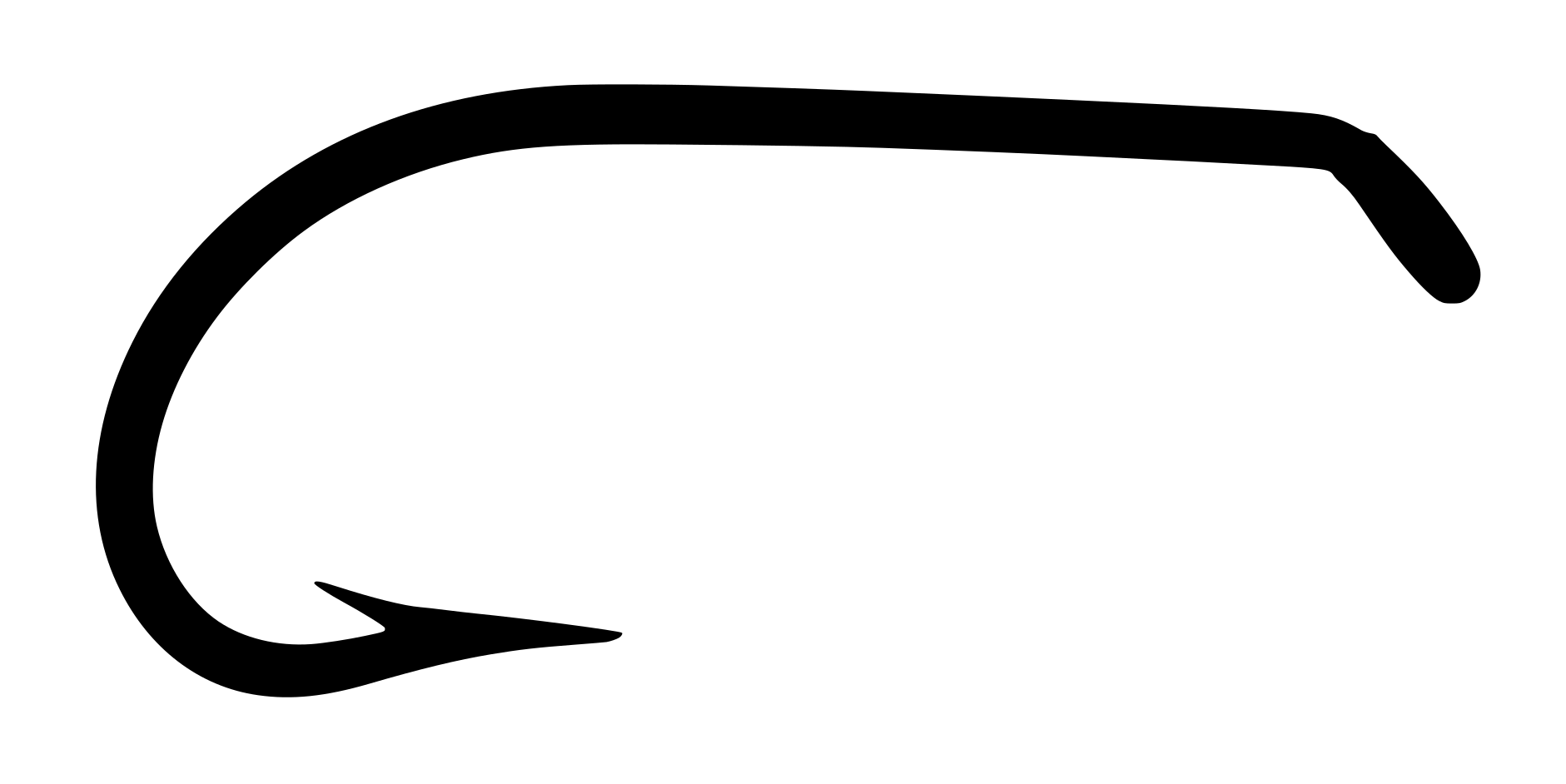
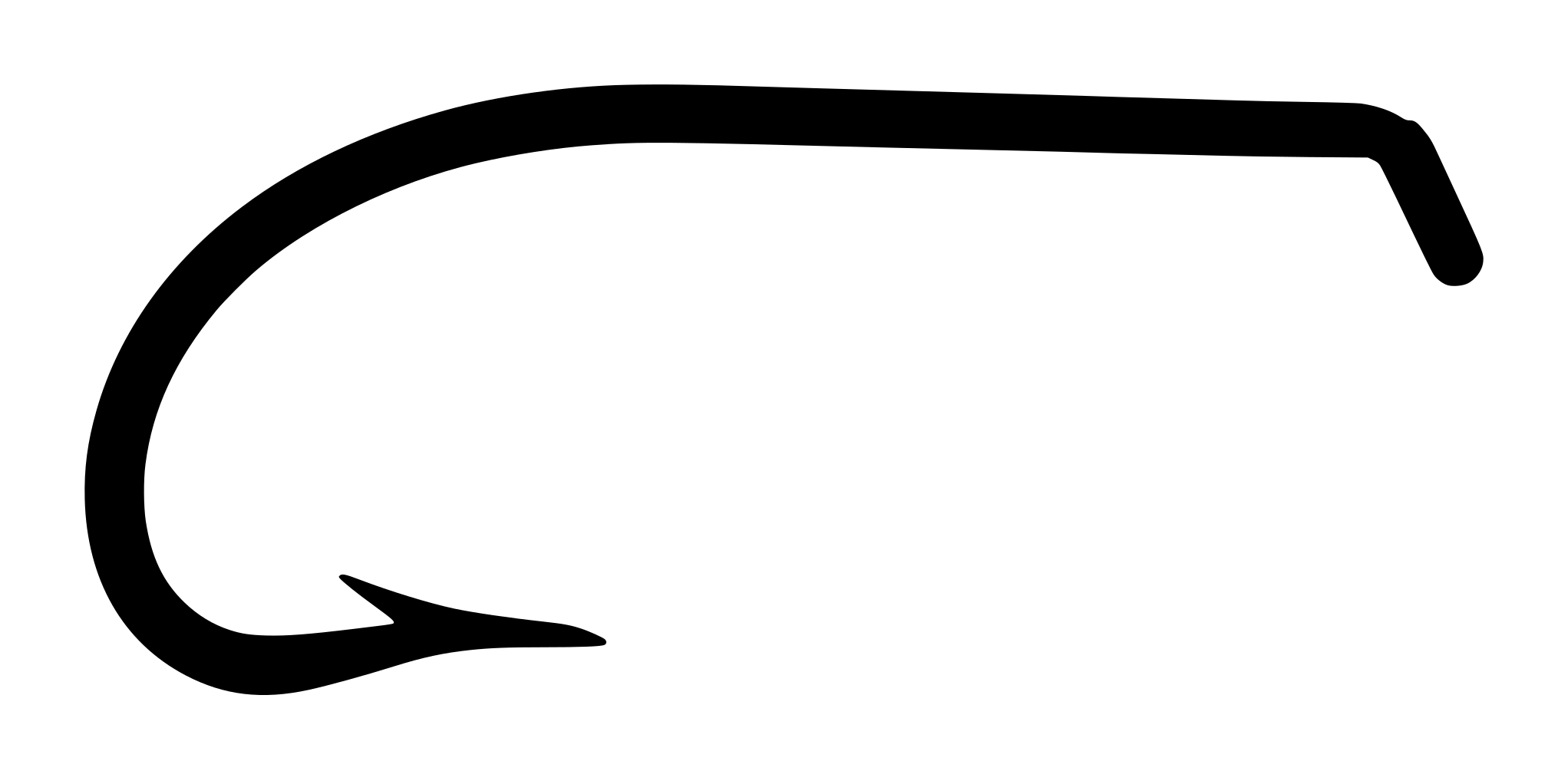
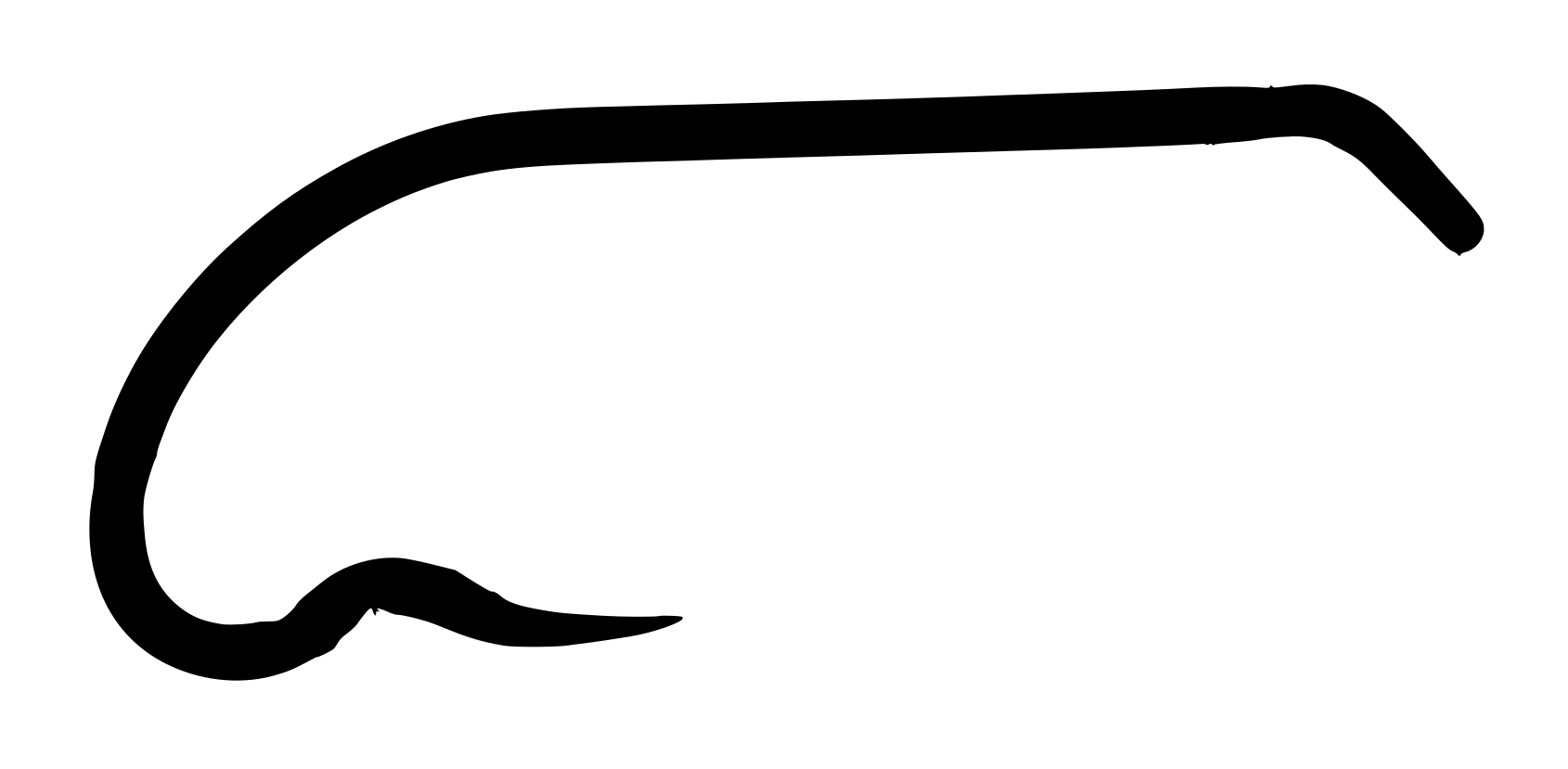
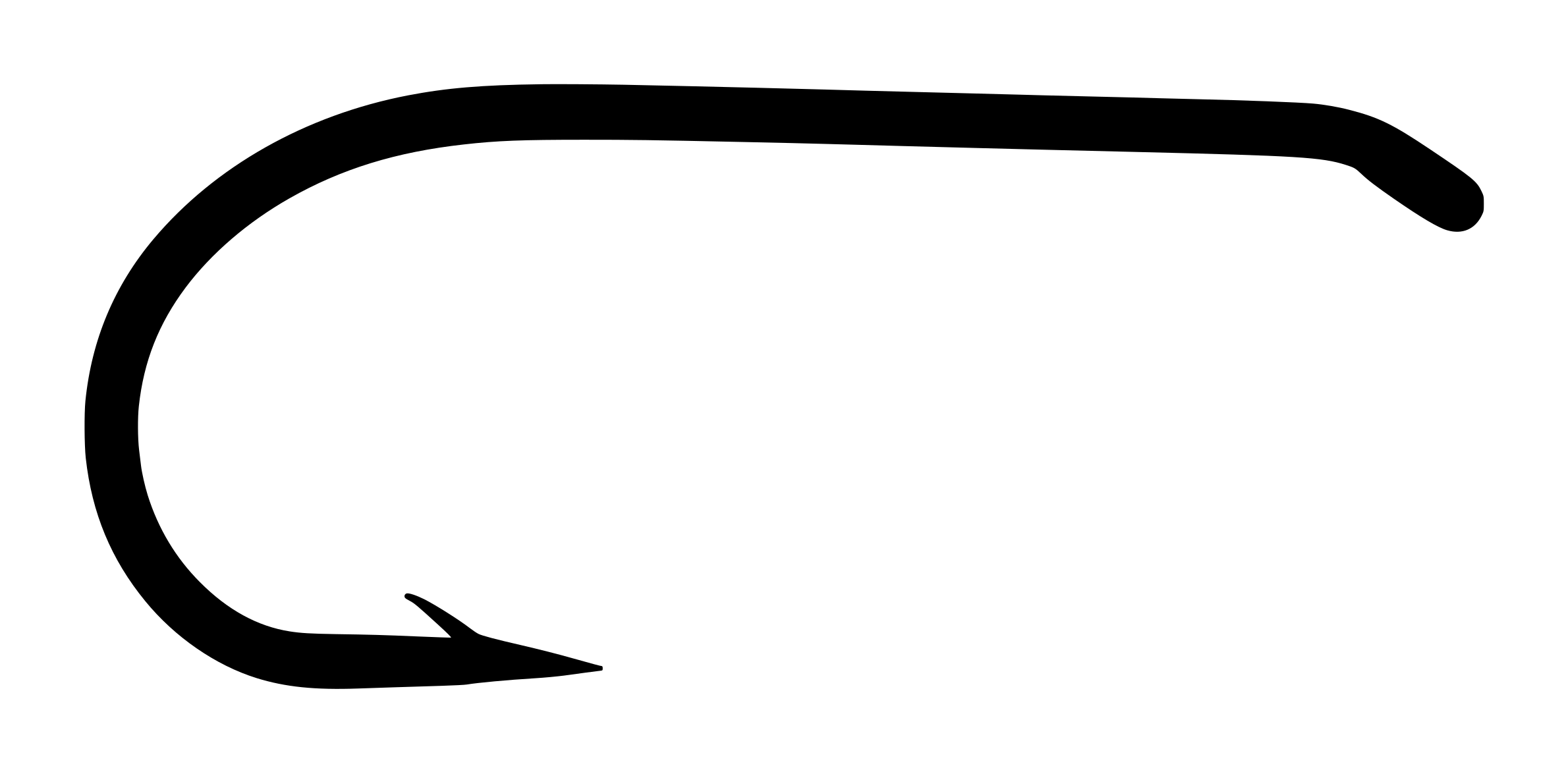
The O’Shaughnessy bend is a deep, rounded curve with a wide gap—a form developed in the mid-19th century and adopted by Norwegian and British makers into the 20th century. The superior point exhibits a near-straight inner taper characteristic of Mustad’s point geometry during this period. Heavy forged wire and kirbed offset emphasize strength and hook set penetration for subsurface work. The designation “1T. d. ball-eye” on the packaging confirms the turned-down ball eye construction (1T. = one turn).
Era evidence includes absence of barcode (pre-1974 indicator), offset printing style, snowflake border motif (characteristic of mid-century Mustad packaging), and “Made in Norway” statement. No postal code, ZIP, or modern phone formats visible. Box construction and paper stock consistent with 1950s–1960s industrial manufacture.
Original orange-red Mustad manufacturer box (c. 1955–1965) containing 100 Mustad 3408 D O'Shaughnessy hooks, size 5. Front panel shows complete specifications including forged construction, kirbed offset, turned-down ball eye, and bronzed finish.
Photographic record
3 cataloged imagesSelect any record to load it above.
3 images shown
Mustad 3408 D Original Box Front PanelOriginal orange-red Mustad manufacturer box (c. 1955–1965) containing 100 Mustad 3408 D O'Shaughnessy hooks, size 5. Front panel shows complete specifications including forged construction, kirbed offset, turned-down ball eye, and bronzed finish.Open originalMustad 3408 D Size 5 Bend ProfileSide profile of a Mustad 3408 D, size 5, showing the rounded O'Shaughnessy bend curve and superior point taper. Heavy bronzed wire is clearly visible. Photographed on 1/10-inch measurement grid for scale reference.Open originalMustad 3408 D Size 5 Top-Down ViewTop-down view of Mustad 3408 D, size 5, clearly showing the kirbed offset (point deflected to the left), the wide gap, the turned-down ball eye, and the bend curve. Photographed on measurement grid.Open original
Technical profile
Turned Down Ball Eye | O'Shaughnessy | Standard | Heavy Wire | Superior Point | Bronzed
Eye
Ball Eye, Turned DownBall eye is uniform diameter throughout the loop, with a clean butted joint where the wire terminates at the shank. Turned-down orientation at approximately 30–45 degrees below the shank plane. Ball is proportionate to the shank diameter; not overly bulbous. Wire transition into the eye is smooth. P
Wire
Heavy (1X Heavy), Forged
Shank
Standard — Plain
Bend
O'Shaughnessy, Wide gap, Offset / kirbedO'Shaughnessy bend characterized by pronounced rounded curve from eye to point, deep and symmetrical. Gap width is wide relative to shank length (~1.96:1 ratio). Wire set is clean and true; no spiral or asymmetry visible. Bend depth proportional to design: not as extreme as round-bend (Sproat), but deeper than standard limerick. Point angle appears to originate from center of bend rather than offset outward, typical of this bend family. P
Point
Superior (near-straight inner taper)Barb is close-cut and relatively short, positioned immediately behind point. Placed on inner face rather than perpendicular to axis. Single barb visible in profile. Consistent with Mustad heavy-wire barb placement for this era. P
Finish
Bronzed — Confirmed (stated on packaging)Warm brown bronzed tone confirmed on packaging ("Bronzed") and visible in photograph as medium-dark golden-brown. Finish is even and uniform across the shank and bend. Wire texture is faintly visible through the coating, typical of bronzing rather than japanning. No corrosion or oxidation spotting on the specimen photographed. Color temperature is distinctly warmer than nickelled or tinned examples, consistent with true bronzing. P
Box lid shows moderate toning and light edge wear consistent with storage age. Front panel printing remains bold and legible. All text clearly readable. No water damage or mold. Hooks appear bright bronzed with no corrosion. P
Heavy forged wire (1X Heavy) provides increased strength and mass for deeper penetration and sustained pressure during subsurface presentations. Forging—the process of hammering the wire to a flattened or oval cross-section—adds stiffness without proportional weight gain.
The superior point geometry features a near-straight inner taper from the barb to the tip, creating a relatively flat inside face. This contrasts with hollow-point designs, which are concave inwardly. The superior profile reduces drag on the barb during set and provides a broader surface area behind the point for force distribution.
Kirbed offset (point angled to the left when viewed from above) has been empirically associated with improved hook penetration in subsurface applications where the tyer wishes to bias the point slightly inward during the strike.
The O’Shaughnessy bend itself combines a wide gap with a deep, rounded curve. Historically developed for both wet flies and bait presentations, this geometry accommodates a substantial amount of dubbing or body material while maintaining adequate gape for point exposure.
This pattern was made in sizes 1-10 (V). We have measurement for size 5. Know the others? Submit calipered measurements and we'll review and add them. Thank you!
Historical context
mustad
O. Mustad & Son was founded in 1832 by Ole Mustad in Gjøvik, Norway, a region with a strong fishing tradition and access to quality iron ore and steel production. By the early 20th century, Mustad had established itself as one of the world’s largest industrial hook manufacturers, rivaling and eventually surpassing the Redditch (England) cluster of makers.
Mustad’s manufacturing philosophy prioritized standardization and economies of scale, allowing the firm to produce hooks at prices competitive with or lower than British craft makers. The firm maintained strict quality control and invested in modern stamping, forging, and finishing equipment. By the 1950s, Mustad held significant market share in Scandinavia, Europe, and North America.
The “Superior” brand designation appears to have emerged in the mid-20th century as Mustad’s umbrella marketing term for their higher-grade hooks, distinguishing them from commodity “Standard” or basic lines. This branding was used across multiple bend families and wire weights, applied to both the packaging and sales literature.
Series History
The Mustad-O’Shaughnessy line represents Mustad’s adoption and standardization of the O’Shaughnessy bend profile, a British form dating to the mid-19th century. By the 1950s, Mustad had incorporated this design into a broad range of sizes and wire weights, marketed under the “Superior” brand umbrella.
The 3408 D variant specifies forged construction (“D” likely denoting a forging designation in Mustad’s internal system), heavy wire weight (1X), kirbed offset, turned-down ball eye, and superior point. This combination was maintained through the 1960s and likely into the 1970s, though later production may have transitioned to nickelled finish as bronzing fell from favor in industrial manufacturing.
The model remained in Mustad’s catalog for decades, appearing in various European and North American distributors’ price lists through the 1980s. The “100 per box” configuration suggests packaging for fly tyers and commercial dressers rather than retail fly shop trade, though both channels carried it.
Era and Packaging Dating
No barcode present on box = pre-1974 (standard adoption threshold in European manufacturing). Offset printing style and paper stock consistent with 1950s–1960s industrial production. Snowflake border motif characteristic of Mustad mid-century Norwegian design. "Made in Norway" statement (full country name rather than abbreviated or missing) typical of 1950s–1960s European export labeling. No postal code or ZIP code format visible; address shown as "OSLO - NORWAY" without further specificity, consistent with earlier European packaging. Box construction (cardboard grade, lid design, printing method) matches Mustad factory samples from this period held in trade collections. Bronzed finish (though still common into the 1970s) was already beginning to be displaced by nickelled finish in this era, supporting earlier rather than later dating within the pre-1974 window.
The O'Shaughnessy: A Bend That Endured
The O'Shaughnessy bend became synonymous with sea trout and salmon fishing in Britain and Ireland during the late 19th and early 20th centuries, where blind-eye spade-end versions were tied with gut loops for leader attachment. Norwegian manufacturers like Mustad adapted the form for both freshwater and saltwater use, recognizing that the wide gap and deep curve offered advantages for both fly dressing and bait presentation. By the 1950s, the bend had become almost a generic standard for "general purpose" hooks across European and North American fly shops. The form's longevity—spanning nearly 150 years of continuous production—reflects its fundamentally sound geometry rather than fashion or marketing.
Design lineage and influence
The O’Shaughnessy bend form originated in 19th-century British hook production, attributed to John O’Shaughnessy, an angler and fly dresser. The bend was adopted by multiple British and Irish makers (Allcock, Partridge of Redditch, and others) and eventually by Norwegian and continental manufacturers.
Mustad’s O’Shaughnessy line represents a standardized, industrial version of the form. Rather than being a direct predecessor or successor to a single design, the Mustad 3408 D is part of a broad family of O’Shaughnessy variants produced by multiple makers. Competing designs from the same era and market include the Allcock O’Shaughnessy (often with blind-eye construction for sea trout), the Partridge of Redditch Patriot (a heavier O’Shaughnessy variant for salmon), and the American-made Wright McGill (Eagle Claw) O’Shaughnessy.
Later Mustad O’Shaughnessy derivatives include the 3408 (likely a later version of the 3408 D, possibly with different finish or wire weight), the 3407 (lighter wire variant), and modern reproductions marketed under nostalgia branding. The form itself has proven remarkably durable and remains in production by multiple manufacturers into the 21st century.
Best matchRelated by Attribute
Computed automatically from catalog data — updated as new hooks are added.
Matches: Bend, Shank, Eye, Point, Finish +4 moreDiffers: Wire: Heavy (1X Heavy) vs Extra-Heavy (2X+); Gap: Wide vs Standard; Eye Orient.: Turned Down vs Straight / Inline
Matches: Bend, Shank, Wire, Eye, Finish +4 moreDiffers: Gap: Wide vs Standard; Eye Orient.: Turned Down vs Straight / Inline; Point: Superior vs Hollow Point +1 more
Matches: Bend, Shank, Wire, Eye, Point +4 moreDiffers: Gap: Wide vs Standard; Eye Orient.: Turned Down vs Straight / Inline; Forging: Forged vs Round +1 more
Nymph and wet fly hook intended for tying impressionistic and attractor patterns in small to medium sizes (No. 2–10). The wide gap and rounded bend accommodate thick dubbing bodies and soft hackle, while the superior point and heavy wire suit dredged presentations in current-heavy water. Historical use in British and Scandinavian wet fly traditions from the 1950s onward.
Secondary Applications
Soft hackle wet fly dressing; small streamers; nymph imitations in gravelly substrates. Less common for dry flies due to the heavy wire weight and wide gap.
Classic Fly Patterns
Not established as a signature pattern hook, but widely used for general wet fly and nymph bases during the mid-20th century. Compatible with March Brown, Greenwells Glory, Partridge and Orange, and similar traditional wet flies.
Collector notes
Rated 3.5/10 — common throughout North America and Europe in original boxes; still found regularly in tackle estate sales and dealer stock. Collector demand is modest and primarily driven by packaging nostalgia rather than functional significance. The heavy wire and wide gap limit appeal to modern fly tyers. Complete original boxes in good condition command a small premium over loose hooks or opened packages.
Reference value
$8 – $24 USD estimate
Packaging condition
Good — moderate wear, legibleRecorded specimen
Packaging format
GW-MUSTAD-BOX-01Catalog code
Positive factors: Original manufacturer box with clear labeling and decorative graphics is more visually striking than typical Mustad cards of the era. Bronzed finish appeals to collectors favoring period authenticity over modern nickelled standards. Size 5 is neither uncommon nor rare, but it is proportionally less common than the larger sizes (1–3) in surviving stock. Mid-century Mustad branding and Norwegian origin have modest collector interest among European tackle historians.
Limiting factors: Mustad 3408 D is not a scarce model; industrial production volumes mean numerous examples survive. The O’Shaughnessy bend, while historically important, lacks the distinctive character of more specialized forms (Sproat, Limerick). No named designer or craft-maker provenance. Heavy wire and wide gap have limited appeal to modern dry-fly tyers, the primary demographic for vintage hook collecting. Boxes are more valuable than loose stock, but even complete examples rarely exceed $20–30.
Packaging variants and desirable configurations: Original sealed or nearly sealed boxes are more sought than opened examples. Smaller sizes (8 and above) are proportionally scarcer than mid-range sizes (2–6). Earlier prints with more pronounced color registration are preferred over later, faded examples. Any example showing original tissue paper or wrapper inside the box commands a premium.
Condition factors: Box integrity is the primary value driver. Lids that remain tight and hinged, with clear printing, are significantly more valuable than water-damaged, bent, or stained boxes. Hook condition is secondary (corrosion or straightening is rare in bronzed stock). Missing or incomplete hook counts reduce value roughly 20–30% depending on the percentage missing.
Packaging
Rigid manufacturer box with separate lid. Orange-red ground with dark blue-grey printed text and decorative border of snowflake motifs. Front panel reads "O. MUSTAD & SON / Manufacturers / OSLO - NORWAY / Qual. 3408 D / Superior / Mustad-O'Shaughnessy Hooks / Forged Kirbed / 1T. d. ball-eye Bronzed / 100 / No. 5 / Made in Norway". Lid shows wear consistent with 1950s-1960s storage; main face relatively clean. Box contains 100 hooks. Paper stock appears to be offset-printed, no barcode visible. Snowflake border is characteristic of Mustad's Norwegian design tradition during mid-century period.
Market Value Notes
Low ($8): Good condition — opened box, most or all 100 hooks present, moderate box wear, legible printing, no water damage<br />
High ($24): Excellent condition — sealed or nearly sealed box, complete hook count, minimal edge wear, bright printing, original tissue visible inside<br />
Premium factors: Original manufacturer box (vs. loose hooks or card), sealed condition, complete hook count, size 5 specifically (moderately scarce vs. larger sizes), bronzed finish, decorative packaging graphics<br />
Platforms: eBay (UK and US), specialist vintage tackle dealers, regional European tackle fairs<br />
Confidence: E estimated — limited direct sales data for this specific model; estimate anchored to comparable Mustad mid-century boxed lots and Scandinavian maker pricing benchmarks
Where to Find
eBay (UK sellers more frequently list Scandinavian-origin stock than US sellers). Specialist dealers in Norway, Sweden, and Denmark occasionally stock unopened Mustad lots. European vintage tackle fairs (particularly in Scandinavia and UK) feature Mustad boxes at periodic auctions. Estate sales in Scandinavia and Northern Europe. Uncommon in North American retail channels unless purchased from international dealers.
Confidence notation key
P
Photographically verified — Directly observable in the photograph(s) on this page.
V
Verified by documentation — Confirmed by manufacturer catalog, spec sheet, or published reference.
I
Inferred — A logical deduction from observable or documented evidence, not directly stated.
E
Estimated — An approximation based on visual comparison, proportional analysis, or limited data.
S
Speculative — A reasoned hypothesis that cannot be confirmed from available evidence.
Claims with no notation are confirmed by multiple independent sources. All photographs on garrenwood.com are taken on a measurement grid where each square equals 1/10 inch (0.1″ / 2.54 mm).