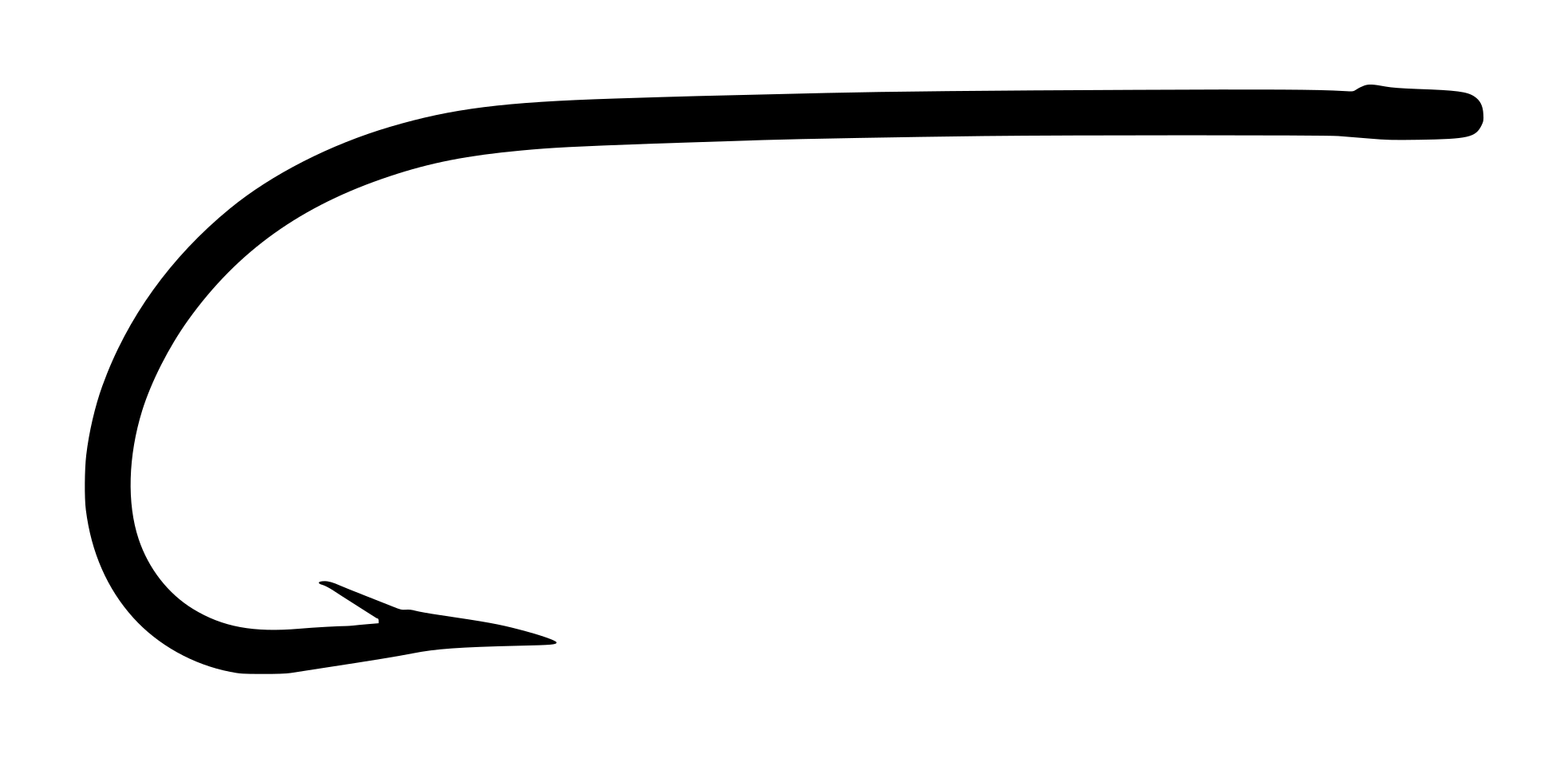
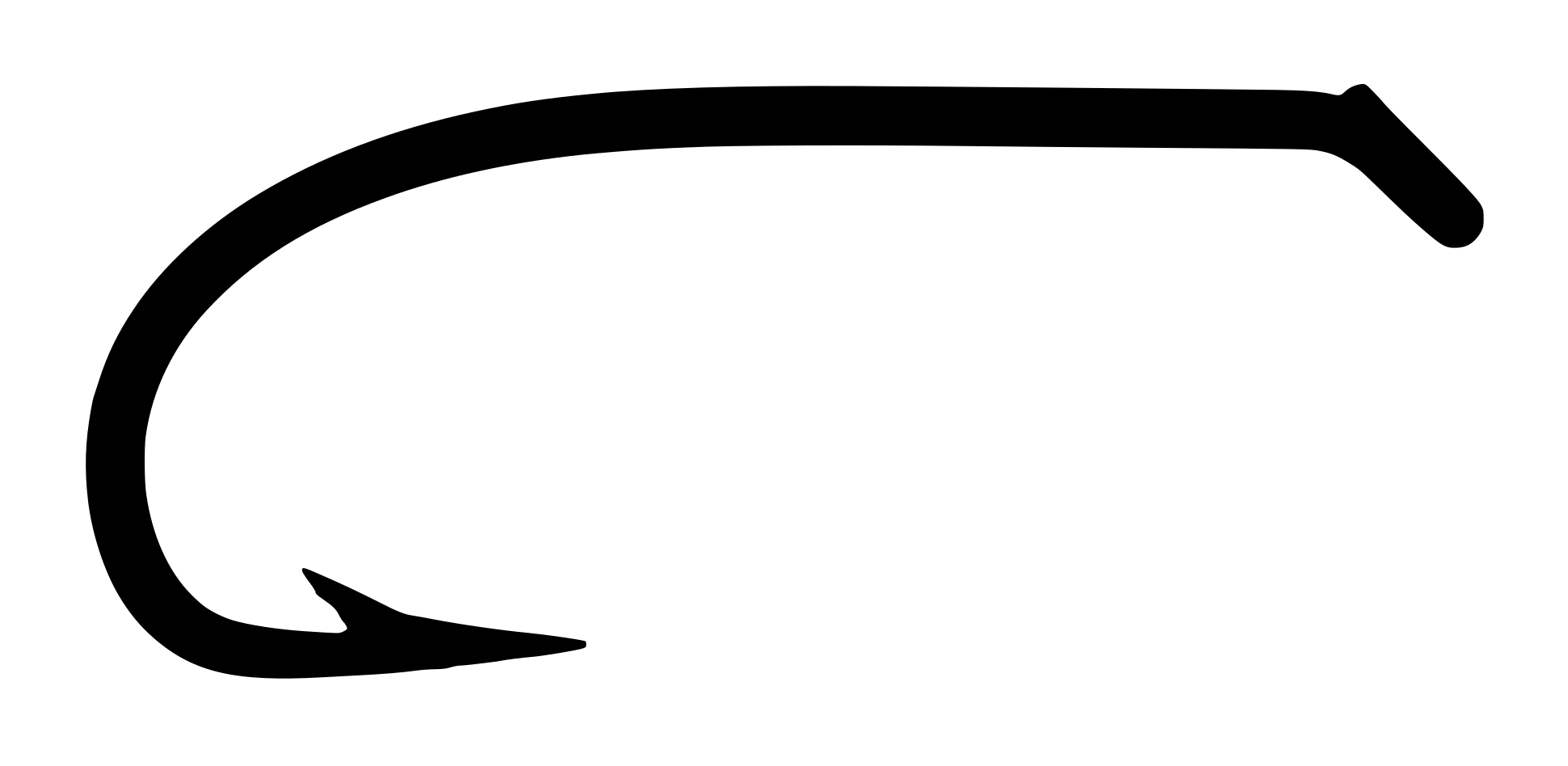
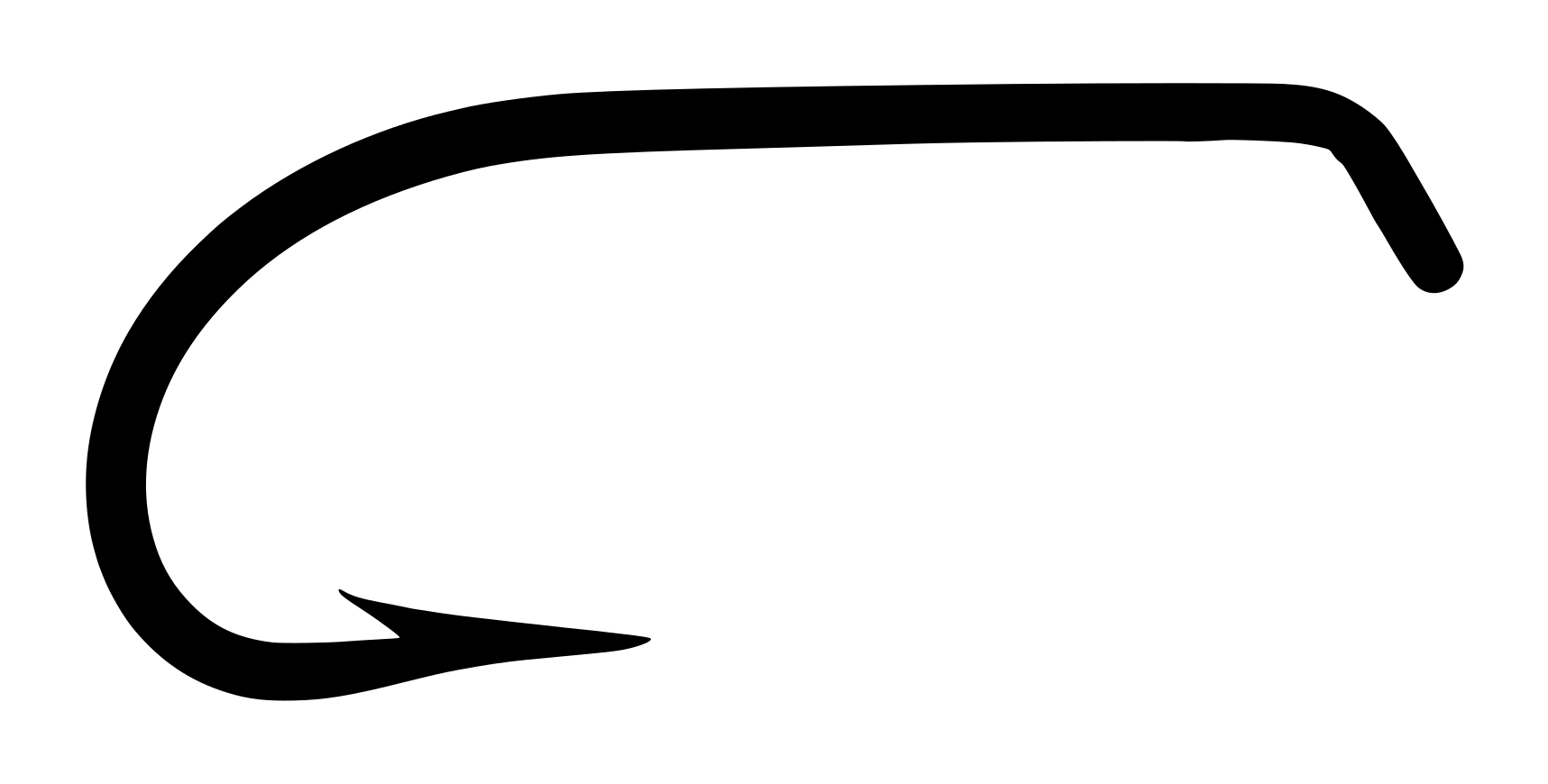
The Allcock No. 790 is a forged O’Shaughnessy-pattern Limerick hook manufactured in Redditch, England by S. Allcock & Co., Ltd., a major British hook maker of the early 20th century. This size 12 specimen represents the interwar era of British hook production, when Allcock was at peak output of craft-quality fishing hooks.
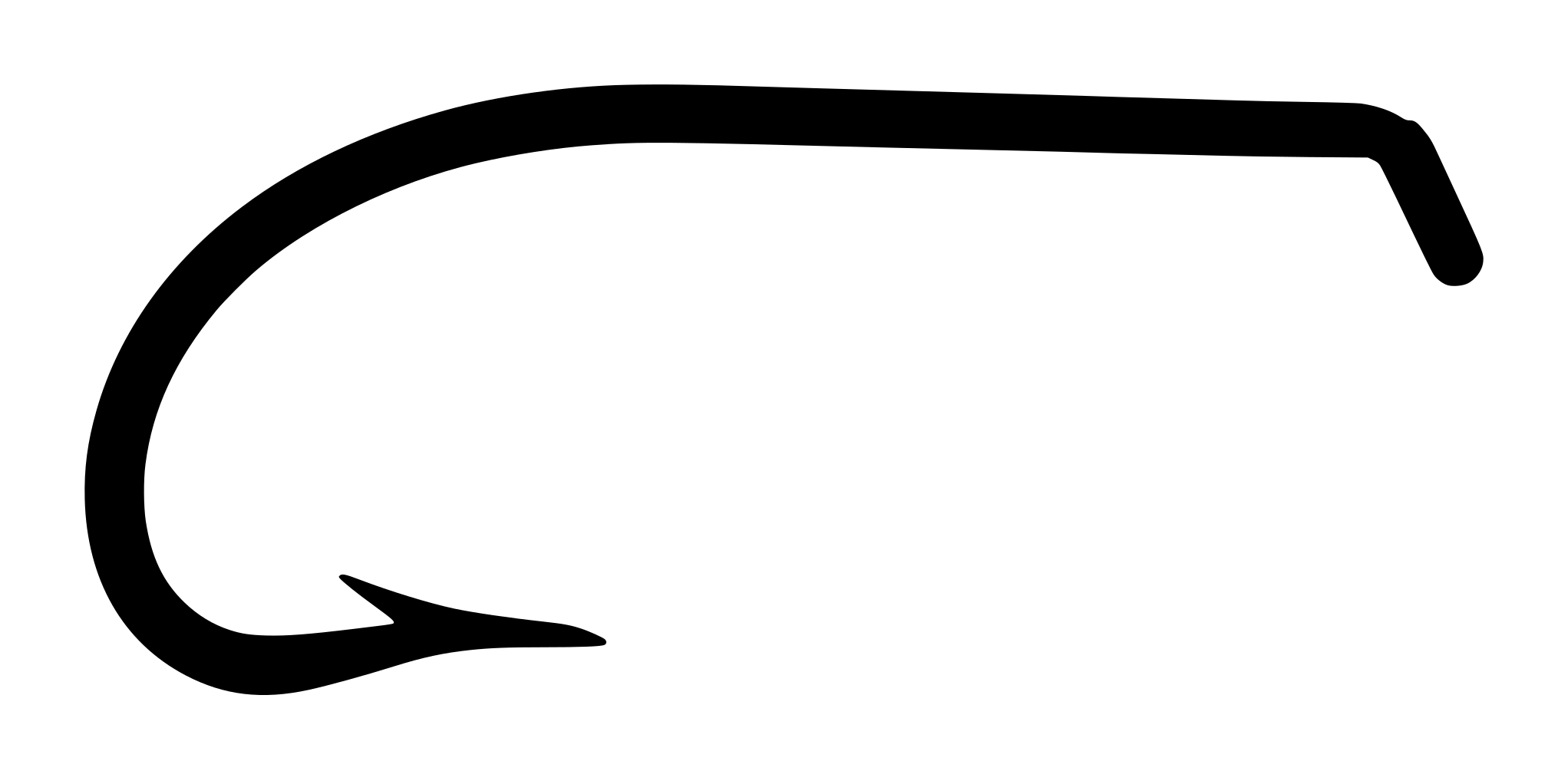
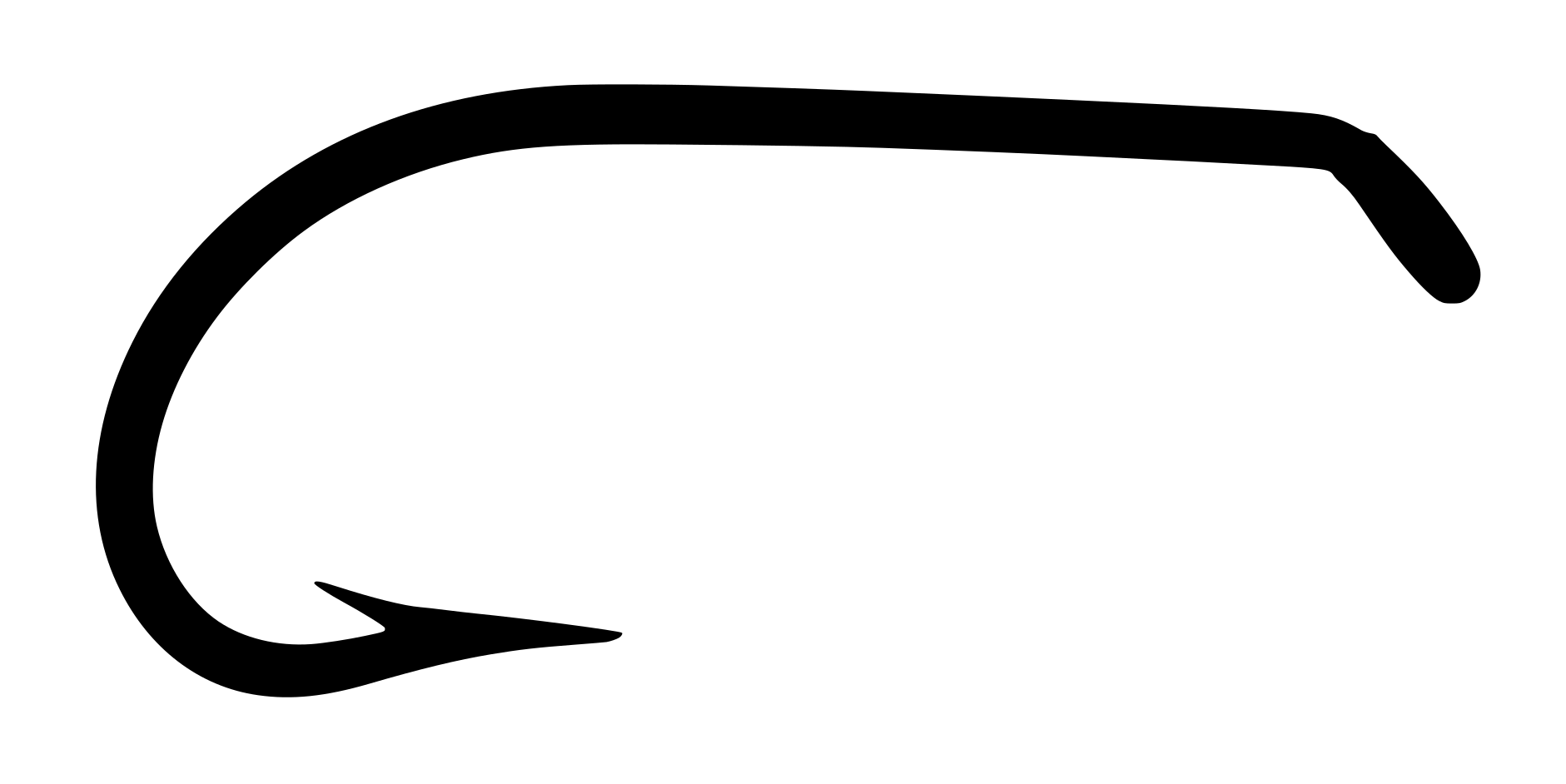
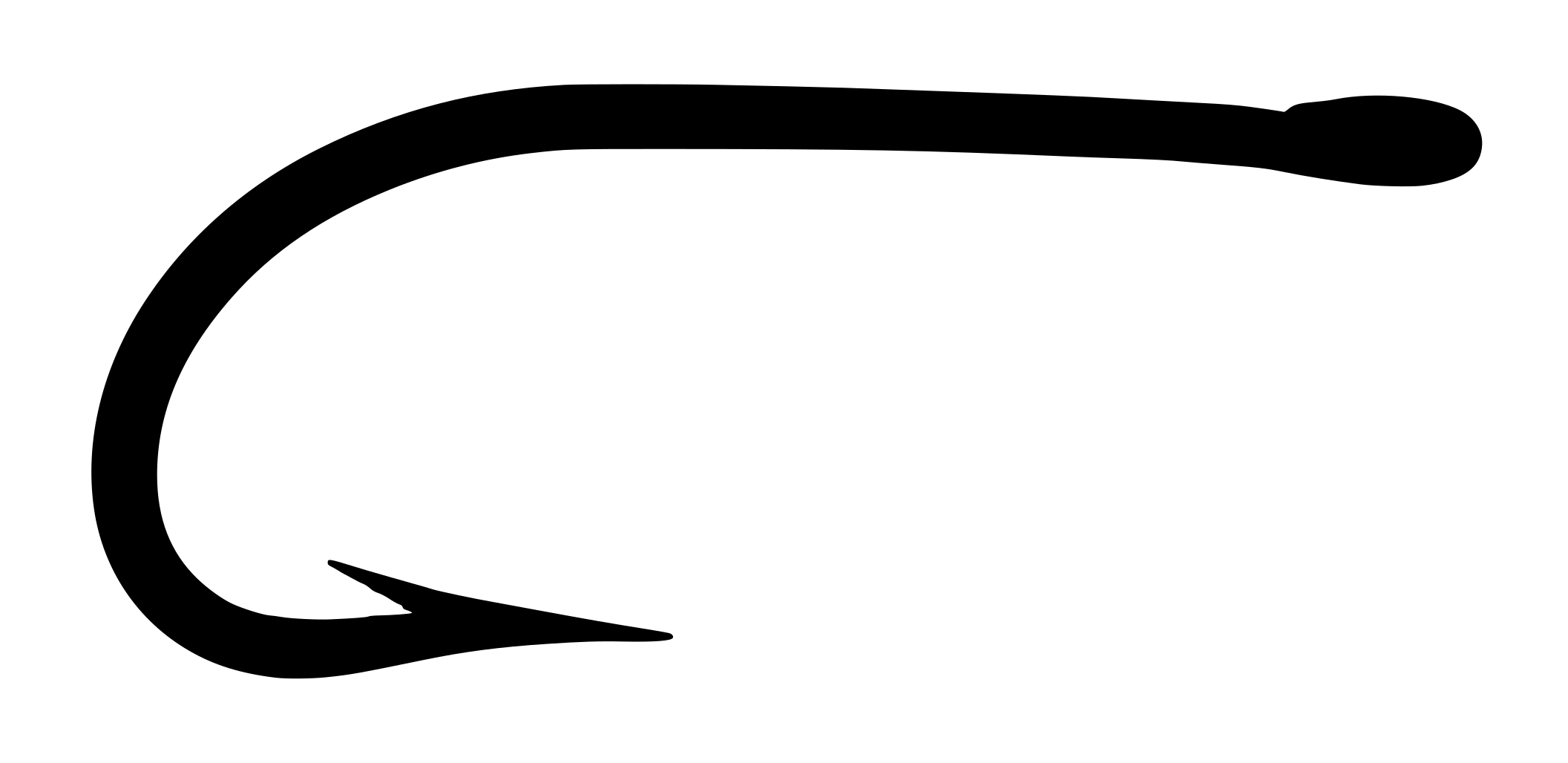
The hook features a tapered turned-down eye, bronzed finish, and superior-style point with a characteristic sharp, nearly-straight inner taper. The forged wire profile and moderate wire gauge (standard weight) make it suitable for both dry and wet fly fishing, and the design is typical of salmon and sea trout patterns from the 1920s-1930s. The Limerick bend delivers the angular, efficient hook geometry favored by British fly tyers of the period.
Collecting significance: Original Allcock packaging from this era is increasingly uncommon, particularly with manufacturer labels intact and pricing visible. Size 12 is neither rare nor common — larger and smaller sizes appear more frequently in the secondary market. The combination of original labeled packaging, bronzed finish confirmation, and documented Redditch manufacture makes this a meaningful reference specimen for collectors of British interwar hooks.
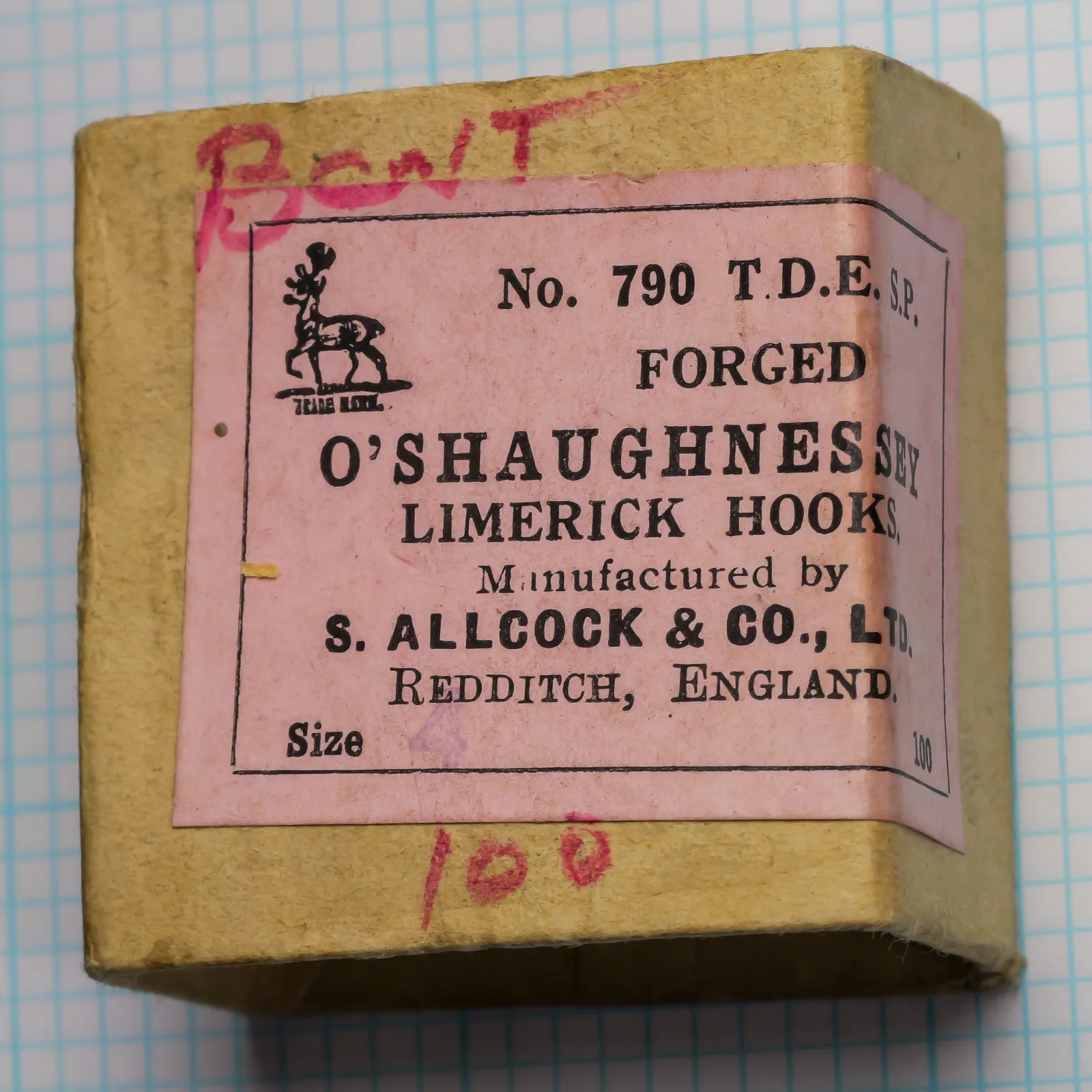
Original interwar Allcock label wrapper with pink cardstock, showing the No. 790 designation, T.D.E. eye specification, and Redditch manufacturer imprint. Kraft backing card shows handwritten size notation and retailer markings.
Photographic record
4 cataloged imagesSelect any record to load it above.
4 images shown
S. Allcock 790 TDE O’Shaughnessy Size 12 Original Label and CardOriginal interwar Allcock label wrapper with pink cardstock, showing the No. 790 designation, T.D.E. eye specification, and Redditch manufacturer imprint. Kraft backing card shows handwritten size notation and retailer markings.Open originalS. Allcock 790 O’Shaughnessy Size 12 Point Profile BronzedClose-up of the hook point and barb, showing the superior-point taper with nearly flat inner face and sharp penetration angle. The bronzed finish displays the characteristic warm brown tone. Photographed on 1/10-inch measurement grid.Open originalS. Allcock 790 O’Shaughnessy Size 12 Full Profile BronzedFull-length side profile of the hook on measurement grid, displaying the Limerick bend geometry, tapered turned-down eye, and overall proportions in size 12. Bronzed finish is uniform across the bend and shank.Open originalS. Allcock 790 O’Shaughnessy Size 12 Hook Pair Comparison BronzedTwo size 12 hooks from the same card, demonstrating manufacturing consistency in bend geometry, eye treatment, and finish. Both show the characteristic Limerick bend and bronzed color tone.Open original
Technical profile
Eye
Ball Eye, Turned Down
Wire
Heavy (1X Heavy), Forged, Est. ~0.031"-0.033" (~0.79-0.84 mm)
Shank
Standard — Plain
Bend
O'Shaughnessy, Standard gap
Point
Standard / Spear
Finish
Bronzed — Confirmed (stated on packaging)Specimen hooks are bright with uniform bronzed finish, no corrosion or pitting visible. Card backing shows light tan color consistent with age; kraft paper is intact but slightly creased at one corner. Label is well-adhered and mostly intact; pink color has faded slightly to a warmer mauve tone, consistent with 80+ years of ambient light exposure. Handwritten notations in red pencil remain legible. Two hooks appear to be present on the card (visible in packaging image, not fully counted).
The superior point on this hook features a near-straight inner taper from the barb to the tip, creating a sharp, efficient penetration angle with minimal resistance on the set. Unlike the hollow point (which has a concave inner face), the superior point uses the full wire cross-section for strength while maintaining sharpness.
The forged wire profile — visible in the photographs as a subtle thickening and strengthening of the wire through the bend — is the result of hot-forging in a dies. This process aligns the steel grain, increases tensile strength, and allows the manufacturer to achieve a more acute bend angle without risk of cracking. For a Limerick bend at standard wire gauge, forging is essential: a drawn (non-forged) wire would be too weak at the critical bend point.
The tapered turned-down eye is a premium eye treatment, more labor-intensive than a simple ball eye but offering superior strength and a refined appearance valued by fly tyers of the era. The taper allows the eye loop to gradually reduce in diameter, which reduces bulk in the fly head while maintaining mechanical strength.
This entry is the first documented Allcock No. 790 T.D.E. Forged O'Shaughnessy in the garrenwood.com catalog. It represents a significant example of interwar British Redditch manufacturing and tapered-eye eye construction from a major maker.
Own this hook? Help us measure it.
We don't have measured sizes for this hook yet. Own one? Submit calipered measurements and we'll review and add them. Thank you!
The O’Shaughnessy pattern originated in Ireland and became one of the most widely manufactured hook designs in the English-speaking fishing world. Allcock’s No. 790 is the company’s version of this iconic pattern, featuring the characteristic deep Limerick bend and robust forging. The model designation (790) appears to have been stable across several decades of production, though wire gauges, finishes, and eye treatments may have varied.
The O’Shaughnessy is fundamentally a salmon and sea trout hook, designed for use in wet-fly and streamer presentations. Its deep bend provides excellent mechanical advantage for large fish, and the forged construction offers strength without excessive weight. Allcock produced this pattern in multiple size ranges and finishes (bronzed and blued being the standard options).
Era and Packaging Dating
Pink printed label format is consistent with interwar British packaging. No barcode present (pre-1974 strong indicator). Serif letterpress typography, modest color palette, and handwritten price markings support early 20th century dating. No postal code on label. Allcock's continued dominance in pre-war Redditch manufacturing supports this range. Label shows wear and toning consistent with 80+ year age.
The Redditch Dominance
Redditch, England, home to Allcock and its rivals Partridge and Edgar Sealey, became the undisputed center of English hook manufacturing by the 1920s. The town's water power, coal proximity, and established needle-making industry (hooks are essentially specialized needles) made it the natural hub. Allcock's success was so dominant that by the 1930s, Redditch-made hooks were exported to fishing tackle dealers on every inhabited continent. The town's heyday lasted until the 1970s, when cheap industrial production from Scandinavia and Asia undercut British craft makers, leading to the eventual closure or consolidation of nearly all the great Redditch firms.
Design lineage and influence
The O’Shaughnessy pattern itself originated in Ireland and became one of the most widely copied hook designs in the 19th and 20th centuries. Nearly every major manufacturer — Allcock, Partridge, Edgar Sealey, Mustad, and smaller makers — produced their own version. The pattern’s robust Limerick bend and deep hook geometry made it ideal for large freshwater and saltwater fish.
Allcock’s No. 790 sits within a family of O’Shaughnessy variants, all sharing the same fundamental bend and point geometry but differing in eye treatment (the 790 is T.D.E.; other models may have had simple round eyes or looped eyes). The model number (790) is Allcock’s internal designation and does not directly correspond to sizing systems — size was indicated separately on the label.
This design had no significant successors within Allcock’s own lineup; the O’Shaughnessy pattern remained stable for decades. Competing designs from other Redditch makers (Partridge, Sealey) followed similar engineering principles, and the Limerick bend itself became the template for countless salmon and sea-trout hooks throughout the 20th century.
Best matchRelated by Attribute
Computed automatically from catalog data — updated as new hooks are added.
Matches: Bend, Shank, Wire, Eye, Eye Orient. +5 moreDiffers: Gap: Standard vs Wide; Point: Standard / Spear vs Superior; Offset: Straight vs Offset / Kirbed
Matches: Bend, Shank, Gap, Eye, Finish +5 moreDiffers: Wire: Heavy (1X Heavy) vs Extra-Heavy (2X+); Eye Orient.: Turned Down vs Straight / Inline; Point: Standard / Spear vs Superior +2 more
Matches: Shank, Wire, Gap, Eye Orient., Point +5 moreDiffers: Bend: O'Shaughnessy vs Sproat; Eye: Ball Eye vs Tapered Eye; Forging: Forged vs Round +2 more
This hook was designed primarily for wet-fly fishing for salmon and sea trout in British rivers, particularly in Scotland and northern England. The deep Limerick bend and robust forging provide the leverage needed to set and hold large, powerful fish. The standard wire gauge balances strength with reduced water resistance — important when fishing wet flies or streamers in currents.
In the interwar era (1920s-1930s), wet-fly fishing for Atlantic salmon was the dominant sport-fishing method in the UK, and hooks like the No. 790 would have been used in classic patterns such as the Durham Ranger, Silver Doctor, and March Brown. The tapered eye was particularly valued by fly dressers who worked with silk thread and hair-wing techniques.
Classic Fly Patterns
Not documented as associated with specific named fly patterns; used generally as a salmon and sea trout wet-fly and streamer hook.
Modern Equivalents
Hook
Match Quality
Notes
Mustad C70SD (O'Shaughnessy)
Very Good
Modern industrial version of O'Shaughnessy pattern; same Limerick bend and robust forging, but nickel-plated rather than bronzed, and mass-produced without the craft quality of vintage Allcock.
Partridge M (Salmon Traditional)
Good
Contemporary producer of traditional Redditch-style salmon hooks; similar bend and eye treatment, but higher modern standard for consistency and finish uniformity.
Collector notes
Rated 4.5/10 — Uncommon but not scarce. Collectibility driven primarily by original Allcock interwar packaging and Redditch provenance rather than rarity of the hook itself. Size 12 is neither a particularly desirable nor undesirable size; collector interest is moderate among British hook specialists and Redditch tradition enthusiasts.
Reference value
$8 – $22 USD estimate
Packaging condition
Good — moderate wear, legibleRecorded specimen
Packaging format
allcock-interwar-labelCatalog code
Positive factors: Original manufacturer labeling is the primary strength — pink cardstock with clear Allcock branding, letterpress print, and explicit ‘T.D.E. Forged’ designation are increasingly uncommon. Interwar era (1920s-1940s) adds historical context and demonstrates the hook’s longevity as an unchanged design. Confirmed bronzed finish and forged construction represent quality-tier manufacturing. Redditch origin carries prestige among collectors of British tackle tradition.
Limiting factors: Size 12 is mid-range and not particularly sought-after; very large (2/0-4/0) and very small (18-20) sizes command premiums. The O’Shaughnessy pattern, while iconic, is widely available from multiple makers, reducing the urgency to acquire any single version. The hook itself (absent packaging) has minimal value — the entire rating derives from the original card. Any missing hooks reduce value significantly.
Most desirable variants: Sealed cards (no opening visible) command a premium; cards in sizes 8-10 are slightly more sought than size 12; blued-finish examples (if any exist for this model) would be variant-interesting; any surviving retailers’ stock cards with original retail price markings are particularly collectible.
Condition factors: Label condition is critical — any significant fading, creasing, or loss of printing reduces value by 30-50%. Hooks themselves should show no corrosion or pitting. Missing hooks reduce value proportionally (missing one hook ~10-15% reduction; missing several ~30-50% reduction). The presence of original kraft backing (not separated) adds ~$2-3 to value.
Packaging
Pink cardstock label wrapper, approximately 3.5" × 2.75", affixed to a kraft-paper card backing. Label printed in black ink using letterpress technique with serif typeface. Central design features the Allcock company trademark (stag with antlers) in a small cartouche at top. Text reads: 'No. 790 T.D.E. Forged O'Shaughnessy Limerick Hooks / Manufactured by S. ALLCOCK & CO., LTD., REDDITCH, ENGLAND' with 'Size' printed at bottom for handwritten entry. Kraft backing shows evidence of age: light tan color, minor creasing at edges, handwritten notations in red pencil (appears to be 'Bait' at top and 'No 12' below). This format is characteristic of Allcock's interwar retail packaging for fly-fishing hooks, predating the more standardized printed cards of the post-war era.
Market Value Notes
Low ($8): Good condition — opened card with most hooks present, label intact but with visible age toning and minor wear.
High ($22): Excellent condition — sealed or near-sealed card, complete hook count, label bright with minimal fading, all hooks perfect and uncorroded.
Premium factors: Original pink label with Allcock branding in good condition; confirmed bronzed finish from manufacturer; interwar-era packaging; complete hook count; Redditch manufacture.
Platforms: eBay UK, specialist vintage tackle dealers, local UK fishing-tackle auctions.
Confidence: E estimated — limited recent sales data for this specific model and size combination; range reflects typical values for uncommon interwar British branded cards with original packaging.
Where to Find
eBay UK occasional listings; British vintage tackle dealers (particularly in the Midlands and southern England); regional fishing-tackle collector fairs and auctions, especially in Worcestershire and surrounding counties where Redditch heritage remains strong. Expect slower turnover than common American hooks — this is a specialist/regional collector item.
Collector's Identification Tips
Identify by the printed label: pink cardstock with serif letterpress text reading ‘No. 790 T.D.E. Forged O’Shaughnessy Limerick Hook’ and the Allcock stag-head trademark. The ‘T.D.E.’ notation on the label explicitly indicates Turned-Down Eye. Look for the manufacturer imprint ‘S. ALLCOCK & CO., LTD., REDDITCH, ENGLAND’ at the bottom. Check for handwritten size number and price pencil marks on the card — these are common on unsold stock. Confirm the tapered eye construction (not a simple ball) and verify the bronzed finish by examining the warm brown tone of the specimen hooks.
Preservation
Storage and Preservation
Store this hook and its original packaging in a cool, dry environment, ideally at 40-55% relative humidity. The bronzed finish is susceptible to atmospheric oxidation and patina development in high-humidity conditions; collectors may view light patina as desirable character, but heavy oxidation should be avoided.
Keep the hook mounted on its original label card rather than removing it. The label itself is now nearly 100 years old and is fragile — excessive handling will cause the paper to tear or the ink to flake. Handle the package by the kraft-backing edges only, minimizing contact with the label surface.
Store away from direct sunlight, which will fade the pink color of the label. Avoid contact with other metals or corrosive materials (salt, acidic substances, rubber bands). Do not attempt to clean the hooks themselves — natural patina and the original bronzed surface are part of the historical artifact. If display is desired, house the card in an archival-quality, inert-material acrylic case or shadow box.
Original packaging of this age and format dramatically increases the value and collecting significance of the hook; removing the hooks from the card will reduce both the monetary and historical value of the specimen.
Size Note
Size 12 in Context
Size 12 represents a mid-range fly hook by modern standards, suitable for nymphs, wet flies, and small streamers. In the interwar era (1920s-1940s), when this hook was manufactured, sizing conventions differed slightly from modern systems, though Allcock’s numbering was generally consistent with contemporary British practice.
Size 12 was a popular choice for Scottish and English river fishing, where it would be used in classic wet-fly patterns for trout and grayling, and occasionally as a secondary pattern for salmon fishing (smaller flies were sometimes preferred in low-water or late-season conditions). This size is neither exceptionally common nor scarce among surviving Allcock hooks, making it a representative specimen of the range.
Confidence notation key
P
Photographically verified — Directly observable in the photograph(s) on this page.
V
Verified by documentation — Confirmed by manufacturer catalog, spec sheet, or published reference.
I
Inferred — A logical deduction from observable or documented evidence, not directly stated.
E
Estimated — An approximation based on visual comparison, proportional analysis, or limited data.
S
Speculative — A reasoned hypothesis that cannot be confirmed from available evidence.
Unnotated claims are the compiler’s synthesis; see Sources. All photographs on garrenwood.com are taken on a measurement grid where each square equals 1/10 inch (0.1″ / 2.54 mm).