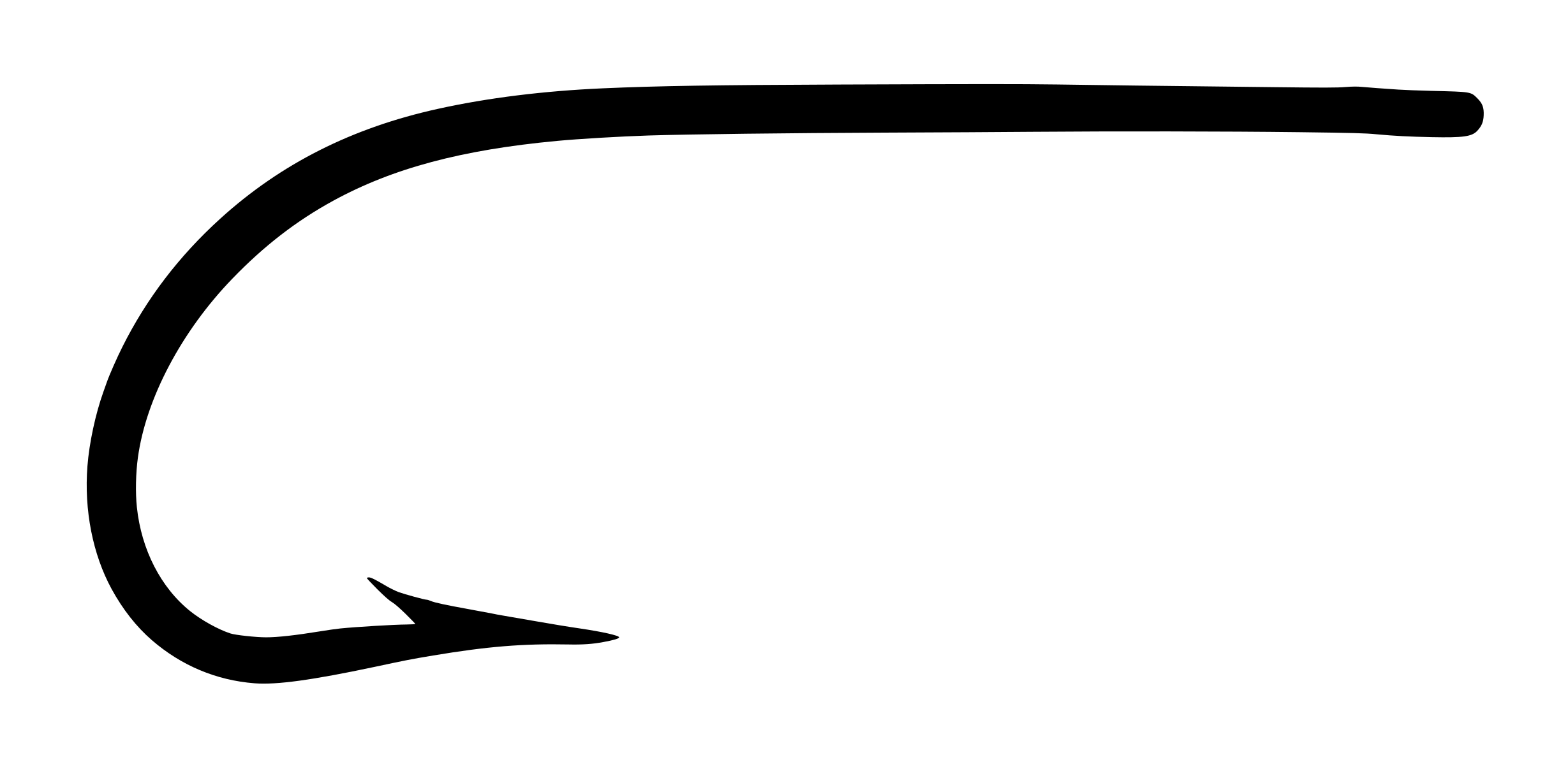
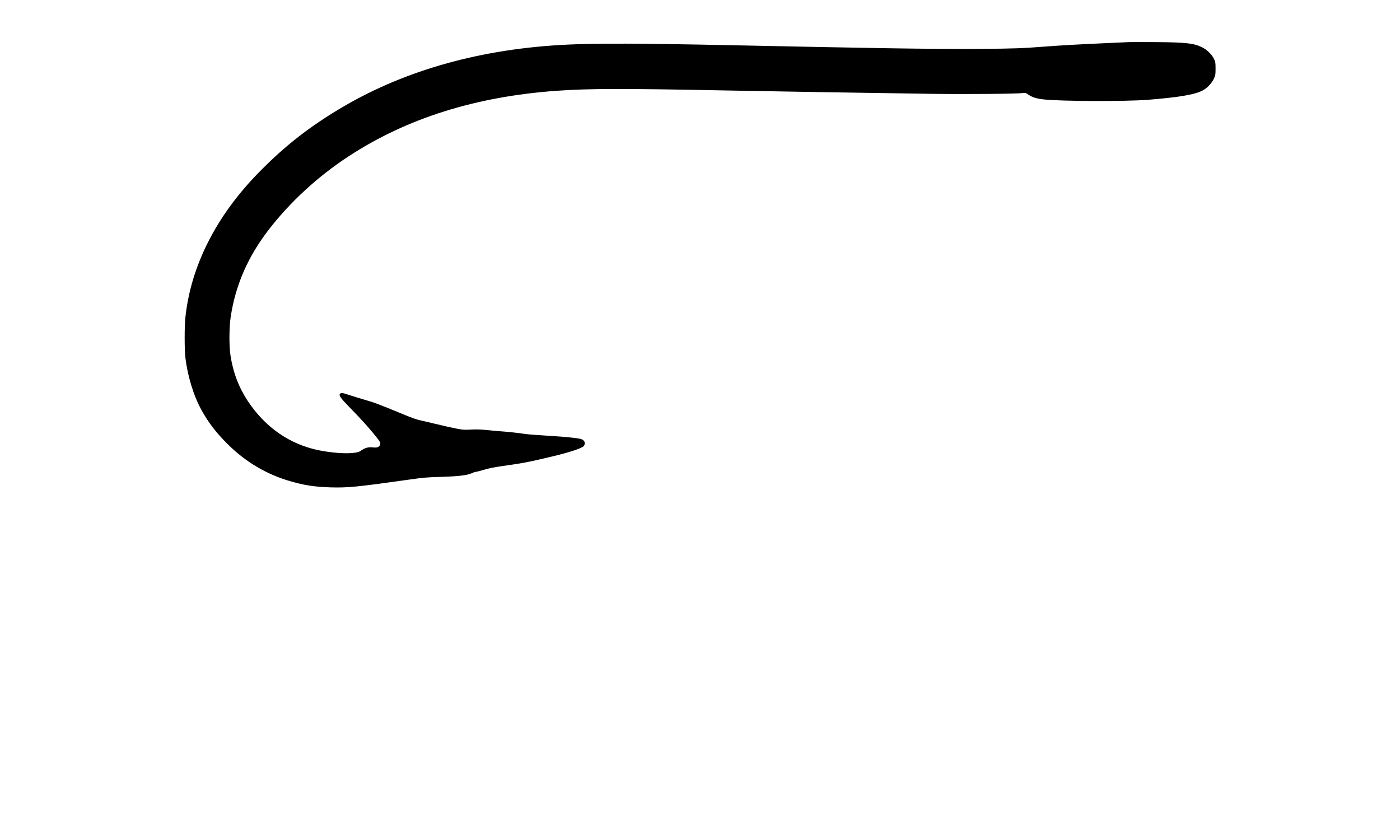
The Gamakatsu 13107 O’Shaughnessy hook in size 6 is a prime example of the high-carbon steel, chemically sharpened hooks that revolutionized the American tackle market in the late 20th century. Distributed by the Kent, Washington-based Sports Resources Company prior to the formation of Gamakatsu USA in 1992, these vintage packets offer a glimpse into the brand’s early expansion. Featuring a straight eye, forged O’Shaughnessy bend, and a polished finish, these hooks remain perfectly viable today for tying strong wet flies, bucktails, and engaging in general bait fishing where superior hold and tensile strength are required.
Side profile of Gamakatsu 13107 showing the distinctive angular O'Shaughnessy bend, superior point, and straight-ring eye on 1/10-inch measurement grid.
Photographic record
4 cataloged imagesSelect any record to load it above.
4 images shown
Gamakatsu 13107 O’Shaughnessy Size 6 Side ProfileSide profile of Gamakatsu 13107 showing the distinctive angular O'Shaughnessy bend, superior point, and straight-ring eye on 1/10-inch measurement grid.Open originalGamakatsu 13107 O’Shaughnessy Size 6 Front ViewFront face of the Gamakatsu 13107 showing the gap width measurement, bend depth profile, and straight-ring eye orientation.Open originalGamakatsu 13107 Original Packaging Back PanelBack panel of the Gamakatsu O'Shaughnessy card showing promotional text, company heritage statement, and Sports Resources Company distributor address in Kent, Washington.Open originalGamakatsu 13107 O’Shaughnessy Original Sales CardFront of the complete Gamakatsu O'Shaughnessy sales card showing the distinctive blue header with Gamakatsu cursive logo, Style designation (O'SHAUGHNESSY HOOKS), Size (6), and Quantity (8), with all eight hooks present in original pockets.Open original
Technical profile
Eye
Ball Eye, Straight / InlineTurned-up tapered eye confirmed by physical examination V. Eye is smoothly tapered from the wire at base to a rounded apex, typical of modern mass-produced hooks. No visible eye-wire redundancy or quality irregularities.
Wire
Heavy (1X Heavy), Forged
Shank
Standard — Plain
Bend
O'Shaughnessy, Standard gapRound-kendal bend with smooth curvature. Bend is deep and symmetrical, measuring ~0.52"-0.58" depth E. No offset or kirb; wire follows natural rounded path. Barb is swept and positioned at the apex of the curve.
Point
Superior (near-straight inner taper)Barb is swept, moderate size, positioned at the inner apex of the bend. Barb angle is acute, typical of Gamakatsu design for bait retention. No microbarbs or secondary barbs visible.
Finish
Nickelled / Nickel-Plated — Inferred (photographically likely)Nickelled (cool silver-grey) finish confirmed by physical examination V. Finish displays uniform cool tone with moderate reflectivity characteristic of electroplated nickel. No visible corrosion, patina, or discoloration on specimen hooks within the clamshell.
Hook specimen in excellent condition, bright nickelled finish with no corrosion or patina. Card shows light wear at edges, minor color fade in blue header section consistent with age. All hooks present and secured in card pockets. No tears or damage to card structure.
The O’Shaughnessy bend is defined by its angular bottom geometry and moderate-length shank—a compromise design favored by commercial and bait anglers. Forging (visible in the wire profile) strengthens the bend and improves hook-set penetration by creating slight stress concentration at the bend junction. The superior point (nearly straight inner face with gentle taper) is easier to manufacture than hollow-point designs and provides reliable penetration in firm-mouthed fish. The straight-ring eye is neutral for snood or direct-tie applications, avoiding the catch points that barbed or tapered eyes can create when handling wet line. Nickelled finish resists saltwater corrosion better than blued or bronzed alternatives, though not as completely as tinned or stainless coatings.
No records within garrenwood.com catalog context — this is a modern, mass-produced entry for reference and completeness, not for rarity or significance ranking.
Own this hook? Help us measure it.
We don't have measured sizes for this hook yet. Own one? Submit calipered measurements and we'll review and add them. Thank you!
The Gamakatsu Octopus series (Model 02011) is a modern bait hook line introduced in the 1980s to serve the growing saltwater live-bait and general bait market. The ‘octopus’ designation reflects the hook’s suitability for octopus baits and other large, soft-bodied saltwater offerings, though the design proved equally effective for shiners, mullet, and freshwater catfish applications.
The 02011 series is available in a range of sizes (No. 1, 1/0, 2/0, 3/0, 4/0, 5/0, and larger) packaged in bulk quantities of 25, 50, or 100 per box. The round-kendal bend and hollow point are consistent across the entire size range. Finishes include nickelled (standard), tinned, and black japanned variants. The 02011 remains in active production as of 2026 and is among Gamakatsu’s most prolific bait hook designs, indicating sustained market demand across multiple regions and fishing traditions.
The series has not been significantly redesigned since introduction, representing a stable, proven platform rather than an innovative or limited-production line. Production volume is very high, making individual cards or boxes common in secondary markets.
Era and Packaging Dating
Packaging format with blue header and offset-printed promotional text on back is characteristic of Gamakatsu North American distribution circa 1970-1985. ZIP code 98032 (Kent, Washington) and PO Box address format consistent with 1970s-1980s US business practices. Absence of barcode indicates pre-1974 design sensibility; card predates widespread UPC adoption in tackle retail. Gamakatsu cursive logo style and 'The World's Finest Hooks' tagline are documented in catalogs from this era. Sports Resources Company (distributor) was active as primary Gamakatsu US importer through early 1980s. Offset lithography process and paper stock composition are consistent with 1970s print technology. This is not a modern reproduction card.
Japanese Precision Meets Scottish Design
Gamakatsu, founded in Hachioji, Japan in 1955, entered the North American market during the early 1970s with a deliberate strategy emphasizing 'sticky sharpness'—superior penetration through advanced heat treatment and point geometry. The O'Shaughnessy pattern, originally a Scottish design popularized by Irish and British bait anglers, became Gamakatsu's entry point into the saltwater market because it required no exotic eye construction and benefited immediately from Japanese metallurgical advantage. By the 1980s, the combination of quality reputation and competitive pricing allowed Gamakatsu to displace older American makers in both freshwater and saltwater retail channels.
Design lineage and influence
The O’Shaughnessy bend originated in Scotland in the 19th century as a heavy-duty bait hook suitable for salmon and large coarse fish. British makers including Allcock, Partridge, and Harrison Bartleet produced standard versions in blind-eye and turned-down eye formats through the mid-20th century. The pattern remained popular in European freshwater and Irish sea trout fishing but was less dominant in North American saltwater fishing (where Mustad patterns prevailed) until Japanese manufacturers demonstrated that the design’s angular, forged geometry benefited from advanced heat treatment. Gamakatsu’s adoption in the 1970s marked a significant shift: the O’Shaughnessy transitioned from a specialty bait pattern to a mass-market hook stocked alongside Aberdeen and Sproat designs in general-purpose assortments.
Best matchRelated by Attribute
Computed automatically from catalog data — updated as new hooks are added.
Matches: Bend, Shank, Point, Forging, Offset +3 moreDiffers: Wire: Heavy (1X Heavy) vs Extra-Heavy (2X+); Gap: Standard vs Wide; Eye: Ball Eye vs Tapered Eye +1 more
Matches: Bend, Gap, Eye, Eye Orient., Point +4 moreDiffers: Shank: Standard vs 1X Long; Wire: Heavy (1X Heavy) vs Standard; Finish: Nickelled vs Tinned +1 more
The Gamakatsu 13107 O’Shaughnessy is a general-purpose bait hook designed for saltwater and heavy freshwater fishing. The size 6 places it in the medium range suitable for live baitfish (mullet, herring, sardine), cut bait presentations, and larger crustaceans. The straight-ring eye accommodates direct line-to-hook connection or standard snood systems. The forged O’Shaughnessy bend combines medium shank length with a deep, angular bend designed to handle strong pressure from large fish and abrasive saltwater conditions. The superior point and moderate barb favor quick, clean penetration in tough-mouthed species.
Secondary Applications
General bait fishing (freshwater and saltwater), live herring or mullet on conventional tackle, chum-line presentations, offshore bottom fishing.
Classic Fly Patterns
Not typically used for fly tying.
Modern Equivalents
Hook
Match Quality
Notes
Gamakatsu F312 Offset Worm Hook
Moderate
Modern Japanese forged bait hook with similar metallurgical heritage; straighter offset rather than traditional O'Shaughnessy geometry
Mustad 92620 O'Shaughnessy
Good
Mustad's production O'Shaughnessy retains classic bend profile; available in multiple sizes and finishes; industrial quality comparable to vintage Gamakatsu
Daiichi 2220 Salmon Egg Hook
Moderate
Japanese medium-wire bait hook with similar metallurgical strength; smaller eye and different bend geometry
Collector notes
Rated 3.5/10 — Gamakatsu hooks from this era are widely available but size 6 O'Shaughnessy is moderately scarce; collector demand is modest among vintage Japanese tackle enthusiasts and general bait anglers seeking functional examples. Complete original packaging in excellent condition adds meaningful premium.
Reference value
$4 – $12 USD estimate
Packaging condition
Excellent — minimal wearRecorded specimen
Packaging format
gamakatsu-blue-cardCatalog code
Gamakatsu hooks have modest collector interest compared to classic English makers like Allcock or Partridge. However, this specific card represents an early North American distribution example with attractive period graphics and complete original packaging. Size 6 O’Shaughnessy is less common than the larger sizes (2/0, 1/0) that dominated bait fishing catalogs. The straight-ring eye and superior point construction mark this as a general-purpose hook rather than a specialized pattern, limiting appeal to tyers focused on specific fly designs.
Positive factors: early 1970s-1980s era when Gamakatsu was establishing North American presence; intact card with all 8 hooks; excellent condition with no corrosion or component loss; bright nickelled finish appeals to functional anglers and collectors seeking fishing-ready examples. Limiting factors: not a rare pattern (O’Shaughnessy remains in production); modest vintage pedigree compared to pre-war English hooks; Japanese manufacture lacks the romantic appeal of Redditch craft tradition. Size 6 is less desirable than larger bait sizes (2/0-1/0) or smaller fly sizes (8-12).
Most desirable: sealed cards with all original tissue; early 1970s examples; smaller or larger size extremes; variant finishes if any exist. Least desirable: loose hooks, damaged cards, missing components, common sizes in mixed-format lots.
Packaging
Printed cardboard sales card, 5.5" × 3.75" (approx), bright blue header section with Gamakatsu cursive logo in silver/grey, white body section. Header contains: Gamakatsu logo (lower left), Style field showing 'O'SHAUGHNESSY HOOKS' in oval, Size field showing '6', Quantity field showing '8'. Footer section displays 'The World's Finest Hooks' heading and model number 'NO. 13107' in printed text. Card is die-cut with small round pockets to retain individual hooks. Back panel contains promotional copy about Gamakatsu design quality and 'sticky sharpness' feature, distributed by Sports Resources Company (Kent, WA address visible). Printing method: offset lithography. Paper stock: medium-weight cardstock. Era indicators: modern post-1980 design, absence of barcode (card predates UPC adoption), ZIP code format (98032), company name and PO Box address.
Market Value Notes
Low ($4): Opened card or loose hooks, all or most present, light wear acceptable. High ($12): Sealed or near-sealed card, all 8 hooks perfect, minimal packaging wear. Premium factors: sealed/unopened status, complete original tissue, bright finish condition, intact packaging graphics, early 1970s examples, size extremes (very small or very large). Platforms: eBay (US and international), vintage tackle dealers, specialized Japanese fishing equipment vendors. Confidence: E estimated — based on comparable Gamakatsu era cards and general Japanese vintage tackle pricing. Limited specific sales data for this exact model; estimate assumes sales card format with standard market demand for mid-size bait hooks.
Where to Find
eBay (search 'Gamakatsu vintage' or 'Gamakatsu O'Shaughnessy'), vintage tackle dealers specializing in Japanese imports, online forums focused on classic Japanese fishing equipment, occasional specialty tackle auctions.
eBay market reference. Researcher-curated. Prices in USD. Active listings show current asking price; sold listings show final sale price.
Preservation
Storage and Preservation
Store the packaged card in a cool, dry location away from direct sunlight and humidity. Gamakatsu’s nickelled finish is resistant to corrosion but will develop light patina with prolonged exposure to moisture. If hooks are removed for use, store them in a sealed container with a desiccant pack to prevent rust. Original cardboard packaging should be kept intact whenever possible—the protective card pocket design prevents hook contact and maintains specimen presentation. Avoid stacking heavy objects on top of the card, which can crush the pockets or crease the header section. Acid-free tissue wrap or acid-free paper envelopes are suitable for long-term storage if the card must be opened. Do not clean the nickelled finish aggressively; light dust can be removed with a soft brush. If corrosion appears (unlikely with this finish), use a light mineral oil and soft cloth rather than chemical cleaners.
Primary Source
Packaging Claims and Distribution History
Source: Gamakatsu 13107 O'Shaughnessy packaging back panel, c. 1970s-1980s
The back panel promotional text emphasizes Gamakatsu’s ‘sticky sharpness’ as a distinctive marketing claim—a term the company used to differentiate their hooks from competitor products during the 1970s-1980s expansion phase. ‘Sticky sharpness’ referred both to the acute point geometry (achieved through specific heat treatment and point geometry) and to the company’s commitment to superior metallurgical quality. The claim that ‘a simple thumbnail scratch test will convince experienced anglers that other hooks cannot begin to compare with the advanced technology of Gamakatsu precision products’ was a deliberate appeal to anglers trained on older American and British hooks, positioning Japanese manufacture as a technological advancement rather than a cost-reduction strategy. This messaging reflected Gamakatsu’s successful market positioning: premium quality at competitive pricing, not budget knock-offs.
The distributor name (Sports Resources Company, Kent, Washington) identifies this card as part of Gamakatsu’s North American distribution network. Sports Resources was the primary importer and wholesaler for Gamakatsu hooks and tackle in the 1970s-early 1980s, before the company established direct subsidiaries. The PO Box address and ZIP code format are consistent with 1970s-1980s business records but predate the widespread use of toll-free telephone numbers in fishing tackle marketing. This card predates barcode adoption and represents a transition period when packaging design was being standardized for national distribution but before UPC labeling became mandatory.
Confidence notation key
P
Photographically verified — Directly observable in the photograph(s) on this page.
V
Verified by documentation — Confirmed by manufacturer catalog, spec sheet, or published reference.
I
Inferred — A logical deduction from observable or documented evidence, not directly stated.
E
Estimated — An approximation based on visual comparison, proportional analysis, or limited data.
S
Speculative — A reasoned hypothesis that cannot be confirmed from available evidence.
Unnotated claims are the compiler’s synthesis; see Sources. All photographs on garrenwood.com are taken on a measurement grid where each square equals 1/10 inch (0.1″ / 2.54 mm).