Selected size
8
Physical specimen
- Overall Length
- 17.8 mm P
- Gap Width
- 5.8 mm P
- Confidence
- P Physical specimen
Physical measurement with calipers
 Garren WoodFishing Hook Reference
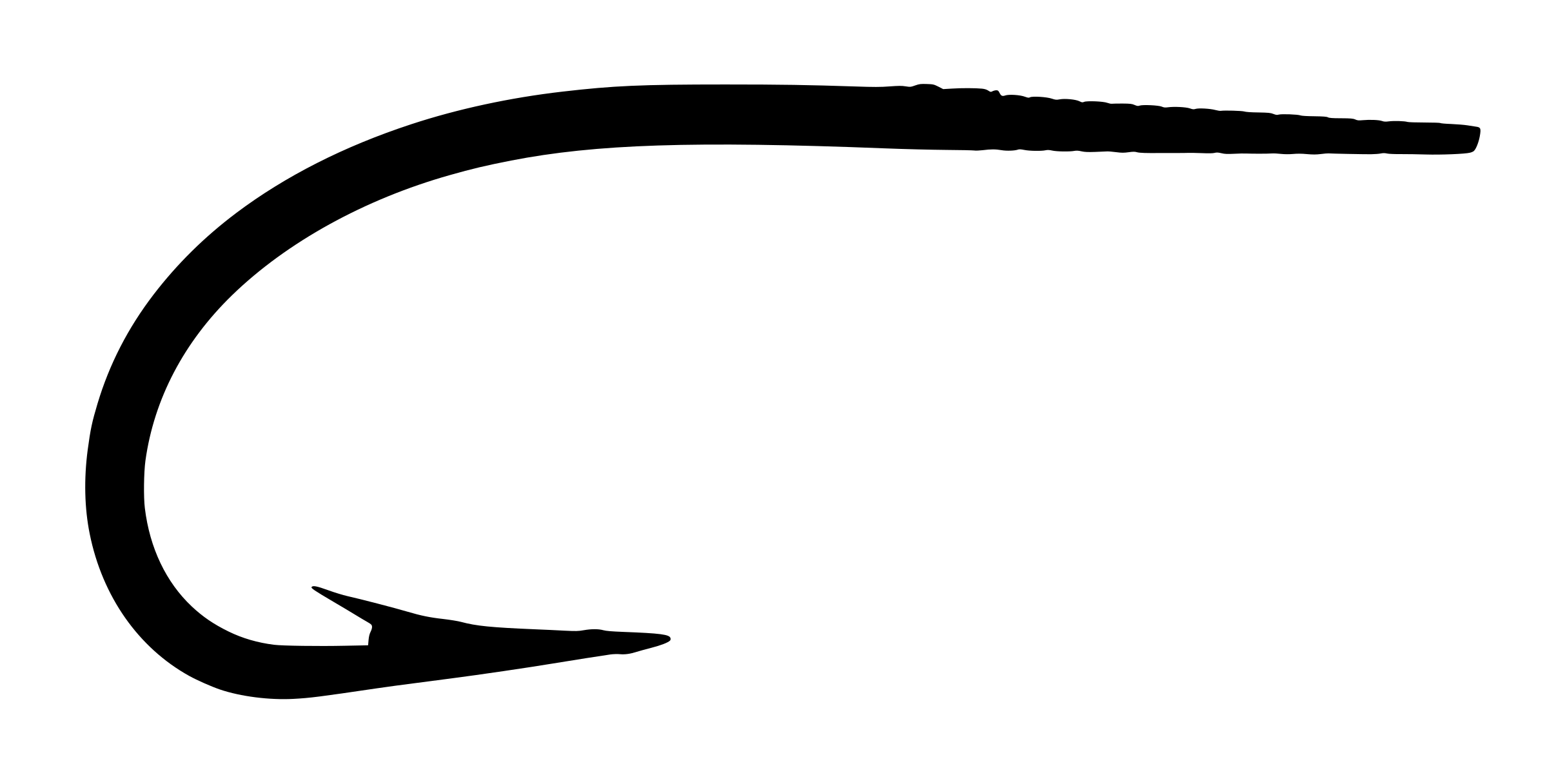
The Mustad Quality 3900 represents the final era of traditional blind eye hook manufacturing, produced between approximately 1925-1955 V. This Sproat bend hook features a tapered shank terminating in a fine point rather than a formed eye, requiring the fly tier to whip a silk gut or braided loop directly onto the shank P.
The hollow point geometry provides exceptional penetration with minimal force, while the classic Sproat bend offers optimal stress distribution across the curve P. The japanned black finish was specifically chosen for blind eye hooks to prevent silk gut abrasion and provide the traditional aesthetic expected by period salmon anglers I.
This size 8 specimen in original manufacturer box represents significant collecting interest, as blind eye hooks became increasingly rare after 1960 when ringed eyes achieved universal adoption I. Complete boxed examples command premium prices among collectors of vintage Norwegian tackle and traditional fly tying implements E.

7 cataloged imagesSelect any record to load it above.
7 images shown
The tapered shank design serves a crucial engineering purpose – as the wire diameter decreases toward the eye end, it accommodates the bulk of the whipped silk gut loop without creating an oversized head on the finished fly. The hollow point geometry, with its concave inner face, concentrates penetration force at an extremely fine tip while rapidly flaring toward the barb for secure holding power. The japanned finish prevents the sharp edges of the steel from cutting through the delicate gut material during the whipping process.
Physical measurement with calipers
We don't have measured sizes for this hook yet. Own one? Submit calipered measurements and we'll review and add them. Thank you!
O. Mustad & Søn was founded in 1832 in Gjøvik, Norway, initially as ‘Brusveen Spiger- og Staltradfabrikk’ under Hans Schikkelstad, producing nails and steel wire. The company was transformed when Ole Hovelsen Mustad and his son Hans Mustad took control and rebranded the firm. The defining moment came in 1877 when Mathias Topp invented the first fully automated hook-making machine, allowing continuous production from raw steel wire. By the 1950s, Mustad controlled 50% of global hook production through industrial efficiency and strict trade secrecy, making ‘Mustad’ virtually synonymous with the fishing hook itself.
The Mustad 3900 belonged to the mid-tier ‘Quality’ series (3000-3999 range), representing hooks manufactured to exacting dimensional and tempering standards. This series included the famous 3304 Cincinnati Bass Hook and the ubiquitous 3906 wet fly hook. The blind eye variant of the 3900 was specifically maintained for traditionalists who continued using silk gut construction methods well into the mid-20th century. Production likely ceased by 1960 as demand for blind eye hooks disappeared with the universal adoption of nylon monofilament and ringed eye construction.
Oslo designation on box indicates post-1925 production (Christiania was renamed to Oslo on January 1, 1925). Japanned finish, paper box construction, and lack of barcode suggest pre-1960 manufacturing. Typography and decorative border pattern are consistent with 1930s-1950s Mustad packaging.
Tying flies on blind eye hooks was considered the 'Master Class' of the craft, as the structural integrity of the entire fly depended on the tier's skill in whipping the gut loop to the shank. A poorly executed eye connection would result in the loss of both the fly and the fish, making these hooks the ultimate test of an angler's tying ability.
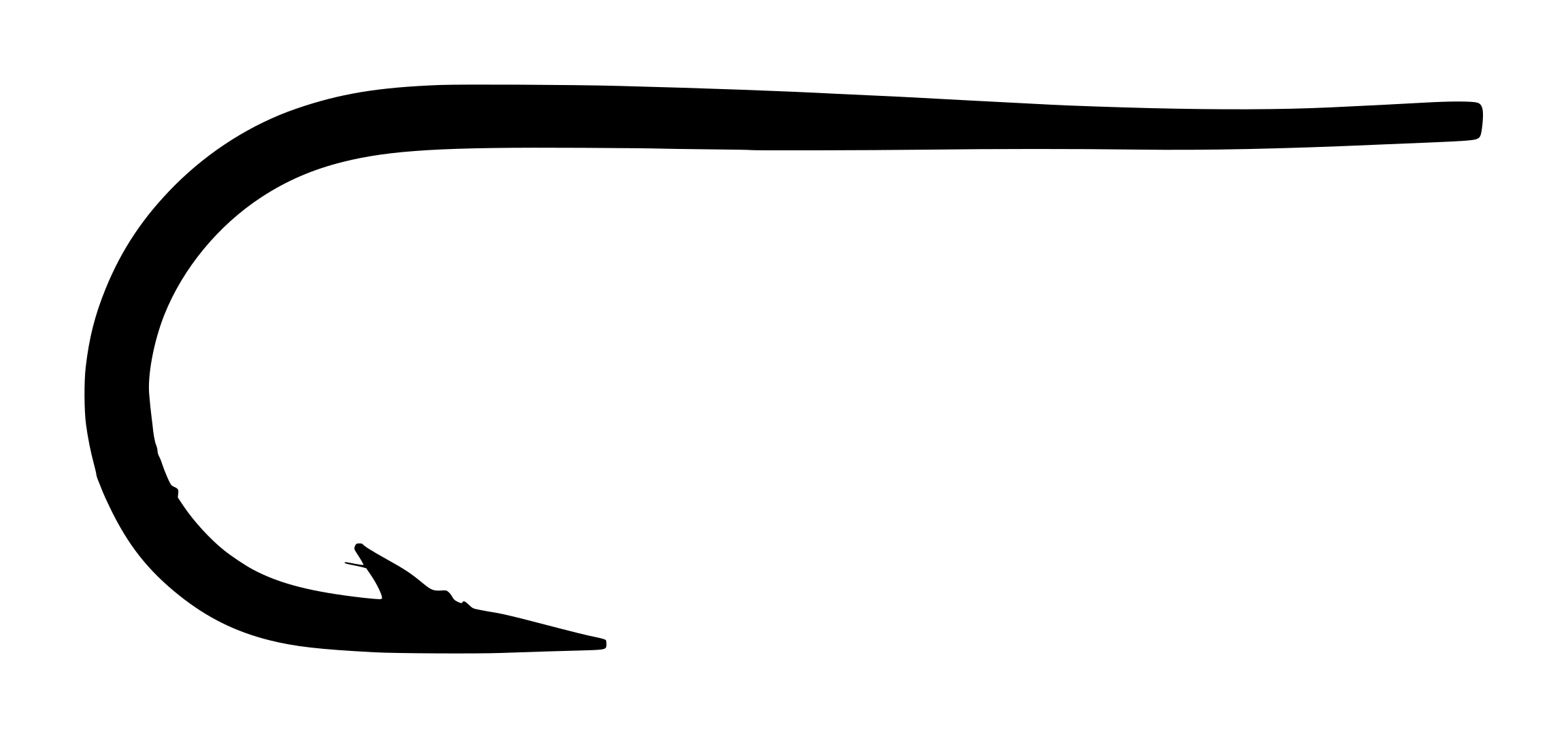
| Silhouette | Hook Model | Match | Analysis | Compare |
|---|---|---|---|---|
| 3025 No. 2 — Harrison Bartleet's Hollow Point Sproat | 83% | Compare | ||

|
M64 No. 6 — Wm. Bartleet & Sons M64 Sproat | 80% | Compare | |

|
Trout Taper No. 6 — Trout Taper | 73% | Compare | |
|
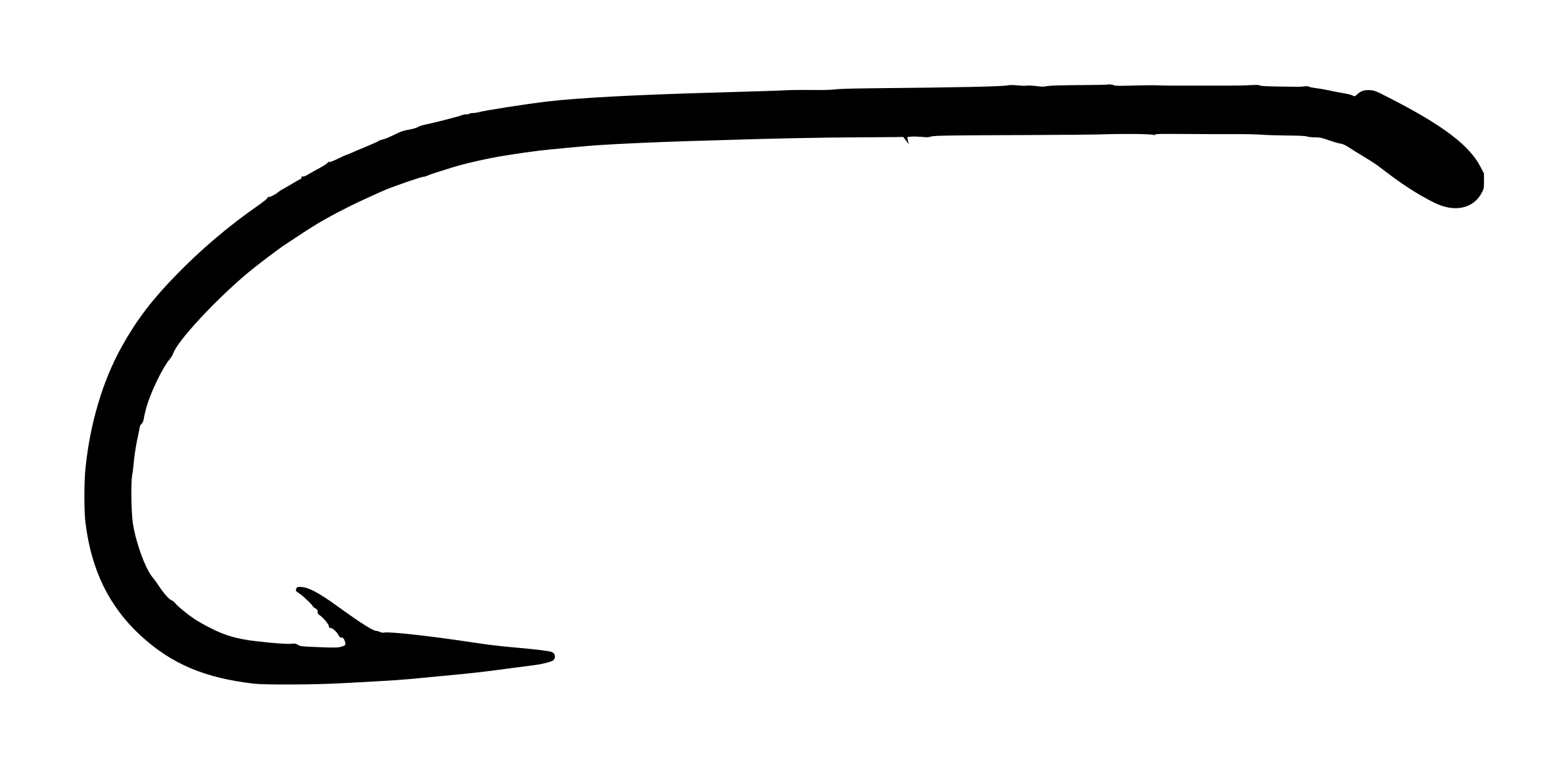
Round Taper No. 11 — Round Taper | 71% | Compare | |
|
HP Sproat, TDE No. 6 — Yellow Label H.P. Sproat, T.D. Eye | 71% | Compare |
| Silhouette | Hook Model | Match | Compare |
|---|---|---|---|

|
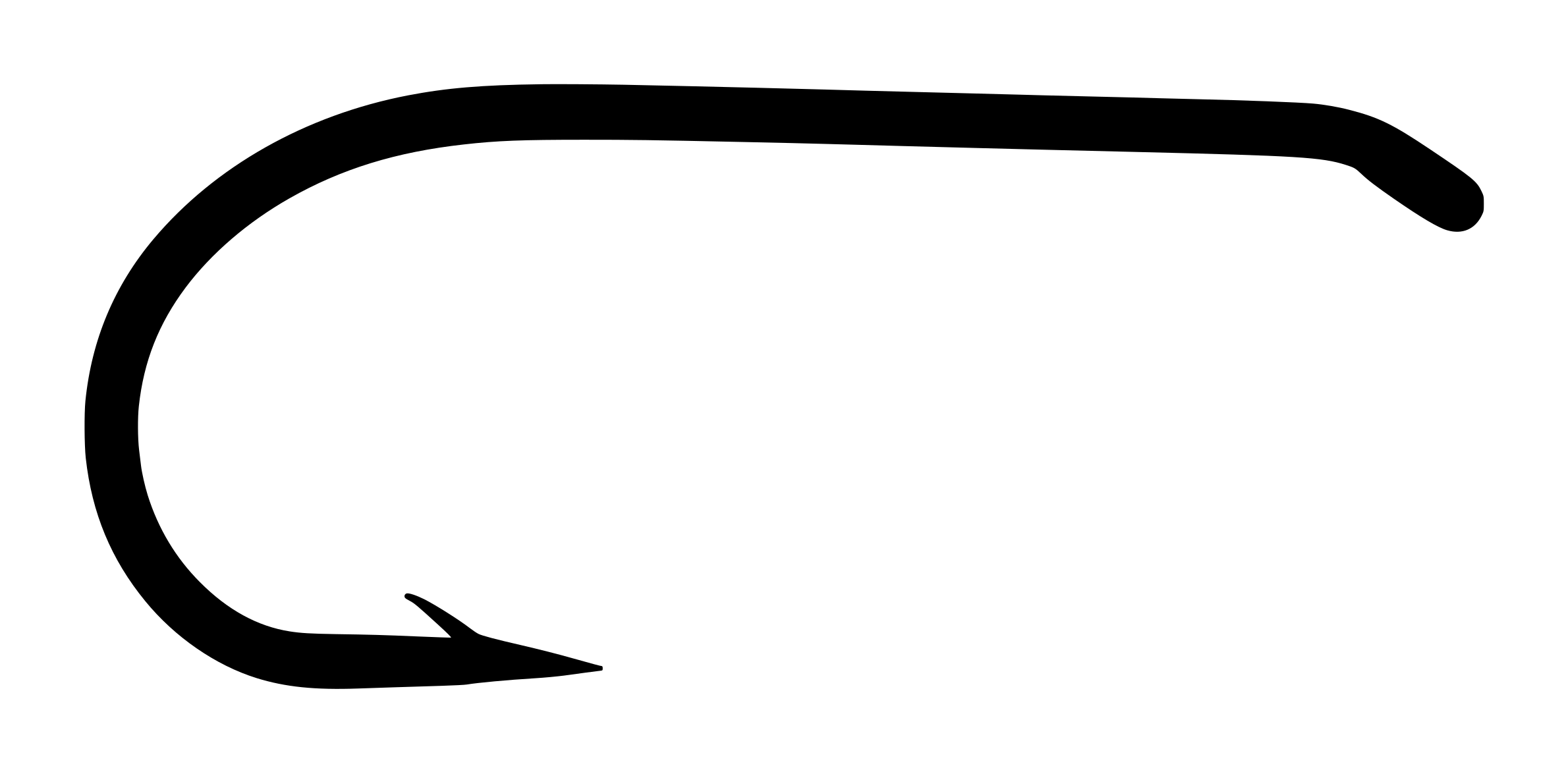
3831 No. 4 — Mustad-OShaughnessy Hooks | 99% | Compare |
|
L2A No. 10 — Captain Hamilton Medium Weight Wet Fly Hook | 99% | Compare |

|
7029RK No. 12 — Gaelic Supreme Hump Shank | 98% | Compare |

|
3103 No. 4 — Mustad-Limerick Hooks | 98% | Compare |

|
3406 B No. 1, No. 4 — Mustad 3406 B | 98% | Compare |
Designed primarily for classic Atlantic salmon flies and traditional Victorian wet fly patterns tied using silk gut loop construction. The size 8 was ideal for standard salmon patterns like the Green Highlander, Silver Doctor, and Jock Scott. The tapered shank and hollow point combination provided the structural foundation necessary for complex feather wing assemblies while ensuring reliable penetration in cold water conditions.
Exhibition-grade display flies, museum reproductions of Victorian patterns
Green Highlander, Silver Doctor, Jock Scott, Durham Ranger, Blue Charm
| Hook | Match Quality | Notes |
|---|---|---|
| Partridge CS10/3 Blind Eye Salmon | Very Good | Closest modern equivalent for blind eye salmon flies, though sizes limited |
| Gaelic Supreme Bartleet Blind Eye | Good | Modern reproduction of traditional blind eye pattern, limited size range |
Rated 6.0/10 — genuinely scarce due to specialized blind eye construction and limited production period; strong demand from salmon fly collectors and traditional tying enthusiasts.
The Mustad 3900 blind eye commands strong collector interest due to its specialized construction and historical significance as a transitional technology. Factors driving collectability include: the rarity of blind eye hooks in smaller sizes like this No. 8, the quality of Norwegian steel and japanned finish, and the complete original packaging. The rating is limited by the fact that Mustad produced substantial quantities during the 1930s-1950s period, so specimens do appear periodically. Mint condition boxes with full hook count are most desirable, followed by cards with intact tissue wrapping. Condition is critical – the japanned finish shows wear easily, and incomplete boxes significantly reduce value. Size 8 is more scarce than larger salmon sizes, adding to desirability among specialists.
Small rectangular cardboard box with decorative border pattern. Cream-colored paper stock with brown printing. Features the iconic Mustad key logo and eight-line label format. Box shows 'Oslo - Norway' location designation. Size marking 'No. 8' in blue ink on lower left. Quantity marked as '100'. Box construction and typography consistent with 1930s-1950s Mustad packaging standards.
Low ($15): Good condition box with minor wear<br />
High ($25): Excellent condition as observed<br />
Premium factors: Complete original box, blind eye specialty, vintage Sproat pattern<br />
Platforms: Private sales, specialist tackle dealers<br />
Confidence: V verified — based on observed $25 private sale
Specialist vintage tackle dealers, estate sales in salmon fishing regions, collector forums, occasionally on eBay UK from Redditch area sellers
Store the original box in a cool, dry environment away from humidity to prevent deterioration of the cardboard and japanned finish. The black japanned coating is susceptible to chipping if hooks contact each other, so avoid unnecessary handling. Original packaging significantly enhances value – keep hooks in the box rather than removing them unless for actual use. If displaying, use archival-quality materials and avoid direct sunlight which can fade the box printing over time. The paper stock is approximately 80+ years old and should be handled minimally to prevent creasing or tearing.
Blind eye hooks often measure slightly smaller than their ringed eye counterparts due to the absence of the formed eye loop. This size 8 measures consistent with period standards, but modern tyers should note that silk gut loop construction adds bulk at the head, effectively creating a larger overall profile than the bare hook dimensions suggest. When substituting modern materials, use the finest possible braided loop or consider sizing up one hook size to maintain proper proportions in classical salmon fly patterns.
| P | Photographically verified — Directly observable in the photograph(s) on this page. |
| V | Verified by documentation — Confirmed by manufacturer catalog, spec sheet, or published reference. |
| I | Inferred — A logical deduction from observable or documented evidence, not directly stated. |
| E | Estimated — An approximation based on visual comparison, proportional analysis, or limited data. |
| S | Speculative — A reasoned hypothesis that cannot be confirmed from available evidence. |
Claims with no notation are confirmed by multiple independent sources. All photographs on garrenwood.com are taken on a measurement grid where each square equals 1/10 inch (0.1″ / 2.54 mm).
Your cart is empty.