Herters Gaelic Supreme Hump Shank (Model 7029RK, Size No. 12) — A premium dry fly and nymph hook manufactured by Herters Inc. of Waseca, Minnesota, featuring a distinctive hump shank (pronounced rise from eye area), sproat bend, needle-sharp point, and straight ring eye. The packaging emphasizes hand-testing and claims of genuine Sheffield steel manufacture and British heritage.
This hook exemplifies the mid-20th-century American tackle market’s marketing of British quality and craft tradition. The ‘Gaelic Supreme’ and ‘Hump Shank’ nomenclature signals premium positioning against mass-market alternatives. Double-bronzed finish and regular-gauge round wire reflect standard durability specifications of the era.
The absence of barcode and letterpress printing on the original box label place this example firmly in the 1950-1965 window, before modern offset lithography and product coding became standard. The ‘Sole American Agents’ claim reveals Herters’ role as distributor of rebranded hooks rather than sole manufacturer, though the packaging attributes production to genuine Sheffield steel work in Britain.
Herters hooks remain modestly collected by fly-tyer historians and vintage tackle enthusiasts, particularly those interested in mid-century American retail fly lines and the internationalization of the hook trade post-WWII.
Original Herters Gaelic Supreme Hump Shank box label, Size No. 12 (Model 7029RK), showing letterpress printing, specifications, and company branding. Label includes claims of Sheffield steel manufacture and hand-testing characteristic of 1950s-era tackle marketing.
Photographic record
2 cataloged imagesSelect any record to load it above.
2 images shown
Herters Gaelic Supreme 7029RK Box Label Size 12Original Herters Gaelic Supreme Hump Shank box label, Size No. 12 (Model 7029RK), showing letterpress printing, specifications, and company branding. Label includes claims of Sheffield steel manufacture and hand-testing characteristic of 1950s-era tackle marketing.Open originalHerters Gaelic Supreme 7029RK Size 12 Hook ProfileSide profile of a single hook from the Gaelic Supreme Hump Shank package, Size No. 12, showing the sproat bend profile, straight ring eye, needle-sharp point, and hump shank characteristic. Double-bronzed finish with warm golden tone. Photographed on 1/10-inch measurement grid for dimensional reference.Open original
Technical profile
Eye
Tapered Eye, Straight / InlineStraight ring eye (separate loose ring) formed from wire loop, typical of Herters' premium positioning. Ring appears uniformly formed and smooth. No visible wear or casting defects on specimen P.
Wire
Heavy (1X Heavy), Round
Shank
Standard — Kinked
Bend
Round / Kendal, Standard gapSproat bend — rounded bottom with moderate depth. No pronounced angular features. Shank rises slightly toward eye (hump characteristic), creating gentle curve in the wire profile. Bend exhibits fine symmetry with no visible offset or twist P.
Point
NeedleBarb is short and closely cut, positioned just below the needle point apex. Barb angle is acute (sharp angle relative to shank). This classic fly-hook barb geometry aids in holding soft insect bodies and nymph dubbing without tearing delicate materials P.
Finish
Bronzed — Confirmed (stated on packaging)Double-bronzed finish exhibits warm golden-bronze tone characteristic of mid-century American bronzing. Color is uniform across the specimen with minimal patina development or corrosion. No evidence of plating wear or flaking. Finish tone is warmer than typical modern bronzed hooks, suggesting slightly different bronzing chemistry or aging P.
Specimen hooks are bright and free of corrosion or oxidation. Original box label shows light toning and age-related creasing but remains fully legible with no loss of printed text. No hooks are missing from the original package count. Box construction and lid integrity are excellent.
Needle Point Geometry and Fly-Hook Function
The needle point (also termed ‘knife edge point’ or ‘spear point’ in period terminology) features a two-sided taper to an extremely fine, sharp apex. This geometry prioritizes piercing efficiency over barb-holding capacity — ideal for dry flies and lightweight nymphs where hook-hold depends primarily on the delicate insect body’s grip on the barb rather than deep penetration into a fish’s mouth.
The sproat bend provides a rounded, moderate-depth profile that balances structural rigidity with light wire strength. This bend family was a standard choice for general-purpose dry flies and nymphs throughout the 20th century.
Standard-gauge round wire (typical 0.019″-0.021″ diameter at size 12) maintains fly balance and allows traditional whip-finish tying techniques. The straight ring eye (loose ring) provides maximum clearance at the tie-point and reduces stress concentration, a design choice common in premium British and American fly hooks.
Double-bronzed finish adds corrosion resistance beyond simple lacquer, a manufacturing detail emphasized on the packaging as a mark of quality. The bronzing process involved immersion in oxidizing solutions to create a protective oxide layer, then often lacquering for additional durability.
We don't have measured sizes for this hook yet. Own one? Submit calipered measurements and we'll review and add them. Thank you!
Historical context
herters
Herters Inc., Waseca, Minnesota (c. 1893-1980s)
Herters was founded in 1893 as a mail-order sporting goods and fishing tackle company serving the North American market. Based in Waseca, Minnesota, the company built a reputation for offering rebranded and private-label fishing tackle at competitive prices, positioning itself as the ‘Sole American Agents’ for British and international hook manufacturers. Herters published extensive mail-order catalogs that were distributed widely throughout the US, making them a major retail force in the mid-20th-century tackle market.
The company’s business model relied on sourcing finished hooks and tackle components from established British and European manufacturers (particularly Redditch-area makers) and applying Herters branding and packaging. The ‘Gaelic Supreme’ line and claims of ‘genuine Sheffield steel’ reflect this strategy — the hooks were likely manufactured by one of the major British industrial makers but sold under Herters’ house brand. This allowed Herters to offer the appearance of premium imported quality while maintaining margin control and rapid inventory turnover.
Herters catalogs from the 1950s-1960s showcase extensive fly hook selections, bait hooks, and specialty patterns, all branded as Herters or Gaelic Supreme quality. The company remained a significant player in American tackle retail through the 1970s but declined with the rise of mass-market retailers and Japanese hook manufacturing.
Series History
Gaelic Supreme Hump Shank Series
The ‘Gaelic Supreme’ product line represented Herters’ premium fly hook offering, marketed to serious fly tyers and trout anglers willing to pay a modest premium over mass-market alternatives. The ‘Hump Shank’ designation refers to the characteristic slight rise or bulge in the wire near the eye, a feature that became popular in mid-century dry fly hook design. This shank shape was believed to provide improved fly balance and tying security.
Model 7029RK (RK suffix likely denoting ‘Ringed Kit’ or ‘Ring eye’) was available across a range of sizes, though size No. 12 is documented here. The series encompassed various bend profiles (Sproat, Round Bend, and others) and eye types, allowing fly tyers to select specialized patterns for different fly styles and target species.
Production appears to date to the 1950s-early 1960s based on packaging characteristics. The line was likely discontinued as Herters’ business model shifted and imported Japanese hooks gained market dominance in the 1970s-1980s. No evidence suggests this was a high-volume model; it occupied a niche position within Herters’ broader catalog.
Era and Packaging Dating
No barcode present on packaging — strong pre-1974 indicator. Yellow and brown offset letterpress printing on box label is consistent with 1950s-early 1960s manufacture. Typography and layout typical of American tackle packaging mid-20th century. 'Waseca, Minn.' address format and 'Since 1893' claim consistent with Herters post-war catalogs. No ZIP code shown (ZIP codes introduced 1963), suggesting early 1960s at latest. Hand-tested claim on packaging typical of premium lines marketed in 1950s-early 1960s before industrial quality control standardization.
Herters and the Forgotten Mail-Order Tradition
Herters' 'Sole American Agents' claim reveals a critical but forgotten chapter of American fly-fishing history. By the 1950s, while Japanese manufacturers were beginning their industrial dominance, Herters thrived by positioning itself as the American gateway to British hook-making tradition. The company's mail-order catalogs were so extensive that they effectively set the standard for American fly-tyer terminology and hook sizing — many American fly fishers learned hook nomenclature from Herters catalogs rather than from direct manufacturer literature. Yet within twenty years, Japanese industrial production and modern retail chains rendered the mail-order model obsolete, and Herters' role in shaping American fly-fishing culture faded from collective memory.
Design lineage and influence
The sproat bend and hump shank design reflects late-19th and early-20th century British fly-hook engineering, codified by Redditch makers like Partridge and S. Allcock. The sproat bend — characterized by its rounded, moderate-depth bottom and balanced proportions — became the default choice for general-purpose dry-fly hooks because it provided structural strength without excessive wire weight, and its symmetry made it suitable for a broad range of fly tying styles.
The ‘hump shank’ variant emerged in the 1930s-1940s as British and American designers sought to improve fly balance by introducing a slight rise in the wire profile near the eye. This reduces the fly’s tendency to ‘tail-heavy’ rotation in current and was particularly favored for smaller dry patterns (sizes 14-18) where weight distribution is critical. Herters’ adoption of the hump shank for their Gaelic Supreme line suggests competitive parity with contemporary Partridge and S. Allcock offerings.
The needle point — a two-sided taper to a very fine apex — reflects the priority of piercing efficiency in dry-fly design, where hook-hold depends more on the sharpness of the initial penetration than on barb geometry. This contrasts with bait and salmon hooks, which typically featured heavier, wider barbs.
Modern equivalents like the Tiemco TMC 100 and Mustad 94840 maintain the sproat bend architecture but refine the point geometry and eye-forming techniques using modern wire-processing methods. The hump shank design has been largely abandoned in contemporary manufacture (replaced by straight-shank or slight-curve designs) as modern fly-tying techniques and materials have made the original design advantage less critical.
Best matchRelated by Attribute
Computed automatically from catalog data — updated as new hooks are added.
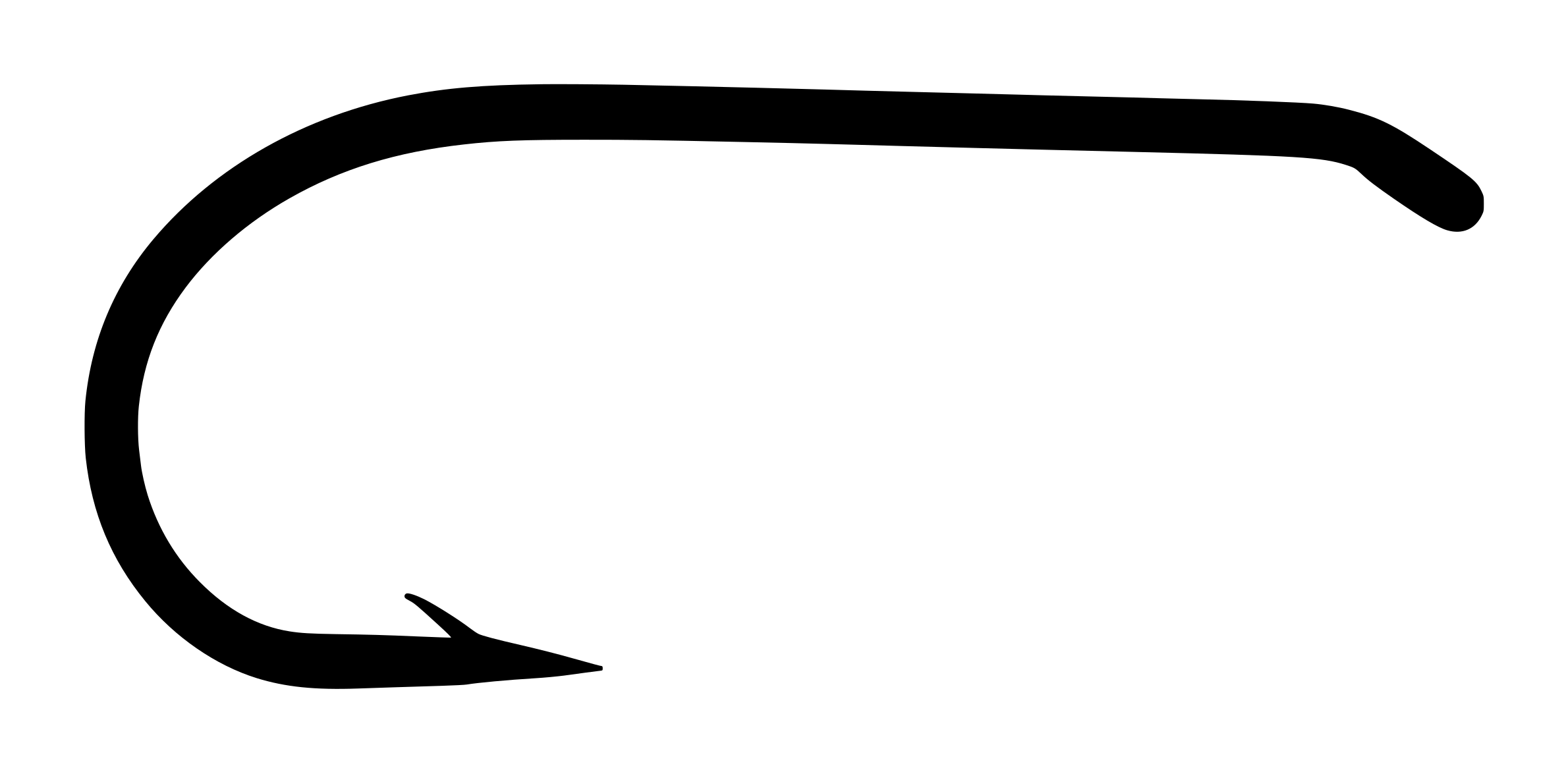
Matches: Bend, Shank, Wire, Eye, Finish +3 moreDiffers: Gap: Standard vs Wide; Eye Orient.: Straight / Inline vs Turned Up; Point: Needle vs Standard / Spear +2 more
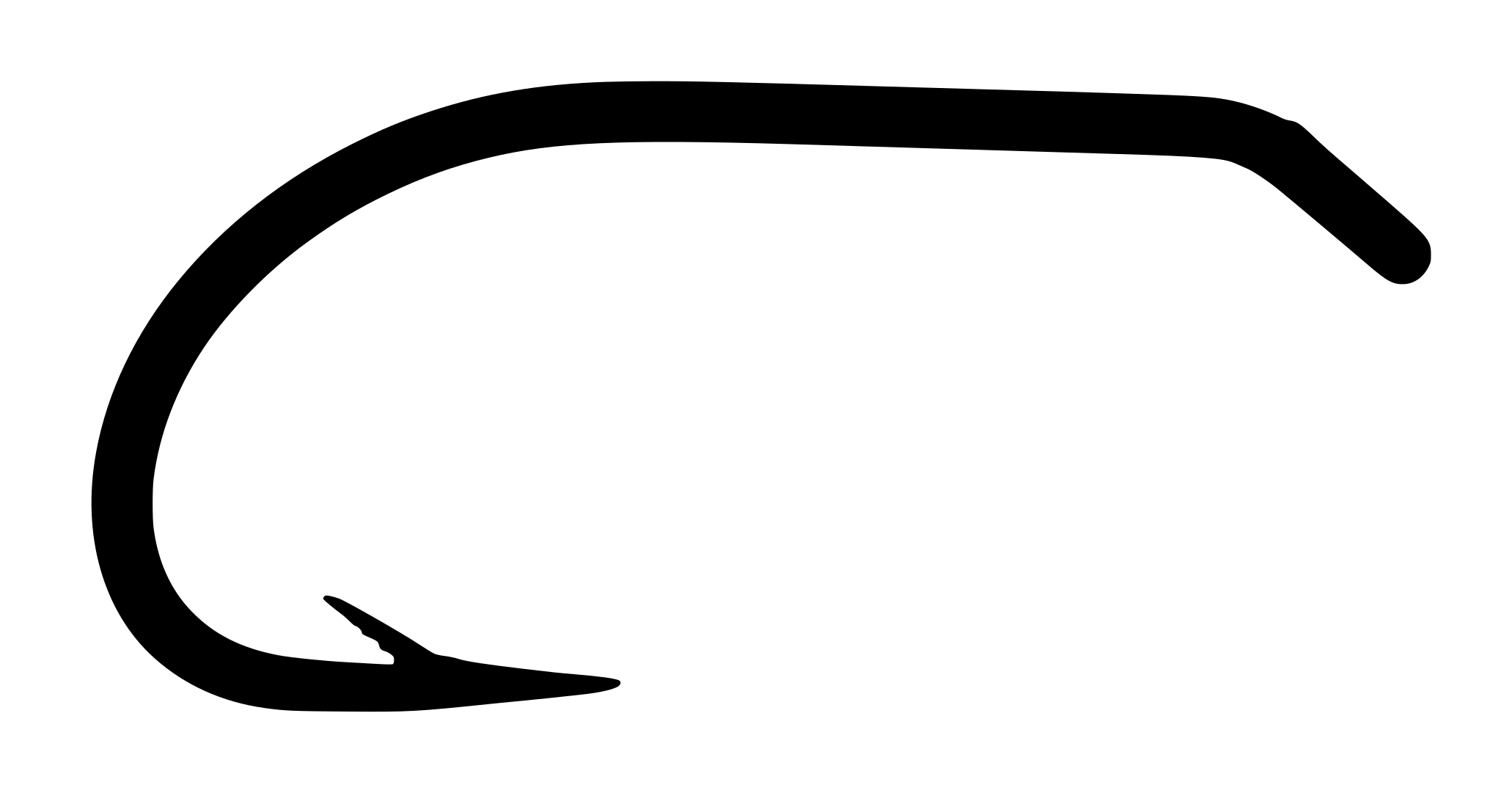
Matches: Bend, Shank, Wire, Eye, Finish +2 moreDiffers: Gap: Standard vs Wide; Eye Orient.: Straight / Inline vs Turned Down; Point: Needle vs Standard / Spear +2 more
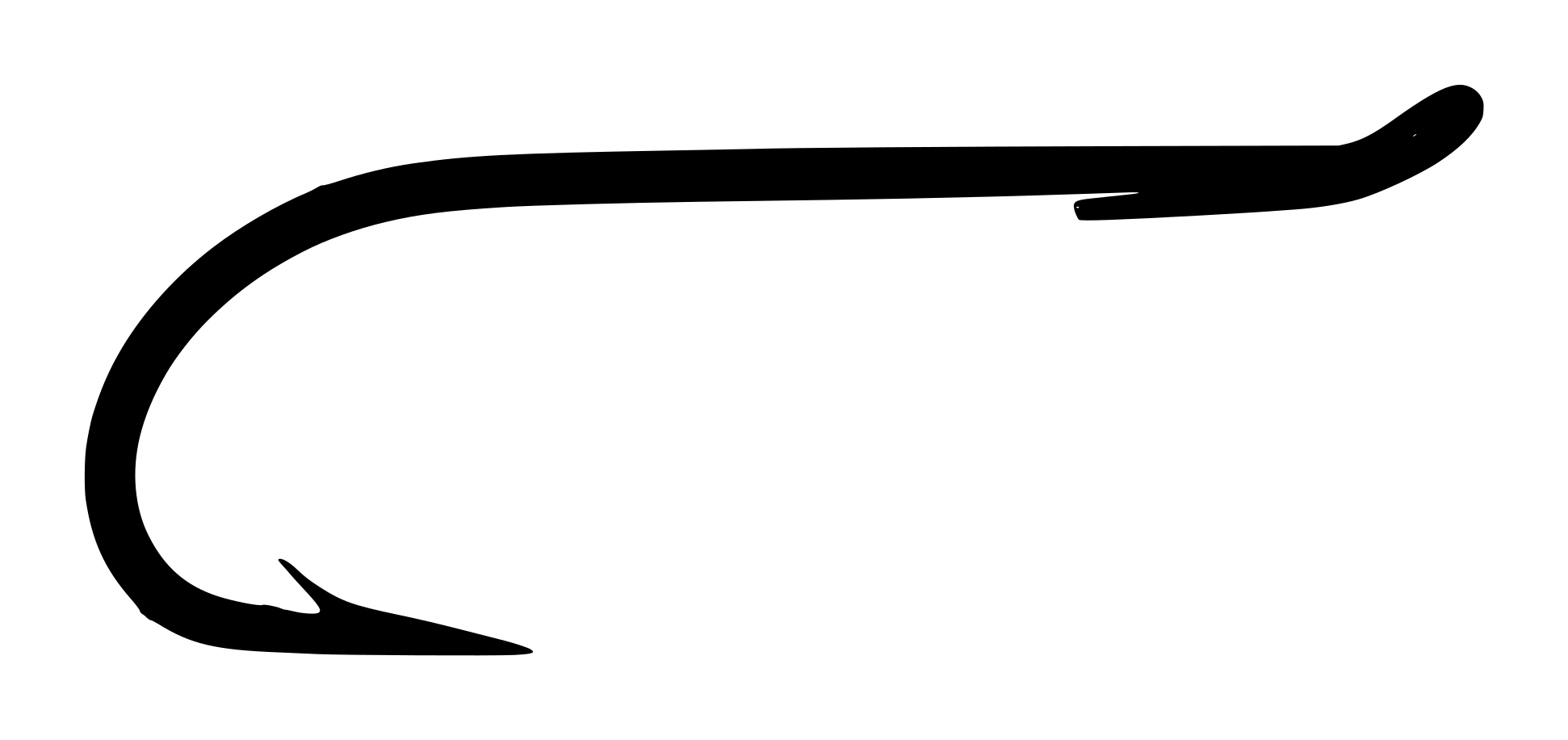
Matches: Bend, Shank, Gap, Eye, Finish +2 moreDiffers: Wire: Heavy (1X Heavy) vs Standard; Eye Orient.: Straight / Inline vs Turned Down; Point: Needle vs Hollow Point +2 more
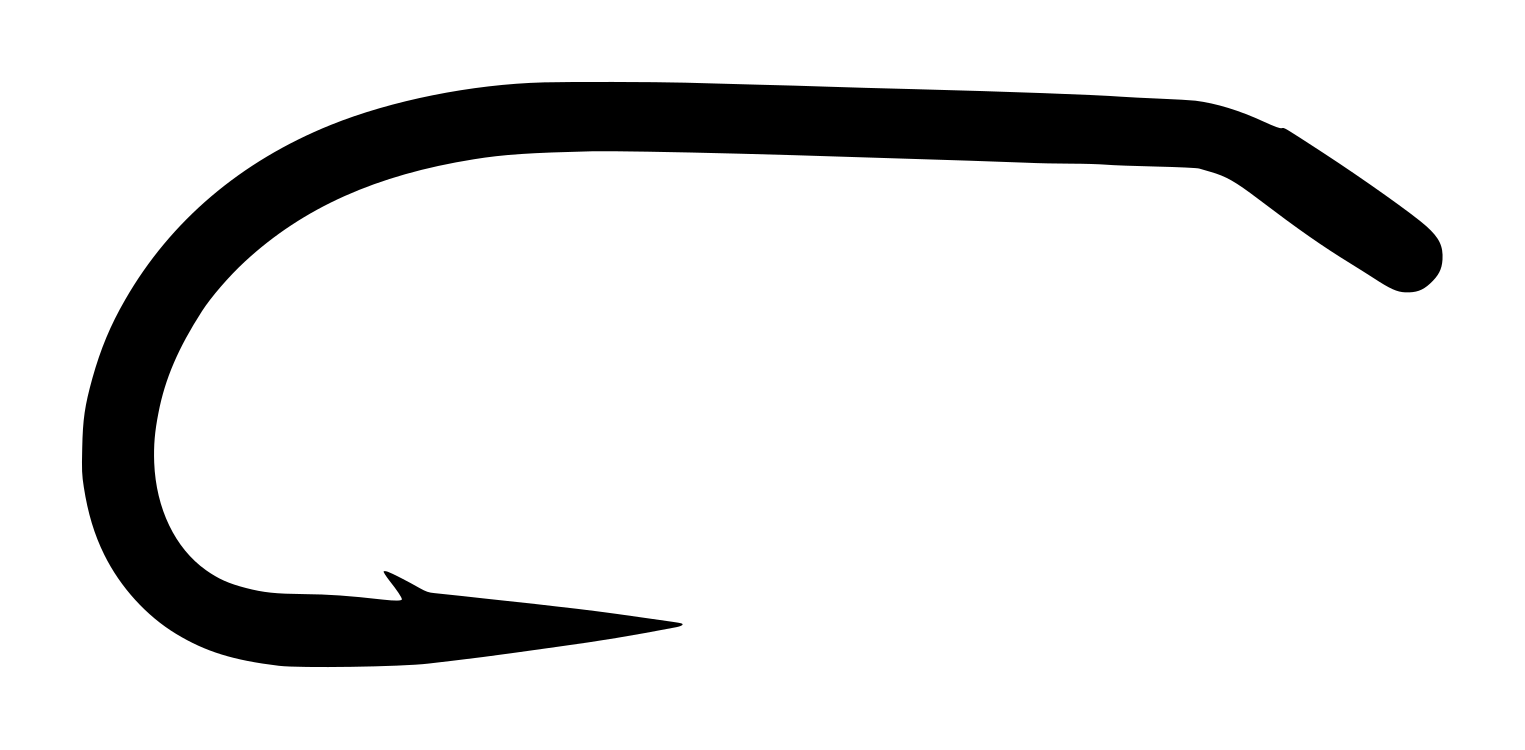
Matches: Shank, Gap, Eye, Point, Finish +2 moreDiffers: Bend: Round / Kendal vs Sproat; Wire: Heavy (1X Heavy) vs Standard; Eye Orient.: Straight / Inline vs Turned Down +2 more
Designed for dry fly and nymph fishing for trout in freshwater streams and rivers. The needle point, sproat bend, and 1X long shank make this an all-purpose pattern hook suitable for standard mayfly and sedge dry-fly imitations, small nymphs, and soft-hackle wet flies. The hump shank was marketed to support improved fly balance and head-down presentation in currents. Typical applications include March Brown, Greenwells Glory, and traditional North American dry patterns in sizes 10-16.
Secondary Applications
Small soft-hackle wet flies, emerging nymph patterns
Classic Fly Patterns
March Brown, Greenwells Glory, Light Cahill, Adams, Pale Morning Dun, Caddis patterns
Modern Equivalents
Hook
Match Quality
Notes
Tiemco TMC 100
Good
Modern dry-fly hook with similar sproat bend, needle point, and standard wire gauge; straighter eye alignment and slightly more refined point taper, but functionally equivalent for traditional dry-fly tying
Mustad 94840
Good
Mustad's sproat bend dry-fly hook; available in similar size range; slightly heavier wire than 7029RK but same bend family and general application
Partridge H1A
Moderate
British sproat bend dry-fly hook from Redditch makers; finer wire than 7029RK, more traditional hook-eye design, but similar bend and point geometry
Collector notes
Rated 3.5/10 — Herters hooks are modest collector interest due to the company's significant but now-forgotten role in mid-century American tackle retail. The Gaelic Supreme line is not commonly encountered, but the model is not exceptionally scarce; collector demand is limited to fly-tyer historians and vintage tackle enthusiasts interested in post-war American tackle branding and distribution. Size No. 12 is less sought after than very small or oversized variants. Original packaging in excellent condition is the primary value driver.
Reference value
$6 – $18 USD estimate
Packaging format
GW-HERTERS-BOX-01Catalog code
What makes this hook collectible: Herters represents an important but understudied segment of mid-20th-century American tackle retail — the mail-order distributor model that democratized access to quality fly-tying materials. The packaging claims and branding (Sheffield steel, hand-tested, Gaelic Supreme) document marketing narratives of the era. Original box labels with intact printing are increasingly scarce, as most surviving hooks are loose or on deteriorated cards.
Limiting factors: Herters hooks lack the heritage cachet of named British makers (Redditch, Partridge) or the widespread familiarity of Mustad. The company is poorly documented in modern fly-fishing history, reducing collector awareness. Most sizes remain common in surviving stock. The model itself (Sproat, needle point, standard shank) is conventional and not functionally distinctive.
Most desirable variants: Sealed or near-sealed original boxes with complete 100-hook counts command the highest premium. Sizes at the extremes (No. 20+ or 2/0+) are more scarce than No. 12. Cards with the earliest 1950s printing (no ZIP code, hand-written prices) are more sought after than later variants. Original tissue liners or envelope packaging intact adds significant premium.
Condition factors affecting value: Box printing legibility is critical — faded or water-damaged labels reduce value substantially. Presence of all 100 hooks is expected for the highest tier; missing more than 3-5 hooks reduces value by 30-50%. Original box lid and side panel integrity matter more for display-oriented collectors than loose hook collectors.
Packaging
Original manufacturer cardboard box with wraparound label. Label: bright yellow background with dark blue/black letterpress text and illustrations. Header text reads 'HAND / GAELIC SUPREME HUMP SHANK / TEMPERED / HOOKS'. Central logo features Herters coat-of-arms (heraldic shield with two stag supporters), 'HERTERS / SINCE 1893 / England'. Quality number '7029RK' prominently displayed upper right. Text fields list: 'SIZE / 100', 'QUALITY / 7029RK', specifications in bullet points (Round Shank, Needle Points, Double Bronzed, Ringed Eye, Regular Wire, 1X Long Shank), and phrase 'PERFECT STRAIGHT BEND'. Lower panel on brown background (simulated leather texture) reads: 'GUARANTEED THE WORLD'S FINEST GUILD QUALITY / Manufactured Of Genuine Sheffield Steel In Britain. / Each Hook Individually Tested by Hand. Sole American Agents / HERTERS INC., WASECA, MINN., U.S.A. — SINCE 1893'. Box dimensions approximately 4.5" × 3.0" × 0.75" (estimated). Paper stock is aged cream-white cardboard with period-appropriate pulp color variation. Letterpress printing shows characteristic ink impression depth. No barcode, price printed (if at all) likely by hand or rubber stamp on edge. Overall condition excellent: label intact with light toning, minimal creasing, no water damage.
Market Value Notes
Low ($6): Good condition - opened box, complete or near-complete hook count (95+), label shows minor wear and toning, hooks bright and uncorroded.<br />
High ($18): Excellent condition - sealed or near-sealed box, full 100-hook count, label printing sharp and legible, minimal age toning, original tissue liner intact if present.<br />
Premium factors: Original box vs loose hooks adds 200-300%. Complete hook count critical. Early 1950s printing (pre-ZIP) more desirable than later variants. Clean label legibility. Sealed condition extremely rare.<br />
Platforms: eBay sales, occasional vintage tackle dealers, fly-tying specialty retailers. Limited dealer inventory; most sales via eBay.<br />
Confidence: E estimated - limited comparable sales data for this specific model and packaging variant. Based on general Herters hook pricing trends ($3-20 for typical models) and the mid-rarity status of this 7029RK variant with original box. Sealed examples rarely listed; estimate based on condition tier extrapolation.
Where to Find
eBay (US and UK listings), vintage fly-fishing tackle shops in the upper Midwest (Minnesota, Wisconsin), specialist fly-tying supply retailers who carry vintage hook stock, occasional antique tackle shows and fly-fishing heritage events. Less commonly encountered than Mustad or Partridge equivalents. Best searching strategy: 'Herters hooks', 'Gaelic Supreme', '7029RK', 'Herters Waseca'.
Preservation
Storage and Preservation
Store the original box in a cool, dry environment away from direct sunlight and moisture. The double-bronzed finish is stable but will develop warm patina over decades if exposed to humidity — this is generally desirable for vintage appeal. If hooks are removed from the box, store them separately in a small envelope or sealed container to prevent tarnishing or dust accumulation.
Avoid handling the label excessively, as the letterpress printing, while durable, can show fingerprint oils and wear with repeated contact. If display is desired, keep the box in a closed cabinet away from UV light to prevent label fading. The paper stock is vulnerable to water damage; avoid basements or areas with humidity fluctuation. A climate-controlled environment (50-60% RH, 65-70°F) is ideal.
If any hooks show early surface oxidation or patina, they can be lightly cleaned with a soft brass brush or fine steel wool without damaging the hard bronze coating. However, original patina on vintage hooks is often preferred by collectors and should be left intact. Do not immerse in water or chemical solutions.
Claim: ‘Manufactured Of Genuine Sheffield Steel In Britain’ — The label explicitly states British manufacture using Sheffield steel. However, packaging evidence indicates this is a Herters-branded product with the manufacturer not named. Sheffield steel was a prestigious designation in early-to-mid 20th century tackle marketing, as Sheffield was (and remains) synonymous with high-quality tool steel. The claim likely reflects rebranded hooks from a British industrial maker (possibly Redditch-based), sold to Herters for distribution. The phrase ‘Sole American Agents’ supports this model: Herters purchased finished hooks from established British manufacturers and applied their own branding.
Claim: ‘Each Hook Individually Tested by Hand’ — Hand-testing was a genuine quality assurance practice in 1950s-era hook manufacturing, though the claim often served as a marketing differentiator rather than a strict industrial process. The claim appears on competing premium lines (e.g., Partridge) of the era. It reflects the industrial-era assumption that manual inspection was necessary for consistency before modern statistical quality control became standard.
Claim: ‘The World’s Finest Guild Quality’ — The term ‘guild quality’ references the medieval craft-guild tradition and the continuing prestige of Redditch hook makers. This is a marketing appeal to tradition and heritage rather than a technical specification. By invoking guild tradition, Herters positioned its house brand above mass-market alternatives, particularly against emerging Japanese manufacturers.
Era Implications: The letterpress printing, blue and yellow color scheme, absence of barcode, and ‘Since 1893’ claim (emphasizing company stability) are all typical of American tackle marketing 1950-1965. The claim of Sheffield steel and hand-testing became less prominent in post-1960s marketing as industrial quality control and overseas manufacturing normalized.
Additional
Herters' Role in American Fly-Fishing Retail
The Mail-Order Distributor Model
Herters Inc. exemplifies the mid-20th-century American tackle retail model built on mail-order catalogs and private-label sourcing. Unlike manufacturers like Mustad or Partridge, Herters did not make hooks — they curated, branded, and distributed them. This business model allowed Herters to offer competitive pricing while maintaining the appearance of premium quality through selective sourcing and careful branding.
The ‘Gaelic Supreme’ line demonstrates this strategy explicitly: the packaging invokes British heritage, Sheffield steel, and hand-testing — all markers of quality associated with Redditch tradition — while the actual manufacturer remains unnamed. By aggregating hooks from various British suppliers under a unified Herters brand, the company could offer fly tyers an expansive catalog (sizes 1/0 to 24, multiple bend profiles, various finishes) at prices undercutting direct British imports.
Herters’ catalogs, distributed via mail to thousands of American fly fishers, became influential in standardizing hook terminology and sizing practices across the US market. Their emphasis on offering ‘Gaelic’ and ‘Supreme’ branded lines created aspirational tiers within the working-class and middle-class fly-tying community — you could buy generic hooks, or you could buy ‘Supreme’ quality from Herters.
The company’s decline in the 1970s-1980s reflects the broader transformation of American tackle retail: Japanese manufacturers began offering low-cost hooks in enormous volumes, mail-order catalogs gave way to retail chain stores, and the tradition-based marketing appeals (Sheffield steel, hand-tested, guild quality) became less persuasive to a generation of fly fishers prioritizing price and convenience over heritage narratives.
Size Note
Size Nomenclature: No. 12 and Hook Scaling
The hook is documented as Size No. 12, which in the British and American dry-fly hook standards represents a mid-range size for terrestrial imitations, small aquatic insects (midges), and scaled-down nymph patterns. At 0.56″ overall length and 0.19″ gap width, this specimen matches the historical standardized dimensions for No. 12 across manufacturers (Mustad, Partridge, Redditch makers all produced No. 12 at approximately these dimensions).
No. 12 represents a pivot point in hook scaling: sizes below No. 12 (14, 16, 18) are considered ‘small’ or ‘fine’ and require lighter wire and tying thread, while sizes above (10, 8, 6) are considered ‘medium’ or ‘standard’. The hump shank designation becomes slightly more pronounced in the smaller sizes (14+) where the wire diameter is reduced and shank geometry must be optimized for light-fly balance.
The 1X long shank category means the shank is approximately 15-20% longer than a standard-shank hook of the same gap width — allowing more room for dubbing and hackle wrap without increasing the hook’s mass. This is an important detail for dry-fly balance: extra shank length requires careful body proportioning to avoid over-weighting the fly.
Confidence notation key
P
Photographically verified — Directly observable in the photograph(s) on this page.
V
Verified by documentation — Confirmed by manufacturer catalog, spec sheet, or published reference.
I
Inferred — A logical deduction from observable or documented evidence, not directly stated.
E
Estimated — An approximation based on visual comparison, proportional analysis, or limited data.
S
Speculative — A reasoned hypothesis that cannot be confirmed from available evidence.
Claims with no notation are confirmed by multiple independent sources. All photographs on garrenwood.com are taken on a measurement grid where each square equals 1/10 inch (0.1″ / 2.54 mm).