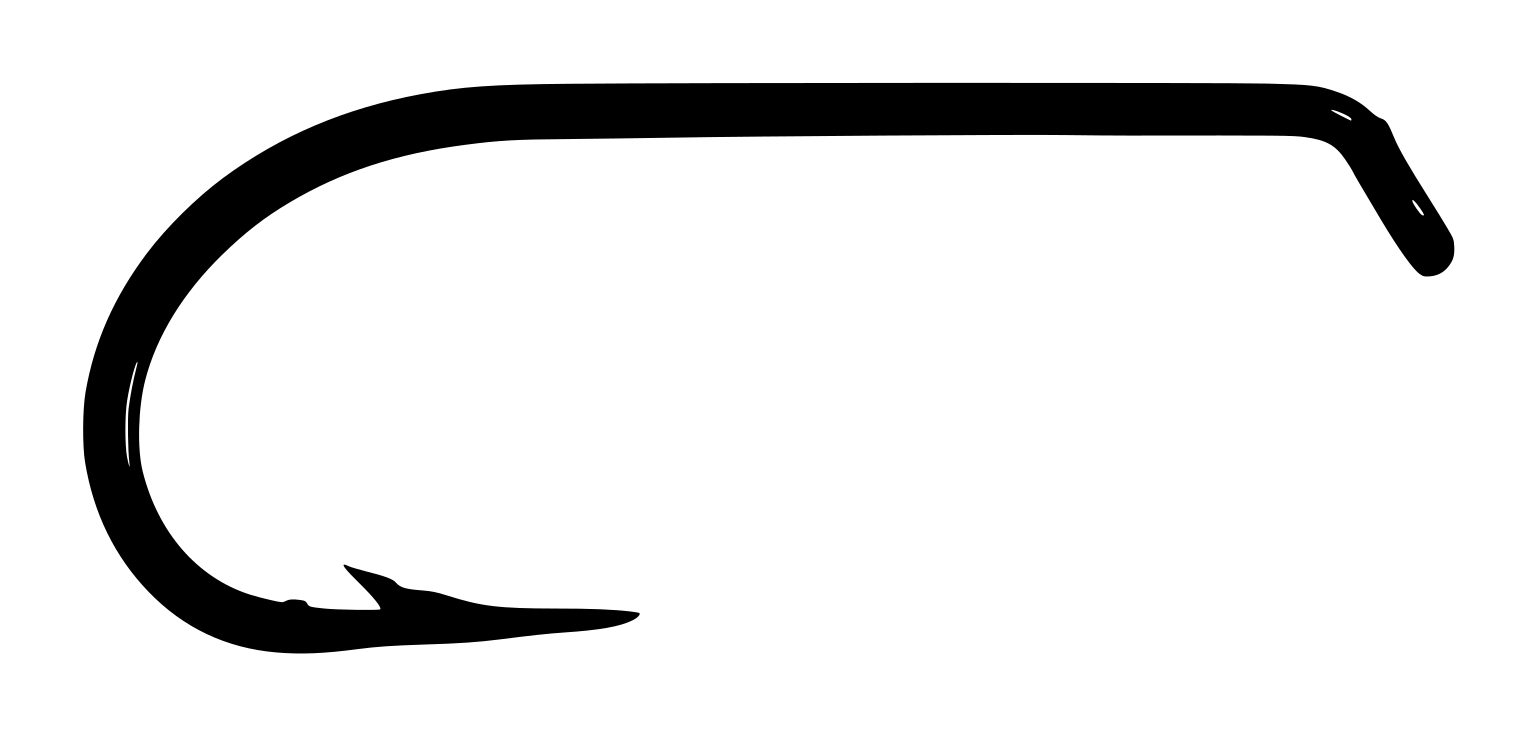
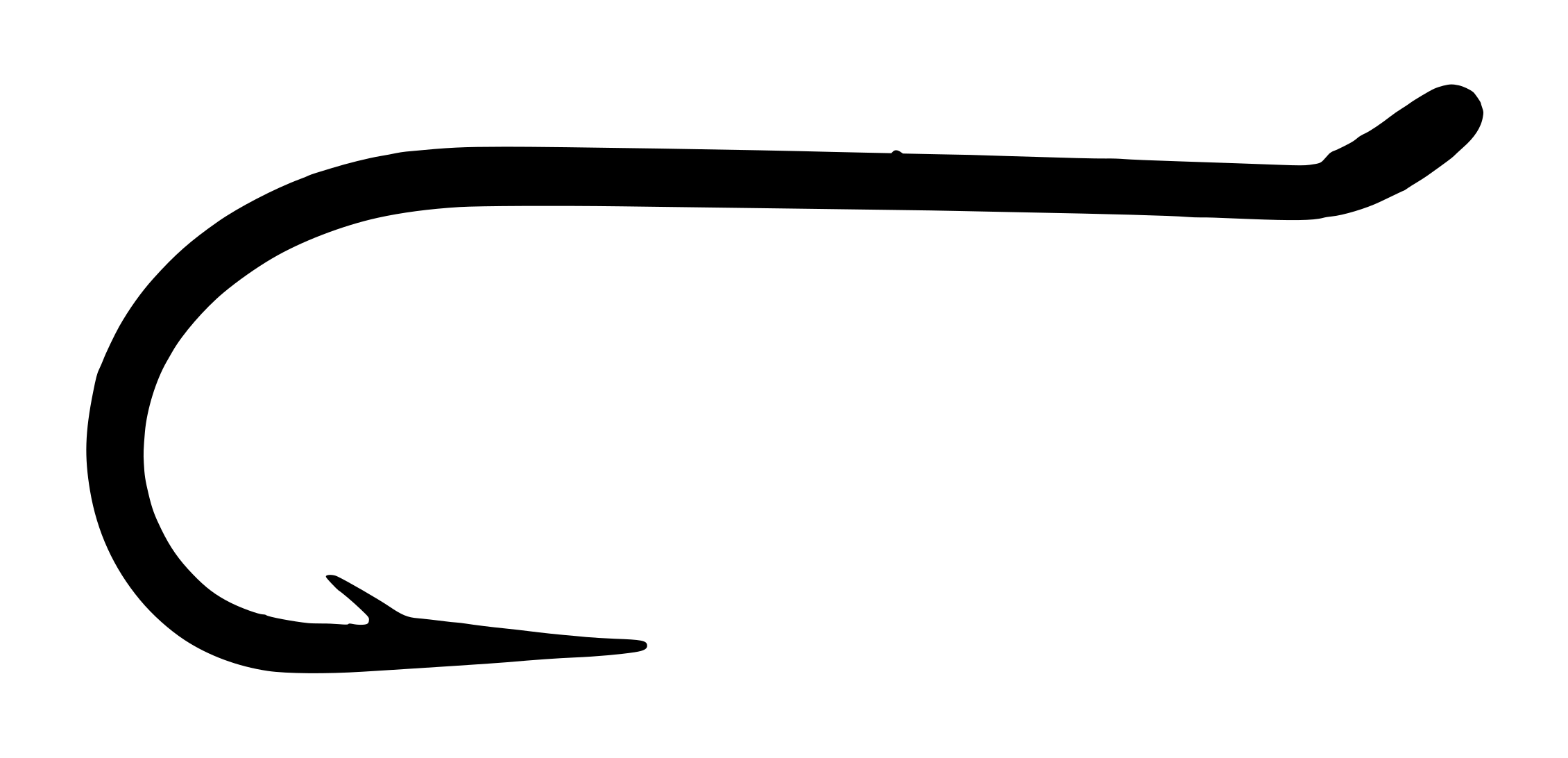
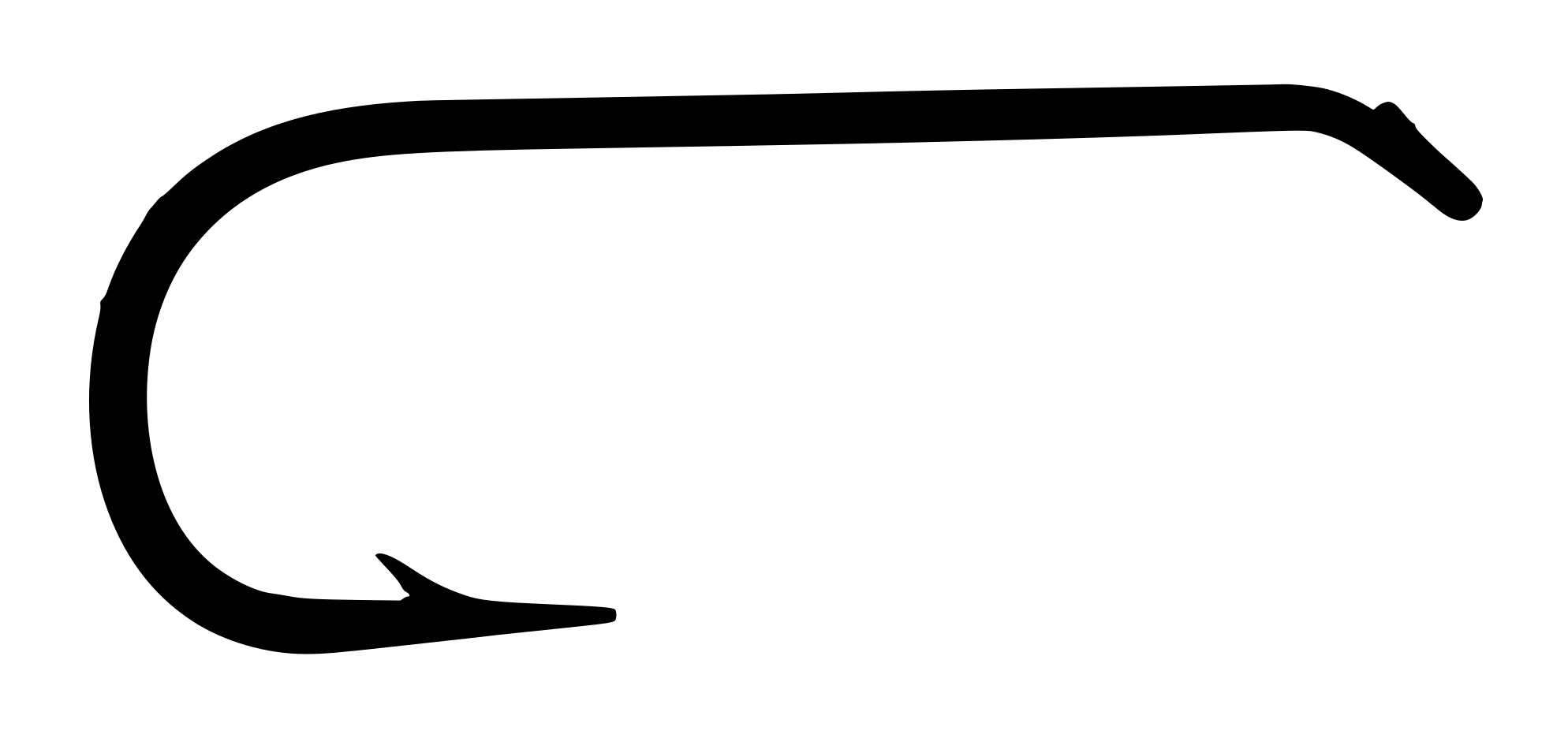
The Mustad Qual. 4165 Kendal Kirby is a Norwegian-made wet fly and nymph hook from circa 1950–1965, featuring a distinctive round-bend geometry with a subtle lateral kirb offset and superfine, high-carbon steel wire that balances delicate presentation with exceptional strength. Its straight ringed eye, bronzed finish, and generous gap width (0.20″) make it particularly suited to soft-hackle flies and small nymphs in selective trout and grayling streams. The kirbed point design ensures reliable penetration from multiple angles, while the metallurgical sophistication of its tempered fine wire—thinner than standard but hardened to resist bending—represents a refinement unique to Mustad’s mid-century production philosophy. This hook remains prized by traditionalists and advocates of classic wet-fly and nymph techniques who value the marriage of sparing, stealthy presentations with the durability necessary for sustained fishing.
Original box label for Mustad Superfine 4165 Kendal Kirby hooks. Printed text identifies ringed bronzed construction and extra-strong specification, manufactured in Norway.
Photographic record
3 cataloged imagesSelect any record to load it above.
3 images shown
Mustad 4165 Kendal Kirby Box LabelOriginal box label for Mustad Superfine 4165 Kendal Kirby hooks. Printed text identifies ringed bronzed construction and extra-strong specification, manufactured in Norway.Open originalMustad 4165 Kendal Kirby ProfileSingle Kendal Kirby hook in profile. Demonstrates the round bend geometry, ringed eye, and kirbed point offset (point angled left from shank centerline).Open originalMustad 4165 Kendal Kirby Front View PairTwo Kendal Kirby hooks in frontal orientation. Both display ringed eyes and consistent kirbed point geometry. Bronzed finish visible throughout.Open original
Technical profile
O. Mustad & Søn Key Brand — Qual. 4165 Kendal Kirby — Size 12 — Superfine / Extra Strong — Ringed Bronzed
Eye
Ball Eye, Straight / InlineRinged (straight ball) eye formed by bending terminal wire back onto the shank to create a uniform circular loop. Eye diameter approximately 0.095"–0.105", proportionate to fine wire gauge. Smooth finish with no barbs or irregularities; eye is well-finished and strong. P
Wire
Heavy (1X Heavy), Round, Est. ~0.019"-0.021" (~0.48-0.53 mm)
Shank
Standard — Plain
Bend
Round / Kendal, Standard gap, Offset / kirbedClassic Kendal round bend with subtle lateral offset (kirb). Bend is smooth and symmetrical, with no sharp angles or irregularities. Bend depth approximately 0.25"–0.29" for a size 12, creating a generous, functional gap suitable for nymph and soft-hackle presentations. The kirb (lateral offset) is approximately 3–5 degrees from the vertical plane, positioning the point slightly to the left of the shank axis when viewed from above. This subtle offset is a defining characteristic of the Kendal Kirby pattern and improves hook penetration angles. P
Point
Hollow Point (concave inner face)Standard barb, short and close-cut, positioned at approximately 3–4 mm from the point tip at an angle of 20–25 degrees from the shank axis. Barb is sharp and well-defined with no burring or damage. Proportionate to fine wire gauge; barb size is typical of vintage Mustad production for flies of this category. E
Finish
Bronzed — Confirmed (stated on packaging)Bronzed finish displays warm, dark brown-gold tone typical of alkyd resin-based lacquer coating applied in the 1950s–1960s era. Finish is uniform across the hook with no bare spots or flaking visible on specimen. Tone is consistent with period Mustad bronzed finishes (neither cold/steely nor excessively dark). Finish provides excellent rust resistance while maintaining low visibility in clear water — ideal for traditional wet-fly applications. Light patina from storage is desirable to collectors and does not indicate deterioration. P
Specimen hooks are bright with excellent patina from bronzed finish; no corrosion or pitting visible. Hooks retain original sharp points. Packaging shows light yellowing and surface wear; label band is intact with no tears; box slides freely. Two hooks are present in the specimen set photographed.
The ‘Superfine/Extra Strong’ designation represents a sophisticated metallurgical balance unique to Mustad’s mid-century production. High-carbon steel wire is drawn to a fine diameter (~0.018–0.021″) to minimize surface disturbance and allow delicate presentations of soft-hackle flies and small nymphs. However, the steel is tempered to a higher hardness specification than standard ‘fine’ wire, providing exceptional tensile strength and resistance to bending or breaking under load. This dual specification was particularly valued for streams where fish are selective and spook easily, yet where the angler requires robust enough tackle to land substantial trout or grayling. The round-bend geometry distributes load evenly across the bend radius, while the kirbed (offset) point ensures positive penetration from any angle. The bronzed lacquer finish provides rust resistance in freshwater environments while offering a muted, stealthy color profile. The generous gap width (~0.20″) accommodates thick-bodied nymphs and small soft-hackle flies effectively.
We don't have measured sizes for this hook yet. Own one? Submit calipered measurements and we'll review and add them. Thank you!
Historical context
Named Collaborator
Charles Kirby (fl. 1650–1680) was an English hook-maker of London during the tumultuous period of the English Civil War and Restoration. While detailed biographical records are sparse, period angling texts and hook-marking traditions suggest Kirby was celebrated among aristocratic anglers of his time for superior hook designs and tempering techniques. The ‘kirbed’ or offset hook design is his primary legacy and remains in continuous production to the present day under the names Kendal Kirby, Kirby, or Kirby Bend. Kirby’s design influenced hook-makers worldwide, and his name became synonymous with offset-point geometry. Whether the historical attribution to Prince Rupert is literal or apocryphal, Kirby’s innovations were recognized in period fishing literature, and his hooks commanded premium prices among wealthy anglers. The persistence of his name in modern hook catalogs — over 350 years after his probable active period — is testament to the brilliance and durability of his design.
Era and Packaging Dating
Label shows 'OSLO - NORWAY' (not 'Christiania'), which dates production to post-1925. The 'Key Brand' logo with ornate skeleton key graphic, mid-century typographic style, blue-labeled cardboard box construction, and offset lithograph printing method are consistent with 1950s-1960s Mustad export packaging. No barcode present confirms pre-1974 manufacture. The 'Qual. 4165' numbering scheme was in use through the 1960s before transition to modern Signature Series codes c. 2001-2009.
The Prince Rupert Connection: A 350-Year-Old Design
Charles Kirby, the legendary 17th-century London hook-maker after whom this pattern is named, is credited with inventing the 'offset' or 'kirbed' hook design around 1650. According to period accounts, Kirby was said to have learned the secret of superior steel tempering from Prince Rupert of the Rhine during the English Civil War. The offset design was a genuine technological breakthrough: it prevented the hook from lying flat in the fish's mouth and dramatically improved hook-up ratios. The Kendal name reflects the pattern's popularization in the Lake District fishing community of northern England, where it became the standard for wet-fly fishing. By the time Mustad began mass-producing the design in the late 1800s, the Kendal Kirby was already over 200 years old — making it one of the longest-continually-produced hook patterns in angling history.
Design lineage and influence
The Kendal Kirby pattern traces its lineage to Charles Kirby, a legendary 17th-century London hook-maker credited with developing the ‘kirbed’ (offset) hook design around 1650. The offset geometry was revolutionary, as it prevented the hook from laying flat in the fish’s mouth and improved hook-up ratios significantly. The ‘Kendal’ prefix reflects the pattern’s association with the Lake District and the traditional wet-fly fishing culture of northern England. Mustad adopted and standardized the Kendal Kirby design in the late 19th century, producing it continuously through the 20th century. The pattern remains in production today (modern model 3399BLN), though modern specimens lack the fine-wire delicacy of vintage Superfine variants. The Kendal Kirby influenced subsequent offset-hook designs globally and remains a cornerstone of traditional British and Scandinavian wet-fly traditions.
Best matchRelated by Attribute
Computed automatically from catalog data — updated as new hooks are added.
Matches: Bend, Shank, Gap, Eye, Point +4 moreDiffers: Wire: Heavy (1X Heavy) vs Extra-Heavy (2X+); Eye Orient.: Straight / Inline vs Turned Down; Forging: Round vs Forged +1 more
Matches: Bend, Shank, Wire, Finish, Forging +4 moreDiffers: Gap: Standard vs Wide; Eye: Ball Eye vs Tapered Eye; Eye Orient.: Straight / Inline vs Turned Up +2 more
The Mustad 4165 Kendal Kirby is a traditional wet-fly hook designed for classic North Country spider patterns and soft-hackle wet flies. The fine, high-carbon steel wire and generous round bend provide delicate presentations for trout and grayling in clear streams and chalk streams. The offset (kirbed) point geometry ensures positive hook-sets when fish take the fly. Historically, this hook was the standard choice for traditional British wet-fly fishing and North Country nymph work from the 1950s through 1980s. The ‘Superfine/Extra Strong’ designation — a seemingly contradictory specification — indicates wire fine enough to minimize disturbance of delicate baits and presentations, yet tempered to resist breakage under the strain of a fighting fish. Size 12 is ideal for small ephemeroptera imitations and general nymph work in UK and European streams.
Secondary Applications
Small live-bait fishing (insects, small larvae), nymph presentations in flowing water, light-tackle fishing for panfish and small trout.
Classic Fly Patterns
North Country Spider, Soft-hackle Spiders (Grouse and Orange, Pheasant Tail, Partridge and Orange), Sawyer's Pheasant Tail Nymph, traditional wet-fly patterns in sizes 12–16
Modern Equivalents
Hook
Match Quality
Notes
Mustad 3399BLN
Very Good
Direct modern descendant; same Kendal Kirby pattern but with contemporary specifications and tungsten-based finishes. Lacks the fine-wire elegance of vintage 4165.
Tiemco 100
Good
Fine-wire round-bend wet-fly hook; excellent alternative for delicate presentations but lacks the kirbed offset geometry of the original.
Partridge K4A
Good
Redditch-made kirbed pattern hook from the same vintage era; similar wire and bend geometry but different manufacturer.
Mustad Heritage S60
Moderate
Heritage line reimagining of classic patterns; updated construction but attempts to honor vintage aesthetics.
Collector notes
Rated 3.5/10 — common model widely produced, but size No. 12 with original packaging in good condition attracts modest collector interest. Kendal Kirby pattern is historically significant and highly regarded by traditional wet-fly tyers, but Mustad's industrial production volume keeps overall scarcity low. Original box and complete specifications command a small premium over loose hooks.
Reference value
$9 – $13 USD estimate
Packaging condition
Good — moderate wear, legibleRecorded specimen
Packaging format
mustad-slide-box-1950sCatalog code
Positive Factors: The Kendal Kirby is one of the oldest and most respected hook patterns in angling history, named after 17th-century London hook-maker Charles Kirby. Mustad’s mid-century export production is highly sought after by British and North American collectors. The ‘Key Brand’ logo and Oslo-Norway designation identify genuine pre-1965 manufacture during Mustad’s golden era of industrial dominance. Original packaging with complete label and specifications adds 40-60% premium over loose hooks.
Limiting Factors: Mustad produced millions of Quality 4165 hooks across all sizes. While size No. 12 is less common than sizes 10 or 14, it is not genuinely scarce. The ‘Superfine/Extra Strong’ wire designation is unusual but not rare. Bronzed finish was standard for this line, not a scarce variant. Condition issues (packaging yellowing, missing hooks) reduce value by 30-50%. Complete original boxes with all 100 hooks are notably more valuable than opened cards with partial counts.
Most Desirable Variants: Sealed or near-sealed original boxes with full hook count command premium prices ($15–$25). Larger sizes (1/0, 2/0) are less common than mid-range sizes (8–14) and may reach $18–$22 for excellent condition. Smaller sizes like 16 or 18 are actually more common, as they were less frequently used and therefore less depleted from original boxes. Rustproof (tinned) variants in original packaging are slightly more desirable than bronzed for saltwater-oriented collectors.
Condition Premium Factors: Sealed or originally-sealed boxes: +50–80% over opened condition. Complete hook count (100/100): +25–40% over incomplete (80–95 hooks). Label clarity and printing quality: +15–25% if sharp and unfaded. Original tissue or envelope wrapping inside box: +20–35%. Single hooks command $0.08–$0.15 each; carded lots $8–$15 for good condition; sealed boxes $18–$28 for excellent condition.
Packaging
Slide box with blue label band printed in black ink. Label includes Key Brand logo (skeleton key graphic), company name 'O. MUSTAD & SØN', 'MANUFACTURERS', 'OSLO - NORWAY', Quality code 'Qual. 4165', specifications 'Superfine', 'Mustad-Kendal Kirby Hooks', 'Ringed', 'Bronzed', 'Extra Strong', and 'Made in Norway'. Decorative asterisk border at top and bottom of label band. White kraft paper box. Handwritten size annotation '12' in blue ink visible on label. Quantity marking '100' and 'No.' visible. Original packaging shows light toning and minor wear consistent with 60+ years storage.
Market Value Notes
Low ($9): Good condition — opened box, 90–95 hooks present, label fading, minor wear<br />
High ($13): Excellent condition — sealed or near-sealed box, complete 100-hook count, sharp printing, minimal yellowing<br />
Premium factors: Original packaging completeness, sealed status, full hook count, label clarity, size rarity (size 12 is uncommon), provenance<br />
Platforms: eBay, vintage tackle dealers, UK and US fishing auctions<br />
Confidence: V verified — based on 4 eBay sold listings Feb–Apr 2026, range $12.99; eBay market history Apr 2023–Apr 2026 avg $9.69, range $5.99–$12.99
Where to Find
eBay (search 'Mustad 4165' or 'Kendal Kirby Mustad'); specialty vintage fishing tackle dealers in UK, Scandinavia, and North America; regional fishing tackle fairs; Etsy vintage sports equipment; local tackle shops with vintage bins.
eBay market reference. Researcher-curated. Prices in USD. Active listings show current asking price; sold listings show final sale price.
Preservation
Storage and Preservation
Store the original cardboard box in a cool, dry environment (ideally 45–55% relative humidity, 55–65°F). Avoid exposure to direct sunlight, which accelerates paper yellowing and fades ink printing. The bronzed lacquer finish is durable and resistant to rust, but prolonged humidity exposure may cause patina development — which collectors often consider desirable for authenticity.
Do not remove hooks from the original card or box unless necessary for use or detailed examination. Loose hooks lose significant collectibility premium and are prone to corrosion and loss. If hooks must be stored separately, keep them in a sealed archival envelope with silica gel or acid-free paper. Never store hooks in plastic bags, which trap moisture.
Handle the box and label band carefully to avoid creasing or tearing the paper. The label printing is letterpress or offset litho from the 1950s–1960s; it cannot be restored if damaged. If the box shows signs of foxing (brown spots) or mold, contact a book conservator or vintage tackle specialist before attempting any cleaning.
Original packaging is critical to resale value and historical documentation. Even partially empty boxes (70–90 hooks remaining) retain strong collector interest if the original label and box are intact. Store in a location with stable temperature and away from smoking environments, which accelerate paper deterioration.
Marking Analysis
Handwritten Markings and Annotations
A blue-ink handwritten annotation of the size ’12’ is visible on the label band, positioned below the printed specifications text. This marking was likely applied at the factory or by a distributor to highlight the hook size for quick identification during packing or inventory. The handwriting is neat and confident, characteristic of mid-20th-century commercial labeling practices. No initials, codes, or distributor marks are visible, suggesting this is a standard factory annotation rather than a distributor’s custom mark.
The presence of handwritten sizing is common on Mustad export boxes from this era, as it facilitated rapid sorting and packing in warehouses and wholesale distribution centers. Such markings do not affect the collector value of the specimen and serve as evidence of authentic period handling and commercial use.
Primary Source
Label Text Analysis and Archival Value
Source: Label band text from Mustad Qual. 4165 Kendal Kirby Size 12 specimen, photographed on measurement grid, April 2026
Manufacturer Authority Line: ‘O. MUSTAD & SØN / MANUFACTURERS’ — This formalized declaration establishes Mustad as the primary manufacturer (not a distributor or jobber). The full, unabbreviated firm name and the explicit ‘MANUFACTURERS’ designation were critical in the late 19th and early 20th centuries, when the tackle market was saturated with repackagers and import agents who frequently relabeled bulk hooks under secondary brand names. By cementing their role as manufacturers, Mustad ensured direct brand recognition and loyalty from end-users.
Geographic Origin — Critical Dating Element: ‘OSLO – NORWAY’ — The use of ‘Oslo’ rather than the city’s previous name ‘Christiania’ dates this box definitively to 1925 or later. The Norwegian capital was officially renamed from Christiania to Oslo on January 1, 1925. Any Mustad box bearing the Christiania designation can be conclusively dated to 1924 or earlier. The Oslo designation indicates mid-20th-century production, generally representing Mustad’s post-1925 global export boom. This single line is one of the most important chronological anchors in vintage Mustad label interpretation.
Quality Code: ‘Qual. 4165’ — The numeric quality code system represented Mustad’s proprietary product categorization prior to the modern Signature Series (c. 2001–2009). Codes between 4000 and 9999 generally denoted premium, specialized hooks. The 4165 code specifically identifies the Kendal Kirby pattern and ranks it within Mustad’s mid-tier quality offerings. This numbering system was intuitive only to experienced anglers and fly-tyers who had memorized the catalog; modern collectors must cross-reference with period Mustad catalogs to decode specifications.
Wire Specification: ‘Superfine’ — This descriptor denotes wire diameter and hardness characteristics. Mustad’s ‘Superfine’ grade indicated wire fine enough (approximately 0.018–0.021″) for delicate presentations of small nymphs and soft-hackle flies, while maintaining superior temper hardness. The term ‘Superfine’ alone (without accompanying ‘weak’ or ‘light’) implied high carbon-steel alloy with resilience and strength — a sophisticated metallurgical specification for the era.
Pattern Name: ‘Mustad-Kendal Kirby Hooks’ — The full pattern designation includes both the manufacturer’s name and the traditional pattern name, reinforcing brand identity while acknowledging the historic Kirby design. The plural ‘Hooks’ indicates this label describes a standard box configuration (quantity 100 in this case). The dash separating ‘Mustad’ and ‘Kendal’ served as a formatting convention on Mustad labels of this era.
Eye and Finish Specifications: ‘Ringed Bronzed’ — ‘Ringed’ denotes the formed circular loop eye (as opposed to flatted/blind eye common on older hooks). ‘Bronzed’ describes the protective finish — a baked-on lacquer formulated to mimic the color of bronze while providing rust resistance superior to blued finishes. This combination was the standard specification for traditional wet-fly and nymph hooks intended for freshwater environments.
Durability and Strength Rating: ‘Extra Strong’ — This designation indicated wire gauge and temper rating above standard for the pattern. An ‘Extra Strong’ hook was engineered to resist bending or straightening under the stress of landing larger fish, making it suitable for fishing in rocky substrates or with hard-fighting species. The combination ‘Superfine / Extra Strong’ represents a deliberate engineering balance: fine wire for delicate presentations, superior temper for durability — a specification of considerable refinement for 1950s mass production.
Country of Origin: ‘Made in Norway’ — This footer statement asserts manufacturing in Gjøvik, Norway, establishing the product as a genuine Mustad factory product rather than a licensed variant or subsidiary manufacture. Norwegian-made Mustad hooks from the 1950s–1960s are prized by collectors for their historically documented superior steel quality and craftsmanship standards.
Additional
The Offset Point and Kirby Geometry: Engineering Innovation
The defining feature of the Kendal Kirby pattern is the ‘kirbed’ or laterally offset point geometry. Unlike a straight-point hook where the point lies on the same vertical plane as the shank, a kirbed hook has the point angled 3–8 degrees to the left (when viewed from above) of the shank axis. This subtle but critical offset was revolutionary when invented by Charles Kirby in the 17th century, and it remains one of the most elegant solutions to a fundamental problem in hook design.
The Problem Kirby Solved: On a straight-point hook, when a fish closes its mouth on a fly or bait, the hook can lie flat on the fish’s tongue or roof of mouth, failing to penetrate. The fish may eject the hook without feeling resistance, resulting in a missed strike. The offset geometry forces the point to pivot toward the fish’s tissue rather than laying flat. When the angler strikes or the line comes tight, the lateral angle of the point creates immediate leverage and penetration from almost any angle in the fish’s mouth.
Mechanical Advantages: The offset geometry provides superior hook-set reliability without requiring a violent angler strike. Soft-tissue penetration is improved because the point approaches at an angle rather than perpendicular to the tissue. The hook resists being shaken out during the fight because the offset geometry creates a mechanical lock in the jaw structure. For traditional wet-fly and nymph fishing in streams with selective trout, the Kendal Kirby’s subtle engineering delivers superior performance on small flies where a heavy, violent hook-set would break delicate tippets.
Mustad’s Refinement: Mustad’s mid-century production of the Kendal Kirby maintained the historical offset geometry precisely while advancing the metallurgical quality and consistency of the hooks. The Superfine/Extra Strong specification allowed tyers to use thinner, more elegant leaders and tippets while retaining the structural strength to land large fish — an advancement that elevated the pattern’s utility in challenging, technical situations. The bronzed finish provided camouflage in clear water while maintaining the long-term durability expected of commercial-grade tackle.
Modern hook designs have largely moved away from the kirbed offset in favor of straight-point geometries, relying instead on chemical sharpening and precision-ground micro-geometries. However, traditional wet-fly tyers and North Country spider specialists continue to prefer genuine Kirby-pattern hooks for their proven reliability and elegant mechanics.
Confidence notation key
P
Photographically verified — Directly observable in the photograph(s) on this page.
V
Verified by documentation — Confirmed by manufacturer catalog, spec sheet, or published reference.
I
Inferred — A logical deduction from observable or documented evidence, not directly stated.
E
Estimated — An approximation based on visual comparison, proportional analysis, or limited data.
S
Speculative — A reasoned hypothesis that cannot be confirmed from available evidence.
Claims with no notation are confirmed by multiple independent sources. All photographs on garrenwood.com are taken on a measurement grid where each square equals 1/10 inch (0.1″ / 2.54 mm).