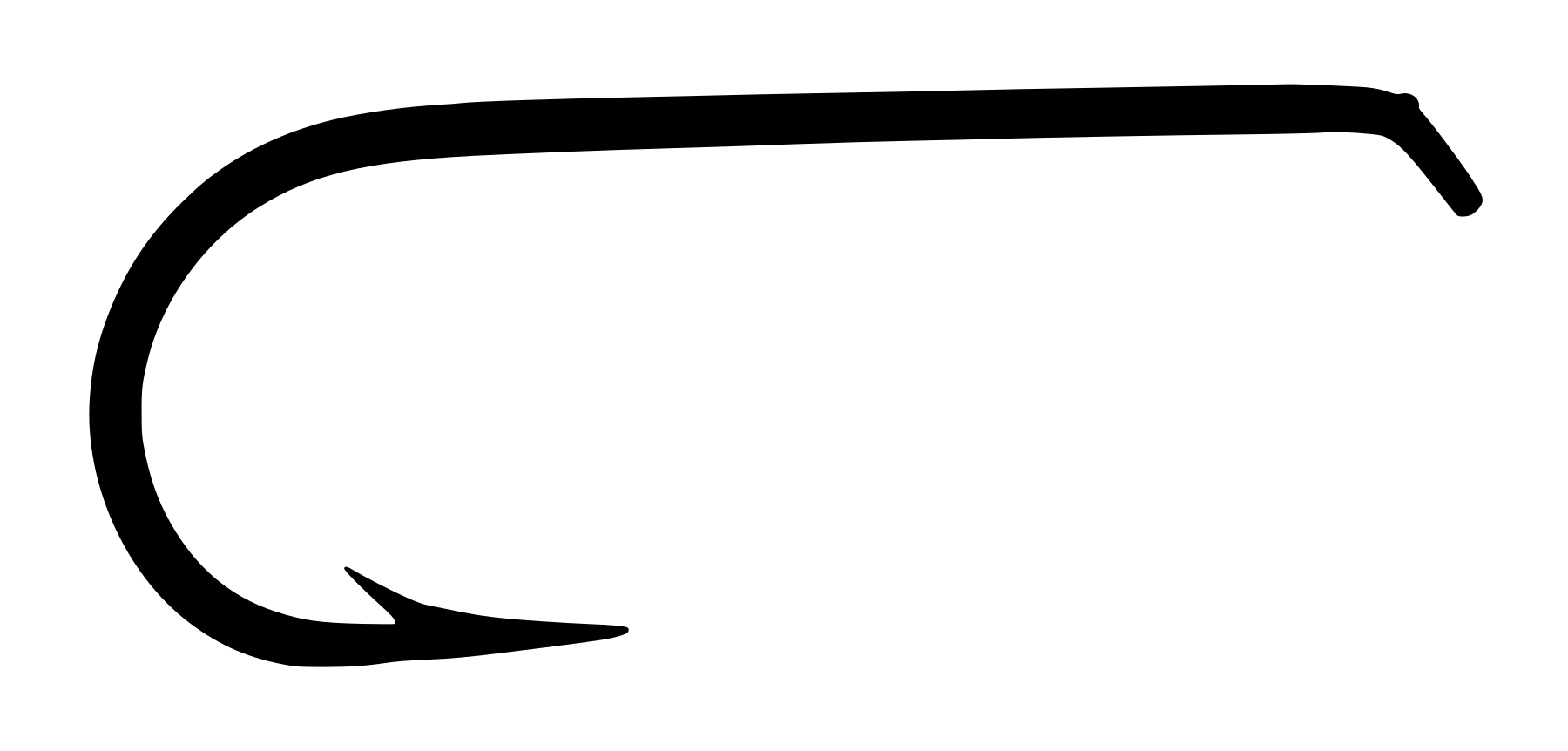
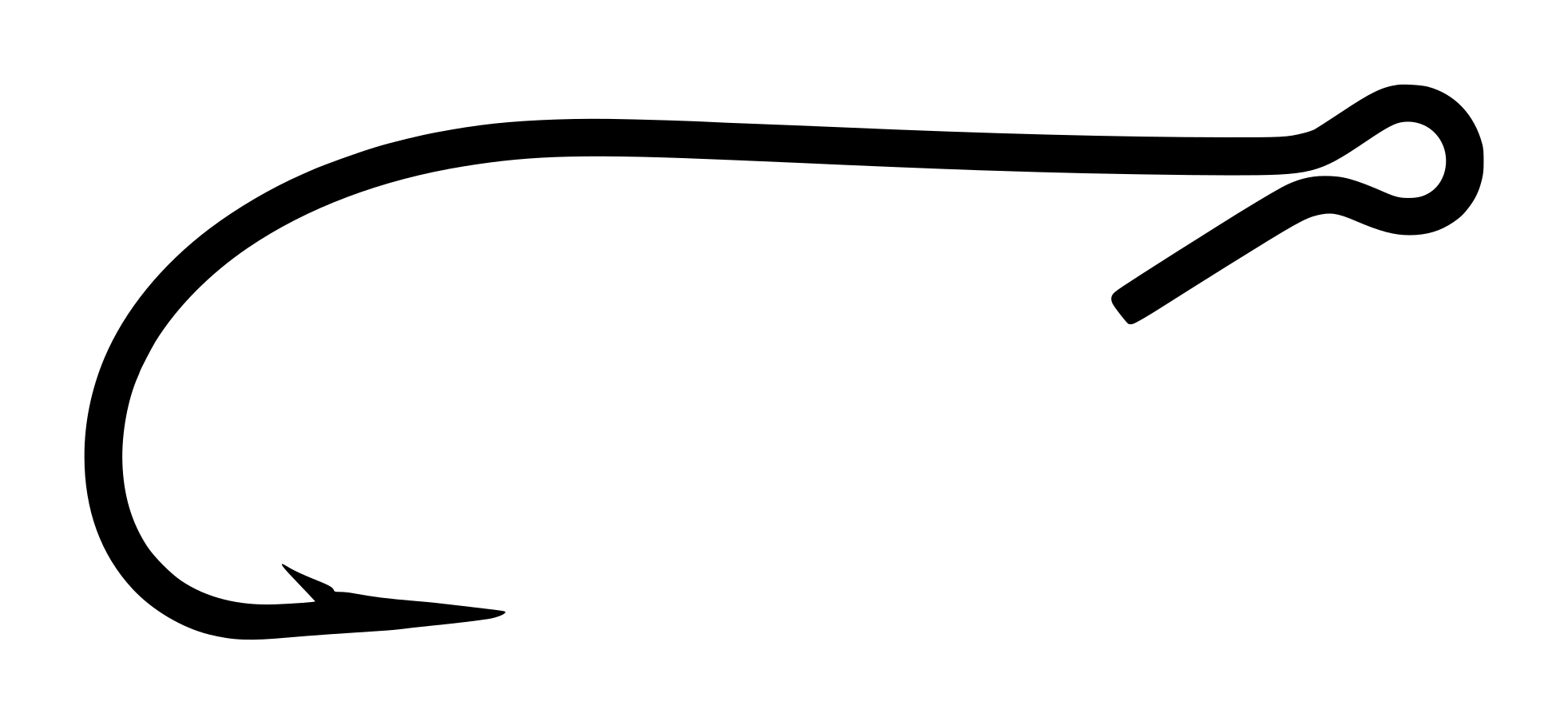
O. Mustad & Søn, Oslo-Norvège, model 57552, Hameçons Ronds (Round Kendal wet fly hook), size No. 1, bronzed finish, forged wire. Tapered turned-down eye, standard wire gauge, hollow point. Approximately 1.0″ overall length, 0.36″ gap. Packaged in original manufacturer box labeled in French and Norwegian with quantity 100.
The round kendal bend and tapered eye design suited light wet flies and early nymph patterns in the mid-twentieth century. The packaging indicates distribution in Continental European markets. No barcode, French labeling, and offset lithography typography place production in the 1930s–1950s era, consistent with Mustad’s interwar expansion into export markets.
The specimen retains original manufacturer box in very good condition with complete hook count—a significant asset for collectors of Continental-labeled Mustad production. The bronzed finish shows natural patina development characteristic of its age. This represents mid-century Mustad quality-grade production distributed through European wholesalers.
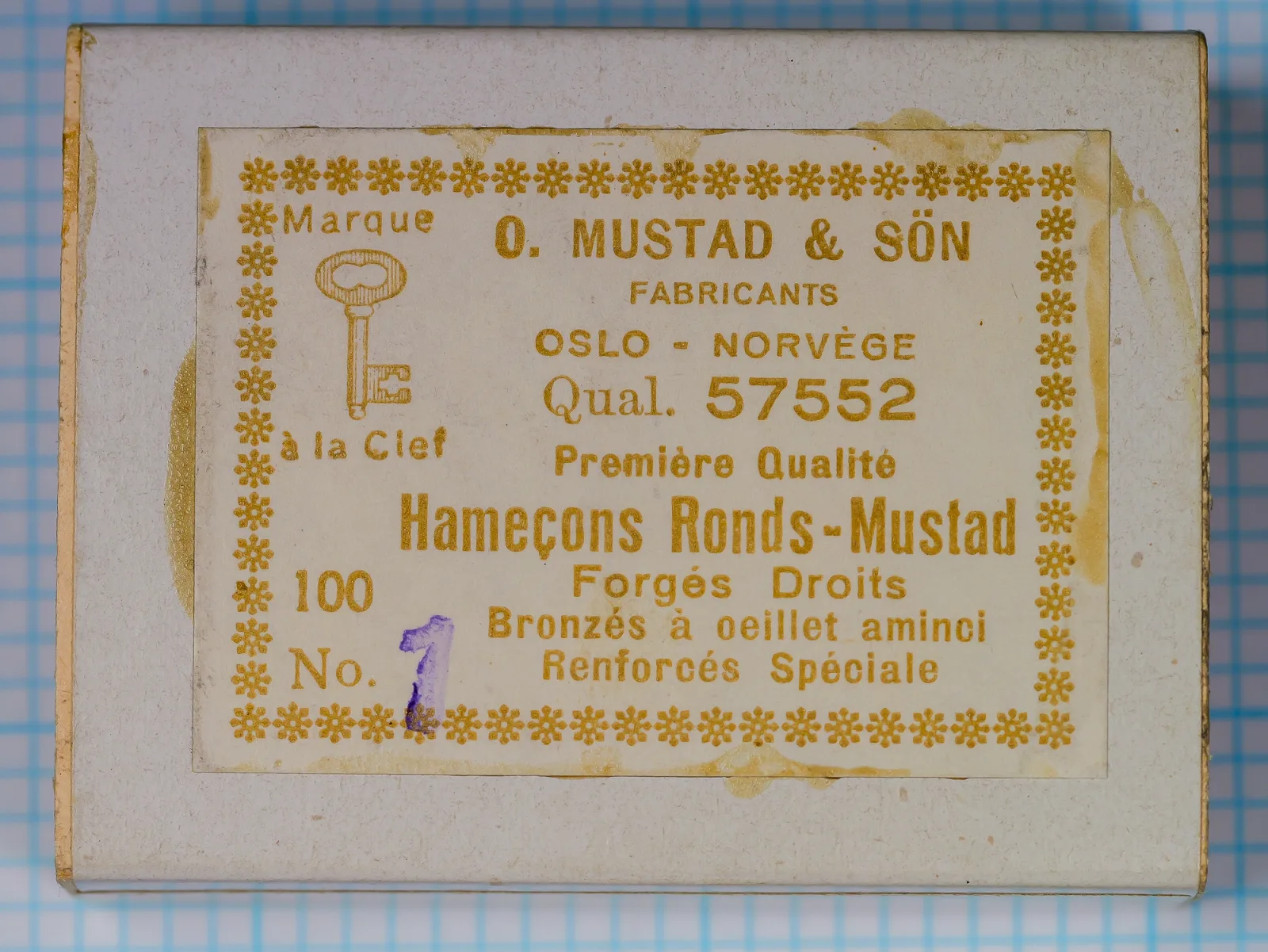
Original manufacturer box label for the Mustad 57552 Hameçons Ronds, printed in French and Norwegian, showing quality code, hook specifications, and snowflake border decoration characteristic of mid-twentieth-century Continental European packaging.
Photographic record
3 cataloged imagesSelect any record to load it above.
3 images shown
Mustad 57552 Box Label FrontOriginal manufacturer box label for the Mustad 57552 Hameçons Ronds, printed in French and Norwegian, showing quality code, hook specifications, and snowflake border decoration characteristic of mid-twentieth-century Continental European packaging.Open originalMustad 57552 Size No. 1 Side ProfileSide profile of the Mustad 57552 wet fly hook, size No. 1, showing the round kendal bend shape, hollow-point geometry, and bronzed finish. Photographed on measurement grid for scale reference.Open originalMustad 57552 Size No. 1 Overhead ViewOverhead view of the Mustad 57552 hook showing the turned-down tapered eye, the straight unkinked shank, and the round kendal bend as viewed from above. The hook casts a shadow on the measurement grid, providing scale reference.Open original
Technical profile
Turned Down Tapered Eye | Round / Kendal | Standard | Standard Wire | Hollow Point | Bronzed
Eye
Tapered Eye, Turned DownTapered eye is cleanly formed, narrowing progressively into the shank. No visible bulk or irregularity in the taper P.
Wire
Standard, Forged
Shank
Standard — Plain
Bend
Round / Kendal, Wide gapRound kendal bend is well-developed with smooth, even curves. The bend is neither overly deep nor shallow for the size category; proportions consistent with a standard wet fly pattern P.
Point
Hollow Point (concave inner face)Barb is short and is positioned immediately below the bend line, characteristic of Mustad's standard mid-century construction P.
Finish
Bronzed — Confirmed (stated on packaging)Bronzed finish is warm brown tone with visible steel texture beneath. No patent finish; characteristic patina development visible on the specimen P.
Specimen shows light general patina consistent with age; no corrosion pitting or structural defects P. Original manufacturer box retains printed label with some foxing and light soiling; lid is intact and hinged. Overall condition is very good to excellent; all hooks present in the box.
The hollow point is a Mustad standard for light-duty wet flies and nymphs, employing a concave inner face that concentrates force along a knife-like edge during the hook set. The point geometry is designed to penetrate cleanly without requiring heavy pressure. The forged wire construction—evident from the subtle oval cross-section and the label text “Forgés Droits”—adds lateral strength while maintaining a fine diameter, typical of Mustad’s mid-century quality-grade production.
The tapered eye reduces bulk at the junction with the shank, improving proportions for small flies and reducing the eye-to-shank diameter step that can impede thread wrap. The round kendal bend is a gentle, symmetrical curve suitable for holding dressings without creating stress points. The 2.3:1 shank-to-gap ratio is typical of wet fly proportions, providing sufficient dressing surface without excessive shank length.
This pattern was made in sizes No. 2 – No. 10 (I). We have measurement for size 1. Know the others? Submit calipered measurements and we'll review and add them. Thank you!
Historical context
mustad
O. Mustad & Søn was founded in Oslo, Norway, in the 1870s as an industrial hook manufacturer. The company expanded rapidly through the early twentieth century, establishing itself as one of the world’s largest producers of fishing hooks. By the 1920s–1930s, Mustad operated a major factory in Gjøvik and distributed hooks internationally through appointed agents and wholesalers.
Mustad’s export strategy included manufacturing packaging in multiple languages to serve Continental European, British, and American markets. The French-language label on this box reflects the company’s direct sales into French Switzerland, Belgium, and France. Mustad maintained strict quality control through numbered quality codes (such as 57552) printed on every box, enabling traceability and quality verification. The company’s mid-century strength derived from industrial precision, consistent materials sourcing, and a reputation for reliable, economically produced hooks.
Series History
The Hameçons Ronds (Round hooks) series represents Mustad’s standard light wet fly and nymph hook offering for the European market. The series designation “Ronds” (rounds) refers to the round kendal bend family, one of the most durable and widely used bend shapes in fly fishing. Mustad offered round kendal hooks in multiple wire gauges and finishes across size ranges typically from No. 2 to No. 10 for wet flies, with larger sizes available for salmon work.
The model 57552 nomenclature indicates this is a quality-grade example with bronzed finish (øillet—eyed—and bronzé à œillet aminc[i] on the label indicates bronzed eyed construction). The label text “Forgés Droits” (straight forged) refers to the forged wire construction, and “Renforcés Spéciale” (specially reinforced) suggests enhanced temper or wire selection. This series remained in continuous production through the 1960s, though post-1950s boxes typically incorporated English-language text and modernized typography reflecting broader market consolidation.
Era and Packaging Dating
No barcode present (pre-1974 indicator). French-language packaging indicates Continental European distribution. Printed label uses gold/yellow offset lithography on cream stock consistent with interwar and immediate postwar Mustad production. Logo style (à la Clef key mark, Mustad & Søn formal designation) and language choices typical of 1930s–1950s Norwegian export marketing. Post-1955 Mustad packaging typically showed more modernized typography and English alongside French. No patent date or technical claims on label. Box construction and hinge style consistent with solid cardboard boxes produced through the 1950s.
Continental Packaging and Market Segmentation
Mustad's use of French-language labels on this box reflects a deliberate market segmentation strategy in the 1930s–1950s. While Mustad's English-language "Superior" brand and numbered quality codes (like 57552) were widely recognized, the company customized packaging language to reach specific regional wholesalers and retailers. French labels appeared on boxes destined for French Switzerland, French-speaking Belgium, and France—markets where English text alone might have hindered sales. The snowflake border decorating the label is characteristic of Continental European packaging aesthetics of the interwar period, suggesting this box was designed specifically for Alpine and Benelux distribution. This multilingual strategy—combining Norwegian company identity, French market language, and numbered quality codes—documents Mustad's sophisticated approach to global manufacturing and the often-overlooked complexity of early twentieth-century international fishing tackle commerce. Collectors searching for Mustad boxes labeled in English alone will easily overlook Continental variants, potentially undervaluing examples like this one that represent a distinct and historically revealing subset of the company's output.
Design lineage and influence
The round kendal bend derives from English Redditch tradition, where it was standardized as one of the fundamental fly hook bends in the nineteenth century. Mustad adopted and refined the round kendal as a core offering in its international product line by the early 1900s. The round kendal competes with the sproat (rounder bottom), limerick (more angular), and aberdeen (wider gap) bends as wet fly options. Mustad’s quality-grade production of the round kendal continued largely unchanged through the 1960s, making this 57552 representative of a stable, long-lived design rather than a transitional variant.
The tapered eye design emerged in the early twentieth century as tyers moved away from blind-eye construction for wet flies. Mustad’s interpretation appears across multiple European quality-grade series and was not a proprietary innovation. The combination of round kendal bend and tapered eye became the standard light-duty wet fly platform across most European manufacturers by the 1930s, and this series exemplifies that convergence.
Best matchRelated by Attribute
Computed automatically from catalog data — updated as new hooks are added.
Matches: Bend, Shank, Wire, Point, Finish +3 moreDiffers: Gap: Wide vs Standard; Eye: Tapered Eye vs Looped Eye; Eye Orient.: Turned Down vs Turned Up +1 more
Matches: Bend, Shank, Eye, Eye Orient., Finish +3 moreDiffers: Wire: Standard vs Fine (1X Fine); Gap: Wide vs Standard; Point: Hollow Point vs Standard / Spear +1 more
Intended as a light to medium wet fly and nymph hook. The round kendal bend and relatively forgiving gap suit traditional dressed wets and early nymph patterns. French packaging indicates availability in Continental markets, suggesting use across European trout streams and rivers.
Modern Equivalents
Hook
Match Quality
Notes
Mustad 3906
Very Good
Modern Mustad round kendal wet fly hook, similar bend and eye type; lacks bronzed finish (typically nickel-plated) and forged wire. Closest direct equivalent in current Mustad catalog.
Tiemco TMC 2312
Good
Contemporary Japanese round kendal pattern with tapered eye; similar proportions and application, though finer wire and different finish reflect modern production standards.
Partridge L1A
Good
Classic English round kendal wet fly hook with tapered eye; historically contemporary with the Mustad 57552 and functionally equivalent, though British origin and different finish.
Collector notes
Rated 4.5/10. Uncommon in complete original manufacturer box form, but not rare. Mustad's industrial production volumes mean loose examples are common; boxed examples with complete counts are noticeably scarcer. The Continental French labeling appeals to European collectors and those studying regional distribution history, adding modest demand. Condition of the original box and complete hook count are the primary value drivers.
Reference value
$12 – $35 USD estimate
Packaging condition
Very Good — light wear, fully legibleRecorded specimen
Packaging format
GW-MUS-BOX-57552Catalog code
Positive Factors: Original manufacturer box is a significant asset—box-packaged Mustad hooks command 2–4× the value of loose hook equivalents. Complete hook count (100) is essential to value. The French-language label appeals to European collectors and historians of international tackle distribution. Bronzed finish and forged wire construction indicate quality-grade production. Mid-twentieth-century era (c. 1935–1955) and absence of barcode place it firmly in the vintage bracket collectors prefer. The packaging label is clearly legible with all technical data visible, making it useful for research and reference.
Limiting Factors: The round kendal bend and general wet fly application are common across multiple manufacturers, reducing exclusivity. Size No. 1 is a standard size in the range, not an anomaly or rare size variant. Mustad’s mass production means most size/finish combinations survive in reasonable quantities. The specific model 57552 is not a named designer hook or historically famous pattern associate—it is utilitarian production. Unless the size is uncommon (No. 16 or smaller, or 2/0 and larger), individual size desirability is moderate.
Most Desirable Variants: Complete original boxes in sizes No. 14, No. 16, or No. 18 (smaller, less commonly preserved). Complete boxes in unusual sizes like No. 2 or No. 10 may carry slightly higher premiums. Boxes with pristine labels (minimal foxing, clear printing) command top of the range. Any example with original tissue paper or envelope wrapping inside the box significantly increases value.
Packaging
Rigid cardboard box with hinged lid. Printed label in French and Norwegian in gold/yellow ink on cream stock. Label reads: Marque à la Clef | O. Mustad & Søn, Fabricants, Oslo—Norvège, Qual. 57552, Première Qualité, Hameçons Ronds-Mustad, Forgés Droits, Bronzés à œillet aminc[i], Renforcés Spéciale, 100, No. 1. Borders decorated with repeating snowflake motifs. Label shows light foxing and discoloration consistent with age. No barcode present.
Market Value Notes
Low ($12): Good condition — box opened, all hooks present, minor packaging wear, label legible.<br />
High ($35): Very Good to Excellent condition — box sealed or near-sealed, all 100 hooks intact, label clean with minimal foxing.<br />
Premium factors: Complete original box (2–3× loose equivalents); pristine label; presence of original internal tissue or wrapper; larger or smaller sizes outside No. 2–No. 10 range; strong European provenance or collection history.<br />
Platforms: eBay UK and European eBay regions; specialized vintage tackle dealers in France, Switzerland, Belgium; occasional tackle auctions and fairs.<br />
Confidence: E estimated — limited comparable sales data for this specific model in boxed form. Valuation assumes standard size (No. 2 through No. 10) and temperate box condition. Smaller sizes (No. 16+) or unusually large sizes (2/0+) may exceed high range.
Where to Find
eBay (UK and European regions, search "Mustad 57552" or "Hameçons Ronds Mustad"). Vintage tackle dealers in France, Belgium, Switzerland. European tackle fairs and auctions, particularly in the Alpine regions. Specialist online forums for Continental European vintage fishing tackle.
Collector's Identification Tips
Confirm quality code 57552 is printed on the label; later reproductions or salvaged boxes may omit the code. French-only or bilingual French-Norwegian labeling is characteristic of pre-1960s Continental European distribution. Absence of barcode or postal code format is consistent with pre-1974 manufacture. Inspect the hinge mechanism on the box lid—cardboard hinges were standard through the 1950s; plastic hinges indicate later construction. Count the hooks: 100 is the documented quantity; incomplete boxes show significant value loss. Examine the finish color temperature: true bronzed will show warm brown tone with visible steel grain, not cool grey-silver (which would indicate later nickel-plated finish).
Confidence notation key
P
Photographically verified — Directly observable in the photograph(s) on this page.
V
Verified by documentation — Confirmed by manufacturer catalog, spec sheet, or published reference.
I
Inferred — A logical deduction from observable or documented evidence, not directly stated.
E
Estimated — An approximation based on visual comparison, proportional analysis, or limited data.
S
Speculative — A reasoned hypothesis that cannot be confirmed from available evidence.
Claims with no notation are confirmed by multiple independent sources. All photographs on garrenwood.com are taken on a measurement grid where each square equals 1/10 inch (0.1″ / 2.54 mm).