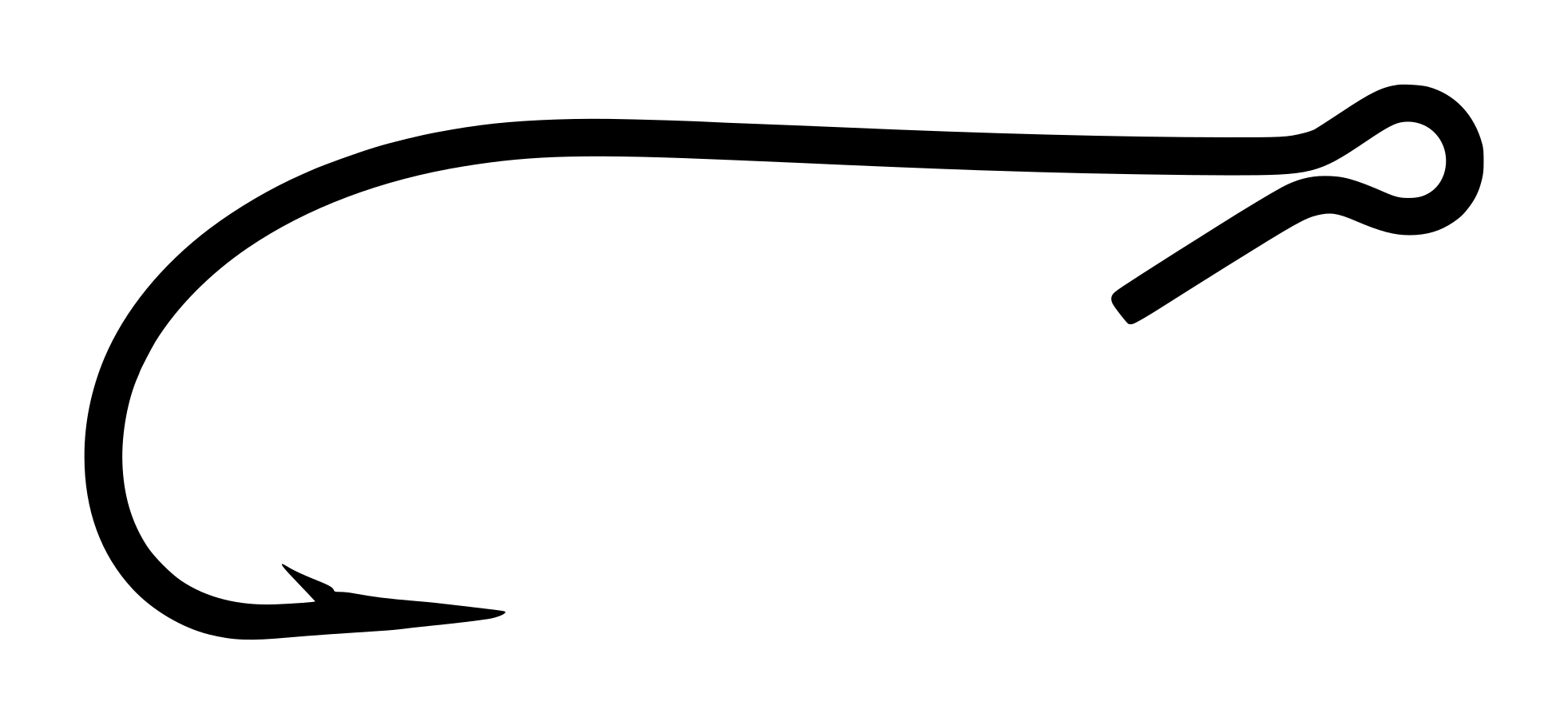
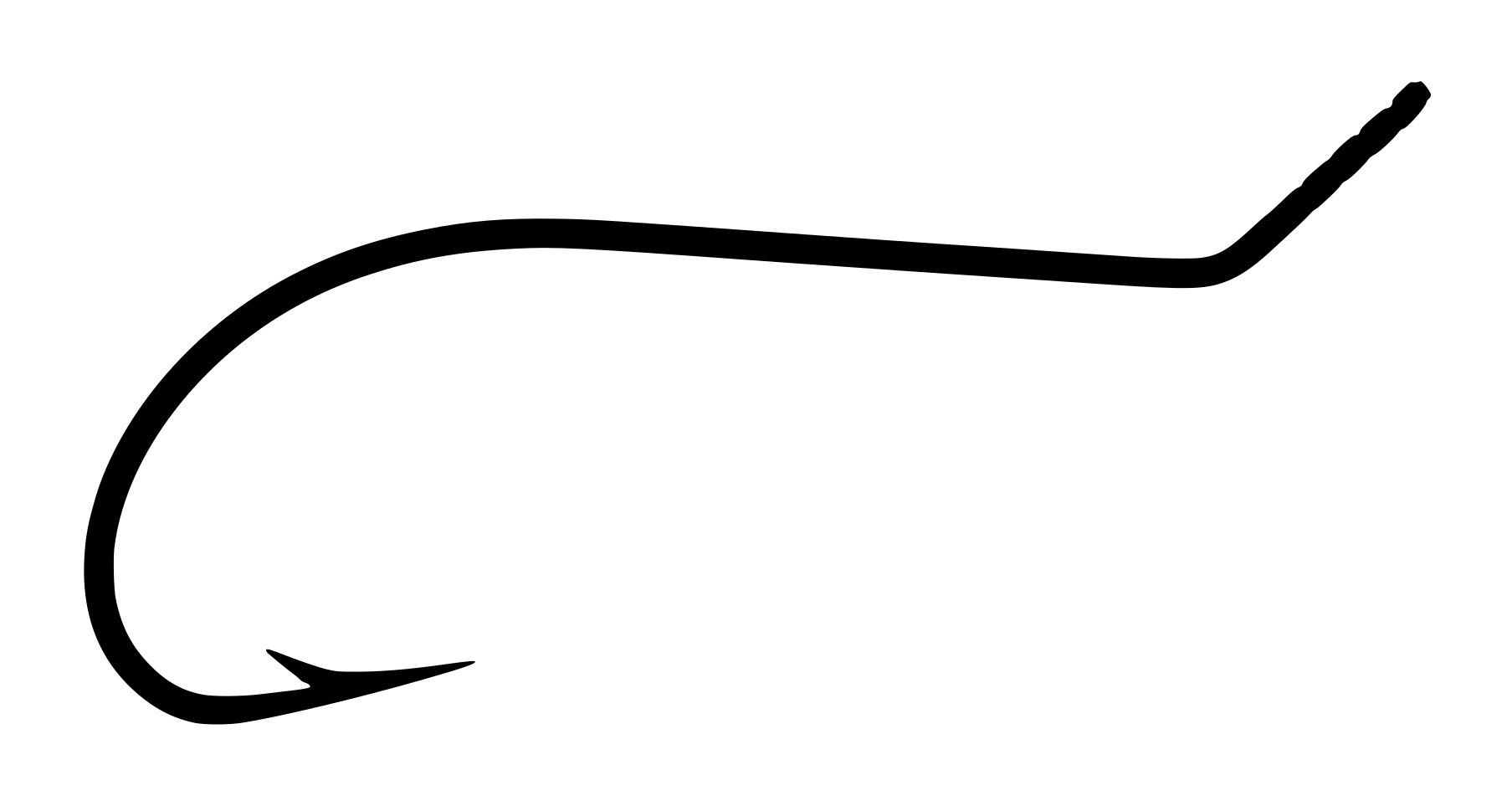
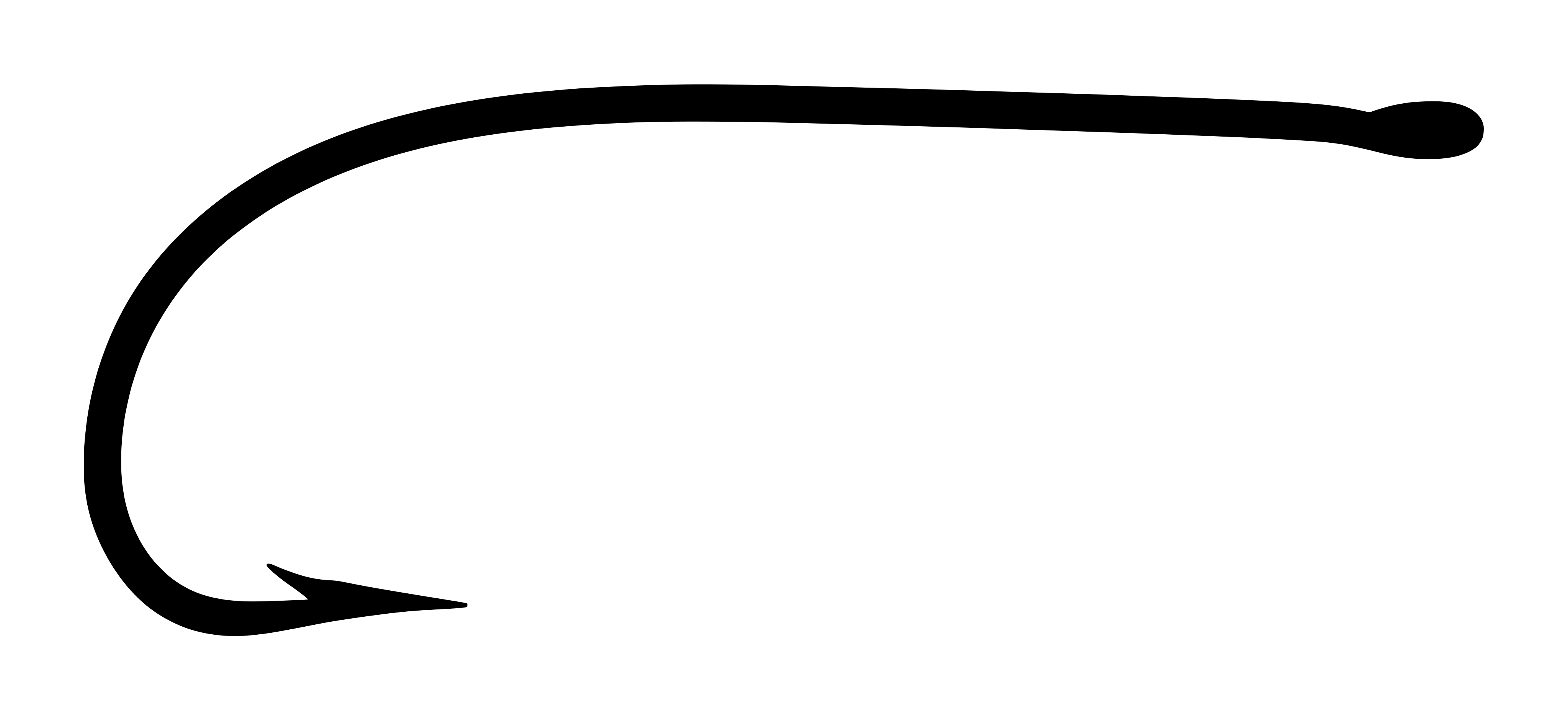
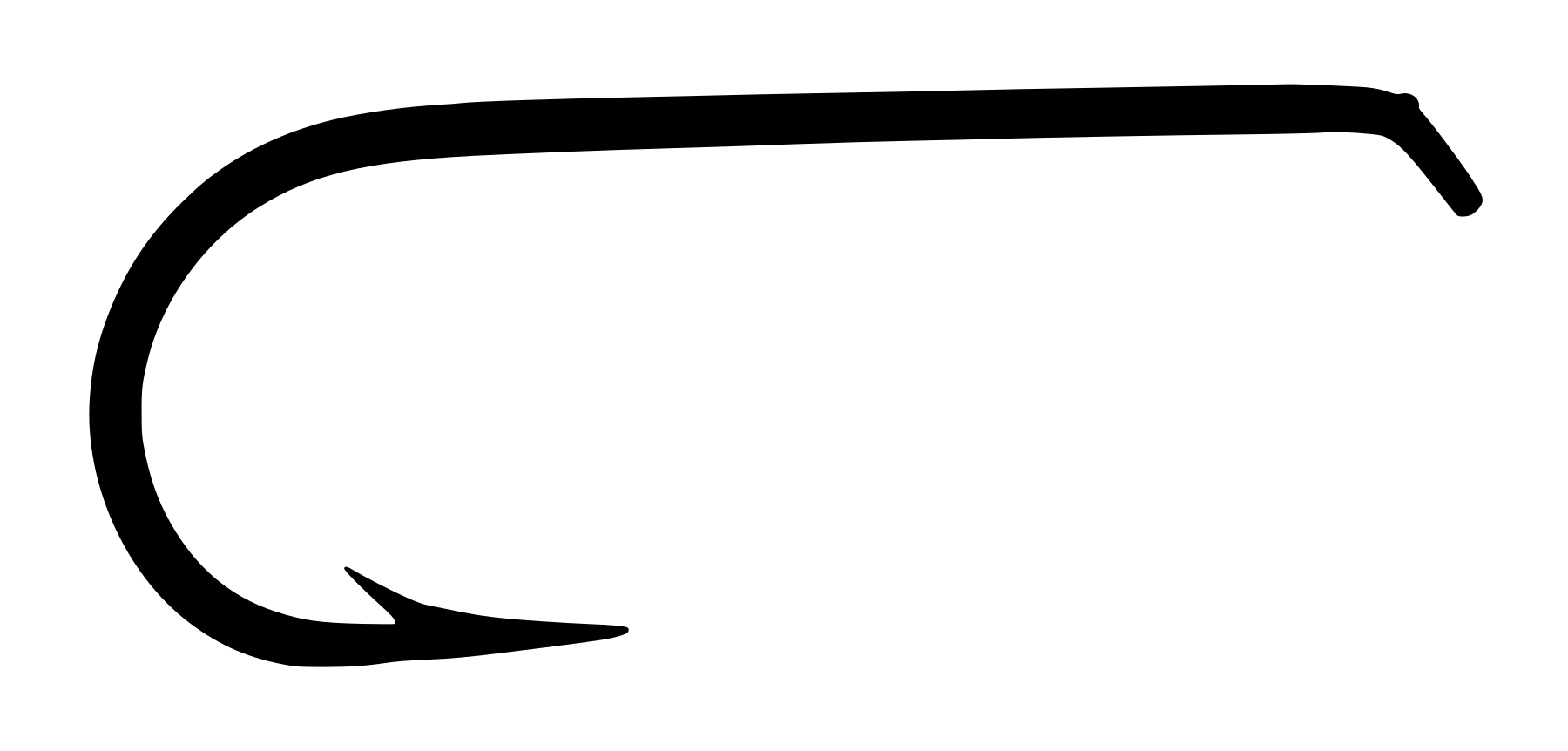
Mustad 3903 C, a saltwater hook manufactured in Oslo circa 1960–1970, combines a Sproat bend with an open soft looped eye, extra-fine wire, and nickel-plate finish in size 6/0. The hollow point geometry—a concave inner face that concentrates cutting pressure at the barb—distinguishes this pattern from straight-point designs and reflects mid-century refinement in penetration performance under load.
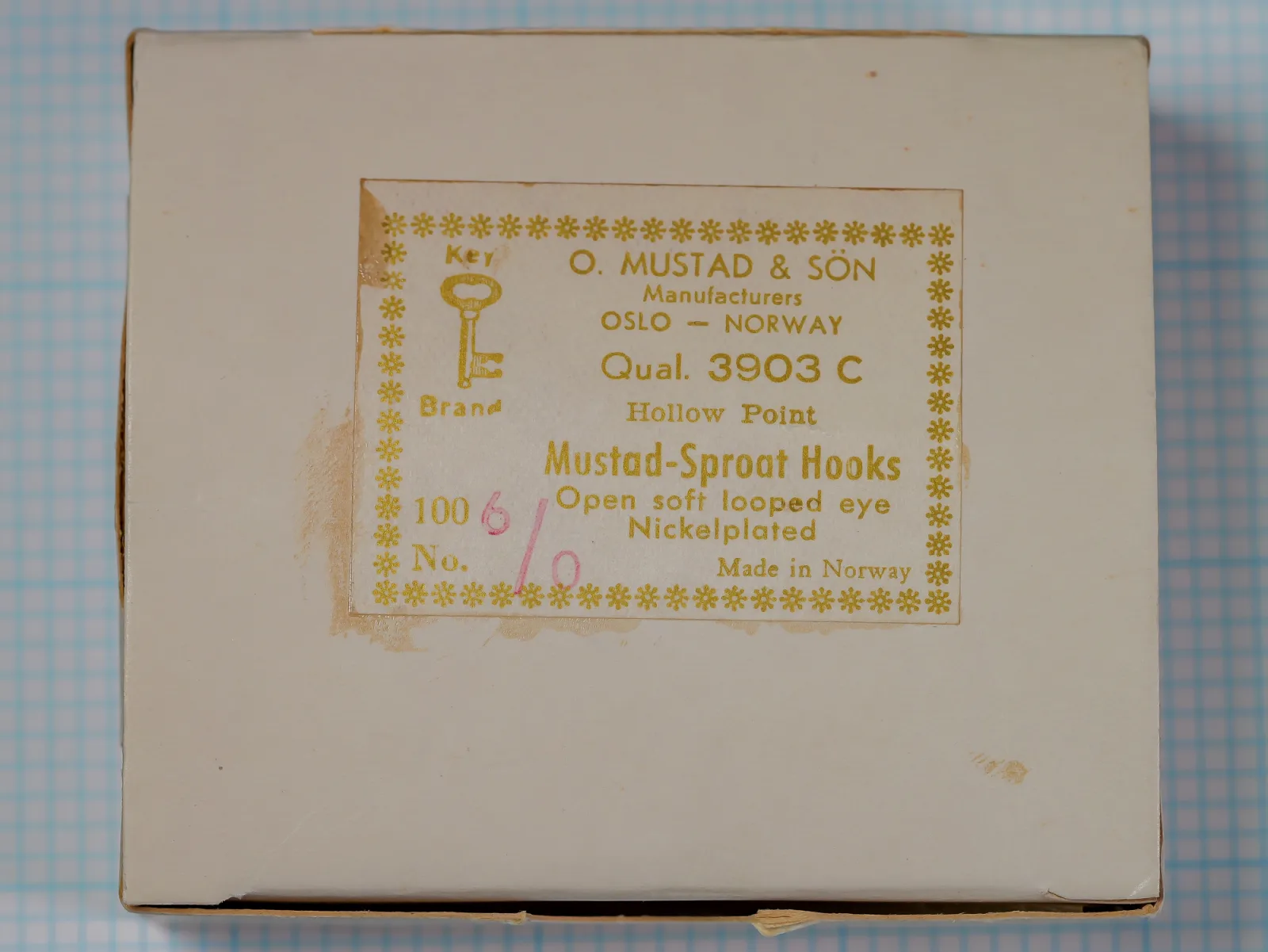
Interior of the manufacturer box showing the letterpress-printed product label in gold and pink, documenting the Mustad-Sprout Hooks model 3903 C, 6/0 size, 100-hook count, hollow point, open soft looped eye, nickelplated finish, Made in Norway.
Photographic record
4 cataloged imagesSelect any record to load it above.
4 images shown
Mustad 3903 C Sproot Hooks Size 6/0 Original Box LabelInterior of the manufacturer box showing the letterpress-printed product label in gold and pink, documenting the Mustad-Sprout Hooks model 3903 C, 6/0 size, 100-hook count, hollow point, open soft looped eye, nickelplated finish, Made in Norway.Open originalMustad 3903 C Sproot Hooks Size 6/0 Profile ViewProfile view of the size 6/0 Mustad-Sprout hook on measurement grid, showing the open soft looped eye, standard-length shank, Sproat bend profile, and nickelplated finish. Overall length approximately 1.99 inches.Open originalMustad 3903 C Sproot Hooks Size 6/0 Point and Barb DetailClose-up side view of the point and barb, showing the concave inner face characteristic of hollow point construction and the short, close-cut barb. Nickel finish is uniform and bright.Open originalMustad 3903 C Sproot Hooks Size 6/0 Open Soft Looped EyeClose-up detail of the open soft looped eye showing the finished loop formation and the open gap for easy knot attachment, nickelplated finish throughout.Open original
Technical profile
Other Other | Sproat | Extra-Fine Wire | Hollow Point | Nickelled / Nickel-plated
Eye
Other, OtherOpen soft looped eye construction. Wire forms an open loop rather than a closed ball or formed ring, allowing the loop to open slightly for knot insertion without threading. Finish does not obscure the loop geometry; nickel plating is uniform over the entire eye. The soft loop conformation is typical of mid-20th-century saltwater factory construction. P
Wire
Extra-Fine, Round
Shank
Standard — Plain
Bend
Sproat, Wide gapSproat bend family confirmed by the characteristic rounded bottom profile and moderate gap-to-shank proportion. Bend is smooth and symmetrical with no visible offset. Wire set is clean through the turn. Bend depth is proportional to gap width, consistent with standard Sproat proportions. P
Point
Hollow Point (concave inner face)Barb is present and clean-cut, located immediately behind the point. Barb is short and close-set relative to the point geometry, typical of hollow-point factory construction. Barb angle appears to be swept slightly upward. P
Finish
Nickelled / Nickel-Plated — Confirmed (stated on packaging)Nickelplated finish confirmed by cool silver-grey color temperature in photographs and explicit statement on packaging label V. Finish is uniform across the entire hook surface. The shank and bend show bright, mirror-like reflectivity consistent with nickel plating. Wire texture is not visible through the finish—coating is thick and opaque. No corrosion or tarnish visible on the specimen. P
Manufacturer box in very good condition. Interior label intact with clear printing. All visible hook-holding positions contain hooks. No apparent damage to box structure or lid. Exterior shows light dust and minor toning consistent with age. Hooks themselves bright and clean with full nickel finish visible in photograph. No corrosion or damage observed.
Hollow Point Geometry: The concave inner face of the hollow point creates a sharper cutting edge at the barb and tip compared to a standard spear point. The inward curve forms a knife-like profile that penetrates live bait and fish tissue more readily. This design was adopted widely in the 1950s-1960s, representing refinement over earlier straight-point designs. Hollow points are preferred for saltwater and live-bait work where penetration speed and holding power matter under load. I
Extra-Fine Wire: The 0.062″ (1.58 mm) wire gauge reduces weight and allows finer point geometry while maintaining adequate strength for the intended use. Extra-fine wire hooks are preferred when light, delicate presentation is valuable—a counterintuitive design choice for saltwater, but justified for cautious fish or when using small live baits that are easily injured by heavy wire. The fineness also allows better bend symmetry and point sharpness from the manufacturing process. EI
Nickelplate Finish: Nickel plating provides corrosion resistance superior to japanning or bluing in saltwater environments. The cool silver color has no visual advantage over other finishes, but the electroplating process builds a thick, durable coating that withstands moisture and brine exposure for weeks in the field. This made nickelplate the preferred finish for commercial saltwater snells intended for angler use without immediate cleaning. I
We have measurement for size 6/0. Know any others? Submit calipered measurements and we'll review and add them. Thank you!
Historical context
mustad
O. Mustad & Son, Oslo, Norway, was established in the 19th century as an independent hook manufacturer, competing with British Redditch makers. By the early 20th century, Mustad had become a major industrial producer, operating large factories in Gjovik and Oslo and distributing globally through regional agents. The company invested in vertical integration—wire production, stamping, and nickel plating—allowing rapid scaling and cost efficiency. Unlike smaller Redditch craftsmen, Mustad could mass-produce hooks to exacting specifications and standardize quality across millions of units. I
In the mid-20th century, Mustad began offering pre-snelled hooks in factory-sealed boxes and cards, a significant shift from loose-hook distribution. This moved the snelling labor from tackle shops and anglers to the factory floor, reducing retail costs and improving consistency. The Sprout Hooks line, introduced in the 1950s-1960s period, reflected this trend—a complete saltwater package (hook, snell, box) ready for the angler. SI
Series History
The Mustad-Sprout Hooks line appears as a discrete product offering within Mustad’s broader saltwater and bait-fishing portfolio. The Sprout name likely derived from a corruption or variant spelling of Sproat, the underlying bend family. The line was marketed under the quality designation 3903 C, where the “C” suffix may indicate a specific variant or production batches—though Mustad documentation from this period is limited. IS
The model 3903 C was sold as a complete snooded package: 100 hooks per box, 6 pre-formed nylon monofilament snells per box (thus 100 hooks ÷ 6 snells = approximately 16-17 snells per 100 hooks, though actual packaging may vary). Size range appears to have included multiple standards from No. 4 to 6/0, typical of Mustad’s saltwater offerings. The hollow point specification and nickelplate finish were standard for saltwater production. VI
No clear discontinuation date is documented in available sources. The line likely remained in production through the 1970s, displaced gradually by plastic-packaged hooks and modern monofilament snoods as these technologies became cheaper and more convenient. The transition from letterpress-printed cream-stock boxes (1960s) to offset-printed or plastic packaging marks the boundary of this era’s production. S
Era and Packaging Dating
Multiple packaging indicators converge on a mid-to-late 1960s production date: (1) Nylon monofilament snells are post-1950s technology, widespread by 1960, but still paired with cream-stock boxes rather than plastic packaging, suggesting pre-plastic-box era (pre-1975). (2) Letterpress printing method is evident on the label; offset printing was standard by the 1970s but letterpress remained in use through the 1960s, particularly by Mustad for smaller production runs. (3) Handwritten price notation in pink pencil suggests direct sales/inventory pricing common to 1950s-1970s before barcode adoption (pre-1974 strong indicator). (4) Box construction and material (rigid cardboard with paste-on label) is consistent with 1960s Mustad production. (5) No barcode visible on exterior, supporting pre-1974 date. (6) The combination of nylon snells (adopted ca. 1950-1960) with cream-stock box and letterpress printing (fading post-1965) narrows window to c. 1960-1970, most likely 1963-1968. VI
The Snelled Revolution
Pre-snelled hooks were a factory innovation of the mid-20th century that fundamentally changed how fishermen bought and used terminal tackle. Before the 1950s, anglers purchased loose hooks and snelled them by hand—threading gut, silk, or later nylon thread through the hook eye and wrapping the shank with needle and waxed thread. It was laborious, skilled work. Mustad and other manufacturers realized that if they could snell hooks at the factory, using consistent materials and speed, they could undercut both the angler's labor and the tackle shop's snelling service. The Mustad-Sprout Hooks box represents this transition: 100 ready-to-use hooks, 6 nylon snells included, no further preparation required. The angler simply tied the snell to the mainline and baited the hook. This shift drove adoption of nylon monofilament snells (faster, cheaper, and more durable than gut) and moved the craft knowledge from the fishing population back to the factory floor.
Design lineage and influence
The Sproat bend family has roots in 19th-century English hook making. The family name is believed derived from an English hook maker or fishing tradition, though primary sources are unclear. The bend is characterized by a rounded bottom, moderate gap-to-shank ratio, and versatility across both freshwater and saltwater applications. Competing designs from the same era include the OShaughnessy (more angular, heavier wire), the Limerick (narrow gap, acute angle), and the Aberdeen (wide round bend). S
Mustad’s adoption of the Sproat for saltwater pre-snelled production placed it in direct competition with British Redditch makers (Allcock, Partridge) and other Norwegian producers. The hollow point specification reflects 1950s-1960s trends toward sharper points, improved penetration, and reduced barb size—responding to refinement in tackle design and angling technique. The open soft looped eye was an alternative to ball-eye construction, offering faster knot tying in field conditions. IS
Modern equivalents would include the Mustad 94415 (contemporary Sproat bait hook) and similar saltwater offerings from Daiichi, Gamakatsu, and Tiemco, though these are typically offered loose rather than pre-snelled, and use modern plastic or paper packaging. I
Best matchRelated by Attribute
Computed automatically from catalog data — updated as new hooks are added.
Matches: Bend, Shank, Wire, Finish, Forging +2 moreDiffers: Gap: Wide vs Standard; Eye: Other vs Ball Eye; Eye Orient.: Other vs Straight / Inline +2 more
Matches: Bend, Shank, Wire, Point, Shank Feat. +1 moreDiffers: Gap: Wide vs Standard; Eye: Other vs Blind — Marked Shank; Eye Orient.: Other vs N/A — Blind +3 more
Saltwater and heavy-duty fishing. The size 6/0 Sproat with hollow point was intended for live bait presentation in saltwater species—mackerel, sea trout, and large bottom feeders. The pre-snelled format (six leaders per box, 100 hooks total) was sold as direct-to-angler terminal tackle, ready to tie to a mainline and bait. Fishermen did not need to loop or snell the hook themselves; commercial snelling reduced friction and improved field deployment. The wide Sproat bend and hollow point provided penetration advantage when using live or chunked bait. VI
Secondary Applications
General saltwater bait fishing, estuarine species (sea bream, bass), trolling with natural bait.
Modern Equivalents
Hook
Match Quality
Notes
Mustad 94415 Sproat
Good
Contemporary Mustad Sproat bend in single-hook format, standard wire, similar applications but loose packaging and plastic box rather than snelled or manufacturer box
Daiichi 2442 Saltwater Bait
Moderate
Modern saltwater bait hook with similar bend geometry but different eye type and wire gauge
Gamakatsu Saltwater Circle
Moderate
Modern saltwater offering but circle-point geometry rather than hollow point
Collector notes
Rated 4.5/10 — uncommon to scarce. Mustad's industrial production volume keeps the rating below 5.0, but the complete original box with unbroken snells, the open soft looped eye variant (less common than ball-eye equivalents), and the mid-century era push interest upward. Snelled boxes in complete condition are less frequently encountered than loose-hook stock, adding a modest scarcity premium.
Reference value
$12 – $35 USD estimate
Packaging condition
Very Good — light wear, fully legibleRecorded specimen
Packaging format
GW-MUSTAD-BOX-01Catalog code
Positive Factors: Original manufacturer box is rare compared to loose-hook or carded stock. Complete unbroken snells add significant value and appeal to saltwater collectors and vintage tackle enthusiasts. The open soft looped eye is a documented variant less frequently seen than ball-eye or tapered-eye Sproats, making size/variant combinations desirable. The era (c. 1960-1970) falls into early post-war industrial period with growing collector interest. Packaging label is clear and legible, documenting the complete product specification. PI
Limiting Factors: Mustad produced Sproat hooks in enormous quantities throughout the 20th century, limiting scarcity to specific variants rather than the general model. The 6/0 size is within a common range; smaller or larger sizes would command higher rarity ratings. Saltwater hooks have narrower collector appeal than trout or salmon flies—the market is smaller. The nylon snells, while period-correct, have limited appeal compared to gut or silk snells from earlier eras; nylon snells are perceived as more utilitarian and less artisanal. Condition of the snells is critical to value; broken or missing snells deduct significantly. I
Most Desirable Variants: Complete boxes with all 100 hooks and 6 unbroken snells present. Smaller sizes (No. 1-4) command premiums due to scarcity. Boxes with additional printed information, retailer markings, or alternate label designs add catalog interest. Mint or near-mint exterior condition (minimal edge wear, clear label printing) significantly increases value. I
Packaging
Rigid manufacturer box with separate lid, cream-colored paper stock. Interior lid surface printed with product label in gold and pink letterpress. Label text includes O. Mustad & Son manufacturer name, Oslo Norway location, Qual. 3903 C model code, Hollow Point specification, Mustad-Sprout Hooks hook name, Open soft looped eye description, Nickelplated finish designation, Made in Norway statement. Decorative gold asterisk border on all four sides of label. Hook count "100" and size "No. 6/0" handwritten in pink pencil on label face. Exterior box shows light toning and edge wear consistent with vintage storage.
Market Value Notes
Low ($12): Good condition—box opened, some snells missing or kinked, slight exterior wear, most hooks present. High ($35): Excellent condition—box lid intact, all 100 hooks present, all 6 snells unbroken and straight, minimal exterior wear, label printing clear. Premium factors: Complete unbroken snells, sealed or well-preserved box exterior, full hook count, clear interior label, unusual size range (very small or very large 6/0 premium). Platforms: eBay (UK and US), specialist vintage tackle dealers, tackle fairs. Confidence: E estimated—limited direct comparable sales data for this specific Mustad model, variant, and box format in current market. Estimate based on general Mustad snelled box pricing ($8-50 range) calibrated to the Sproat Hooks rarity tier and snell condition premium.
Where to Find
eBay (US and UK auctions), vintage fishing tackle specialists, estate sale listings, tackle fairs and auctions in Norway and the UK (origin point advantage). Mustad hooks of this era are more frequently found in European markets than North American.
Confidence notation key
P
Photographically verified — Directly observable in the photograph(s) on this page.
V
Verified by documentation — Confirmed by manufacturer catalog, spec sheet, or published reference.
I
Inferred — A logical deduction from observable or documented evidence, not directly stated.
E
Estimated — An approximation based on visual comparison, proportional analysis, or limited data.
S
Speculative — A reasoned hypothesis that cannot be confirmed from available evidence.
Claims with no notation are confirmed by multiple independent sources. All photographs on garrenwood.com are taken on a measurement grid where each square equals 1/10 inch (0.1″ / 2.54 mm).