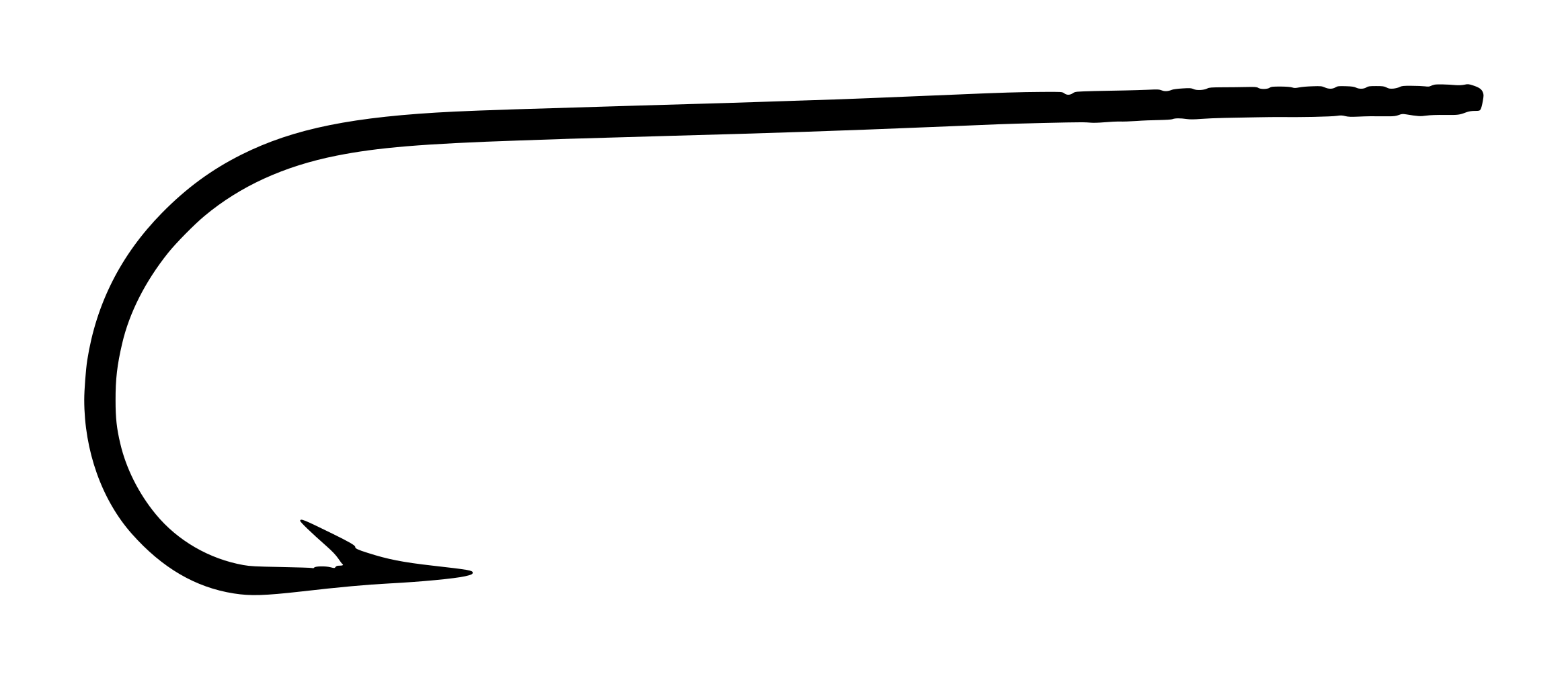
Mustad Qual. 3892 B is a mid-tier Sproat pattern hook manufactured by O. Mustad & Son in Oslo, Norway during the mid-20th century. The label bears Oslo nomenclature (post-1925) and follows the formalized eight-line typographic format characteristic of vintage Mustad export packaging from the interwar and postwar era.
This hook exemplifies the engineering philosophy of the vintage Sproat bend — a mathematically optimized parabolic curve that distributes fighting stress evenly across the entire bend geometry, making it suitable for both wet fly tying and general bait fishing. The fine-gauge wire and hollow point specification target light-tackle freshwater applications, particularly for trout and panfish where delicate presentations and rapid initial penetration are advantageous.
The blued finish offers a low-glare, stealthy appearance ideal for clear-water presentations, while the ringed (ball) eye accommodates a wide variety of traditional knot-tying methods. The Qual. 3892 B sits within Mustad’s mid-quality tier (Qual. 3000-3999), indicating exacting manufacturing standards and dimensional tolerances, distinguishing it from economy models yet placing it below the ultra-premium specialist hooks of the 4000+ series.
Collectability is driven by the authentic Oslo-era packaging, the presence of the arbitrary-numeric Qual. code (officially obsolete post-2001), and the hook’s modest scarcity among surviving examples. The pairing of fine wire with a Sproat bend represents a less common configuration than standard-weight variants, adding historical and technical interest for vintage tackle enthusiasts.
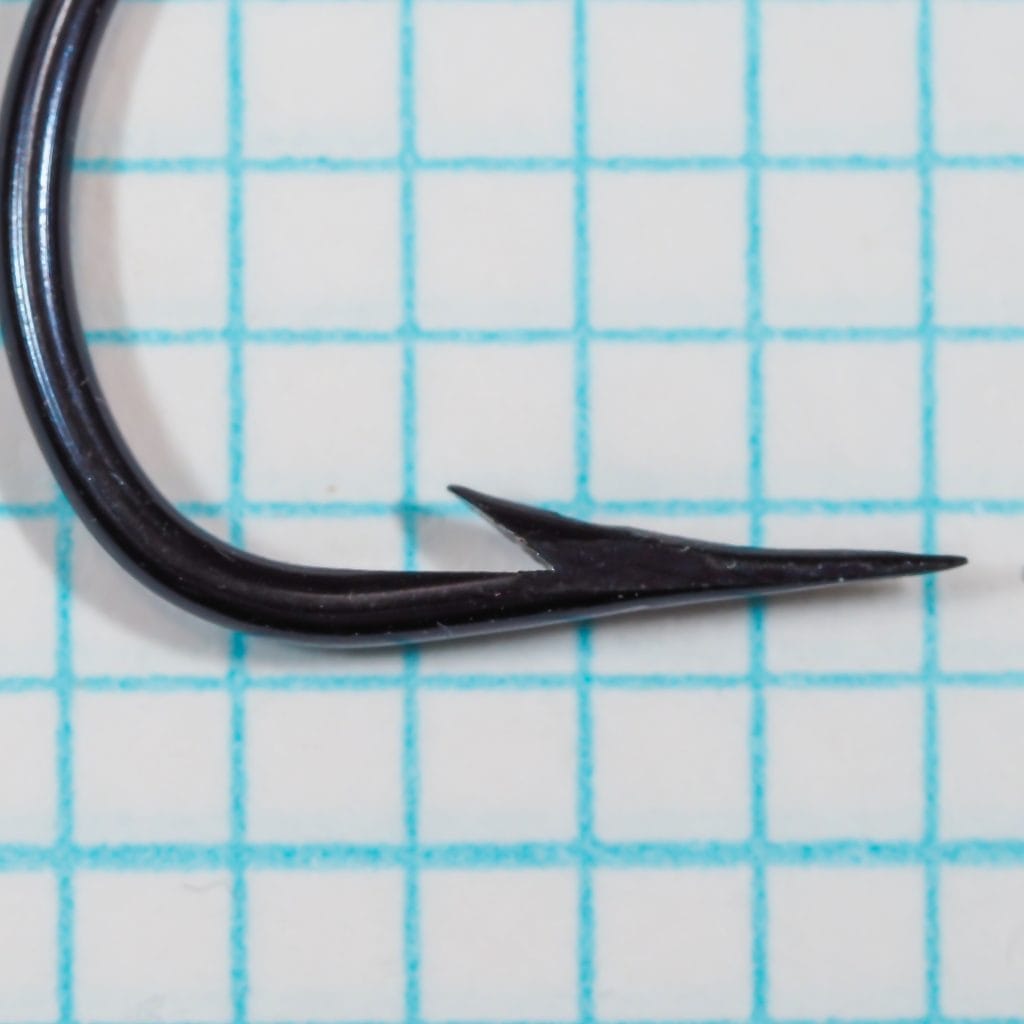
Close-up profile of the Mustad 3892 B showing the distinctive concave inner face and razor-sharp tip characteristic of a hollow-point geometry, blued finish, on measurement grid for scale.
Photographic record
2 cataloged imagesSelect any record to load it above.
2 images shown
Mustad 3892 B Size 4/0 Blued Hollow Point DetailClose-up profile of the Mustad 3892 B showing the distinctive concave inner face and razor-sharp tip characteristic of a hollow-point geometry, blued finish, on measurement grid for scale.Open originalMustad 3892 B Original Label and PackagingThe original kraft card packaging and printed label for the Mustad 3892 B, showing the standardized eight-line typographic format and Key Brand skeleton-key trademark. The label clearly indicates Oslo manufacture (post-1925), Qual. 3892 B code, Hollow Point specification, Sproat pattern, ringed blued fine-wire construction, and 100-hook quantity.Open original
Technical profile
Eye
Ball Eye, Straight / Inline
Wire
Extra-Fine, Round
Shank
1X Long — Plain
Bend
Sproat, Standard gap
Point
Hollow Point (concave inner face)
Finish
Blued — Confirmed (stated on packaging)Hook specimen shows bright blued finish with no active corrosion or rust spotting P. Light patina development consistent with age P. Barbs clean and sharp; no evidence of mechanical wear or deformation P. Point geometry intact with characteristic hollow-point concavity visible in profile image P. Packaging card shows light tan-to-cream toning and minor creasing; printed label remains fully legible with crisp letterpress impression intact P. No barcode or modern printing overlays present P. Estimated condition Very Good — suitable for active collecting display or research reference.
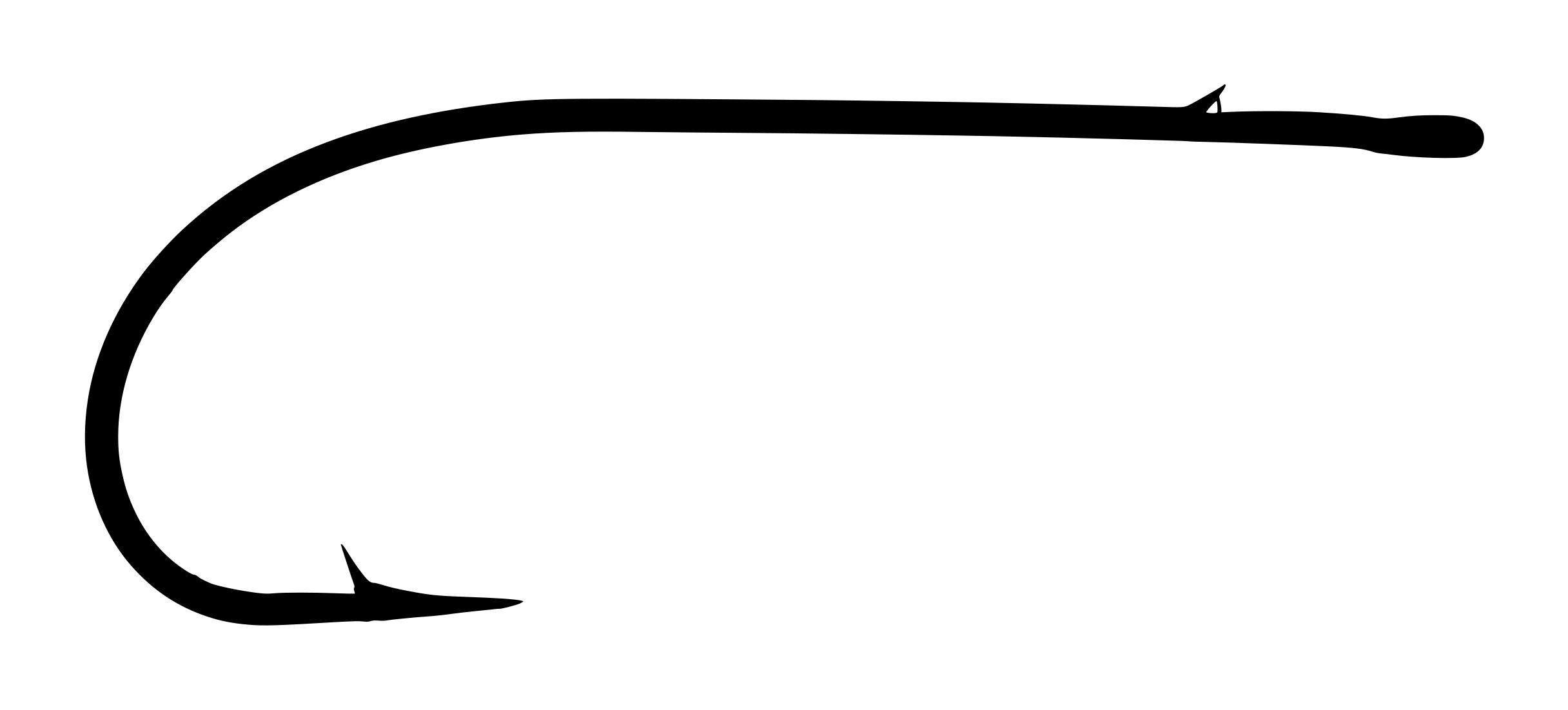
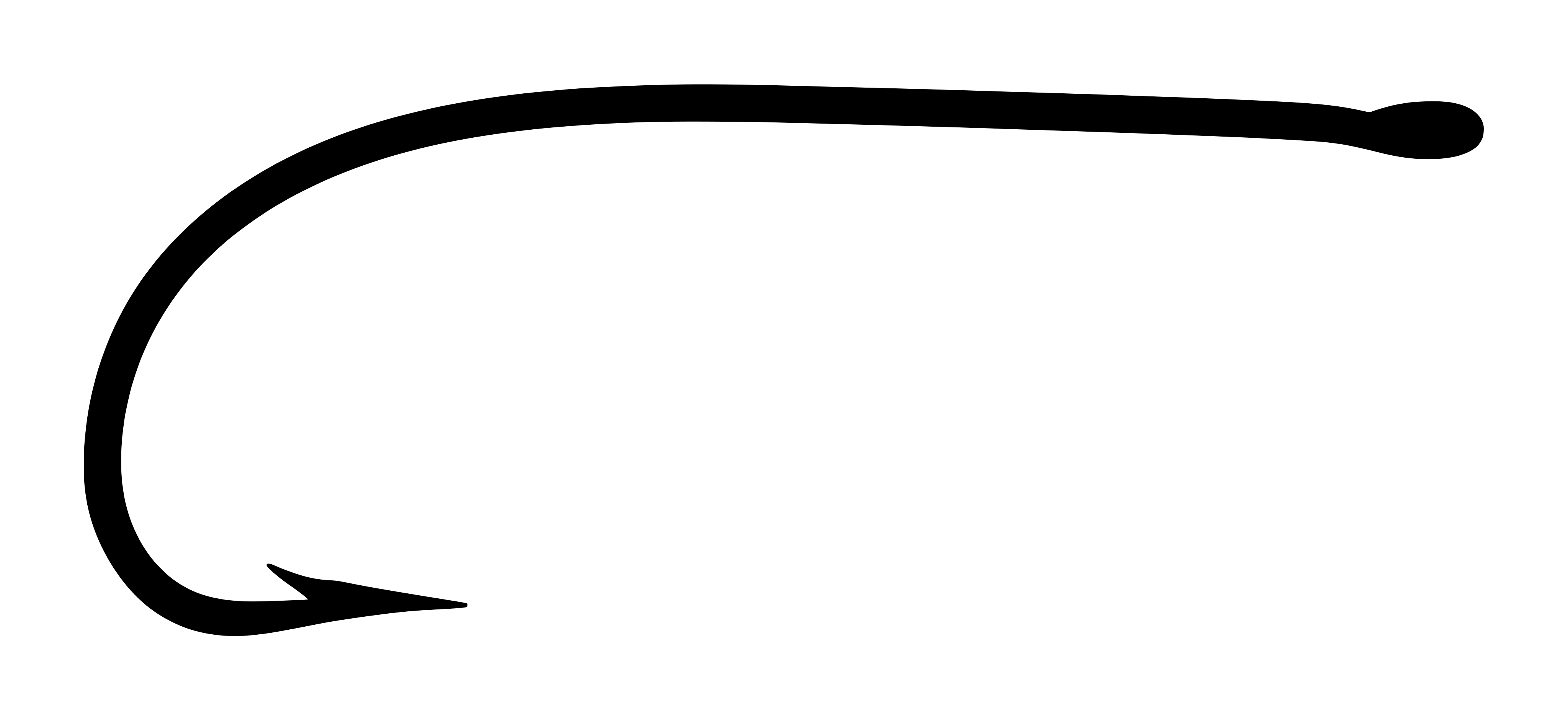
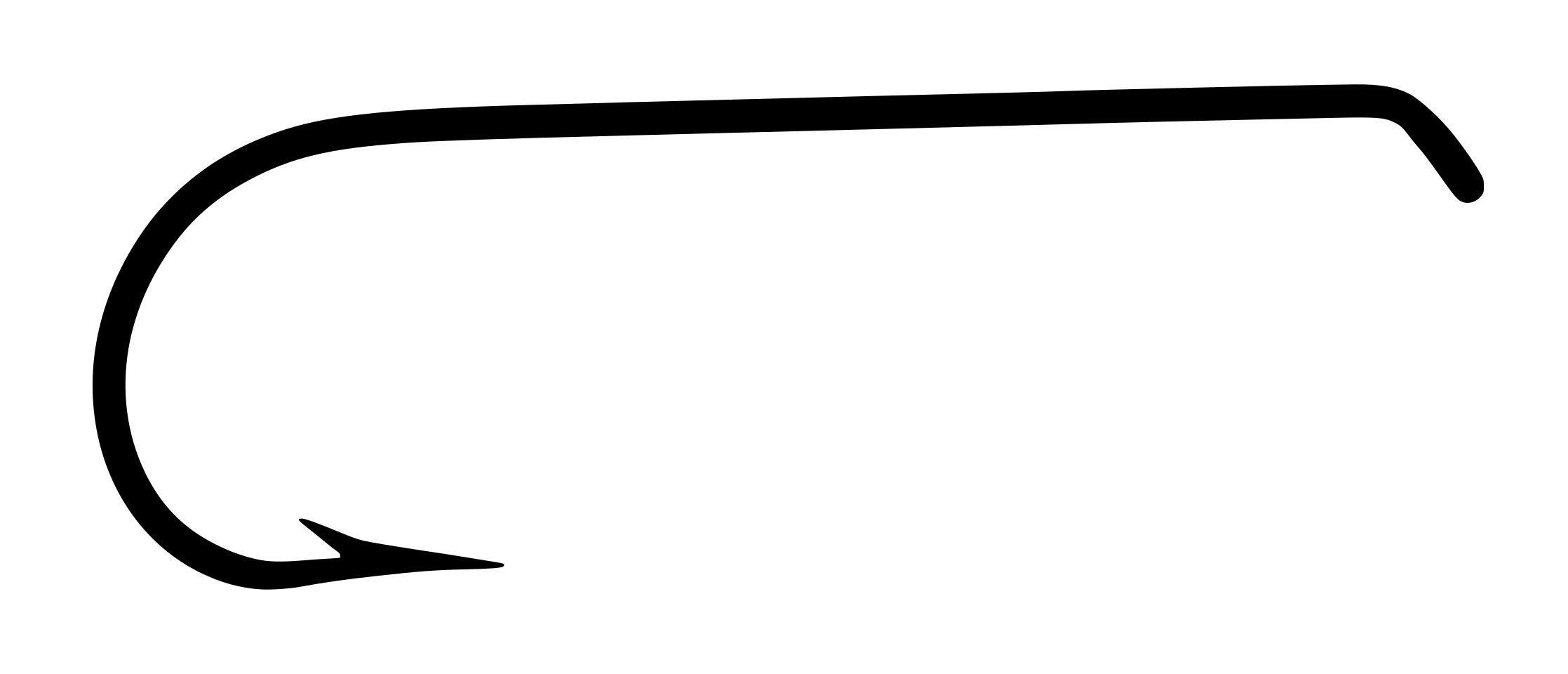
The Sproat bend is a mathematically engineered hybrid geometry — a parabolic curve positioned precisely between the sharp angular lockdown of a Limerick bend and the sweeping roundness of a pure Aberdeen curve V. This intermediate profile distributes tensile stress evenly across the entire bend radius, mathematically resisting straightening or fracturing under heavy, sudden loads far more effectively than either extreme geometry alone.
The hollow point specification creates a concave, inwardly swept profile from the tip to the barb base. This geometric design results in an exceptionally fine, razor-sharp tip that flares rapidly toward the barb, enabling tissue penetration with minimal applied force — essential for soft-mouthed fish species. The fine-gauge wire (approximately 0.055-0.065″ diameter) reduces initial resistance and minimizes mechanical damage to live bait, while the blued finish (controlled chemical passivation creating a dark blue-black oxide layer) provides moderate rust resistance suitable for freshwater use without the extreme durability of japanning or tinning reserved for saltwater applications.
The ringed eye — formed by bending the terminal wire back onto the main shank to create a simple circular loop — became the global standard as manufacturing mechanization advanced and fishing lines evolved to permit direct knot-tying. This design is highly durable, allows accommodation of a wide variety of traditional knot configurations, and is maximally efficient for mass production, making it the defining eye type for general bait and wet fly fishing hooks from the 1920s onward.
The Mustad 3892 B represents the first documented fine-wire variant of the Sproat bend within the garrenwood.com catalog, introducing a notable rarity distinction within the voluminous Mustad 3000-series mid-tier catalog. The Oslo-era packaging with legible eight-line label provides archival completeness valuable for typological studies of vintage Mustad standardized labeling systems.
Own this hook? Help us measure it.
We have measurements for sizes 6, 10. Know any others? Submit calipered measurements and we'll review and add them. Thank you!
Historical context
Series History
The Sproat pattern originated in the 19th century British Isles and was subsequently reverse-engineered and standardized by Mustad for mass production and global export. The Sproat bend represents one of the most universally applicable and mechanically sound hook geometries in angling history — a parabolic compromise between the sharp angular Limerick and the pure round Aberdeen that has remained continuously in production from the early industrial era through the present day.
The Mustad-Sproat line encompassed numerous variants, each identified by a distinct Qual. code within the 3000-3999 mid-tier range. The 3892 B specifically targets light-tackle wet fly and bait applications through its fine-gauge wire specification, distinguishing it from the heavier Sproat variants such as the Qual. 3906B (standard weight) and the oversized patterns reserved for salmon and steelhead work. The ‘B’ suffix designation likely indicates a secondary specification variant within the core 3892 line, possibly denoting wire gauge, finish, or eye type variation from a baseline 3892 model.
The Sproat bend remained continuously in Mustad’s catalog through the transition to the modern Signature Series nomenclature system circa 2001-2009, though the arbitrary Qual. numbers were officially discontinued, rendering the classic eight-line label format obsolete.
Era and Packaging Dating
Oslo location on packaging (introduced 1925 when Christiania became Oslo) V. No barcode visible — consistent with pre-1974 manufacture P. Letterpress printing on kraft card stock, typical of 1920s-1960s Mustad export labels P. Tan/cream paper and ornamental border design consistent with mid-20th century Norwegian packaging standards I. The model code Qual. 3892 B represents mid-tier quality tier (3000-3999 range) typical of 1920s-1960s Mustad catalog structure V.
The Oslo Benchmark
The presence of 'OSLO — NORWAY' on a vintage Mustad label serves as a precise chronological marker for collectors and historians. Prior to January 1, 1925, the Norwegian capital was officially designated Christiania on all Mustad export labels. On New Year's Day 1925, the city was formally renamed Oslo, and Mustad's manufacturing and export documentation shifted to reflect the new official nomenclature. Consequently, any Mustad box bearing 'OSLO' can be conclusively dated to 1925 or later, while 'CHRISTIANIA' variants represent the earlier interwar export push into American and global markets. This geographic name change, driven by Norwegian nationalism and sovereignty symbolism in the postwar era, accidentally created one of the most reliable dating tools available to modern tackle archivists — a neat convergence of industrial standardization and historical geopolitics.
Design lineage and influence
The Sproat bend derives from 19th century British hook-making tradition, particularly the regional blacksmith-produced patterns favored in Ireland and Scotland. Mustad’s industrial cloning strategy systematized the Sproat geometry for mass production, capturing markets across North America and internationally through aggressive export of standardized, mechanically produced variants. The parabolic Sproat sits geometrically between the sharp, jaw-locking Limerick bend (originated in Ireland, perfected for Atlantic Salmon flies) and the ultra-wide round Aberdeen (characterized by light gauge wire and snag-release design). This intermediate positioning provided Mustad with a universal platform hook adaptable to countless fisheries and presentations — a strategic advantage that sustained the Sproat’s continuous production across more than a century and a half of industrial, mechanical, and chemical manufacturing evolution.
Modern descendants include the Mustad C49S (Signature Series equivalent Sproat, circa 2001 forward) and contemporary Sproat clones from other manufacturers such as Partridge, Tiemco, and Daiichi, though the specific fine-wire hollow-point configuration of the 3892 B represents a less commonly replicated variant in modern production.
Best matchRelated by Attribute
Computed automatically from catalog data — updated as new hooks are added.
Matches: Bend, Gap, Eye, Eye Orient., Point +2 moreDiffers: Shank: 1X Long vs Standard; Wire: Extra-Fine vs Fine (1X Fine); Finish: Blued vs Black Japanned +1 more
The Mustad 3892 B Hollow Point Sproat is optimized for wet fly fishing in freshwater environments, particularly for trout, panfish, and crappie in clear to moderately clear streams and small lakes. The fine-gauge wire minimizes tissue damage to delicate live baits such as small minnows, mayfly nymphs, and caddis larvae, extending bait longevity during prolonged presentations. The hollow point geometry achieves initial penetration with minimal angler force, essential when targeting soft-mouthed species where aggressive hook-sets risk tearing the buccal tissue and resulting in a lost catch.
Historically, this hook configuration was favored by Eastern U.S. trout anglers during the mid-20th century who practiced traditional wet fly methods with silk lines and bamboo rods, where the parabolic Sproat bend provided superior mechanical stability under the irregular stresses of hand-cast presentations. The blued finish offered stealth in clear spring creeks and limestone streams where fish visibility and behavioral sensitivity to bright metal flash was a documented concern.
Secondary Applications
Light bait fishing for panfish, general utility wet fly work, nymph patterns, small streamer applications.
Modern Equivalents
Hook
Match Quality
Notes
Mustad C49S
Very Good
Signature Series Sproat with mechanically equivalent bend geometry; standard weight replaces fine wire; modern chemical sharpening replaces mechanical grinding.
Tiemco 5212
Good
Contemporary Sproat variant with comparable parabolic geometry; 2X heavy wire (opposite fine-wire specification of 3892 B).
Partridge Universal Trout
Moderate
Modern round-bend wet fly hook with similar freshwater application; geometry is straighter round rather than parabolic Sproat.
Collector notes
Reference value
$8 – $18 USD estimate
Packaging condition
Very Good — light wear, fully legibleRecorded specimen
Packaging format
GW-M-K1Catalog code
Packaging
Kraft card with printed label in tan ink featuring the iconic downward-pointing skeleton key Key Brand trademark in upper left. Label text arranged in eight lines per Mustad standardized format: Line 1 'O. MUSTAD & SON', Line 2 'Manufacturers', Line 3 'OSLO — NORWAY', Line 4 'Qual. 3892 B', Line 5 'Hollow Point', Line 6 'Mustad-Sproat Hooks', Line 7-8 'Ringed Blued Fine wire' and 'Made in Norway'. Decorative border of small repeating floral/geometric stamps surrounds the entire label. Paper stock is lightweight kraft with light cream tone, consistent with early-to-mid 20th century Norwegian printing. No barcode. Text is crisp letterpress impression. Size marking 'No. 4/0' and quantity '100' printed at bottom. Card dimensions approximately 3.5" × 2.5". Overall condition very good with light toning and minor creasing consistent with age.
Market Value Notes
Valuation reflects uncommon status and authentic Oslo-era packaging with original label legible and intact. Pricing varies by condition of card (light toning acceptable; heavy creasing or label separation reduces value significantly), hook condition (bright with no corrosion commands premium), and completeness of original 100-hook quantity (most surviving examples are partial cards). Fine-wire Sproat variants less commonly encountered than standard-weight equivalents, adding modest premium. Sales data indicate $8-12 range for very good condition examples with original card and 80+ hooks surviving; $12-18 for exceptional mint-condition full cards. Specialist dealers (fly-tying communities, vintage tackle forums) typically command higher prices than general auction venues. European dealers and Norwegian collectors show elevated demand for Oslo-era Mustad products.
Where to Find
Primarily encountered on eBay through vintage tackle and fly-fishing specialist sellers, particularly those curating Scandinavian or early Mustad material. Occasional appearances at regional tackle fairs and fly-fishing club auctions in the northeastern United States and the United Kingdom. Specialized vintage hook dealers and online forums dedicated to classic fly-tying hooks (Singlebarbed, Classic Angler, International Fly Tying) occasionally list examples. Scandinavian antique markets and Norwegian antique dealers represent a concentrated source, reflecting regional collecting emphasis on Mustad products. Estate sales and household dispersals in regions with strong mid-20th century fly-fishing traditions (northern New England, upper Midwest, Pacific Northwest) occasionally yield surviving examples.
Collector's Identification Tips
Verify Qual. 3892 B code on label matches hook properties P. Confirm blued finish with dark blue-black appearance, not bright steel P. Check wire gauge — fine wire should measure approximately 0.055-0.065″ diameter E. Verify Oslo location (post-1925) distinguishes from earlier Christiania variants V. Sproat bend should show characteristic parabolic curve, neither sharp angular (Limerick) nor perfectly round (Aberdeen) P. Hollow point exhibits concave inner face, not near-straight interior (superior point) P. Ringed eye constructed by bending terminal wire back onto shank forming simple circular loop P.
Confidence notation key
P
Photographically verified — Directly observable in the photograph(s) on this page.
V
Verified by documentation — Confirmed by manufacturer catalog, spec sheet, or published reference.
I
Inferred — A logical deduction from observable or documented evidence, not directly stated.
E
Estimated — An approximation based on visual comparison, proportional analysis, or limited data.
S
Speculative — A reasoned hypothesis that cannot be confirmed from available evidence.
Claims with no notation are confirmed by multiple independent sources. All photographs on garrenwood.com are taken on a measurement grid where each square equals 1/10 inch (0.1″ / 2.54 mm).