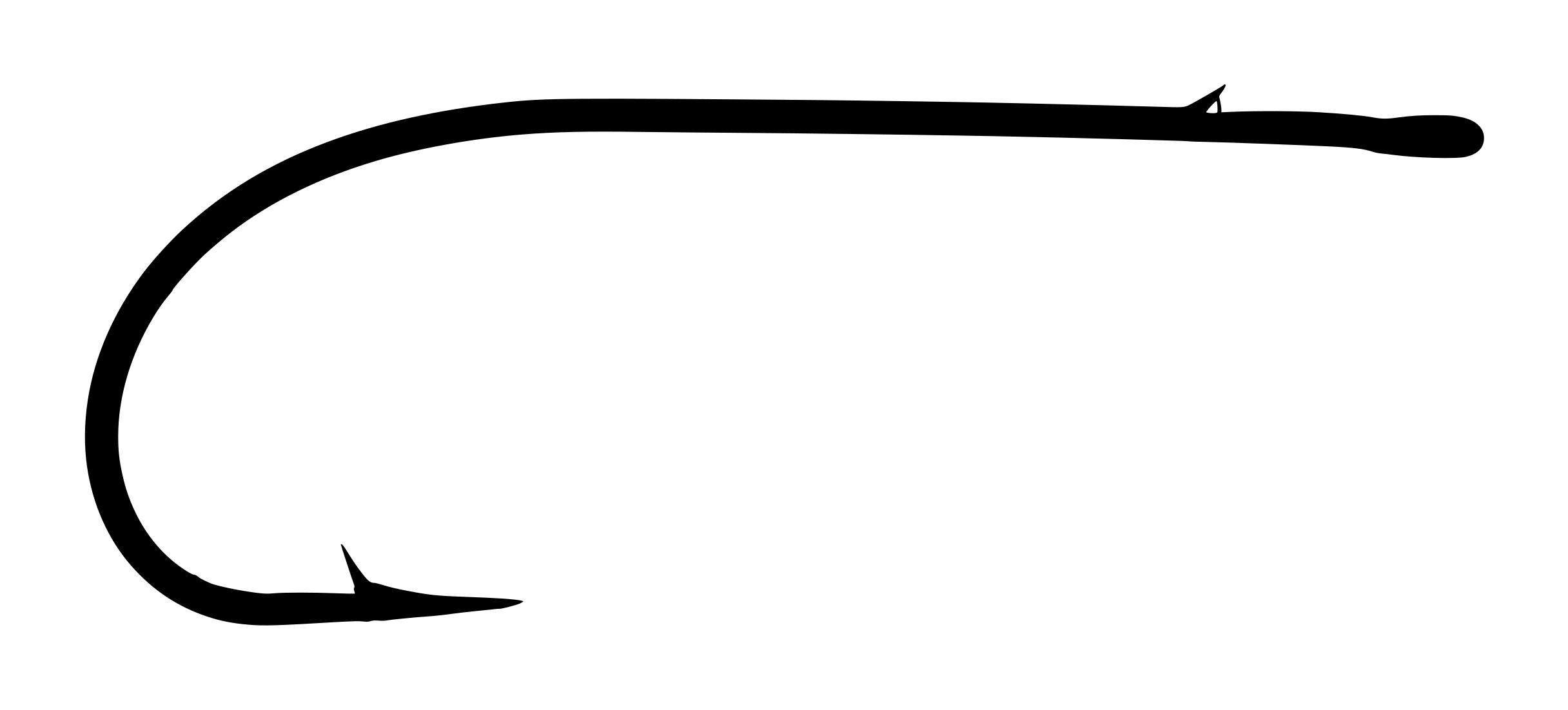
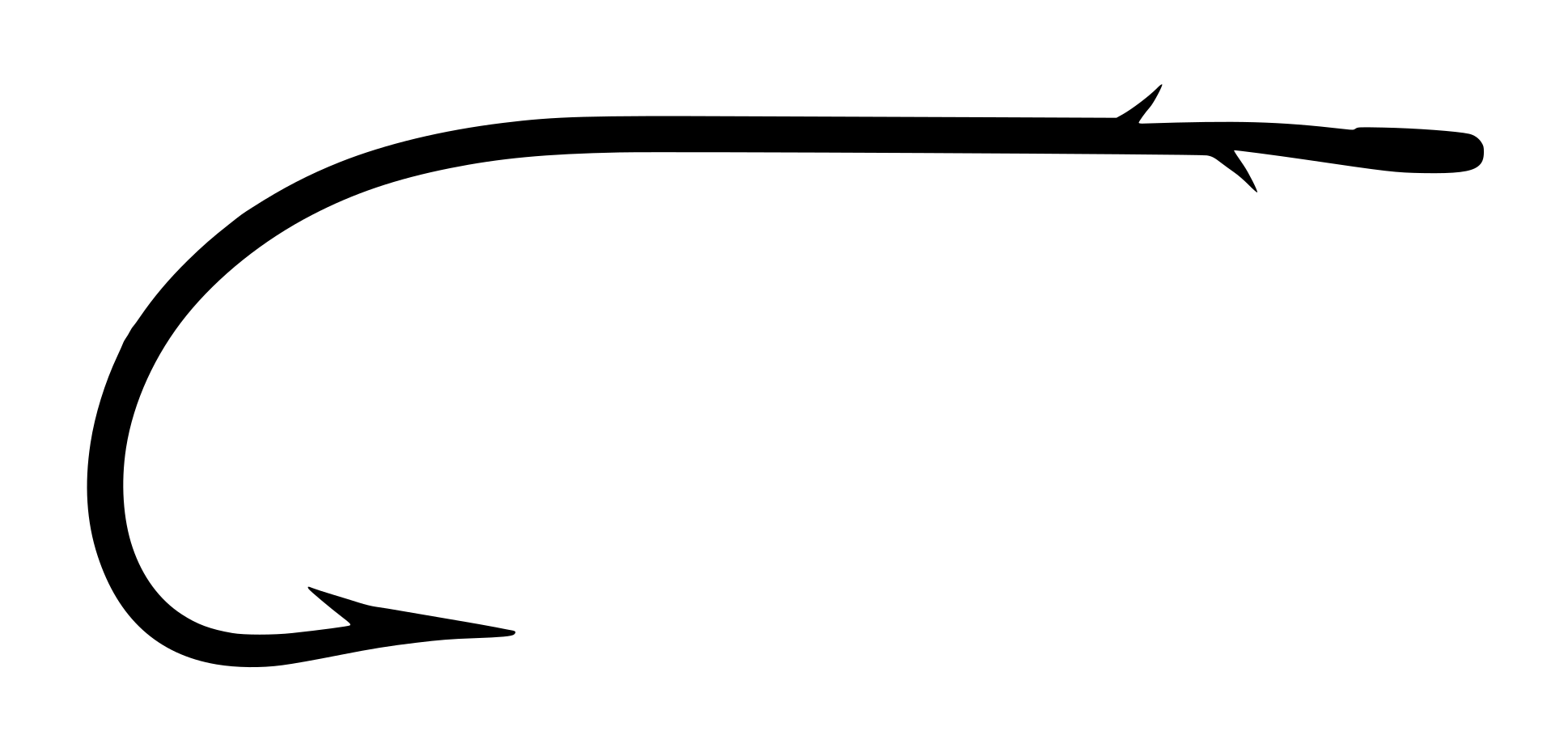
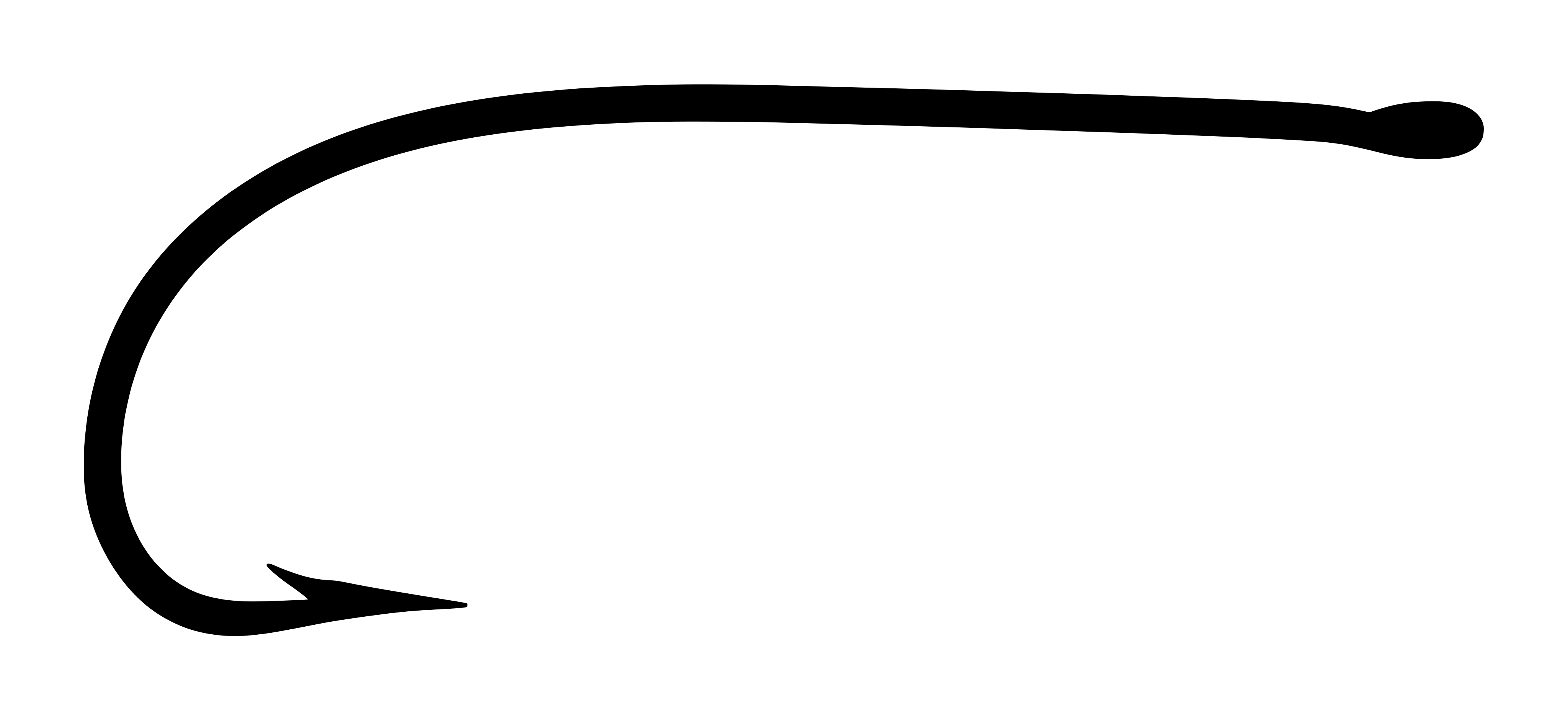
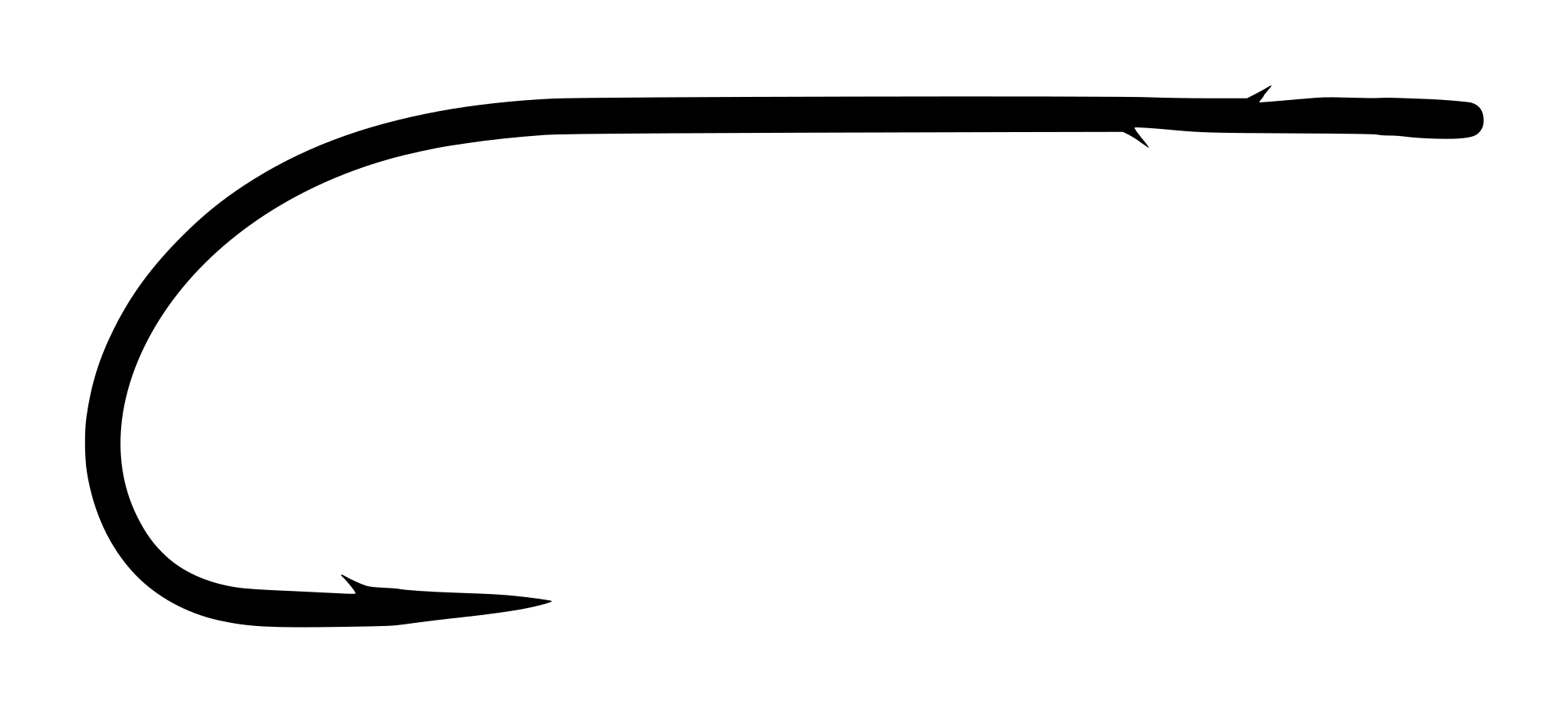
The Mustad 38928 is a mid-tier Sproat-bend general-purpose hook produced by O. Mustad & Søn in Oslo, Norway, during the 1950s-1970s. This model exemplifies Mustad’s strategy of reverse-engineering and mass-producing regional hook patterns—in this case, the Sproat bend, a parabolic hybrid geometry that provides exceptional mechanical holding power by distributing load evenly across the bend.
The defining feature is the hollow point: a concave, razor-sharp ground geometry that penetrates soft tissue with minimal applied pressure, making it ideal for delicate presentations to soft-mouthed species and live-bait applications. The single slice in the shank provides modest grip for soft baits without adding manufacturing complexity. The ringed (ball) eye, blued finish, and standard wire gauge position this hook in Mustad’s mid-tier commercial and sport-angling market.
The eight-line label with Key Brand logo, absence of barcode, and Oslo designation (post-1925) place this in the classic vintage Mustad era. The packaging shows light wear and storage aging, with a notable pink price mark suggesting retail sale in North America. Collectors value the clarity of the technical specifications and the hook’s documented versatility across multiple fishing disciplines.
Original cardstock packaging for Mustad 38928 Sproat Hooks, showing the eight-line printed label with Key Brand logo, explicit technical specifications (Hollow Point, Ringed Blued, one slice in shank), and Oslo - Norway origin marking. Label shows moderate toning and a pink retail price mark typical of mid-twentieth-century North American tackle sales.
Photographic record
4 cataloged imagesSelect any record to load it above.
4 images shown
Mustad 38928 Sproat Hooks Box and Label — Size 4/0Original cardstock packaging for Mustad 38928 Sproat Hooks, showing the eight-line printed label with Key Brand logo, explicit technical specifications (Hollow Point, Ringed Blued, one slice in shank), and Oslo - Norway origin marking. Label shows moderate toning and a pink retail price mark typical of mid-twentieth-century North American tackle sales.Open originalMustad 38928 Size 4/0 — Point Profile and Barb GeometryClose-up profile view of a single Mustad 38928 Sproat Hook (size 4/0) showing the hollow point geometry. The concave inner face of the point tapers from the barb to the tip, creating a dished-out silhouette characteristic of hollow-point grinding. The rapid flare and fine, sharp tip are optimized for penetration with minimal applied force, ideal for soft-mouthed species.Open originalMustad 38928 Size 4/0 — Full Hook Profile and BendFull-length profile view of a Mustad 38928 Sproat Hook (size 4/0) displaying the characteristic parabolic bend geometry, ringed ball eye, and even blued finish throughout. The smooth, sweeping curve of the Sproat bend is designed to distribute mechanical load evenly, resisting straightening under heavy load.Open originalMustad 38928 Size 4/0 — Two-Hook Comparison ViewComparative view of two Mustad 38928 Sproat Hooks (both size 4/0) demonstrating manufacturing consistency. Both hooks show identical parabolic bend geometry, ringed eyes, uniform blued finish, and hollow-point grinding. The comparison documents the precision and repeatability of Mustad's automated hook-making process.Open original
Technical profile
Ringed | Blued | Hollow Point | Sproat | Standard Shank | One Slice in Shank
Eye
Ball Eye, Straight / InlineRinged (ball) eye formed by bending terminal wire back onto main shank. Ball is well-formed and symmetrical P. Eye loop is typical for mid-tier Mustad production of the era, allowing direct knot attachment without requiring a snell or gut loop.
Wire
Extra-Fine, Round, Est. ~0.040"-0.050" (~1.0-1.3 mm)
Shank
1X Long — Baitholder Slices
Bend
Sproat, Standard gapClassic parabolic Sproat bend with smooth, sweeping curve from shank to point. The bend depth relative to gap is moderate and proportional, consistent with standard Sproat geometry P. No offset or unusual angle observed. Bend radius appears symmetrical and well-formed, indicating mechanical consistency in production.
Point
Hollow Point (concave inner face)Hollow point terminates in a barb of moderate size, positioned at a typical angle relative to the shank axis P. Barb appears close-cut and well-defined, without excessive length. The concave inner face of the hollow point creates a knife-edge effect at the tip.
Finish
Blued — Confirmed (stated on packaging)Blued finish is evenly applied, showing a dark, low-glare black-blue tone characteristic of chemical passivation P. No bright spots or bare steel visible on the specimen examined. Finish tone is cool and matte, appropriate for stealth presentation in clear freshwater. Light oxidation patina consistent with age.
Specimen hooks appear bright and unfabricated, with no visible corrosion despite age. Blued finish is intact and even. Card shows light cream-colored toning and minor creasing consistent with storage in a dry environment. Pink stain (likely a price mark or retail sticker residue) visible in upper right. Two hooks missing from original lot of 100; approximately 98 hooks remain, representing a ~98% retention rate.
The hollow point is a mechanically ground geometry featuring a concave, sweeping profile cut from the very tip down to the base of the barb. Instead of a straight, wedge-like taper, the point possesses a dished-out, concave silhouette that results in an incredibly fine, razor-sharp tip that flares rapidly toward the barb. This design achieves initial penetration with minimal applied pressure—a critical advantage when targeting soft-mouthed fish such as crappie, panfish, and certain trout species, where a heavy, violent hook-set would tear friable tissue and result in a lost catch. The rapid flare of the hollow point ensures that once the sharp tip penetrates past the barb, the hook holds securely in soft tissue without creating an overly large entry wound that could tear open under the strain of the fight. The parabolic Sproat bend distributes mechanical load evenly, preventing stress concentration at any single point along the curve and resisting the straightening forces generated by large or powerful fish. The standard wire gauge offers a balance between durability and delicacy, suitable for both live-bait presentations and small streamer patterns. The blued finish provides corrosion resistance via chemical passivation (a thin dark oxide layer) and offers a low-glare presentation ideal for clear-water environments where bright metal might spook cautious fish.
This entry documents a well-preserved example of Mustad's mid-tier eight-line label format and serves as a reference specimen for the transition from blind-eye (Qual. 3371) to ringed-eye Sproat variants. The packaging exemplifies the clarity and technical precision of Mustad's standardized labeling system during the peak era of international hook exportation.
Own this hook? Help us measure it.
We don't have measured sizes for this hook yet. Own one? Submit calipered measurements and we'll review and add them. Thank you!
The Sproat bend is one of the most universally applicable hook geometries in angling history. It features a parabolic curve—a highly engineered hybrid shape sitting exactly between a perfect, sweeping round bend and a sharp, angular Limerick bend. This parabolic structure provides exceptional mechanical holding power by distributing the strain of a fighting fish evenly across the entire bend of the steel, making it highly resistant to straightening or fracturing under heavy, sudden loads. Mustad’s Qual. 38928 is a mid-tier production variant designed for both commercial bait fishing and sport angling, serving as a direct successor to earlier blind-eye Sproat models (such as the Qual. 3371) from the pre-1925 era. The 38928 introduced the ringed (ball) eye, reflecting the broader industry shift from gut-snelled hooks to direct knot attachment as fishing line technology evolved. The single slice in the shank provides modest bait-holding capability without the complexity or manufacturing cost of heavily barbed or ridged designs. The Sproat bend remained in continuous production throughout the twentieth century and is still manufactured by Mustad and other major hook makers today, testament to the geometric superiority of the parabolic design.
Era and Packaging Dating
Packaging shows 'Oslo - Norway' designation. Christiania was renamed to Oslo on January 1, 1925, establishing a post-1925 bracket. The eight-line typography, Key Brand logo, and absence of barcode all indicate mid-twentieth-century production. The card format, offset printing style, and lack of modern postal codes point to the 1950s-1970s period. The 'Made in Norway' statement and Qual. model code are consistent with Mustad's classic labeling era, which ended circa 2001-2009 when the Signature Series was introduced. No specific date can be narrowed further without additional provenance.
The Geometry of Global Conquest
The Sproat bend's parabolic geometry was so mechanically superior that it became the foundation for Mustad's global market dominance in the mid-twentieth century. By reverse-engineering and mass-producing regional patterns like the Sproat (which originated in British fly-tying tradition), Mustad was able to capture localized markets on a global scale with unmatched efficiency. The eight-line label system that adorns this box represents one of the most rigorous standardized technical language systems ever devised for a consumer product—a system so effective that it allowed international merchants, dock workers, and anglers across linguistic and cultural boundaries to instantly understand exactly what hook they were purchasing, without a single word of translation.
Design lineage and influence
The Sproat bend traces its lineage to nineteenth-century British fly-tying tradition, where the parabolic geometry was prized for its mechanical superiority. Mustad’s industrial application of the Sproat (beginning with models like the Qual. 3371 blind-eye variant) represented a democratization of this elite design—making a hook geometry formerly hand-crafted by skilled Redditch artisans available to subsistence fishers and commercial operations worldwide. The Qual. 38928 represents a midpoint in the evolution of Sproat variants: it retained the mechanical integrity of the bend while adopting the ringed eye (enabling direct knot attachment rather than gut snelling) and modest slicing for bait grip. Downstream influences include the widely-used Mustad 3906 wet fly hook, the Tiemco 5262 (a Japanese interpretation of the Sproat geometry), and countless modern fly-tying patterns that rely on the Sproat’s exceptional holding power and even load distribution.
Best matchRelated by Attribute
Computed automatically from catalog data — updated as new hooks are added.
Matches: Bend, Shank, Wire, Gap, Eye +5 moreDiffers: Point: Hollow Point vs Superior; Finish: Blued vs Gold-Plated; Application: Bait vs Bait, Saltwater +2 more
Matches: Bend, Gap, Eye, Eye Orient., Point +4 moreDiffers: Shank: 1X Long vs Standard; Wire: Extra-Fine vs Fine (1X Fine); Finish: Blued vs Black Japanned +2 more
The Mustad 38928 is a versatile, mid-tier general-purpose hook designed for both bait fishing and wet fly applications. The parabolic Sproat bend distributes mechanical stress evenly across the entire bend radius, making it exceptionally resistant to straightening under heavy load. The hollow point provides excellent penetration with minimal force, making it effective for soft-mouthed species such as trout, crappie, and panfish. The single slice in the shank provides modest bait-grip capability, preventing soft baits from sliding excessively during casting or in current. The blued finish offers a low-glare presentation suitable for clear-water environments.
Not typically used for fly tying; primarily a bait hook and wet-fly base.
Modern Equivalents
Hook
Match Quality
Notes
Mustad R72 (Round, 2X strong, 2X long)
Moderate
Modern Signature Series equivalent using logical alpha-numeric naming. Sproat bend geometry and standard wire weight are preserved, but the historical point terminology (Hollow Point) is replaced with Mustad's modern UltraPoint or AlphaPoint sharpening specifications.
Tiemco 5262
Good
Japanese-made wet fly hook with similar Sproat-inspired bend and hollow-point ground geometry. Standard wire, ringed eye, suitable for general bait and wet-fly applications. Often cited as a direct modern alternative for vintage Mustad Sproat hooks.
Collector notes
The 38928 is a common mid-tier variant with modest collector interest. While the Sproat bend is historically significant and the hook's technical specifications are clearly documented on the label, Mustad produced millions of units, limiting rarity value. Collectability is elevated by the intact original packaging, the clarity of the eight-line label system, and the documentation of hollow-point grinding and blued finish specifications.
Positive factors: Original cardstock packaging with clean, legible eight-line label featuring the iconic Key Brand logo. The label’s explicit documentation of point type (Hollow Point), pattern (Sproat), finish (Blued), and shank modification (one slice) provides excellent historical clarity and technical reference value. The absence of a barcode and the Oslo designation place this squarely in the classic vintage Mustad era (post-1925, pre-2001). The specimen hooks remain in bright, unfabricated condition with no corrosion. The Sproat bend’s status as one of the most historically important hook geometries elevates this model’s significance in tackle history.
Limiting factors: Mustad produced the 38928 in enormous quantities throughout the 1950s-1970s, making it common on the secondary market. No particularly unusual features, ornamentation, or rarity markers elevate the model above typical mid-tier production. The loss of approximately 2 hooks from the original 100-unit package (now ~98 remaining) reduces the value slightly, though this is minor. The fair condition of the packaging (light toning, creasing, and a pink price mark) indicates active use and storage rather than mint preservation. The model offers strong historical and technical reference value but limited scarcity or premium investment appeal.
Packaging
Cardstock box with cream-colored paper stock. Eight-line printed label with decorative snowflake border (✼ motif). Label displays Key Brand logo (downward-pointing skeleton key) in upper left, followed by: O. MUSTAD & SON / Manufacturers / Oslo - Norway / Qual. 38928 / Hollow Point / Mustad-Sproat Hooks / Ringed Blued With One slice in shank / Mace in Norway. Size and quantity notation: 100 No. 4/0 in lower left corner. Pink/red stain or pricing mark visible in upper right. Offset letterpress printing. No barcode. Label shows moderate toning and light creasing consistent with age and storage.
Market Value Notes
Vintage Mustad Sproat hooks in original packaging typically sell between $8-18 USD per box, depending on condition, completeness, and era clarity. Boxes with intact original labels, clean cardstock, and all or nearly all hooks present command the higher end of this range. Boxes with significant toning, creasing, or missing hooks (as in this specimen, with ~2 hooks lost) typically fall to the $8-12 range. Specialist tackle dealers and online auction platforms (eBay, Etsy) are the most common venues. Collectors prioritize original packaging and label clarity over the specific model number, as Mustad Sproat variants are functionally interchangeable.
Where to Find
eBay listings for vintage Mustad lots; specialist fly-fishing and tackle antique dealers; estate and tackle show sales; collector forums dedicated to vintage hook documentation (such as the Vintage Fly Fishing Forum and garrenwood.com itself).
Preservation
Storage and Preservation
Store the hook box in a cool, dry environment away from moisture and direct sunlight. The blued finish is a thin oxide layer that, while protective, is susceptible to patina development and eventual surface corrosion if exposed to high humidity for extended periods. Collectors who value the patina and aging characteristics of vintage hooks may prefer to display the box as-is; those seeking to prevent further corrosion should store in acid-free tissue paper or glassine envelopes, away from other metals and in an environment maintained below 50% relative humidity. The original cardstock packaging adds significant historical and monetary value—preserve the box and label intact rather than removing individual hooks. Avoid handling the label excessively, as the offset-printed text can be abraded. If hooks must be removed for use, store them separately in a dry container or on a piece of cork to prevent rust transfer to the original packaging. Never store this box near heating systems, in basements, or in outdoor structures where temperature and humidity fluctuate dramatically.
Marking Analysis
Packaging Marks and Annotations
A pink or red stain is visible in the upper right quadrant of the label, likely a retail price mark or adhesive residue from a vintage price sticker. This mark is consistent with mid-twentieth-century retail practice in North America, where price tags were frequently applied directly to hook box labels. The mark does not obliterate any printed text and provides valuable provenance evidence of active retail sale and distribution through standard sporting goods channels. No handwritten annotations, lot numbers, or dealer marks are visible on the specimen examined. The absence of handwritten cataloging or personal notations suggests this box passed through standard retail channels rather than being part of a curated personal collection or tackle dealer inventory.
Size Note
Size Designation and Vintage Scaling Systems
The documented size is 4/0, denoted on the label as ‘No. 4/0’ in the standard aught scale used for large hooks. The physical measurements derived from grid photography confirm this designation: overall length ~1.98 inches and gap width ~0.64 inches are consistent with modern standards for a 4/0 hook. Vintage Mustad sizing was rigorous and standardized; the 4/0 size was universal across Mustad’s catalog during this era and remains consistent with modern fly-hook sizing standards. No anomaly or scaling variation is present in this specimen. The Mustad eight-line label system explicitly denoted size to prevent confusion across international markets and language barriers—a precision that distinguishes Mustad documentation from many competing manufacturers of the era.
The printed label adheres strictly to Mustad’s standardized eight-line typographic format, documented in detail in ‘A Comprehensive Typology and Decryption of Vintage O. Mustad & Søn Hook Labels’ (reference source). Line-by-line analysis: (1) O. MUSTAD & SON—corporate identity, manufacturer name; (2) Manufacturers—industry role, differentiating Mustad from import agents and repackagers; (3) Oslo – Norway—geographic origin and post-1925 dating marker; (4) Qual. 38928—model code in Mustad’s mid-tier quality bracket (3000-3999 range); (5) Hollow Point—point geometry designation, explicitly defining the concave inner-face penetration mechanics; (6) Mustad-Sproat Hooks—pattern name, identifying the parabolic bend geometry; (7-8) Ringed Blued With one slice in shank / Mace in Norway—anatomical modifications and finish specification. The label’s precise technical language enabled wholesalers, retailers, and individual anglers across linguistic boundaries to instantly identify the exact specifications of the hook. The ‘Mace in Norway’ designation on Line 8 (likely a printing variant or abbreviation for ‘Made in Norway’) confirms Norwegian manufacture and further supports the post-1925, pre-2001 vintage bracket.
Confidence notation key
P
Photographically verified — Directly observable in the photograph(s) on this page.
V
Verified by documentation — Confirmed by manufacturer catalog, spec sheet, or published reference.
I
Inferred — A logical deduction from observable or documented evidence, not directly stated.
E
Estimated — An approximation based on visual comparison, proportional analysis, or limited data.
S
Speculative — A reasoned hypothesis that cannot be confirmed from available evidence.
Unnotated claims are the compiler’s synthesis; see Sources. All photographs on garrenwood.com are taken on a measurement grid where each square equals 1/10 inch (0.1″ / 2.54 mm).