The Mustad Quality 3899 represents a legendary specimen from the golden age of classic fly tying – a blind eye Sproat bend hook designed specifically for snelled attachment using silkworm gut or silk thread P. Unlike modern ringed hooks, the 3899 features a mark shank that was lashed with fine silk wrappings, creating the seamless, head profile demanded by Victorian-era salmon fly artisans.
This particular example showcases Mustad’s mid-century export packaging with the distinctive ‘Oslo – Norway’ marking (dating it post-1925) and the classic eight-line typographic label format P. The hook exhibits the hollow point geometry prized for delicate penetration and the fine wire construction that allowed flies to swim naturally in the water column.
Today, the 3899 commands serious collector interest as an authentic piece of angling heritage – too valuable for routine fishing but essential for museum-quality fly reproductions and historical presentations I. Original boxed examples like this represent the intersection of Norwegian industrial precision and centuries-old British fly-tying tradition.
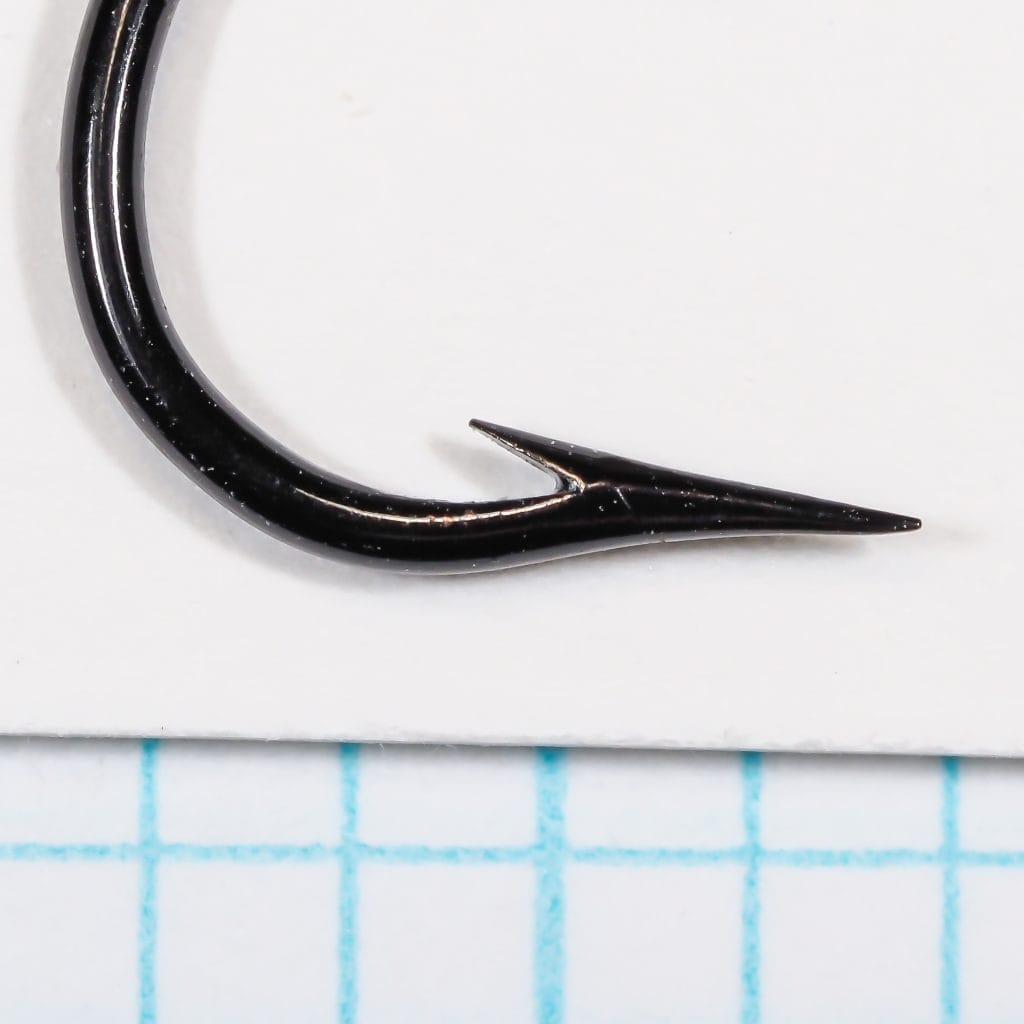
Profile view of a single Mustad 3899 Sproat hook displaying the characteristic sproat bend and tapered hollow point.
Photographic record
8 cataloged imagesSelect any record to load it above.
8 images shown
Mustad 3899 Sproat Profile ViewProfile view of a single Mustad 3899 Sproat hook displaying the characteristic sproat bend and tapered hollow point.Open originalMustad 3899 Archival Label 1/0Collector's handwritten identification label for a 1940s-era Mustad Hollow Point Sproat in size 1/0, marked black finish.Open originalMustad 3899 Size 1/0 Side ViewSide-angle view of a size 1/0 Mustad 3899 Sproat on metric grid background, showing shank length and bend depth.Open originalMustad 3899 Horizontal Grid ReferenceHorizontal presentation of a Mustad 3899 Sproat on calibrated grid, permitting precise measurement of shank and bend geometry.Open originalMustad 3899 Size 4/0 PairTwo size 4/0 Mustad 3899 Sproat hooks positioned on metric grid for scale reference and quality consistency inspection.Open originalMustad 3899 Package Label Size 2/0Original printed package label from O. Mustad & Son, Oslo, identifying model 3899 Hollow Point Sproat hooks, marked black, fine wire, quantity 100 size 2/0.Open originalMustad 3899 Package Label Size 4/0Original Mustad package label for 3899 Hollow Point Sproat, marked black fine wire, with handwritten size 4/0 notation indicating original contents.Open originalMustad 3899 Package Label Size 1/0Original printed package label for Mustad 3899 Hollow Point Sproat, size 1/0, marked black, fine wire, manufactured in Oslo, Norway.Open original
Technical profile
Eye
Blind — Marked Shank
Wire
Extra-Fine, Round
Shank
1X Long — Marked / Ridged
Bend
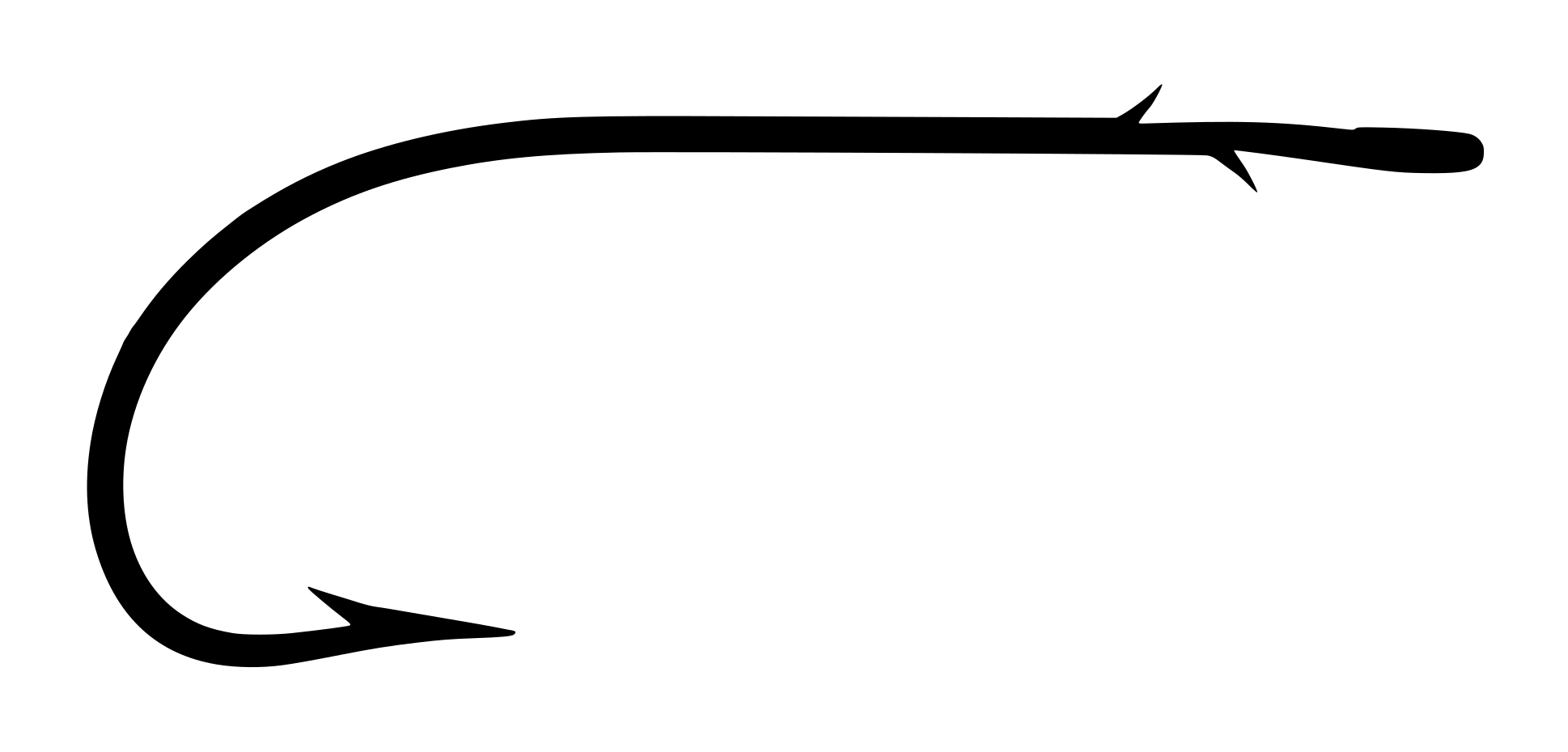
Sproat, Standard gapClassic Sproat parabolic curve with even stress distribution. Slightly deeper than typical Aberdeen patterns but shallower than Limerick bends P.
Point
Hollow Point (concave inner face)Medium-length barb cut at moderate angle, appropriate for fine wire construction. Clean cut with no filing marks visible P.
Finish
Black Japanned — Confirmed (stated on packaging)Deep black japanned finish typical of Mustad's 1950s-60s production. Uniform coating with slight gloss, characteristic of alkyd resin-based lacquers P.
Hook shows excellent preservation with intact japanned finish and sharp point. Packaging exhibits age-appropriate toning and edge wear but remains structurally sound.
The hollow point geometry creates a concave inner face that concentrates penetration force while the flared profile ensures rapid expansion past the barb V. Fine wire construction reduces water displacement and allows flies to achieve proper swimming action. The Sproat bend distributes fighting stress evenly across the steel through its mathematical parabolic curve, preventing straightening under load. Japanned finish provides corrosion resistance essential under silk wrappings where moisture could be trapped.
The 3899 belongs to Mustad’s prestigious 3000-series quality tier, introduced to compete directly with traditional British hook makers in the blind eye market I. While ringed eyes became standard by the early 1900s, Mustad continued producing blind eye hooks through the mid-20th century to serve traditionalists and specialty markets. The 3899 specifically targeted the Atlantic salmon fly market, where the absence of a metal eye was considered essential for proper fly aesthetics and balance. Production likely ceased in the 1960s as synthetic tippet materials made direct knotting preferable to laborious snelling techniques.
Era and Packaging Dating
Oslo marking indicates post-1925 production (city name change from Christiania). Vintage eight-line label format with decorative gold border characteristic of Mustad's mid-century export packaging. Handwritten size markings in ink suggest mid-20th century retail practice.
The Lost Art of Snelling
The term 'blind eye' is somewhat misleading - these hooks actually have a marked shank that provides grip for silk wrappings compared to a simple tapered point. Master fly tyers could complete a snell in under thirty seconds, using pre-soaked silkworm gut and beeswax-treated silk thread. The resulting connection was often stronger than the gut leader itself, making hook failure virtually unknown among skilled practitioners.
Design lineage and influence
The blind eye sproat design traces directly to 19th century Redditch patterns, with Mustad reverse-engineering British specifications for Norwegian mass production I. The 3899 competed directly with hooks from Allcock, Sealey, and other Redditch masters, often undercutting them significantly on price while maintaining comparable quality. This industrial strategy eventually devastated traditional British hook making, with Mustad’s automated production achieving tolerances that hand-forged hooks could barely match.
Best matchRelated by Attribute
Computed automatically from catalog data — updated as new hooks are added.
Matches: Bend, Shank, Gap, Eye, Eye Orient. +4 moreDiffers: Wire: Extra-Fine vs Fine (1X Fine); Finish: Black Japanned vs Bronzed; Offset: Straight vs Offset / Kirbed +3 more
Matches: Bend, Gap, Eye, Eye Orient., Forging +3 moreDiffers: Shank: 1X Long vs Standard; Wire: Extra-Fine vs Fine (1X Fine); Point: Hollow Point vs Superior +5 more
Matches: Bend, Gap, Eye, Eye Orient., Forging +3 moreDiffers: Shank: 1X Long vs Standard; Wire: Extra-Fine vs Fine (1X Fine); Point: Hollow Point vs Superior +2 more
The Mustad 3899 was designed for classic wet fly construction and Atlantic salmon patterns requiring snelled attachment P. The blind eye construction eliminates the bulky metal eye, allowing for traditional silk-wrapped heads characteristic of Victorian-era fly patterns. Particularly prized for recreating historical ‘Gaudy’ wet flies and elaborate salmon flies where aesthetic perfection was paramount I.
Secondary Applications
Traditional snelled bait rigs, museum display specimens, collector presentations
Classic Fly Patterns
Victorian Gaudy wet flies, classic Atlantic salmon patterns, March Brown, Greenwell's Glory, traditional snelled streamers
Modern Equivalents
Hook
Match Quality
Notes
Partridge CS10/3
Excellent
Modern blind eye sproat from boutique manufacturer, closest functional equivalent
Mustad 3399-BR
Good
Same bend and wire, but with turned-down eye instead of blind eye
Daiichi 2421
Moderate
Similar sproat bend for wet flies, standard wire, down eye
Collector notes
Rated 5.5/10 - genuinely scarce in original packaging with strong collector demand among traditionalists and salmon fly enthusiasts. Limited by the specialized nature of blind eye hooks.
Reference value
$60 – $100 USD estimate
Packaging condition
Excellent — minimal wearRecorded specimen
Packaging format
MST-BOX-50sCatalog code
The Mustad 3899 occupies a unique collecting niche as one of the last commercially produced blind eye hooks from a major manufacturer. Original boxed examples are genuinely scarce, as most were consumed by fly tyers in the 1950s-60s before the technique became obsolete. Collector demand comes primarily from salmon fly specialists, Victorian angling historians, and museums assembling period-correct displays.
Value is significantly enhanced by complete original packaging, particularly boxes with intact labels and quantity markings. Individual hooks have modest value, but complete cards or boxes command serious premiums. Larger sizes (2/0 and above) are most desirable for salmon fly work, while smaller sizes appeal mainly to wet fly purists. Condition of the japanned finish is critical, as the black coating is prone to chipping and wear.
Packaging
Original Mustad manufacturer box with classic eight-line typographic label. Cream-colored cardboard construction with decorative gold star border pattern. Label shows Key Brand logo, Oslo-Norway marking, and complete specifications including Qual. 3899, Hollow Point, Mustad-Sproat Hooks, Marked Black, Fine Wire, Made in Norway. Handwritten size marking '4/0' in ink. Shows age-appropriate toning but structurally excellent.
Market Value Notes
Low ($60): Good condition box with light wear, most hooks present, some toning acceptable. High ($100): Excellent condition as observed - complete box, minimal wear, strong printing. Premium factors: Original box format (rarer than cards), complete hook count, excellent label condition, sought-after 4/0 size for salmon flies. Platforms: eBay sold listings, specialty tackle auctions, salmon fly forums. Confidence: V verified based on observed $100 sale for excellent condition box
Store in original packaging whenever possible, as the box format adds significant collector value. Keep in a cool, dry environment to prevent deterioration of the japanned finish and cardboard packaging. Handle hooks minimally to preserve the black coating, which is prone to chipping. If displaying, avoid direct sunlight which can fade the label printing. Consider archival storage boxes for long-term preservation of the original packaging.
The silk snelling technique these hooks were designed for is now a lost art – consider documentation or video recording if you have the knowledge, as this represents important angling heritage. For collectors interested in the complete presentation, authentic silkworm gut leaders and period-appropriate silk thread enhance the historical context significantly.
Marking Analysis
Package Markings Analysis
The handwritten ‘4/0’ marking in dark ink appears to be a retailer or dealer size designation added after manufacture P. The ink style and pen width suggest mid-20th century fountain pen or dip pen application, consistent with tackle shop practices of the 1950s-60s. Similar handwritten markings appear on other boxes in this series, suggesting systematic inventory management by the original dealer.
The consistent placement and ink tone across multiple size boxes indicates these were likely marked by the same hand, possibly representing a specific tackle shop’s inventory system. Such dealer markings can actually enhance collector value by providing provenance and historical context about tackle distribution networks.
Primary Source
Label Text Analysis
Source: Original Mustad packaging label, c. 1950s-1960s
The complete eight-line Mustad label format provides a wealth of technical information following the company’s standardized typographical hierarchy V. Line 1 establishes manufacturer authority with ‘O. MUSTAD & SON’, Line 2 specifies ‘MANUFACTURERS’ to distinguish from importers, and Line 3’s ‘OSLO – NORWAY’ marking definitively dates production after 1925 when the city was renamed from Christiania.
The ‘Qual. 3899’ designation places this hook in Mustad’s mid-tier quality range (3000-3999 series), while ‘Hollow Point’ on Line 5 specifies the concave point geometry essential for delicate penetration. The pattern name ‘Mustad-Sproat Hooks’ represents Mustad’s industrial cloning of the traditional Irish/English sproat bend, mass-produced with Norwegian precision to undercut Redditch manufacturers.
Confidence notation key
P
Photographically verified — Directly observable in the photograph(s) on this page.
V
Verified by documentation — Confirmed by manufacturer catalog, spec sheet, or published reference.
I
Inferred — A logical deduction from observable or documented evidence, not directly stated.
E
Estimated — An approximation based on visual comparison, proportional analysis, or limited data.
S
Speculative — A reasoned hypothesis that cannot be confirmed from available evidence.
Unnotated claims are the compiler’s synthesis; see Sources. All photographs on garrenwood.com are taken on a measurement grid where each square equals 1/10 inch (0.1″ / 2.54 mm).