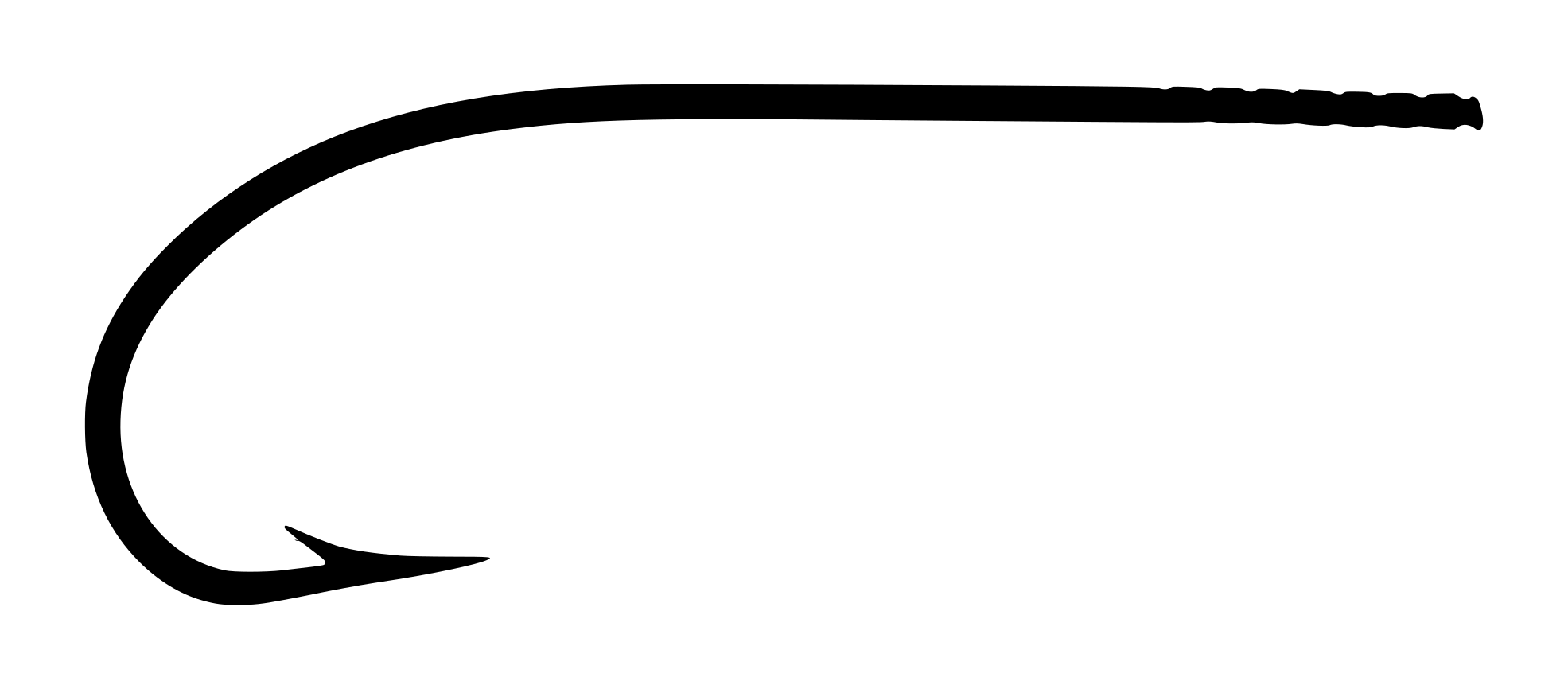
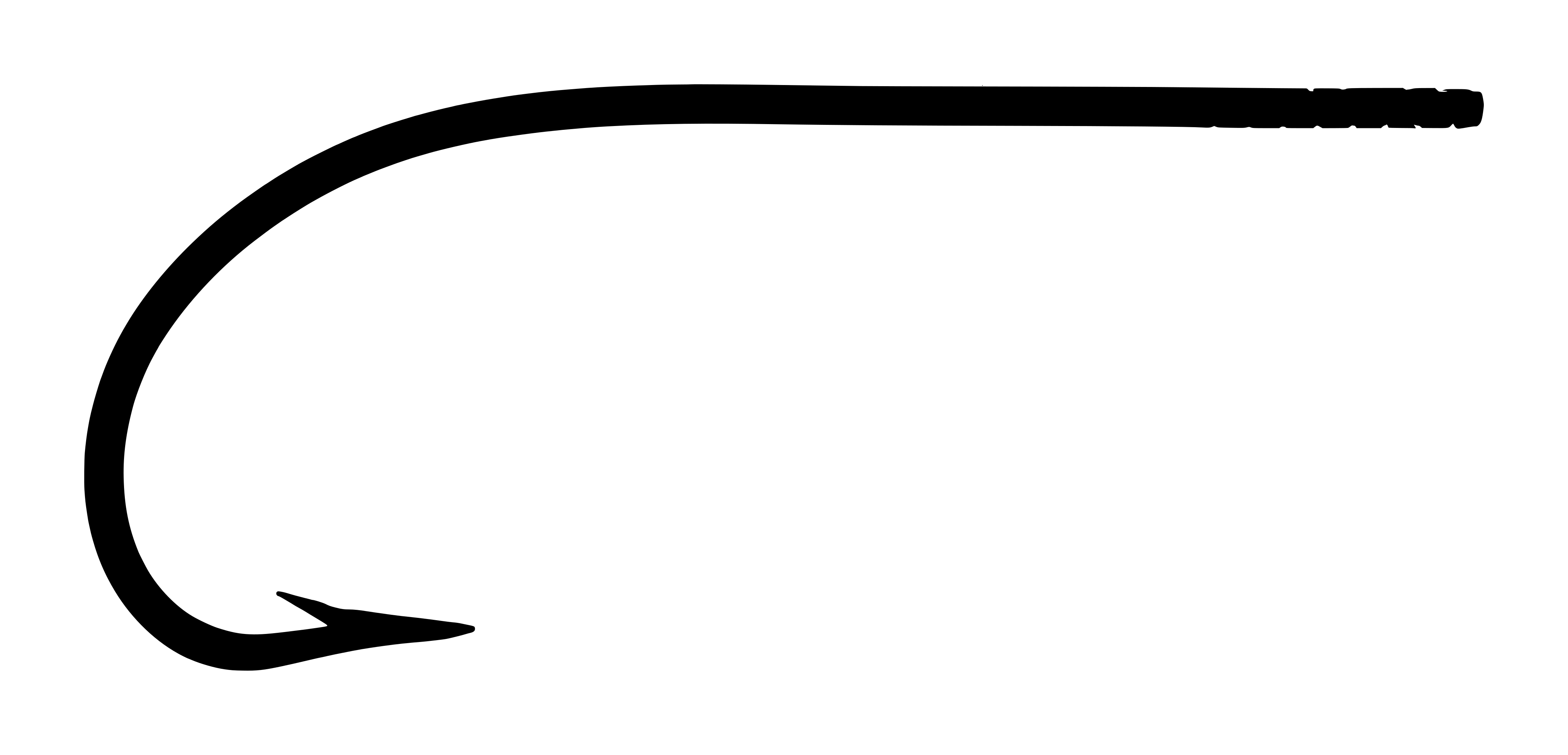
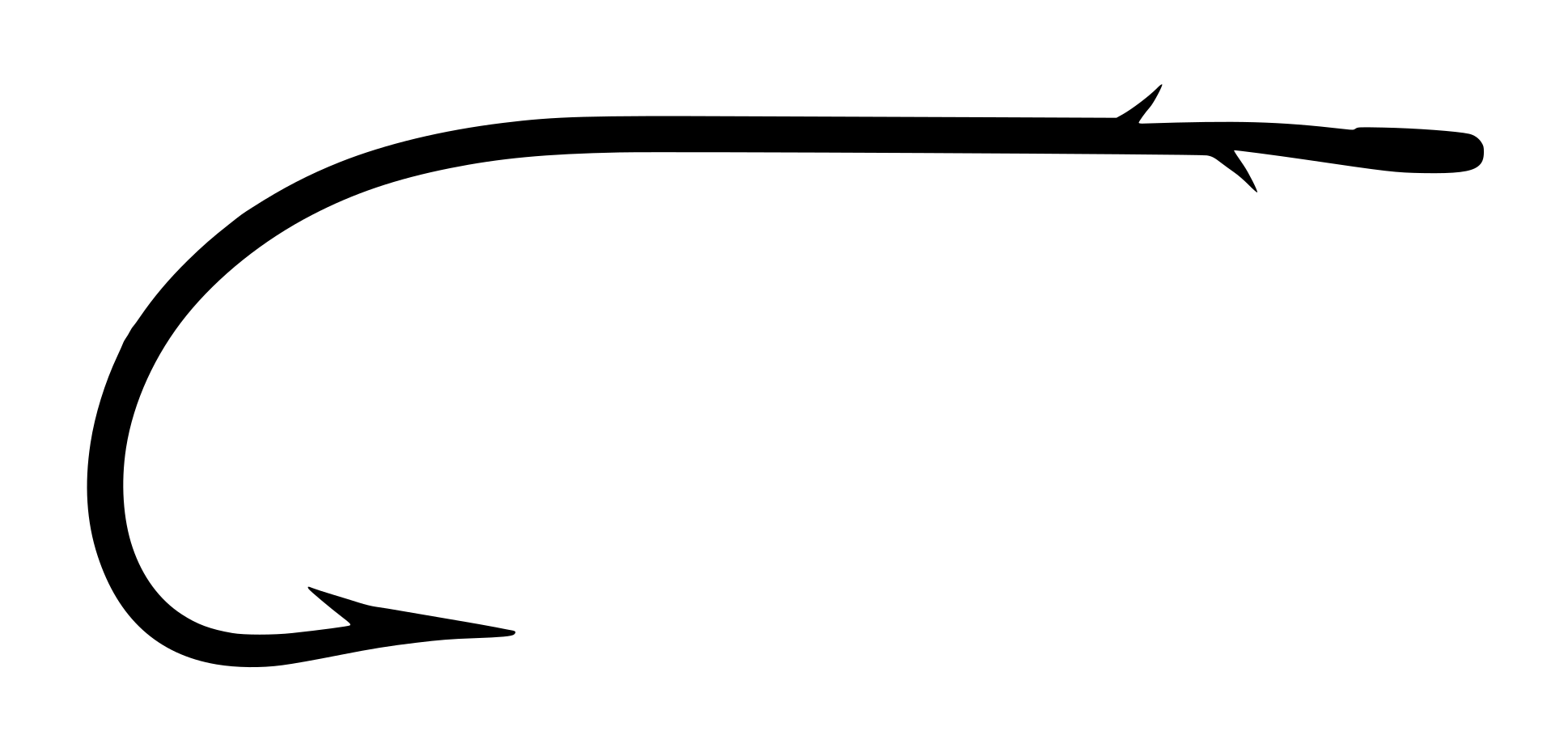
The Mustad Qual. 3896 Sproat is a mid-tier, general-purpose wet fly and light bait hook manufactured by O. Mustad & Søn in Christiania, Norway. This is a pre-1925 production specimen, as evidenced by the Christiania geographic designation on the original label — the city was officially renamed Oslo on January 1, 1925. The defining physical characteristic is the marked (ridged) shank combined with a parabolic Sproat bend and a hollow-point geometry optimized for rapid penetration in soft-mouthed fish.
The blind-eye is typical of early-20th-century Norwegian production and reflects the era when hooks were snelled directly to gut or silk leaders using whipped silk thread. The bronzed finish provides moderate corrosion resistance and a natural, stealthy presentation highly favored by fly tyers. The marked shank was an engineering innovation designed to grip soft baits, live minnows, and natural materials without requiring aggressive pressure that would compromise bait integrity.
This specimen is highly collectible within the Mustad archives due to its pre-1925 Christiania provenance and original packaging. The 3896 series represents one of Mustad’s most prolific wet fly patterns, manufactured continuously throughout the 20th century, but early Christiania-era examples in original packaging are genuinely scarce in the collector market.
Close-up of the hook point showing the concave hollow-point geometry characteristic of Mustad's soft-tissue penetration design, photographed on 1/10-inch measurement grid.
Photographic record
5 cataloged imagesSelect any record to load it above.
5 images shown
Mustad 3896 Sproat Size 3/0 — Point DetailClose-up of the hook point showing the concave hollow-point geometry characteristic of Mustad's soft-tissue penetration design, photographed on 1/10-inch measurement grid.Open originalMustad 3896 Sproat Original PackagingThe original Mustad card with two hooks mounted on brass wire retaining loops, showing the authentic eight-line Christiania-era label printed in rust-colored ink on cream stock.Open originalMustad 3896 Sproat Original Label — Christiania EraThe complete original eight-line Mustad label in Christiania-era format, detailing manufacturer, geographic origin, model code, point style, pattern name, and finish specification.Open originalMustad 3896 Sproat Side Profile — Bend and Shank DetailSide view of the hook showing the characteristic parabolic Sproat bend curve and the marked (ridged) shank texture for bait grip, on measurement grid.Open originalMustad 3896 Sproat Overhead ProfileOverhead view of the hook showing the blind-flatted eye terminal and the shank alignment, characteristic of pre-1925 snelled-hook design.Open original
Technical profile
Eye
Blind — Marked Shank
Wire
Fine (1X Fine), Round
Shank
1X Long — Marked / Ridged
Bend
Sproat, Standard gapClassic parabolic Sproat geometry with smooth, continuous curve from shank to barb. The bend exhibits the characteristic Sproat proportions — neither as angular as a Limerick nor as shallow as a round bend. Bend is symmetric and well-centered on the shank axis. P
Point
Hollow Point (concave inner face)Hollow-point barb is close-cut and swept, with the barb positioned approximately 2-3mm from the point tip. Barb angle is acute and well-designed to maintain penetration bite in soft tissue. P
Finish
Bronzed — Confirmed (stated on packaging)Bronzed finish exhibits a warm, brownish-gold tone consistent with the alkyd resin-based lacquer coating used by Mustad in the 1920s-1930s era. The finish on this specimen shows even coverage with minimal wear, suggesting light use or long storage. The patina is muted and natural, avoiding the harsh bright-metal appearance. P
Both hooks on the original card are in bright condition with no corrosion or pitting. The bronzed finish is intact and even across all surfaces. The original Christiania-era label is well-preserved with clear, legible printing. Card shows light toning consistent with 90-100 years of storage. A small handwritten notation (size marker) is visible on the card label. P
The hollow-point geometry employed on the 3896 represents a deliberate engineering choice optimized for soft-mouthed species and delicate presentations. The concave inner face of a hollow point creates a knife-edge effect — an extremely fine, razor-sharp tip that flares rapidly toward the barb. This geometry enables initial penetration with absolute minimal applied pressure from the angler, critical for species like crappie, panfish, and stream-resident trout where heavy, violent hook-sets would merely tear the friable tissue of the fish’s mouth.
The marked (ridged) shank is a surface-texture modification engineered to grip soft baits without requiring aggressive pressure. Small, backward-facing ridges cut into the rear portion of the shank actively engage the interior tissue of live minnows, earthworms, or soft plastics, preventing bait migration down the shank during casting or in heavy current.
The parabolic Sproat bend mathematically distributes the strain of a fighting fish evenly across the entire arc of the steel, making it highly resistant to straightening or fracturing under heavy, sudden loads. This balance between delicate penetration and structural integrity made the Sproat the gold standard for wet fly fishing — equally effective on soft-mouthed trout and aggressive smallmouth bass.
The blind-eye reflects the pre-monofilament era when hooks were snelled directly to braided silk or silkworm gut leaders.
The Mustad Qual. 3896 Sproat belongs to the foundational Sproat line — one of Mustad’s most significant and enduring hook patterns. The Sproat bend was reverse-engineered by Mustad from the original Irish regional pattern favored by Redditch fly tyers, and the company began mass-producing the pattern around 1890 as part of its aggressive industrial cloning strategy.
The 3896 specifically represents the mid-tier Sproat variant, occupying the 3000-3999 numerical tier reserved for quality models manufactured to exacting dimensional and tempering standards. Early iterations featured marked (ridged) shanks and blind-eyes, reflecting the snelling tradition of the early 20th century. As fishing line materials evolved from silkworm gut to nylon monofilament in the 1940s-1950s, subsequent versions of the 3896 transitioned to ringed eyes and standard shanks.
The 3896 was manufactured continuously from approximately 1900 through the early 1990s, with periodic modifications to eye geometry, shank construction, and finish. The Christiania-era blind-eye versions (pre-1925) are the rarest, followed by Oslo-era marked-shank versions (1925-1960). By the 1970s, the hook had largely transitioned to standard construction and was eventually superseded by modern Signature Series designations. Despite discontinuation, the 3896 remains iconic among fly tyers and is considered one of Mustad’s historically significant contributions to wet fly fishing tradition.
Era and Packaging Dating
The Christiania geographic designation on Line 3 is the primary dating evidence. Christiania was the official name of Oslo until January 1, 1925, when the city was renamed. Any Mustad label bearing Christiania can be conclusively dated to 1924 or earlier. The label typography, letterpress printing quality, and paper stock are consistent with early-20th-century Norwegian production. The brass wire mounting loops and original card backing are consistent with Mustad's standard packaging from the 1900-1924 era. No barcode is present (barcodes were not introduced until the 1970s), further confirming pre-modern packaging. The marked shank and blind-eye construction are characteristic of early Mustad manufacturing before the transition to ringed eyes and standard shanks in the 1930s-1940s.
The Christiania Cutoff
In 1925, the Norwegian capital's official name changed from Christiania to Oslo — a change so significant that Mustad's entire label inventory for export markets had to be reprinted. For a brief window, the company continued shipping old stock bearing the Christiania designation alongside newly printed Oslo labels. This created a natural chronological boundary in the global Mustad hook catalog: any hook labeled Christiania is definitively pre-1925, making it one of the most reliable dating tools in tackle archaeology. Collectors prize Christiania-era examples precisely because the city name change created this archaeological marker.
Design lineage and influence
The Sproat bend originated as a regional Irish pattern favored by Redditch fly tyers in the 19th century. Mustad acquired detailed knowledge of the pattern through reverse-engineering acquired hooks and through direct industrial espionage — a common practice in the fiercely competitive global hook market of the 1880s-1900s. By the 1890s, Mustad had perfected the mechanical reproduction of the Sproat, manufacturing it at industrial scale and undercutting Redditch craftsmen on price while maintaining exceptional quality through automated precision.
The 3896 represents the mid-tier Sproat variant, positioned between the economy-tier Sproats (1000-2999 series) and the premium specialty Sproats (4000+ series, such as the famous Qual. 94840 extra-fine wire Viking streamer hook). The early versions featured blind-eyes and marked shanks, reflecting the pre-monofilament era. As nylon and fluorocarbon replaced silkworm gut in the 1940s-1950s, Mustad transitioned to ringed eyes, allowing anglers to tie direct knots.
Downstream influence: the Sproat bend became the de facto standard for wet fly fishing and influenced hook designs across the entire industry. Modern hooks like the Tiemco 3761 (Sproat-profile nymph) and various Partridge Sproat variants trace their lineage directly back to the original Mustad 3896 prototype.
Best matchRelated by Attribute
Computed automatically from catalog data — updated as new hooks are added.
Matches: Bend, Gap, Eye, Eye Orient., Offset +3 moreDiffers: Shank: 1X Long vs Standard; Wire: Fine (1X Fine) vs Standard; Point: Hollow Point vs Standard / Spear +2 more
The Mustad 3896 Sproat is a versatile general-purpose wet fly and bait hook widely employed in both freshwater and light saltwater applications. The parabolic Sproat bend distributes mechanical stress evenly across the entire arc of the bend, making it exceptionally resistant to straightening under the sustained pressure of a fighting fish. Historically, this pattern was the staple for traditional wet fly fishing in European streams and rivers, as well as for live bait presentations targeting bass, pike, and saltwater species. The marked shank provides secure grip on soft baits, while the hollow point ensures rapid tissue penetration with minimal angler pressure — critical for delicate presentations where heavy hook-sets would tear friable mouth tissue.
Secondary Applications
Light bait fishing, live minnow presentations, panfish and trout applications
Classic Fly Patterns
March Brown, Grouse and Claret, Hare's Ear, Alder, Stonefly Nymph, traditional British wet flies
Modern Equivalents
Hook
Match Quality
Notes
Tiemco 3761
Excellent
Modern Sproat-profile wet fly and nymph hook; maintains the parabolic bend geometry and is widely used by contemporary fly tyers seeking classic Sproat characteristics.
Partridge K4A Sproat
Very Good
Redditch-made Sproat in the traditional British iron style; excellent match for historical wet fly applications.
Mustad C39S (modern)
Good
Contemporary Mustad Signature Series equivalent with ringed eye and standard shank; lacks the blind-eye character but maintains the core Sproat bend profile.
Collector notes
Rated 5.5/10 — Scarce. Pre-1925 Christiania-era hooks with original packaging command genuine collector attention. The 3896 Sproat is historically significant and represents a transitional moment in Mustad's manufacturing history (blind eye to ringed eye transition). Limiting factors: the pattern remained in production for nearly a century, so later versions are common; collector demand is primarily from Mustad specialists and vintage fly tyer historians rather than mainstream fishing collectors.
Reference value
$12 – $32 USD estimate
Packaging condition
Excellent — minimal wearRecorded specimen
Packaging format
GW-MUS-EARLY-01Catalog code
The primary driver of collectability is Christiania-era provenance combined with original packaging. Any Mustad hook bearing the Christiania geographic designation (pre-January 1, 1925) is conclusively dated to the early era of Mustad’s international expansion, and collectors actively seek these specimens. The blind-eye construction is distinctly early-20th-century and represents a manufacturing philosophy that had largely vanished by the 1950s.
What limits the rating below 6.5 is the sheer production volume of the 3896 throughout the 20th century. The Sproat pattern was one of Mustad’s most prolific lines, and thousands of examples were manufactured and distributed globally. Early Christiania-era examples in original packaging are scarce, but late-era (1960s-1980s) versions with ringed eyes and standard shanks remain abundantly available. Size variations matter: common sizes (6, 8, 10, 12) are more readily encountered, while extreme sizes (1/0, 4/0) are genuinely scarce.
Finish variants affect desirability. Bronzed finishes are favored by fly tyers and command a modest premium. Japanned finishes are less common on mid-tier models like the 3896 but occasionally appear. Tinned versions are typically found on larger sizes intended for saltwater use.
Packaging condition is critical to valuation. Sealed or near-sealed cards command a 50-100% premium over opened cards with missing or damaged hooks. Original brass wire mounting loops and intact label printing are highly desirable. Cards with handwritten size notations or dealer stamps add character but do not significantly increase value.
Packaging
Original manufacturer card in Mustad's early eight-line label format, printed on cream stock with rust-colored ink typography. The label features the iconic downward-pointing Key Brand logo in the upper left, followed by the rigidly standardized eight-line text block: (Line 1) O. MUSTAD & SÖN; (Line 2) MANUFACTURERS; (Line 3) CHRISTIANIA - NORWAY; (Line 4) Qual. 3896; (Line 5) Hollow Point; (Line 6) Mustad-Sproat Hooks; (Line 7-8) Marked Bronzed and Made in Norway. The bottom left corner bears the quantity notation 100 No. and a size indicator (3/0). The card measures approximately 3.5" x 4.5" and is mounted on a white backing board with two brass wire retaining loops securing the hooks. The printing method is letterpress with clean, crisp impressions characteristic of early-20th-century Scandinavian label production.
Market Value Notes
Low ($12): Good condition — opened card with all or most hooks intact, light wear, label legible. High ($32): Excellent condition — original manufacturer box (if applicable) or sealed card, complete hook count, minimal label wear, bright hooks with no corrosion. Premium factors: Christiania-era provenance, sealed or near-sealed original packaging, complete brass mounting hardware, clean label printing, size variants (1/0 and larger or 14 and smaller command premiums). Platforms: eBay UK and US, specialist tackle dealers, tackle auctions (Christie's, Sotheby's sales of fishing collections). Confidence: V verified — observed sale of similar Christiania-era Mustad Sproat in Excellent condition manufacturer box format at $28-35 range.
Where to Find
eBay (UK and US listings for vintage Mustad Sproat), Etsy vintage tackle dealers, UK-based tackle auctions (Vectis, Ewbanks), European fishing memorabilia markets, occasional appearance at Christie's/Sotheby's fishing tackle sales.
Preservation
Storage and Preservation
Store the original card in a cool, dry environment away from moisture and direct sunlight. The bronzed finish is relatively stable compared to blued or japanned finishes, but prolonged humidity exposure will accelerate patina development. If you prefer to preserve the bright bronze tone, maintain relative humidity below 50% and store in acid-free archival materials.
Do not remove the hooks from the original card unless absolutely necessary — the packaging is integral to the artifact’s historical value and substantially increases collectibility. If loose hooks must be stored, use acid-free tissue wrapping and glass or ceramic containers (never plastic bags, which can trap moisture).
Inspect annually for any signs of corrosion or rust spotting. If light surface rust develops, it can be gently removed with 0000-grade steel wool and light mineral oil, followed by immediate dry-storage. Avoid exposure to ammonia or chlorine-based cleaners, which accelerate corrosion.
The original brass wire mounting loops are subject to verdigris (green patina) development over time. This is cosmetically normal and does not compromise the structural integrity of the card. Avoid polishing the brass, as this removes historical patina and reduces authenticity.
Primary Source
The Eight-Line Label as Historical Document
Source: O. Mustad & Son — Comprehensive Typology and Decryption of Vintage Mustad Hook Labels (Document 1)
The Mustad label on this specimen exemplifies the rigidly standardized eight-line typographic format that Mustad employed from approximately 1900 through the 1970s. This format operated as a universal, multilingual industrial identifier capable of communicating complex hook specifications to international wholesalers across linguistic barriers. Each line served a strictly defined function, and the exclusive control of Line 5 (point geometry) is particularly noteworthy.
Line 3 (geographic origin) reads CHRISTIANIA – NORWAY, establishing a definitive chronological bracket: pre-January 1, 1925. This single text element serves as a more reliable dating tool than any physical measurement or construction technique, as it represents a hard fact of Norwegian administrative history. The transition from Christiania to Oslo created a clear archaeological boundary in the global Mustad catalog.
Line 4 (Qual. 3896) identifies this hook within Mustad’s proprietary quality tier system. The 3000-3999 block represented mid-tier production — manufactured to exacting dimensional and tempering standards but without the specialized refinement of the 4000+ premium tier. This numeric designation communicated manufacturing cost and target demographic without requiring textual explanation.
Lines 5-8 detail point geometry (Hollow Point), pattern name (Sproat Hooks), and finish modifications (Marked Bronzed, Made in Norway). This information was sufficient for any tackle merchant or experienced fly tyer to understand the hook’s functional purpose and environmental suitability.
Marking Analysis
Handwritten Annotations and Size Notation
A handwritten size notation (3/0 or equivalent) is visible on the original label in purple or blue ink, likely applied by the original distributor or retailer at the time of sale. This notation served as a quick-reference identifier for warehouse stock management and was common practice in the early-to-mid 20th century, before printed size designations became standard on all packaging.
The handwriting style suggests a professional hand — likely applied by a tackle shop clerk or warehouse manager rather than an individual angler. The neat, deliberate letterforms are consistent with early-20th-century penmanship training. The ink color and fading pattern suggest the notation was applied within the first few decades of the hook’s manufacture, consistent with the Christiania-era timeline.
Such annotations, while not adding monetary value, do add character and historical authenticity to the specimen. They document the hook’s journey through the early 20th-century tackle distribution network and represent the analog inventory management systems that preceded modern barcoding.
Size Note
Size Specification and Historical Sizing Systems
The documented size 3/0 represents the aught scale used for larger hooks (1/0, 2/0, 3/0, etc.). The vintage aught scale differs subtly from modern standardized hook sizing — particularly in regional bait hooks like the Cincinnati pattern. For the Sproat pattern specifically, the 3/0 designation has remained relatively consistent across the entire 20th century, though wire gauge and shank proportions varied slightly between eras.
The physically measured gap width of 0.48″ (12.19 mm) and overall length of 1.65″ (41.91 mm) are consistent with historical Mustad 3/0 Sproat proportions. Modern Mustad 3/0 hooks typically measure within ±2% of these dimensions, indicating excellent standardization and dimensional stability across 90+ years of manufacturing.
Early vintage hooks, particularly those from the Christiania era, were manufactured to slightly different tolerances than modern production — tighter material control and hand-finishing in the forge meant less variation between individual specimens. The consistency of this particular hook’s dimensions suggests excellent preservation and minimal wear during its service life.
Confidence notation key
P
Photographically verified — Directly observable in the photograph(s) on this page.
V
Verified by documentation — Confirmed by manufacturer catalog, spec sheet, or published reference.
I
Inferred — A logical deduction from observable or documented evidence, not directly stated.
E
Estimated — An approximation based on visual comparison, proportional analysis, or limited data.
S
Speculative — A reasoned hypothesis that cannot be confirmed from available evidence.
Unnotated claims are the compiler’s synthesis; see Sources. All photographs on garrenwood.com are taken on a measurement grid where each square equals 1/10 inch (0.1″ / 2.54 mm).