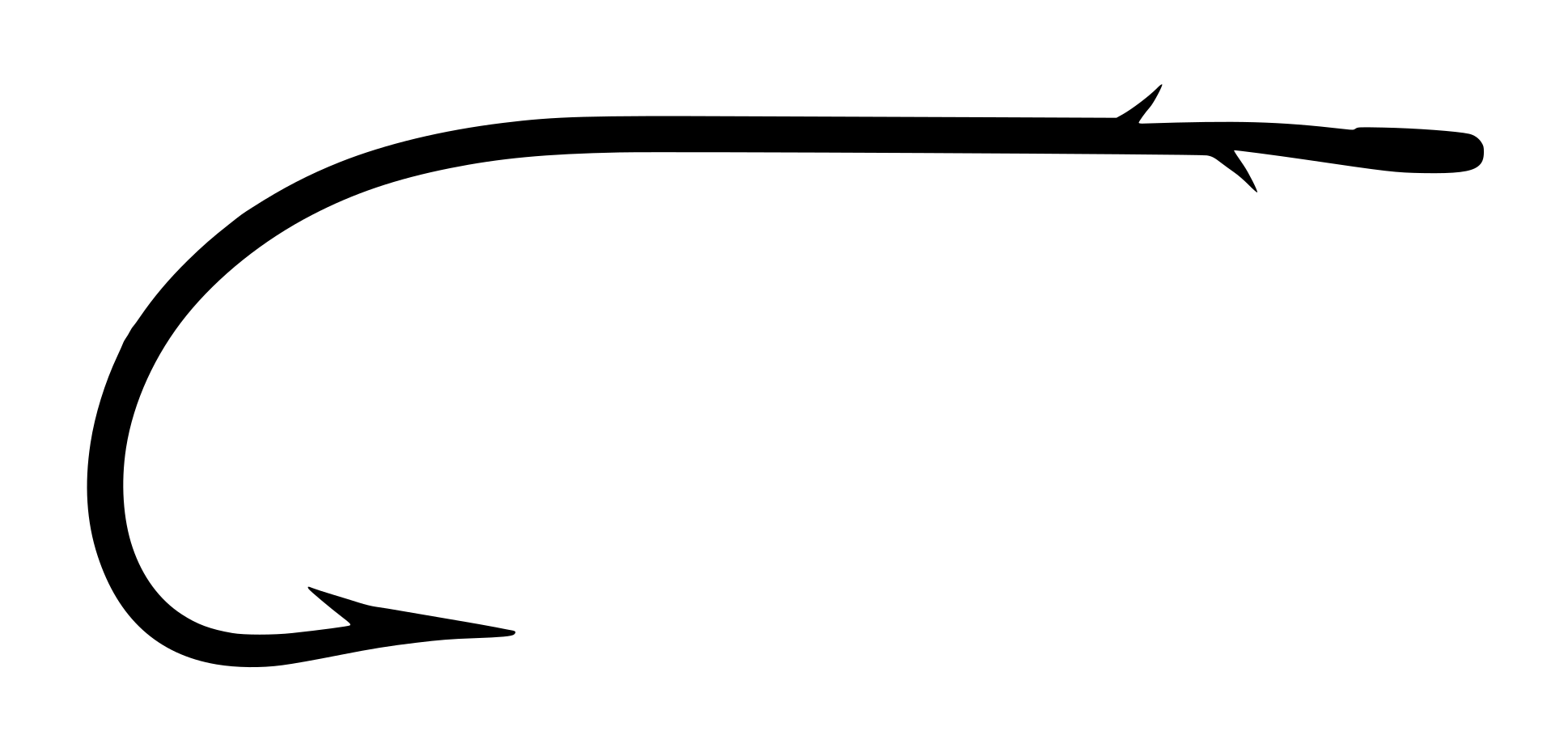
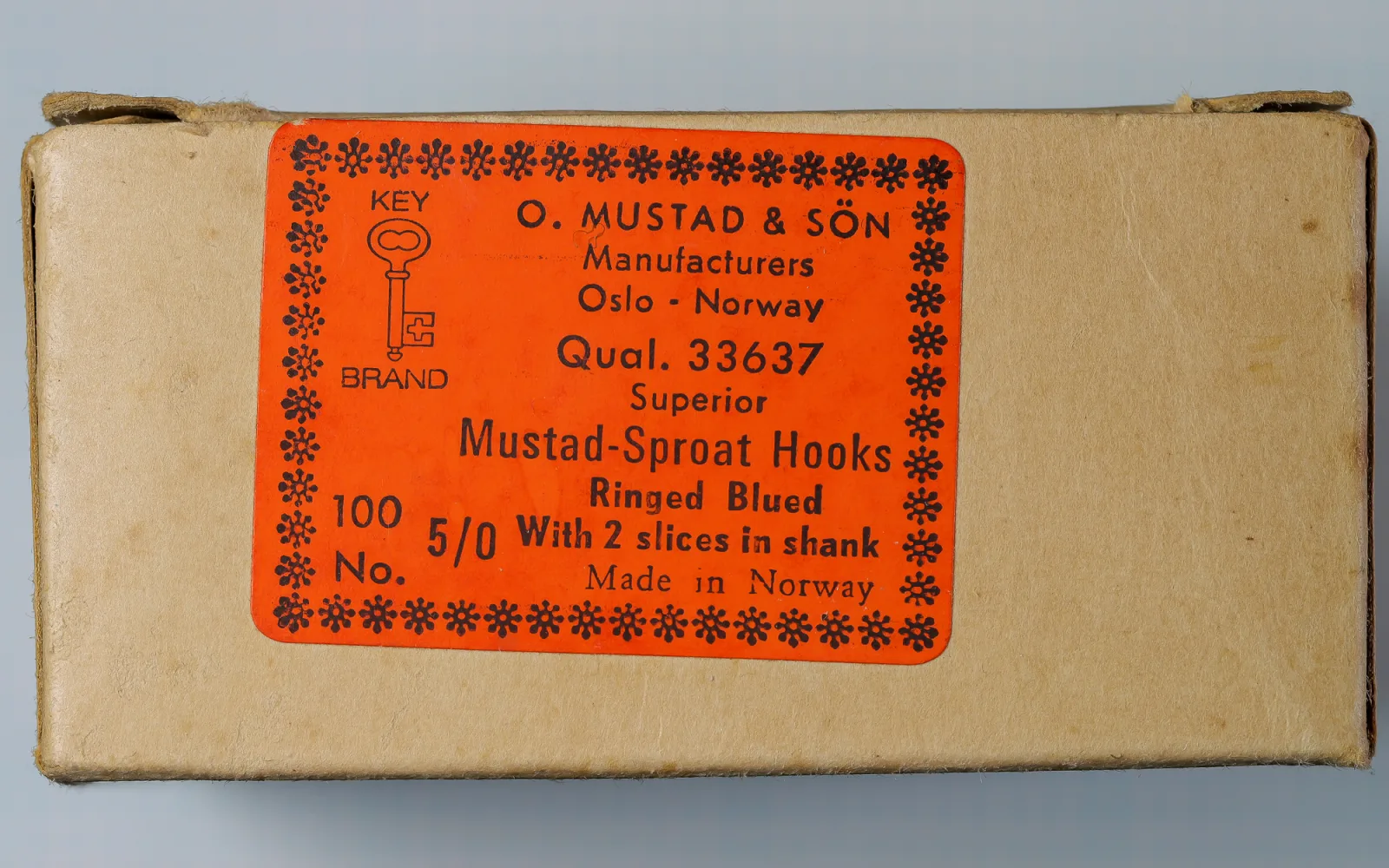
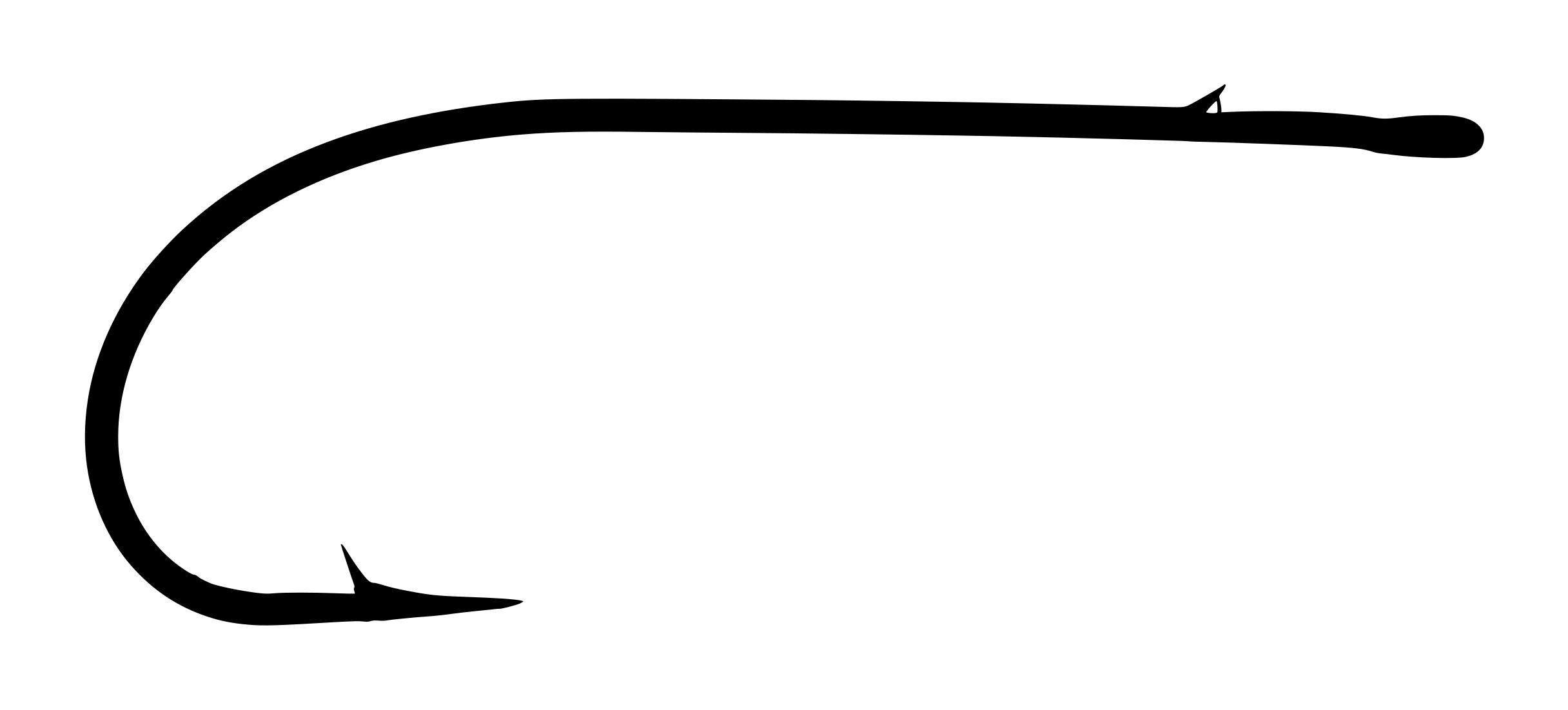
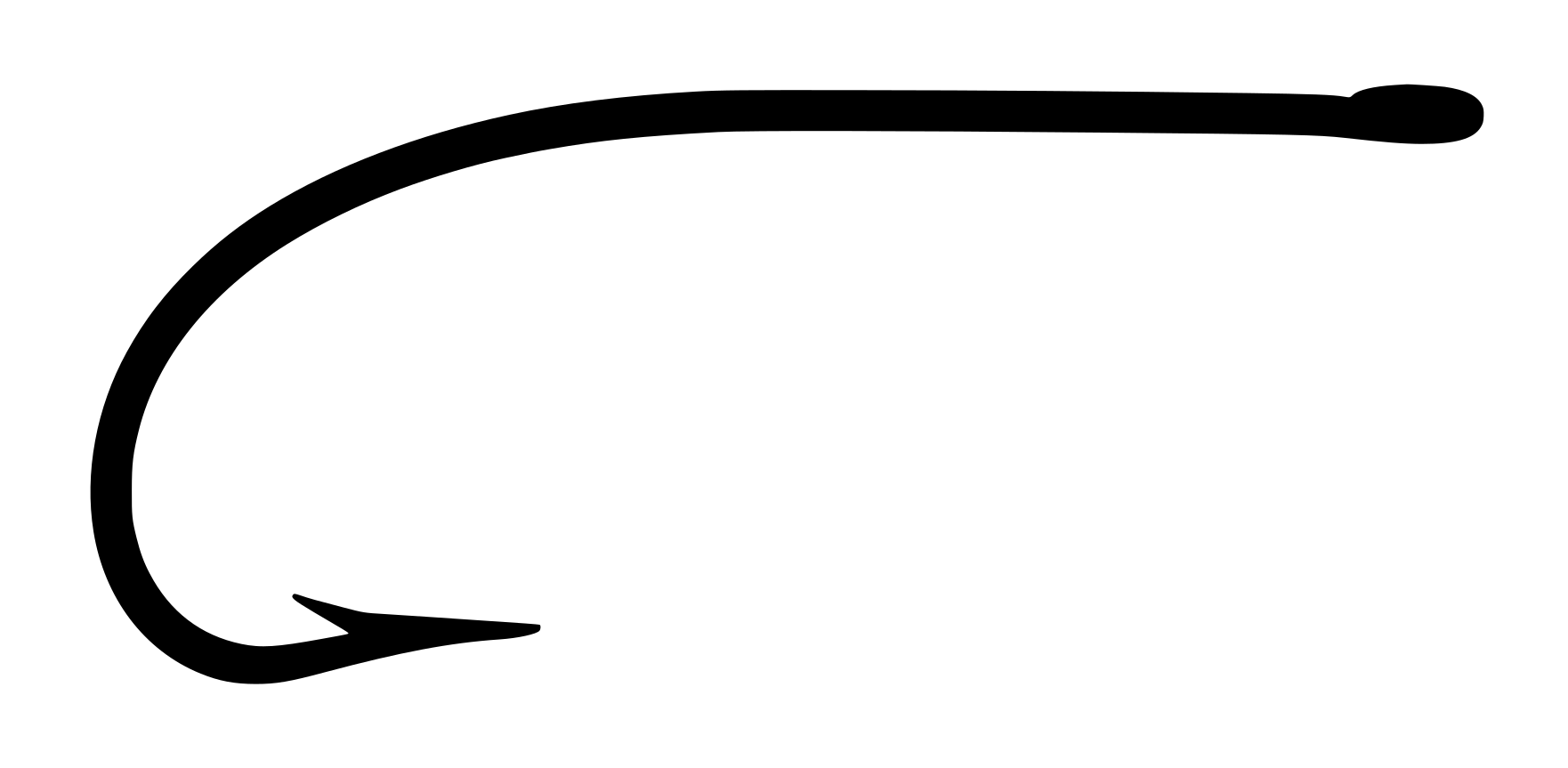
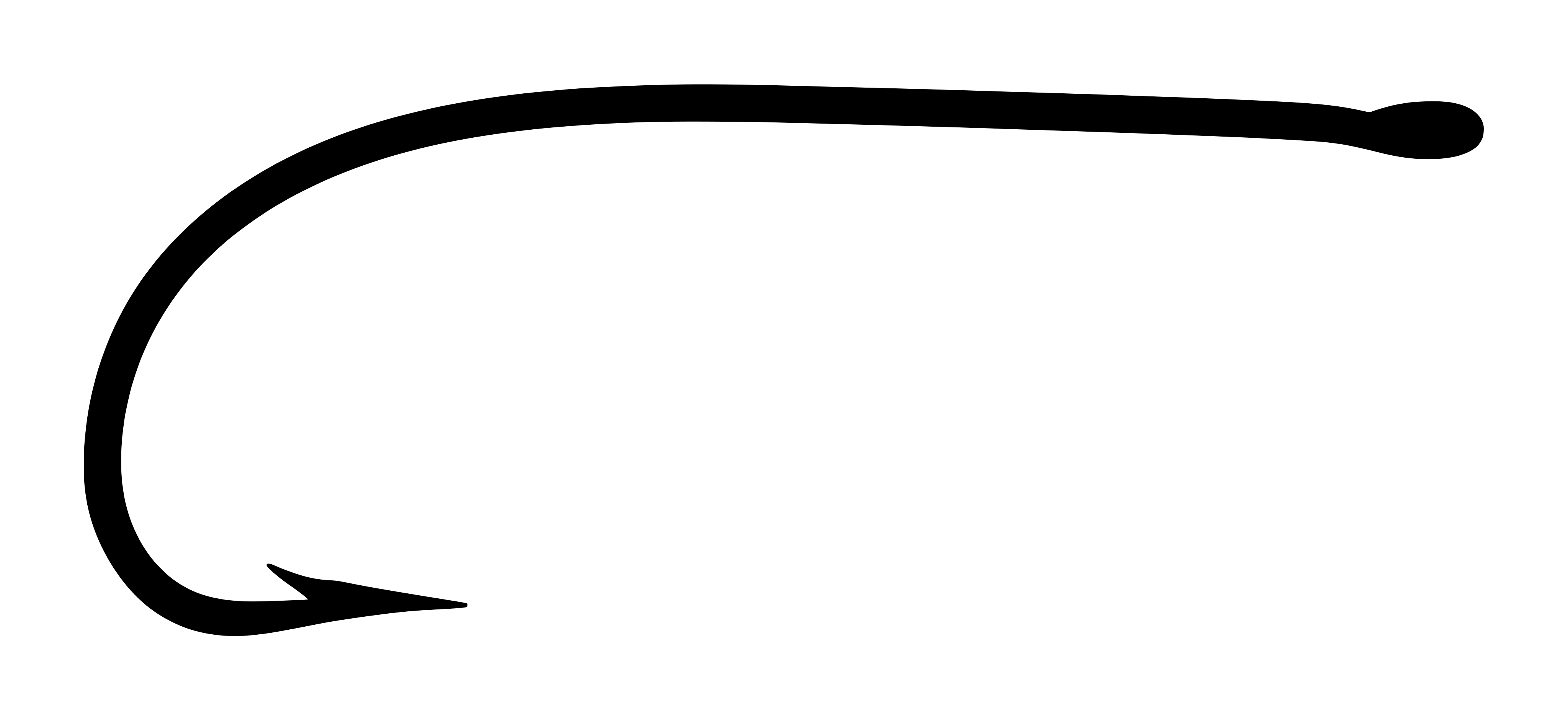
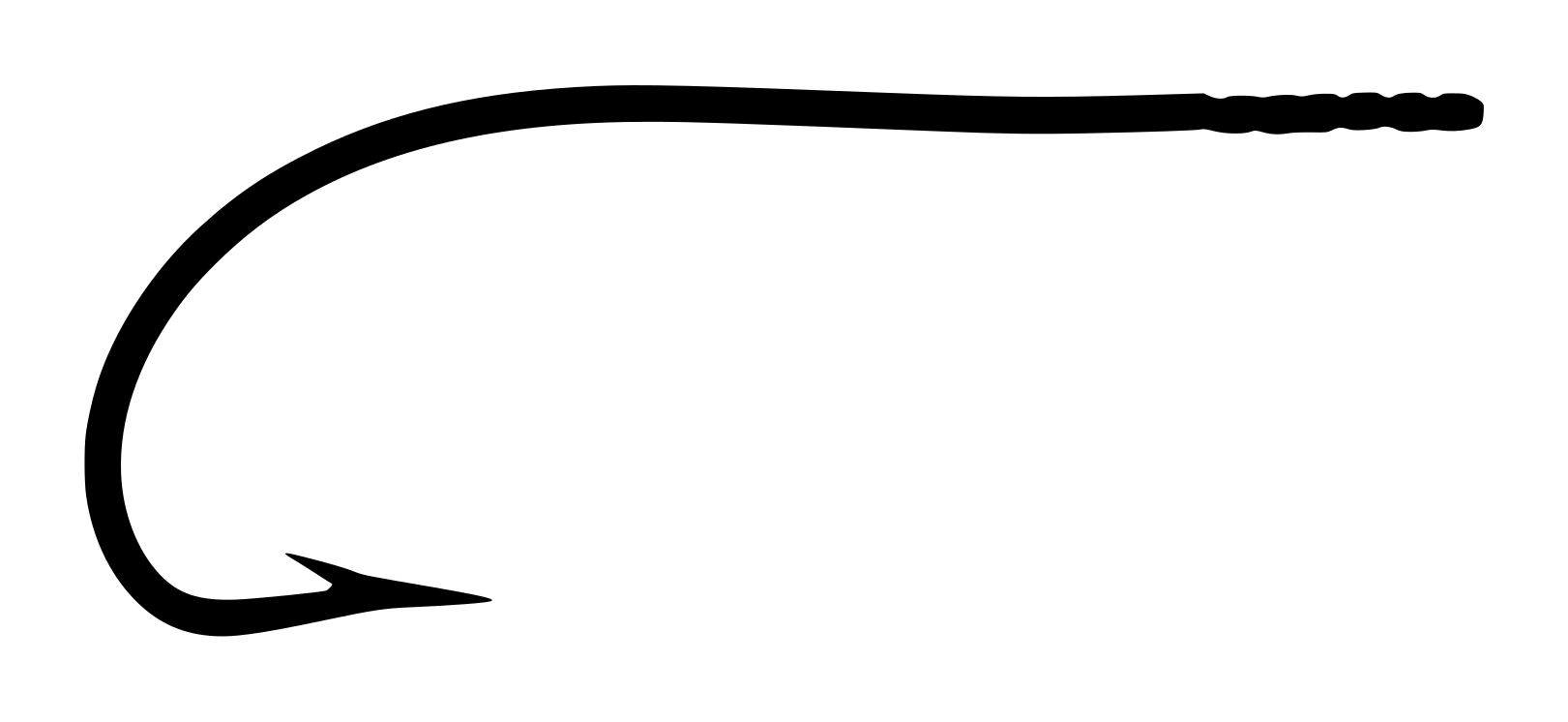
Mustad 33637 Superior Sproat, size 5/0. Blued finish, straight ball eye, extra-fine wire, 1X long shank. 100-hook manufacturer box with bright orange label. Two longitudinal slices in shank for bait grip. Made in Norway, circa 1950-1965.
Sproat bend is a rounded-bottom configuration suited to bait fishing for coarse fish and sea species. The superior point geometry features a near-straight inner taper and nearly flat inside face — a manufacturing choice common in Mustad’s bait-hook line. Straight eye orientation is less common than turned-down or turned-up; it accommodates direct-tie bait rigging.
This is a working hook from Mustad’s commercial bait-fishing catalog, not a specialty or decorator item. The box packaging and complete hook count make this a collectible reference specimen for the Mustad mid-century bait-hook series.
Mustad — New entry — image 1
Photographic record
3 cataloged imagesSelect any record to load it above.
3 images shown
Mustad — New entry — image 1Mustad — New entry — image 1Open originalMustad — New entry — image 2Mustad — New entry — image 2Open originalMustad — New entry — image 3Mustad — New entry — image 3Open original
Technical profile
Straight / Inline Ball Eye | Sproat | 1X Long | Extra-Fine Wire | Superior Point | Blued
Eye
Ball Eye, Straight / InlineBall eye is uniformly round with consistent diameter throughout the loop. No taper. Wire ends are butted (not overlapped or brazed) where they close. Straight orientation — the eye loop sits in the vertical plane of the hook rather than angled downward (turned-down) or upward (turned-up). Straight eyes are less common than turned-down eyes on fly hooks but are standard on bait-hook lines for direct knot or loop attachment. Eye shows minor age toning (light oxidation) consistent with specimen age; no corrosion or structural damage.
Wire
Extra-Fine, Round
Shank
1X Long — Baitholder Slices
Bend
Sproat, Standard gapSproat bend is evenly rounded through the entire curve from eye to point, with symmetrical geometry viewed from above and from the side. Bend depth (measured from shank centerline to apex) is proportional to gap width — approximately 0.68" gap width with corresponding rounded-bottom profile. No flattening or angular features typical of Limerick or Dublin bends. Bend sits perpendicular to shank, with no rotation or bias. Wire is uniformly set through the curve with no obvious hammer marks or distortion.
Point
Superior (near-straight inner taper)Short close-cut barb, positioned mid-slope of the point. Barb angle is swept rearward (approximately 35-40 degrees from horizontal). Standard manufacturing — no micro-barbs or double barbs visible. Barb placement is consistent across the specimen, indicating consistent production tooling.
Finish
Blued — Confirmed (stated on packaging)Blued finish confirmed by packaging text and verified photographically as cool blue-grey oxide with metallic sheen. The specimen shows uniform bluing across all examined hooks, with no brown or warm-tone patina typical of bronzed finishes. Shank and bend show consistent steel-grey coloration. Minor surface micro-wear visible on high points (barb, point tip) consistent with age, but primary blued coating remains intact. This is a thin oxide layer applied during manufacturing, not a thick lacquer, so light surface texture of underlying steel remains visible beneath the finish.
Box exterior shows light age toning and minor edge wear. Orange label on lid remains bright with sharp printing. Interior box structure intact. 100 hooks present and accounted for, blued finish intact on all examined specimens, no corrosion or significant wear visible. Hooks remain mounted on original card stock interior as manufactured.
The superior point — a near-straight inner taper with nearly flat inside face — was a deliberate design choice for bait hooks. This geometry prioritizes durability over penetration efficiency; it reduces point breakage under the repeated stress of casting heavy live baits and fighting hard-fighting saltwater species. The blunt inner face distributes strain across the point shoulders, whereas a hollow-point (concave inner face) concentrates stress at a knife edge.
Extra-fine wire (0.0574″ diameter) is counterintuitive for a 5/0 size but reflects Mustad’s marketing strategy: lighter wire allowed anglers to use larger hooks without excessive weight, improving casting feel with live-bait rigs. The trade-off is reduced wire strength — acceptable for smaller species but marginal for large pike. The straight eye (rather than turned-up) facilitates gut or monofilament loop attachment and direct knot-tying for bait-rig construction.
Baitholder shank: two longitudinal slices cut into the shank provide friction purchase for bait scales, preventing live bait from sliding freely. This was industry standard by the 1950s, increasing rig stability and bait longevity underwater.
This pattern was made in sizes 5/0 (V). We have measurement for size 5/0. Know the others? Submit calipered measurements and we'll review and add them. Thank you!
Mustad’s Sproat line comprised a family of bait and coarse-fishing hooks across multiple wire gauges and shank lengths. The 33637 was marketed as part of the Superior brand — a commercial series name applied to mid-range Mustad bait hooks, not a point-style designation. The Sproat pattern itself has origins in 19th-century English fly-hook design (Kendal and Redditch makers) but was adopted and industrialized by Mustad as a bait-hook profile. The rounded-bottom bend proved stable under heavy live-bait rigging and durable in freshwater and saltwater applications. This 5/0 size was common stock for pike, perch, and sea-trout bait fishing across European dealers. Production continued into the 1960s-1970s, with later versions sometimes appearing on printed cards rather than in boxes. The baitholder shank (two slices) became standard on Mustad’s larger bait Sproats, improving bait grip compared to plain-shank versions.
Era and Packaging Dating
No barcode present — strong pre-1974 indicator. Printing method is letterpress on kraft paper stock, consistent with 1950s-1960s commercial practice. Orange label insert style and decorative floral border motif typical of Mustad's mid-century packaging design. "Made in Norway" statement without postal code format visible. Box construction and paper quality consistent with Gjøvik-era Mustad manufacture. Logo rendering style and typeface consistent with Mustad identity system circa 1950-1965. No modernizing design changes typical of post-1965 commercial revision.
The Baitholder Revolution
By the 1950s, the baitholder shank (longitudinal slices in the wire) had become industry standard across Mustad's bait-hook range, but this feature was not inevitable. Earlier Mustad and English-made bait hooks used plain or marked-ridged shanks, with anglers relying on bait hardness or wire wrapping to keep live baits secure. The shift to sliced shanks came from practical field experience: bait slippage during long casts and hard strikes in pike fishing led dealers to demand better bait grip. Mustad's engineering team added the slices — a simple cold-chisel operation — increasing production cost marginally but reducing angler complaints significantly. By the time the 33637 was manufactured in the 1950s, baitholder shanks were de facto universal on larger bait hooks, a design evolution driven by fishermen themselves rather than manufacturers' innovation.
Design lineage and influence
The Sproat bend descends from 19th-century English fly-hook tradition, particularly Redditch and Kendal makers who developed the rounded-bottom geometry for wet flies and sea-trout patterns. Mustad adopted the Sproat profile for its bait-hook line, recognizing its structural efficiency: a rounded bend distributes bending stress across a longer inner curve, reducing the point-concentration failures common in angular (Limerick, Dublin) bends.
Mustad’s 33637 represents the industrial-scale production version of this tradition. By the 1950s, the Sproat was available from multiple makers (Partridge, Allcock, English-made imports), but Mustad’s volume and price point made it the dominant commercial choice for European tackle dealers stocking bait hooks. The baitholder variant (shank slices) became the standard by this era, displacing plain-shank versions.
Later Mustad Sproats moved to printed card packaging (1960s-1970s), losing the box format. Modern equivalents include Mustad 3906 and 3907 (contemporary bait hooks), though these feature improved barb geometry and japanned finishes rather than traditional bluing.
Best matchRelated by Attribute
Computed automatically from catalog data — updated as new hooks are added.
Matches: Bend, Shank, Wire, Gap, Eye +6 moreDiffers: Point: Superior vs Hollow Point; Shank Feat.: Baitholder vs Plain; Shank ratio: 85.3% vs 70.0% +2 more
Matches: Bend, Wire, Gap, Eye, Eye Orient. +4 moreDiffers: Shank: 1X Long vs Standard; Finish: Blued vs Tinned; Application: Bait vs Bait, Saltwater +4 more
Pike, perch, and coarse-fish live-bait fishing. The 5/0 size and extra-fine wire indicate use with medium-sized live baits (2-4 inch roach, dace, or eel sections) in freshwater lakes and slow rivers. The baitholder shank prevents bait from sliding and tearing during cast and retrieve.
Secondary saltwater use for sea-trout and estuary species, where live or dead baitfish (sprats, small mullet) are fished on running-ledger or drift rigs. The blued finish provided corrosion resistance adequate for saltwater immersion, though not comparable to stainless or plated finishes that became standard later.
The straight eye made this hook popular for traditional gut-snell or monofilament loop construction, where the angler ties a loop or directly knots the leader — unlike turned-down eyes which are designed for fly-line attachment. This made the 33637 a dealer staple across European tackle shops for 1950s-1960s bait fishermen.
Secondary Applications
Saltwater estuary and coastal fishing for sea-trout, bass, and sea bream using live-bait rigs. Trolling with live baitfish in large lakes.
Collector notes
Rated 3.5/10 — a common production hook in large sizes (5/0) from a major manufacturer, but the complete original box with 100 intact hooks is less common than single cards. Collector demand is modest; this hook appeals primarily to Mustad specialists and bait-fishing historians rather than fly-tyer or design-enthusiast collectors. The extra-fine wire on a 5/0 size is mildly unusual, adding minor specialist interest.
Reference value
$8 – $22 USD estimate
Packaging condition
Good — moderate wear, legibleRecorded specimen
Packaging format
GW-M-BOX-01Catalog code
Positive factors: Original manufacturer box (rare vs card format; Mustad boxes command 2-4x card values). Complete 100-hook count. Blued finish confirmed on packaging and specimen. Clean orange-label printing in bright condition. Pre-1974 manufacture (no barcode) appeals to vintage-era collectors. Straight eye and baitholder shank are defining features of a specific commercial segment. The 33637 model code is documented and catalogable.
Limiting factors: Mustad is mass-produced — even 1950s stock remains abundant in surviving packages. Size 5/0 is too large for fly tyers and not sought by modern bait fishermen. Extra-fine wire on this size is eccentric but not rare enough to significantly boost demand. Box condition is good but not mint; label shows age toning, lid edge wear. No inherent scarcity; Mustad produced hundreds of thousands of 33637s for dealers across Europe and North America. Bait-hook collecting is a specialist niche with smaller collector base than fly-hook collecting.
Most desirable variant: Sealed box (never opened, all 100 hooks present and unused) in mint condition commands premium. Opened box with complete count: modest premium over opened card. Missing hooks or damaged box: value drops significantly. Single hooks from this line: negligible individual value beyond reference interest.
Packaging
Manufacturer box. Rigid cardboard construction with separate lid. Exterior: kraft paper stock, age-yellowed. Label: 3.5" x 2.25" bright orange printed insert glued to lid face. Red-orange background with black letterpress type and decorative floral border pattern (snowflake/asterisk design repeated around margin). Text in English. KEY logo (outline key design) and Mustad brand shield printed in black. Box contains 100 hooks. Made in Norway statement present. No barcode visible — consistent with pre-1974 manufacture.
Market Value Notes
Low ($8): Good condition, box opened, all 100 hooks present, minor box wear, label intact but aged.nHigh ($22): Excellent/mint condition, sealed or near-sealed box, full hook count, minimal label wear, pristine hooks.nPremium factors: sealed original box (vs opened), complete hook count, bright label printing, all hooks unused/unbent.nPlatforms: eBay (UK and US), specialist tackle dealers, vintage fishing auctions.nConfidence: E estimated — limited recent sold data for boxed Mustad bait hooks of this era; values based on comparable Mustad commercial boxes and bait-hook pricing patterns. Bait-hook market is thinner than fly-hook market, so values remain conservative.
Where to Find
eBay UK and US (search "Mustad 33637" or "Mustad Sproat 5/0" box lot). Specialist vintage fishing tackle dealers in England and Scandinavia. Tackle collector fairs in Norway and the UK. Redditch museum collection (reference). Rarely appears at major auction houses outside sporting tackle specialists.
Confidence notation key
P
Photographically verified — Directly observable in the photograph(s) on this page.
V
Verified by documentation — Confirmed by manufacturer catalog, spec sheet, or published reference.
I
Inferred — A logical deduction from observable or documented evidence, not directly stated.
E
Estimated — An approximation based on visual comparison, proportional analysis, or limited data.
S
Speculative — A reasoned hypothesis that cannot be confirmed from available evidence.
Unnotated claims are the compiler’s synthesis; see Sources. All photographs on garrenwood.com are taken on a measurement grid where each square equals 1/10 inch (0.1″ / 2.54 mm).