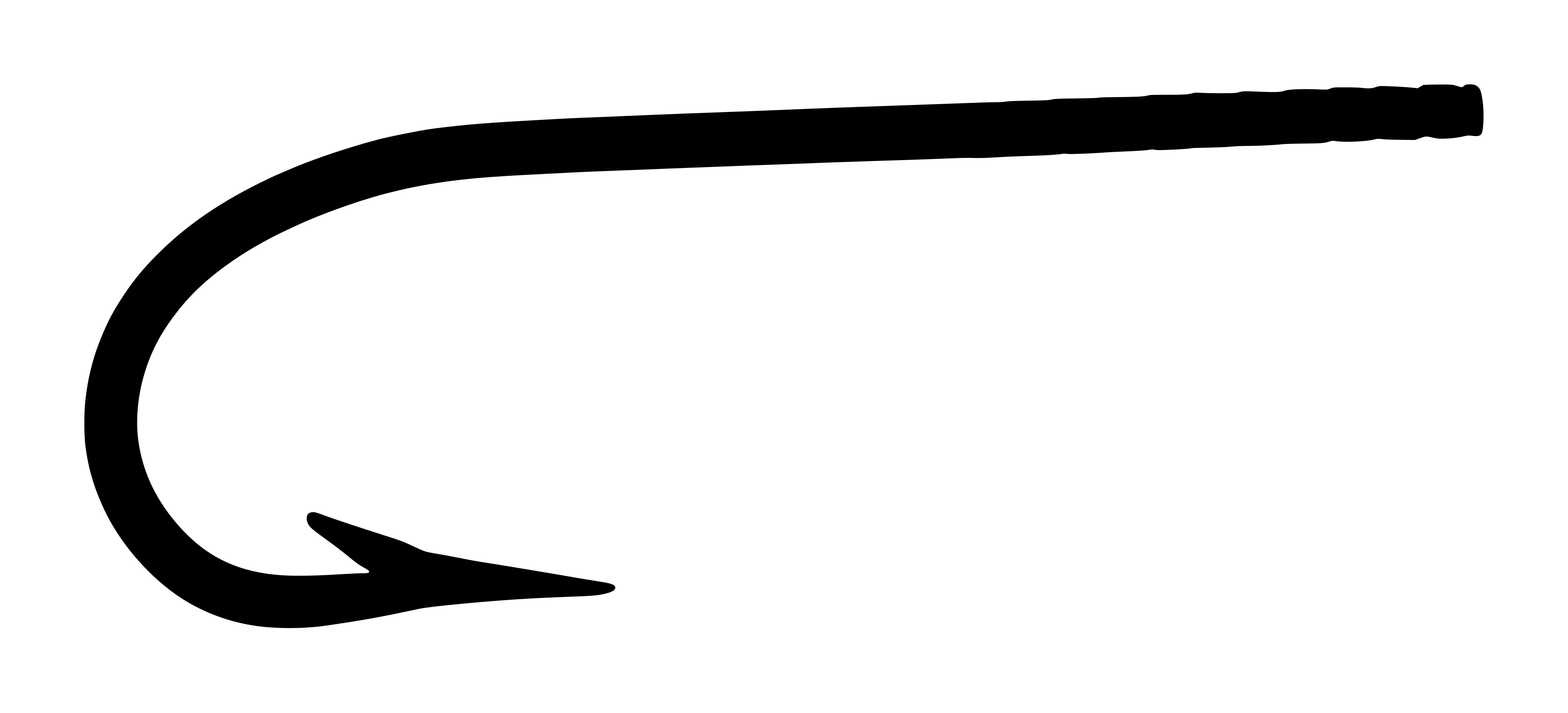
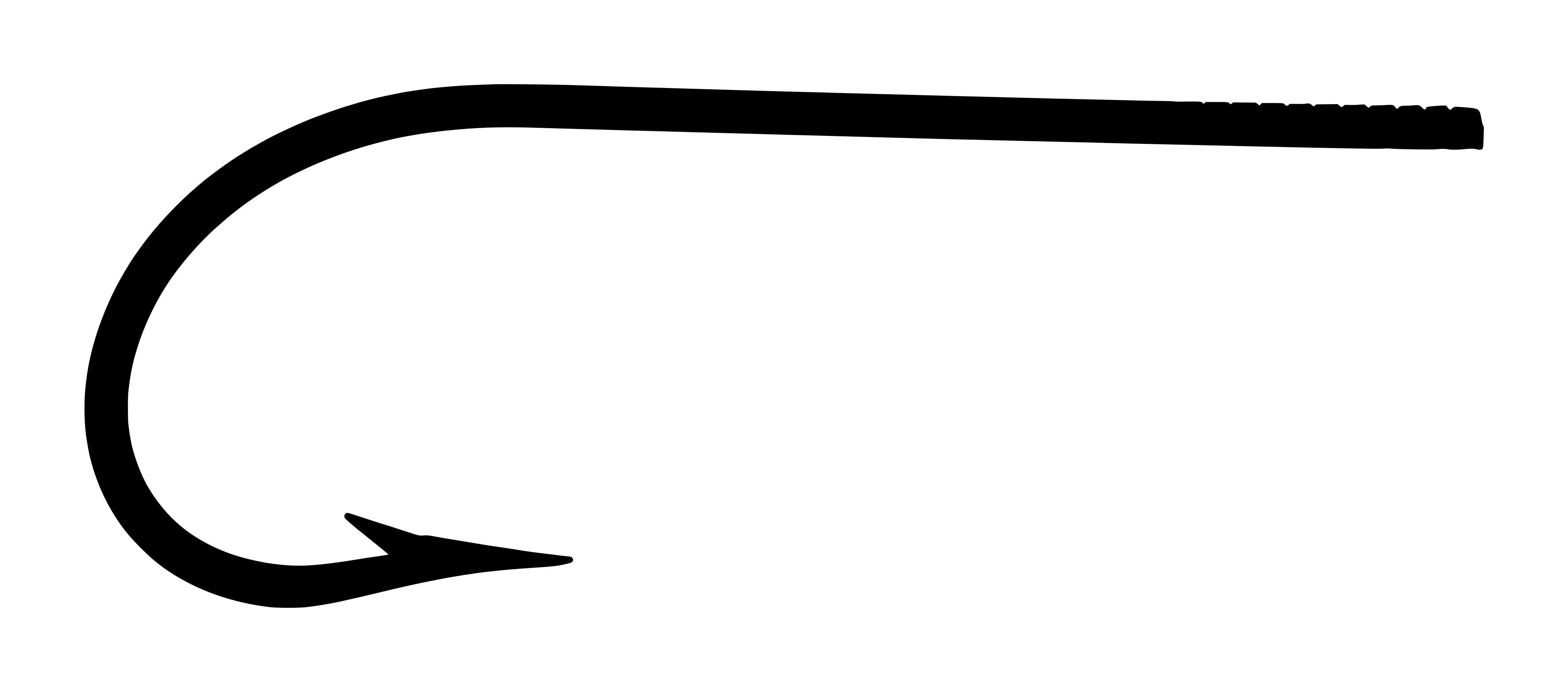
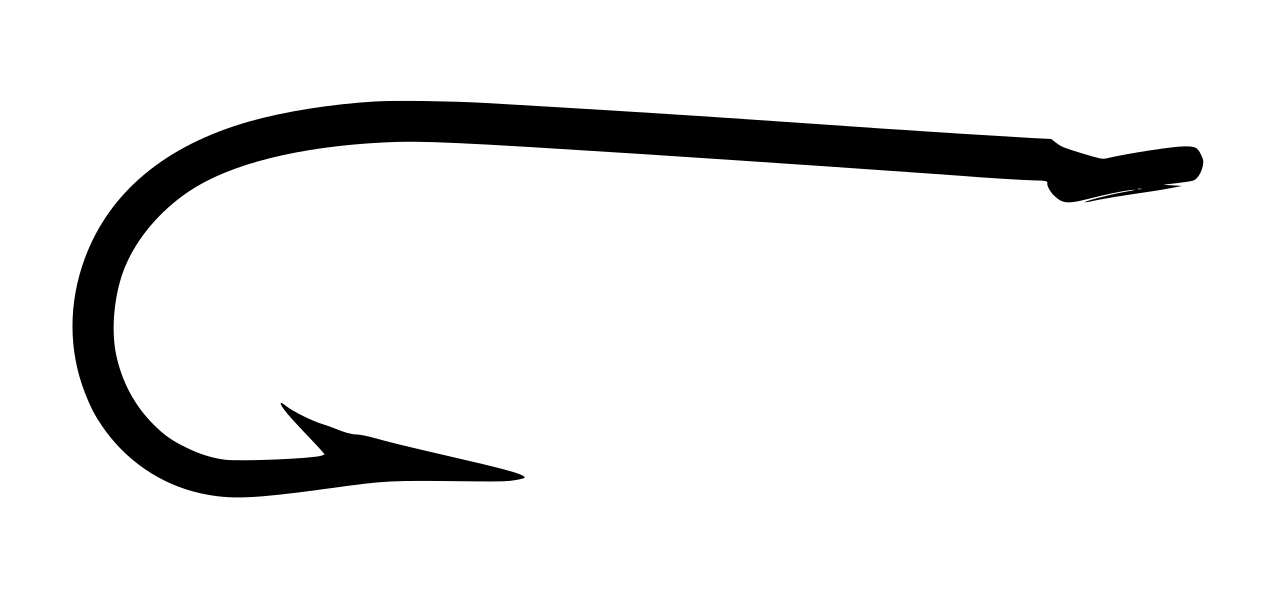
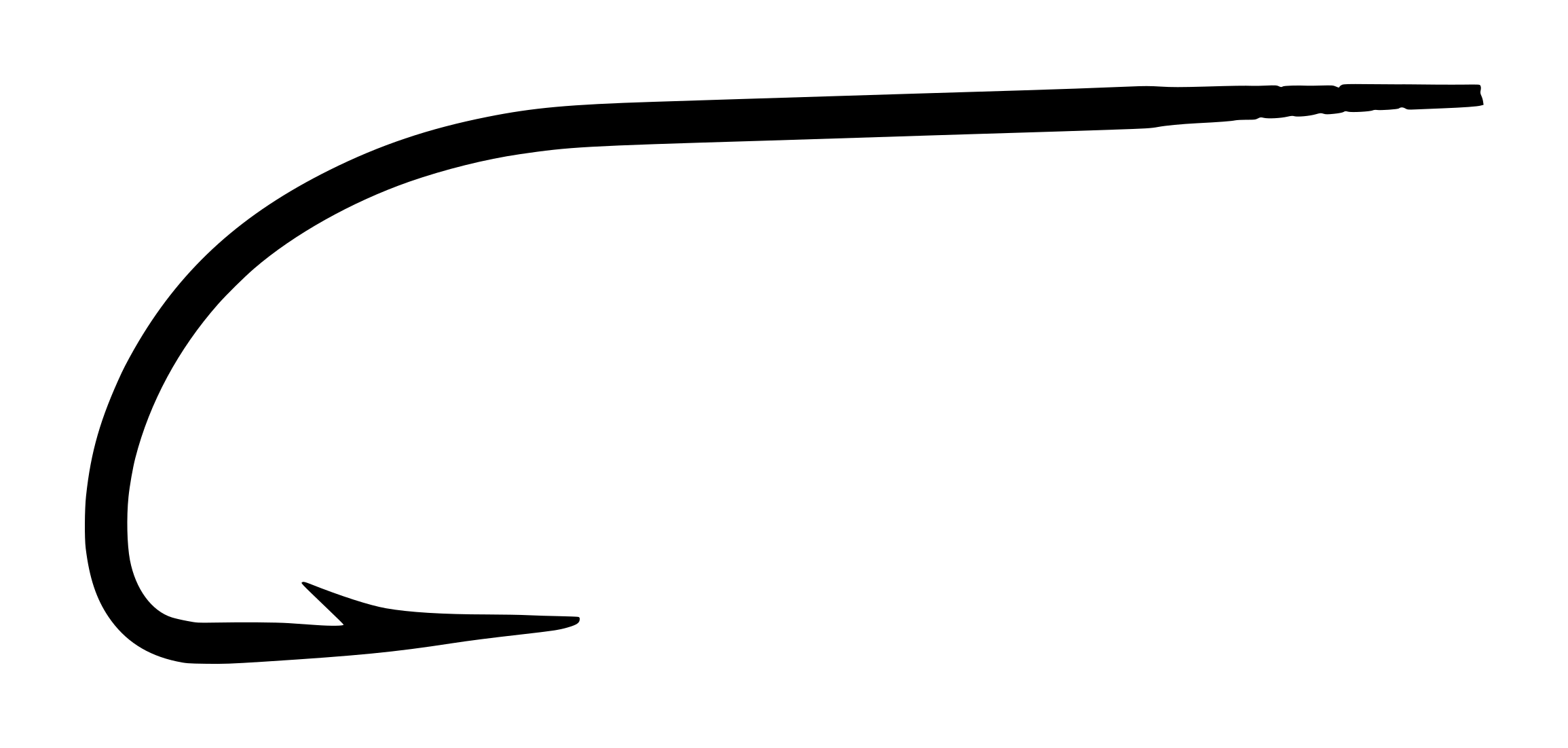
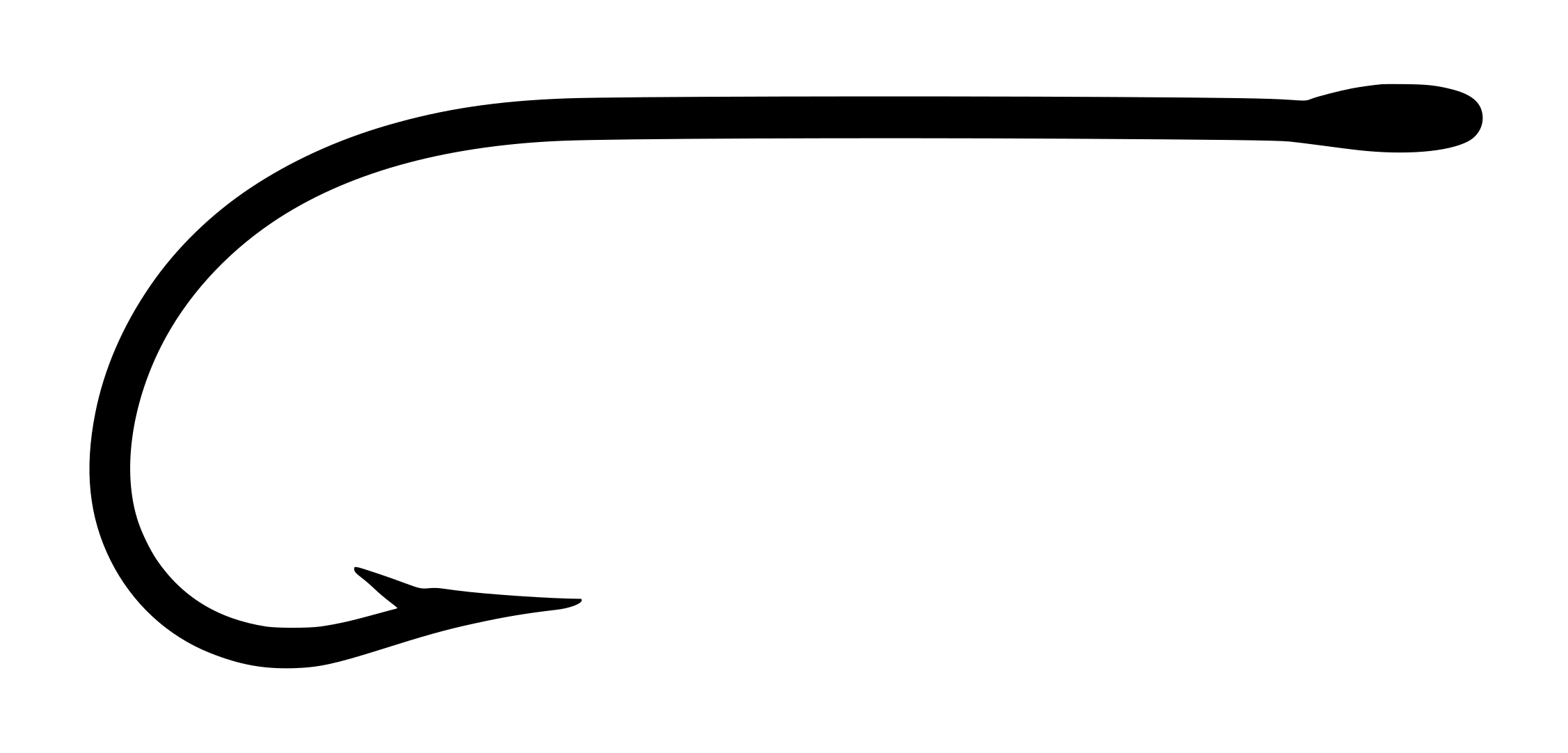
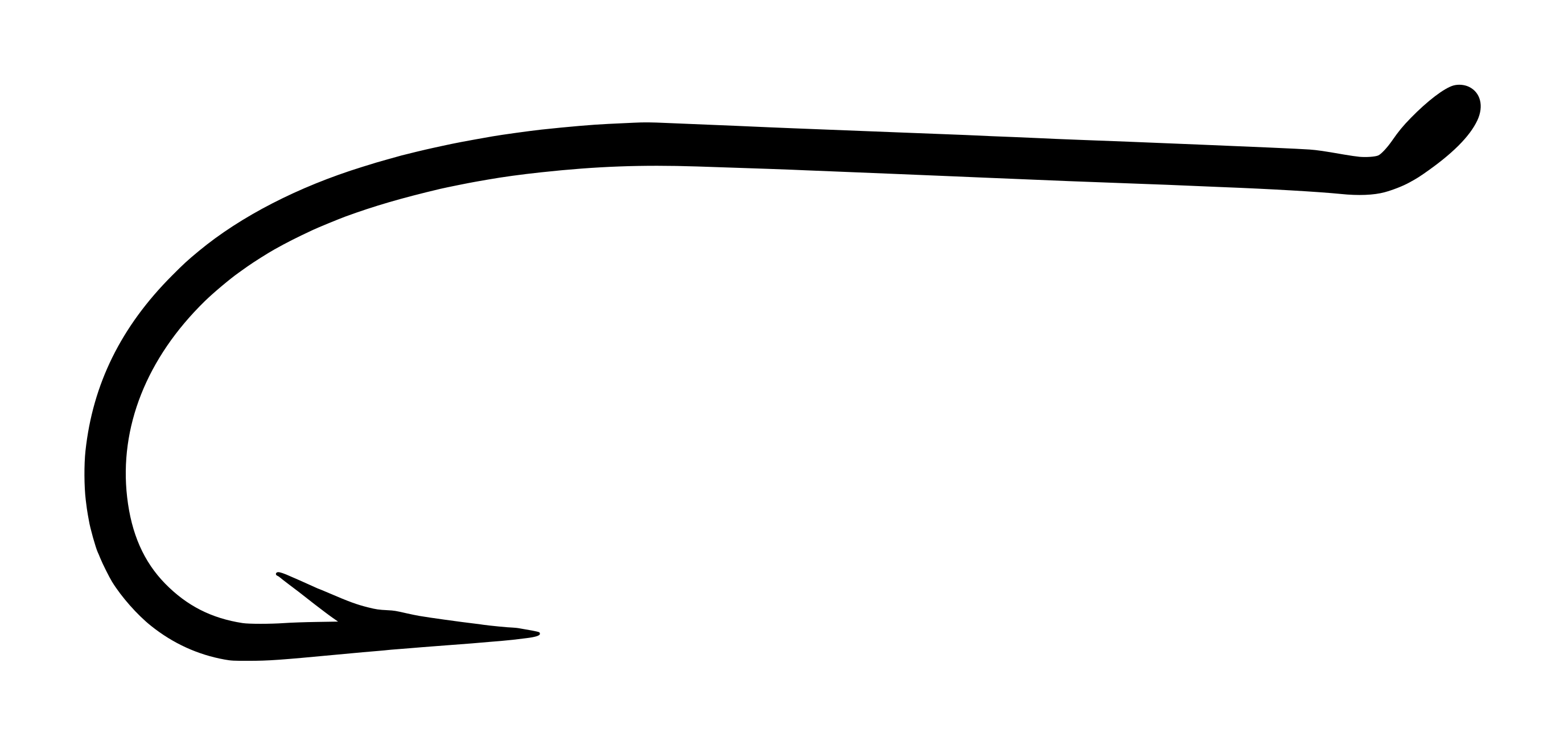
The Mustad Quality 3751 is a marked-shank Cincinnati Bass Hook manufactured by O. Mustad & Søn in Oslo, Norway, during the 1950s-early 1960s. This size 19 specimen exemplifies the transitional moment in hook design when the marked blind-eye shank tradition was yielding to modern eyed construction. The Cincinnati pattern — a distinctly American regional design — features an exceptionally wide gap and deep round bend optimized for still fishing with large live baits for bass and pike.
Defining features include hollow-point penetration geometry, heavy-gauge round wire, and a bronzed lacquer finish. The marked shank represents a technical requirement of the snelling era, when anglers bound premium silkworm gut directly to the hook shaft using fine silk thread and pitch — a practice that dominated bass fishing methodology through the 1930s-1950s. The orange-printed eight-line label with floral border and Oslo designation provides precise manufacturing dating and represents Mustad’s standardized typographic labeling system that encoded technical specifications for global distribution.
The Mustad 3751 in size 19 is a scarce documented example of marked-shank construction, increasingly valued by pattern historians and vintage tackle specialists interested in regional American hook design and the transition from gut snells to modern monofilament leaders. Original packaging with intact label significantly enhances collecting value and historical documentation.
Extreme close-up of the Mustad 3751 hollow point, showing the concave inner face and short, steep-angled barb characteristic of rapid-penetration design for soft-mouthed species. Bronzed finish showing light patina consistent with 1950s-1960s age.
Photographic record
6 cataloged imagesSelect any record to load it above.
6 images shown
Mustad 3751 Size 19 — Barb and Point DetailExtreme close-up of the Mustad 3751 hollow point, showing the concave inner face and short, steep-angled barb characteristic of rapid-penetration design for soft-mouthed species. Bronzed finish showing light patina consistent with 1950s-1960s age.Open originalMustad 3751 Size 19 — Full ProfileComplete profile view of the Mustad 3751 Cincinnati Bass Hook showing the deep round bend, marked shank construction, long straight shank section, and hollow-point tip. The wide gap and smooth curve are characteristic of the Cincinnati pattern design.Open originalMustad 3751 Size 19 — Two Hooks for ScaleTwo Mustad 3751 Size 19 hooks photographed side-by-side on the measurement grid, showing consistent construction and providing scale reference. Both hooks show marked shank indentations, deep Cincinnati bend, and hollow-point geometry. Handwritten label identifies model and size.Open originalMustad 3751 Size 19 — Original Box LabelOriginal orange-printed label from the Mustad 3751 box showing the complete eight-line standard typographic format with Key Brand logo, manufacturer identity, Oslo origin, quality code, point type, pattern name, and finish specification. Floral border and asterisk motifs are characteristic of Mustad's mid-century packaging aesthetic.Open originalMustad 3751 Size 19 — Point Profile DetailClose-up profile view of the Mustad 3751 point and barb, clearly showing the concave inner-face geometry characteristic of hollow-point design. The sharp, fine tip and close-cut barb are optimized for rapid penetration with minimal applied pressure.Open originalMustad 3751 Size 19 — Complete Hook MeasurementComplete profile photograph of a single Mustad 3751 Size 19 hook on measurement grid showing overall proportions, marked shank construction, deep Cincinnati round bend, and full shank length. This image is optimal for dimensional calibration and grid-based measurements.Open original
Technical profile
Blind Eye | Cincinnati Bass Bend | Extra-Long Shank | Heavy Wire | Hollow Point | Bronzed Finish
Eye
Blind — Marked Shank
Wire
Fine (1X Fine), Round, Est. ~0.045"-0.050" (~1.1-1.3 mm) E
Shank
1X Long — Marked / Ridged
Bend
Kirby (offset), Standard gap, Offset / kirbedCincinnati Bass bend pattern — characterized by a deep, round bend with slight lateral offset (kirbed). The shank is distinctly long and straight, transitioning smoothly from the bend. P
Point
Hollow Point (concave inner face)Short, close-cut barb set at a steep angle, characteristic of hollow-point penetration design. Positioned approximately 1/8 inch (3mm) from the tip. P
Finish
BronzedWarm brownish-gold tone consistent with baked lacquer bronzing. Specimen shows excellent patina with light oxidation typical of age. P
Hooks examined are bright and uncorroded with no pitting or damage to points or barbs. Card label shows light aging and minimal creasing, consistent with storage in original box. Bronze finish exhibits light surface patina typical of 60+ year old specimens. All examined hooks functional with no structural defects.
The hollow point on the Mustad 3751 employs a distinct inwardly curved geometry ground into the terminal wire, creating a razor-sharp inner face that concentrates penetration force at the microscopic tip. This design requires minimal applied pressure from the angler — critical for live bait presentations where heavy-handed hook sets would rupture the delicate buccal tissue of soft-mouthed species like crappie and panfish. The Cincinnati bend’s unusually wide gap (approximately 0.50 inches on size 19) distributes the strain of a fighting fish across a greater arc of the bend, providing exceptional structural rigidity without adding significant weight or thickness to the wire. The marked shank construction — comprising small indentations cut into the terminal shank — was engineered to provide mechanical grip for the silk whipping knots used in the snelling process. The heavy standard-gauge wire (approximately 0.045-0.050 inches diameter) provides the durability necessary for heavy live baits and protracted battles with large bass in rocky, weed-choked environments. The bronzed finish (baked-on lacquer mimicking bronze hue) provides excellent rust resistance in freshwater while maintaining a muted, natural color profile that avoids unnatural metallic flash.
We have measurement for size 23. Know any others? Submit calipered measurements and we'll review and add them. Thank you!
Historical context
mustad
O. Mustad & Søn was founded in 1832 in Gjøvik, Norway, initially as Brusveen Spiger- og Staltradfabrikk, producing nails, steel wire, and industrial metal goods under founder Hans Schikkelstad. The company was taken over by Schikkelstad’s son-in-law, Ole Hovelsen Mustad, and his son, Hans Mustad, who rebranded it as O. Mustad & Søn. The defining technological breakthrough occurred in 1877 when Mathias Topp, a visionary within the company, invented the first fully automated hook-making machine — a mechanization that allowed raw steel wire to be continuously fed, autonomously cut, bent, barbed, and pointed at unprecedented pace. Rather than filing for patents (which would have required public disclosure), the Mustad family relied on intense corporate secrecy, strict non-disclosure agreements, and restricted factory access to protect their proprietary methods. This strategy proved devastatingly effective against rival hook-making centers in Redditch, England, and manufacturing hubs across Japan and the United States. By the 1950s, when this 3751 was manufactured, Mustad had secured approximately 50% of the global hook production market, with sales offices and manufacturing facilities across multiple continents. The company became virtually synonymous with the fishing hook itself.
Series History
The Cincinnati Bass Hook is not a Mustad original design but rather a reverse-engineered adaptation of a regional American pattern that emerged from the Midwest in the late 19th century. Mustad adopted this pattern for export around 1900, recognizing the commercial opportunity to cornerfamiliar regional preferences into global industrial production. The Cincinnati pattern competed directly with English designs (Limerick, Sproat, Aberdeen) but captured significant market share in North America, particularly in the Great Lakes and Mississippi River basin regions where the ‘Indiana School’ of bass anglers had developed it. The Qual. 3751 specifically refers to the marked-shank variant — a transitional construction that maintained the snelling capability of earlier blind-eye hooks while offering the advantage of the Cincinnati bend’s wide gap and deep penetration geometry. By the 1950s-1960s, when this example was manufactured, the marked shank was already becoming obsolete as modern eyed variants (such as the Qual. 3304) gained dominance. The 3751 represents the tail end of production for blind-eye Cincinnati Bass construction; by the 1970s, eyed versions had completely replaced marked-shank designs in the Mustad catalog. The hollow point geometry on the 3751 was selected to match the soft-mouthed characteristics of largemouth and smallmouth bass in shallow, warm-water environments — a deliberate contrast to the superior and knife-edge points favored for Atlantic salmon and saltwater applications.
Era and Packaging Dating
OSLO designation on Line 3 (Oslo - Norway) — definitively post-January 1, 1925, when Christiania was officially renamed. The orange Key Brand label with floral border is characteristic of Mustad's mid-century packaging era. Absence of barcode (pre-1974 strong indicator). Offset letterpress print technology and paper stock consistent with 1950s-1960s manufacture. The specific label design with asterisk motifs matches documented Mustad catalog examples from this period. No later markings or changes visible.
The Ghost of the Snelling Tradition
The Cincinnati Bass Hook represents a fascinating moment in American tackle history — the 'Indiana School' of bass fishermen, centered around the American Midwest in the late 19th and early 20th centuries, developed the Cincinnati bend pattern specifically for the massive smallmouth bass populations of rivers like the White River and Wabash. These patterns were so successful and so regionally beloved that Mustad reverse-engineered them for global export, transforming a local blacksmith's craft into an industrial standard. The marked shank on the 3751 is a direct link to the snelling tradition — skilled anglers would bind premium silkworm gut leader material directly to the shank using fine silk thread and pitch, creating an invisible connection that was believed to present the bait far more naturally than a bulky metal eye. By the 1950s, when this hook was manufactured, the marked shank was already becoming obsolete as modern nylon monofilament and direct eye-loop designs dominated, making this hook a beautiful artifact of a dying era of tackle craftsmanship.
Design lineage and influence
The Cincinnati Bass pattern originated with regional Midwestern blacksmiths and rod-makers in the 1880s-1890s, refined by the ‘Indiana School’ of bass anglers including fishing guides and tournament participants. The pattern emphasizes an unusually wide gap and deep round bend — a deliberate departure from English patterns like the Limerick and Sproat, which dominated European salmon and trout fishing. Mustad’s adoption of the Cincinnati design around 1900 marked the transformation of a regional craft pattern into a globally distributed industrial product. The marked shank construction on early Cincinnati variants like the 3751 represents a transitional phase; by the 1960s and 1970s, eyed versions (such as the Qual. 3304) had fully replaced blind-eye construction. The hollow point geometry on this model was selected to match the soft-mouthed characteristics of largemouth and smallmouth bass in shallow, warm-water environments — a stark contrast to the superior and knife-edge points favored for Atlantic salmon and saltwater applications. Downstream influence visible in modern Aberdeen and Virginia patterns, which adopted the wide-gap geometry for contemporary bait fishing.
Best matchRelated by Attribute
Computed automatically from catalog data — updated as new hooks are added.
Matches: Bend, Shank, Gap, Eye, Eye Orient. +5 moreDiffers: Wire: Fine (1X Fine) vs Heavy (1X Heavy); Point: Hollow Point vs Superior; Finish: Bronzed vs Tinned
Matches: Bend, Shank, Wire, Gap, Eye +6 moreDiffers: Point: Hollow Point vs Standard / Spear; Finish: Bronzed vs Bright / Uncoated Steel; Length: 27 mm vs 48 mm
Matches: Bend, Shank, Gap, Eye, Eye Orient. +5 moreDiffers: Wire: Fine (1X Fine) vs Standard; Point: Hollow Point vs Superior; Application: Bait vs Salmon, Sea Trout, Bait +1 more
Matches: Bend, Shank, Gap, Eye Orient., Forging +3 moreDiffers: Wire: Fine (1X Fine) vs Heavy (1X Heavy); Eye: Blind — Marked Shank vs Blind — Flatted; Point: Hollow Point vs Superior +2 more
The Mustad 3751 Cincinnati Bass Hook is a traditional bait hook designed for still fishing with large live baits such as minnows, shiners, and live crayfish. The Cincinnati bend pattern features an exceptionally wide gap and deep round bend engineered to prevent large-mouthed bass from easily shaking or throwing the hook during a jump. The extra-long shank protects the fragile gut or silk fishing line of the era from being severed by the abrasive teeth of bass and northern pike. The hollow point ensures rapid penetration with minimal applied pressure, ideal for soft-mouthed species and live bait presentations.
Secondary Applications
Also suitable for large panfish (bluegill, sunfish) and general freshwater bait fishing applications requiring robust construction and maximum holding power.
Classic Fly Patterns
Not typically used for fly tying.
Modern Equivalents
Hook
Match Quality
Notes
Gamakatsu Baitholder
Moderate
Modern eyed bait hook with similar bend profile and heavy wire, but lacks the marked shank and hollow point geometry.
Mustad 3366
Moderate
Modern Mustad regional pattern variant with similar bend, but has standard eye and updated metallurgy.
Owner SSW
Poor
Contemporary saltwater bait hook with different bend family and modern finish.
Collector notes
The Mustad 3751 in size 19 is a scarce documented example of mid-century Cincinnati Bass construction with marked shank — a historically significant transitional hook design. Original packaging and bronzed finish intact specimens drive collector demand; blind-eye marked shanks are increasingly rare as modern hooks standardized eyed construction.
Reference value
$12 – $28 USD estimate
Packaging condition
Good — moderate wear, legibleRecorded specimen
Packaging format
GW-M-07Catalog code
Positive factors: Original packaging with intact label and eight-line Mustad standard format. Clear Oslo designation dating. Marked shank construction is historically significant — represents the tail end of the snelling tradition before eyed hooks became universal. Hollow point geometry on a regional pattern is uncommon in this era. Size 19 is rarely encountered (most surviving Cincinnati Bass hooks are larger sizes 1/0 and up). Bronzed finish excellent with light patina. No damage to hook structure or finish.
Limiting factors: Cincinnati Bass pattern is primarily of historical and regional interest rather than modern fishing applicability. Blind eye construction has no utility to modern anglers without specialized snelling knowledge. Size 19 is undersized for typical bass bait fishing, limiting appeal to active fishers. Marked shank variants significantly less common than eyed equivalents, but catalog documentation is sparse. Market demand concentrated among pattern historians and vintage tackle specialists rather than broad collector base.
Packaging
Orange-printed card label on cream stock with decorative floral border. Eight-line Mustad standard format: Key Brand logo (skeleton key graphic), O. MUSTAD & SÖN, MANUFACTURERS, OSLO - NORWAY, Qual. 3751, Hollow Point, Mustad-Cincinnati Bass Hooks, Marked Bronzed. Box quantity 100 No. printed bottom left. Made In Norway printed bottom right. Ornamental asterisk motifs frame all edges. Offset letterpress print on aged paper stock. Label shows minimal fading and light creasing consistent with c. 1950s-1960s storage.
Market Value Notes
Original packaging specimens with intact label command premium ($20-28 USD); loose hooks or cards with label damage $8-15. Size 19 commands modest premium over larger sizes (1/0, 2/0) due to rarity. Condition of label print and paper stock drives premium. Specialist dealers and eBay generally; tackle shows and regional auctions less common. Values reflect niche collector interest in marked-shank construction and Cincinnati pattern documentation.
Where to Find
eBay vintage fishing tackle auctions; specialist tackle dealers focusing on regional hooks; vintage fishing tackle shows in Midwest USA (historical Cincinnati market); private collections of pattern historians. Original packaging examples rarely available; loose hooks or damaged cards more common.
Preservation
Storage and Preservation
Store the Mustad 3751 in a cool, dry environment away from moisture and direct sunlight. The bronzed finish is susceptible to patina development with humidity exposure — collectors may consider light surface patina desirable as it documents age and authenticity, but deeper corrosion should be prevented. Original packaging adds significant collecting value and should be preserved intact; store hooks on the original card rather than loose in containers. Avoid contact with other metals (especially iron or stainless steel) to prevent galvanic corrosion. If the card becomes damp, allow it to air-dry slowly at room temperature rather than applying heat. Do not attempt to polish or ‘restore’ the bronzed finish — patina is historically appropriate and removal diminishes authenticity and value. For loose hooks without original packaging, store in acid-free paper envelopes or small cloth pouches. Periodic inspection for rust is recommended in humid climates; very light surface oxidation is normal and acceptable.
Primary Source
Decoding the Eight-Line Mustad Label
Source: Mustad Standard Typographic Label System, c. 1925-1970s
The orange label on this Mustad 3751 box exemplifies Mustad’s rigorous eight-line typographic labeling system, engineered to communicate technical specifications across linguistic barriers to global wholesalers, retailers, and anglers. Each line serves a precise function in the encoding: Line 1 (O. MUSTAD & SÖN) establishes manufacturer authority; Line 2 (MANUFACTURERS) differentiates from import agents and repackagers; Line 3 (OSLO – NORWAY) provides geographic origin and critical dating evidence (Oslo designation post-dates January 1, 1925 rename); Line 4 (Qual. 3751) specifies the quality code tier and baseline model (3751 falls in the mid-tier 3000-3999 block, indicating manufacturing to exacting dimensional and tempering standards); Line 5 (Hollow Point) exclusively defines the point geometry’s penetrative characteristics; Line 6 (Mustad-Cincinnati Bass Hooks) identifies the overarching bend pattern and cloned regional style; Lines 7-8 (Marked Bronzed) describe anatomical modifications (marked shank) and metallurgical finish (bronzed lacquer). The decorative asterisk border and floral framing are characteristic of Mustad’s mid-century label aesthetic, consistent with documented examples from the 1950s-1963 era. The phrase ‘Made In Norway’ at label bottom explicitly asserts post-war manufacturing location. Box quantity (100 No.) indicates standard wholesale packaging for the era.
Size Note
Cincinnati Pattern Sizing: A Non-Standard Scale
The ‘No. 19’ designation on this Mustad 3751 refers to the specific Cincinnati regional scale — a sizing system that differs significantly from modern standardized fly hook gape measurements and even from other Mustad regional patterns like the Sproat or Aberdeen. The Cincinnati scale was developed by Midwestern American anglers and blacksmiths in the late 19th century, optimized for large live bait presentations rather than fly or nymph tying. A Cincinnati No. 19 (approximately 0.50 inch gap, 1.67 inch overall length) would be considered undersized for typical bass bait fishing by modern standards — most contemporary Cincinnati-pattern bait hooks start at sizes 1/0 and larger. This size 19 may have been manufactured for panfish applications (bluegill, sunfish, crappie) or as a specialized light-bait variant. Collectors and historians should not attempt to cross-reference Cincinnati sizing with standard trout fly hook scales — the systems are incommensurable. The rarity of size 19 Cincinnati Bass examples in surviving collections suggests limited production quantities, possibly indicating discontinued or regional-market-only availability in the 1950s-1960s era.
Additional
The Marked Shank and the Snelling Tradition
The marked shank on the Mustad 3751 is a direct mechanical link to the snelling tradition — one of the most significant, now-forgotten, technical practices in angling history. From the late 19th century through the 1950s, premium bait and fly anglers would not use a ready-tied line with a loop or knot at the fly end. Instead, they would bind a length of premium material (silkworm gut, later nylon monofilament) directly to the hook shank using a specialized wrapping technique called ‘snelling.’ The marked shank — small indentations or raised ridges cut into the terminal wire — provided mechanical grip points for the silk wrapping thread and pitch compound used in this construction. A skilled angler could create an invisible connection that presented the bait or fly far more naturally than a bulky metal eye loop.
The shift from marked-shank to eyed hooks represents a profound change in fishing methodology. Eyed hooks allowed direct knotting with modern monofilament leaders and eliminated the need for specialized snelling knowledge. By the 1960s, when this 3751 was manufactured, the marked shank was already becoming anachronistic — most professional and recreational anglers had adopted eyed construction. The 3751 represents a manufacturer’s last gesture toward the snelling tradition before complete abandonment of the design. Contemporary anglers who encounter these marked-shank hooks often mistake them for defects or damage, unaware that they represent a deliberate engineering choice optimized for a technique that dominated for nearly a century.
Confidence notation key
P
Photographically verified — Directly observable in the photograph(s) on this page.
V
Verified by documentation — Confirmed by manufacturer catalog, spec sheet, or published reference.
I
Inferred — A logical deduction from observable or documented evidence, not directly stated.
E
Estimated — An approximation based on visual comparison, proportional analysis, or limited data.
S
Speculative — A reasoned hypothesis that cannot be confirmed from available evidence.
Claims with no notation are confirmed by multiple independent sources. All photographs on garrenwood.com are taken on a measurement grid where each square equals 1/10 inch (0.1″ / 2.54 mm).