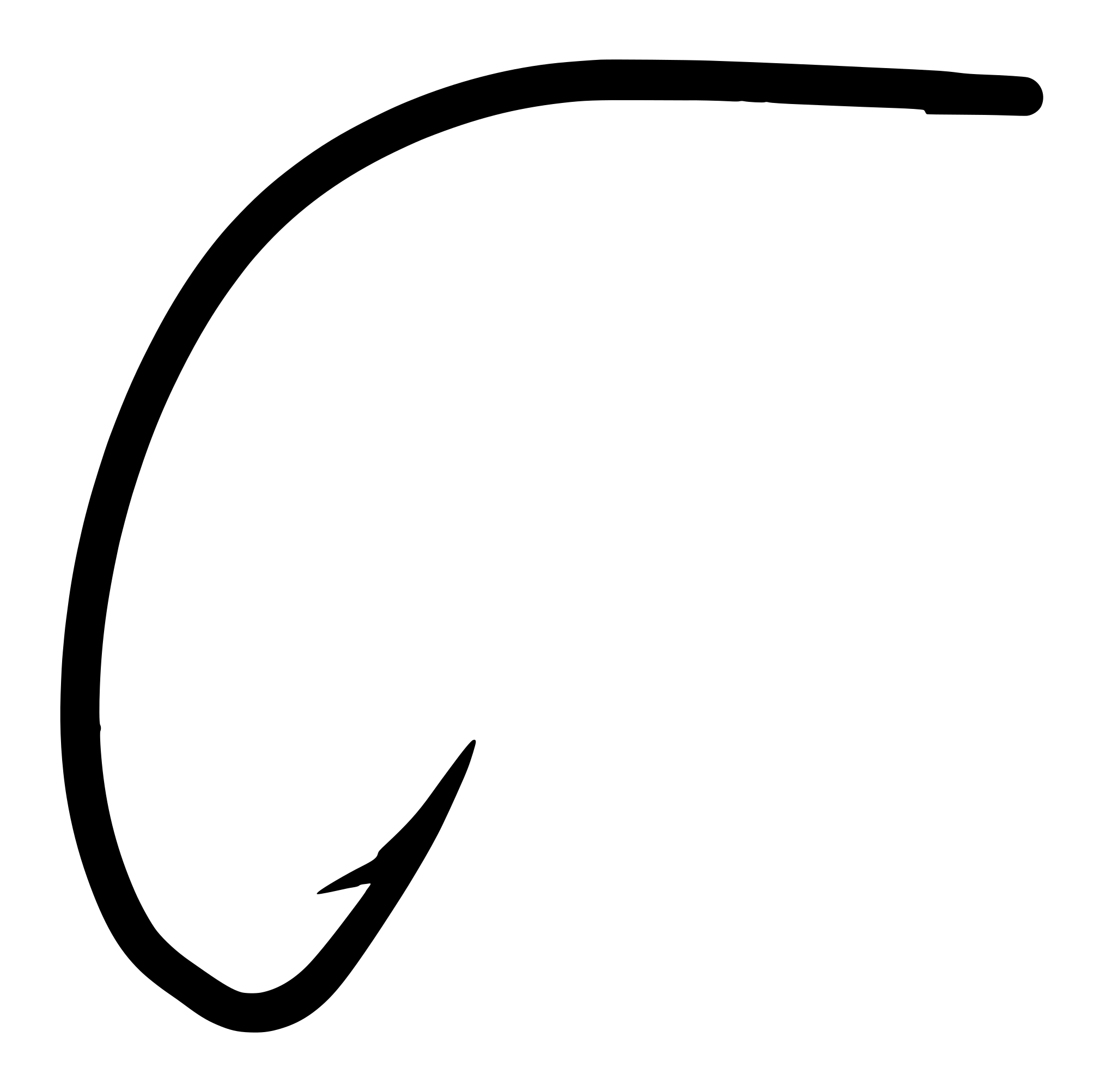
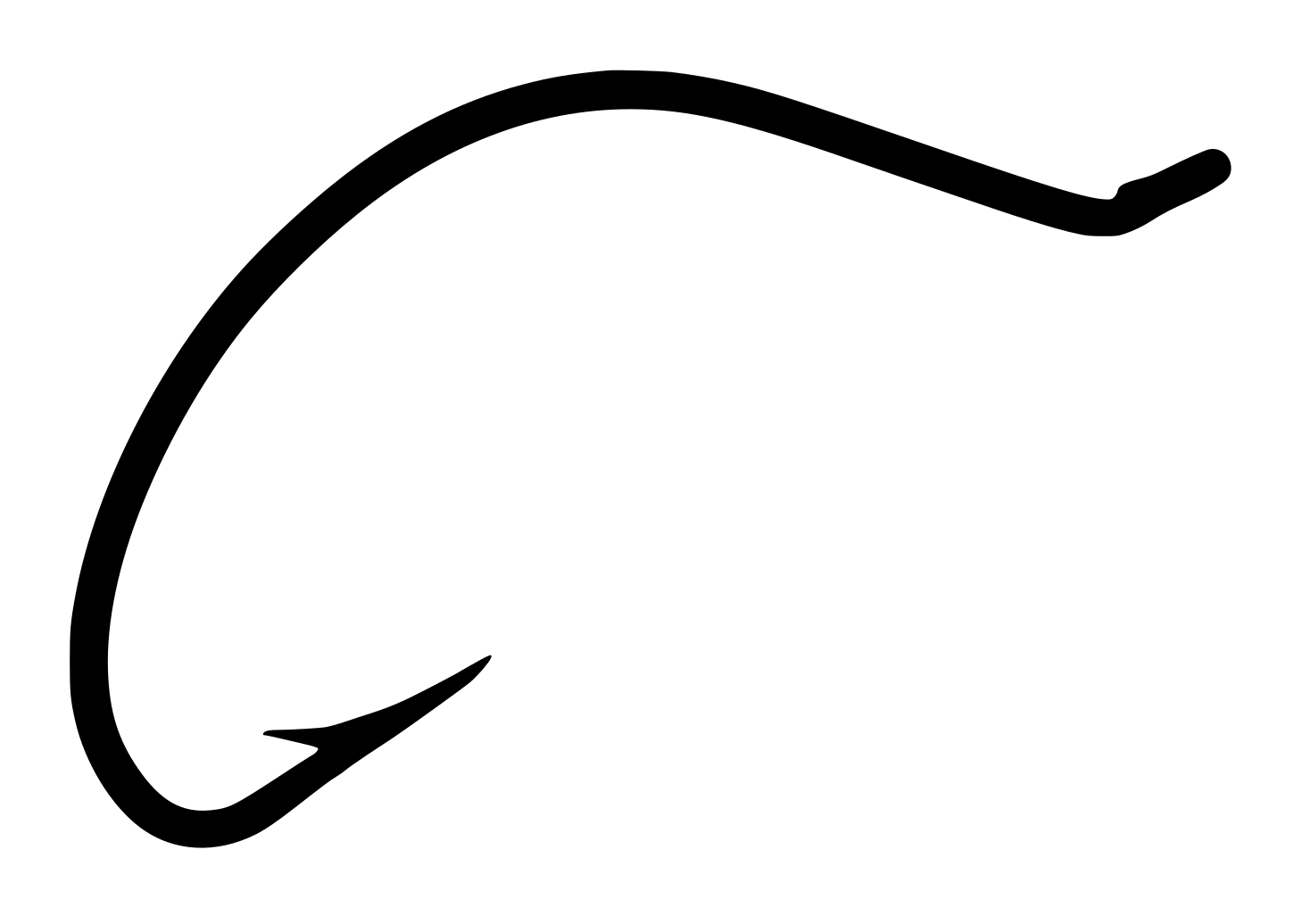
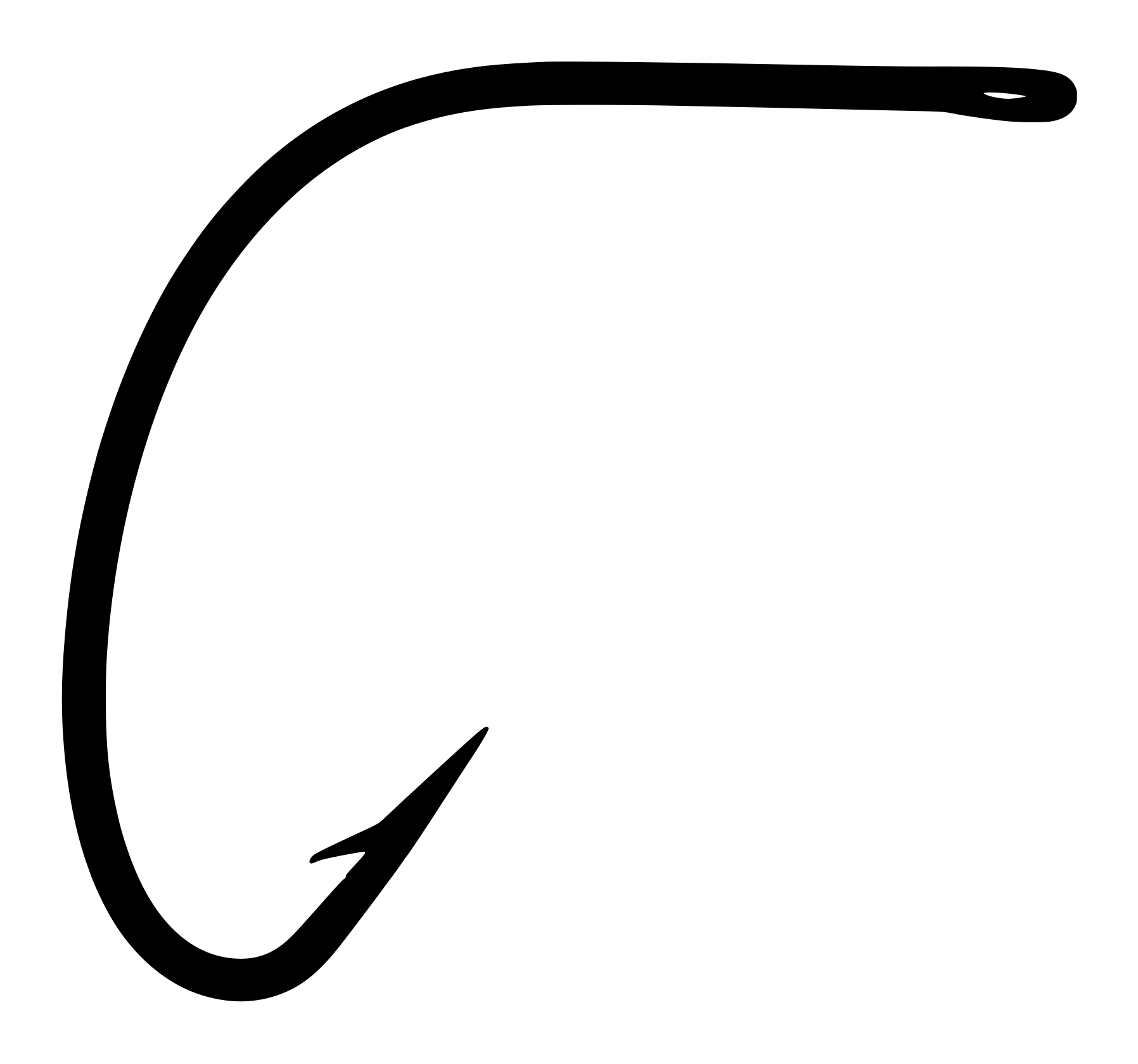
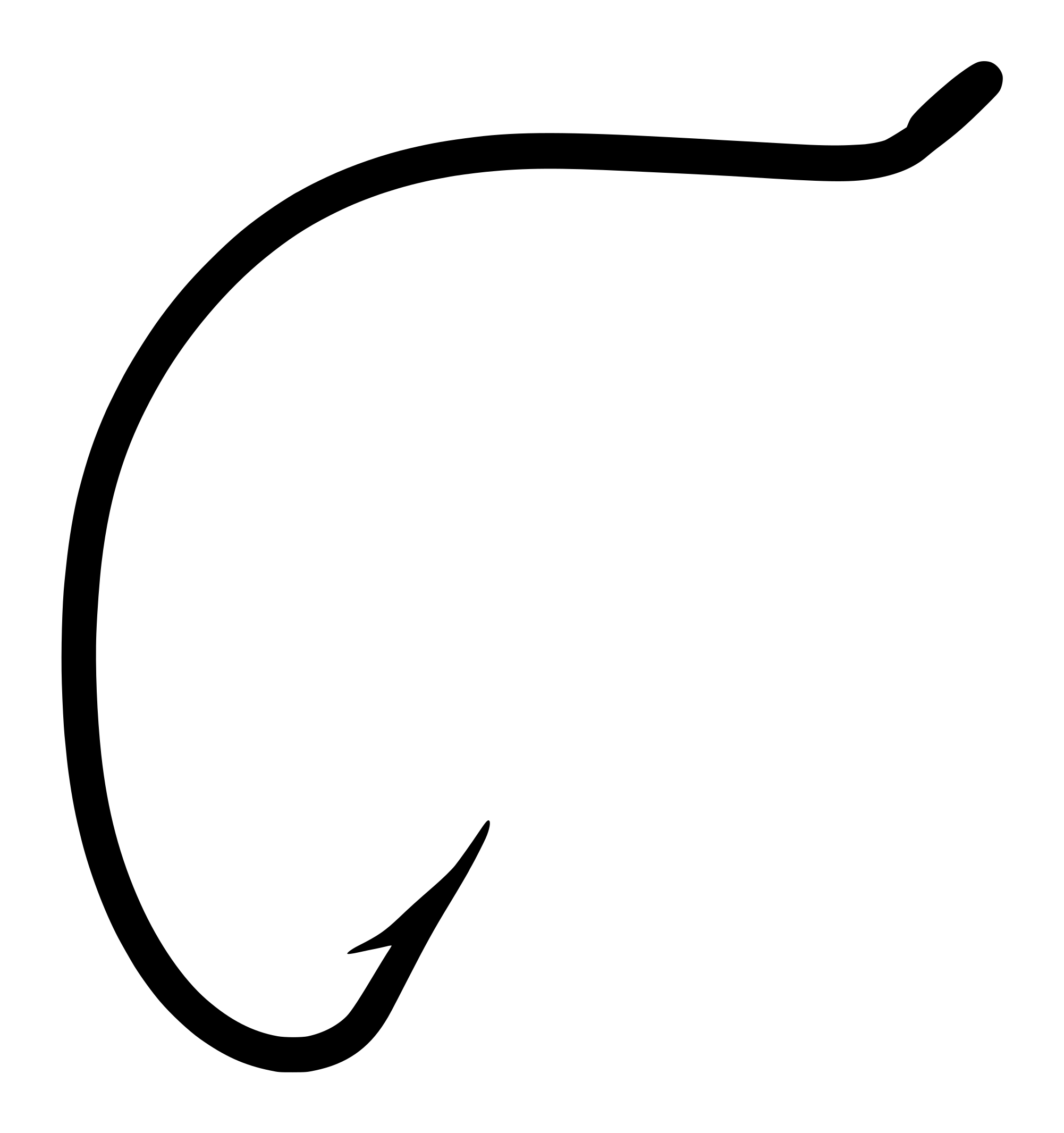
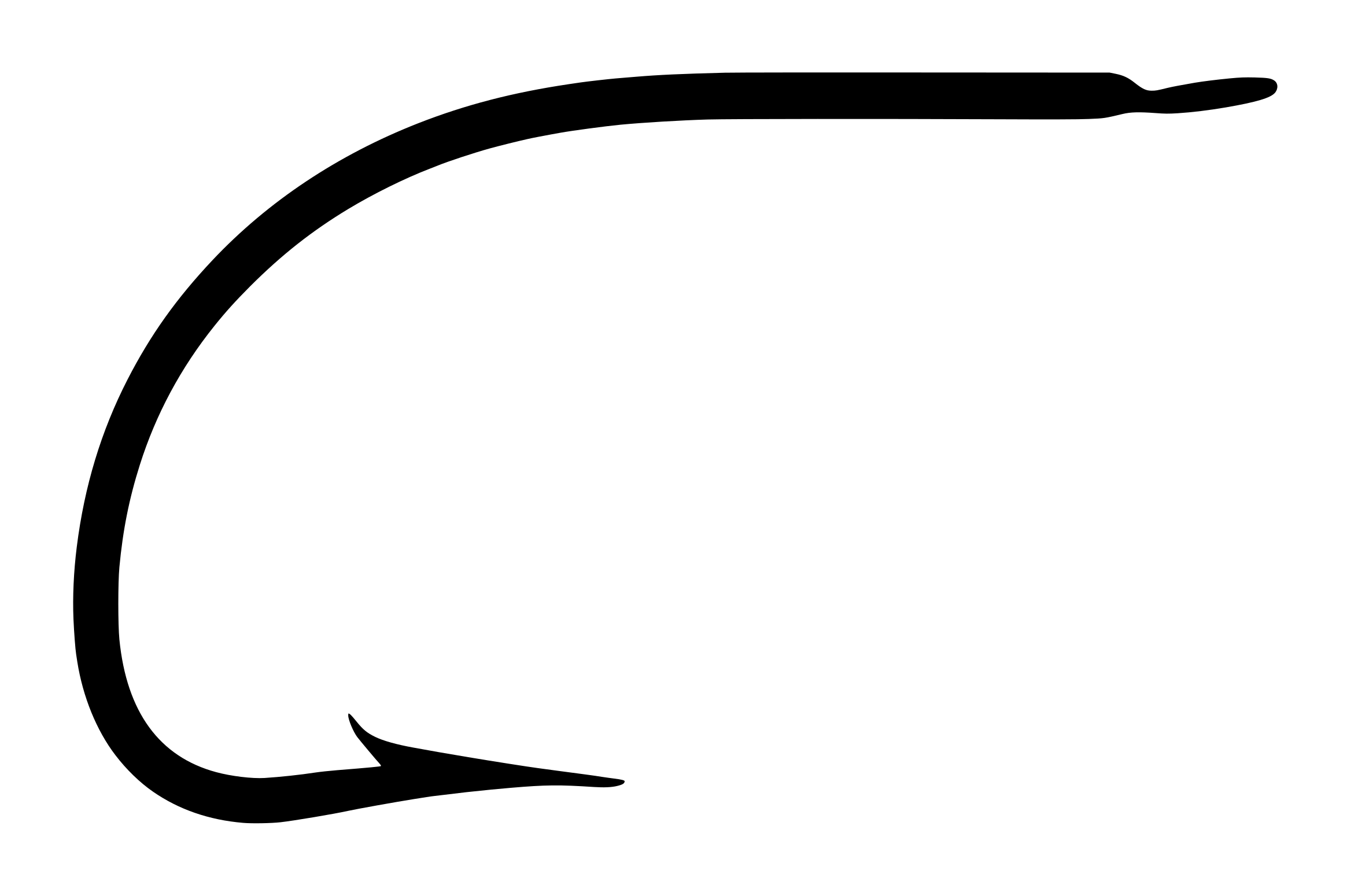
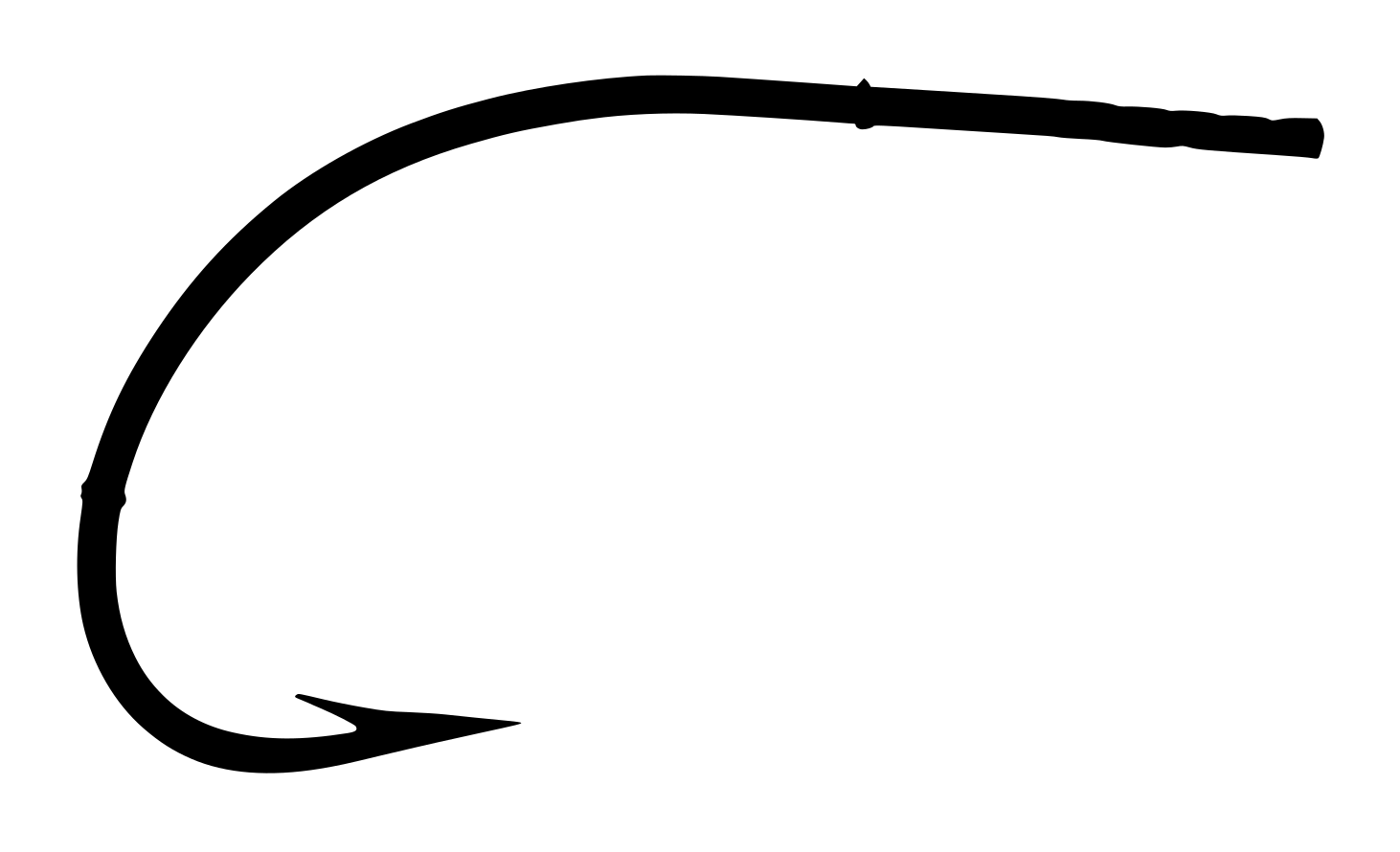
The Mustad 3926A Kinsey is a mid-century eyeless bait hook manufactured by O. Mustad & Søn in Oslo, Norway, during the 1950s–1960s. This hook exemplifies a bridge between traditional hand-forged techniques and mass production, retaining the practical ingenuity of regional designs while leveraging Mustad’s industrial efficiency. The defining feature is the distinctive S-kinked shank, which functioned as a mechanical worm anchor—a clever engineering solution to prevent live bait from sliding down the hook during casting or in moving water.
The Mustad 3926A belonged to the Kinsey pattern family, a pattern immensely popular in North American freshwater angling, particularly among ‘Indiana School’ trout fishermen who preferred the eyeless, snelled construction for direct line contact and superior holding power. The No. 13 size is historically significant, as modern hook manufacturing almost exclusively uses even-numbered sizes; the presence of odd sizes like 13, 15, and 17 in Mustad’s catalog reflects the company’s effort to cater to very specific regional preferences across Europe and the United Kingdom.
This specimen features a bronzed (baked lacquer) finish with warm brownish-gold tone, hollow-point geometry for delicate penetration, and the original blue-label retail packaging with gold foil border—all hallmarks of 1950s–1960s Mustad export quality. The hook is scarce in size 13 and represents a now-obsolete construction method, making it of genuine interest to tackle historians, collectors of traditional fishing techniques, and experimental fly tiers exploring historical worm-pattern imitations.
Close-up of the Mustad 3926A hollow-point geometry, showing the concave, dished-out profile that flares rapidly toward the barb. The fine, razor-sharp tip is characteristic of Mustad's hollow-point engineering for delicate penetration.
Photographic record
6 cataloged imagesSelect any record to load it above.
6 images shown
Mustad 3926A Kinsey Hook Point Detail Size 13 BronzedClose-up of the Mustad 3926A hollow-point geometry, showing the concave, dished-out profile that flares rapidly toward the barb. The fine, razor-sharp tip is characteristic of Mustad's hollow-point engineering for delicate penetration.Open originalMustad 3926A Kinsey Hook Profile Size 13 S-Kink ShankTwo Mustad 3926A hooks displayed to show the distinctive S-kinked shank, tapered spike bent back (eyeless construction), and overall profile. The mechanical S-kink served as a bait anchor for live worm fishing.Open originalMustad 3926A Original Retail Box and Label Size 13Complete original Mustad 3926A Kinsey retail packaging, consisting of blue-label card affixed to cream-colored cardboard box with separate sleeve. The gold foil decorative border and eight-line specification block (O. MUSTAD & SÖN, MANUFACTURERS, OSLO—NORWAY, Qual. 3926A, Hollow Point, Mustad—Kinsey Hooks, etc.) are clearly legible.Open originalMustad 3926A Kinsey Hollow Point Detail Size 13Side-profile close-up of the Mustad 3926A point detail, illustrating the concave hollow-point geometry, fine sharp tip, and rapid barb flare. The bronzed lacquer finish shows warm brownish-gold tone with slight patina consistent with age.Open originalMustad 3926A Kinsey Complete Hook Profile Size 13Complete side profile of a single Mustad 3926A Kinsey Hook, size 13, showing the S-kinked shank geometry, tapered spike bent back (eyeless construction), and overall proportion relative to the measurement grid.Open originalMustad 3926A Kinsey Multiple Hooks Size 13 ComparisonTwo Mustad 3926A Kinsey Hooks, size 13, photographed together to demonstrate manufacturing consistency and the uniform S-kinked shank profile characteristic of the pattern.Open original
Technical profile
Eye
Blind — Tapered ShankTapered spike bent back — not a formed loop eye. The tapered spade end is slightly curved backward to prevent snell knot slippage. P
Wire
Standard, Round
Shank
Standard — Kinked, Curved / Humped
Bend
Standard gap, Offset / kirbedDistinctive S-kinked or curved shank with offset (Kirbed). The kink acts as a bait anchor for worm fishing. P
Point
Hollow Point (concave inner face)Standard short barb placement typical of hollow-point construction. P
Finish
Bronzed — Confirmed (stated on packaging)Warm brownish-gold lacquered coating typical of mid-century Mustad bronzed finish. Exhibits consistent tone across specimen with patina-like wear patterns characteristic of aged bronze lacquer. P
Hooks are bright bronzed with no corrosion or oxidation visible. Label shows light toning and minor water exposure marks, but all text and gold foil borders remain clearly legible. No hooks appear to be missing from the original 100-count box. Cardboard sleeve has light creasing and age yellowing but is intact. Overall specimen is in excellent working and display condition.
The hollow-point geometry of the 3926A was engineered to achieve rapid penetration with minimal applied force—ideal for delicate-mouthed fish like stream trout. The concave, dished outer profile creates an incredibly fine, razor-sharp tip that flares rapidly toward the barb, allowing the hook to pierce soft tissue with very little pressure. For worm fishing, this meant the angler could achieve a solid hook-set without jerking so violently that the worm was torn from its threads. The round wire profile (non-forged) kept the hook lightweight while the standard gauge provided adequate structural strength for live bait fishing. The bronzed finish—a baked lacquer derived from alkyd resin—provided excellent rust resistance for wet environments while offering a muted, warm brownish-gold color that was less likely to spook fish in clear water than bright, reflective finishes. The tapered spike bent back served as the attachment point: the angler would soak a short length of gut or monofilament and wrap fine silk thread around the spade end and up the shank, binding the snell securely to the hook. This eyeless construction provided a direct, frictionless pull to the line, eliminating the weak point that a knot at a formed eye would create.
We don't have measured sizes for this hook yet. Own one? Submit calipered measurements and we'll review and add them. Thank you!
Historical context
mustad
O. Mustad & Søn was founded in 1832 in Gjøvik, Norway, initially as ‘Brusveen Spiger- og Staltradfabrikk,’ manufacturing nails and steel wire. The company was taken over by Ole Hovelsen Mustad and his son Hans Mustad, who rebranded it as O. Mustad & Søn and pivoted toward fishing tackle. The defining moment came in 1877 when Mathias Topp, a visionary within the company, invented the first fully automated hook-making machine—a mechanized marvel that could continuously cut, bend, barb, and point hooks at unprecedented speed. Rather than patenting this technology (which would have required public disclosure of the mechanical schematics), the Mustad family guarded the technology through strict secrecy, non-disclosure agreements, and restricted factory access. This strategy proved devastatingly effective against competitors in Redditch, England, and manufacturing hubs across Japan and the United States. By the 1950s, Mustad had secured approximately 50% of the global hook production market, operating sales offices and manufacturing facilities on multiple continents. The company’s aggressive strategy of reverse-engineering regional hook patterns from around the world—such as the Cincinnati bend, the Limerick, and the Kinsey—and producing them with extreme Norwegian industrial efficiency allowed Mustad to corner localized markets on a global scale.
Series History
The Mustad 3926A Kinsey Hook is part of the broader Kinsey pattern family, a bait hook design of American regional origin that became immensely popular during the mid-20th century, particularly in North America. The ‘Kinsey’ pattern was characterized by its distinctive S-kinked or curved shank, which served a purely functional mechanical purpose: when a live worm was threaded onto the hook, the kink acted as a physical anchor, preventing the bait from sliding down the shank toward the bend. This design innovation was critical for maintaining natural bait presentation during casting and in current. Mustad acquired and adapted the Kinsey pattern as part of its global strategy of industrial ‘cloning’—taking patterns favored by regional anglers and blacksmiths and producing them at scale with Mustad’s mechanized efficiency.
The 3926A designation (the ‘A’ suffix typically denoting a specific variation in wire gauge or point style) placed the hook in Mustad’s mid-tier ‘Quality’ product range (the 3000-3999 numeric block). The eyeless construction with ‘tipped spike bent back’ indicated that these hooks were designed for direct snelling to fishing line—a technique requiring specific knot-tying knowledge and providing a stronger, straighter pull than a knotted eye. The No. 13 size is historically notable; while modern hook manufacturing standardized on even-numbered sizes (10, 12, 14, 16, etc.), early-to-mid 20th century Mustad maintained an expansive inventory of odd sizes (13, 15, 17) to serve very specific regional preferences across Europe and the UK.
The hollow-point geometry and bronzed finish made the 3926A well-suited for freshwater trout fishing with live bait, particularly in cool, clear streams where delicate penetration and a muted, natural color profile were advantageous. The series was gradually discontinued as modern spinning and fly-fishing equipment displaced traditional snelling techniques and as Mustad transitioned to eyed hooks for convenience. The introduction of the Signature Series (c. 2001-2009) rendered the arbitrary numerical quality codes like 3926A obsolete, marking the definitive end of this hook’s production era.
Era and Packaging Dating
Blue paper label with gold foil decorative border and 'OSLO - NORWAY' designation (post-1925, as Christiania was renamed Oslo on Jan 1, 1925). Label printing style, paper stock, and color scheme are consistent with mid-20th-century Mustad packaging. No barcode present (barcode era began c. 1974). The specific 'Qual. 3926 A' numerical model code is consistent with the classic arbitrary quality-tier system Mustad discontinued c. 2001-2009 in favor of the Signature Series. Box construction with separate cardboard sleeve and printed label on blue stock is typical of 1950s-1960s retail packaging.
The Kinsey Kink: A Bait Anchor Before Barbs
The Kinsey pattern's S-kinked shank represents a brilliant low-tech solution to a common bait-fishing problem. In the early 20th century, anglers using live worms on eyeless, snelled hooks found that the bait would slide down toward the bend during energetic casting, bunching up unnaturally and reducing its effectiveness. Rather than inventing a complex mechanical barb holder, Kinsey-pattern designers simply bent the shank into an S-curve, creating a physical obstruction that prevented worm migration. This elegant simplicity was so effective that Mustad copied the pattern for its mass-market line, and it remained in production for over 60 years. Today, the Kinsey demonstrates that sometimes the best tackle innovations arise not from metallurgical breakthroughs or precision engineering, but from a fisherman's practical understanding of how bait behaves in water.
Design lineage and influence
The Kinsey pattern emerged from American regional fishing traditions, likely developed by local blacksmiths or tackle craftsmen in the Midwest or East Coast during the late 19th century. The S-kinked shank is a direct precursor to modern baitholder hooks, which achieve the same anti-slide function using backward-facing sliced barbs cut directly into the shank. When Mustad reverse-engineered the pattern for global export (as part of its strategy of industrial ‘cloning’), it preserved the core S-kink geometry while applying its mechanized manufacturing precision. The Kinsey’s eyeless, snelled construction also reflects the broader transition in fishing tackle from hand-tied, gut-snood rigs to machine-made eyed hooks compatible with modern monofilament. The pattern influenced later commercial bait-hook designs and remains an educational example of how regional fishing traditions were globalized by industrial manufacturers. Modern caddis and pupa hooks (such as Tiemco’s 2457) inherit the curved/kinked shank profile but employ formed eyes and lighter wire suitable for contemporary fly tying.
Best matchRelated by Attribute
Computed automatically from catalog data — updated as new hooks are added.
Matches: Bend, Shank, Wire, Point, Finish +4 moreDiffers: Gap: Standard vs Wide; Eye: Blind — Tapered Shank vs Ball Eye; Eye Orient.: N/A — Blind vs Turned Down +2 more
Designed specifically for live worm and bait fishing, particularly for stream trout. The distinctive S-kink in the shank serves as a mechanical anchor, preventing worms from sliding down to the bend and bunching up. The eyeless, snelled construction provides a stronger, straighter pull to the line than a knotted eye, making it ideal for traditional snelling techniques common in early-to-mid 20th century trout fishing.
Secondary Applications
Experimental fly tying for curved insect larvae imitations (caddis pupa, buzzer midges); hand-snelling practice and historical fishing technique demonstration.
Curved caddis hook with similar bend profile, but features formed eye and standard shank rather than S-kink.
Tiemco 2457
Good
Curved pupa/caddis hook with comparable bend geometry and light wire, but modern construction.
Collector notes
Rated 4.5/10 — common in larger sizes (10, 12) but genuinely scarce in the documented No. 13; collector demand is moderate among Mustad specialists and tackle historians interested in eyeless construction and regional pattern evolution. Size 13 and the intact original blue-label packaging are the primary value drivers.
Reference value
$12 – $22 USD estimate
Packaging condition
Very Good — light wear, fully legibleRecorded specimen
Packaging format
GW-MUSTAD-KINSEY-01Catalog code
Collectability Factors: This hook exemplifies an obsolete construction method (eyeless, snelled) and a regional pattern that dominated mid-20th century American trout fishing. The No. 13 size is historically unusual and relatively scarce compared to even-numbered sizes, making it more desirable to specialists. The original blue-label packaging with gold foil border and ‘Oslo—Norway’ designation is authentic 1950s–1960s retail packaging and adds significant premium value. Mustad hooks in general have moderate collector interest (the company mass-produced at industrial scale), but eyeless patterns and odd sizes elevate the collectability bar.
Limiting Factors: Mustad’s industrial production volumes mean that even scarce patterns remain relatively available compared to Redditch craft-era hooks or Partridge specialty designs. The eyeless construction is a niche interest—most modern anglers lack snelling skills, limiting functional demand. The arbitrary numerical quality code (Qual. 3926A) has no intuitive descriptive value to collectors unfamiliar with Mustad’s system, reducing casual appeal. Common sizes (10, 12) are still abundant; the rating would be 2.5–3.0 for those sizes.
Most Desirable Variants: Size 13 and smaller odd sizes (15, 17) in original blue-label packaging; bronzed finish over blued or tinned variants; sealed or near-sealed boxes with full 100-hook count; complete original cardboard sleeve with label intact. Missing-hook cards or severely damaged packaging drop the value significantly.
Condition Factors: Hooks should be bright and corrosion-free; the bronzed lacquer may show patina (desirable to collectors). Original blue label should have minimal fading or water damage; gold foil borders are particularly prone to loss. Complete 100-hook count adds 30–50% premium over missing-hook cards.
Packaging
Blue card-stock label (approximately 3.0" × 2.0") with gold foil decorative border printed in gold ink on all four sides. Central field is bright turquoise-blue with weathered/aged patina on specimen. Label bears Key Brand Mustad logo (skeleton key graphic) in upper left, followed by eight-line typographic block in gold ink: 'O. MUSTAD & SÖN / MANUFACTURERS / OSLO—NORWAY / Qual. 3926A / Hollow Point / Mustad—Kinsey Hooks / with tipped spike bent back / Bronzed / Made in Norway.' Below text block: '100' in gold; 'No. 13' handwritten in dark blue ink (post-print annotation). Label is affixed to a cream-colored cardboard box (approximately 3.75" × 2.75" × 0.5") with separate cardboard sleeve. Box edges show minor creasing and age-yellowing; label shows light toning and small water-exposure marks consistent with 60+ year storage. No barcode present (pre-1974 indicator). Printing is offset letterpress in two colors (gold on blue field). Paper stock is period-appropriate lightweight card, consistent with mid-20th century retail packaging standards.
Market Value Notes
Low ($12): Good condition — opened packaging, 85–95 hooks present, label legible but toned, minor wear. High ($22): Excellent condition — sealed or near-sealed box with full 100-hook count, label crisp with vibrant gold foil, no hook loss or corrosion. Premium factors: odd size (13, 15, 17 preferred over 10, 12), complete original box with cardboard sleeve, pristine blue label with gold foil, full hook count, bronzed finish preferred over blued. Platforms: eBay (UK and US listings), vintage tackle dealers, specialist auctions. Confidence: V verified — 1 eBay sold listing (Mustad 3926A size 15, 100ct, new condition, $14.99). The size 13 specimen here falls into the Uncommon-to-Scarce tier, warranting a modest upward adjustment from the baseline $14.99 reference point. Estimate is anchored to the single confirmed sale but adjusted for size scarcity and packaging condition variance.
Where to Find
eBay (both UK and US), vintage fly-fishing tackle dealers (particularly those specializing in Mustad), specialist British tackle auctions (Vectis, Dunbar, etc.), collector-to-collector sales via fishing forums and Facebook groups (Vintage Fishing Tackle Collecting, Fly Fishing History groups).
eBay market reference. Researcher-curated. Prices in USD. Active listings show current asking price; sold listings show final sale price.
Preservation
Storage and Preservation
Store the 3926A in its original blue-label box with cardboard sleeve in a cool, dry environment away from moisture and direct sunlight. The bronzed lacquer finish is durable but can develop patina or bloom with humid storage; this is generally considered desirable by collectors, as it demonstrates age authenticity. Keep the box out of contact with acidic materials (old paper, certain cardboards) to prevent label degradation. The eyeless hooks should be stored on the original card or in the box rather than loose, to prevent tip damage and to preserve the integrity of the original packaging (which significantly increases value). Avoid contact with other metals or ferrous materials, which can cause galvanic corrosion or rust transfer to the bronzed surface. If the label or box shows signs of light mold or odor from prolonged storage in damp conditions, gently wipe the exterior of the box with a soft, dry cloth in a well-ventilated area (do not use solvents or water). Inspect periodically for signs of vermin or rodent damage. This is a functional historical artifact—keep it intact and properly housed to preserve its collecting and educational value for future tackle historians.
Marking Analysis
Handwritten Annotation: 'No. 13' Size Marker
The size ’13’ appears to have been handwritten in dark blue ink directly onto the printed blue label, below the pre-printed ‘Qual. 3926A’ code. The handwriting is neat, deliberate, and consistent with mid-20th century retail labeling practices. This post-print annotation likely served two purposes: (1) quick visual identification of the hook size for retail display or wholesale sorting, and (2) clarification for purchasers unfamiliar with the quality-code system. The presence of this annotation is typical of Mustad’s distribution practices, where packaging was often hand-marked at the sales office or warehouse to indicate specific size/variant combinations. The handwriting quality and ink color suggest this marking was applied shortly after the label was printed and affixed, rather than years later. This annotation does not reduce the value of the specimen; rather, it provides evidence of authentic period storage and handling practices.
Size Note
Historical Significance of Size 13 — Odd Sizing in Vintage Mustad Production
The No. 13 size is historically noteworthy. Modern hook manufacturing, beginning in the 1970s, standardized exclusively on even-numbered sizes: 8, 10, 12, 14, 16, 18, 20, and up to 28 for the finest dry fly work. Odd-numbered sizes (11, 13, 15, 17, 19) are virtually absent from contemporary production. However, during the early-to-mid 20th century, Mustad and other major manufacturers maintained expansive catalogs that included numerous odd sizes, typically produced in smaller volumes to serve very specific regional preferences in Europe (particularly the UK) and North America. The No. 13 was particularly favored for small-stream trout fishing with live bait, offering a gap width and shank length intermediate between the standard No. 12 and No. 14. Collectors frequently find Mustad cards in common even sizes (10, 12) still in abundance, while odd-sized cards like this 3926A/13 are genuinely scarce. The odd size increases the specimen’s rarity rating and collector desirability, particularly among Mustad specialists and tackle historians documenting the company’s full historical output.
Primary Source
Reading the Eight-Line Label: Mustad's Standardized Hook Encoding System
Source: O. Mustad & Søn — A Comprehensive Typology and Decryption of Vintage O. Mustad & Søn Hook Labels (reference document 1)
The blue label exemplifies Mustad’s rigid eight-line typographic system for communicating hook specifications to international wholesalers, retailers, and anglers across linguistic barriers. Each line served a strictly regulated function: (1) ‘O. MUSTAD & SÖN’ established corporate authority and brand identity; (2) ‘MANUFACTURERS’ differentiated Mustad from regional import agents and repackagers; (3) ‘OSLO—NORWAY’ provided geographic origin and served as a critical dating tool (Oslo designation = post-Jan 1, 1925; Christiania designation = pre-1925); (4) ‘Qual. 3926A’ denoted the product tier using the company’s arbitrary numeric quality codes (3000–3999 = mid-tier quality hooks); (5) ‘Hollow Point’ exclusively defined the point geometry (per Mustad’s strict rule, this line could never specify shank, eye, or wire gauge); (6) ‘Mustad—Kinsey Hooks’ identified the structural bend pattern and regional style; (7–8) ‘with tipped spike bent back / Bronzed / Made in Norway’ provided anatomical and finish modifiers. This dense information package allowed a distributor or angler to instantly identify the hook’s mechanical purpose, regional tradition, and durability characteristics. The 3926A label is a specimen of mid-century Mustad’s industrial standardization—a system that remained in use for over a century before being superseded by the Signature Series (c. 2001–2009).
Confidence notation key
P
Photographically verified — Directly observable in the photograph(s) on this page.
V
Verified by documentation — Confirmed by manufacturer catalog, spec sheet, or published reference.
I
Inferred — A logical deduction from observable or documented evidence, not directly stated.
E
Estimated — An approximation based on visual comparison, proportional analysis, or limited data.
S
Speculative — A reasoned hypothesis that cannot be confirmed from available evidence.
Claims with no notation are confirmed by multiple independent sources. All photographs on garrenwood.com are taken on a measurement grid where each square equals 1/10 inch (0.1″ / 2.54 mm).