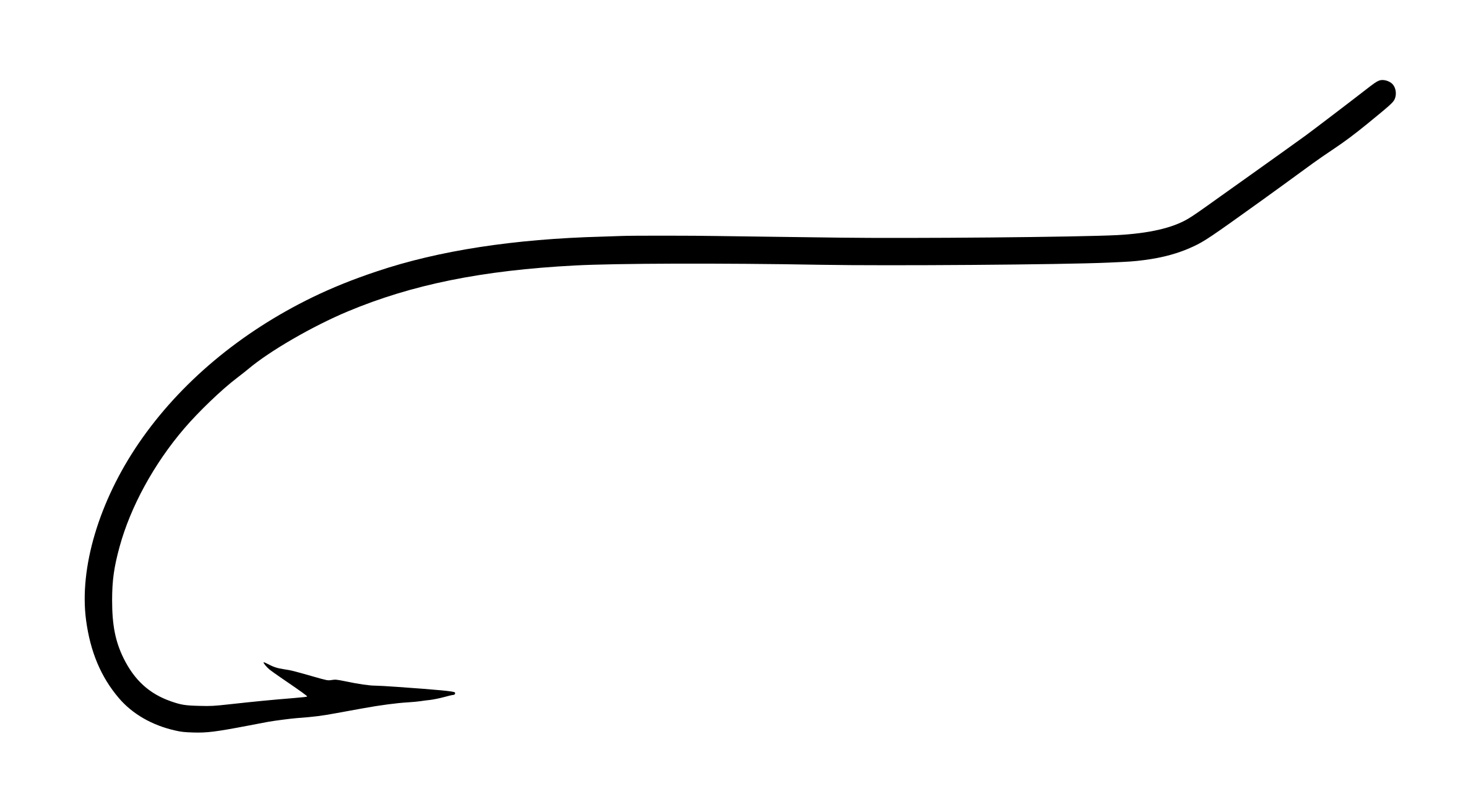
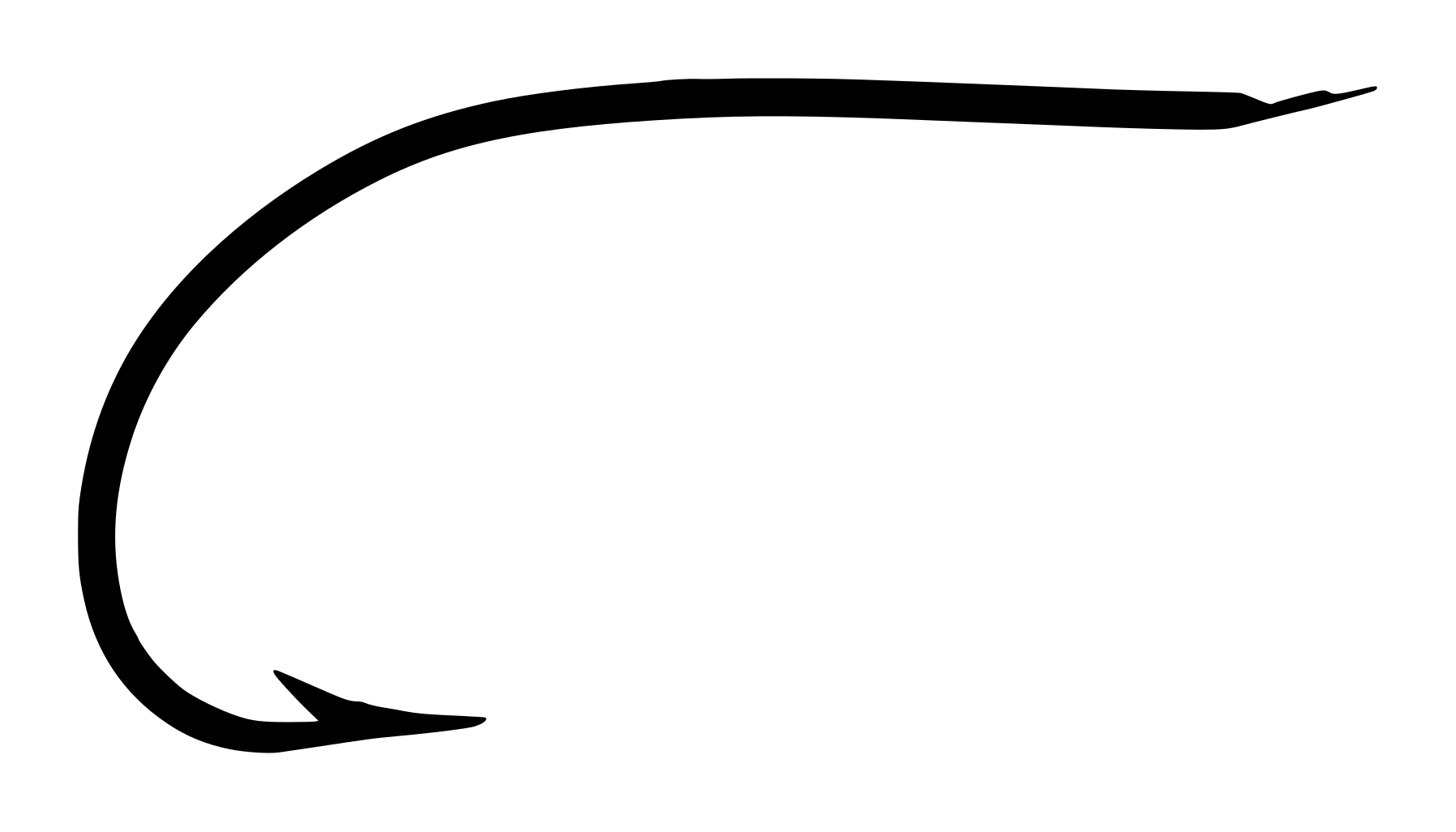
The Mustad 3714 Mustad-Carlisle Minnow Hook represents a fascinating piece of specialized tackle engineering from the mid-20th century P. This size 2 hook features the distinctive ‘tipped shank bent back’ design—a blind eye with an upward kink near the head that was specifically engineered for rigging natural minnows and preventing bait slippage during casting and retrieval V.
Dating to approximately 1950-1965 based on the classic yellow snowflake-border label and ‘Oslo – Norway’ designation I, this hook exemplifies Mustad’s dominance in producing specialized tackle solutions for specific fishing applications V. The hollow point and bronzed ‘Rustproof’ finish were standard features for freshwater bait fishing of the era V.
Today, the 3714 serves primarily as a collector’s piece documenting the sophisticated bait rigging techniques that preceded modern tackle systems I. The kinked shank design became obsolete as fishing evolved toward artificial lures and simplified rigging methods, making complete examples on original cards increasingly scarce among vintage tackle enthusiasts I.
Original Mustad 3714 box with classic yellow snowflake-border label showing complete product specifications and Key Brand logo.
Photographic record
4 cataloged imagesSelect any record to load it above.
4 images shown
Mustad 3714 Original Box and Label Size 2Original Mustad 3714 box with classic yellow snowflake-border label showing complete product specifications and Key Brand logo.Open originalMustad 3714 Full Hook Profile Size 2Side profile of the Mustad 3714 clearly showing the distinctive upward-kinked shank design that prevented minnow bait from sliding during use.Open originalMustad 3714 Point Detail Size 2Close-up detail of the Mustad 3714 showing the hollow point geometry and proportioned barb designed for bait fishing applications.Open originalMustad 3714 Size Comparison Size 2Two Mustad 3714 hooks on measurement grid demonstrating the consistency of Mustad's precision manufacturing during the mid-20th century.Open original
Technical profile
Eye
Blind — Tapered Shank
Wire
Extra-Fine, Round
Shank
2X Long — Kinked
Bend
Standard gapModified Carlisle bend with distinctive upward kink in the shank near the head area, creating an approximately 15-20 degree angle P. This 'bent back' feature was specifically engineered for minnow rigging applications V.
Point
Hollow Point (concave inner face)Standard proportioned barb with moderate angle, appropriate for bait fishing applications P.
Finish
Bronzed — Confirmed (stated on packaging)Warm bronze tone with excellent uniformity across the hook surface P. The 'Rustproof' designation likely indicates a protective lacquer coating over the bronze base finish I.
Card shows light age toning consistent with era. Hook finish remains bright with warm bronze tone. Sample hooks show no corrosion.
The distinctive upward kink in the shank serves a specific biomechanical function in minnow rigging—it creates a natural anchor point that prevents the bait fish from sliding down the hook shaft under casting forces or current pressure. The hollow point geometry provides rapid penetration with minimal force, essential when fish strike natural baits with varying degrees of aggression. The extended shank length accommodates the full body length of small minnows while protecting the fishing line from sharp teeth of predatory species like northern pike and large bass.
The 3714 belonged to Mustad’s specialized minnow hook series, which included various kinked-shank and bent-back designs engineered specifically for natural bait rigging applications during the 1940s-1960s. These hooks represented Mustad’s response to the sophisticated live and preserved minnow fishing techniques popular among American bass and trout anglers of the era. The series was gradually discontinued as fishing evolved toward artificial lures and simplified tackle systems, with most models becoming obsolete by the 1970s.
Era and Packaging Dating
Yellow paper label with snowflake border pattern, 'Oslo - Norway' designation (post-1925), Key Brand logo style, and 'Rustproof' finish terminology characteristic of mid-century Mustad export packaging. Typography and printing methods consistent with 1950s-1960s production.
The Language of Lure
The 'bent back' terminology used on vintage Mustad labels was specifically coined to differentiate their kinked-shank minnow hooks from competitors' straight-shank designs. This linguistic precision reflected Mustad's marketing sophistication—they understood that American anglers needed to quickly identify the functional difference when purchasing hooks by mail order from sporting goods catalogs, where detailed illustrations were often unavailable.
Design lineage and influence
The kinked-shank concept represented Mustad’s adaptation of traditional British snelled hook designs for the American market’s preference for direct-tied connections. While other manufacturers like Pflueger and Wright & McGill offered similar minnow hooks, Mustad’s precision manufacturing and the specific angle of the ‘bent back’ feature set the 3714 apart. The design influenced later bait hook development but was ultimately superseded by modern circle hooks and specialized live bait systems.
Best matchRelated by Attribute
Computed automatically from catalog data — updated as new hooks are added.
Matches: Gap, Point, Finish, Forging, Offset +2 moreDiffers: Shank: 2X Long vs 1X Long; Wire: Extra-Fine vs Fine (1X Fine); Eye: Blind — Tapered Shank vs Ball Eye +4 more
Matches: Wire, Eye Orient., Point, Finish, Forging +3 moreDiffers: Shank: 2X Long vs Short (1X–2X Short); Gap: Standard vs Wide; Eye: Blind — Tapered Shank vs Blind — Marked Shank +2 more
Matches: Gap, Eye, Eye Orient., Point, Finish +3 moreDiffers: Shank: 2X Long vs Standard; Wire: Extra-Fine vs Standard; Offset: Straight vs Offset / Kirbed +2 more
Matches: Wire, Eye Orient., Point, Forging, Offset +2 moreDiffers: Shank: 2X Long vs Short (1X–2X Short); Gap: Standard vs Wide; Eye: Blind — Tapered Shank vs Blind — Flatted +3 more
Specifically designed for rigging natural minnows and small baitfish P. The distinctive upward-kinked shank near the head was engineered to secure the bait fish and prevent it from sliding down the hook during casting and retrieval V. Originally intended for targeting large trout, bass, and salmon with live or preserved minnows in lakes and slower rivers V.
Secondary Applications
Occasionally used by creative fly tyers for retro streamers where the kinked shank creates unique head profiles.
Classic Fly Patterns
Not typically used for fly tying
Modern Equivalents
Hook
Match Quality
Notes
No direct modern equivalent - specialized design discontinued
Poor
Standard long-shank Carlisle hooks like Mustad 3261 provide similar proportions but lack the kinked shank feature
Collector notes
Scarce specialized design with unique kinked shank feature that became obsolete with modern tackle evolution.
Reference value
$15 – $35 USD estimate
Packaging condition
Very Good — light wear, fully legibleRecorded specimen
Packaging format
MUS-YEL-SF-01Catalog code
Strong positive factors include the unusual kinked shank construction that represents a specific historical solution to minnow rigging challenges, complete original packaging with the classic yellow snowflake-border label, and documentation of Mustad’s specialized tackle engineering during their mid-century dominance. The ‘Rustproof’ finish terminology and Key Brand designation add period authenticity.
Limiting factors include the specialized nature that appeals primarily to bait fishing historians rather than fly fishing collectors, and the reality that most anglers today would not recognize or understand the functional purpose of the kinked shank design.
Packaging
Yellow paper label with decorative snowflake border pattern. Classic Mustad eight-line format with Key Brand logo. Shows 'Oslo - Norway' location, 'Qual. 3714', 'Hollow Point', 'Mustad-Carlisle Minnow Hooks', '100 No. 2', 'Tipped shank bent back', 'Rustproof', 'Made in Norway'. Light age toning but text remains clearly legible.
Market Value Notes
Complete card in good condition. Individual hooks worth significantly less. Premium for mint condition cards with all 100 hooks intact.
Where to Find
Vintage tackle shows, eBay auctions, estate sales of older anglers who used natural bait
Preservation
Storage and Preservation
Store the complete card in a cool, dry environment away from humidity to prevent degradation of both the paper label and bronze hook finish. The yellow paper stock is particularly susceptible to further toning and brittleness with age, so archival storage sleeves are recommended for high-value examples. The bronzed finish may develop an attractive patina over time, which many collectors consider desirable. Handle hooks minimally to preserve the original finish, and avoid contact with dissimilar metals to prevent galvanic corrosion. Original packaging significantly enhances collector value—keep hooks mounted on the card rather than removing them for display.
Primary Source
Label Terminology Analysis
Source: Original Mustad 3714 packaging label
The phrase ‘Tipped shank bent back’ on the original label provides precise technical description in Mustad’s standardized terminology. ‘Tipped’ indicates the blind eye construction where the shank wire is tapered to a point rather than formed into a loop. ‘Bent back’ specifically describes the upward angle of the shank near the head—distinguishing this design from straight-shank models and other bent configurations. The ‘Rustproof’ designation was Mustad’s marketing term for their protective lacquer coating system, which provided superior corrosion resistance compared to plain bronze finishes of competing manufacturers.
Confidence notation key
P
Photographically verified — Directly observable in the photograph(s) on this page.
V
Verified by documentation — Confirmed by manufacturer catalog, spec sheet, or published reference.
I
Inferred — A logical deduction from observable or documented evidence, not directly stated.
E
Estimated — An approximation based on visual comparison, proportional analysis, or limited data.
S
Speculative — A reasoned hypothesis that cannot be confirmed from available evidence.
Unnotated claims are the compiler’s synthesis; see Sources. All photographs on garrenwood.com are taken on a measurement grid where each square equals 1/10 inch (0.1″ / 2.54 mm).