
Harrison Bartleet & Co.
- Founded
- 1865Redditch, England
- Documented entries
- 3Catalog records
- Categories
- 5By application
- Era range
- 1890–19303 dated entries
Harrison Bartleet & Co. traces its roots to Richard Harrison, documented among Redditch needle manufacturers as early as 1840. By 1865 Harrison had established the Metropolitan Works on Hewell Road, Redditch — a state-of-the-art manufacturing facility that would become the firm’s operational heart. The company earned Silver Medals at the Paris Exhibition (1867) and the Berlin Exhibition (1873) before Richard Harrison entered into a formal partnership with Arthur Greame Bartleet in 1876, forming R. Harrison, Bartleet & Co. This alliance combined Harrison’s established technical infrastructure with the prestige and capital of the Bartleet family name.
The period from 1876 to 1901 represented the firm’s absolute zenith. Following Richard Harrison’s death in 1880, Arthur Greame Bartleet assumed sole operational leadership, targeting the premium end of the global angling market — particularly the aristocratic Atlantic salmon anglers of the United Kingdom and the wealthy sporting elite of North America. The firm operated under two heavily protected trademarks: the “Fish” brand and the “Unicorn” brand. Their hooks were characterized by a proprietary japanning process that produced the deep black lacquer finish synonymous with classic blind-eye salmon hooks, and by a tempering process that achieved an optimal elastic temper absorbing severe shocks without snapping or straightening.
The firm’s most enduring technical contribution was the popularization of the Bartleet Bend — a modified Limerick geometry utilizing a sweeping continuous curve that begins much further up the shank, shortening the mechanical lever arm while maintaining a wide gape. This design distributed stress evenly across the heavy wire and remains the gold standard for classic Atlantic salmon fly hooks. George M. Kelson’s seminal work The Salmon Fly (1895) prominently featured Harrison Bartleet hooks, including a full plate illustrating their Dublin Limerick patterns.
Arthur Greame Bartleet died on April 21, 1901, at age 46, leaving an estate valued at £15,550. His sons Arthur Derrington and Bryan Douglas, aged 23 and 20 respectively, sold the business to Henry Milward & Sons Ltd. on September 5, 1902. Milward subsequently kept the Harrison Bartleet brand alive as a “zombie brand” on packaging for decades, even appearing in the Alfred Field & Co. catalog (New York, 1938) as an active manufacturer. The Metropolitan Works on Hewell Road was demolished during urban redevelopment in the 1970s. Today original Harrison Bartleet hooks are “Grail” items among classic salmon fly tyers, with modern replicas from makers such as Gaelic Supreme and Partridge (CS10/1, CS10/2) perpetuating the Bartleet Bend geometry.
- 1840
- Richard Harrison recorded among Redditch needle manufacturers petitioning the House of Commons
- 1851
- Census records Harrison as "fish hook maker and traveler in the needle trade"
- 1865
- Richard Harrison & Co. established at the Metropolitan Works, Hewell Road, Redditch
- 1867
- Silver Medal, Paris Exhibition
- 1873
- Silver Medal, Berlin Exhibition
- 1876
- Partnership formed with Arthur Greame Bartleet; R. Harrison, Bartleet & Co. founded
- 1880
- Richard Harrison dies; Arthur Greame Bartleet assumes sole leadership
- 1895
- Kelson's The Salmon Fly published; contains full plate of Harrison Bartleet hooks
- 1901
- Arthur Greame Bartleet dies April 21, age 46; estate £15,550; firm passes to his sons
- 1902
- Bartleet brothers sell firm to Henry Milward & Sons Ltd. (September 5)
- 1903–1950s
- Harrison Bartleet operated as zombie brand on Milward-produced packaging
Catalog by application
Complete index
3 entries
| Model | Name | Specification | Application | Era | Collectability | |
|---|---|---|---|---|---|---|
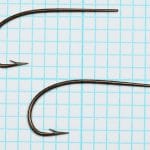
|
3025 | Harrison Bartleet's Hollow Point Sproat | SproatStdJapanned | Wet Salmon Sea trout | c. 1930-1945 | |
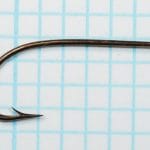
|
3051 | Chathundeley Sproat | SproatFine1XLBronzed | Wet Nymph | c. 1900-1930 | |
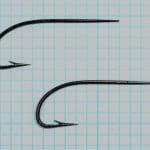
|
Harrison & Bartleet’s – Celebrated Pennell Limerick Hooks | Celebrated Pennell Limerick Hook, Tapers | LimerickFine1XLJapanned | Salmon Sea trout Display | c. 1890-1910 |