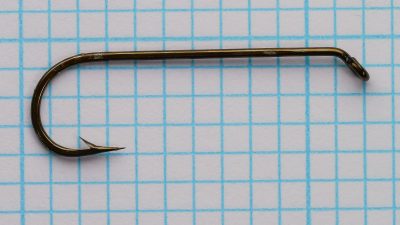
Ray Bergman Hook History
The “Ray Bergman Hook making company” is widely misunderstood; there was never a factory owned by Ray Bergman that manufactured hooks. Instead, “Ray Bergman Hooks” were a private-label brand sold through his mail-order business, while the actual manufacturing was outsourced to Redditch, England.
The following summary traces the history of this brand from its origins in the golden age of American angling literature to its status today as a highly collectible vintage item.
1. The Origin: Ray Bergman’s Angling Specialties (1934)
Ray Bergman (1891–1967), the Angling Editor of Outdoor Life and author of the seminal 1938 book Trout, did not manufacture tackle himself. In 1934, to supplement his writing income and supply readers who couldn’t easily source quality materials, he opened a mail-order business called Ray Bergman’s Angling Specialties out of his home in Nyack, New York — a town in which he was born and lived his entire life.
Through this business, he sold the “Nyack” line of tackle, which included leaders, gut, and his famous hooks. He operated the business continuously until his retirement.
2. The Manufacturer: The Redditch Connection (1934–1960s)
While the boxes bore Bergman’s name, the hooks were manufactured in Redditch, England, the global center of needle and hook manufacturing at the time.
-
- The Maker: The manufacturer for Bergman’s private label was the Martinez Company, a well-regarded Redditch firm. Sources consistently identify the maker by this name; there is no substantiated evidence of a “Bird” partnership in the manufacturing of Bergman’s hooks.
-
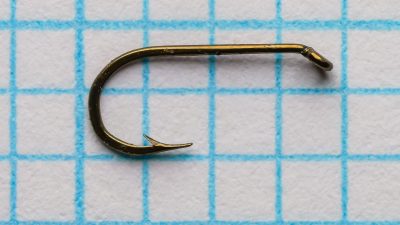
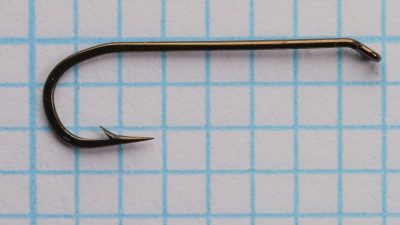
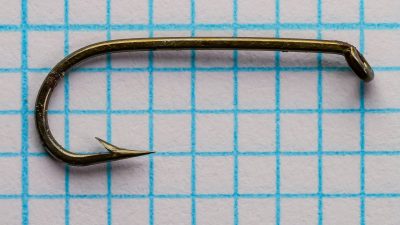
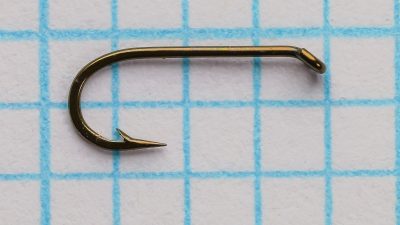
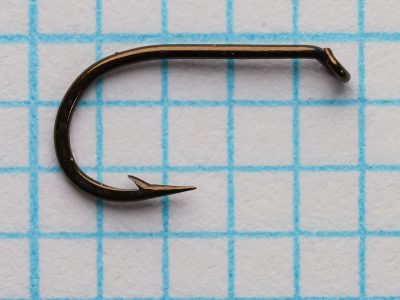
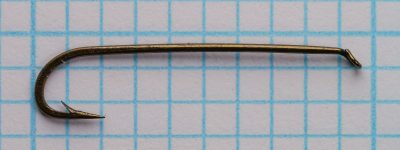
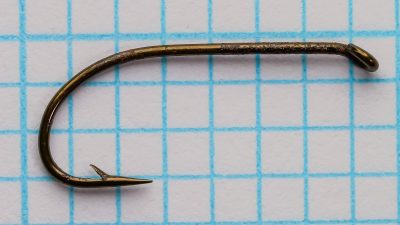
- The Specifications: Bergman was meticulous about his hooks. His most famous line featured a heavy-wire temper suited to sinking wet flies, a “Sproat” bend, a turned-down tapered eye, and a bronze finish. However, surviving boxes also confirm he carried 2x fine wire hooks for dry fly patterns, showing a broader range than often cited.
-
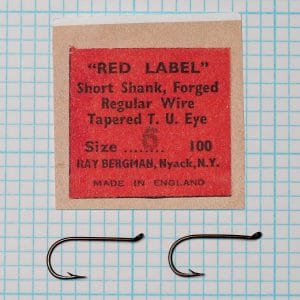
- The Labels: The hooks were sold in cardboard boxes with distinct colored paper labels indicating their type or wire gauge — e.g., “Red Label” (Extra Stout), “Blue Label,” and “Yellow Label” — all sold under the “Nyack Brand, Ray Bergman Fly Tying Hooks” name.
3. The “Bergman Hook” Style
The hook sold by Bergman became iconic not simply because of the brand, but because of the color fly plates in his book Trout. The flies illustrated by Dr. Edgar Burke were tied on these specific hooks, cementing their association with the classic American wet fly tradition in the minds of generations of anglers.
-
- Wet Fly Characteristics: Heavy wire (for rapid sinking), turned-down tapered eye, bronze finish, and a wide, round Sproat gape.
-
- Function: These hooks were designed for classic wet fly patterns — such as the Parmacheene Belle, Fontinalis, and Grizzly King — which needed to break the surface quickly without the aid of added weight.
-
- Bergman’s Own Flies: By the time Trout was published in 1938, Bergman had tied over 100,000 flies by his own count. His original patterns — including the Squirrel Series Streamers, the R.B. Translucent Series, and the Iron Blue Variant — were characteristically tied on the Nyack Brand hooks.
4. Decline and Disappearance (1960s–1980s)
Ray Bergman served as Angling Editor of Outdoor Life from 1933 until his retirement in 1960 — a 27-year tenure. He passed away in 1967. With the wind-down of his mail-order business, the “Ray Bergman” brand of hooks gradually ceased to exist.
-
- The Shift to Mustad: As the supply of Nyack Brand hooks dried up, fly tyers shifted to the closest mass-produced equivalent: the Mustad 3399. For decades, this hook became the de-facto substitute for wet fly enthusiasts recreating Bergman-era patterns.
-
- The Manufacturer’s Fate: The Martinez Company, along with much of the Redditch hook trade, eventually succumbed to global competition. British hook manufacturing declined sharply through the 1970s and early 1980s.
5. The Present: A “Style” Rather than a Company
Today, there is no active company producing “Ray Bergman Hooks.” However, the term persists in the fly fishing world to describe a specific style of hook — particularly the heavy-wire, Sproat-bend, bronze wet fly hook with a turned-down eye.
-
- Vintage Market: Original boxes of “Nyack Brand / Ray Bergman” hooks are highly sought-after collectibles, with surviving boxes from estates of notable tyers (such as Fran Betters) commanding strong prices among classic fly dressers seeking historical accuracy.
-
- Modern Equivalents: Current manufacturers produce hooks that serve as practical substitutes:
-
- Mustad 3399 / S60-3399A — the long-standing de-facto standard
-
- Partridge of Redditch “Sproat Wet” — closely mirrors the old Redditch profiles
-
- Daiichi 1550 — a widely used standard wet fly substitute