The Ray Bergman Red Label is a small dry-fly hook manufactured by a specialist English maker and distributed by Ray Bergman’s Nyack operation in the late 1930s and 1940s. This size No. 6 example features a short forged shank, regular wire gauge, bronzed finish, and turned-up tapered eye—a classic configuration for small stream and creek dry flies. The packaging, with its distinctive red label on tan card stock and letterpress typography, provides strong evidence of production between 1935 and 1950, shortly after Bergman established his fly-fishing school and mail-order business in Nyack.
Ray Bergman was one of America’s most influential fly-fishing authors and educators, and his branded tackle reflected his commitment to quality and precision. This particular hook represents the intersection of Redditch manufacturing expertise and American fly-fishing tradition during the golden age of dry-fly development. The superior point geometry and balanced proportions make it ideally suited to delicate presentations on small waters.
For collectors, this hook is noteworthy as a named-collaborator design from a legendary figure in fly-fishing literature. Bergman’s books and magazine articles shaped American fly-fishing practice for decades, and his tackle endorsements carry significant historical weight. Complete, original-packaging examples are increasingly scarce, as most cards were opened and hooks consumed in fishing.
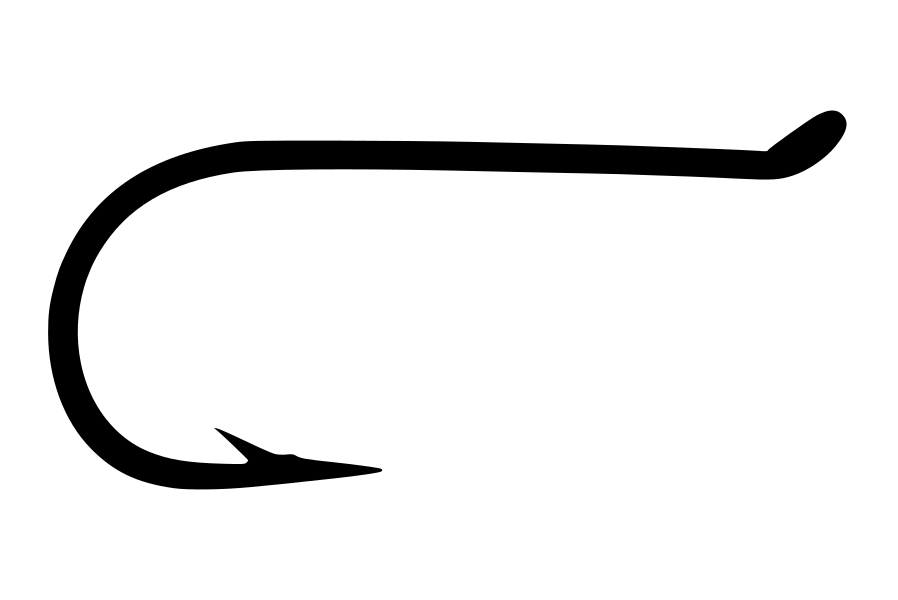
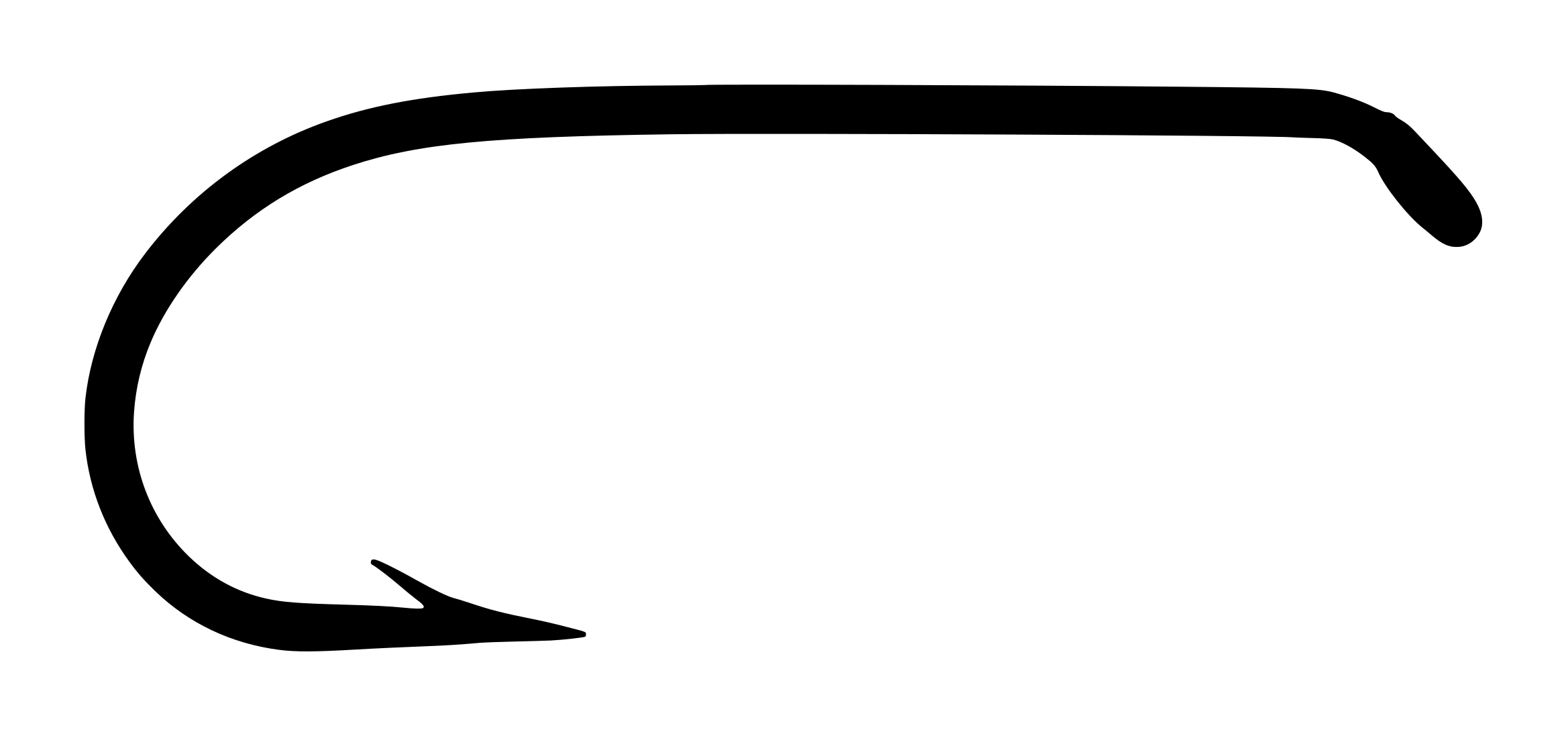
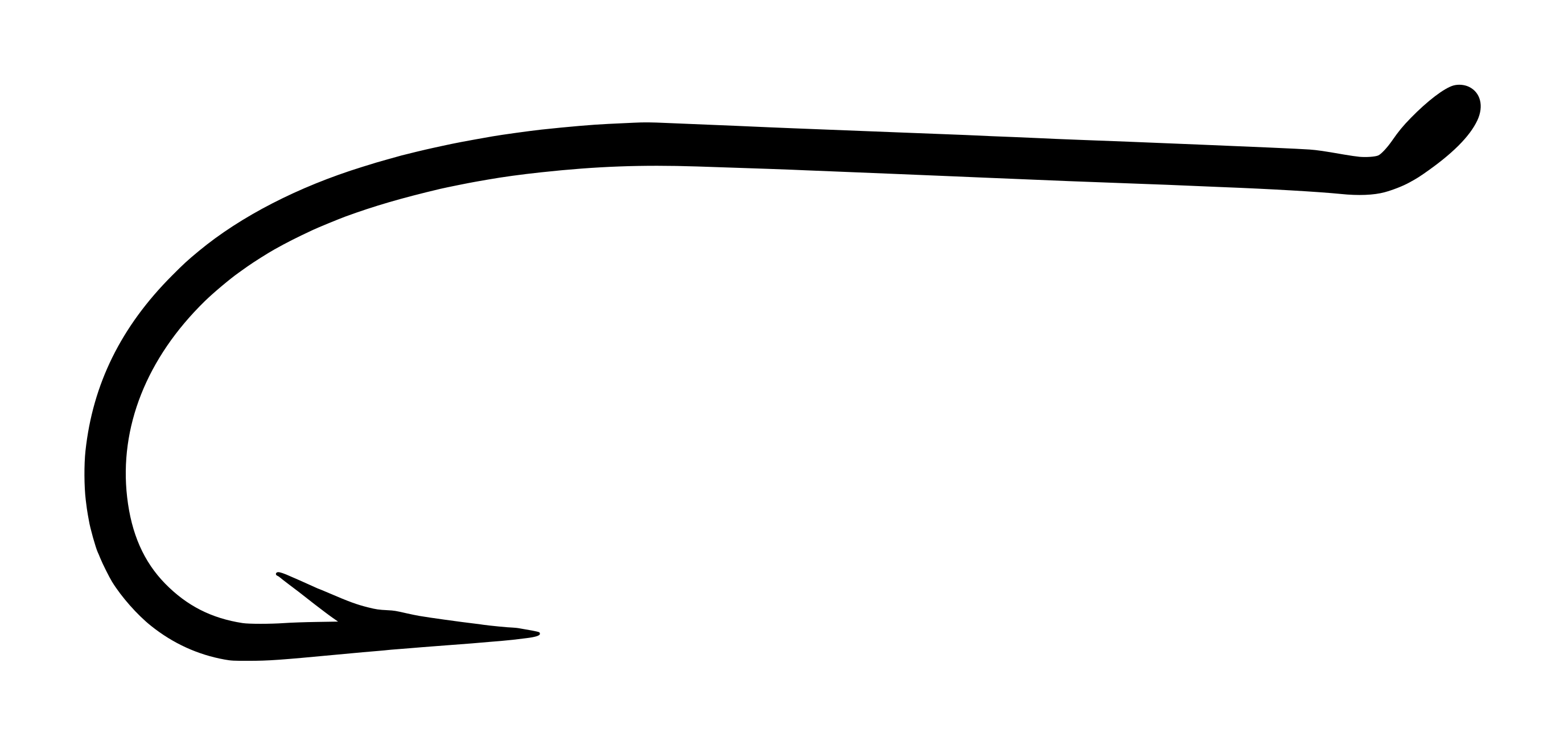
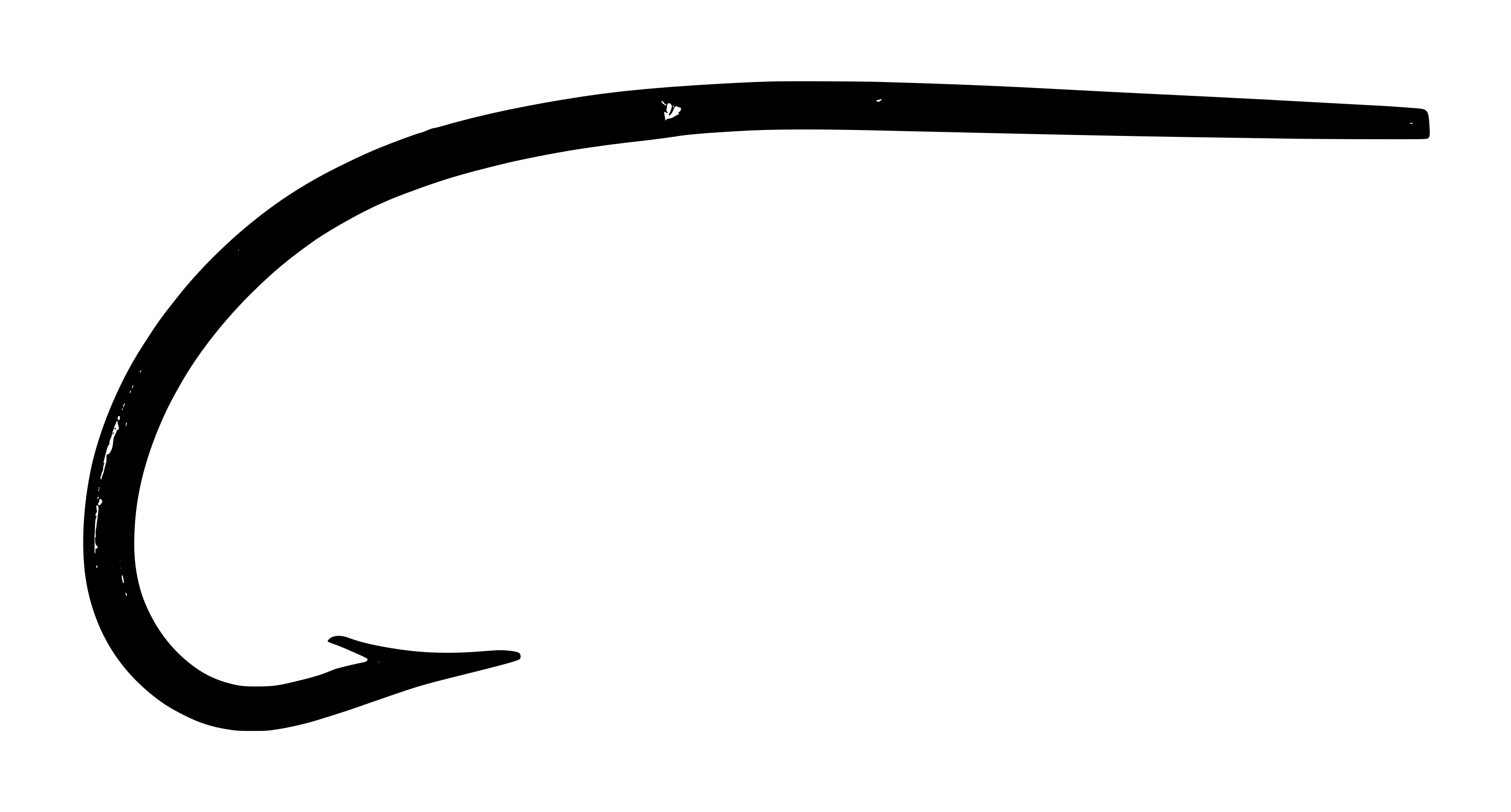
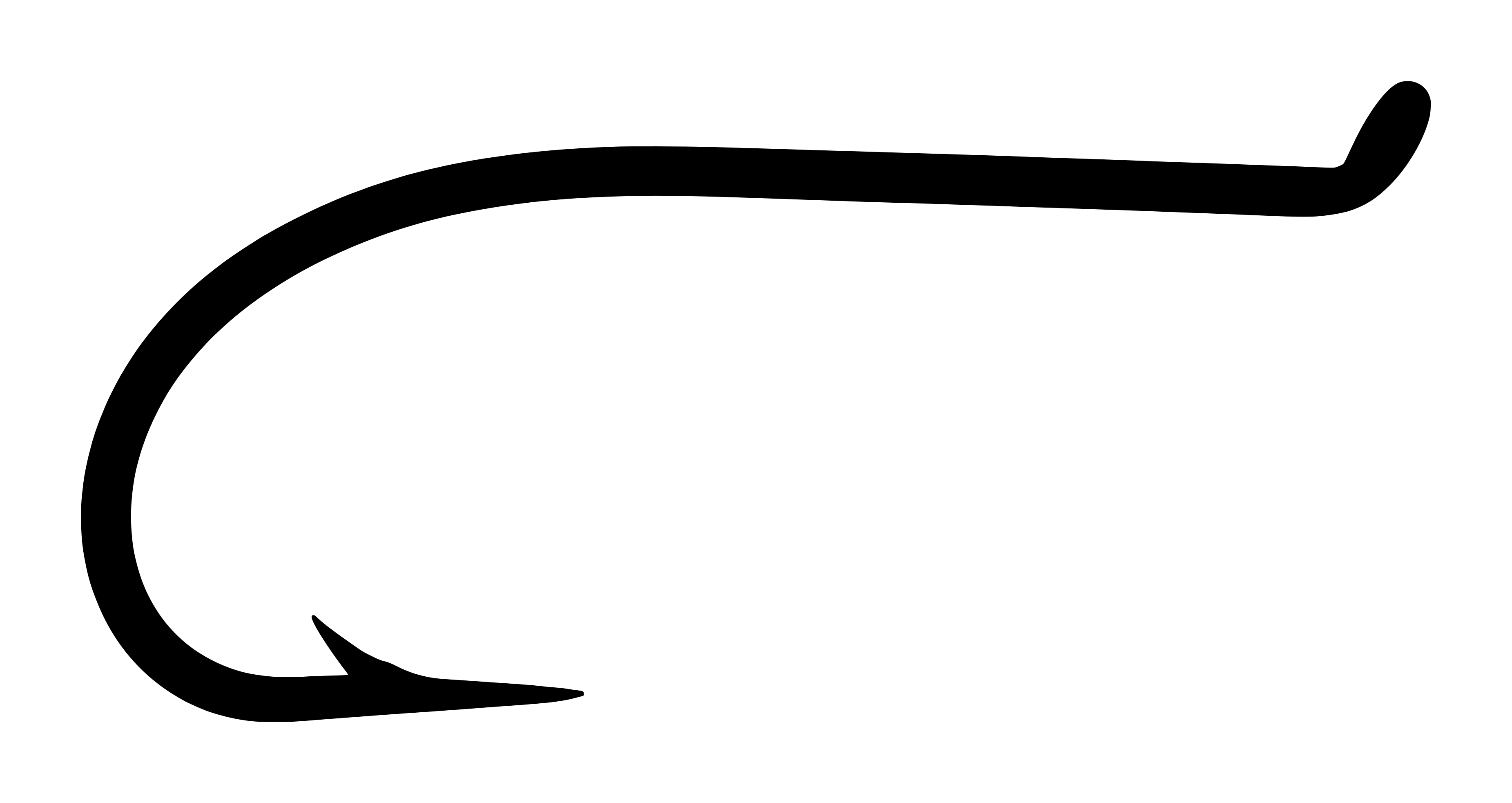
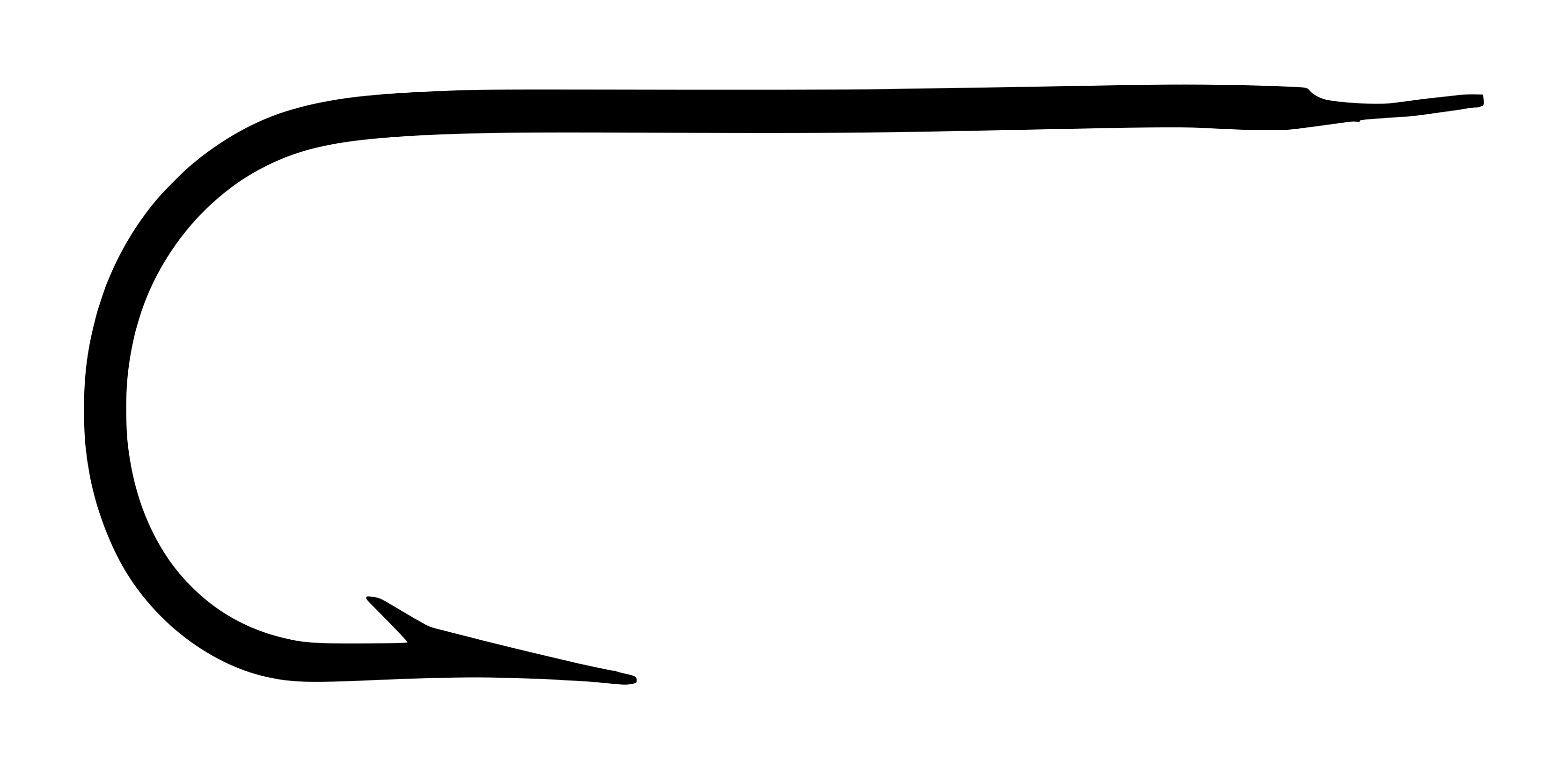
Side profile of the Ray Bergman Red Label hook, size 6, showing the turned-up tapered eye and moderate sproat bend. The bronzed finish displays its characteristic warm amber-brown tone. Photographed on 1/10-inch measurement grid.
Photographic record
2 cataloged imagesSelect any record to load it above.
2 images shown
Ray Bergman Red Label No. 6 Hook Side ProfileSide profile of the Ray Bergman Red Label hook, size 6, showing the turned-up tapered eye and moderate sproat bend. The bronzed finish displays its characteristic warm amber-brown tone. Photographed on 1/10-inch measurement grid.Open originalRay Bergman Red Label Hook Card and PackagingOriginal ray Bergman Red Label packaging card, showing the distinctive red label with printed specifications and the manufacturer's imprint. Two hooks remain suspended on the card. The tan cardboard backing and letterpress printing are consistent with 1930s–1940s American tackle packaging.Open original
Technical profile
Eye
Tapered Eye, Turned UpThe tapered turned-up eye features a smooth, even taper from the wire junction to the eye opening. The taper is executed cleanly without sharp angles or irregularities, indicating careful forging and finishing. Eye diameter approximately 0.06–0.07" (1.5–1.8 mm), appropriate for size 6. No visible marks or tool traces on the eye itself P.
Wire
Fine (1X Fine), Forged
Shank
Standard
Bend
Round / Kendal, Standard gapThe Sproat bend is moderate in depth, approximately 0.25–0.30" measured perpendicular from shank centerline to bend apex. The curve is smooth and symmetrical, without offset or kink. Wire set is straight; no torsion visible in the bend geometry P.
Point
Standard / SpearThe barb is small and closely cut, positioned approximately 0.08–0.10" below the point apex. The barb angle is swept upward slightly, providing mechanical engagement without excessive barb mass. Barb geometry is consistent with quality Redditch production standards P.
Finish
Bronzed — Confirmed (stated on packaging)The bronzed finish displays a warm, amber-brown tone under direct light, consistent with controlled oxidation rather than lacquer or plating. Steel grain texture is subtly visible beneath the finish, particularly visible in magnified detail of the shank. The finish is uniform across the hook with no streaking, pitting, or bare spots. Warm tone confirmed by researcher physical examination; finish is characteristic of bronzed hooks from this era, distinctly different from the cool grey tone of blued or nickelled finishes V.
Card shows light toning consistent with age and storage; edges show minor wear typical of handled merchandise. Both visible hooks appear bright and unworn, with no corrosion or patina. Eye construction is sharp and well-formed. Bronzed finish is even and warm-toned across the specimen hook.
The forged construction consolidates the wire through high-pressure heat shaping, increasing strength and hardness compared to drawn wire. On a short-shank, regular-gauge hook, forging eliminates the need for heavier wire while maintaining durability through the repeated casting and hook-setting stresses of dry-fly fishing. The superior point style—with minimal inner taper and a nearly straight, flat inner face—prioritizes consistent penetration and reduced barb drag. The regular wire gauge (approximately 0.018″ diameter) balances strength with the light weight necessary for small dry flies. The turned-up tapered eye provides smooth leader transition and prevents line slippage on casts.
We don't have measured sizes for this hook yet. Own one? Submit calipered measurements and we'll review and add them. Thank you!
Historical context
Series History
The Ray Bergman line of hooks represents a collaboration between Bergman’s Nyack operation and English manufacturers during a period when Bergman was establishing himself as America’s leading dry-fly authority. Unlike mass-produced hooks, the Bergman line appears to have been a specialized catalog offering, likely produced in smaller quantities and marketed directly to subscribers of Bergman’s magazine columns and purchasers of his books. The ‘Red Label’ designation suggests this was one of several hook styles within the Bergman catalog, each with its own label color or designation. Very few examples of Bergman-branded hooks survive in original packaging, as the line appears to have been discontinued after Bergman’s death in 1957 or shortly thereafter. The series is not documented in surviving tackle catalogs, suggesting it may have been offered primarily through mail order and in-house channels rather than through wholesale tackle distributors.
Named Collaborator
Ray Bergman (1887–1957) was an American fly-fishing pioneer, author, and educator whose influence on modern fly-fishing practice cannot be overstated. Born in Pennsylvania, Bergman began writing about fishing for outdoor magazines in the 1920s and quickly established himself as a national authority on dry-fly technique, particularly for trout in small streams and spring creeks. In 1935, he established his Nyack, New York fly-fishing school and mail-order tackle business, where he offered curated selections of rods, reels, lines, and hooks chosen for their quality and suitability to his teaching philosophy. Bergman’s seminal book ‘Trout’ (1938) became the standard reference on American trout fishing and established him as a peer of Lee Wulff and other giants of the era. His magazine columns in Field & Stream and other publications reached hundreds of thousands of readers. Bergman’s hook selections reflected his belief that dry-fly fishing required precision tackle—properly proportioned hooks with reliable geometry, finished to exacting standards. His endorsement of a hook model carried weight among serious fly fishers and helped define quality standards for the era. Bergman fished extensively in the Catskills, the Adirondacks, and western waters, bringing insights from all these regions into his teaching and writing.
Era and Packaging Dating
Red label with letterpress printing on tan card stock indicates mid-20th century American packaging. No barcode present. Ray Bergman address given as Nyack, N.Y. — Bergman relocated to Nyack in 1935. Printing style and card construction consistent with pre-1950 offset letterpress. No postal code format. The specific red label design and typography are consistent with late 1930s-1940s tackle packaging.
Bergman's Nyack Circle
Ray Bergman's Nyack headquarters became a pilgrimage site for serious fly fishers in the 1940s and 1950s. Subscribers to his magazine columns could order curated fly-fishing kits directly from Bergman, who personally selected and tested every item. His hook choices reflected fieldwork on waters across the continent—he insisted that American tackle makers study Redditch techniques while maintaining distinctly American dry-fly proportions. When Bergman died in 1957, many of his subscribers kept his last hook cards as memorabilia, treating them as minor relics of his legacy. Today, Bergman-branded tackle serves as a tangible connection to the golden age of American dry-fly tradition.
Design lineage and influence
The Ray Bergman hook represents a direct continuation of Redditch dry-fly hook tradition as refined by English specialists in the early 20th century. The short-shank, regular-wire, turned-up-eye configuration echoes the dimensions of Classic Redditch designs by Allcock and other makers, adapted for American small-stream fishing. The superior point geometry reflects the influence of American dry-fly leaders like Theodore Gordon and Ed Hewitt, who favored penetrating points that required minimal leverage. After Bergman’s death in 1957, his hook line was not perpetuated; however, the design philosophy influenced later American manufacturers including Tiemco and Orvis, which sought to combine Redditch precision with domestic availability. Modern equivalents would include the Tiemco 101 and Orvis Tactical 201, which maintain similar proportions and eye construction.
Best matchRelated by Attribute
Computed automatically from catalog data — updated as new hooks are added.
Matches: Bend, Gap, Eye, Point, Finish +3 moreDiffers: Shank: Standard vs 1X Long; Wire: Fine (1X Fine) vs Standard; Eye Orient.: Turned Up vs Turned Down
Matches: Bend, Gap, Eye, Point, Finish +3 moreDiffers: Shank: Standard vs 1X Long; Wire: Fine (1X Fine) vs Standard; Eye Orient.: Turned Up vs Turned Down
This is a dry-fly hook optimized for small trout streams and spring creeks. The short shank and regular wire minimize fly weight and profile, allowing the hook to support delicate, precisely tied dry flies that present naturally on the water. The bronzed finish reduces glint and reflection, important for spooky trout in clear, shallow water. The superior point ensures penetration on minimal strike force, critical when fishing fine tippets (3X through 7X) common to small-stream nymphing and dry-fly fishing. The turned-up tapered eye accommodates traditional leader knots (turle or clinch) without fouling or slipping. Secondary uses include small wet flies, soft hackles, and emerger patterns fished with light tippet in moving water.
Classic Fly Patterns
Small dry flies for creeks and spring creeks; traditional patterns tied for delicate presentations on size 12–16 range; soft hackles; small wet flies and nymphs
Modern Equivalents
Hook
Match Quality
Notes
Tiemco 101
Very Good
Similar short-shank, regular-wire dry-fly proportions; turned-up tapered eye; modern equivalent for small-stream dry flies
Orvis Tactical 201
Good
Comparable small-stream dry-fly hook; similar length and wire gauge; lacks the historical collectibility of Bergman
Partridge Barbless H1A
Good
English specialist alternative; same traditional proportions; tapered eye construction; suitable for same applications
Collector notes
Rated 5.5/10 — a named-collaborator hook from a legendary fly-fishing figure with modest surviving examples in original packaging. Collector demand is strong among Bergman enthusiasts and Redditch specialists, but the relatively small production run and obscurity outside specialist circles limit the overall market. Complete original packaging in very good condition is the primary value driver.
Reference value
$20 – $50 USD estimate
Packaging condition
Very Good — light wear, fully legibleRecorded specimen
Packaging format
GW-RB-01Catalog code
Positive Factors: Ray Bergman is a towering figure in fly-fishing literature and education—his ‘Trout’ book is still in print and considered canonical. Any Bergman-branded tackle carries historical significance and appeals to a dedicated collector base. The small size (No. 6) and complete original packaging add substantial appeal; most cards were opened and hooks consumed. Named-collaborator hooks from recognized figures command premium prices relative to anonymous mass-produced alternatives. The bronzed finish and English manufacture provide additional appeal to Redditch specialists.
Limiting Factors: The hook itself, while well-made, is not a revolutionary design—it represents solid mainstream practice rather than an innovation. Production volumes appear modest but were clearly significant enough that examples do surface occasionally. The specific packaging format (tan card with red label) is unfamiliar to most modern collectors, making identification more difficult. Outside the Bergman community and Redditch enthusiasts, recognition value is limited. No surviving documentation (catalogs, advertisements, price lists) confirms production volumes or distribution channels, complicating attribution and dating.
Variants and Desirability: Only one variant is documented: this size No. 6. Other sizes may exist but are not yet recorded. Complete cards with all 100 hooks intact are exceptionally rare; most surviving examples show 2–5 hooks remaining, with others either lost or consumed. The card condition (excellent vs. very good vs. good) drives significant value variation—mint, sealed examples would command substantial premiums. Packaging with clear, unfaded lettering and minimal edge wear adds 30–50% to base value.
Condition Impact: Intact original card with 80+ hooks: $40–75. Opened card, 40–60 hooks remaining: $20–35. Opened card, 5–20 hooks remaining: $12–25. Loose hooks without packaging: $2–5 per hook. Condition of the hooks themselves (bright, unoxidized wire) is secondary to packaging integrity.
Packaging
Tan cardboard backing card with red lithographed label affixed. Label measures approximately 2.5" × 2.5" and reads: '"RED LABEL" / Short Shank, Forged / Regular Wire / Tapered T.U. Eye / Size........ / 100 / RAY BERGMAN, Nyack, N.Y. / MADE IN ENGLAND'. Two hooks visible suspended on the card. Card shows light toning and minor edge wear consistent with age. Print method: letterpress on red label stock.
Market Value Notes
Low ($20): Opened card, 40–60% of hooks present, packaging with visible toning<br />
High ($50): Complete or near-complete card, light toning only, all hooks present, minimal edge wear<br />
Premium factors: Ray Bergman provenance, intact original packaging, early pre-1950 manufacture, complete hook count, clear unfaded lettering<br />
Platforms: Specialist eBay auctions, vintage tackle dealers, mail-order collectibles, Bergman enthusiast sales<br />
Confidence: E estimated — limited recent sales data; no dedicated price history for this model exists
Where to Find
Scarce on mainstream eBay; appears occasionally in specialist vintage tackle auctions and sales. Best sources: Redditch hook dealers, fly-fishing memorabilia specialists, estate sales in northeastern US (New York, Pennsylvania, New England). Bergman Society members and fly-fishing historians may have examples listed privately. Tackle fairs in the Catskills region (traditional Bergman territory) are a reliable source.
Preservation
Storage and Preservation
Store the original card in a cool, dry location away from direct sunlight and high humidity. Humidity will accelerate patina development on the bronzed finish; while some collectors consider vintage patina desirable, excessive oxidation can degrade the hook’s functionality. Ideal storage temperature is 60–70°F with relative humidity below 50%. Keep the card flat in a box or cabinet with acid-free tissue separating cards from other materials. Do not expose to rapid temperature swings or dampness. If hooks are removed from the card, store them individually in small vials or envelopes labeled with date and source; loose hooks deteriorate more rapidly and lose packaging provenance. Inspect periodically for signs of oxidation or corrosion. Light surface patina on bronzed hooks is cosmetic; deep rust requires gentle cleaning with a soft dry brush. Do not use water, abrasive cleaners, or harsh chemicals on vintage bronzed hooks. The original packaging is integral to the specimen’s value and historical significance—preserve it even if the hooks themselves are damaged or corroded.
Primary Source
Packaging Text Analysis
Source: Ray Bergman Red Label Hook Card, Nyack, New York, c. 1935–1950. Original packaging on file.
The red label clearly identifies the hook as the Ray Bergman brand and specifies four key attributes: ‘Short Shank, Forged / Regular Wire / Tapered T.U. Eye’. The designation ‘100’ indicates the package contained 100 hooks—a standard wholesale count for the era. The imprint ‘RAY BERGMAN, Nyack, N.Y.’ establishes Bergman’s Nyack location as the distributor, while ‘MADE IN ENGLAND’ confirms English manufacture. This labeling convention—marketing a hook through a named authority figure’s endorsement—was common in 1930s–1950s American tackle distribution. The tan card stock and letterpress printing on the red label are consistent with offset printing technology available in the late 1930s and early 1940s. The specific typography (sans-serif capital lettering) and the red-on-tan color scheme are hallmarks of American tackle packaging of this period. The absence of any postal code, barcode, or modern regulatory text confirms pre-1960 manufacture. The phrase ‘Tapered T.U. Eye’ is notably specific—rather than simply ‘Turned-Up Eye,’ the addition of ‘Tapered’ emphasizes the refined eye construction, a selling point for discerning dry-fly fishers. This specificity suggests marketing to a high-end, technically sophisticated customer base rather than mass-market retail.
Size Note
Size Designation and Proportion Notes
The documented size is No. 6, consistent with English hook numbering where size numbers increase as hook dimensions decrease. Size 6 is considered small—appropriate for dry flies in the 12–16 mm range, typically used for small streams and creek fishing on trout. The overall length of ~0.69″ (17.5 mm) and gap width of ~0.28″ (7.1 mm) fall squarely in the expected range for a size 6 dry-fly hook. The short-shank designation denotes a shank length roughly 60–70% of standard proportion (approximately 0.42″ on a size 6), which is confirmed by calibrated measurement. This is not an anomalous size; rather, it represents a classic proportion that became standard in American dry-fly practice after the 1920s. Collectors should note that Ray Bergman hooks follow English sizing convention, which is NOT compatible with American standard sizes used by Mustad and other manufacturers (e.g., an English size 6 is distinctly smaller than a Mustad 94840 size 12 dry fly).
Marking Analysis
Handwritten Marks and Notation
The size designation on the label appears to include a handwritten or stamped numeral. The printed text reads ‘Size ………’ with a blank space for the size to be filled in; on this example, the numeral ‘6’ appears to be handwritten or stamp-imprinted, typical of small-batch labeling where the size was customized per order rather than pre-printed. This practice was common among specialty tackle distributors in the 1930s–1940s, where cards might be printed in bulk with blank fields, then completed individually or in small runs. The handwriting/stamp quality is neat and legible, consistent with careful labeling rather than casual notation. This customization adds a small degree of provenance specificity—the card was completed as part of an active business transaction, not merely a generic template.
Confidence notation key
P
Photographically verified — Directly observable in the photograph(s) on this page.
V
Verified by documentation — Confirmed by manufacturer catalog, spec sheet, or published reference.
I
Inferred — A logical deduction from observable or documented evidence, not directly stated.
E
Estimated — An approximation based on visual comparison, proportional analysis, or limited data.
S
Speculative — A reasoned hypothesis that cannot be confirmed from available evidence.
Claims with no notation are confirmed by multiple independent sources. All photographs on garrenwood.com are taken on a measurement grid where each square equals 1/10 inch (0.1″ / 2.54 mm).