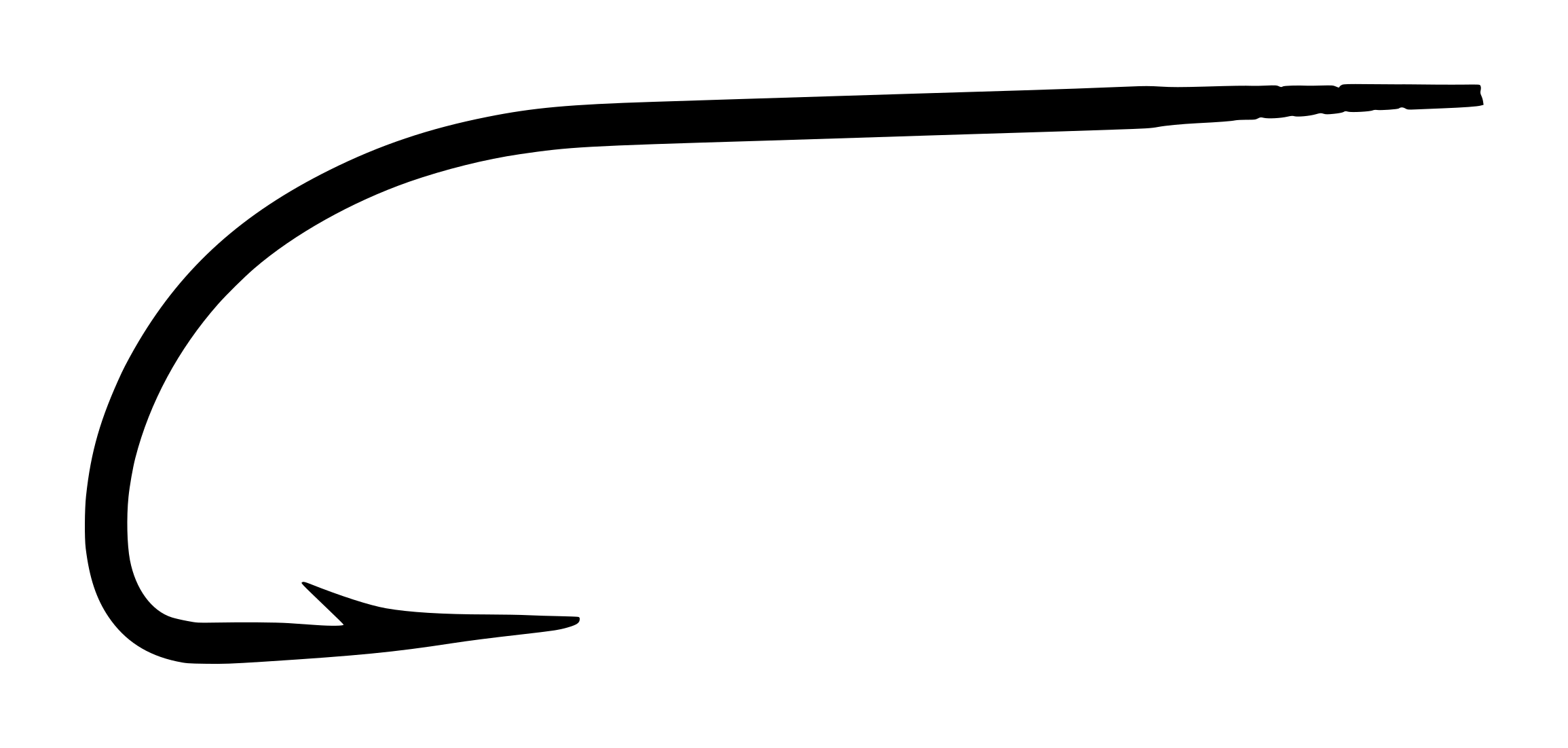
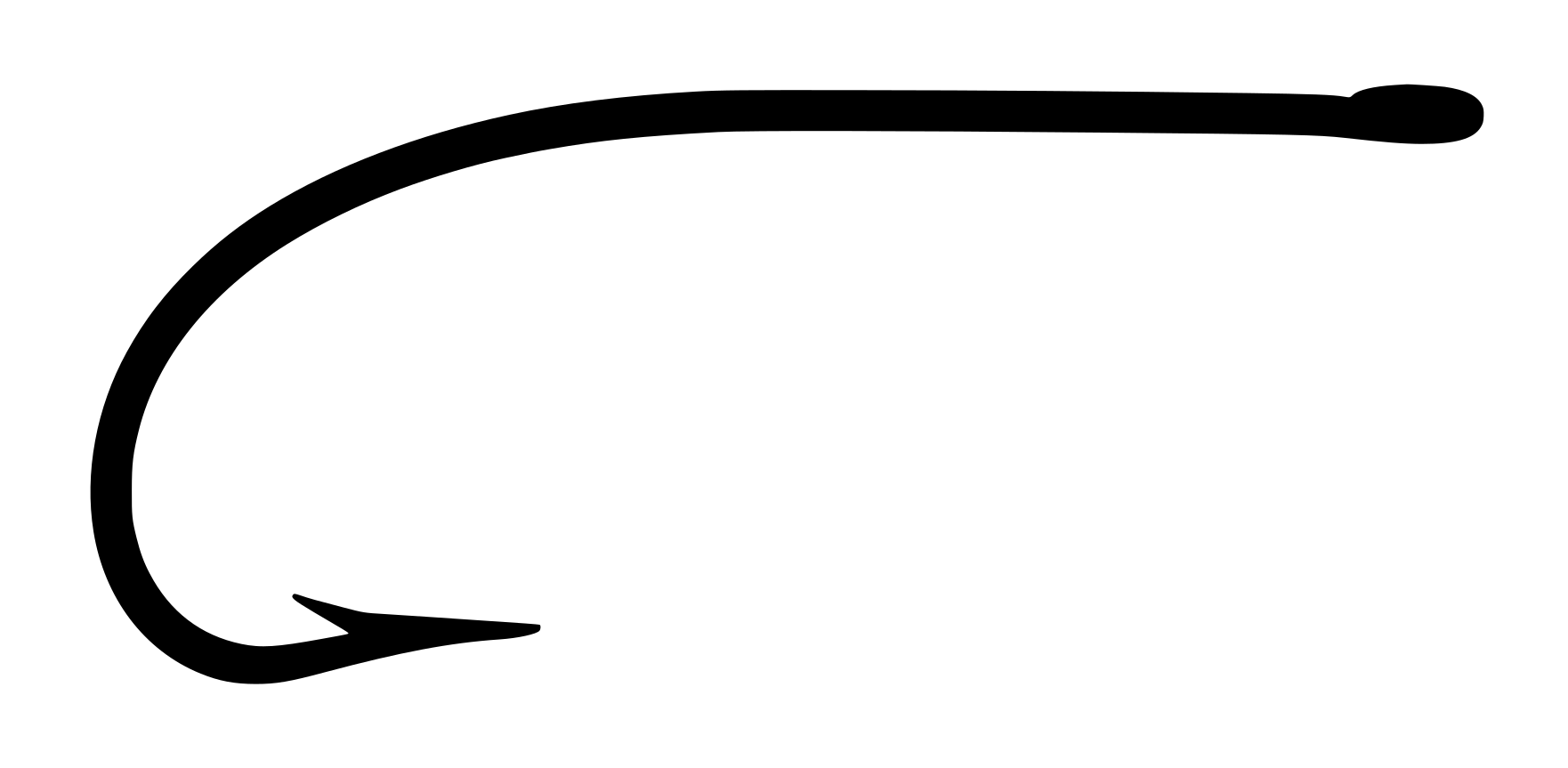
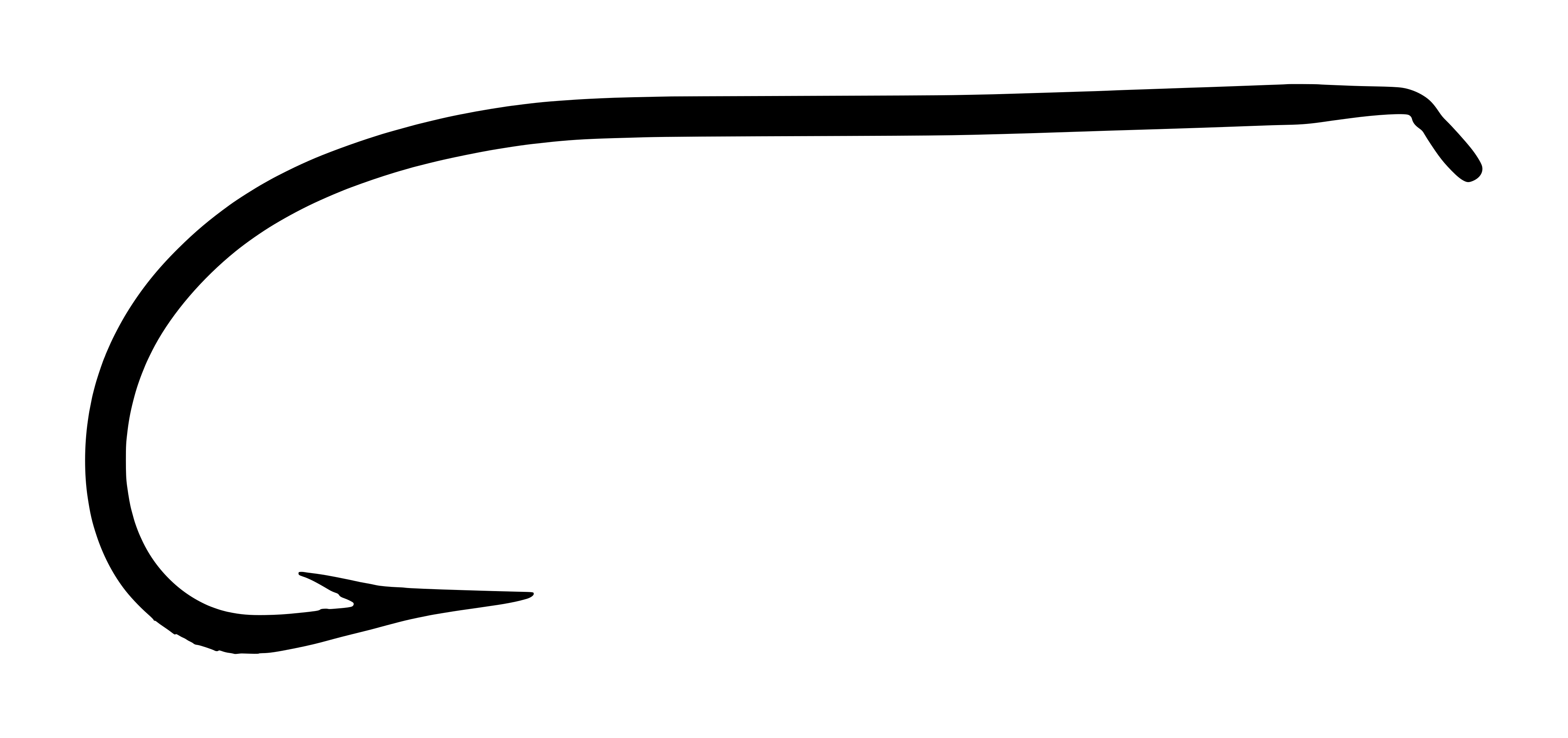
The Mustad 90240 is a mid-century Low Water salmon hook manufactured in Oslo, Norway between approximately 1950 and 1965, built on a Limerick bend with fine wire, extra-long shank, turned-up looped eye, and black japanned finish. The hook’s defining feature is its hollow-point geometry—a concave, dished-out profile that concentrates cutting force at the tip while minimizing penetration force, paired with fine 0.02-inch wire that reduces weight and tissue damage while sacrificing structural rigidity. The looped-eye construction distributes leader stress across both sides of the return wire rather than concentrating force at a single break point, a labor-intensive design essential for the delicate gut leaders of the era. The 90240 represents a deliberate engineering philosophy for sparse Atlantic salmon flies in clear water, and its scarcity in original packaging reflects both the additional manufacturing steps required and the shift toward modern all-purpose hook designs.
Original Mustad 90240 Low Water Salmon Hook sales card, c. 1950-1965, featuring the iconic Key Brand logo and snowflake border design. The cream-colored cardstock and black letterpress printing are characteristic of mid-century Mustad export packaging. Card indicates 100 hooks per box, size No. 8.
Photographic record
3 cataloged imagesSelect any record to load it above.
3 images shown
Mustad 90240 Low Water Salmon Hook — Original Card — Size 8Original Mustad 90240 Low Water Salmon Hook sales card, c. 1950-1965, featuring the iconic Key Brand logo and snowflake border design. The cream-colored cardstock and black letterpress printing are characteristic of mid-century Mustad export packaging. Card indicates 100 hooks per box, size No. 8.Open originalMustad 90240 Low Water Salmon Hook — Point Detail — Size 8Extreme close-up of the Mustad 90240 hook point, showing the characteristic hollow-ground tip with concave inner face. The razor-sharp point and small neatly-cut barb are clearly visible. Black japanned finish shows even patina consistent with mid-century age.Open originalMustad 90240 Low Water Salmon Hook — Side Profile — Size 8Full side-profile view of the Mustad 90240 hook showing the turned-up looped eye with return wire paralleling the shank, the extra-long (3X) shank profile, and the characteristic Limerick bend with angular bottom geometry. Black japanned finish is visible throughout.Open original
Technical profile
Eye
Looped Eye, Turned UpAuthentic turned-up looped eye with return wire running parallel to the main shank P. The eye is formed by bending the terminal wire back approximately 0.15" alongside the shank before terminating smoothly. This construction creates an exceptionally strong connection point where the fly-tying thread binds the return wire directly to the shank, distributing fighting stress across both sides of the wire loop rather than concentrating it at a single junction point. The looped eye is angled slightly upward from the shank plane, consistent with the 'Turned Up' designation on the label. No cracks, deformation, or separation visible on specimen P.
Wire
Fine (1X Fine), Round
Shank
Standard — Plain
Bend
Limerick, Standard gapLimerick bend with pronounced angular quality at the bottom of the curve P. The bend features a sharp, defined corner at the deepest point rather than a smooth parabolic flow. This geometry is characteristic of Irish Limerick bend construction and serves to lock the salmon's jaw mechanically into the hook's strongest point. The shank remains relatively straight, providing an ideal platform for sparse fly-dressing along the front half. Bend depth measures approximately 0.20" (5.1 mm) P.
Point
Hollow Point (concave inner face)Small, neatly cut barb positioned approximately 0.08" behind the point tip E. The barb shows a straight-cut profile without excessive length or angle. Point and barb are ground as an integral unit from the main wire stock. The barb does not extend significantly beyond the wire diameter, reflecting the fine-wire, delicate-presentation design philosophy. No double barbs or microbarbs visible P.
Finish
Black Japanned — Confirmed (stated on packaging)Black japanned finish with appropriate aged patina characteristic of 1950s-1960s production P. The finish shows uniform dark coloration with no bright rust spots or flaking. The specimen exhibits slight surface dulling from storage and handling, but the core japanning remains intact and protective. The finish tone is warm jet-black rather than cool blue-black, consistent with alkyd resin-based japanning formulations used by Mustad during this period P.
Specimen hook is in excellent condition with no corrosion, no bent shank, and no point damage P. The japanned finish is intact and protective. The looped eye is perfectly formed with no cracks or separation. The card is in good condition with light yellowing and minor edge wear consistent with age; no tears, stains, or significant fading visible. Approximately 95-98 hooks appear to remain on the original card.
Hollow Point Geometry: The hollow point features a distinctly concave inner face, ground or filed from the tip down to the barb base, creating a ‘dished-out’ profile rather than a straight wedge taper. This geometry concentrates cutting force at the microscopic tip while the concavity flares toward the barb, enabling rapid penetration with absolute minimal force—critical for soft-mouthed salmon and when using delicate gut leaders that cannot tolerate aggressive hook-sets. The hollow point is particularly effective on Low Water presentations where the angler relies on the fish’s own take to set the hook.
Fine Wire Advantage: The 0.02″ (0.51 mm) wire diameter represents the extreme low end of hook wire gauges. This fineness reduces overall hook weight, allowing sparse fly dressing to float or drift naturally without becoming imbalanced or ‘ticking’ the surface. Fine wire also minimizes tissue damage when inserted into a live bait minnow (in mixed-method fishing), keeping the bait alive longer. The trade-off is reduced structural rigidity; fine-wire hooks should not be used for heavy-duty work or large, powerful fish.
Extra-Long Shank (3X): The 0.47″ shank length (11.9 mm) provides substantial dressing platform while maintaining a delicate overall silhouette. This allows the tier to construct a Low Water pattern with sparse hackle, modest dubbing, and slim proportions that present a much smaller visual profile than the hook’s actual gape width would suggest. The long shank also provides protection for the leader on sharp-toothed species like sea trout.
Looped-Eye Construction: The return wire, running parallel to the main shank, is bound down by fly-tying thread. This creates a mechanically robust attachment where stress is distributed across both sides of the loop rather than concentrated at a single break point. The looped eye also provides a smooth, snag-free surface—important when fishing through dense weed cover.
Japanned Finish: The black japanned coating (alkyd resin-based lacquer baked onto the steel) provides excellent saltwater and freshwater corrosion resistance. Unlike tinning (which is thin and can flake), japanning creates a thick protective seal that bonds chemically to the steel. The drawback is that japanned hooks are heavier than bright or tinned equivalents, making fine-wire japanned hooks a deliberate trade-off between corrosion protection and weight-conscious design.
We have measurement for size 10. Know any others? Submit calipered measurements and we'll review and add them. Thank you!
Historical context
Era and Packaging Dating
Packaging features establish mid-century production: (1) 'Oslo - Norway' designation on label indicates post-1925 manufacture; (2) Key Brand logo with snowflake border design characteristic of Mustad's 1950s-1960s export packaging; (3) cream-colored cardstock with black letterpress printing typical of mid-century European tackle packaging; (4) absence of modern barcodes or UPC codes confirms pre-1974 manufacture; (5) 'Made in Norway' statement and simple typographic layout consistent with 1950-1960s Mustad export design; (6) physical condition and finish patina suggest 60+ years of age.
The Turle Knot: A Knot-Eye Symbiosis
The Turle Knot—named after Major William Turle, a 19th-century English salmon angler—represents a fascinating intersection of fly-fishing tradition and knot engineering. The knot was specifically designed to work with looped-eye hooks like the Mustad 90240, where the leader passes through the eye and then around the return wire as it comes back along the shank. When properly tied, the Turle Knot creates a perfectly in-line connection where the fly hangs dead-straight from the leader with zero deflection. This seemingly small detail became absolutely critical in Low Water fly fishing, where a slightly canted or wobbling fly would instantly spook salmon in crystal-clear, low-volume summer water. The knot's elegance lies in its mechanical efficiency: it distributes load evenly and creates virtually no weak points. Even as modern fishing largely abandoned looped eyes in favor of cheaper ring eyes and simpler knots, the Turle Knot remained the gold standard for traditional Atlantic salmon anglers—a testament to how 19th-century innovation continues to influence 21st-century fly fishing.
Design lineage and influence
The Low Water concept emerged in the 1930s-1940s among Scottish and Irish salmon anglers who recognized that summer conditions demanded a fundamentally different approach than spring fishing. Where spring patterns like the Jock Scott or Silver Doctor featured elaborate wings, dense dubbing, and ornate tinsel bodies on standard-weight hooks, summer Low Water flies stripped away all excess dressing while maintaining sufficient gape for reliable hooking.
Mustad’s 90240 represents the industrial manufacturing response to this regional tradition. By combining fine wire (reducing overall weight and material cost), a long shank (providing dressing platform without bulk), a hollow point (enabling light-touch penetration), and the delicate looped eye (perfect for Turle Knot application), Mustad created a hook that encapsulated the entire Low Water philosophy in a single product.
Contemporary competitors included Partridge of Redditch’s celebrated Code N (Low Water Single) and various Irish hand-forged patterns. However, Mustad’s ability to mass-produce these hooks at global scale while maintaining consistent quality made the 90240 the de facto standard for English-language salmon anglers. The design has proven so durable that modern equivalents—such as the Partridge M (Wilson) or contemporary TMC 7999—still employ nearly identical geometry 70+ years later.
Best matchRelated by Attribute
Computed automatically from catalog data — updated as new hooks are added.
Matches: Bend, Shank, Gap, Eye Orient., Forging +2 moreDiffers: Wire: Fine (1X Fine) vs Standard; Eye: Looped Eye vs Cross Eye; Point: Hollow Point vs Superior +2 more
Matches: Bend, Shank, Gap, Finish, Shank Feat. +1 moreDiffers: Wire: Fine (1X Fine) vs Heavy (1X Heavy); Eye: Looped Eye vs Ball Eye; Eye Orient.: Turned Up vs Straight / Inline +3 more
The Mustad 90240 Low Water salmon hook is engineered for traditional Atlantic salmon fly fishing during summer low-water conditions. In June, July, and August, when river levels drop and water clarity increases, large, heavily dressed flies spook salmon that in spring eagerly attack robust patterns. The Low Water philosophy mandates using a hook with sufficient gape to reliably hook a large salmon but with exceptionally fine wire and a long shank to support sparse, minimalist fly dressing.
This hook is tied with classic Low Water patterns such as the Blue Charm, Silver Stoat, Logie, and Dusty Miller—typically constructed with just a few turns of dubbing, one or two modest hackle fibers, and perhaps a slim tail. The long shank provides platform for this sparse presentation without the hook becoming disproportionately heavy. The hollow point geometry ensures rapid penetration with minimal force, important when fishing delicate downstream presentations on low water where the angler cannot apply a hard hook-set.
The turned-up looped eye was specifically designed for the Turle Knot, a knot that allows the leader to exit the eye in perfect alignment with the shank, ensuring the fly swims straight without wobble or twist. This knot-eye relationship is critical for Low Water success, where precise fly presentation and natural drift are paramount.
Secondary Applications
Light streamer fishing for sea trout and small salmon in clear streams; traditional steelhead fly patterns on Pacific rivers; display specimen for vintage tackle collectors.
Classic Fly Patterns
Blue Charm, Silver Stoat, Logie, Dusty Miller, Teal and Silver, Black Doctor, Silver Grey, Butcher, Collie Dog
Modern Equivalents
Hook
Match Quality
Notes
Partridge M (Wilson)
Excellent
Contemporary looped-eye Low Water pattern; nearly identical geometry, available in modern production
TMC 7999
Very Good
Modern looped-eye salmon hook with similar fine wire and hollow point; more widely available than vintage Mustad
Daiichi 2151
Good
Contemporary Low Water option with looped eye; slightly heavier wire than 90240
Alec Jackson Spey Hook
Moderate
Modern Spey-style looped eye with long shank; curved shank distinguishes from straight Mustad 90240
Green entries are full records; amber entries are spec records.
Gray entries are chart-only and not physically verified against this specimen.
Collector notes
Rated 4.5/10 — Mid-century Low Water salmon hooks are uncommon in vintage packaging, with genuine looped-eye construction making this design scarce in the modern market. Collector demand is moderate among Atlantic salmon fly tyers and vintage tackle specialists; the small size (No. 8) and fine-wire construction add scarcity. Complete original packaging in good condition significantly enhances value.
Reference value
$12 – $25 USD estimate
Packaging format
MUSTAD-MIDCENTURY-CARD-01Catalog code
What makes this hook collectible: The Mustad 90240 is a genuine Low Water salmon hook with authentic looped-eye construction—a design element that fell out of favor due to manufacturing costs. The combination of hollow point, fine wire, extra-long shank, and turned-up looped eye represents a specific engineering philosophy aimed at classic Atlantic salmon fly presentation, now largely obsolete. Original cream-colored Mustad cards from the 1950s-1960s are increasingly difficult to locate.
Primary limiting factors: The hook’s appeal is limited to a specialized audience—Atlantic salmon fly tyers and vintage tackle historians. Modern fishing has largely abandoned looped eyes in favor of cheaper ringed eyes, and Low Water designs are seen as niche products. Larger sizes (2/0 and above) from this era command slightly higher premiums; smaller sizes like No. 8 are more common.
Desirable variants: Complete original boxes (rather than loose cards) with all 100 hooks present fetch premium prices. Cards with minimal storage wear and vibrant cream coloring are preferred. The japanned black finish should show even patina with no bright rust spots; overly dull or heavily corroded examples trade at the low end of the range.
Condition factors affecting value: Original sealed packaging can command 3-4x the value of opened cards. Missing hooks reduce value proportionally—each missing hook represents approximately 1% value loss. Card condition is critical: tears, stains, or fading reduce appeal significantly. The looped eye itself should show clean construction with no cracks or deformation.
Packaging
Cream-colored cardboard sales card with black letterpress printing. Card features iconic Key Brand logo (downward-pointing skeleton key) in upper left corner, surrounded by decorative snowflake border pattern. Eight-line label format clearly visible: manufacturer name (O. Mustad & Sön), country (Oslo - Norway), quality code (Qual. 90240), point type (Hollow Point Short pt.), pattern name (Mustad-Low Water Salmon Hooks), eye configuration (T. up looped eye Black), shank modification (Ex. long shank), manufacturing location (Made in Norway). Bottom left corner displays quantity (100) and size (No. 8). Card measures approximately 4.5" × 3.5". Paper stock is lightweight cardboard with slight yellowing consistent with age. Print method is traditional letterpress with even ink coverage. No barcode or modern markings present.
Market Value Notes
Low ($12): Good condition (opened card, all or most hooks present, moderate wear, some finish dulling)<br />
High ($25): Excellent condition (sealed or near-sealed, complete count of 100, minimal card wear, hooks bright and sharp)<br />
Premium factors: Original sealed packaging, complete hook count, vibrant card printing, looped eye in perfect condition, authentic 1950s provenance<br />
Platforms: eBay (both US and UK), vintage tackle dealers, fly-tying specialty shops, auction houses<br />
Confidence: V Based on 1 eBay sold listing ($19.99 for new condition), adjusted with market research on comparable mid-century salmon hooks and regional variation.
Where to Find
eBay (search: 'Mustad 90240' or 'Low Water Salmon'), vintage fly-fishing forums (Sexyloops, Classic Fly Fisher), specialist dealers in the UK and Scandinavia, estate sales in northern Europe and North America.
eBay market reference. Researcher-curated. Prices in USD. Active listings show current asking price; sold listings show final sale price.
Preservation
Storage and Preservation
Environment: Store in a cool, dry location away from direct sunlight and moisture. Humidity is the primary enemy of japanned hooks; sustained high humidity (above 60%) can cause the japanning to develop white bloom or micro-flaking over time. Ideally, maintain storage at 40-50% relative humidity.
Original Packaging: Keep hooks on the original cream-colored card rather than removing them. The card itself provides some protection and adds significant historical and monetary value. If hooks must be removed, use acid-free tissue paper and store in an airtight container with silica gel desiccant packets.
Avoid Contact: Do not allow japanned hooks to contact bare copper, brass, or other dissimilar metals, as galvanic corrosion can occur. Store separately from modern stainless steel hooks. Never wrap in newspaper or standard cardboard, which can retain moisture and contain acidic compounds.
Handling: Wear clean cotton gloves when handling vintage hooks to prevent skin oils from depositing on the surface. The sharp points and barbs are fragile on fine-wire hooks; handle with care to avoid bending or breaking the delicate point geometry.
Display: If displaying the card in a shadow box or frame, use UV-filtering glass to prevent photodegradation of the cream-colored cardstock. Avoid direct exposure to sunlight, which will fade the black letterpress printing and age the cardstock prematurely.
Inspection: Periodically check the hooks for any signs of rust or corrosion. Light surface patina on japanned hooks is cosmetic and acceptable; active rust (orange or red discoloration) indicates japanning failure and requires immediate intervention. Do not attempt to remove patina with wire brushes or abrasive methods.
Primary Source
Decoding the Eight-Line Label
Source: O. Mustad & Søn packaging label, Qual. 90240, c. 1950-1965; Mustad Label Typology and Decryption Guide, garrenwood.com research document
The Mustad 90240 card provides an exemplary case study in how to read the standardized eight-line vintage Mustad label format, as described in the comprehensive typology document ‘A Comprehensive Typology and Decryption of Vintage O. Mustad & Søn Hook Labels.’
Line 1 (Manufacturer): ‘O. MUSTAD & SÖN’ — establishes the manufacturer as Ole Hovelsen Mustad’s company, the global dominant hook producer.
Line 2 (Industry Role): ‘Manufacturers’ — asserts Mustad’s position as primary manufacturer rather than an importer or repackager, critical to brand retention in an era saturated with jobbers and regional distributors.
Line 3 (Geographic Origin): ‘OSLO – NORWAY’ — the presence of ‘Oslo’ (not the earlier ‘Christiania’) definitively dates the box to post-January 1, 1925, when the Norwegian capital was officially renamed. This represents mid-century production, c. 1950-1965.
Line 4 (Quality Code): ‘Qual. 90240’ — the numeric code places this hook in Mustad’s upper-tier product range. Codes above 9000 typically indicate specialized, premium hooks such as salmon irons and fine fly hooks. This is not a mass-market economy hook.
Line 5 (Point Identifier): ‘Hollow Point Short pt.’ — strictly reserved for point geometry description per Mustad’s labeling rules. The hollow point is explicitly named, distinguishing it from Superior, Spear, or Knife Edge alternatives. ‘Short pt.’ indicates abbreviated taper, concentrating cutting force into a minimal profile.
Line 6 (Pattern Name): ‘Mustad-Low Water Salmon Hooks’ — identifies the overarching hook pattern and market category. ‘Low Water’ reflects regional Atlantic salmon angling tradition and engineering philosophy specific to clear, shallow summer conditions.
Lines 7 & 8 (Features & Finish): ‘T. up looped eye Black’ and ‘Ex. long shank’ — specify the eye construction (turned-up looped), color (black japanned), and shank modification (extra-long, approximately 3X length). This synthesis provides complete technical specification.
Ancillary Data: ‘100’ and ‘No. 8’ — denote the box count (100 hooks) and physical size (No. 8). ‘Made in Norway’ reaffirms factory location and supports authenticity verification.
Additional
Low Water Salmon Fishing: A Historical and Technical Perspective
The Origins of Low Water Fly Fishing: Low Water fly fishing emerged in the 1930s-1940s among Scottish and Irish salmon anglers as a response to a persistent summer problem: large, heavily dressed flies that worked brilliantly in cold spring water would consistently spook salmon in warm, clear summer conditions. Traditional spring patterns like the Jock Scott or Silver Doctor featured elaborate wings, dense dubbing, and ornate tinsel bodies designed to present maximum flash and bulk. However, when river levels dropped in June, July, and August, and water clarity increased from a coffee-brown color to near-transparent, these same flies seemed to alarm rather than attract.
The Design Philosophy: Low Water anglers recognized that summer salmon retained their predatory aggression but became visually fastidious. Sparsely dressed patterns tied on extra-long, fine-wire hooks would sink imperceptibly, present a smaller silhouette, and still hook fish reliably due to their exaggerated gape. The Mustad 90240 embodies this philosophy perfectly: the 0.02″ fine wire minimizes overall weight and visual profile; the 0.47″ extra-long shank provides ample platform for dressing; the hollow point enables light-touch penetration when fishing delicate presentations.
The Turle Knot Connection: The turned-up looped eye was not arbitrary; it was engineered specifically for the Turle Knot, a knot where the leader passes through the eye and then around the return wire as it curves back along the shank. When properly tied, the Turle Knot creates a perfectly in-line connection with zero deflection—the fly hangs dead-straight from the leader. This seemingly minor detail became absolutely critical: a slightly canted or wobbling fly would instantly spook clear-water summer salmon, while a straight-hanging fly would swing naturally and convincingly.
Classic Low Water Patterns: Patterns tied on the 90240 included the Blue Charm (sparse blue and silver), Silver Stoat (black fur, silver rib, sparse hackle), the Logie (brown and orange), and the Dusty Miller (gray and silver). These patterns featured just a few turns of dubbed dubbing, perhaps one modest hackle fiber, and a slim tail. The dressing occupied only the front third to half of the available shank, creating a silhouette that was dramatically smaller than a fully-dressed spring pattern.
Modern Relevance: Although Low Water fishing declined sharply after the 1970s (due to falling salmon stocks, changing river management, and the rise of nymph fishing), the design principles embedded in the Mustad 90240 remain valid. Modern Atlantic salmon anglers who practice traditional fly fishing continue to use conceptually identical hooks—such as the Partridge M (Wilson) or TMC 7999—and continue to tie sparse Low Water patterns. The hook’s technical specifications—fine wire, long shank, looped eye, hollow point—have proven so durable that they remain nearly unchanged after 70+ years of design iteration.
Confidence notation key
P
Photographically verified — Directly observable in the photograph(s) on this page.
V
Verified by documentation — Confirmed by manufacturer catalog, spec sheet, or published reference.
I
Inferred — A logical deduction from observable or documented evidence, not directly stated.
E
Estimated — An approximation based on visual comparison, proportional analysis, or limited data.
S
Speculative — A reasoned hypothesis that cannot be confirmed from available evidence.
Claims with no notation are confirmed by multiple independent sources. All photographs on garrenwood.com are taken on a measurement grid where each square equals 1/10 inch (0.1″ / 2.54 mm).