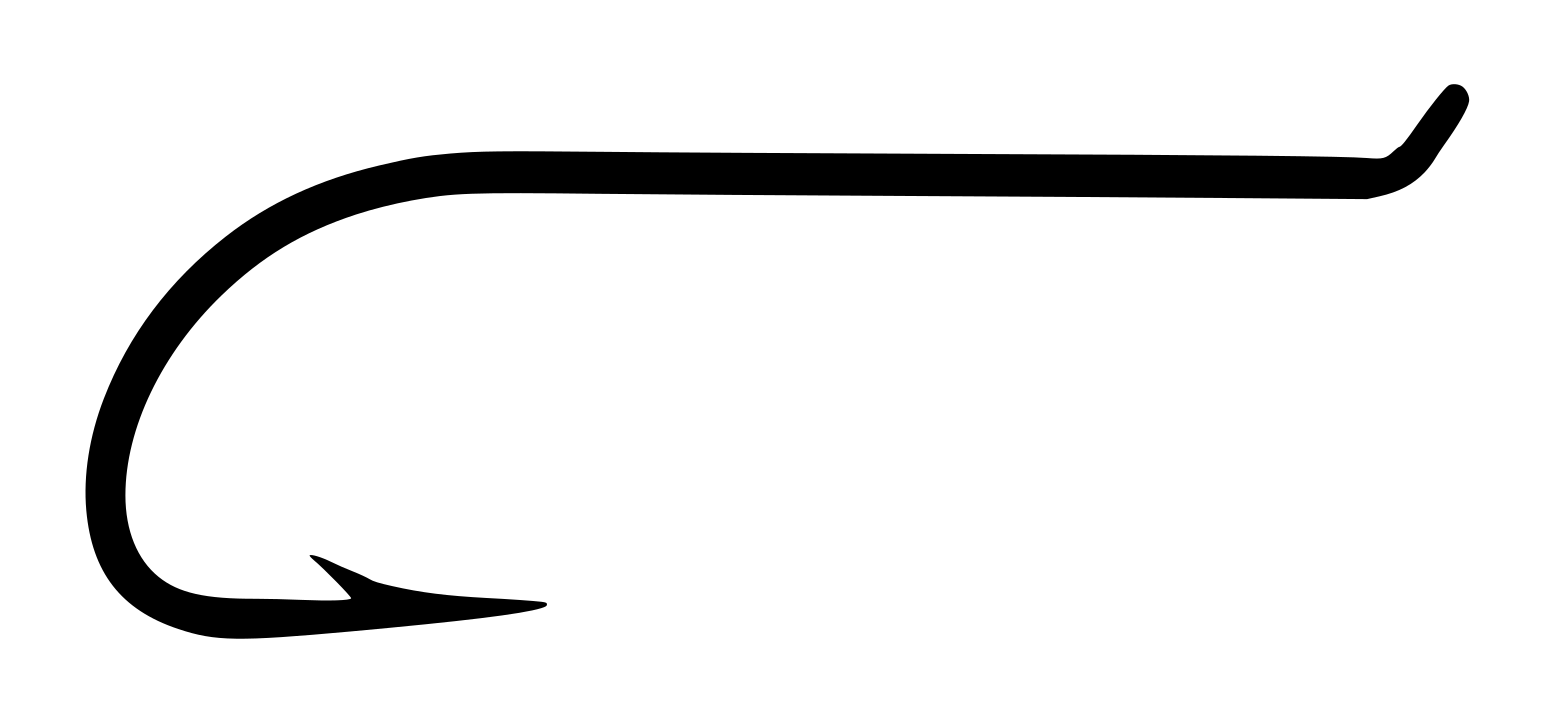
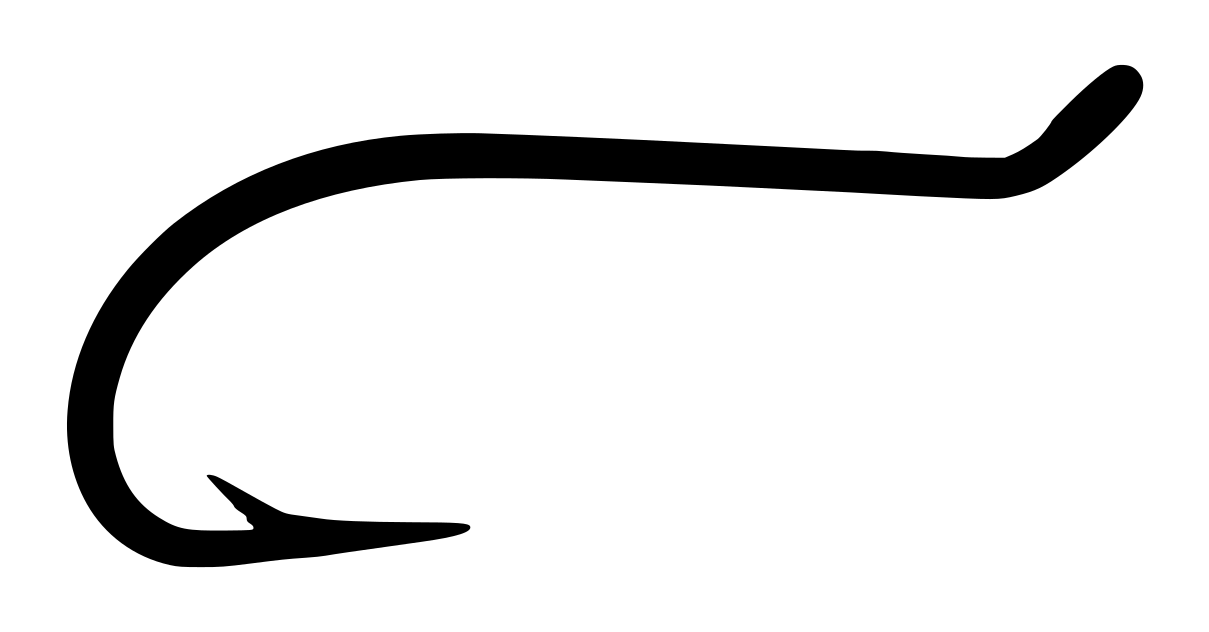
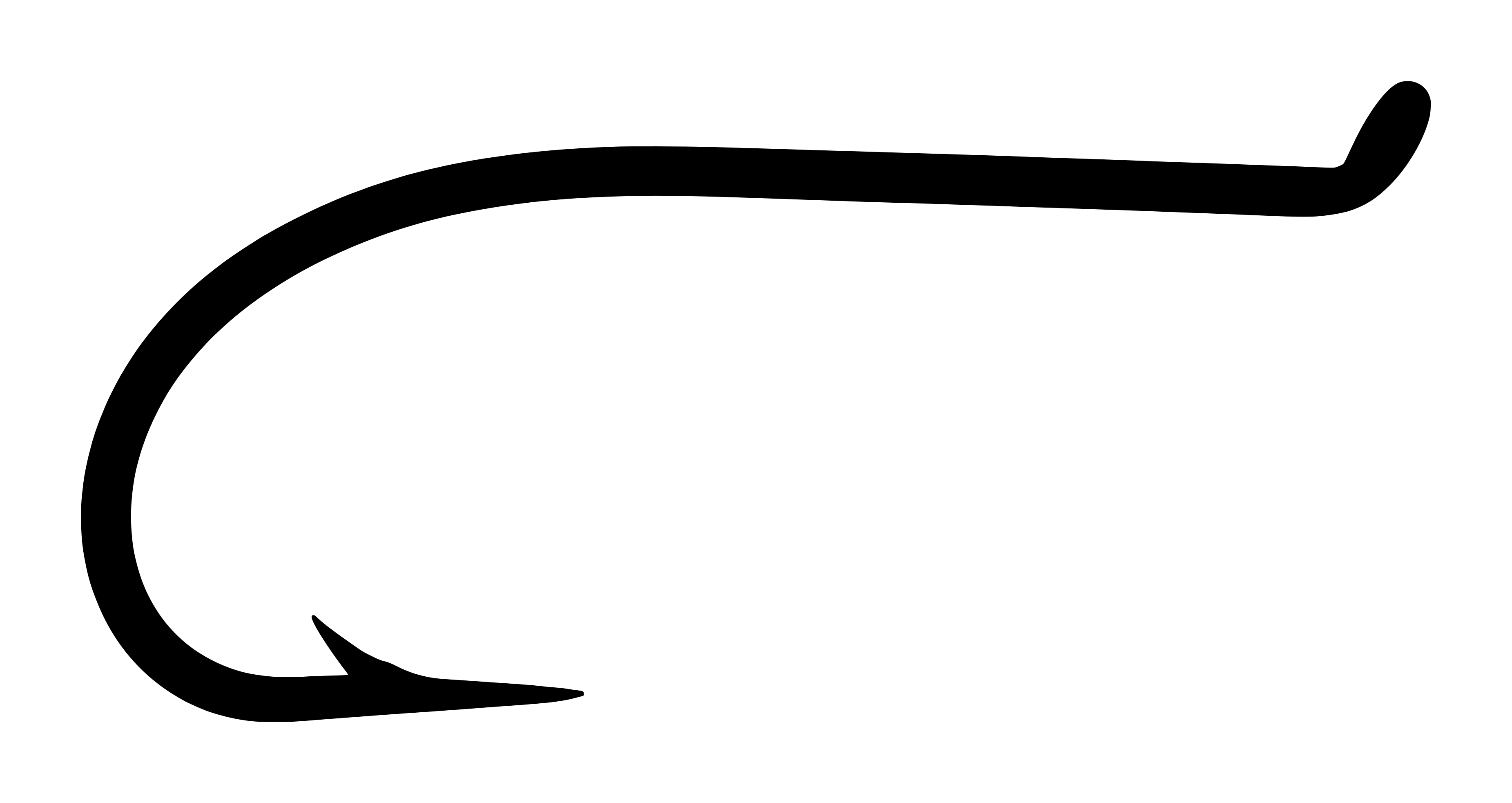
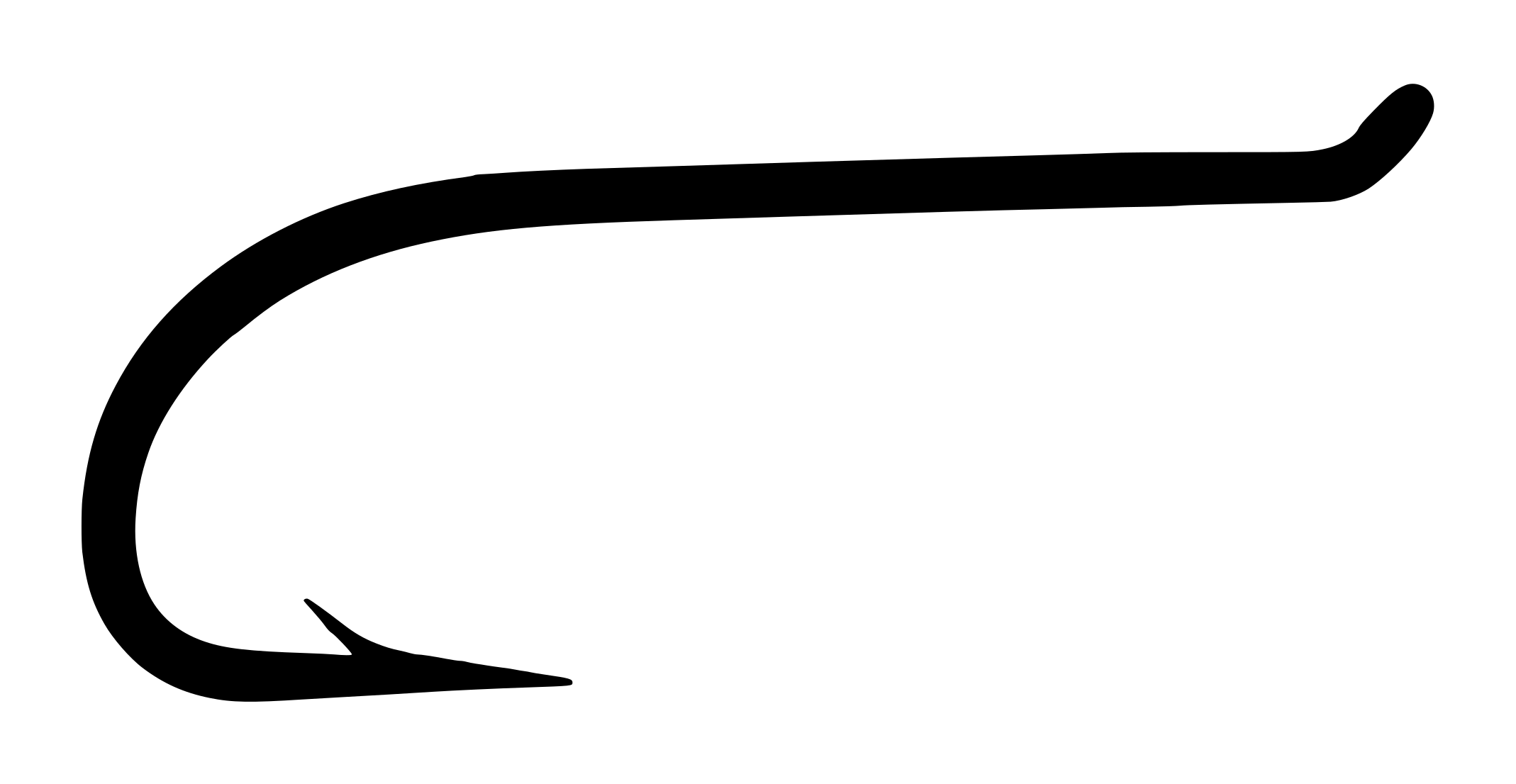
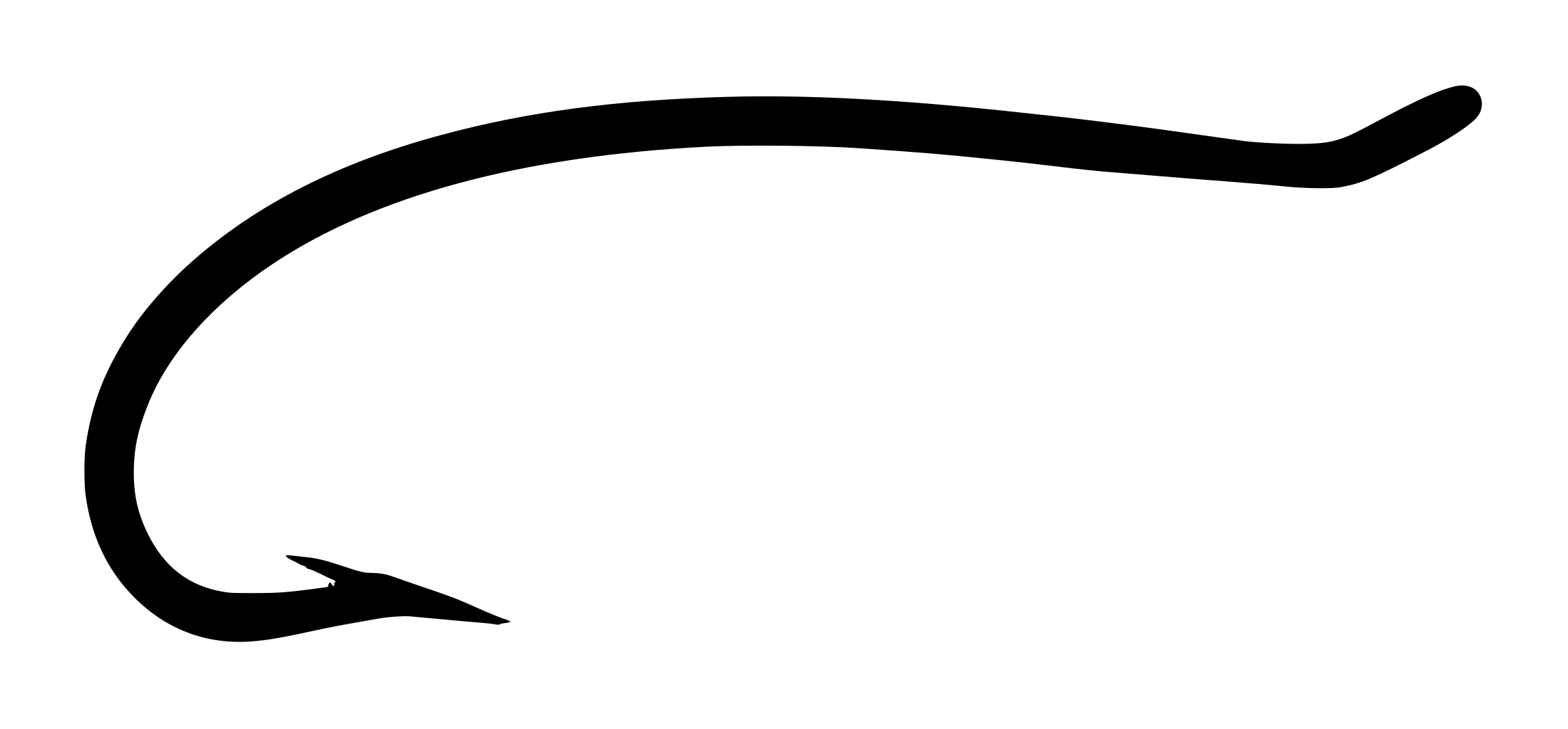
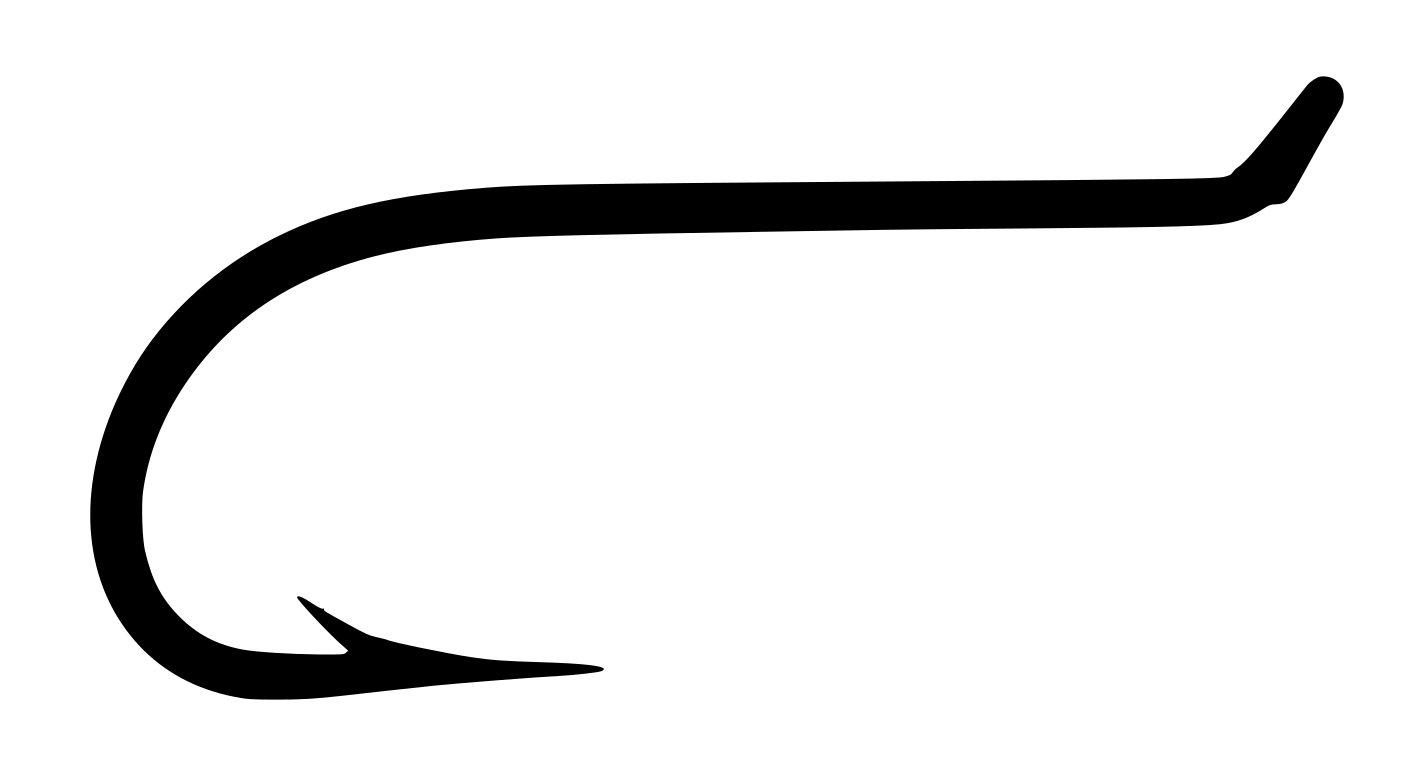
- Overall Length
- 23.4 mm
- Shank Length
- 15.2 mm
- Bend Depth
- 8.4 mm
- Wire Diameter
- 0.76 mm
- Confidence
- V Catalog record only
Mustad Hooks – 3670
Mustad 3670
Save this hook to your account to build a list you can come back to.
Record summary
The Mustad Quality 3670 represents a classic European wet fly hook from the golden age of traditional fly fishing P. This size 8 specimen features the distinctive Limerick bend geometry with its characteristic angular bottom section, paired with a turned-up loop eye construction that was the hallmark of premium wet fly hooks P.
The black japanned finish provided excellent corrosion resistance while maintaining the traditional aesthetic preferred by classic fly tyers P. Dating from approximately 1950-1975 based on the Oslo-Norway geographic designation and cream box packaging style, this hook represents Mustad’s mid-century dominance in the European fly fishing market I.
The hollow point geometry visible on the specimen provides rapid penetration with minimal force, making it ideal for soft-mouthed trout and similar species P. This combination of Limerick bend, turned-up loop eye, and hollow point made the 3670 a favorite among traditional wet fly anglers and collectors of vintage tackle I.
Photographic record
8 cataloged imagesSelect any record to load it above.
8 images shown
Technical profile
- Eye
- Looped Eye, Turned Up The turned-up loop eye shows the characteristic oval shape with return wire running parallel to the shank P. This construction was specifically designed for snelling to gut leaders and represents premium manufacturing quality I.
- Wire
- Heavy (1X Heavy), Round
- Shank
- Standard — Plain
- Bend
- Limerick, Standard gap Classic Limerick geometry with distinct angular bottom section clearly visible P. The sharp angle at the bottom of the bend was designed to lock into the fish's jaw for secure hook sets I.
- Point
- Hollow Point (concave inner face) Standard-sized barb positioned close to the point with moderate angle P. Barb size is proportionate to hook size and designed for secure holding without excessive tissue damage E.
- Finish
-
Black Japanned — Confirmed (stated on packaging) Deep black japanned finish with characteristic high-gloss appearance P. This traditional lacquer coating provided excellent rust resistance and was the preferred finish for classic wet fly hooks I.
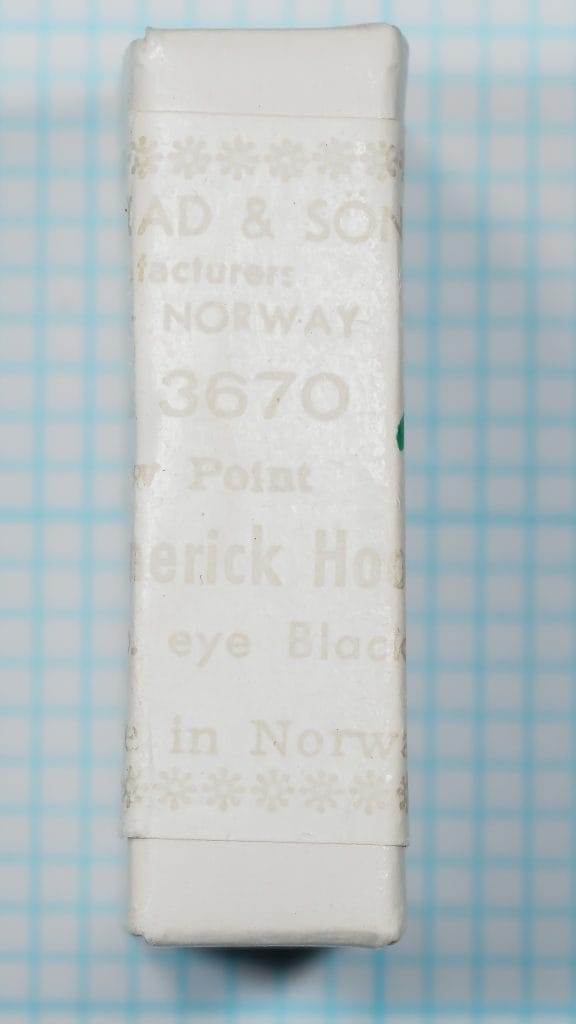
Hooks show excellent condition with intact japanned finish and no corrosion P. Original cream-colored box displays light age toning but remains structurally sound with clear labeling P.
The hollow point geometry features a concave inner face that creates an extremely sharp tip with rapid tissue penetration characteristics P. This design minimizes the force required for hook sets, making it ideal for light tackle applications and soft-mouthed fish I. The Limerick bend’s angular geometry distributes stress effectively while providing positive jaw engagement, and the loop eye construction ensures maximum strength under fighting loads I.
Size & scale lab
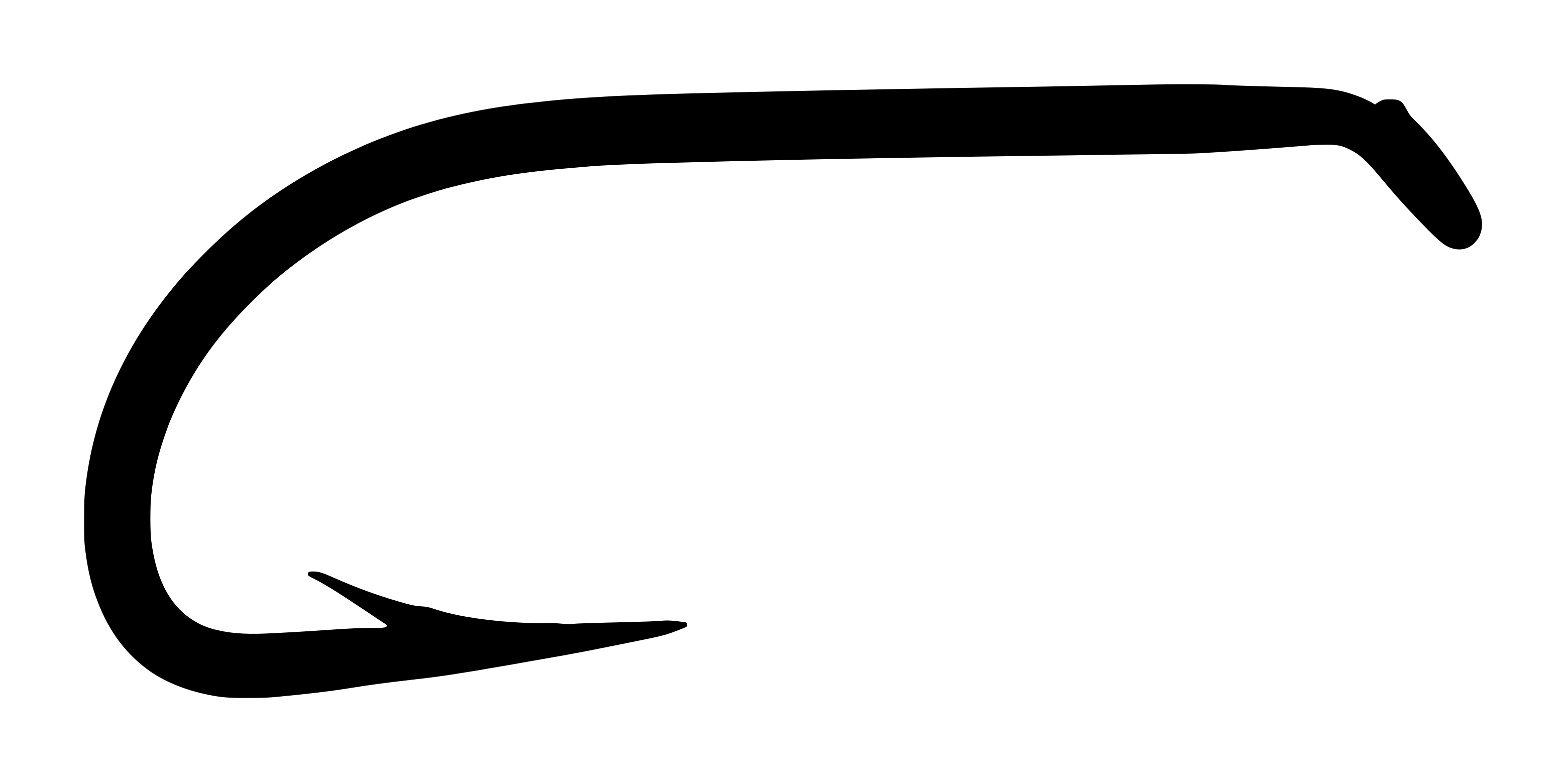
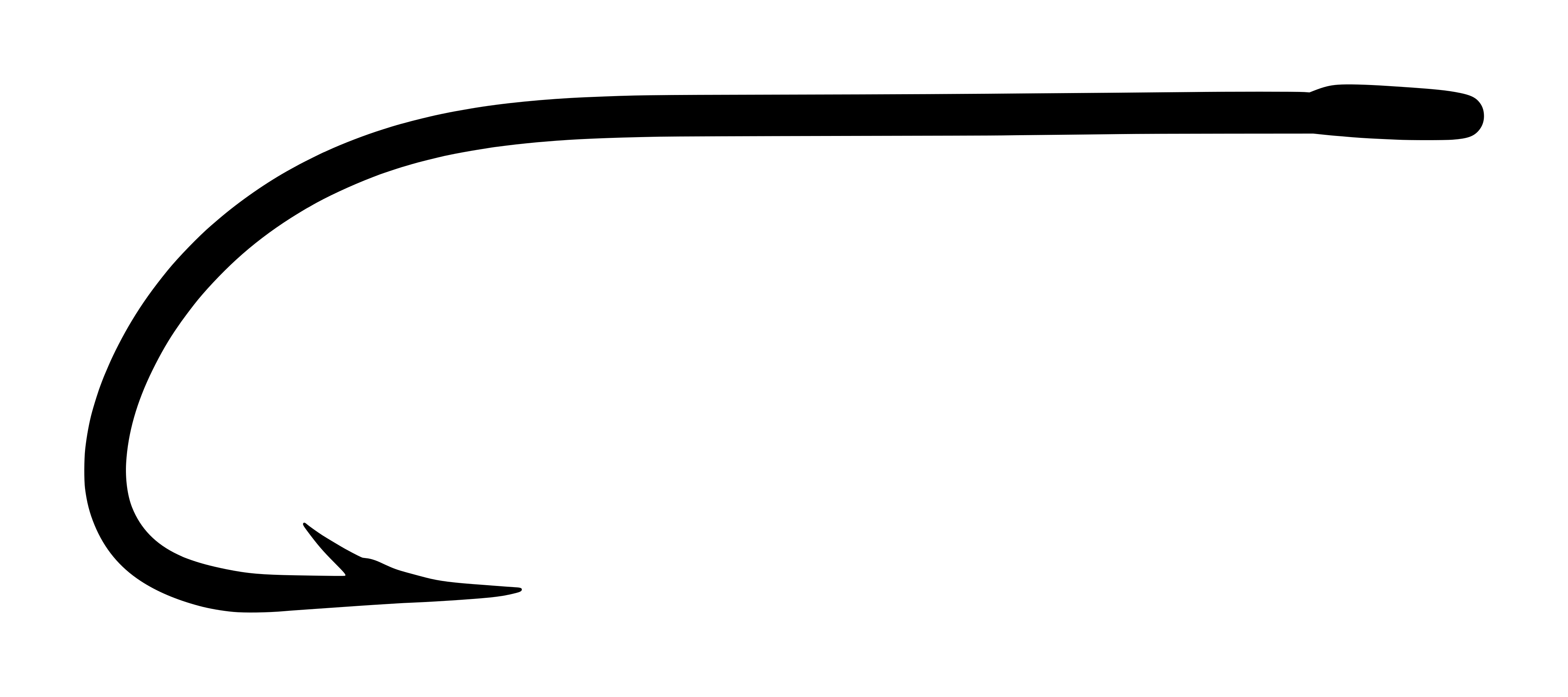
- Overall Length
- 19.1 mm
- Shank Length
- 12.2 mm
- Bend Depth
- 6.6 mm
- Wire Diameter
- 0.76 mm
- Confidence
- V Catalog record only
We have measurements for sizes 6, 8. Know any others? Submit calipered measurements and we'll review and add them. Thank you!
Historical context
mustad
O. Mustad & Søn transformed from a small Norwegian nail factory into the world’s largest hook manufacturer following Mathias Topp’s invention of the automated hook-making machine in 1877 V. Operating from their Gjøvik factory, Mustad achieved global dominance through industrial efficiency and aggressive reverse-engineering of regional hook patterns V. By the 1950s, Mustad controlled approximately 50% of the global hook production market, making their name virtually synonymous with fishing hooks worldwide V.
Series History
The 3670 was part of Mustad’s comprehensive wet fly hook lineup, designed to compete directly with traditional British manufacturers like Allcock and Sealey I. The model combined the popular Limerick bend geometry with premium construction features like the turned-up loop eye, positioning it as a high-quality alternative to Redditch-made hooks I. Production likely continued through the 1970s before being discontinued during Mustad’s product line rationalization S.
Era and Packaging Dating
Oslo-Norway geographic designation indicates post-1925 production when Christiania was renamed. Cream-colored box with gold foil lettering and Key Brand logo is characteristic of mid-century Mustad packaging. No barcode indicates pre-1974 production.
The turned-up loop eye on trout-sized hooks like this size 8 represents a fascinating transition period in fly fishing history. Originally developed for snelling to expensive silkworm gut leaders, this eye style became a mark of premium quality even as knotted nylon leaders gained popularity. Many traditional European anglers continued to prefer the aesthetic and performance characteristics of loop-eyed hooks well into the modern era, making models like the 3670 a bridge between classical and contemporary fly fishing techniques.
Cross-reference & comparisons
Primary Application
Classic wet fly hook designed for traditional winged wet flies and small streamers P. The turned-up loop eye was specifically engineered for snelling to gut leaders, making this a premium choice for European-style wet fly fishing I. The Limerick bend geometry provides secure hook sets and excellent fish-holding power for trout and similar species P.
Secondary Applications
Small bait fishing applications, traditional salmon fly tying
Classic Fly Patterns
Traditional winged wet flies, Bergman series patterns, classic loch flies, small bucktail streamers
Modern Equivalents
| Hook | Match Quality | Notes |
|---|---|---|
| Mustad R73-9671 | Moderate | Modern Limerick bend wet fly hook but with down-turned eye rather than loop construction |
| Daiichi 2141 | Good | Limerick bend with black finish captures the traditional aesthetic though typically sold for salmon applications |
Collector notes
Strong collector interest due to classic wet fly design and traditional construction features, with moderate rarity in good condition.
This hook appeals strongly to collectors of vintage wet fly tackle and traditional Norwegian fishing equipment I. The combination of Limerick bend and turned-up loop eye represents classic European fly fishing heritage that resonates with traditional fly fishing enthusiasts I. The japanned finish and cream box packaging add aesthetic appeal for display purposes P.
Availability is somewhat limited as most surviving examples show wear or corrosion, making pristine specimens like this more desirable E. However, the 3670 was not a rare or limited production model, which moderates collector demand compared to more scarce vintage hooks I.
Packaging
Cream-colored cardboard box with gold foil lettering and decorative border. Features Key Brand logo with skeleton key graphic. Eight-line Mustad label format clearly visible on top panel. Size marking '12' handwritten in purple on end panel.
Market Value Notes
Prices vary significantly based on packaging condition and completeness. Loose hooks bring $1-3 each, while complete boxes in excellent condition command premium pricing.
Where to Find
eBay vintage tackle listings, European fishing tackle fairs, specialized vintage fly fishing dealers, estate sales in traditional fishing regions
Storage and Preservation
Store these hooks in their original packaging whenever possible, as the cream-colored box adds significant collector value I. Keep in a cool, dry environment to prevent deterioration of the japanned finish, which can develop pitting or flaking in humid conditions I. The cardboard packaging is susceptible to moisture damage and insect activity, so consider archival storage boxes for long-term preservation I. Handle hooks minimally to preserve the integrity of the finish, and avoid contact with other metals that could cause galvanic corrosion I. If displaying, use indirect lighting to prevent fading of the box graphics and text I.
Box Markings
The purple handwritten ’12’ on the box end appears to be a dealer or angler inventory marking rather than factory notation P. The ink style and color suggests ballpoint pen application, likely from the 1960s-70s period when these pens became common E. This type of personal marking was typical among tackle shop owners and serious anglers who maintained detailed inventory systems for their hook collections I.
Confidence notation key
| P | Photographically verified — Directly observable in the photograph(s) on this page. |
| V | Verified by documentation — Confirmed by manufacturer catalog, spec sheet, or published reference. |
| I | Inferred — A logical deduction from observable or documented evidence, not directly stated. |
| E | Estimated — An approximation based on visual comparison, proportional analysis, or limited data. |
| S | Speculative — A reasoned hypothesis that cannot be confirmed from available evidence. |
Claims with no notation are confirmed by multiple independent sources. All photographs on garrenwood.com are taken on a measurement grid where each square equals 1/10 inch (0.1″ / 2.54 mm).