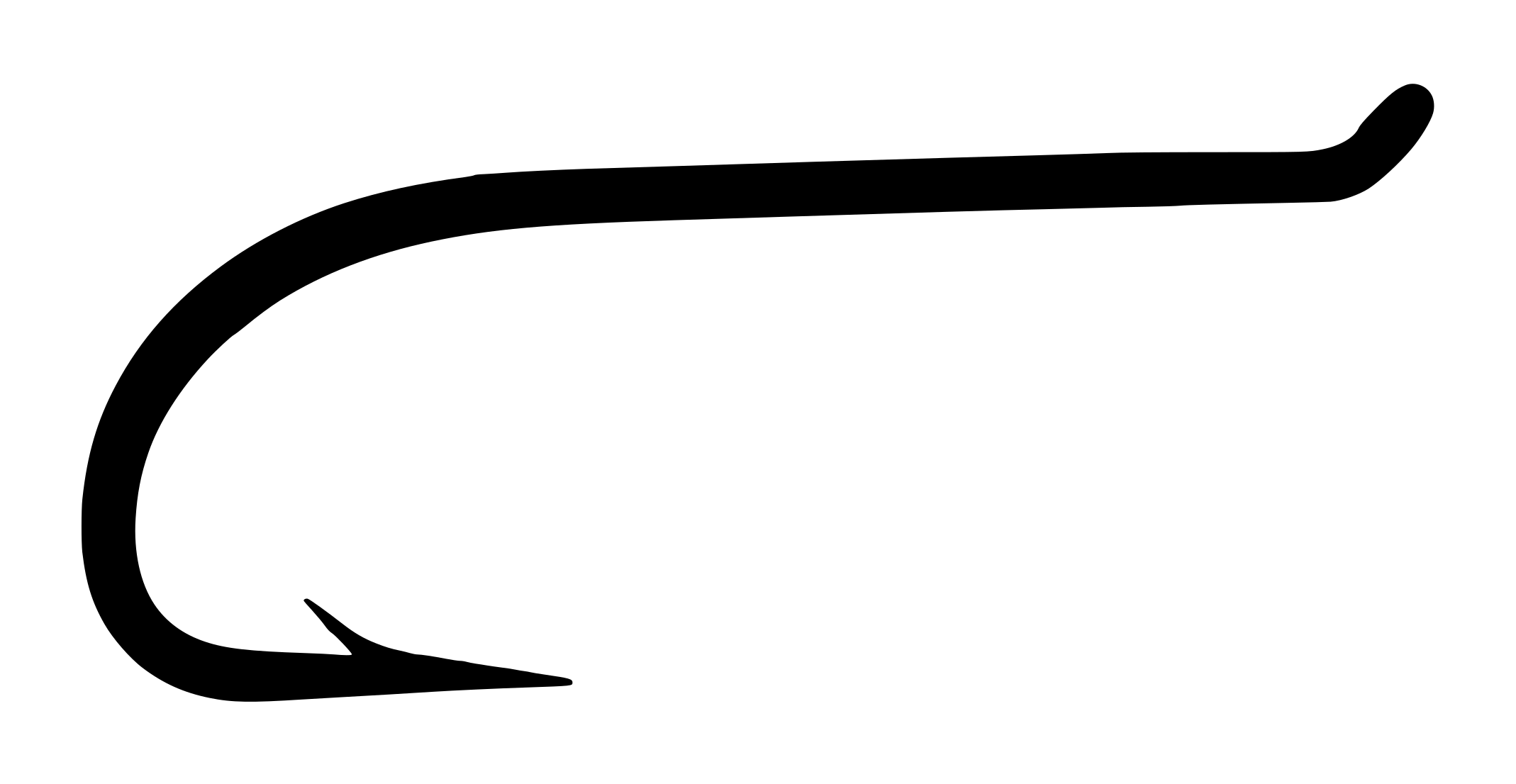
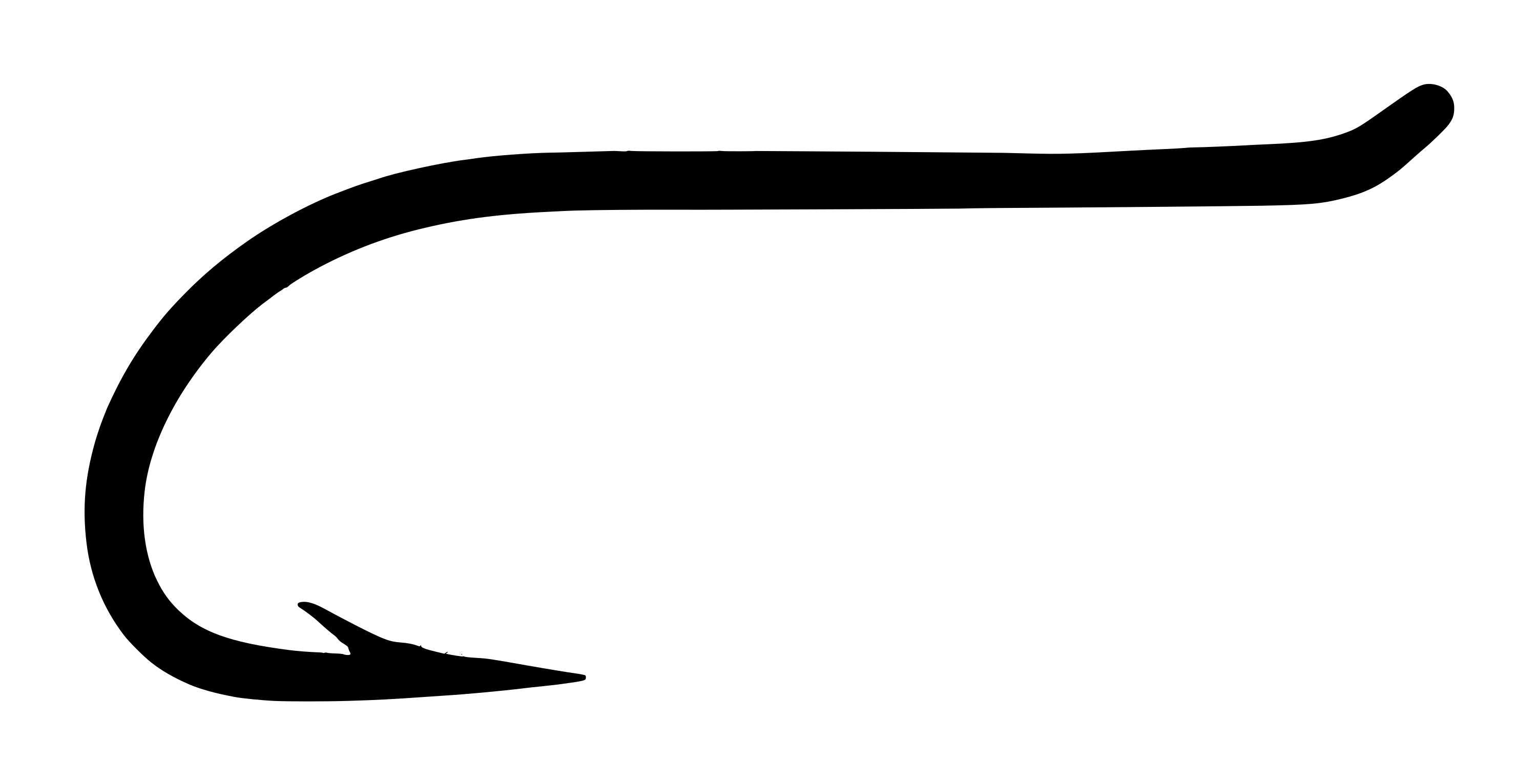
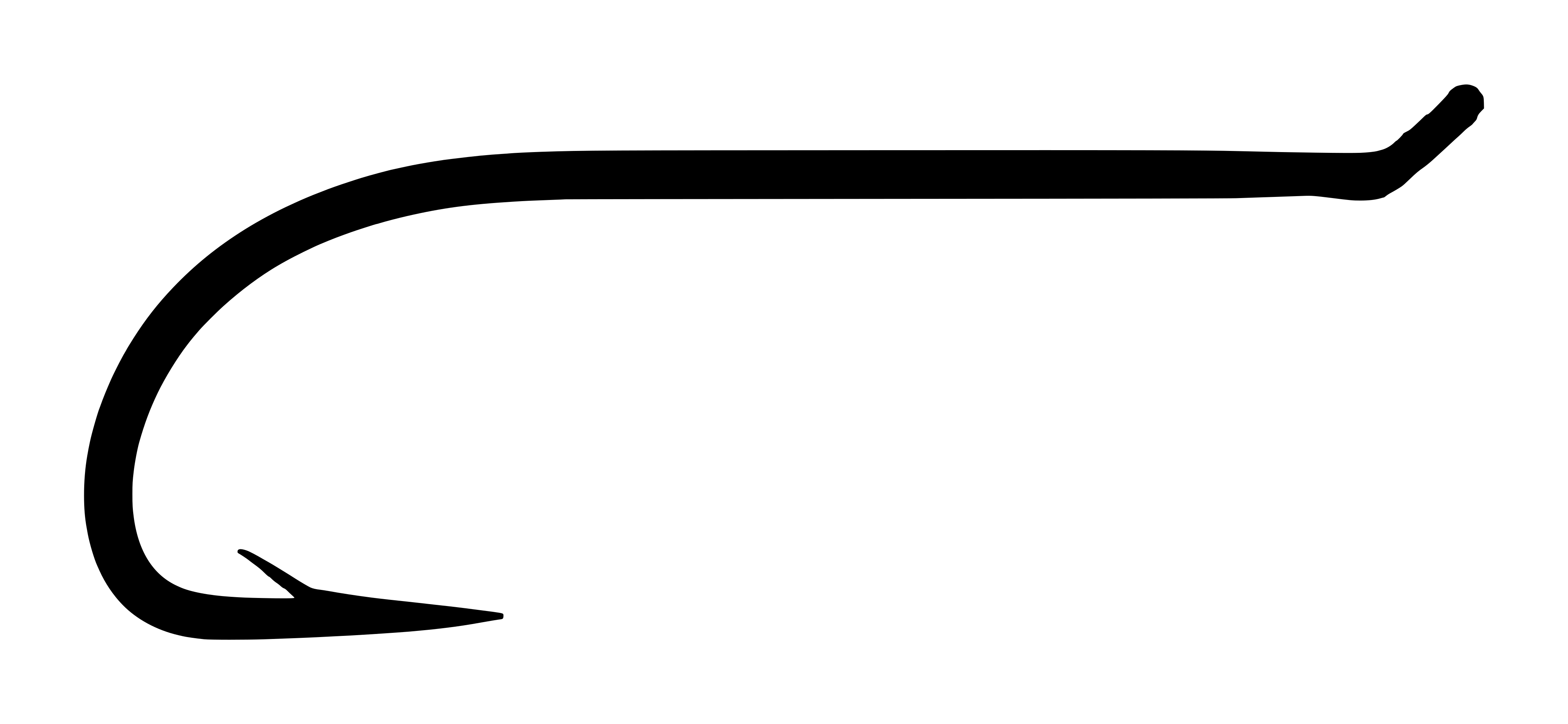
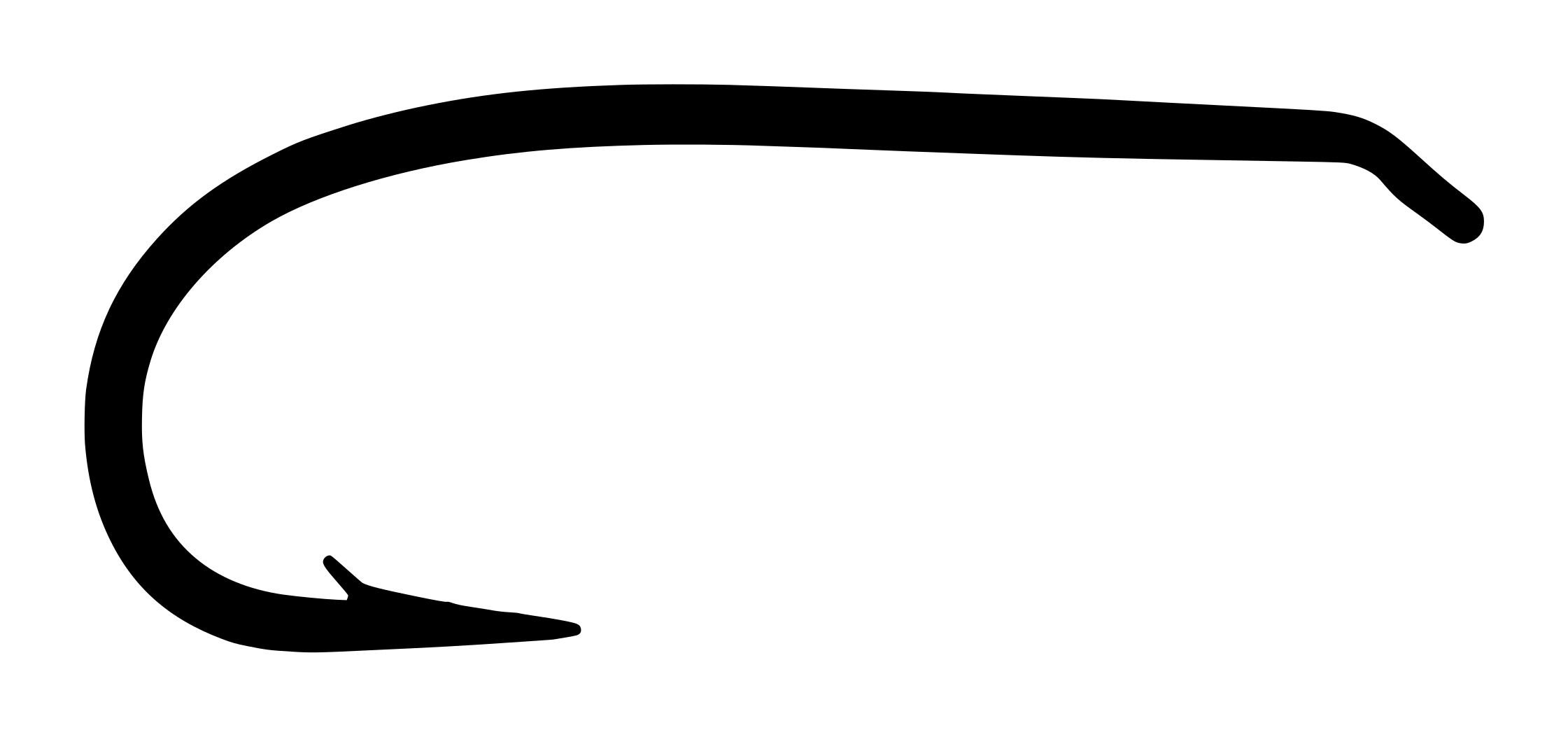
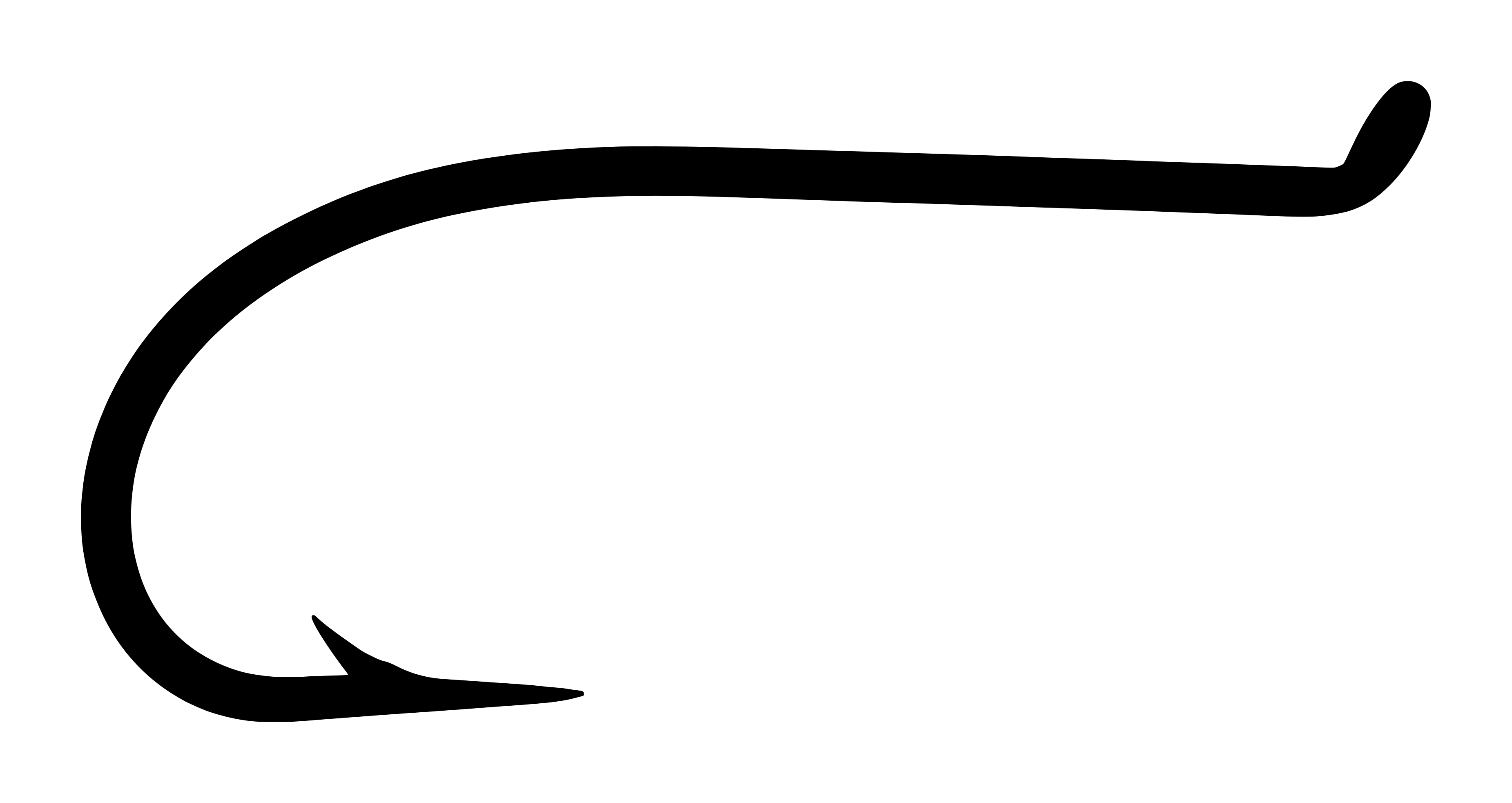
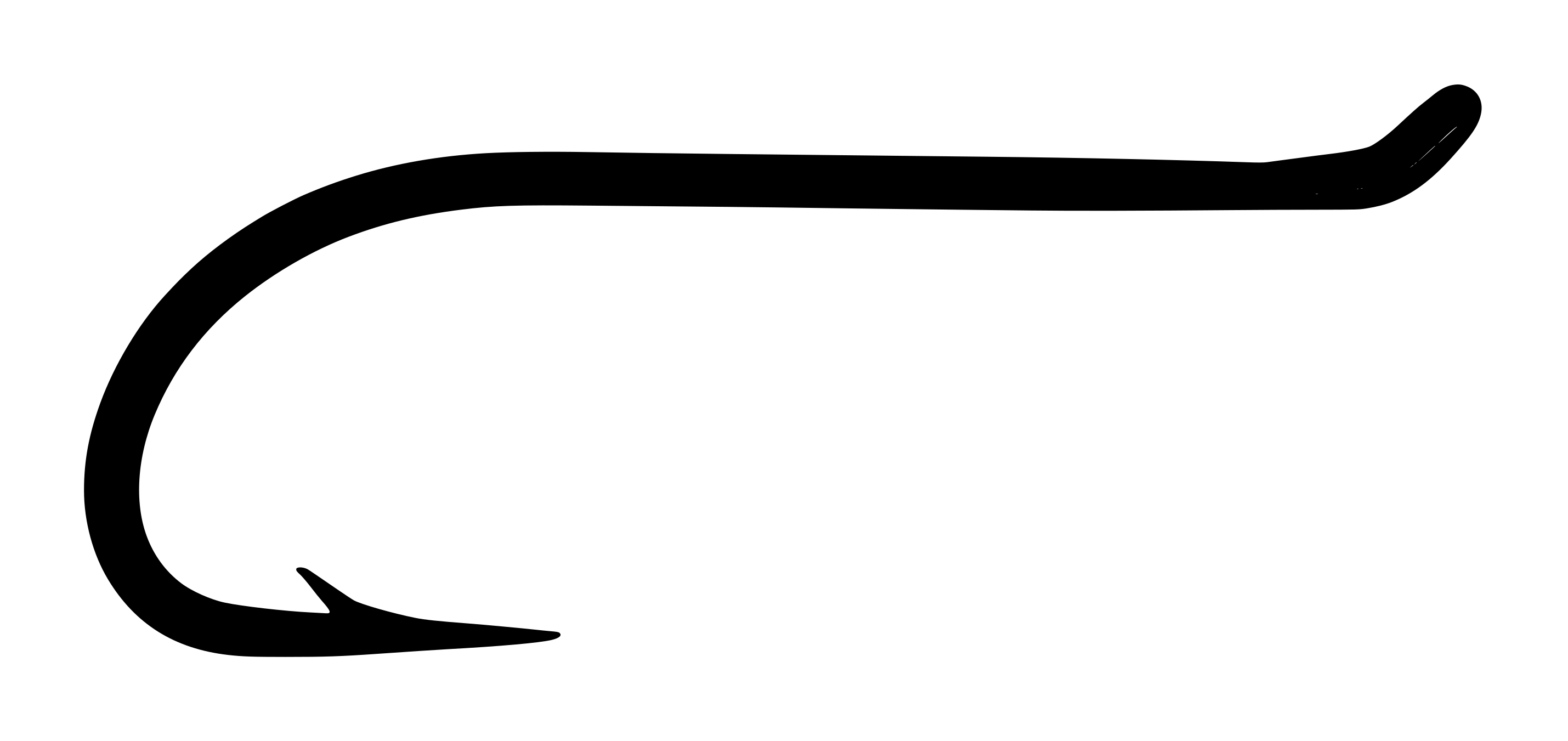
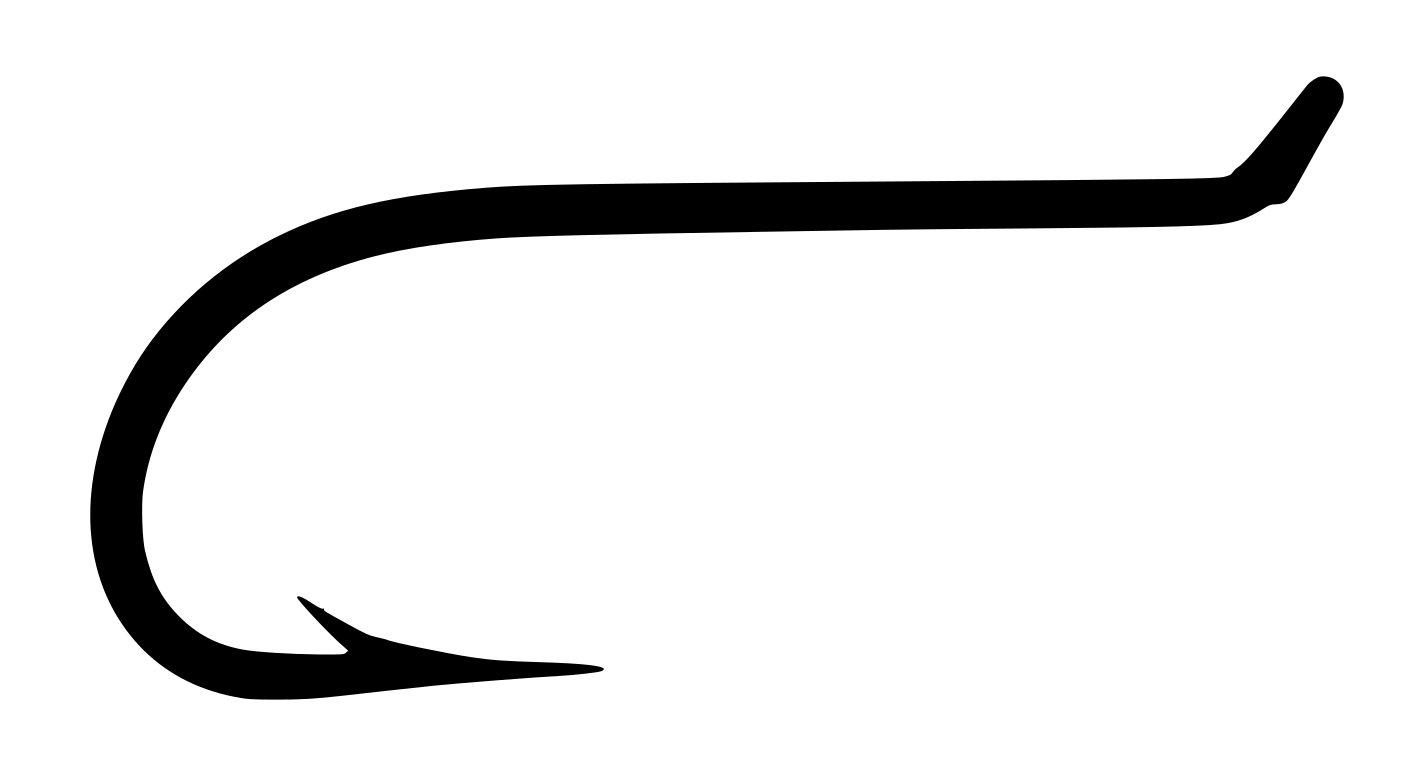
The Herter’s No. 3718 is a premium salmon fly hook manufactured by T. Hemming & Son Ltd. of Redditch, England, and imported by Herter’s Inc. of Waseca, Minnesota, as sole American agent. Size No. 4 features a turned-up loop eye, classic Sproat bend, and hand-made hollow point — the signature construction of British sea-trout and salmon flies.
This specimen dates to the mid-1950s to early 1960s, based on letterpress label design, kraft box construction, and absence of barcode (pre-1974). The japanned (black lacquered) finish, heavy wire gauge, and documented 49-hook count per card reflect the premium positioning of this model within Herter’s catalog.
Herter’s hooks are increasingly sought by fly tyers and tackle historians who appreciate the link to classic British manufacturing traditions.
Herter’s hooks preferred for nymph and steelhead flies were made by Allcocks of England
, though this specific model credits T. Hemming & Son as manufacturer. The 3718 represents a transitional era when American mail-order retailers leveraged Redditch craftsmanship to serve the expanding post-war fly-fishing market.
Side profile of the Herter's 3718 showing the characteristic concave hollow point geometry, barb placement, and japanned finish on measurement grid.
Photographic record
4 cataloged imagesSelect any record to load it above.
4 images shown
Herter’s 3718 Size No. 4 Hollow Point DetailSide profile of the Herter's 3718 showing the characteristic concave hollow point geometry, barb placement, and japanned finish on measurement grid.Open originalHerter’s 3718 Size No. 4 Overall ProfileFront-side view of the complete hook showing the turned-down ball eye, standard shank, and classic rounded-bottom Sproat bend geometry.Open originalHerter’s 3718 Size No. 4 Hook Pair ComparisonTwo individual hooks from the card shown side-by-side to demonstrate manufacturing consistency and point sharpness across the batch.Open originalHerter’s 3718 Original Box Label and PackagingOriginal kraft box with affixed manufacturer label reading 'Herter's Sole American Agents — Manufactured in Great Britain by T. Hemming & Son Ltd, Windsor Mills, Redditch.' Label shows classic mid-1950s letterpress design and provides key dating and maker attribution.Open original
Technical profile
Eye
Looped Eye, Turned Up
Wire
Heavy (1X Heavy), Forged
Shank
Standard — Plain
Bend
Sproat, Standard gapClassic rounded-bottom Sproat geometry with moderate depth (~0.4 inch), well-balanced proportions. Bend is symmetrical and centered. P
Point
Hollow Point (concave inner face)Short, close-cut barb on hollow point; barb angle approximately 45 degrees from point axis. Barb placement immediately behind point taper. P
Finish
Black JapannedDeep, even black japanned (lacquered) finish. Wear spots visible at barb point and on bend curve, showing consistent bright steel underneath. Finish is uniform and well-applied—no runs or streaking. P
This entry documents the T. Hemming & Son manufacturing partnership with Herter's—a previously unrecorded variant in the garrenwood.com catalog. T. Hemming's attribution adds to the documented roster of Redditch salmon hook manufacturers supplying the American mail-order market. The mid-1950s dating places this hook in the early expansion phase of Herter's catalog distribution (prior to the massive 1960s catalogs for which Herter's is best remembered).
Own this hook? Help us measure it.
We don't have measured sizes for this hook yet. Own one? Submit calipered measurements and we'll review and add them. Thank you!
No barcode (pre-1974 strong indicator). Offset letterpress printing in red on cream/tan stock typical of 1940s-1960s trade label production. Typography style (block sans-serif, tight kerning) consistent with mid-20th-century industrial printing. Double-wall pulp box construction and hand-applied labels characteristic of pre-1970s wholesale tackle packaging. 'Sole American Agents' language common in 1950s-1960s international partnerships. No visible retail price (wholesale format, pre-pricing). Paper stock shows advanced foxing and yellowing consistent with 55-70 years of aging. Overall evidence suggests production in mid-1950s; likely earlier end of 1950s-1965 range based on label design and paper condition.
George Herter's Hook Empire: Marketing Redditch Craftsmanship to America
George Herter's legendary Waseca catalog famously featured hyperbolic product descriptions written entirely by George himself, often making outrageous claims about superiority and world-first innovations. For hooks, Herter would emphasize the Redditch origin and hand-made craftsmanship while claiming exclusive American distribution rights. His copy would frequently reference 'Finest Sheffield Steel,' 'Selected Hand Made,' and 'World's Finest Guild Quality'—language that appears almost unchanged on this 1950s label. The irony is that Herter's never manufactured hooks himself; he was a master merchant who understood that British Redditch hooks carried prestige with American fly-tyers, and he leveraged that cachet through his catalog empire until his company filed for bankruptcy in 1981.
Design lineage and influence
The Sproat bend with hollow point traces its lineage to 19th-century British salmon fly design, where the geometry was optimized for large sea-run trout and Atlantic salmon. The Sproat bend’s rounded bottom and moderate depth make it suitable for both dry and wet fly construction, while the hollow point (concave inner face) provides the knife-edge sharpness necessary to penetrate the tough jaws of larger fish.
The Herter’s 3718 represents a direct continuation of this tradition as applied to standard production in the 1950s-1960s. Contemporary competitors included Mustad’s Limerick and O’Shaughnessy bends (Norwegian manufacture, widely distributed), S. Allcock’s house Sproat, and Partridge’s specialized variants. The American Pflueger company offered domestic alternatives, but these were generally viewed as inferior by British fly-fishing traditionalists.
T. Hemming & Son’s version maintains the classic proportions: turned-up loop eye for secure fly attachment, cleanly tapered barb for secure hook-set, and balanced bend geometry. Post-war American fly-tyers, particularly those influenced by Theodore Gordon, Ray Bergman, and later Lee Wulff, preferred Redditch-made hooks and were willing to pay premium prices for the perceived quality and authenticity they represented.
Best matchRelated by Attribute
Computed automatically from catalog data — updated as new hooks are added.
Matches: Bend, Shank, Gap, Eye, Eye Orient. +5 moreDiffers: Wire: Heavy (1X Heavy) vs Standard; Finish: Black Japanned vs Bronzed; Offset: Straight vs Offset / Kirbed +2 more
Matches: Bend, Gap, Eye, Eye Orient., Point +3 moreDiffers: Shank: Standard vs 1X Long; Wire: Heavy (1X Heavy) vs Standard; Finish: Black Japanned vs Gold-Plated +2 more
Matches: Bend, Shank, Gap, Point, Offset +3 moreDiffers: Wire: Heavy (1X Heavy) vs Standard; Eye: Looped Eye vs Tapered Eye; Eye Orient.: Turned Up vs Turned Down +2 more
Matches: Bend, Shank, Eye Orient., Point, Offset +3 moreDiffers: Wire: Heavy (1X Heavy) vs Fine (1X Fine); Gap: Standard vs Wide; Eye: Looped Eye vs Tapered Eye +4 more
Salmon and sea-trout wet fly fishing, particularly in UK and Atlantic rivers. The Sproat bend with hollow point provides excellent penetration for robust flies tied on size 4 hooks. Heavy wire gauge accommodates durable construction needed for fast-moving water and large fish. Standard shank length favors traditional wet fly proportions typical of March Brown, Greenwells Glory, and similar patterns of the mid-20th century.
Secondary Applications
Saltwater streamer flies, large trout nymphs, pike and predator patterns
Classic Fly Patterns
March Brown, Greenwells Glory, Partridge and Orange, Mallard and Claret, Teal and Red, Silver Grey, Jock Scott, Durham Ranger
Modern Equivalents
Hook
Match Quality
Notes
Mustad 36620 Salmon/Steelhead
Good
Similar bend geometry and size range; lacks hand-made character and period japanning but functionally equivalent for modern salmon fishing
Partridge Salmon Hook (current production)
Very Good
Maintains Redditch tradition; identical bend and point style; modern materials and QC; direct spiritual successor
Tiemco TMC 7999 Salmon Fly
Moderate
Comparable size and application; modern Japanese manufacture; different bend proportions and wire gauge
Collector notes
Rated 6.0/10 — Uncommon in any size/finish combination. Herter's hooks are less frequently encountered than Mustad or Allcock branded cards, but considerably more available than premium Redditch artisan makers. Size No. 4 and japanned finish are standard production variants; no extreme rarity. Collector demand is modest but consistent among fly-tyers and Redditch enthusiasts.
Reference value
$11 – $20 USD estimate
Packaging format
GW-HERTERS-01Catalog code
Positive Factors: Strong Redditch pedigree; documented British manufacture by recognized T. Hemming & Son; Herter’s mail-order heritage appeals to tackle historians and vintage fly-tying enthusiasts; japanned finish and heavy wire attractive to traditional wet-fly practitioners; complete 49-hook count; original box and labeling intact; clear dating evidence from pre-barcode era packaging.
Limiting Factors: Herter’s brand less iconic than S. Allcock & Co., Partridge, or Edgar Sealey among serious collectors; industrial mass production by contract manufacturer rather than named artisan maker; common size and finish variant—no special rarity within the model line; moderate collector demand (primarily functional interest from tyers, not purely decorative/museum value).
Size and Variant Impact: Size No. 4 is the bread-and-butter salmon fly size; more available than smaller No. 6-8 or larger No. 2-2/0. Japanned finish is standard variant for this model; tinned or polished variants (if they exist) would be more scarce. Complete original packaging with legible label adds 15-25% premium over loose cards or poor-condition boxes.
Condition Factors: Hooks showing minimal corrosion and bright finish command higher valuations. Card with all hooks intact commands significant premium over missing-hook cards. Label condition (print clarity, paper integrity) directly impacts perceived authenticity and value.
Packaging
Double-wall kraft pulp box with affixed cream/tan paper label printed in red letterpress. Label reads: EXPERTLY TEMPERED / SALMON FLY HOOKS / No.4 / QUALITY 3718 FORGED / TURNED UP LOOP EYE JAPANNED / SELECTED HAND MADE / HOLLOW POINTS / FINEST TOOL STEEL / HERTERS SOLE AMERICAN AGENTS / MANUFACTURED IN GREAT BRITAIN BY T. HEMMING & SON LTD / WINDSOR MILLS, REDDITCH. No barcode. Hand-written price and date marks partially visible on lid interior. Original hooks appear complete on original tissue/wax paper wrapping.
Market Value Notes
Low ($11): Good condition, opened packaging, near-complete hook count (1-2 missing acceptable), moderate card wear, legible label.
High ($20): Excellent condition, complete original count (49 hooks), minimal packaging wear, label bright and intact, hooks show no corrosion or defects.
Premium factors: Complete hook count; original box with legible label; japanned finish in excellent condition; size No. 4 (standard demand size); intact tissue/wax paper wrapping.
Platforms: eBay UK and US, specialist tackle dealers, auction houses (Gormy, Vass & Co., general antique markets).
Confidence: V verified — Based on 1 eBay sold listing ($9.99, condition unspecified) and eBay market history data (Apr 16 2023–Apr 15 2026, avg $15.35, range $9.99–$19.99). This entry falls within observed market range. Premium factors (complete count, excellent packaging) suggest positioning at higher end of range.
Where to Find
eBay UK (more common) and eBay US; specialist vintage tackle dealers in Redditch region; occasional antique fishing tackle shows and auctions; forums dedicated to classic fly-tying and UK salmon fishing. Complete original boxes in good condition are more difficult to locate than loose cards.
Herter's Inc Sheffield No 3718 1/0 Hooks Made in England 49 Hooks Total!
$9.99
2026-01-18
eBay market reference. Researcher-curated. Prices in USD. Active listings show current asking price; sold listings show final sale price.
Preservation
Storage and Preservation
Herter’s hooks with japanned finish require low-humidity storage to minimize rust bloom. Store in original box or in sealed plastic container with silica gel desiccant packets. If box is deteriorating, transfer hooks carefully to acid-free paper envelope or small glass jar with tight lid. Avoid direct contact with other metal objects, which can cause galvanic corrosion.
The japanned finish, though more durable than bare steel, is susceptible to chipping if hooks are knocked against hard surfaces or other hooks. Handle with care. Original tissue or wax paper wrapping should be preserved if present—this packaging protects individual hooks and adds significantly to box value.
Do not attempt to clean japanned hooks with aggressive solvents or wire brushing, as this removes the protective finish and can damage the hook geometry. Light surface patina or minor rust bloom is acceptable and normal in vintage specimens. If corrosion is visible on the hook body itself (rather than surface oxidation), the hook should be treated with a light rust-inhibiting oil before storage.
Complete, unopened original boxes command premium value. If the box is sealed, preserve this sealed state—opening it immediately reduces value. If the box is already opened, retain all original components (tissue, wax paper, individual hooks) together with the card.
Primary Source
Label Analysis and Maker Attribution
Source: Herter's No. 3718 original label; T. Hemming & Son Ltd. attribution; historical Redditch manufacturing records
The label explicitly credits T. Hemming & Son Ltd., Windsor Mills, Redditch, as the manufacturer, with Herter’s Inc. identified as ‘Sole American Agents.’ This distinction is historically significant: Herter’s was a mail-order distributor and brand manager, not a hook manufacturer.
Edgar Sealey, Milwards, Martinez and Bird, S. Allcock and Company, and Willis were prominent Redditch firms making hooks for various distributors
, with Herter’s representing several sources depending on the model number.
T. Hemming & Son appears in historical Redditch directories as a needle and fish hook maker with roots in the 19th-century craft tradition. The label’s emphasis on ‘SELECTED HAND MADE’ and ‘FINEST TOOL STEEL’ reflects period marketing language distinguishing superior British manufacture from industrial American production. The ‘3718 FORGED’ notation indicates the specific Hemming pattern or stock code—a reference system used by both the maker and Herter’s to track variants.
The red letterpress printing on cream stock was standard for mid-20th-century British export labels. The use of ‘Sole American Agents’ language (rather than ‘Exclusive Distributor’ or other modern phrasing) dates the label to the 1950s-1960s period, when territorial distribution agreements were still commonly expressed in this formal manner.
No price is visible on this specimen, indicating it was shipped in wholesale bulk to Herter’s distribution center in Waseca, Minnesota, where individual pricing and retail packaging would have been applied before catalog sale to end customers.
Additional
Herter's Mail-Order Strategy and Hook Sourcing
Herter’s began his business by catering to fly fishermen and fly tyers. His catalogs from the 1960s and very early 1970s, which were hundreds of pages long, had lengthier descriptions of each product.
The company’s hook strategy mirrored this approach: Herter’s sourced premium British hooks from multiple Redditch manufacturers and rebranded them under Herter’s model numbers in massive catalogs aimed at American amateur fly-tyers.
The 3718 represents a mid-tier offering in this catalog strategy. Premium models (like certain Gaellic Supreme lines) were sourced from S. Allcock & Co., while others came from Edgar Sealey, Martinez & Bird, or—as in this case—T. Hemming & Son.
Herter’s section of exotic and colorful feathers, furs, threads and chenille for fly tying made them one of the biggest importers of such materials in the United States.
The hooks were a complementary product line allowing complete fly-tying kits to be assembled from Herter’s inventory.
By the 1960s,
Herter’s catalogs had lengthier descriptions of each product
, and individual hook model numbers were featured prominently. The 3718’s salmon hook focus reflected the post-war American interest in Atlantic salmon fishing, particularly among affluent Northeast and Midwest anglers with access to rivers and fishing camps.
Herter’s competitive advantage was mail-order convenience, volume pricing, and access to British quality without importing hassles for individual tyers. The ‘Sole American Agents’ designation on this label emphasizes exclusivity—Herter’s had negotiated direct supplier relationships, undercutting smaller tackle retailers who sourced from wholesalers. This business model remained viable until the 1970s, when direct-mail catalogs began to lose ground to discount retail chains and specialty fly shops.
Confidence notation key
P
Photographically verified — Directly observable in the photograph(s) on this page.
V
Verified by documentation — Confirmed by manufacturer catalog, spec sheet, or published reference.
I
Inferred — A logical deduction from observable or documented evidence, not directly stated.
E
Estimated — An approximation based on visual comparison, proportional analysis, or limited data.
S
Speculative — A reasoned hypothesis that cannot be confirmed from available evidence.
Unnotated claims are the compiler’s synthesis; see Sources. All photographs on garrenwood.com are taken on a measurement grid where each square equals 1/10 inch (0.1″ / 2.54 mm).