Edgar Sealey & Sons S 4324 H.E. — Hand Forged, Redditch, England
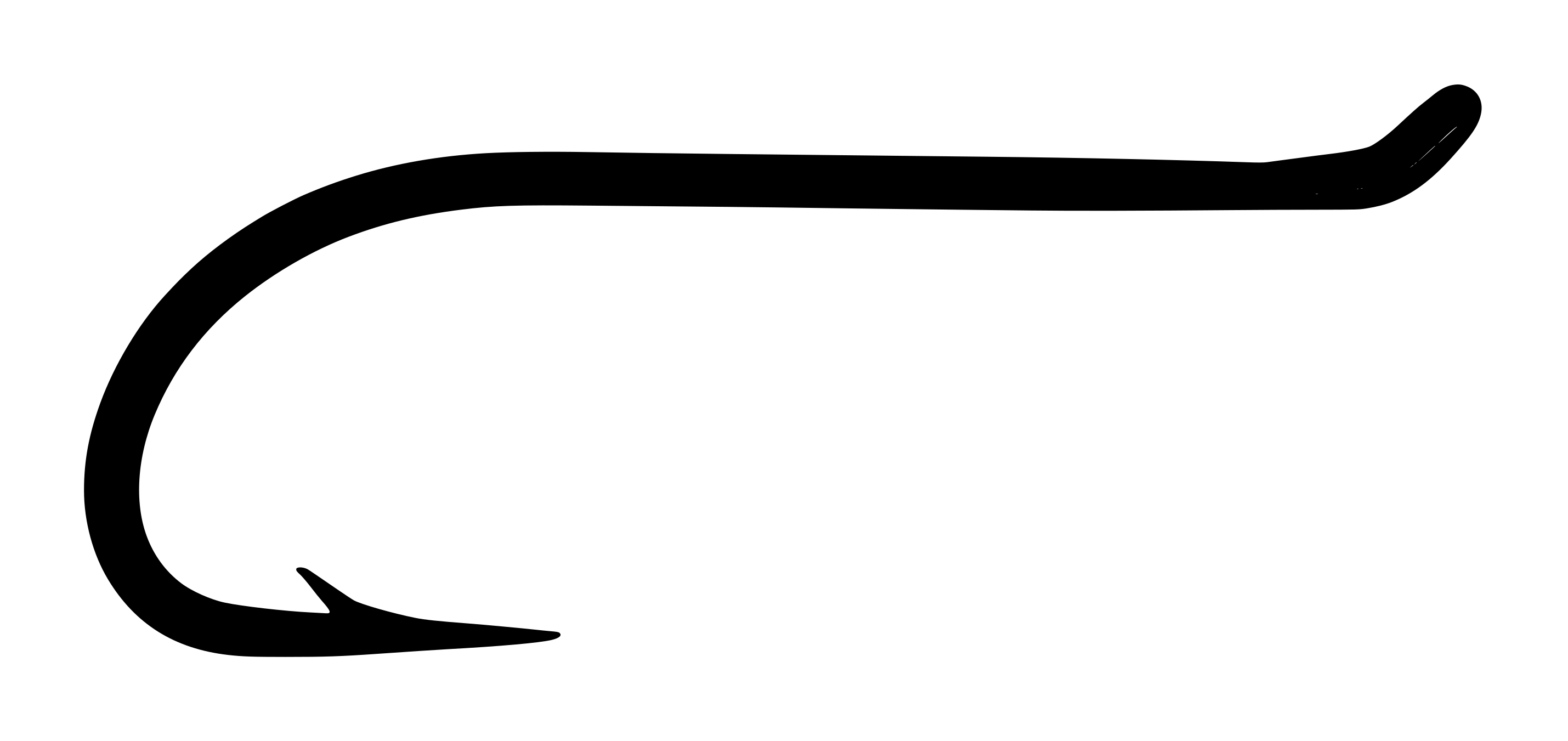
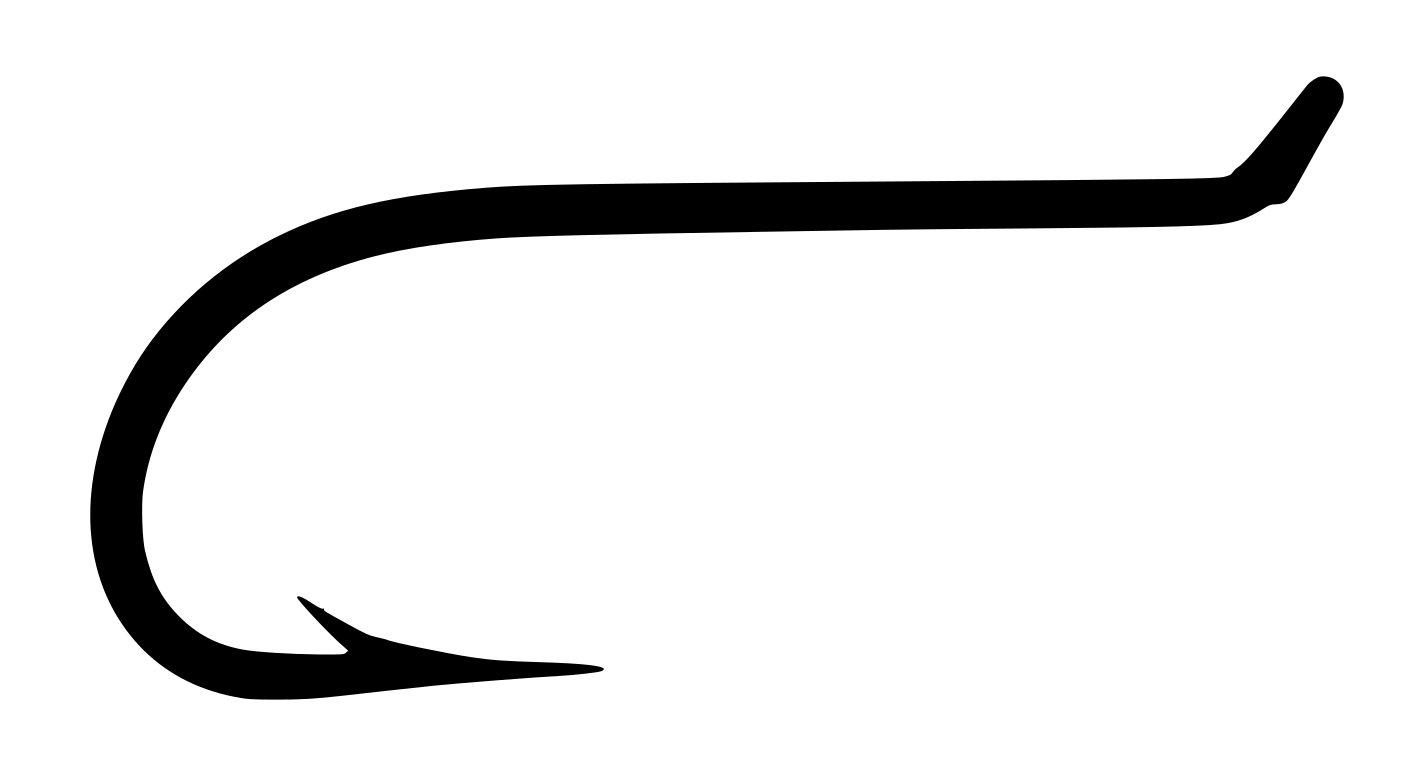
A forged, bronzed No. 10 hook sold under Edgar Sealey’s Octopus trade mark. The photographed specimens have a looped eye bent away from the point, a Sproat-type bend, a straight fine point with a large cut barb, and wire of about 0.02″. The label reads ‘Highest Grade’, ‘HAND FORGED’ and ‘Turn-down-eye, fine points, Reversed’; the eye direction in the photographs does not match the label and is unresolved.
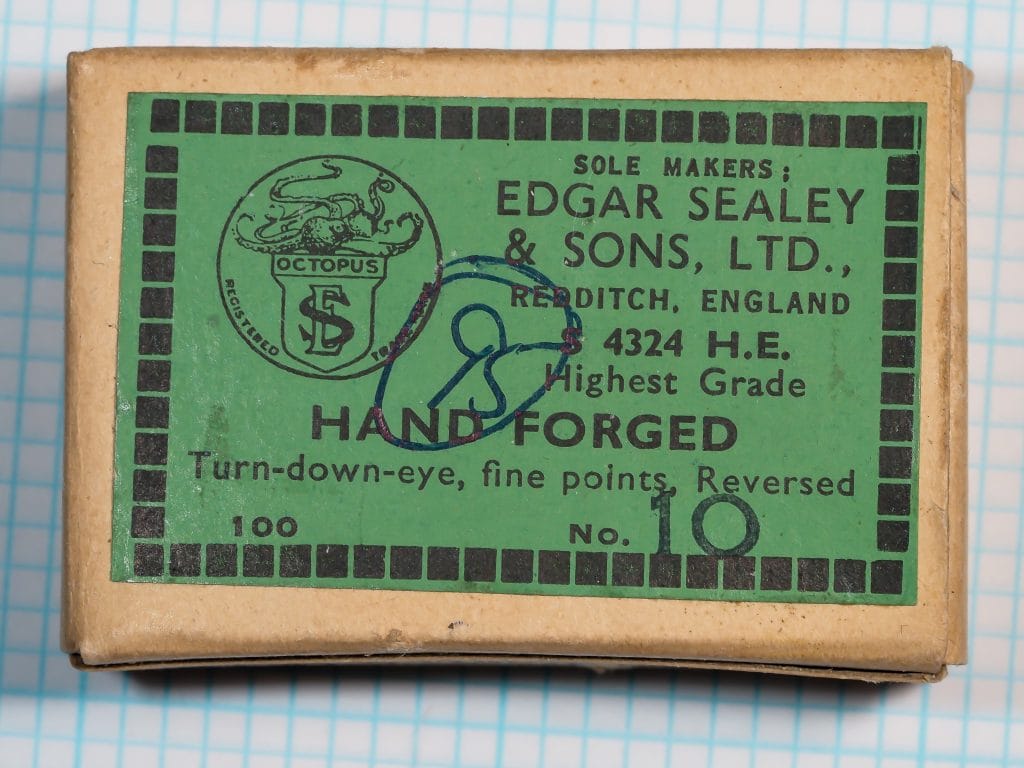
The box is a buff card slide box with a pasted green label carrying the octopus-and-shield roundel. Edgar Sealey began hook-making around 1930, and the Octopus mark places this box c. 1930–1963 E. No intended use is documented for the pattern.
Original green printed sales card for Edgar Sealey & Sons S4324 Octopus hooks, size No. 10, showing the iconic octopus logo, 'Highest Grade Hand Forged' text, and 'Brockhill Works, Redditch, England' maker's mark — c. 1930-1950.
Photographic record
3 cataloged imagesSelect any record to load it above.
3 images shown
Edgar Sealey S4324 Size 10 Octopus Box LabelOriginal green printed sales card for Edgar Sealey & Sons S4324 Octopus hooks, size No. 10, showing the iconic octopus logo, 'Highest Grade Hand Forged' text, and 'Brockhill Works, Redditch, England' maker's mark — c. 1930-1950.Open originalEdgar Sealey S4324 Size 10 Sproat Bend ProfileTwo size No. 10 Edgar Sealey S4324 hooks shown side-by-side on 1/10-inch measurement grid, displaying the characteristic sproat bend profile, reversed offset geometry, and tapered eye. Both hooks are bright bronzed with sharp points.Open originalEdgar Sealey S4324 Size 10 Hollow Point DetailMagnified close-up of the Edgar Sealey S4324 hollow point, showing the concave inner face and inward-curved point geometry characteristic of a true hollow point design. The small close-cut barb is visible high on the point. The needle-sharp point is undamaged.Open original
Technical profile
Edgar Sealey & Sons S 4324 H.E., Size No. 10, Hand Forged, Looped Eye, Sproat-type Bend, Reversed, Bronzed
Eye
Looped Eye, Turned UpLooped eye: the wire end is returned along the shank for ~0.27"-0.28", and the step where the returned end finishes is visible on both specimens P. In the photographs the eye bends away from the point side — turned up P — which conflicts with the label text 'Turn-down-eye' V. Unresolved: the specimens may not be original to this box, or the label may be a stock label S.
Wire
Standard, Forged
Shank
Standard — Plain
Bend
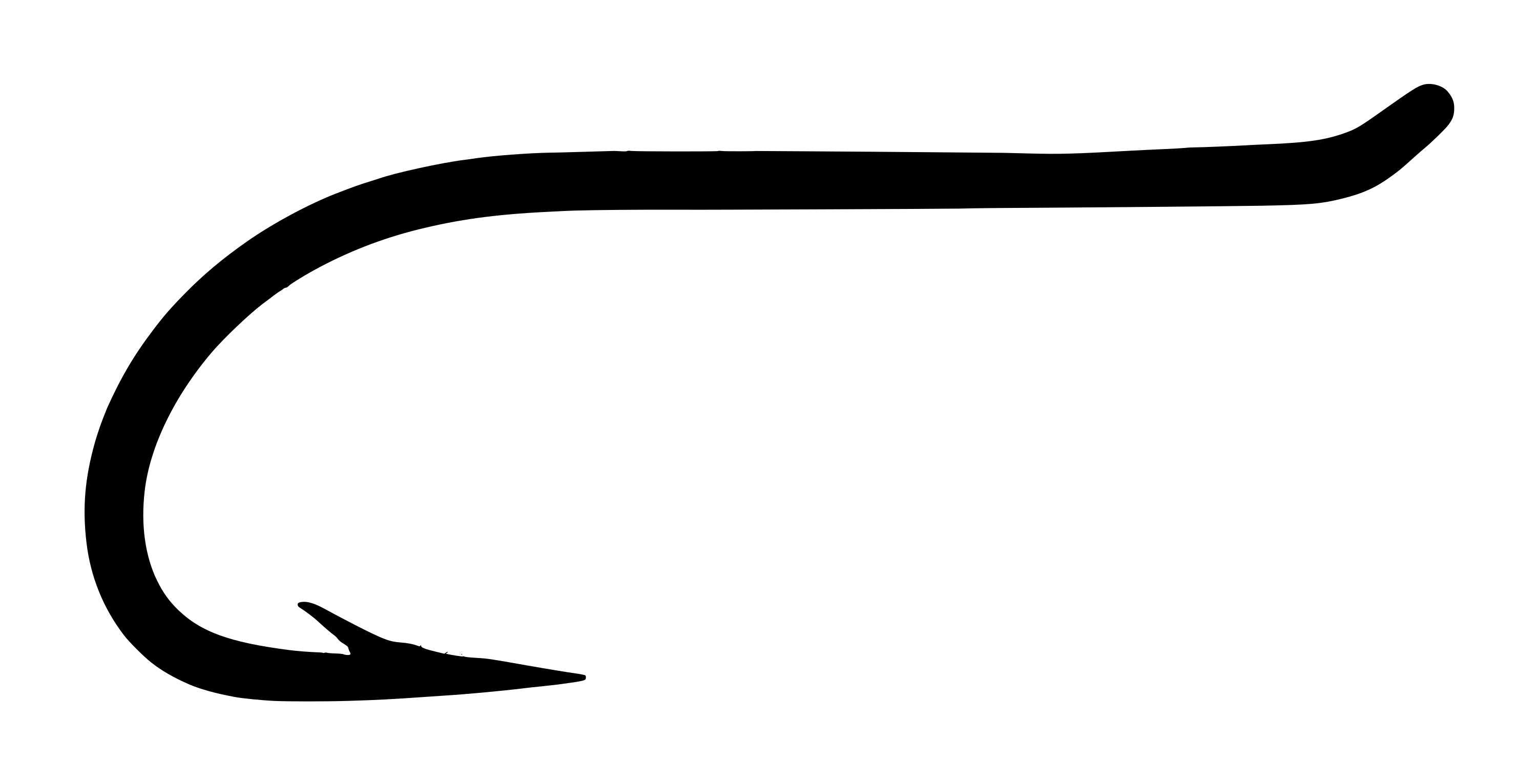
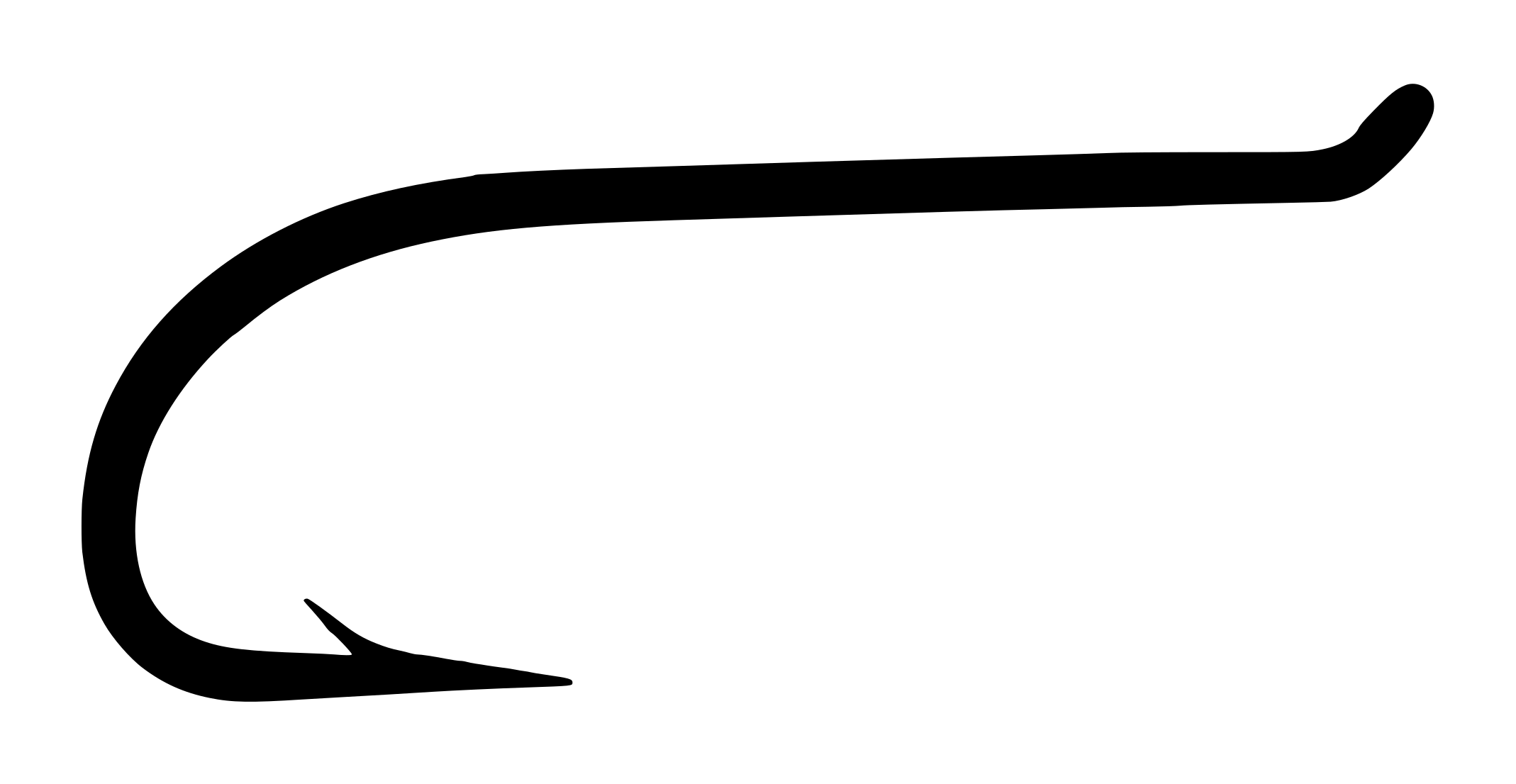
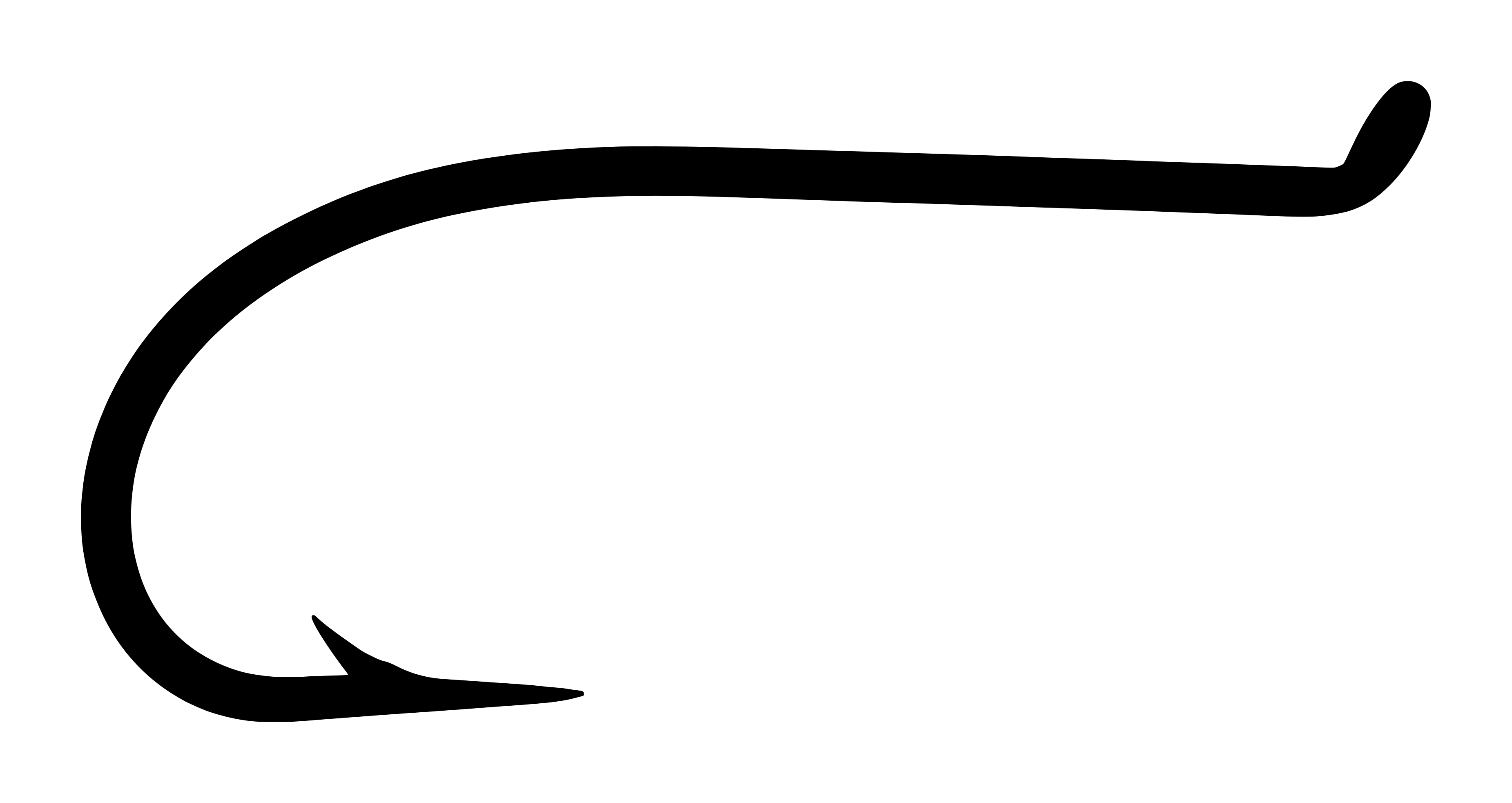
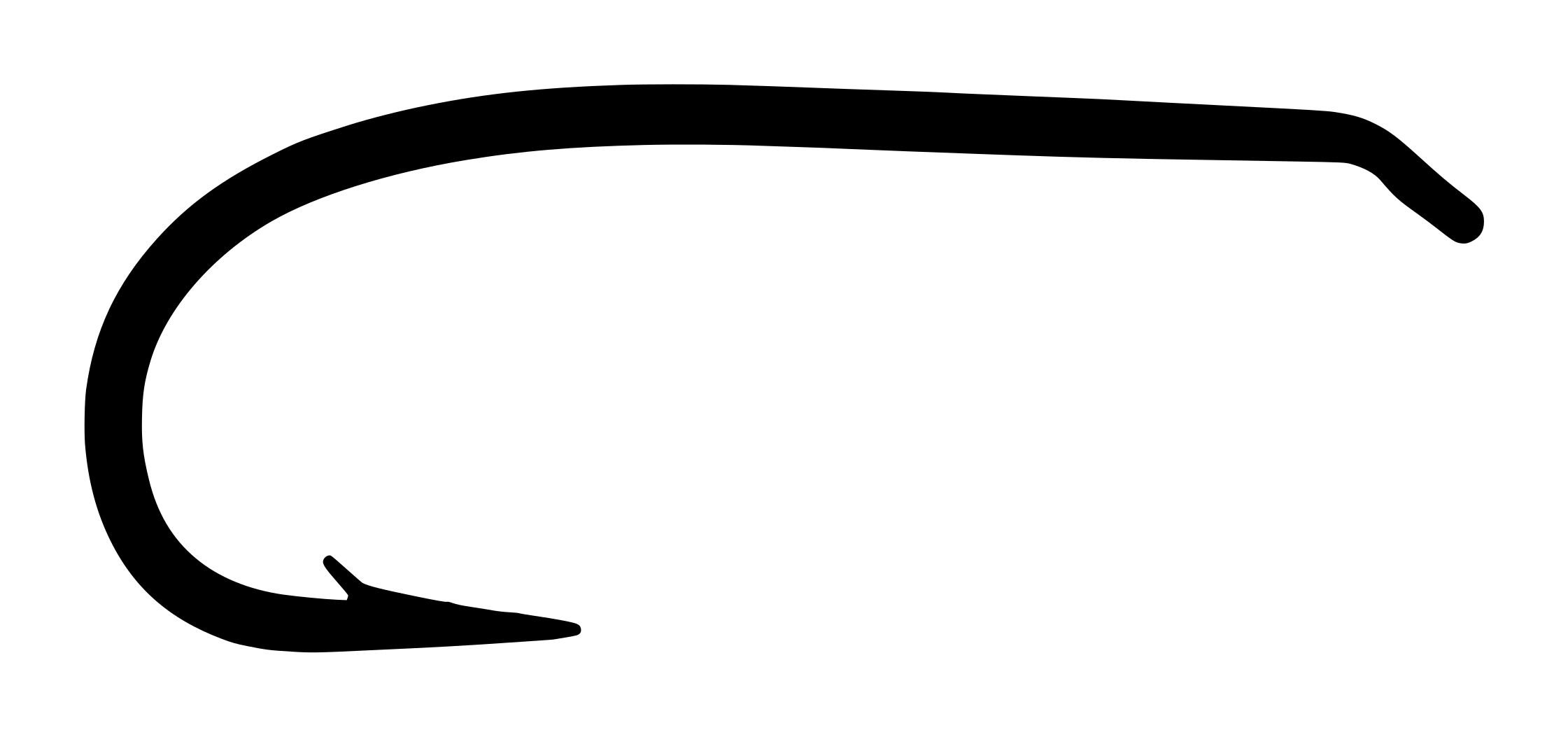
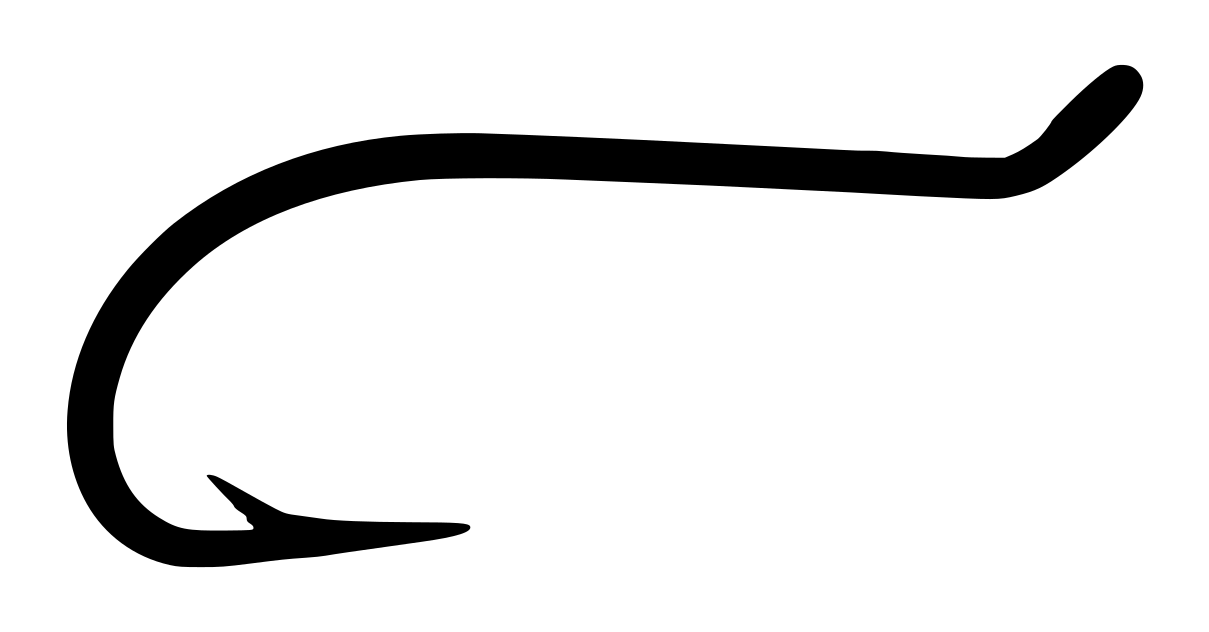
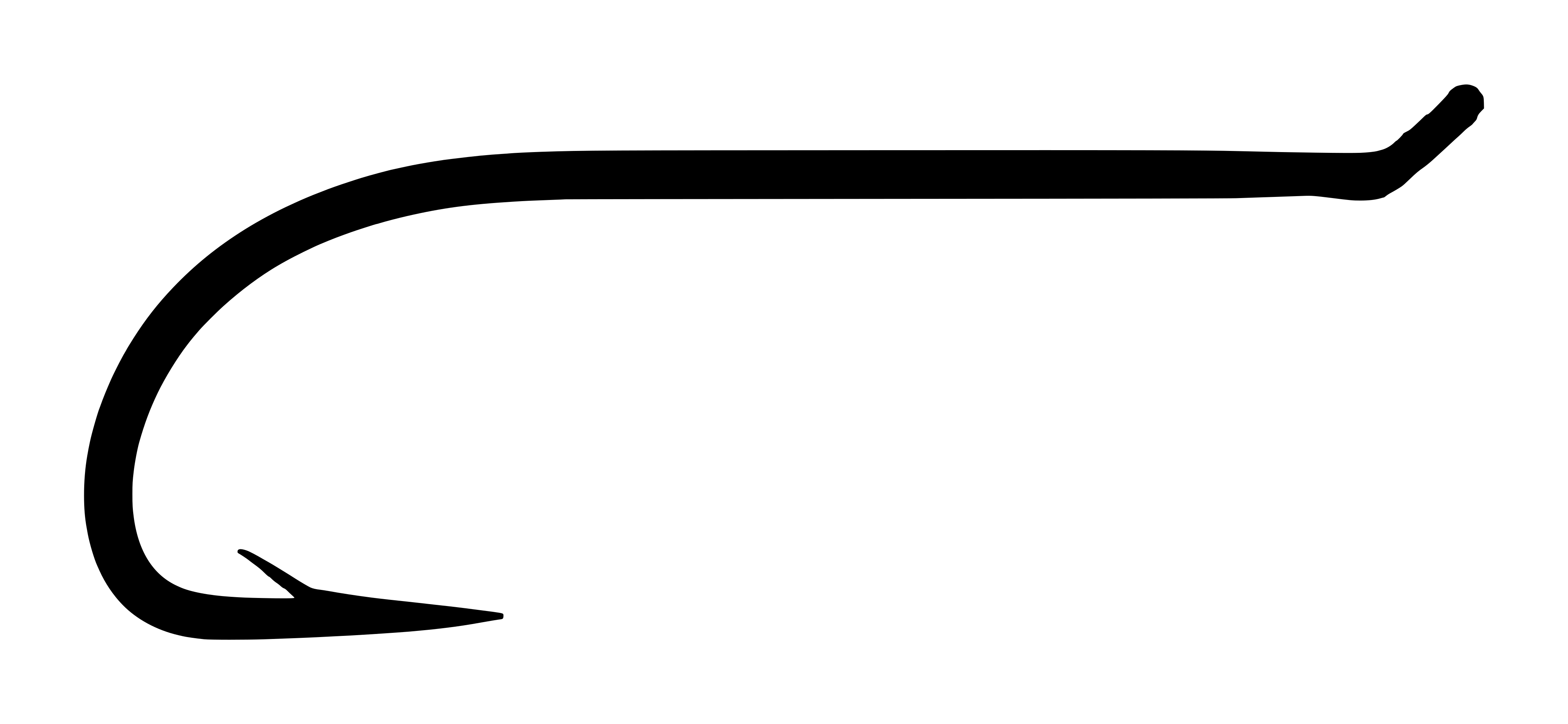
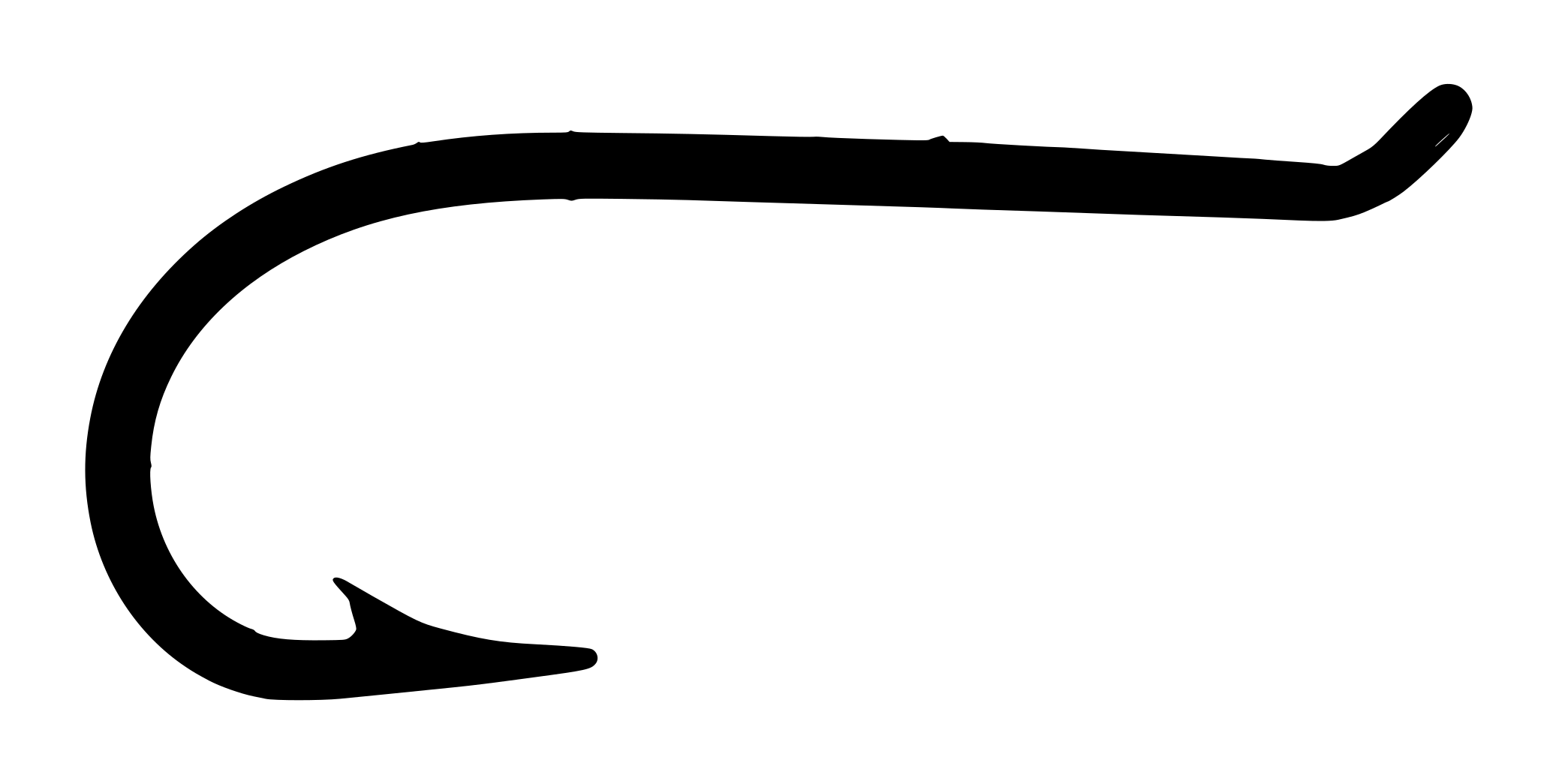
Sproat, Standard gap, Offset / kirbedSproat-type bend: broad curve behind the shank, tighter turn at the bottom, and a long straight point section running roughly parallel to the shank E. Forged, with flattened sides visible at the bend P. Label states 'Reversed' — point offset to the right V; the offset is not visible in the flat-lay photographs. Confirm the bend family against the Hand Forged and Sproat cards in Sealey's 1950 sample book.
Point
Hollow Point (concave inner face)Large, deeply cut barb standing well off the wire, ~0.05" long, set ~0.14" behind the tip E. Reddish exposed-steel or rust spotting at the barb cut on the close-up specimen P.
Finish
Bronzed — Confirmed (stated on packaging)Bronzed finish with warm brown-black patina visible in specimens. Color tone is medium to dark bronze, typical of English hand-forged work from this era. No bright blotches or uneven coloration — finish appears uniform and well-executed. P
Both photographed hooks have a sound bronzed finish and sharp, undamaged points P. Minor reddish spotting at the barb cut on the close-up specimen and a small spot on the upper hook's shank near the eye P. Buff card slide box with pasted green label; label clean and legible; box edges rubbed with minor scuffs P. Box contents, hook count, and any inner wrapper are not shown in the photographs.
Forged Construction
The label states ‘HAND FORGED’ V. In the photographs the bend shows the flattened sides and paired highlights of a forged hook P; the cross-section itself is not visible. Forging flattens the sides of the bend to stiffen it against opening under load; it does not make the hook lighter. Whether the forging was done by hand cannot be judged from the specimens.
Point and Barb
The close-up shows a straight, conically tapered point: the inner edge runs straight from barb to tip, with no hollow curve P. This matches the label’s ‘fine points.’ The barb is large and deeply cut, stands well off the wire, and is set about 0.14″ behind the tip E.
Reversed Offset
The label states ‘Reversed’ V. In English trade usage a reversed hook has its point offset to the right; kirbed is the opposite offset. The offset is not visible in the flat-lay photographs. Offset is a separate choice from bend shape and is not characteristic of any bend family.
Looped Eye
Both specimens have a looped eye: the wire end is bent back along the shank, and the step where the returned end finishes is visible about 0.27″–0.28″ behind the eye tip P. The eye bends away from the point side — turned up P — although the label reads ‘Turn-down-eye’ V. See the eye notes for the unresolved discrepancy.
‘4324’ is a pattern number, not a size designation: the size is printed separately on the label as ‘No. 10’ P, so the same S 4324 H.E. code would normally cover a run of sizes. ‘H.E.’ most plausibly stands for ‘Heavy Eyed,’ since Sealey’s 1950 sample book includes a ‘Hand Forged Heavy Eyed’ card I. No Sealey key to these suffixes, or to the ‘S’ prefix, has been located.
The size range, catalog dates and any variants of S 4324 H.E. are not documented. The pattern should be checked against the Hand Forged and Hand Forged Heavy Eyed cards in the 1950 Octopus Brand sample book and against Sealey’s High Class Fish Hooks catalog.
Era and Packaging Dating
Lower bound: Edgar Sealey & Sons began hook-making c. 1930 and is listed in Kelly's Directory of 1932 at Brockhill (Brookhill) Works, Hewell Road, Redditch (I — reported secondhand). Upper bound: the Octopus trade mark on this label was still advertised in 1959 and is reported to have been replaced by a 'two fishes' logo around 1963 (S — single secondary source). The box — buff card slide box, pasted green printed label, 'LTD.' in the company name, no barcode — is consistent with this range but does not narrow it E. Range c. 1930-1963 E.
Fun Fact
The octopus on this label is Edgar Sealey's registered trade mark — the roundel reads 'REGISTERED TRADE MARK' — and the firm used it across its whole range, not on one pattern. A 1959 advertisement urged anglers to 'Say Octopus for hooks and Rods,' and the name carried onto rods such as the Octofloat. Sealey's 1950 Octopus Brand sample book also includes a separate pattern card titled 'Octopus,' so at Sealey the word served as both a brand and a pattern name.
Design lineage and influence
The Sproat is a 19th-century bend. The Limerick is generally dated earlier, so the Sproat was not displaced by a ‘more modern’ Limerick. The S 4324 H.E. combines a forged Sproat-type bend E, a reversed offset V and a looped eye P.
Offset direction is independent of bend shape. Redditch makers commonly offered the same pattern straight, kirbed or reversed, and Sealey’s own 1950 sample book lists forged reversed hooks (‘Forgé Renversé’) as a separate card V.
How this pattern relates to other Redditch makers’ forged reversed hooks of the period is not documented. Claims about when offset or Sproat hooks fell from favour need a source before they are published.
Best matchRelated by Attribute
Computed automatically from catalog data — updated as new hooks are added.
Matches: Bend, Shank, Gap, Eye, Eye Orient. +5 moreDiffers: Wire: Standard vs Heavy (1X Heavy); Finish: Bronzed vs Black Japanned; Offset: Offset / Kirbed vs Straight +2 more
Matches: Bend, Shank, Eye Orient., Point, Finish +3 moreDiffers: Wire: Standard vs Fine (1X Fine); Gap: Standard vs Wide; Eye: Looped Eye vs Tapered Eye +4 more
Matches: Bend, Shank, Wire, Gap, Point +3 moreDiffers: Eye: Looped Eye vs Tapered Eye; Eye Orient.: Turned Up vs Turned Down; Forging: Forged vs Round +2 more
Matches: Bend, Wire, Gap, Eye, Eye Orient. +3 moreDiffers: Shank: Standard vs 1X Long; Finish: Bronzed vs Gold-Plated; Forging: Forged vs Round +2 more
The label does not state an intended use, and none is documented for this pattern. The hook’s features point in different directions. The looped, turned-up eye and fine point are associated with game-fishing hooks, including salmon and sea-trout patterns I, while a reversed offset is more usual on bait hooks I. At No. 10, with about 0.88″ overall length and about 0.02″ wire, it would suit small baits or wet flies for trout and sea trout. Use for pike or carp is not supported at this size E.
Secondary Applications
Not documented. Plausible uses include small-bait freshwater fishing or wet flies for trout and sea trout S.
Classic Fly Patterns
None documented for this pattern.
Collector notes
Rated 6.5/10 E — an original boxed Octopus Brand hand-forged pattern with an unusually detailed specification label. Sealey produced hooks from c. 1930 into the 1970s or later, so boxes are uncommon rather than scarce; value rests on label condition and completeness. No sales data recorded.
Reference value
$45 – $120 USD estimate
Packaging condition
Good — moderate wear, legibleRecorded specimen
Packaging format
GW-ES-001Catalog code
Positive factors: Original box with a clean, legible label and the Octopus trade-mark roundel. The label carries an unusually full specification (‘Turn-down-eye, fine points, Reversed’). Hand forging is stated on the label.
Limiting factors: Sealey was a sizeable Redditch firm (around 100 employees at its 1950s peak) that made hooks into the 1970s or later, so its boxes are not rare in absolute terms. Size 10 is a common size. Box contents and hook count are not documented. The box edges show minor wear.
Market Value Notes
Low ($45): box complete with legible label, some wear, contents partial or unverified. High ($120): crisp label, full count of 100 confirmed, box unworn. Platforms: UK eBay, specialist vintage tackle dealers, tackle auctions. Confidence: E — no recorded sales of this pattern; estimate based on comparable boxed Redditch hooks of the period.
Where to Find
UK eBay and specialist vintage tackle dealers in England; occasional appearance at UK tackle antiques fairs and auctions. Rarely encountered in North America. Redditch specialist dealers most likely source.
Collector's Identification Tips
Identify Edgar Sealey S 4324 H.E. hooks by:
A buff card slide box with a pasted green label bearing the octopus-and-shield roundel marked ‘REGISTERED TRADE MARK’ P.
The code ‘S 4324 H.E.’, with the size printed separately as ‘No. 10’ P.
The text ‘Highest Grade’, ‘HAND FORGED’ and ‘Turn-down-eye, fine points, Reversed’ P.
The quantity ‘100’ P.
A looped eye, with the returned wire end visible along the shank P.
A straight, finely tapered point with a large cut barb P.
A forged bend with flattened sides, and a bronzed finish P.
The photographed specimens have a turned-up eye despite the label’s ‘Turn-down-eye,’ so check any hooks attributed to this box against the label S. Loose hooks cannot be attributed to this pattern without packaging. Where possible, compare against the Hand Forged cards in Sealey’s 1950 sample book.
Preservation
Storage and Preservation
Store the box in a cool, dry environment away from moisture and direct sunlight. The bronzed finish is susceptible to patina development and oxidation if exposed to humidity or salt air. This patina is often considered desirable by collectors, but excessive corrosion can damage the finish and underlying wire. Keep the box away from damp basements, garages, or coastal areas prone to salt spray.
Store the box horizontally or in a vertical position against a shelf, but avoid compression under heavy objects. The original green cardboard label is fragile — handle by the edges only to avoid fingerprint marks, tears, or crushing. If the original tissue wrapper is present inside the box, leave it undisturbed; this adds authenticity and historical value.
Never remove individual hooks from the card unless they are to be used for fishing. The original presentation, count, and packaging context are primary value drivers. Avoid contact with other metals or dissimilar materials that could cause galvanic corrosion or transfer rust. Periodically inspect for insect damage (bookworms, silverfish) or mold growth, particularly if stored in older buildings with fluctuating humidity. A sealed acid-free storage box offers additional long-term protection.
Primary Source
Packaging Text Analysis
Source: Edgar Sealey & Sons S4324 Original Box Label, Redditch, England, c. 1930-1950
‘SOLE MAKERS; EDGAR SEALEY & SONS, LTD., REDDITCH, ENGLAND’ — This text establishes Edgar Sealey as the sole manufacturer of this design and confirms Redditch, England as the production location. The use of ‘Sole Makers’ is a common British trademark claim from this era, asserting exclusive manufacturing rights to the pattern.
‘4324 H.E.’ (MODEL CODE) — The ‘H.E.’ designation likely stands for ‘Highest Grade’ or ‘Hand Forged Extra,’ a premium quality marker. The 4324 is an internal product code within Edgar Sealey’s catalog system.
‘Highest Grade’ — Appears prominently on the label, indicating this is Edgar Sealey’s top-tier offering. In the context of hand-forged hooks, ‘Highest Grade’ refers to rigorous quality control, hand-selection of materials, and premium finishing, not merely a product line name.
‘HAND FORGED’ — All-caps emphasis on the manufacturing method, highlighting craftsmanship as a key selling point. In 1930-1950, when industrial mass-production was increasingly dominant, hand-forging was marketed as a quality differentiator.
‘Turn-down-eye, fine points, Reversed’ — This technical specification string confirms: (1) Tapered (turned-down) eye construction; (2) Fine point geometry (likely referring to point sharpness and taper refinement); (3) Reversed offset (point angled to the right when viewed from above). This is a rare example of detailed hook specification on packaging, valuable for historian authentication.
‘100’ — Package quantity. The 100-hook count per box was standard for English retail bait hooks in this era, suitable for general tackle shops and individual anglers.
Source: Green printed label on original Edgar Sealey & Sons S4324 sales box, c. 1930-1950.
Additional
Redditch Craft Tradition and Edgar Sealey's Place
Redditch, Worcestershire, England became the world capital of hook manufacturing during the Industrial Revolution, with dozens of hand-forging operations established along the Redditch stream (which provided water power for trip hammers). By the early 20th century, the town was home to major makers including S. Allcock & Co., Partridge of Redditch, H. Milward & Sons, and numerous smaller specialists like Edgar Sealey.
Edgar Sealey & Sons occupied Brockhill Works, a modest facility typical of mid-tier Redditch makers. Unlike the industrial giants (Allcock employed hundreds; Partridge was a large factory operation), Edgar Sealey remained a craft-focused enterprise, maintaining hand-forging techniques when other makers were increasingly mechanizing. This was both a point of pride (marketed as ‘Highest Grade’) and an economic constraint — hand labor was expensive, limiting production and market reach compared to Mustad (Norway) and American industrials.
The company’s octopus logo and focus on bait hooks (rather than fly patterns) positioned Edgar Sealey as a specialist for coarse fishermen — pike, carp, and general mixed-species fishing where durable, heavy-wire bait hooks were essential. This was a solid market niche in the English Midlands, but it did not translate to the volume or geographic reach of larger competitors.
Edgar Sealey eventually ceased independent operation in the post-war period (likely 1950s), absorbed into larger manufacturing consolidation as hand-forging became uneconomical. Today, their hooks are valued by collectors not just for rarity, but as authentic artifacts of the Redditch tradition — material evidence of a manufacturing culture that defined English hook-craft for nearly 150 years.
Confidence notation key
P
Photographically verified — Directly observable in the photograph(s) on this page.
V
Verified by documentation — Confirmed by manufacturer catalog, spec sheet, or published reference.
I
Inferred — A logical deduction from observable or documented evidence, not directly stated.
E
Estimated — An approximation based on visual comparison, proportional analysis, or limited data.
S
Speculative — A reasoned hypothesis that cannot be confirmed from available evidence.
Unnotated claims are the compiler’s synthesis; see Sources. All photographs on garrenwood.com are taken on a measurement grid where each square equals 1/10 inch (0.1″ / 2.54 mm).