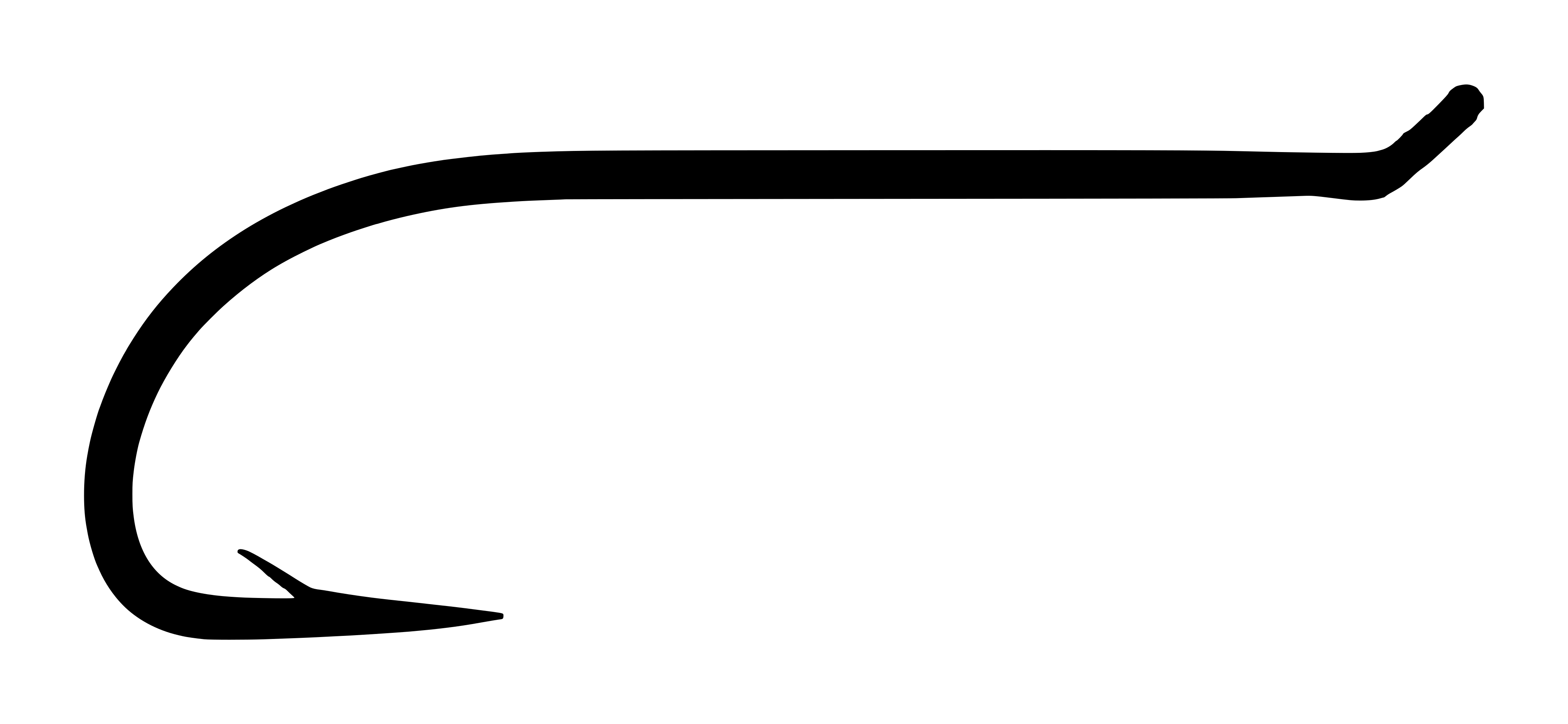
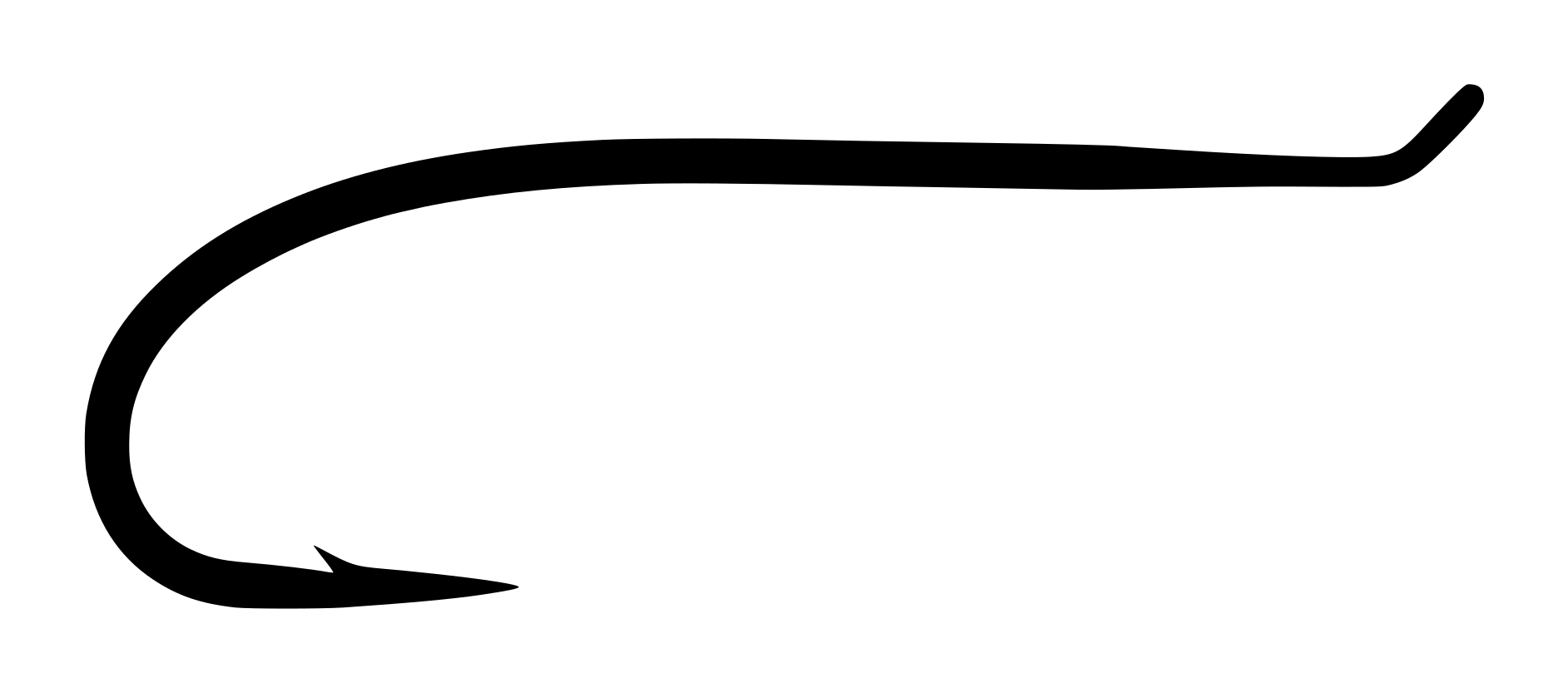
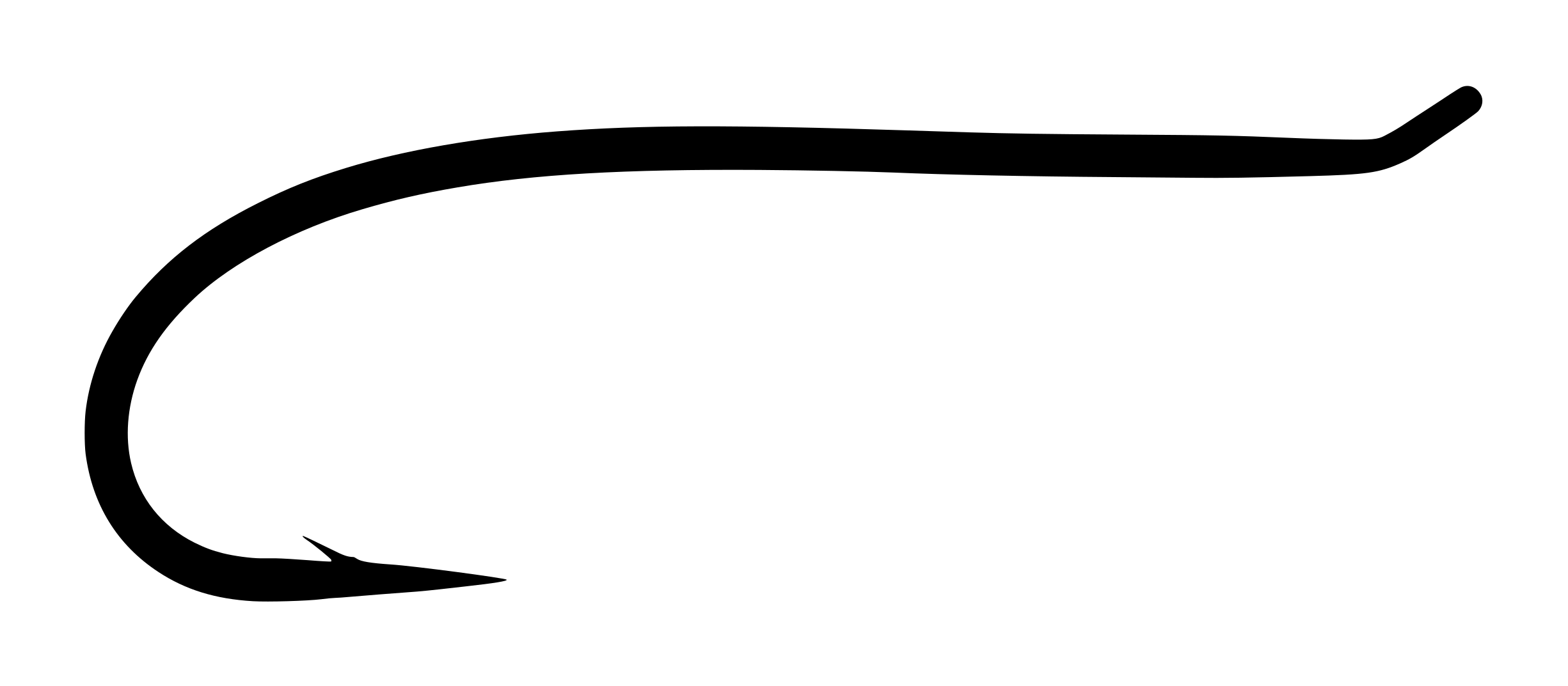
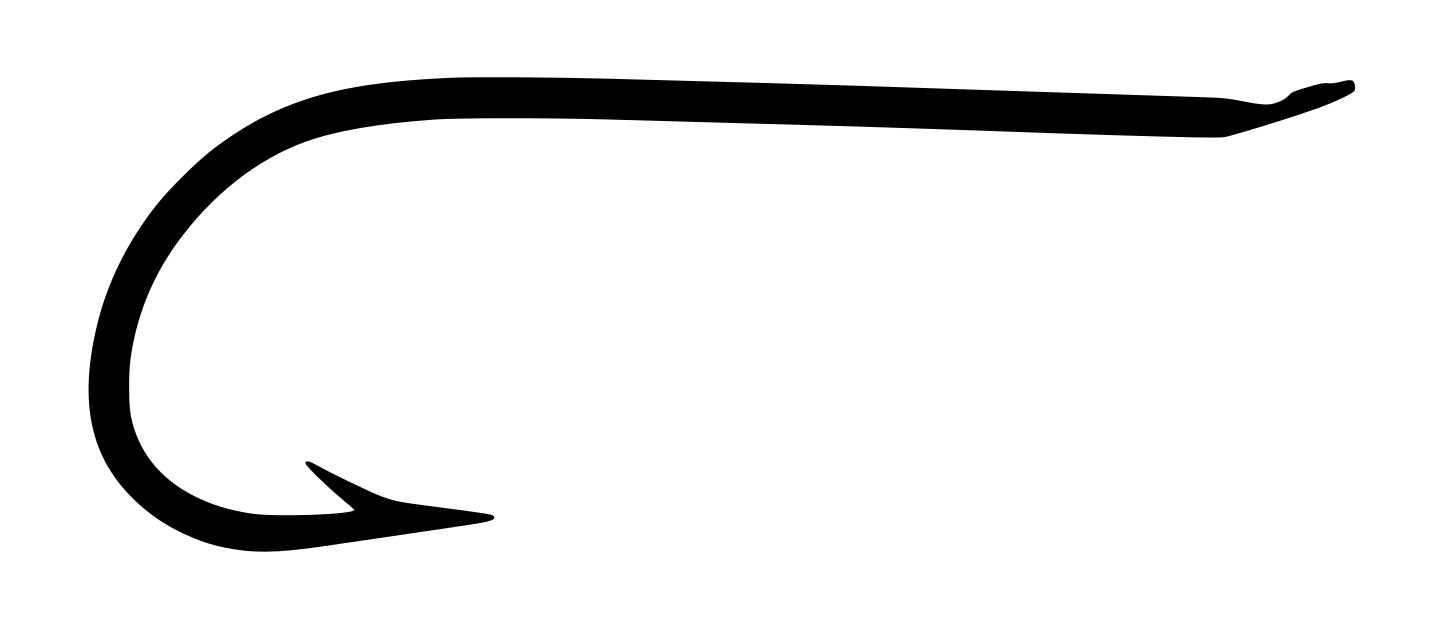
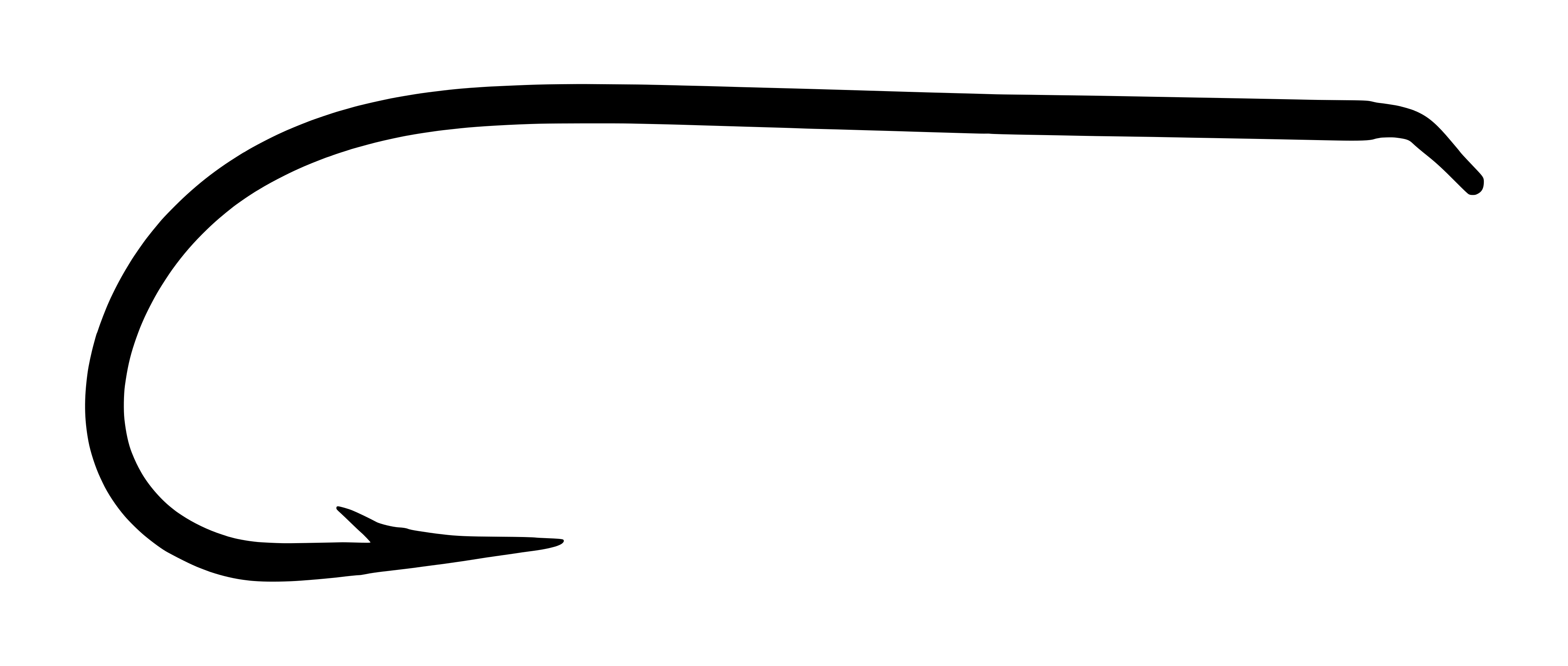
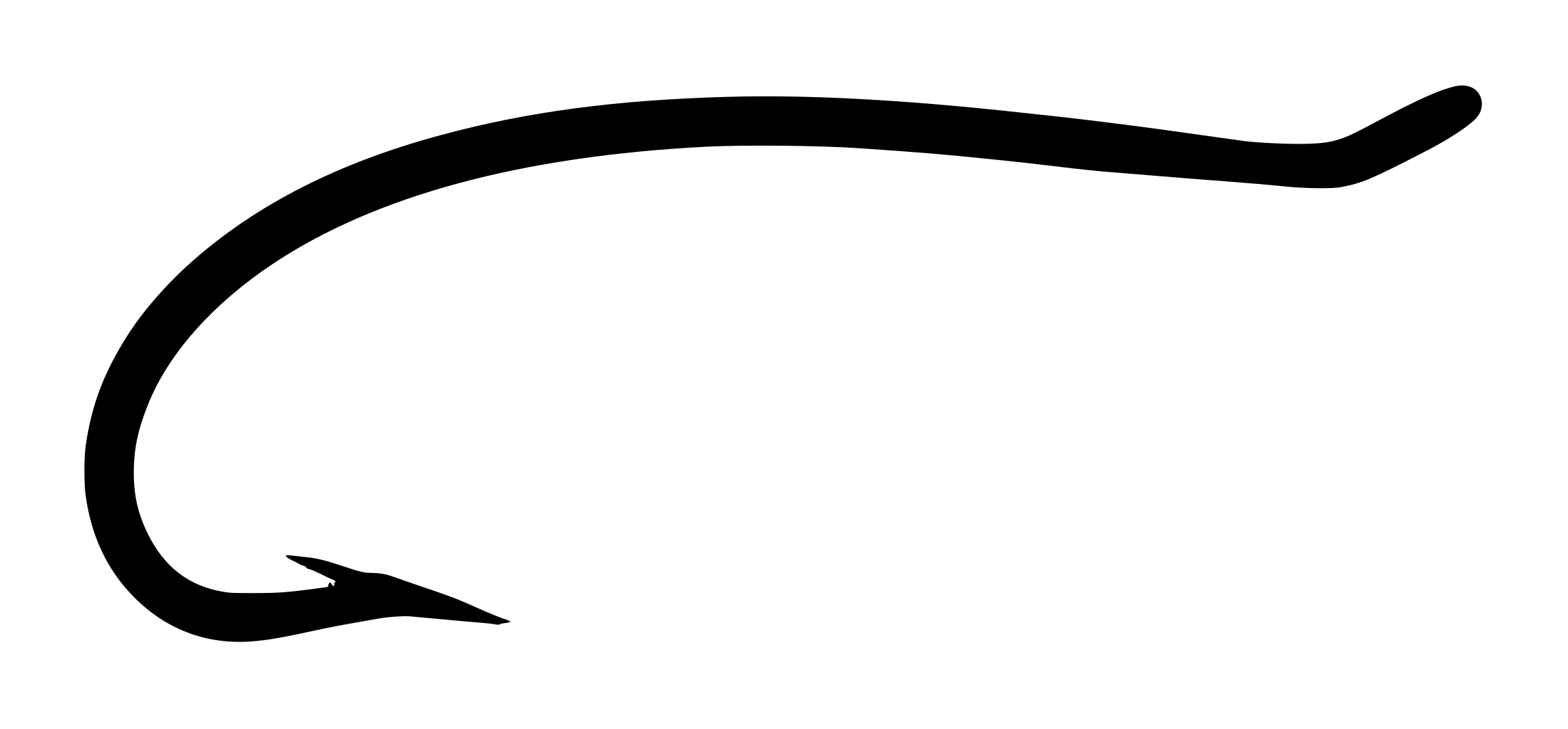
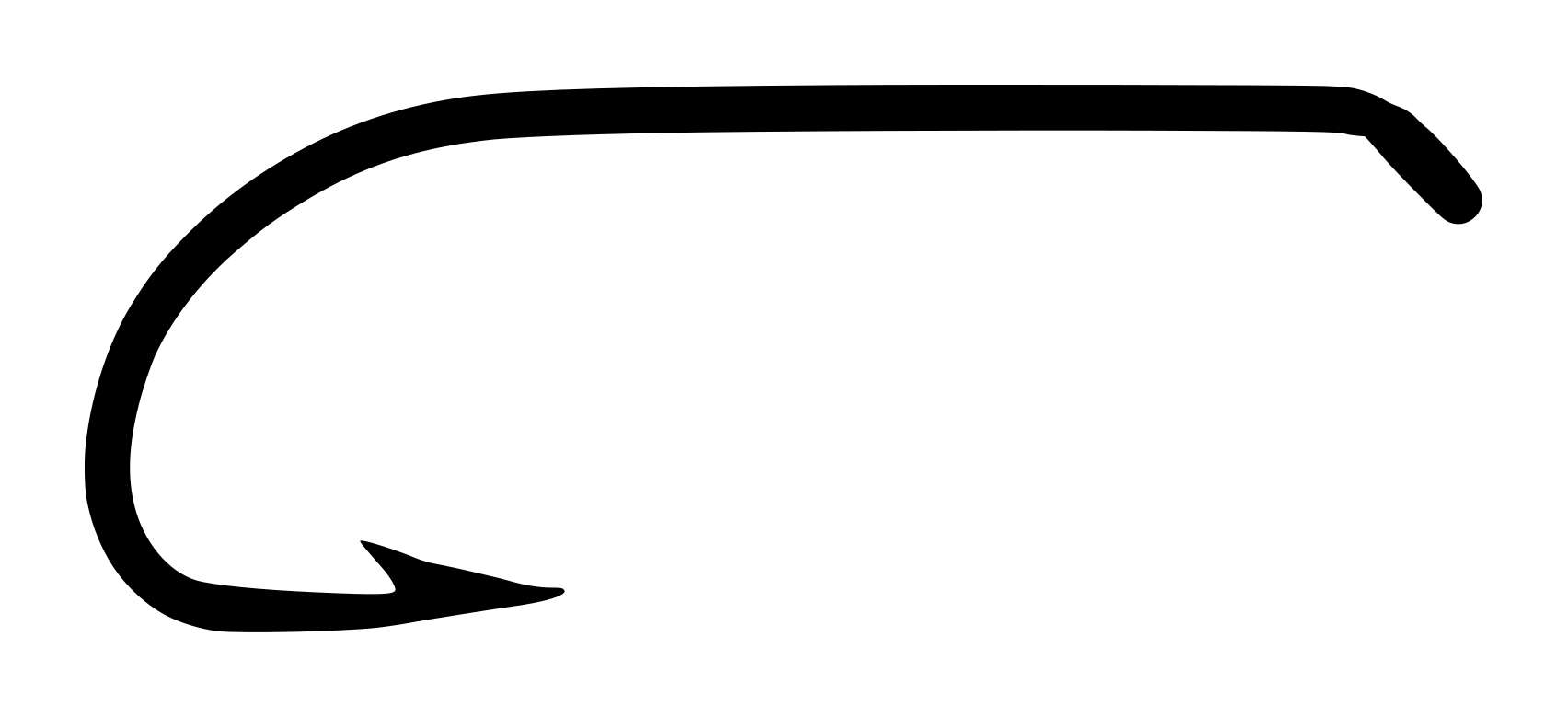
Allcocks L220 Gilt, size No. 4 — a classic mid-20th-century Sproat-bend salmon and sea trout hook manufactured in Redditch, England. The L220 series represents Allcocks’ quality production line, featuring a turned-up loop eye and standard-gauge wire typical of British wet-fly and salmon patterns from the 1950s-1960s.
What distinguishes this specimen is the gold-plated (gilt) finish, a luxury option that was less common than bronzed or blued equivalents. The warm amber tone visible in the photograph confirms the plating was well-executed. This finish choice reflects both the angler’s preference for visible shimmer in the water and the manufacturing era when such finishes were marketed as premium options.
The packaging — a kraft envelope with offset-printed label featuring the iconic Allcocks deer mark and ‘Made in England’ statement — dates to approximately 1950-1970. The absence of a barcode and the period typography are strong era indicators. This is a working hook from the classic era of British tackle craftsmanship, sought by fly tyers and collectors interested in mid-century salmon and steelhead patterns.
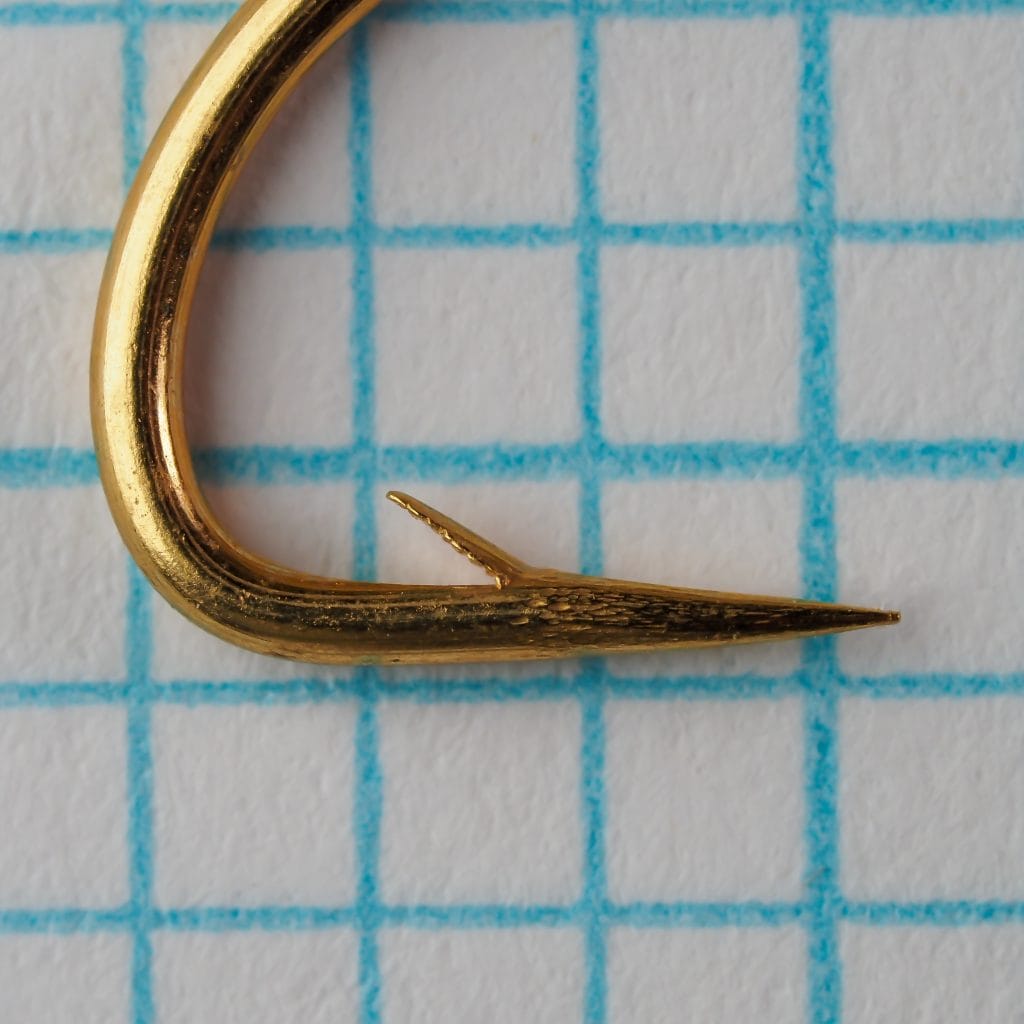
Close-up of the Allcocks L220 hook point showing the hollow point geometry, barb placement, and gold-plated finish on measurement grid.
Photographic record
5 cataloged imagesSelect any record to load it above.
5 images shown
Allcocks L220 Size No. 4 Point Detail Gold-PlatedClose-up of the Allcocks L220 hook point showing the hollow point geometry, barb placement, and gold-plated finish on measurement grid.Open originalAllcocks L220 Size No. 4 Full ProfileFull-length profile view of the Allcocks L220 hook showing the Sproat bend, turned-up loop eye, and shank proportions on measurement grid.Open originalAllcocks L220 Size No. 4 Two Hook SpecimensComparison view of two Allcocks L220 hooks showing consistency in bend profile, eye construction, and gold plating finish.Open originalAllcocks L220 Original Packaging and SpecimensOriginal kraft paper envelope with offset-printed label showing the Allcocks L220 designation, Gilt finish, and company branding, with two hook specimens displayed on grid below.Open originalAllcocks L220 Packaging Label DetailFull view of the original Allcocks L220 Gilt packaging label showing all printed text, the iconic deer trademark, and maker's details.Open original
Technical profile
Turned up Looped | Sproat | 1X long | Standard Wire | Hollow Point | Gold-plated
Eye
Looped Eye, Turned Up
Wire
Standard, Round
Shank
1X Long — Plain
Bend
Sproat, Standard gapClassic Sproat profile with rounded bottom sweep, typical of Allcocks production. Shallow to moderate depth relative to gap width I.
Point
Hollow Point (concave inner face)
Finish
Gold-Plated — Confirmed (stated on packaging)Gold-plated finish with warm amber tone visible in photograph. Coating uniform across shank and bend. Finish name stated explicitly on original packaging as 'Gilt' V.
Original kraft envelope intact with clean, legible label. Minor edge creasing and light tone aging consistent with ~60-year storage. Hooks bright gold with no corrosion or plating loss visible on specimens shown. All hooks accounted for in images provided (2 visible on grid). Original tissue or inner wrapping not visible but envelope closure intact.
The Allcocks L220 features a hollow point geometry — a concave inner face that creates a cutting edge similar to a surgical blade. This geometry was (and remains) superior for penetration in tough mouth tissue, particularly valuable when targeting large migratory fish like salmon and sea trout that require reliable hook-up even in adverse conditions (rocks, current, heavily scaled jaws).
The Sproat bend is characterized by a rounded-bottom arc with moderate depth relative to the gap width. This geometry distributes pressure more evenly across the bend than sharper, more angular bends, reducing the risk of straightening under load — a critical consideration when fishing large flies on heavy tippet against powerful fish.
The gold-plated finish serves both aesthetic and practical purposes. The warm amber tone theoretically presents better visibility in clear water and bright conditions compared to cool-toned finishes like nickel or blued. The plating also provides corrosion resistance and reduces the visibility of the metal itself, which some anglers believed improved fish acceptance. Gold plating requires more labor than simple bronzing or bluing, making it a premium-priced option.
Standard wire gauge was optimized for the balance between strength and adequate hook opening for fly-tying purposes. The size No. 4 accommodates flies tied with #16-18 thread and moderate dubbing bulk — ideal for palmered wet flies, soft-hackle patterns, and conventional salmon flies of the era.
We have measurement for size 4. Know any others? Submit calipered measurements and we'll review and add them. Thank you!
Historical context
allcock
S. Allcock & Co. Ltd., Redditch, England was one of the major British fishing tackle manufacturers of the 19th and 20th centuries. Founded in the heart of Redditch’s hook-making tradition, Allcocks became known for quality forged hooks and innovative fishing equipment. The company operated from their Redditch works and maintained a reputation for precision manufacturing and finish quality.
Allcocks produced a wide range of patterns for both freshwater and sea fishing, with particular strength in salmon and sea trout hooks. The L-series designations (L210, L220, L310, etc.) were among their catalog standards. The company remained independent through much of the 20th century before consolidation in the modern era. Gold-plated and specially finished hooks were part of their premium product line, marketed to anglers who valued aesthetic presentation and the theoretical visibility advantage in clear water.
Series History
The Allcocks L220 represents a standalone model in the Allcocks product range rather than part of a numbered series progression. The ‘L’ prefix indicates a quality production hook in the main catalog, while the ‘220’ was the specific model code. The Sproat bend was one of Allcocks’ core bend offerings, particularly suited to salmon wet flies and sea trout patterns.
The L220 was available in multiple finishes — bronzed (most common), blued, and gold-plated (gilt) as documented here. Quantity packaging was standardized at 100 hooks per card or envelope, following British tackle industry convention. Production appears to have spanned the 1950s through early 1970s, with consistent construction and finish quality throughout this period. No documented discontinuation is recorded; the model was likely superseded by modern synthetic-fiber tackle trends rather than being formally withdrawn.
Era and Packaging Dating
No barcode visible — standard indicator of pre-1974 manufacture. Packaging construction: light kraft paper envelope with printed label stock (offset lithography, bright colors, no digital markers). Logo style: classic Allcocks deer mark in period typography. Paper stock tone and print method consistent with 1950s-1960s British tackle packaging. No ZIP code or modern postal format visible. 'Made in England' statement is printed but not in modern regulatory format. Quantity marking ('Qty. 100') in period typeface. Overall evidence points to early-to-mid 1960s with plausible range 1950-1970.
The Gold Standard: Luxury Tackles of the Salmon Era
Gold-plated fishing hooks represented a luxury market segment in mid-20th-century tackle — a response to both practical and psychological angler concerns. While the warmth and brightness of gold plating offered theoretical visibility advantages in clear water, the premium price (typically 30-50% above bronzed equivalents) reflected the labor-intensive plating process. British tackle makers like Allcocks marketed gilt hooks to wealthy salmon and sea trout anglers, particularly in Scotland and Ireland, who viewed the finish as both a status symbol and a functional improvement. The practice faded as modern synthetic materials and hook designs became dominant, making surviving gilt-finished hooks increasingly rare and collectible.
Design lineage and influence
The Sproat bend originated in 19th-century British tackle design and became one of the most widely adopted profiles across manufacturers. Allcocks’ L220 represents the refinement of this traditional geometry in industrial-era production. The Sproat’s rounded bottom and moderate depth made it an ideal compromise between the strength of angular bends (like the Limerick) and the wide opening of round bends (like the Aberdeen), particularly valued for salmon and sea trout fishing where reliability under load was paramount.
The turned-up loop eye, standard on this model, reflects British tradition dating to the Bartleet loop innovation of the late 19th century. By the 1950s-60s, the loop eye was the dominant eye style on quality British hooks, offering superior strength and smooth knot seating compared to earlier blind-flatted (spade) eyes.
The gold-plated finish on the L220 was influenced by earlier specialty-finish practices on premium hooks, particularly in the saltwater market where tinning and plating were common. The application of gold plating to freshwater/migratory species hooks represented Allcocks’ attempt to capture a luxury segment during the post-war boom in recreational angling.
Best matchRelated by Attribute
Computed automatically from catalog data — updated as new hooks are added.
Matches: Bend, Shank, Wire, Eye, Eye Orient. +4 moreDiffers: Gap: Standard vs Narrow; Point: Hollow Point vs Standard / Spear; Finish: Gold-Plated vs Other
Matches: Bend, Shank, Wire, Eye, Eye Orient. +3 moreDiffers: Gap: Standard vs Narrow; Point: Hollow Point vs Standard / Spear; Finish: Gold-Plated vs Black Japanned +1 more
Matches: Bend, Shank, Gap, Eye, Eye Orient. +3 moreDiffers: Wire: Standard vs Fine (1X Fine); Point: Hollow Point vs Standard / Spear; Finish: Gold-Plated vs Black Japanned +1 more
Matches: Bend, Wire, Gap, Point, Forging +3 moreDiffers: Shank: 1X Long vs 2X Long; Eye: Looped Eye vs Tapered Eye; Eye Orient.: Turned Up vs Turned Down +1 more
The Allcocks L220 is a Sproat-bend hook designed for salmon, sea trout, and steelhead fishing. The gold-plated finish was a luxury finish in mid-20th-century tackle, valued by anglers who preferred the aesthetic appeal and theoretical brightness in water. The No. 4 size places this in the range suitable for larger wet flies, conventional salmon patterns, and steelhead spey flies.
Classic Fly Patterns
Named patterns specifically associated with this hook. Leave blank if none formally documented. Do not speculate — only include patterns with a confirmed association.
Modern Equivalents
Hook
Match Quality
Notes
Mustad 3906B
Good
Modern Viking-forged Sproat with standard wire and loop eye; closest contemporary equivalent in bend and size range
Partridge CS18/2
Very Good
Modern Redditch tradition Sproat; similar hook-up geometry and wire strength, though slightly different eye design
Tiemco TMC 300
Moderate
Modern salmon hook with similar application but different bend geometry and forging style
Collector notes
Rated 7.5/10 — Allcocks hooks are well-regarded by British tackle collectors and fly tyers, but production volumes were substantial. The gold-plated finish variant is less common than bronzed equivalents, adding collector appeal. Complete original packaging in this condition is the primary value driver; sealed cards command a significant premium over loose hooks or partially-depleted stock.
Reference value
$20 – $35 USD estimate
Packaging condition
Very Good — light wear, fully legibleRecorded specimen
Packaging format
GW-ACK-ENV-02Catalog code
Positive collectibility factors: (1) Redditch manufacture in the era of hand-finishing excellence; (2) Gold-plated finish is less common than standard bronzed or blued options, making this variant desirable to completist collectors; (3) Original packaging with clean label and maker’s mark clearly visible; (4) Size No. 4 is appropriate for display and functional fly-tying; (5) Strong appeal to salmon and sea trout fly tyers who value period-appropriate materials.
Limiting factors: (1) Allcocks produced in large industrial quantities, reducing scarcity; (2) No. 4 is a standard size (not exceptionally rare); (3) Sproat bend was their most common bend family; (4) Loop eye was standard production — no blind-eye or specialized construction to elevate rarity; (5) Individual hooks without packaging command minimal premium.
Condition factors affecting value: Sealed or near-sealed envelope with complete 100-count and legible label: market top tier. Opened envelope with 90%+ hooks present and clean label: strong value. Missing hooks (80% complete or less) or label damage: moderate value loss per hook missing. Loose hooks without packaging: commodity pricing, primarily functional value to tyers.
Desirable variants: The gilt finish commands a small premium (10-20%) over standard bronzed equivalent. Size No. 4 is more desirable than very small or very large sizes in this series. Complete quantity (100 hooks) in original packaging significantly outvalues partial stock.
Packaging
Light kraft paper envelope, folded construction, with offset-printed label adhered to front. Label ground color: bright green (period color standard for Allcocks quality lines). Label border: orange-red rule frame. Text printed in black and red. Front label displays: 'L220' (upper left, large blue type), Allcocks deer mark (center, rust-red), 'Qty. 100' (upper right, red), 'Made in England' (top center, red), 'ALLCOCKS' (center, bold black), 'Gilt' (center, blue script), 'No. 4' (left side, large blue), 'Fish Hooks' (center-right, red), and 'S. Allcock & Co. Ltd., Redditch, England' (bottom, black). Envelope shows light aging and minimal creasing consistent with storage in original packaging. No barcode, price marking, or modern regulatory text visible.
Market Value Notes
Low ($20): Good condition — opened envelope, 90% hook count present, label intact but light wear. High ($35): Excellent condition — original sealed or near-sealed envelope, complete 100-count, label crisp and legible. Premium factors: gold-plated (gilt) finish variant, original period packaging with maker's mark clearly visible, complete quantity, No. 4 size (functional for fly tyers). Platforms: eBay (primarily UK and US), specialist tackle dealers, online auction. Confidence: V verified — based on eBay sold data (Apr 25, 2023 – Apr 24, 2026), avg $27.95, range $27.95 - $27.95. Single confirmed transaction indicates narrow market activity; estimate reflects this limited dataset with expectation of ±$5-8 variance for condition and completeness.
Where to Find
eBay UK (tackle collectibles category), specialty British vintage tackle dealers, online fishing history forums, regional UK tackle auctions. Search terms: 'Allcocks L220', 'Allcocks gilt hooks', 'vintage salmon hooks Redditch'. Less commonly appears in US eBay auctions; European sellers typically have greater stock.
Collector's Identification Tips
Positive identification markers: (1) Green kraft envelope label with printed ‘L220’ in left corner P; (2) Allcocks company name and deer trademark clearly visible V; (3) ‘Gilt’ printed in handwritten or script style beneath the company name V; (4) ‘Made in England’ and ‘Redditch, England’ statements P; (5) Qty. 100 marking standard for this package format P; (6) Turned-up loop eye visible in specimens P.
Variant detection: Allcocks L220 was produced in at least three finishes — bronzed (most common, warm brown tone), blued (cool grey tone), and gilt (gold-plated, warm amber — this example). Original packaging will state the finish on the label. The bend profile and eye type remain consistent across finishes.
Condition assessment: Original kraft envelope in good condition should show even color and legible printing. Hooks should display uniform gold tone with no rust or corrosion (the plating protects against oxidation). Missing hooks reduce value proportionally; a complete 100-count card in original envelope is worth significantly more than an opened partially-depleted package.
eBay market reference. Researcher-curated. Prices in USD.
Preservation
Storage and Preservation
Store the original kraft envelope in a cool, dry location away from direct sunlight and moisture. The gold-plated finish is more resistant to oxidation than bronzed finishes, but humidity exposure can still damage the packaging and promote patina on any unplated wire surfaces. Keep away from aggressive desiccants that may dry out and crack the paper envelope.
If the envelope is opened, store individual hooks in an acid-free paper envelope or small glassine packet to minimize air exposure. Do not use PVC-containing plastics, which can promote corrosion. Avoid contact with copper, brass, or other dissimilar metals that can cause galvanic corrosion of the steel wire beneath the gold plate.
The original packaging — the kraft envelope with printed label — is a significant part of the hook’s collecting value. Preserve it intact rather than transferring hooks to modern containers. If packaging shows mold or severe damage, consult a conservator before attempting restoration. Light color shifts and edge wear on the envelope are normal aging and do not significantly diminish value when the label remains legible.
Display specimens should be protected from humidity fluctuations. If stored long-term, inspect annually for any sign of rust creep beneath the gold plate; this is extremely rare on plated hooks but indicates a need for improved environmental control.
Primary Source
Packaging Text Analysis
Source: Allcocks L220 Gilt packaging label, front face (V)
‘Gilt’ designation: The term ‘Gilt’ (printed in blue script on the label) is the British English and period-appropriate term for gold-plated finish. This is distinct from ‘Gold Plated’ terminology that would appear on later American packaging. The use of ‘Gilt’ confirms both British manufacture and mid-20th-century dating — modern packaging would use ‘Gold Plated’ or ‘Gold Finish’.
‘Made in England’ statement: This text is present on the label in period typeface but formatted without modern regulatory language. No country-of-origin law enforcement dates are noted, suggesting production before mandatory labeling requirements became standardized (post-1970s in many markets).
‘S. Allcock & Co. Ltd., Redditch, England’: The full legal entity name and city-plus-country format is typical of 1950s-1960s British packaging. Later labels might use only ‘Allcocks’ or include a postal code. The consistent use of ‘Ltd.’ (Limited company) confirms formal corporate registration.
‘Qty. 100’ marking: The emphasis on quantity in large print reflects the tackle industry’s standard packaging convention. Allcocks typically supplied hooks in 100-count units for wholesale distribution and retail sale, distinguishing from smaller 25- or 50-count cards used for some specialty patterns.
Marking Analysis
Handwritten Marks and Annotations
No handwritten marks, prices, or collector annotations are visible on the original packaging provided. The label is entirely printed (offset lithography), including the ‘Gilt’ designation, which appears to be printed in blue script typeface rather than handwritten. This indicates factory-printed production with no subsequent retailer or collector markup notations — a favorable sign for collectors seeking original, unaltered specimens.
The absence of pencil notations or ink markings on the envelope suggests careful storage by the original or early owner, or alternatively, that this was stock merchandise that remained in dealer inventory or storage rather than being well-used and passed among collectors.
Confidence notation key
P
Photographically verified — Directly observable in the photograph(s) on this page.
V
Verified by documentation — Confirmed by manufacturer catalog, spec sheet, or published reference.
I
Inferred — A logical deduction from observable or documented evidence, not directly stated.
E
Estimated — An approximation based on visual comparison, proportional analysis, or limited data.
S
Speculative — A reasoned hypothesis that cannot be confirmed from available evidence.
Claims with no notation are confirmed by multiple independent sources. All photographs on garrenwood.com are taken on a measurement grid where each square equals 1/10 inch (0.1″ / 2.54 mm).