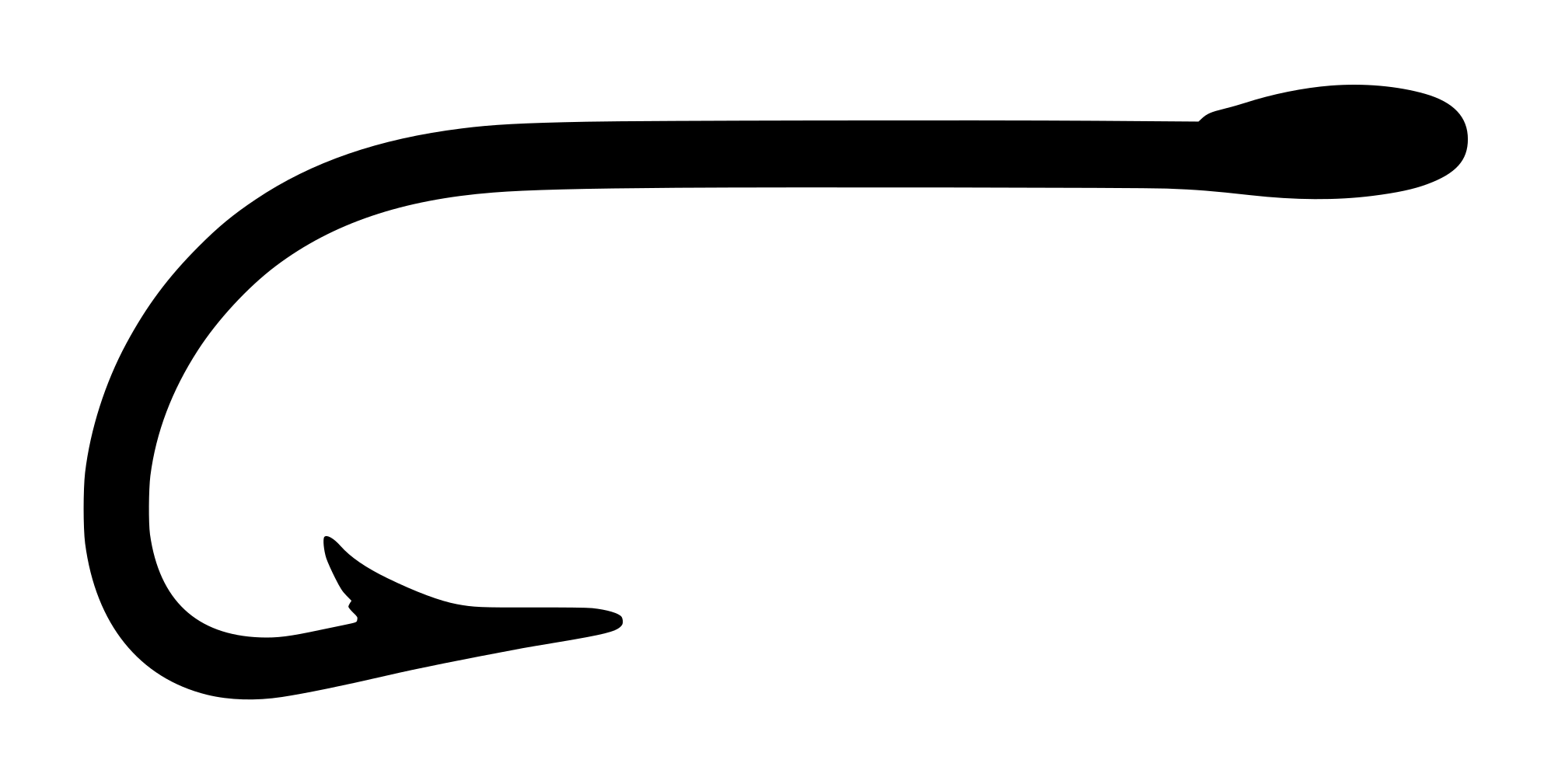
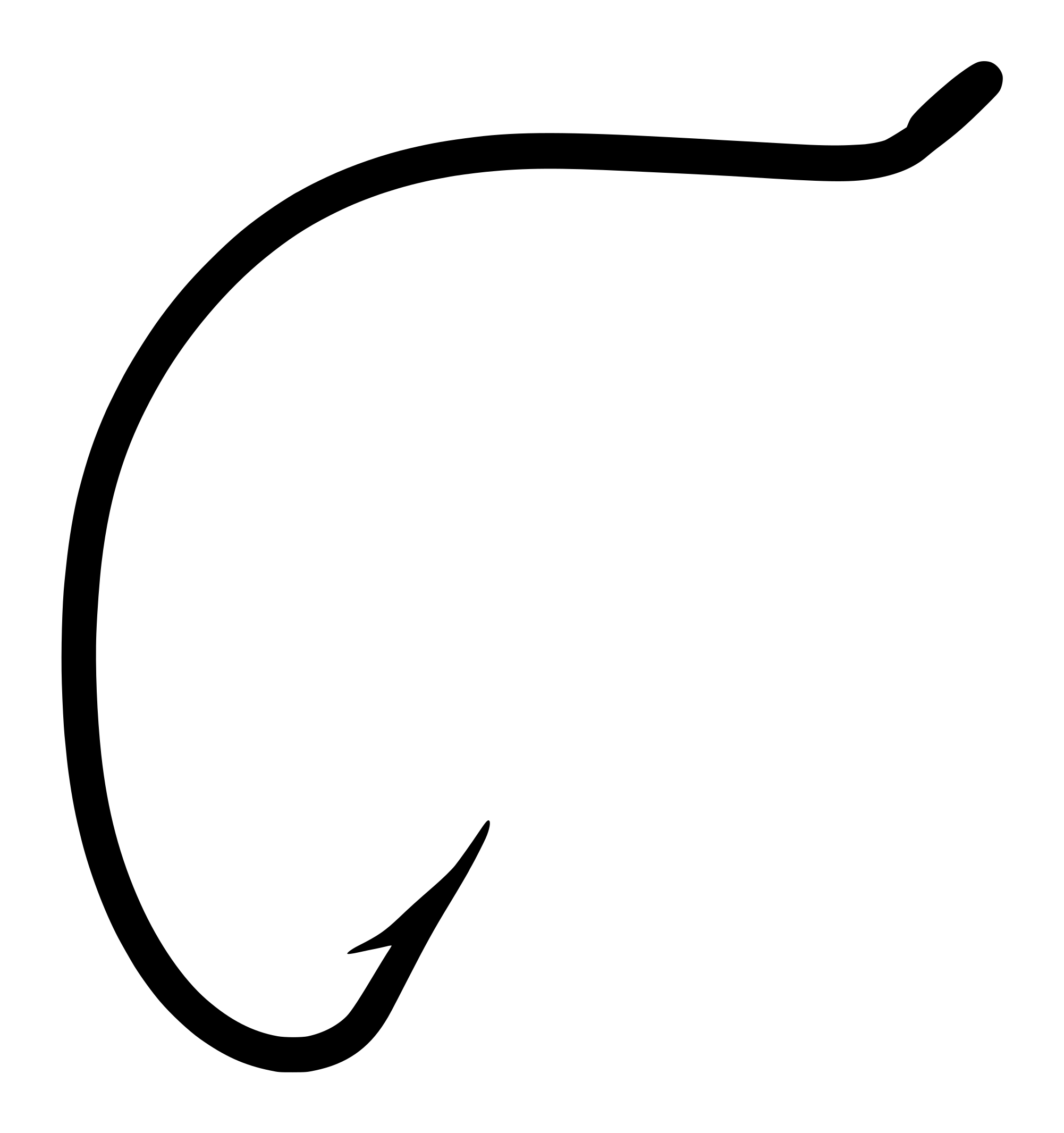
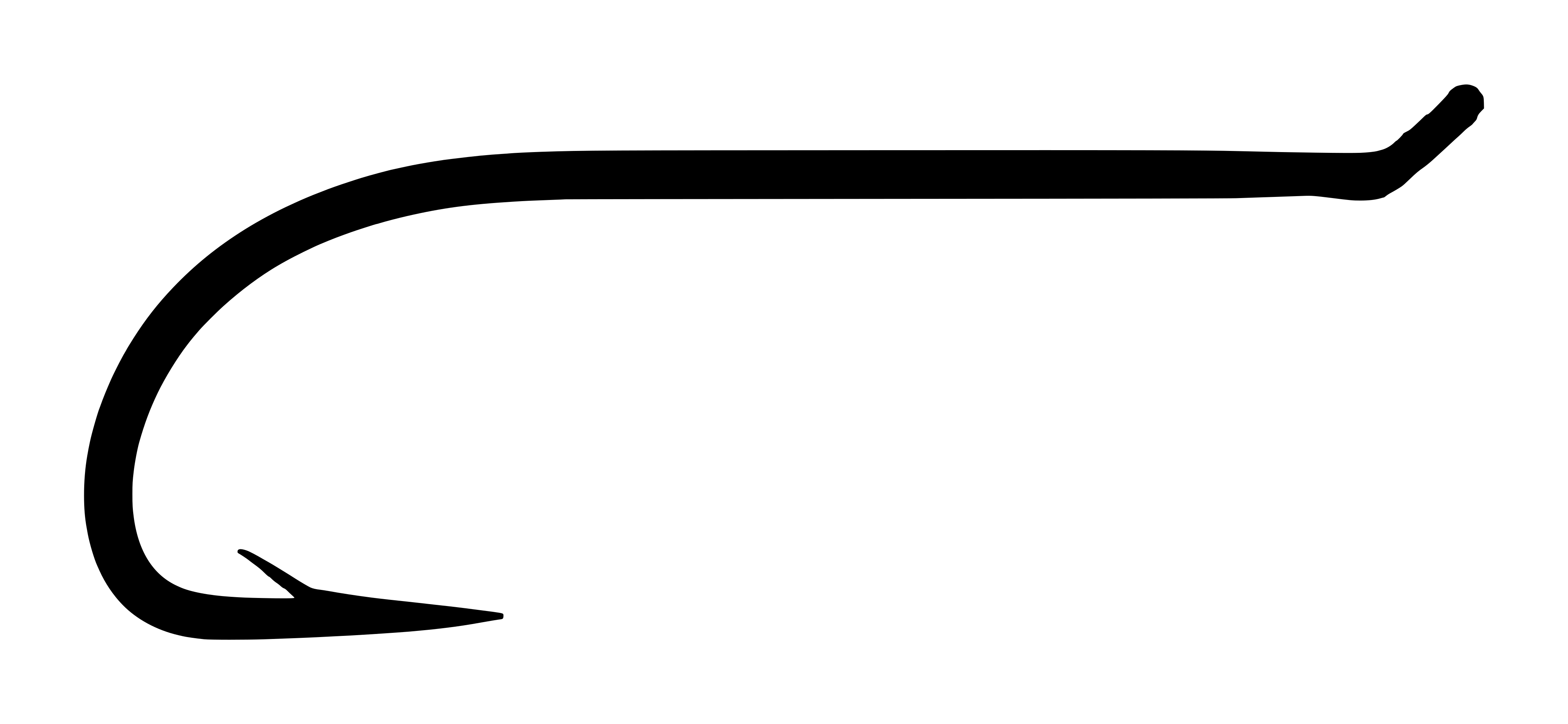
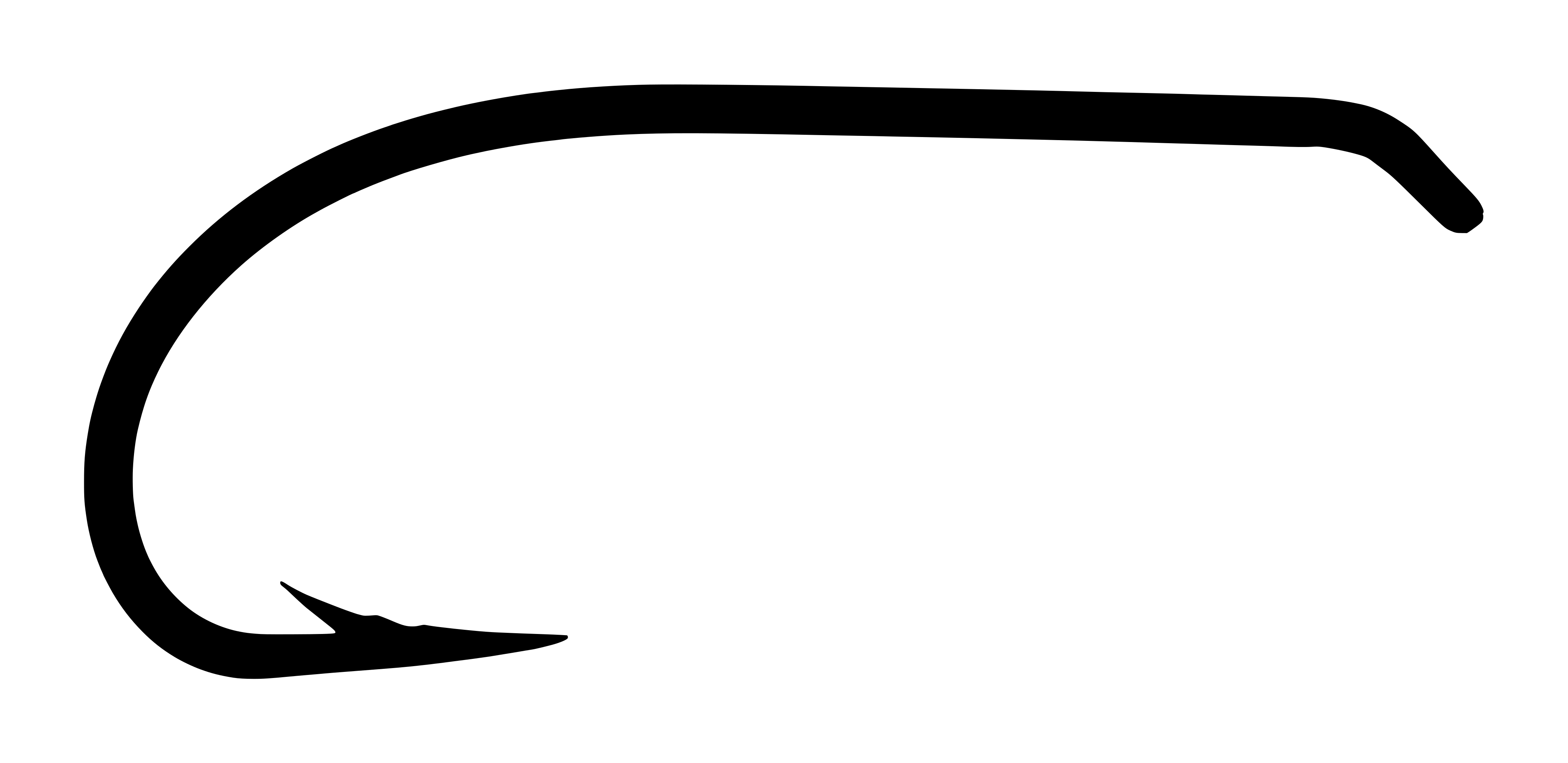
The Mustad 3228 Virginia Hook represents a traditional American saltwater pattern manufactured by the Norwegian industrial giant O. Mustad & Son during their mid-20th century dominance of the global hook market. This size No. 7 specimen features the characteristic long shank and superior point design that made the Virginia bend a favorite for bottom-feeding species along the Atlantic coast P.
The flatted (blind) eye construction with stamped ‘M’ mark exemplifies traditional European craftsmanship, where leaders were snelled directly to the shank rather than tied through a wire loop. The blued finish provided the dark, non-reflective appearance preferred by saltwater anglers, though it offered less corrosion resistance than bronze alternatives P.
Dating to approximately 1940s-1960s based on the distinctive green Key Brand packaging with Oslo address, this hook documents Mustad’s systematic cataloging of regional fishing patterns from around the world. The Virginia bend’s specific geometry – with its slight kirbed offset and rounded profile – was engineered specifically for the tough-mouthed species common in American coastal waters I.
Mustad-3228-Box-and-Label-Size-7
Photographic record
8 cataloged imagesSelect any record to load it above.
8 images shown
Mustad-3228-Box-and-Label-Size-7Mustad-3228-Box-and-Label-Size-7Open originalMustad-3228-Flatted-Eye-Size-7Mustad-3228-Flatted-Eye-Size-7Open originalMustad-3228-Hook-Point-Size-7Mustad-3228-Hook-Point-Size-7Open originalMustad-3228-Hook-Size-7Mustad-3228-Hook-Size-7Open originalMustad-3228-Box-and-Label-size-3Mustad-3228-Box-and-Label-size-3Open originalMustad-3228-Flatted-Eye-size-3Mustad-3228-Flatted-Eye-size-3Open originalMustad-3228-Hook-Point-size-3Mustad-3228-Hook-Point-size-3Open originalMustad-3228-Hook-size-3Mustad-3228-Hook-size-3Open original
Technical profile
Eye
Blind — FlattedFlatted end is cleanly formed with sharp, clear 'M' stamp indicating proper die work. No cracks or deformation visible around the flattened area P.
Wire
Heavy (1X Heavy), Round
Shank
Standard — Plain
Bend
Standard gap, Offset / kirbedVirginia bend shows characteristic rounded profile with slight kirbed offset to left. Bend maintains consistent curve without flat spots or angular transitions P.
Point
Superior (near-straight inner taper)Single barb of moderate size positioned close to point. Clean cut with appropriate angle for secure holding without excessive tissue damage P.
Finish
Blued — Confirmed (stated on packaging)Blued finish displays the characteristic dark blue-black coloration with subtle iridescent highlights. Finish appears uniform with no significant wear or corrosion on specimen P.
Hook specimen shows excellent condition with intact blued finish. Original packaging shows moderate aging with some corner wear but remains structurally sound with clear, readable graphics.
The Virginia bend’s engineering reflects specific functional requirements for bottom fishing applications. The long shank provides leverage for hook setting in tough-mouthed species while offering better bait presentation and easier removal. The superior point geometry – with its nearly straight inner taper – provides excellent penetration while maintaining strength under lateral stress P.
The flatted eye construction, while labor-intensive to manufacture, offered superior strength compared to formed wire loops and allowed for snelled leader attachment that distributed stress across a larger area of the shank. The heavy wire gauge and blued finish were selected specifically for saltwater durability, though the bluing process provided more aesthetic than corrosion-resistant benefits compared to bronze alternatives.
We have measurement for size 7. Know any others? Submit calipered measurements and we'll review and add them. Thank you!
Historical context
mustad
O. Mustad & Son was founded in 1832 by Ole Mustad in Gjøvik, Norway, and grew to become the world’s largest fishhook manufacturer by the early 20th century. The company’s industrial approach to hook production, combined with systematic metallurgy and quality control, allowed them to dominate global markets and establish the ‘Mustad Standard’ for hook nomenclature and specifications.
Operating from their Gjøvik factory with additional facilities in Oslo, Mustad employed hundreds of workers and produced millions of hooks annually by the 1940s. Their strategy of cataloging and manufacturing regional hook patterns from around the world – including American designs like the Virginia bend – made them the primary supplier to tackle dealers globally. The distinctive ‘M’ stamp became synonymous with quality and consistency in the fishing tackle trade.
Series History
The Mustad-Virginia Hook series was part of Mustad’s comprehensive American pattern line, developed to serve the growing North American fishing market in the early-to-mid 20th century. The Virginia bend itself was a traditional American saltwater pattern, characterized by its long shank and slightly rounded, kirbed bend geometry optimized for bottom-feeding species.
Mustad’s Quality 3228 designation placed this hook in their premium tier, featuring superior point geometry and heavy wire construction. The series was available in a full size range and remained in production through the 1960s, when modern manufacturing techniques and changing angling preferences led to the gradual discontinuation of many traditional flatted-eye patterns in favor of standard wire-loop eyes.
Era and Packaging Dating
Green Key Brand label with Oslo - Norway address and decorative flower border design. Typography and label construction consistent with mid-20th century Mustad packaging, before the company's major branding changes of the 1970s. No barcode indicates pre-1974 production.
The Anti-Counterfeiting Mark
The stamped 'M' mark on Mustad's flatted eyes wasn't just branding - it was an anti-counterfeiting measure. In the early 1900s, cheaper hooks from smaller factories often copied Mustad's tempering process and packaging, but couldn't replicate the precision die-stamping equipment needed to cleanly mark the hardened steel without cracking it.
Design lineage and influence
The Virginia bend traces its origins to 19th century American saltwater fishing traditions, particularly along the Chesapeake Bay and mid-Atlantic coast. The pattern was developed specifically for species like sheepshead, porgy, and flounder that required strong hooks with superior holding power in tough, bony mouths.
Mustad’s adoption of the Virginia pattern represented their strategy of cataloging successful regional designs and manufacturing them to industrial standards. Contemporary competitors like Allcock and Partridge offered similar American patterns, but Mustad’s consistent quality and global distribution network made their version the most widely available. The design influenced later bait hook development, though modern hooks have largely moved away from the traditional flatted eye construction.
Best matchRelated by Attribute
Computed automatically from catalog data — updated as new hooks are added.
The Mustad-Virginia Hook was specifically designed for bottom-feeding saltwater and freshwater species with tough mouths. The long shank and superior point made it ideal for bait fishing targeting porgies, sheepshead, flounder, and similar species along the American Atlantic coast. The flatted eye was designed for snelling with gut or heavy silk leaders P.
Secondary Applications
Traditional snelled streamers where the connection point needed to be concealed within the fly body
Classic Fly Patterns
Not typically used for fly tying
Modern Equivalents
Hook
Match Quality
Notes
Mustad 92641
Moderate
Similar bend geometry and long shank but with standard ball eye rather than flatted construction
Eagle Claw 181
Moderate
Comparable long shank bait hook design but with different bend profile and modern eye
Collector notes
Modest collecting interest driven by the Virginia bend's historical significance and the traditional flatted eye construction.
Reference value
$15 – $35 USD estimate
Packaging condition
Good — moderate wear, legibleRecorded specimen
Packaging format
MUS-KB-01Catalog code
The Mustad 3228 Virginia Hook holds moderate appeal for collectors interested in traditional American saltwater patterns and blind-eye construction. Positive factors include the historical significance of the Virginia bend pattern, the craftsmanship of the flatted eye with stamped ‘M’ mark, and the attractive green Key Brand packaging from Mustad’s mid-century period.
Limiting factors include the hook’s utilitarian nature and relatively common availability compared to more specialized patterns. The size 7 documentation is helpful, though collectors often seek complete size runs or unopened packages for maximum value.
Packaging
Vintage cardboard backing with green Key Brand label featuring decorative flower border. Label reads 'O. MUSTAD & SÖN MANUFACTURERS OSLO • NORWAY Qual. 3228 Superior Mustad-Virginia Hooks Flatted Blued Long shank Made in Norway'. Card shows moderate aging with some edge wear but label remains vibrant and fully legible.
Market Value Notes
Card with partial hook complement. Complete cards or unopened packages command higher prices. Condition of green label affects value significantly.
Authenticate by checking for crisp ‘M’ stamp in flatted eye – counterfeits often show poor die work. Green Key Brand label should have sharp flower border details and ‘SÖN’ spelling with umlaut. Quality 3228 designation should be clearly printed, not hand-stamped.
Preservation
Storage and Preservation
Store in a cool, dry environment to prevent corrosion of the blued finish. The blue-black oxidation coating is more susceptible to humidity damage than bronze or nickel finishes, so silica gel packets in storage containers are recommended. Original green Key Brand packaging adds significant collecting value – store hooks on card rather than loose to maintain provenance.
Avoid handling the flatted eye area excessively, as the stamped ‘M’ mark can wear with repeated contact. When displaying, position away from direct sunlight to prevent label fading. The cardboard backing is particularly susceptible to UV damage and should be stored flat in acid-free folders when not displayed.
Primary Source
Label Text Analysis
Source: Original packaging label, photographically documented
The green Key Brand label provides several important dating and authentication markers. The ‘O. MUSTAD & SÖN’ spelling with umlaut over the ‘O’ and period after ‘SÖN’ is consistent with mid-20th century Norwegian typography standards. The ‘OSLO • NORWAY’ address indicates production during the period when Mustad maintained significant operations in Oslo alongside their primary Gjøvik factory.
The ‘Qual. 3228’ designation places this hook in Mustad’s quality numbering system, which was used primarily from the 1930s through 1960s. The term ‘Superior’ refers specifically to the point geometry rather than overall quality grade. The decorative flower border pattern was characteristic of Mustad’s Key Brand subsidiary labeling during this era, distinguishing it from their main-line Mustad branding.
Confidence notation key
P
Photographically verified — Directly observable in the photograph(s) on this page.
V
Verified by documentation — Confirmed by manufacturer catalog, spec sheet, or published reference.
I
Inferred — A logical deduction from observable or documented evidence, not directly stated.
E
Estimated — An approximation based on visual comparison, proportional analysis, or limited data.
S
Speculative — A reasoned hypothesis that cannot be confirmed from available evidence.
Claims with no notation are confirmed by multiple independent sources. All photographs on garrenwood.com are taken on a measurement grid where each square equals 1/10 inch (0.1″ / 2.54 mm).