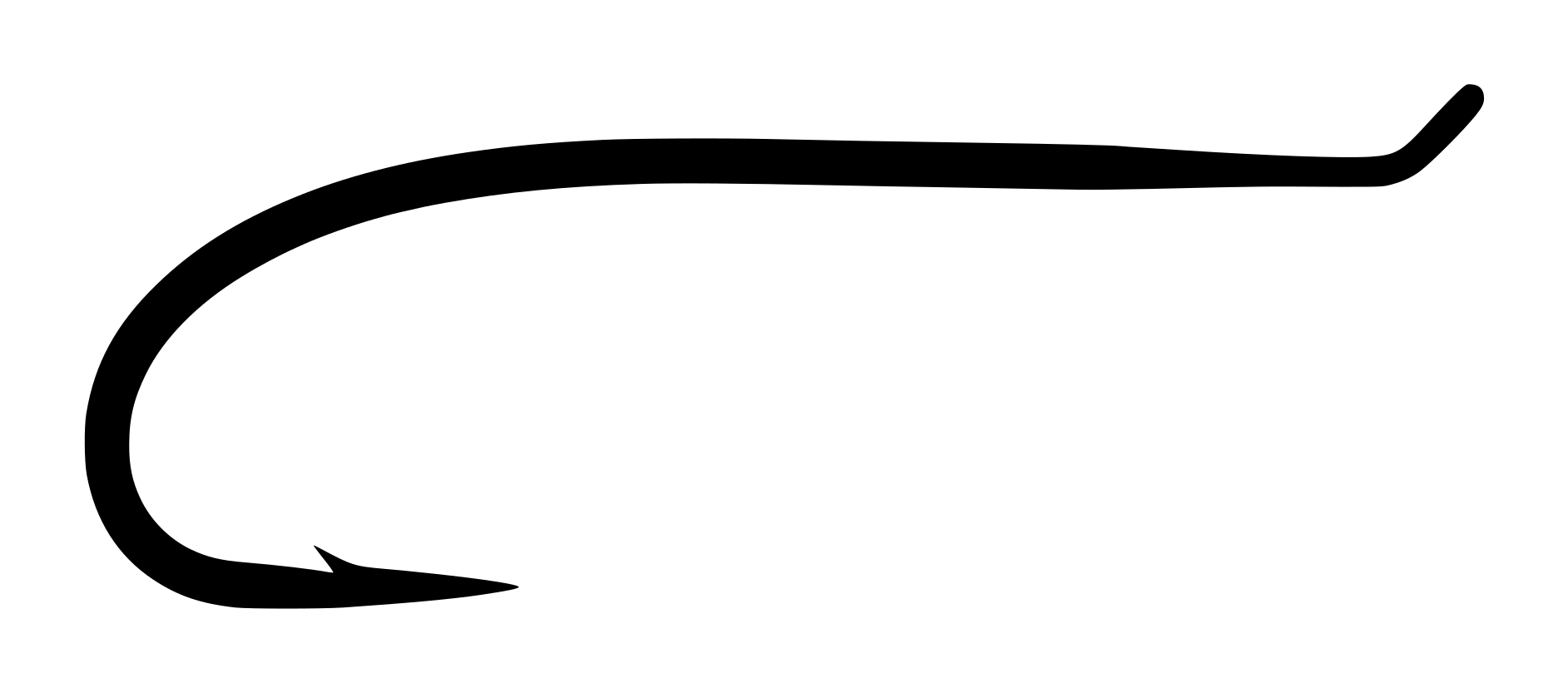
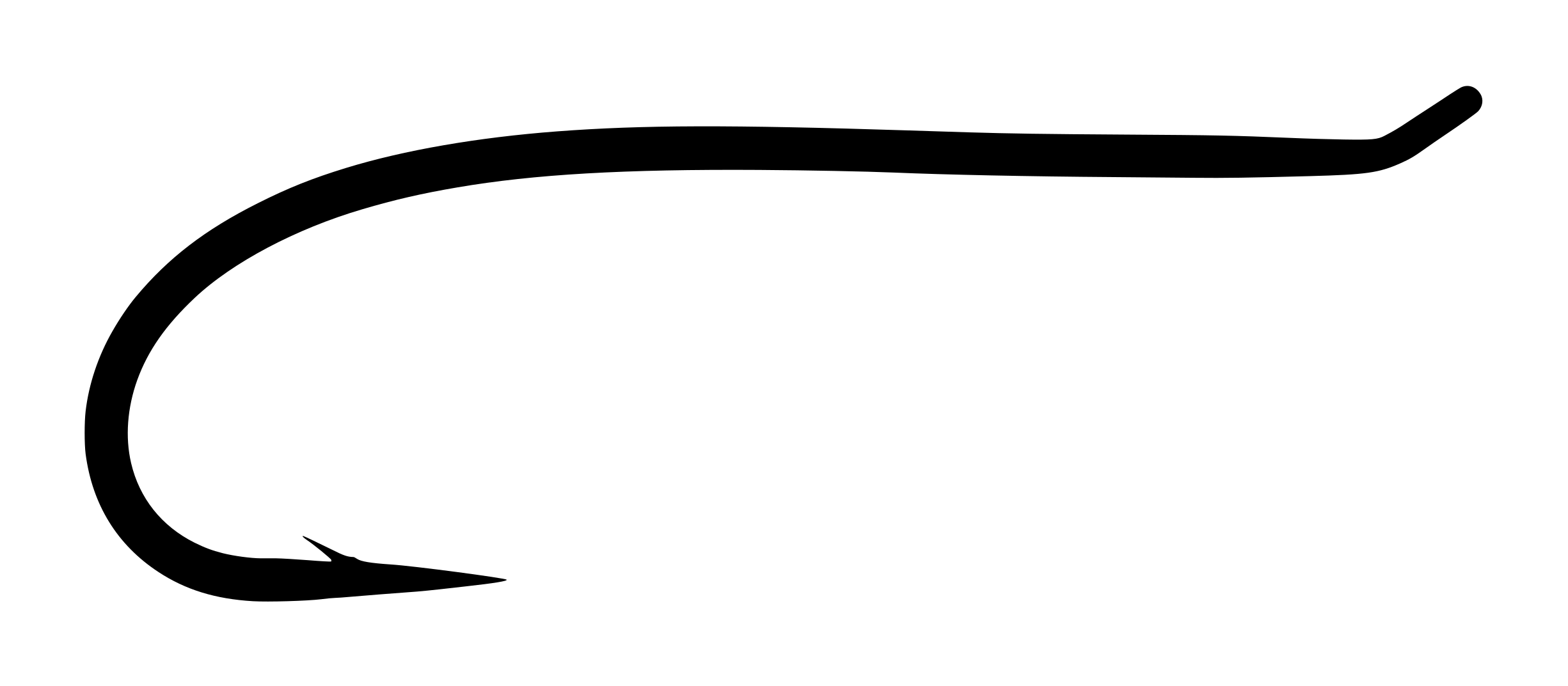
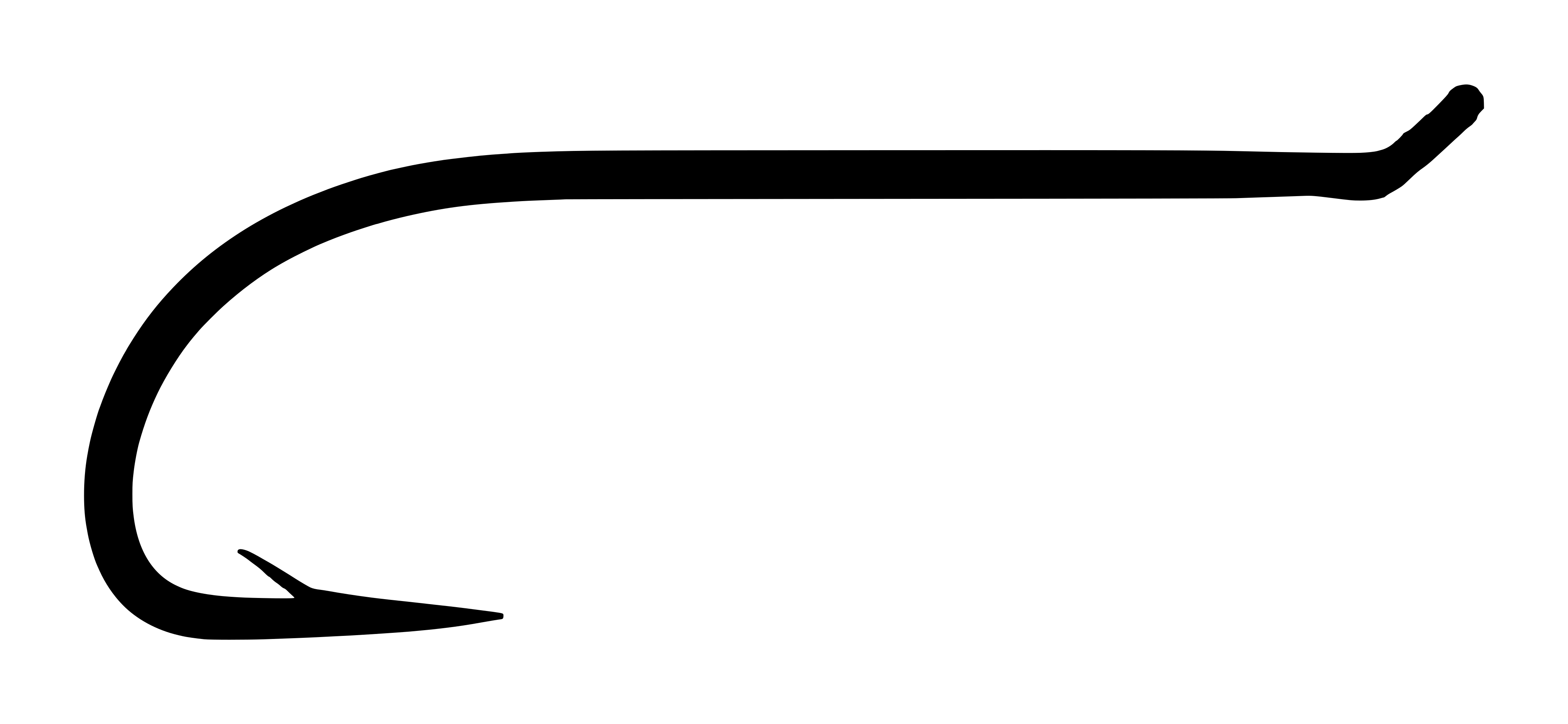
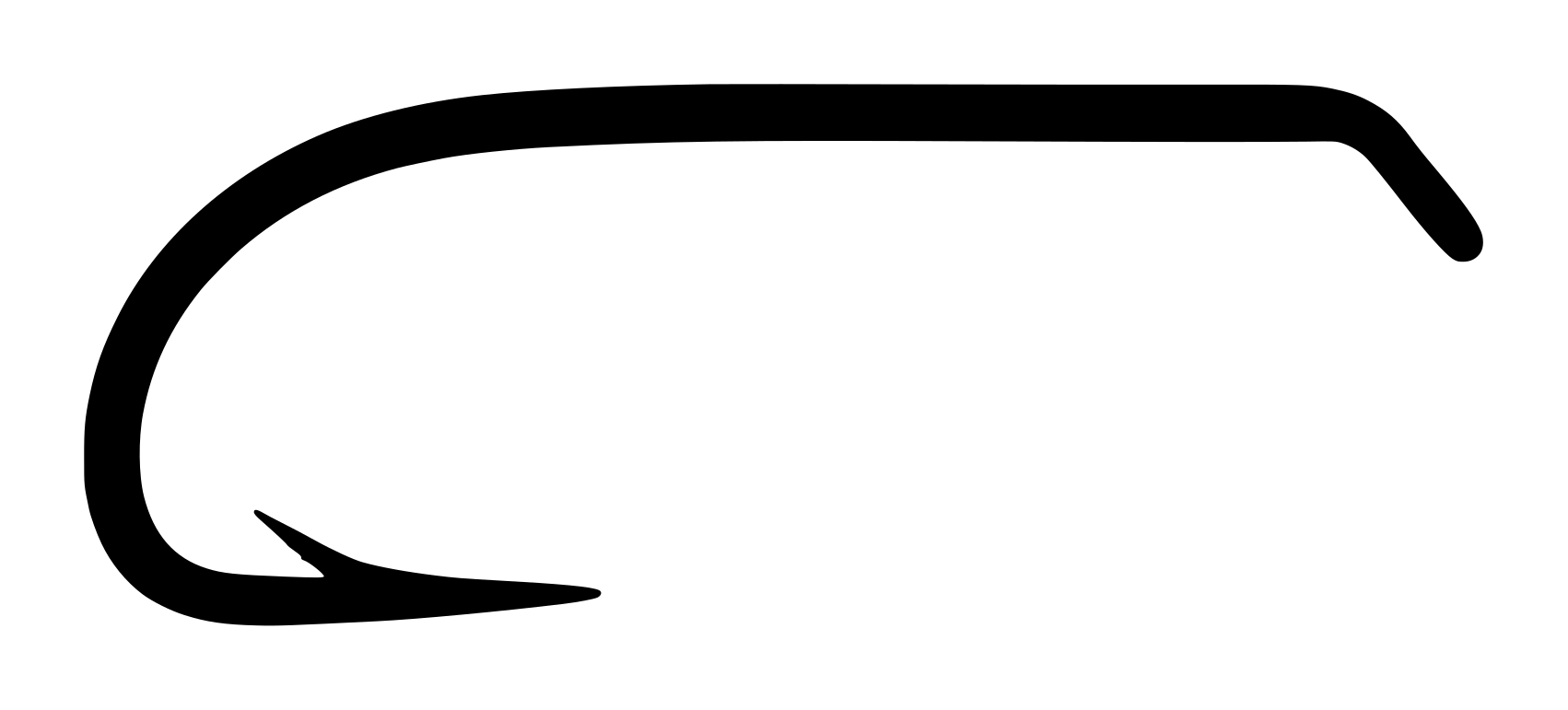
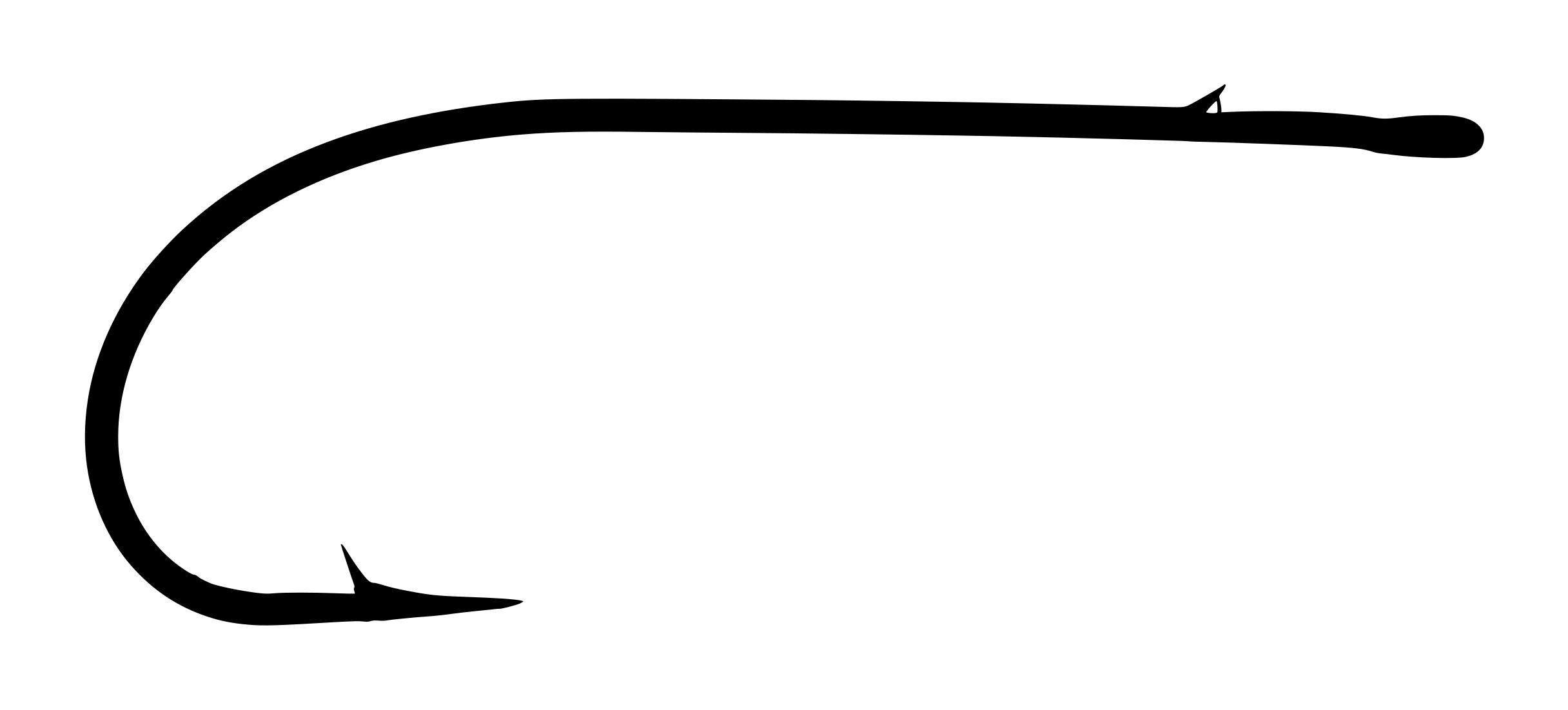
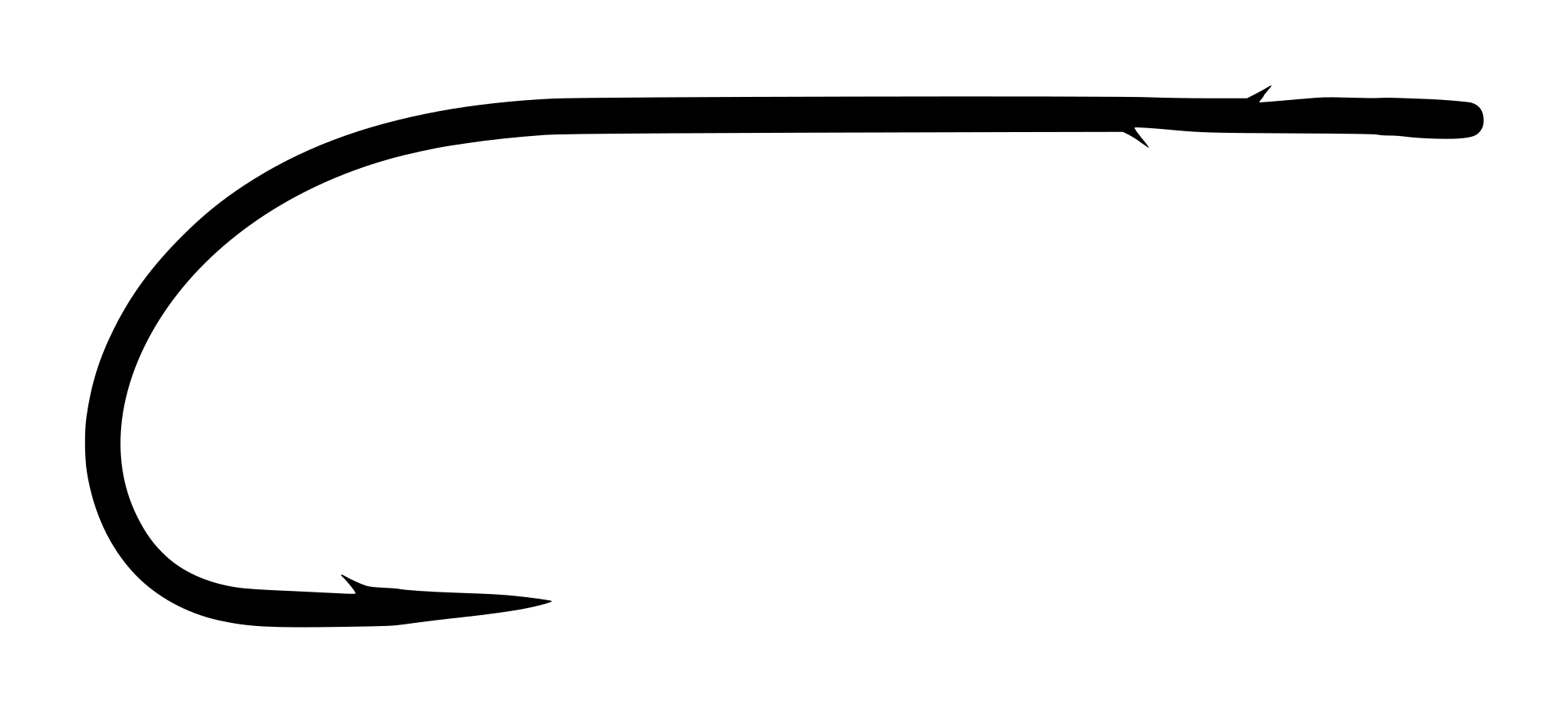
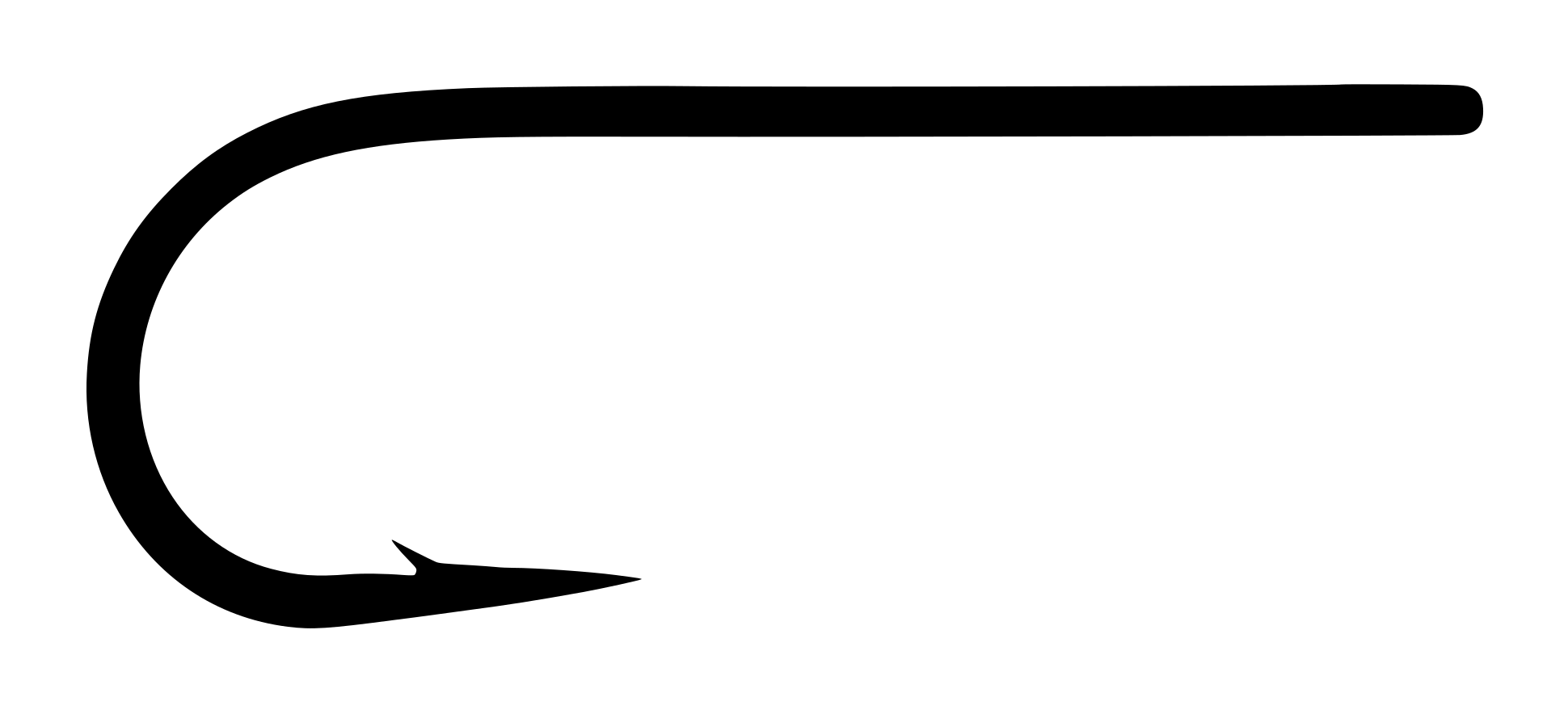
Gamakatsu T10-6H is a single-hook salmon design from the Traditional Series, marketed for salmon and sea-trout fly tying. The hook features a tapered looped eye turned up, Sproat bend, 1X long shank, standard wire gauge, and a standard spear point. The designation on the box identifies it as “Salmon, Tapered Looped Up Eye,” reflecting a specific lineage of British and Continental salmon fly construction.
The hook is packaged in a rigid manufacturer box with original labeling intact. Documented sizes are No. 1 (20-hook box, stock 73310-20) and 1/0 (10-hook box, stock 63411-10). The finish is specified as “Other” on the packaging label and appears as a dark blued or japanned surface in the photographs, consistent with traditional salmon hook practice.
The Sproat bend is a rounded-bottom form suited to single wet flies and salmon patterns. The narrow gap and 1X long shank place this design in the traditional salmon fly category, distinct from modern competition or indicator-nymph designs. The looped eye is a hallmark of pre-drawn leader attachment, typical of salmon fly construction from the mid-20th century onward.
Gamakatsu’s Traditional Series hooks emerged in the 1980s-1990s as the manufacturer positioned itself to serve fly tyers working within established British and European traditions. The T10-6H represents a Japanese interpretation of proven salmon fly forms, marketed to a growing international market interested in classic salmon fly tying.
Original Gamakatsu Traditional Series box for T10-6H salmon hooks, size 1/0, quantity 20.
Photographic record
8 cataloged imagesSelect any record to load it above.
8 images shown
Gamakatsu T10-6H Package Front Size 1/0Original Gamakatsu Traditional Series box for T10-6H salmon hooks, size 1/0, quantity 20.Open originalT10-6H Red Hook Looped Eye Side ViewRed-finished T10-6H with prominent tapered looped-up eye, viewed from side.Open originalT10-6H Black Hook Looped Eye Side ViewBlack-finished T10-6H with tapered looped-up eye, viewed from side.Open originalT10-6H Red Hook Profile and PointRed T10-6H displayed in profile showing sproat bend curvature and tapered point.Open originalT10-6H Black Hook Bend ProfileBlack T10-6H in profile view showing the sproat bend and shank taper.Open originalT10-6H Red Hook Full Bend ViewRed T10-6H displayed showing complete bend geometry and looped eye angle.Open originalT10-6H Black Hook Complete ProfileBlack T10-6H displaying full bend curvature and tapered point geometry.Open originalGamakatsu T10-6H Package Front Size 1/0 AltGamakatsu Traditional Series T10-6H box, size 1/0, quantity 10, stock number 63411-10.Open original
Technical profile
Turned Up Looped Eye | Sproat | 1X Long | Standard Wire | Standard / Spear Point | Other
Eye
Looped Eye, Turned UpThe looped eye is neatly formed and exhibits a smooth, consistent radius. The loop is turned upward at approximately 90 degrees relative to the shank plane, consistent with traditional salmon fly eye orientation P. The eye diameter appears proportional to the wire gauge, with no excess material or flaking. The taper of the loop is subtle but visible, indicating a deliberate drawing-down of the wire diameter as it forms the eye P.
Wire
Standard, Round
Shank
1X Long — Plain
Bend
Sproat, Narrow gapThe Sproat bend exhibits a gentle, rounded profile with no angular transitions or kinks P. The wire set is symmetric, with the point aligned with the shank plane. The bend depth is approximately 0.52"-0.58", placing it in the mid-range for Sproat bends of this size and shank length E. The curve from shank to bend bottom is even and stress-free, with no visual evidence of hard spots or inconsistent forging P.
Point
Standard / SpearThe barb is a short, cleanly cut form positioned just behind the point on the inside face of the bend P. The barb angle is approximately 45 degrees relative to the wire axis, sloping gently backward. This is a standard salmon fly barb geometry, sized and positioned to hold soft materials such as dubbing and fur bodies without excessive material damage P.
Finish
Other — Confirmed (stated on packaging)The hook finish is listed as "Other" on the packaging label, a non-specific designation that appears to indicate a blued or japanned dark finish. Photographically, the wire exhibits a cool, dark tone consistent with a thin bluing or light japanning process P. The finish is uniform across the shank and bend with no evidence of bright steel showing through. This dark finish is traditional for salmon hooks, serving both aesthetic purposes and providing modest corrosion resistance. The finish does not exhibit the warm amber-brown tone of a bronzed surface, nor does it show the high reflectivity of a nickel-plated hook. The cool dark tone and opacity are most consistent with a blued oxide or thin japanned lacquer I.
Box lid retains bright blue finish with no significant fading. Labels crisp and legible. Minimal creasing or wear to box structure. All 20 hooks present, bright with no corrosion or discoloration. Two size variants documented in boxes: Size 1 (stock 73310-20, qty 20) and Size 1/0 (stock 63411-10, qty 10). P
The T10-6H employs a standard spear point, which features a near-straight inner taper and a streamlined penetration profile. The point is formed by drawing the wire to a fine, symmetrical edge along both sides of the inner face. This geometry is distinct from the hollow point, which has a concave inner surface, or the beak-reversed point common to offset hooks.
The Sproat bend is a rounded-bottom form characterized by a gentle, uniform curve from the shank to the bend bottom. Unlike the angular Limerick, the Sproat provides a smooth stress distribution through the wire and is well-suited to single-hook fly patterns. The rounded bottom minimizes the catch points that can occur with sharper bend geometries, allowing fly materials to flow naturally around the hook profile.
The tapered looped eye is formed by drawing the wire past the point where the shank begins, then bending it back on itself in a smooth loop. The “tapered” designation indicates that the eye loop tapers slightly in diameter, reducing bulk at the eye attachment point. This construction allows the eye to accommodate a pre-tied loop knot or direct leader connection without excessive material buildup.
The 1X long shank provides approximately 25% additional shank length relative to a standard shank of the same hook size number. This extended shank accommodates larger fly bodies and allows for more elaborate tail and dubbing configurations while maintaining a proportional gap suitable for salmon and sea-trout fishing.
The narrow gap—approximately 0.40″-0.42″ on the Size 1 specimen—reflects the design intent for use with relatively fine tippets and smaller fish mouths than larger bass or pike patterns. The proportional shank-to-gap ratio of approximately 2.8:1 is typical of traditional salmon fly hooks, balancing gape for reliable hooksets against the need for delicate fly profiles.
This pattern was made in sizes Size 1, Size 1/0 (V). We have measurement for size 1. Know the others? Submit calipered measurements and we'll review and add them. Thank you!
Historical context
gamakatsu
Gamakatsu Co., Ltd., founded in 1924 in Hachinohe, Aomori Prefecture, Japan, is one of the world’s largest manufacturers of fishing hooks. The company began with traditional hand-forging methods but adopted modern machinery by the 1950s, establishing itself as a major supplier to both Japanese and international fishing tackle manufacturers.
By the 1970s, Gamakatsu had developed a reputation for precision manufacturing and quality control, particularly for saltwater and specialty hooks. The company expanded aggressively into the international market in the 1980s, establishing direct sales channels in the United States and Europe. This expansion coincided with the revival of traditional fly-fishing in Europe and the growth of competitive fly-fishing.
Gamakatsu’s entry into the fly-tying market was deliberate: the company recognized that European fly tyers held strong preferences for hooks based on established British and Irish bend forms. Rather than competing head-to-head with Partridge, Allcock, and other established Redditch makers, Gamakatsu created the Traditional Series to offer modern manufacturing reliability and consistency while maintaining fidelity to proven designs.
The company’s manufacturing process emphasizes precision forging and quality control. Gamakatsu’s wire stock is sourced from high-carbon steel suppliers and undergoes multiple quality checks. The company continues to produce both specialty designs for Japanese markets and re-creations of European forms for the international fly-tying community.
Series History
The Gamakatsu Traditional Series represents the manufacturer’s dedicated line of fly-tying hooks modeled after established bend forms and construction methods developed in Redditch, England, and continued by Norwegian and Irish makers. The series began production in the early 1980s as Gamakatsu sought to establish credibility among fly tyers accustomed to European hook designs.
The T10-6H was designated specifically for salmon and sea-trout fly work, with the “Tapered Looped Up Eye” designation indicating a direct engagement with the looped-eye tradition central to British salmon fly practice. The 1X long shank and Sproat bend were selected to accommodate the range of traditional Atlantic salmon patterns—including hair-wing, feather-wing, and tube fly configurations—that define British and Irish fly-tying culture.
Gamakatsu marketed this hook to international fly tyers through boxed retail packaging rather than bulk cards, reflecting an awareness that salmon fly tyers typically purchase in smaller quantities than dry-fly or nymph specialists. The box format and Traditional Series branding conveyed both quality assurance and adherence to established standards.
The series continued production through the 1990s and into the 2000s, though subsequent generations saw evolution toward modern hook technologies and materials. The T10-6H remains characteristic of Gamakatsu’s commitment to re-creating proven European designs for a global market.
Era and Packaging Dating
No barcode visible on packaging, consistent with pre-1974 or early 1980s production. Gamakatsu branding and script logo style are consistent with Japanese hook manufacture of the 1980s-early 1990s. Box construction and offset-printed labels with white background are typical of this era. Gamakatsu established Traditional Series naming convention and export market presence by the early 1980s. The designation "SALMON, TAPERED LOOPED UP EYE" on the packaging indicates a specific design intended for salmon and sea-trout fly-fishing, reflecting the renewed interest in traditional salmon fly construction that emerged in the 1980s among British and European fly tyers. The looped eye construction is consistent with Gamakatsu's post-1970s salmon hook designs. I
The Loop That Connected Two Fishing Traditions
The looped eye, ubiquitous in modern salmon fly kits, emerged from a practical constraint of 19th-century fly fishing. Traditional salmon flies were tied on snelled hooks—hooks pre-attached to lengths of gut leader with a knot. As synthetic materials like nylon emerged in the 1950s-1960s, fly tyers sought a faster way to attach the fly to their leader. The looped eye answered this need: instead of laboriously snelling each hook with gut or silk, the tyer could simply tie a loop-to-loop connection. This small innovation transformed salmon fly fishing from a craft requiring extensive preparation to one that allowed rapid mid-stream fly changes. Japanese hook makers, entering the salmon fly market in the 1980s, recognized that the looped eye was non-negotiable for Western fly tyers. Gamakatsu's adoption of the looped eye in the Traditional Series was not innovation—it was strategic deference to a proven, established practice that defined what a "real" salmon hook should be.
Design lineage and influence
The Sproat bend family traces back to the Redditch tradition of English hook-making, where the rounded-bottom form emerged as a refinement of earlier Aberdeen and Kirby patterns. The Sproat became the standard bend for British wet flies, salmon flies, and sea-trout patterns from the late 19th century onward. English manufacturers including S. Allcock & Co., Partridge of Redditch, and H. Milward & Sons all offered Sproat bends in their salmon fly lines.
The looped eye—as distinct from the blind eye or ball eye—became a standard feature for salmon flies by the early 20th century, particularly in British practice. The looped eye allowed the fly tyer to attach a pre-tied leader loop without requiring a separate snell attachment, streamlining the rigging process. This construction method is associated with the development of standardized salmon fly dressing techniques, particularly those documented in British publications including “Salmon Flies” (Kelson, 1895) and later works.
Gamakatsu’s T10-6H is a direct descendant of these British designs, adapted for manufacture using modern precision forging. The 1X long shank and narrow gap replicate the proportions established by Redditch makers for single wet flies in sizes 1 and 1/0. Japanese hook manufacturers including Mustad, Daiichi, and Tiemco also adopted similar designs in the 1980s-1990s, reflecting a broader international recognition of the Sproat-looped-eye form as the standard for salmon and sea-trout fly work.
The T10-6H differs from contemporary British-made salmon hooks primarily in manufacturing process: Gamakatsu employs precision machinery and quality-control standards that ensure consistency across all hooks in a batch, whereas traditional Redditch makers maintained hand-finishing steps that introduced individual variation. This difference became a marketing advantage for Japanese manufacturers, as modern fly tyers valued the consistency that industrial production provided.
Best matchRelated by Attribute
Computed automatically from catalog data — updated as new hooks are added.
Matches: Bend, Shank, Wire, Eye, Eye Orient. +4 moreDiffers: Gap: Narrow vs Standard; Point: Standard / Spear vs Hollow Point; Finish: Other vs Gold-Plated
Matches: Bend, Shank, Eye, Eye Orient., Point +3 moreDiffers: Wire: Standard vs Fine (1X Fine); Gap: Narrow vs Standard; Finish: Other vs Black Japanned +1 more
Matches: Bend, Eye, Eye Orient., Point, Application +2 moreDiffers: Shank: 1X Long vs 2X Long; Wire: Standard vs Fine (1X Fine); Gap: Narrow vs Standard +2 more
Matches: Bend, Eye, Eye Orient., Point, Application +2 moreDiffers: Shank: 1X Long vs 2X Long; Wire: Standard vs Heavy (1X Heavy); Gap: Narrow vs Standard +3 more
Contemporary British salmon hook with identical Sproat bend, looped eye, and 1X long shank; considered the traditional standard
Gamakatsu T10-6B
Very Good
Gamakatsu variant with blind eye instead of looped eye; same bend and shank proportions
Tiemco 7989
Good
Japanese salmon hook with Sproat bend and looped eye; slightly heavier wire and wider gap
Daiichi 1720
Good
Japanese salmon hook, Sproat bend, looped eye; designed for steelhead and Atlantic salmon
Collector notes
Rated 4.0/10. Gamakatsu Traditional Series hooks are uncommon but not rare, with limited collector demand compared to Redditch-era or Norwegian-made salmon hooks. The box format and original labeling add modest value. Size 1 is more readily encountered than 1/0; however, the scarcity does not rise to the level of sought-after collectable status.
Reference value
$8 – $18 USD estimate
Packaging condition
Excellent — minimal wearRecorded specimen
Packaging format
manufacturer_boxCatalog code
Positive Factors: The T10-6H is housed in a rigid manufacturer box with intact original labeling—far rarer than loose hooks or sales cards. The Traditional Series branding is specific and recognizable. Size 1 specimens appear less frequently in the used market than larger sizes, as many anglers favor 1/0 or larger for salmon work. The box shows excellent condition with no significant wear, printing intact, and all 20 hooks present—all premium factors.
Limiting Factors: Gamakatsu produced hooks in large industrial volumes throughout the 1980s-1990s, and many original boxes survive. Japanese hooks are not as sought-after by British and Irish salmon fly tyers, who retain strong preferences for Partridge, Allcock, and other Redditch makers. The “Other” finish designation is unusual but does not add collector value. The model has no documented use in named fly patterns or by recognized fly designers, reducing the design-historical significance.
Desirable Variants: Complete original boxes in excellent condition (like the specimen documented here) are worth more than opened or partial boxes. Size 1 is more scarce than 1/0. Intact original tissue paper or factory wrapping, if present, would add a modest premium.
Value Drivers: Condition of the box and label integrity are the primary value factors. All 20 hooks present is expected; missing hooks deduct 10-20% from value. The narrow gap and 1X long shank are less commonly stocked than standard or 2X long variants, slightly favoring rarity. Rust or corrosion on the hooks would deduct significantly, as would faded labeling or box damage.
Packaging
Rigid manufacturer box with separate blue lid. Bright blue stock with white and black printed labels. Top label displays Gamakatsu Traditional Series branding in script font, hook model T10-6H, size marking, and stock number 73310-20 with quantity 20. Lower label includes standard safety warning text in black on white. Box construction appears consistent with Japanese manufacture from 1980s-1990s era. Paper stock is offset-printed with no visible barcode, suggesting pre-1974 or early 1980s production. P
Market Value Notes
Low ($8): Good condition — opened box, all or most hooks present, minor label wear or storage patina acceptable. High ($18): Excellent condition — sealed or near-sealed box, all 20 hooks present, labels crisp, minimal wear to box structure. Premium factors: Size 1 commands modest premium over larger sizes; complete original box format worth 2-3x a loose-hook equivalent; intact factory labeling and logo clarity. Platforms: eBay UK (where UK and European tackle collectors active), occasional specialist fly-fishing auctions in UK. Confidence: E estimated — limited comparable sold data for Gamakatsu Traditional Series salmon hooks in original packaging; estimate based on typical Japanese vintage hook valuations and box-format premiums. Size 1/0 variants may command $5-12 due to greater production volume.
Where to Find
eBay UK and eBay.com (search "Gamakatsu Traditional Series" or "Gamakatsu T10-6H"). Specialist fly-fishing dealers in the UK and Ireland occasionally stock Japanese vintage salmon hooks. Tackle auctions in England and Scotland may feature collections including Gamakatsu boxes. Online vintage fly-fishing forums and Facebook groups focused on salmon fly collecting occasionally advertise examples. Rarer to find in US markets, where American and Scandinavian salmon hooks dominate the collecting sphere.
Collector's Identification Tips
The T10-6H is identified by several definitive markers: (1) The box label clearly prints “T10-6H” and “SALMON, TAPERED LOOPED UP EYE” in black text on white background. (2) The stock number 73310 followed by a dash and size indicator (73310-20 for Size 1) appears on every box. (3) The Gamakatsu Traditional Series branding in script font is prominently displayed. (4) The looped eye, turned upward, is visually distinctive and differs from the ball eyes or needle eyes found on other Gamakatsu salmon designs. (5) The dark blued finish is consistent across production. Size 1 boxes contain 20 hooks; Size 1/0 boxes contain 10 hooks—quantity variations are stock-number specific. Counterfeit Japanese hooks from this era are uncommon, but the original box condition and label crispness are reliable indicators of authenticity.
Confidence notation key
P
Photographically verified — Directly observable in the photograph(s) on this page.
V
Verified by documentation — Confirmed by manufacturer catalog, spec sheet, or published reference.
I
Inferred — A logical deduction from observable or documented evidence, not directly stated.
E
Estimated — An approximation based on visual comparison, proportional analysis, or limited data.
S
Speculative — A reasoned hypothesis that cannot be confirmed from available evidence.
Claims with no notation are confirmed by multiple independent sources. All photographs on garrenwood.com are taken on a measurement grid where each square equals 1/10 inch (0.1″ / 2.54 mm).