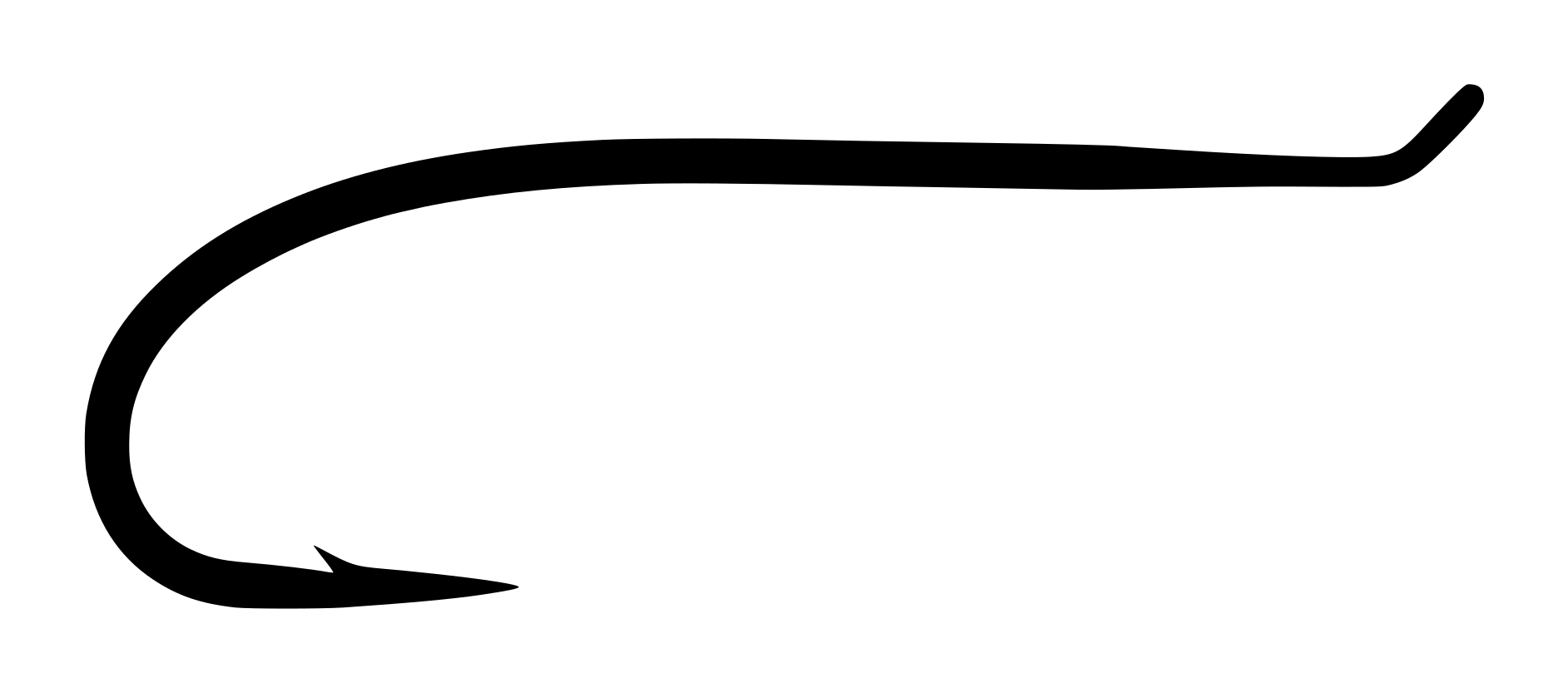
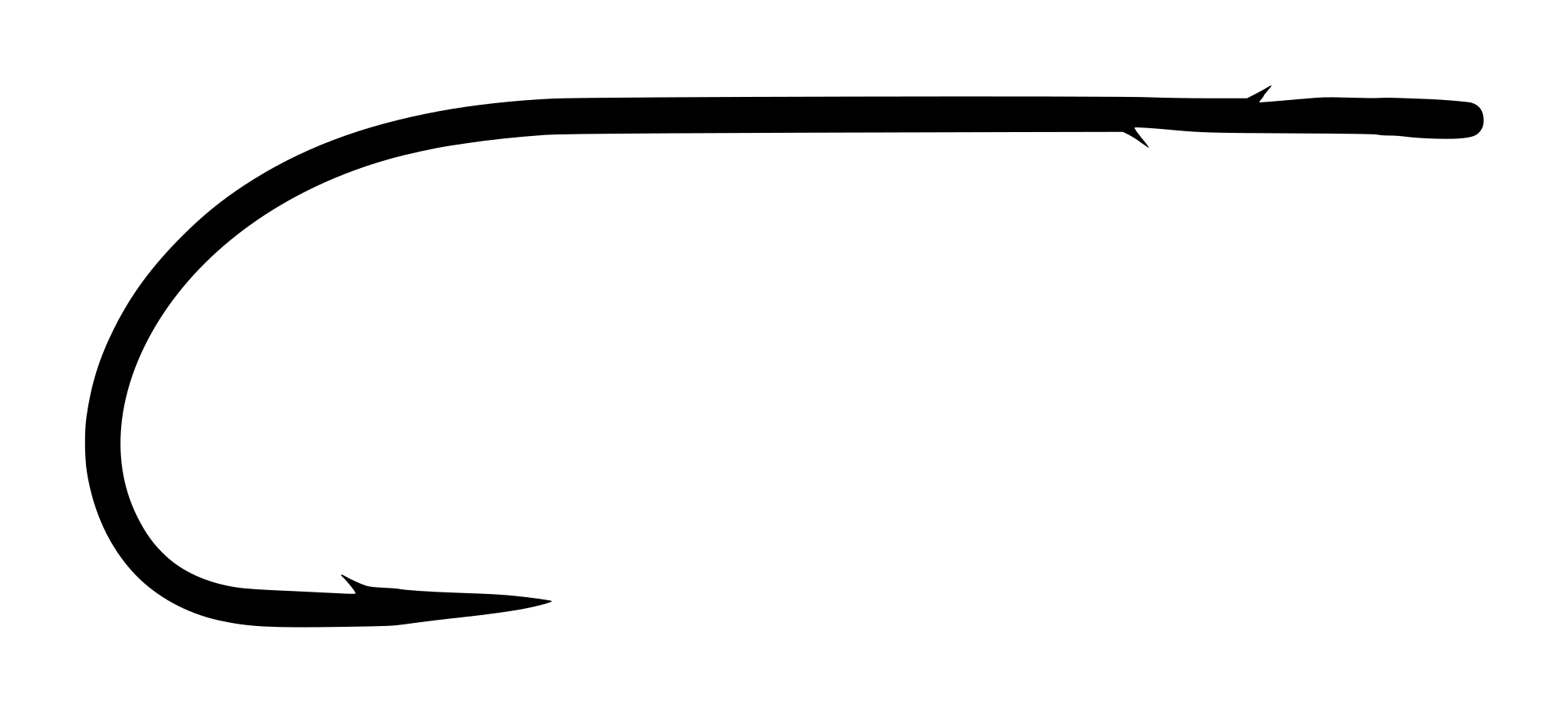
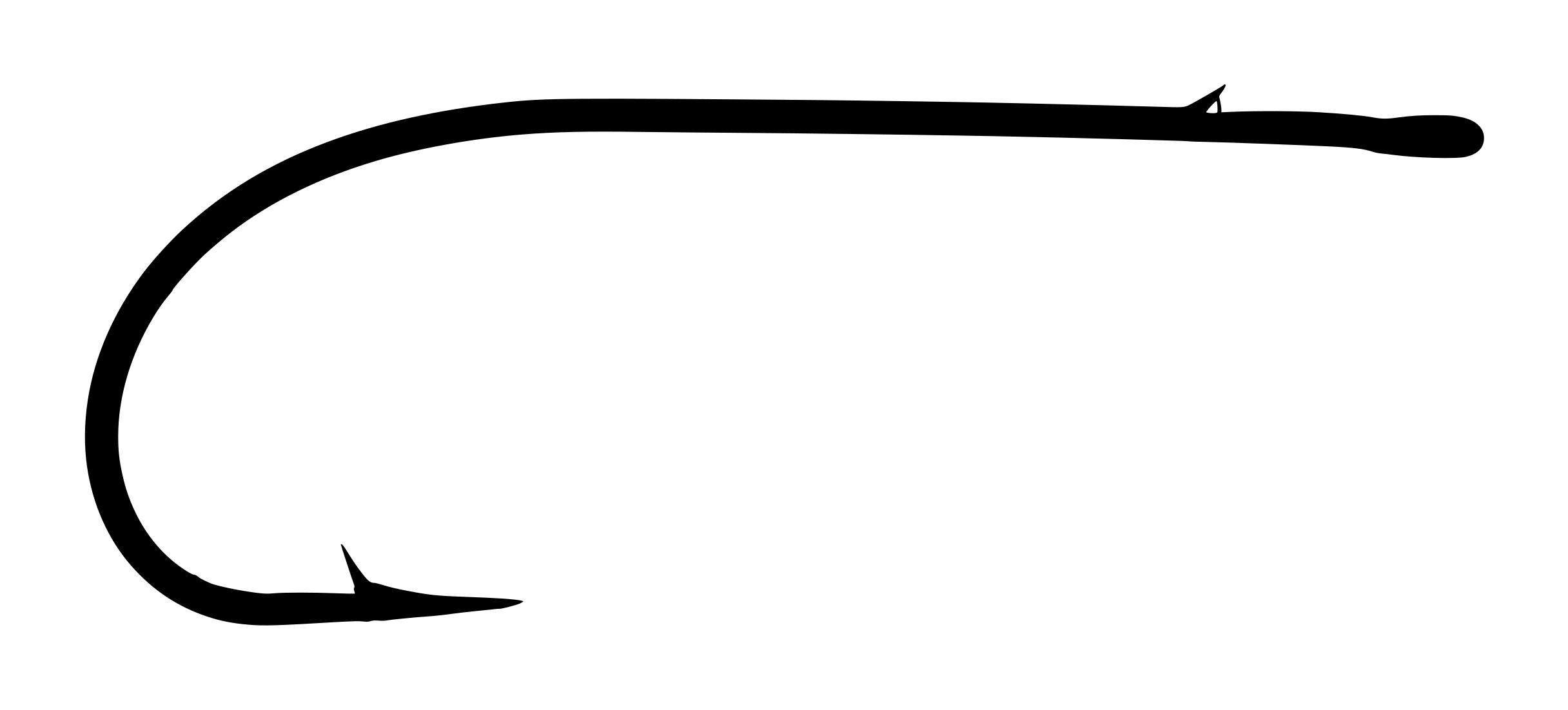
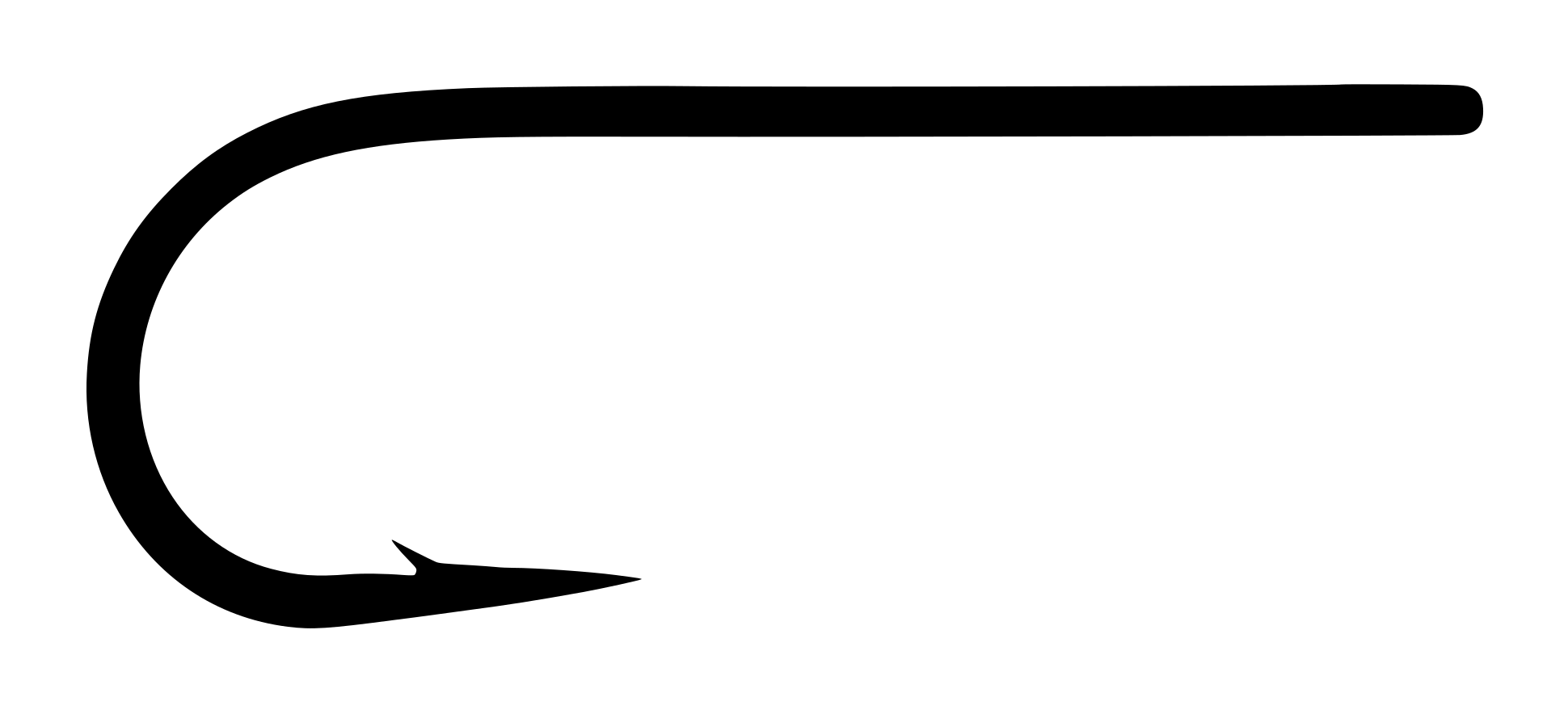
The Mustad 3667 D Limerick Hooks represent a specialized category in mid-century hook manufacturing: robust tinned sea-trout patterns engineered for salt water conditions. Manufactured by O. Mustad & Söhn in Oslo, Norway, these hooks feature a hollow-point geometry, extra-heavy 2X wire, and 1X long shank optimized for soft-hackle wets and estuary nymphs. The tapered eye reduces bulk while maintaining strength — a hallmark of Mustad precision engineering from the 1950s–1960s era. This box of 100 original hooks are hand-stamped size designation, providing a complete specimen of mid-century Scandinavian hook production.
Original cardboard box label for Mustad-Limerick Hooks, model 3667 D, size 7. Label states tinned finish, hollow point, tapered eye, and 2 extra strong construction. Manufactured by O. Mustad & Søn in Oslo, Norway.
Photographic record
3 cataloged imagesSelect any record to load it above.
3 images shown
Mustad 3667 D Limerick Hooks Box LabelOriginal cardboard box label for Mustad-Limerick Hooks, model 3667 D, size 7. Label states tinned finish, hollow point, tapered eye, and 2 extra strong construction. Manufactured by O. Mustad & Søn in Oslo, Norway.Open originalMustad 3667 D Point and Bend DetailSide profile detail of the 3667 D point and lower bend. Hollow point is fine and straight. Tinned finish shows patina consistent with age.Open originalMustad 3667 D Full Hook ProfileComplete profile of the 3667 D showing the limerick bend, tapered eye, and proportions. Wire gauge and shank length consistent with a size 7 specification.Open original
Technical profile
Turned Down Tapered Eye | Limerick | 1X Long | Extra-Heavy (2X+) Wire | Hollow Point | Tinned
Eye
Tapered Eye, Turned DownTapered eye demonstrates classic Mustad engineering — wire progressively narrows toward the eye opening to reduce bulk without loss of strength. Eye gap uniform and properly formed. Turned-down orientation is standard for soft-hackle wets and nymphs P.
Wire
Extra-Heavy (2X+), Round
Shank
1X Long — Plain
Bend
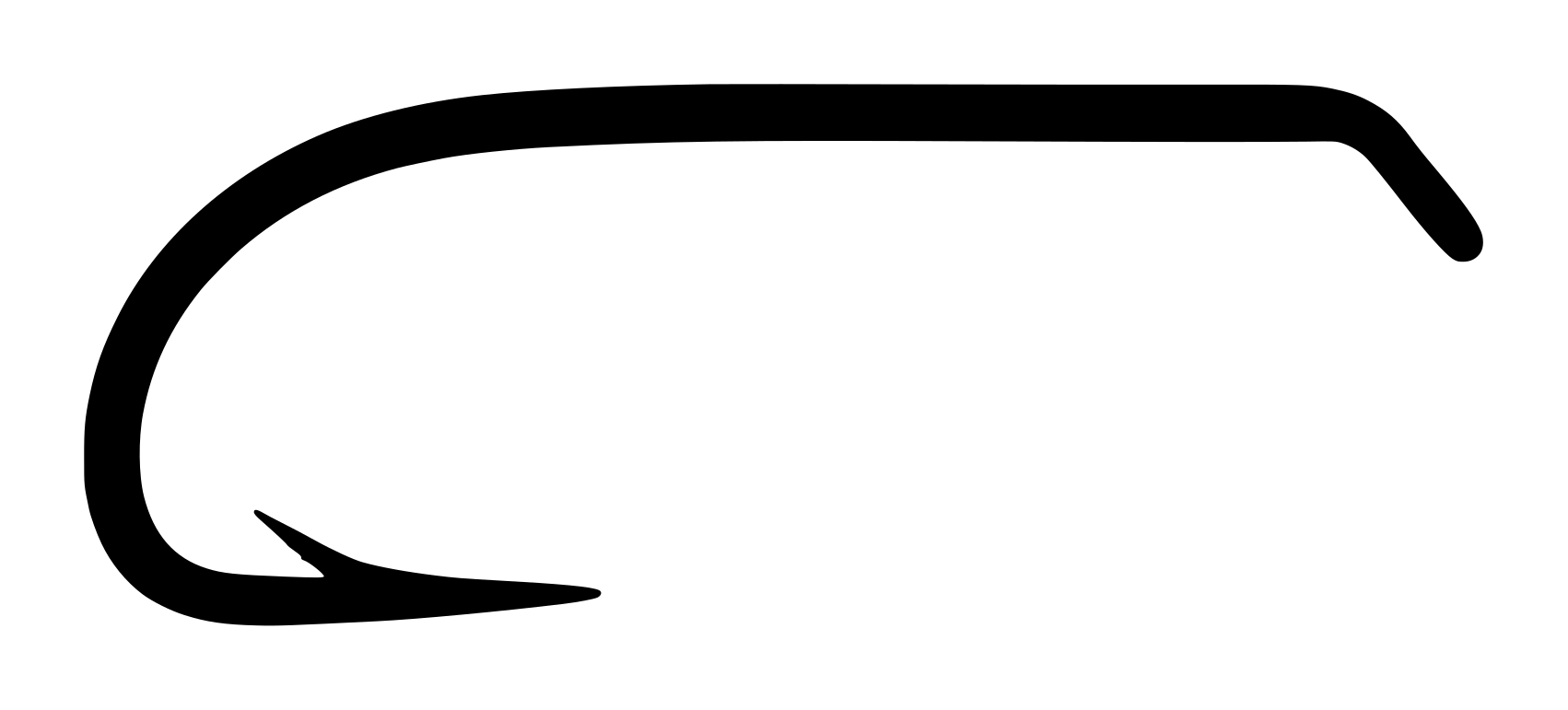
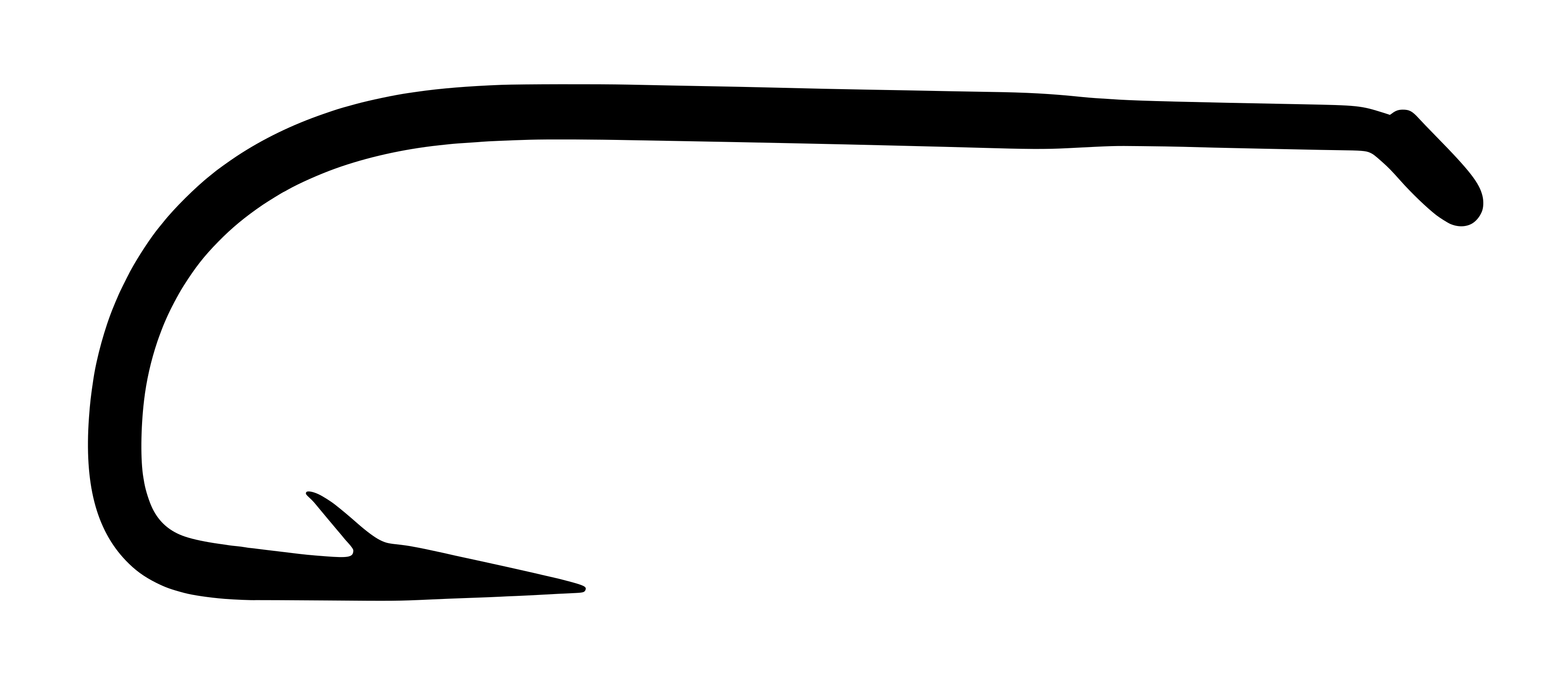
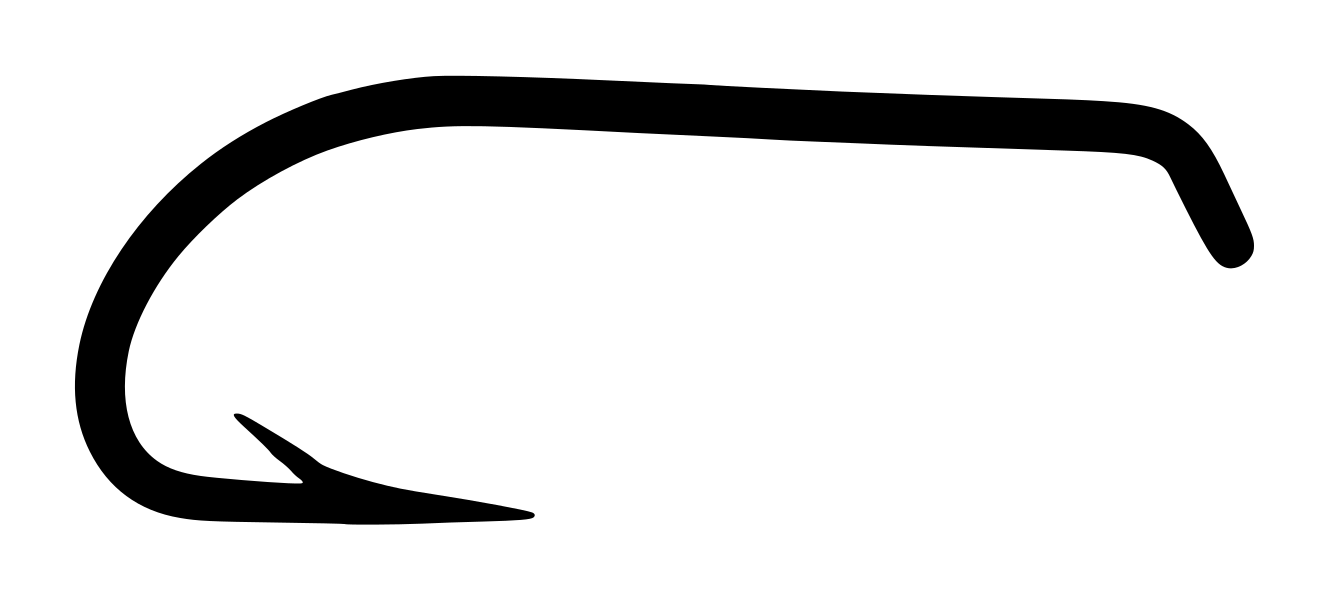
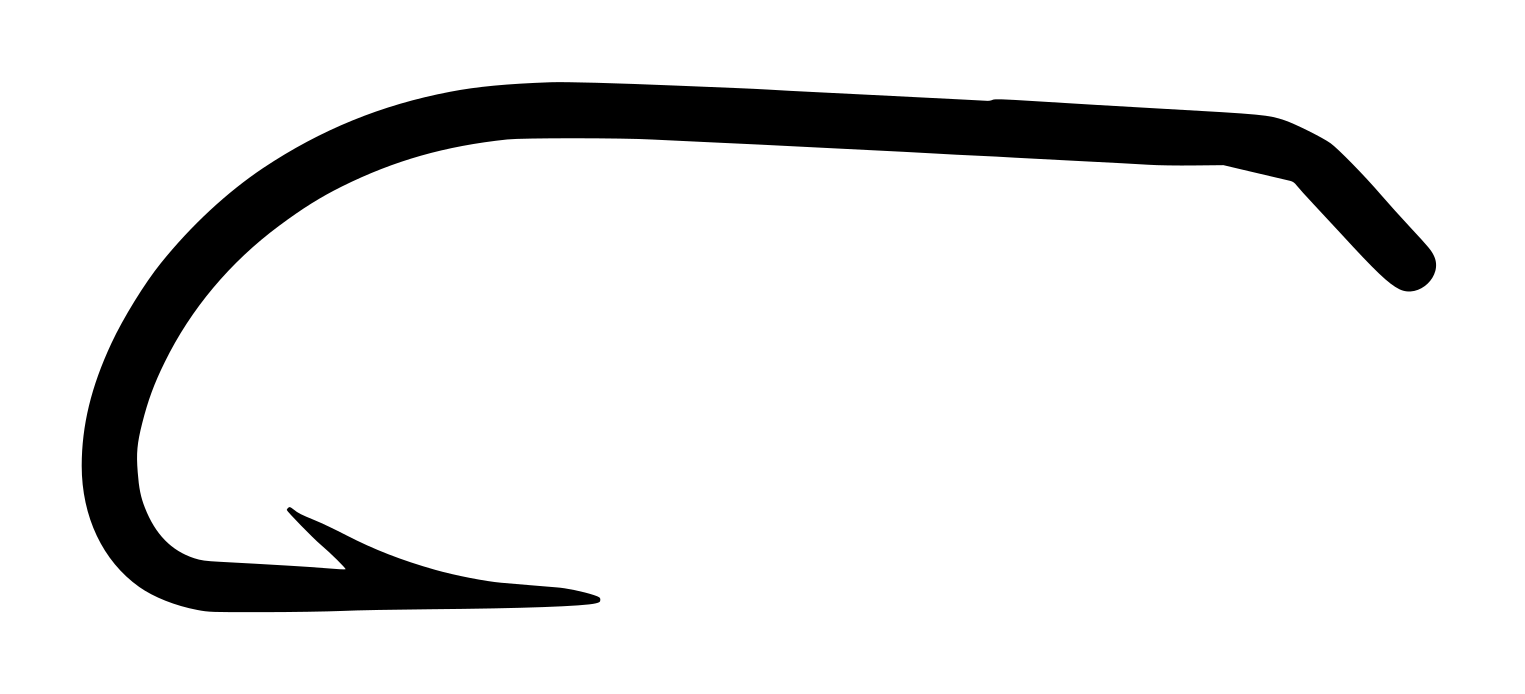
Limerick, Standard gapLimerick bend presents a characteristic angular profile with a sharp inner corner and relatively straight barb slope. The bend depth is pronounced relative to the standard Sproat, creating a more acute fishing angle. No visible offset or reverse to the point P.
Point
Hollow Point (concave inner face)Barb is small and closely cut to the shank, positioned at approximately 3/8 inch from the point. Barb angle is acute, approximately 60 degrees to the shank axis. Designed for secure hold on soft baits and delicate presentations P.
Finish
Tinned — Confirmed (stated on packaging)Tinned finish displays cool bright silver-grey tone consistent with plating, not warm bronzed color P. Surface patina from age shows light grey oxidation overlay, particularly visible in bend area. Wire texture remains visible beneath thin plating. Finish designation 'Tinned' confirmed on original packaging V.
Box lid shows surface yellowing, light soiling, and minor edge creasing; interior paper remains cream-colored. All 100 hooks present and accounted for P. Hook specimens show tinned finish intact with no active corrosion, light surface patina and handling wear consistent with age. One hook removed from package for detailed photography.
The hollow-point geometry distinguishes the 3667 D from standard-point Limerick variants. The inwardly concave inner face of a hollow point creates a knife-edge effect that enhances penetration, particularly valuable when casting to wary sea trout in shallow estuarine flats. The concavity is formed during the pointing operation — the barb and point are forged with a visible curve rather than a straight taper.
Extra-heavy (2X) wire classification in size 7 means the wire diameter remains substantially thicker than a standard-gauge size 7, sacrificing some finesse for durability. This specification reflects the original market context: hooks destined for salt water where corrosion, abrasion from sand and rock, and the need to land larger sea trout demanded robust construction.
The tinned finish — bright electroplated tin over steel — provides corrosion resistance superior to japanned or bronzed finishes in salt water, though inferior to stainless steel (not yet in widespread use in the 1950s). The tapered eye reduces bulk at the attachment point without compromising strength, allowing finer tippets to be used with greater safety.
We have measurement for size 7. Know any others? Submit calipered measurements and we'll review and add them. Thank you!
Historical context
mustad
O. Mustad & Söhn was founded in Gjøvik, Norway, in 1832 as an industrial hook manufacturer. By the 1950s, Mustad operated the world’s largest-capacity hook factory, producing millions of hooks annually for worldwide distribution. The company maintained regional branding — the “Koy Brand” key logo visible on this box — to market fishing tackle throughout Scandinavia, the UK, and North America.
The Oslo address on this packaging reflects Mustad’s sales office and administrative headquarters, though primary manufacturing remained centered in Gjøvik. During the 1950s–1960s, Mustad systematized its model numbering and began consolidating its product lines. The “3667 D” designation and the application of “Mustad-Limerick” branding to hooks that featured modern forging (not blind-eye construction) illustrate how Mustad leveraged its heritage model names to market upgraded versions to established customers.
Series History
The Limerick series encompasses Mustad’s interpretation of the classic Irish Limerick bend — a slightly angular, deep-bodied bend favored for sea-trout and salmon wets. Mustad made Limerick-pattern hooks in dozens of configurations across multiple wire gauges, shank lengths, and finishes spanning from the 1920s through the 1980s.
The “3667 D” specifically appears to represent a 1950s–1960s standard variant: tinned finish, tapered eye, extra-heavy wire, 1X long shank, and hollow point. The “D” suffix likely denotes the tin-plated finish grade (a common Mustad convention). Earlier Limerick versions included spade-end (blind) variants and were often japanned; the transition to modern headed hooks with tinned finish reflects postwar manufacturing improvements and changing market preferences for salt-water durability.
Era and Packaging Dating
Box construction and paper stock consistent with mid-century Mustad manufacturing P. No barcode present — strong indicator of pre-1974 production P. Decorative golden-yellow border design typical of Mustad ca. 1950s P. Norwegian address and manufacturing claim align with Oslo operations 1950s-1960s I. 'Pennell' descriptor on packaging suggests blind-eye legacy terminology being applied to modern headed hooks — common marketing during transition period ca. 1955-1965 I. Handwritten size label in purple pencil consistent with hand-stamped inventory practice, pre-1970s E.
The Pennell Misnomer: Marketing Drift in 1950s Hook Nomenclature
The term "Pennell" on this box — "Hollow Point Pennell" — represents a marketing anomaly. Pennell hooks were a specific 19th-century design featuring a blind, tapered shank for gut loop attachment, invented by the English angler H. Cholmondeley Pennell. By the 1950s, Mustad was applying the name to any tapered-shank or tapered-eye configuration, even modern headed hooks like the 3667 D. This linguistic drift reflects how fishing terminology persisted long after the original functional context (gut-loop attachment) became obsolete. To vintage anglers, the word "Pennell" invoked heritage and tradition; to Mustad's marketing department, it was simply a descriptor meaning "finely tapered." The box is a snapshot of mid-century fishing terminology in transition.
Design lineage and influence
The Limerick bend traces to Irish and Scottish salt-water fly traditions of the 19th century, where the angular profile provided reliable hook-set geometry in heavy water. English and Irish makers (notably H. Milward and Partridge of Redditch) produced classic Limerick patterns in blind-eye (spade-end) format for salmon and sea-trout anglers.
Mustad adopted and systematized the Limerick design, producing headed versions from the 1920s onward. The introduction of tinned finish in the 1950s and the marketing of the design as “Mustad-Limerick” rather than simply “Limerick” reflects Mustad’s strategy of consolidating its product identity while claiming heritage.
By the 1970s, the 3667 D and similar Limerick patterns were displaced by newer designs (Mustad’s 9671 and 9672 series), though Limerick hooks remained in the catalog for specialty users. Modern equivalents include the Tiemco Carrie Stevens Limerick and various saltwater wet-fly hooks marketed under different names.
Best matchRelated by Attribute
Computed automatically from catalog data — updated as new hooks are added.
Matches: Bend, Wire, Gap, Eye Orient., Point +3 moreDiffers: Shank: 1X Long vs 2X Long; Eye: Tapered Eye vs Ball Eye; Finish: Tinned vs Bronzed +1 more
Matches: Bend, Wire, Gap, Point, Finish +3 moreDiffers: Shank: 1X Long vs Standard; Eye: Tapered Eye vs Ball Eye; Eye Orient.: Turned Down vs Straight / Inline +1 more
Matches: Bend, Shank, Gap, Eye Orient., Point +3 moreDiffers: Wire: Extra-Heavy (2X+) vs Heavy (1X Heavy); Eye: Tapered Eye vs Looped Eye; Finish: Tinned vs Bronzed +1 more
Limerick 3667D hooks were designed as soft-hackle wets and sea-trout patterns in small to medium sizes. The 1X long shank accommodates body wraps for traditional patterns. Extra-heavy wire specification and tinned finish suited them for salt water and demanding estuarine conditions where corrosion and abrasion required durable construction. Size 7 falls within the traditional sea-trout and estuary wet-fly range (8–10 foot rods, medium tippets, 12–16 foot leaders).
Secondary Applications
Nymph patterns in saltwater and brackish environments. Small streamers on light tackle. Bait presentations in estuaries.
Classic Fly Patterns
Saltwater soft-hackle patterns, sea-trout wets (e.g., Woodcock and Mixed Teal, Silver Partridge patterns adapted to size 7), small streamers (Invicta-style weighted wets).
Collector notes
Rated 4.5/10 — moderate collecting interest driven by original box format (scarcer than cards) and mid-century Mustad manufacturing. Size 7 is less common than sizes 8–12. Limiting factors: Limerick patterns are not actively sought by contemporary tyers, and hollow-point variants are more common than superior-point hooks in the same era.
Reference value
$8 – $25 USD estimate
Packaging condition
Good — moderate wear, legibleRecorded specimen
Packaging format
GW-M-BOX-01Catalog code
Positive factors: Original manufacturer box with 100-count interior and hand-marked size notation is significantly scarcer than individual sales cards. Complete and sealed packaging commands a real premium. Mustad boxes from the 1950s–1960s are underrepresented in collector databases. The tinned finish and extra-heavy wire are functional specifications that appeal to salt-water fly historians. The “Pennell” terminology on packaging is an interesting artifact of how vintage manufacturers marketed heritage to modern users.
Limiting factors: Mustad hook production was enormous; even 50+ year-old stock survives in moderate quantities. The Limerick bend is less iconic than Sproat, Aberdeen, or OShaughnessy patterns. Size 7 is not a “display” size — too large for most dry-fly collections, too small for salmon specialists. Hollow-point geometry is more common than superior-point in vintage Mustad stock, reducing rarity premium. Contemporary fly-tying demand is minimal — these are primarily collection pieces rather than functional fishing tools.
Most desirable variant: Complete original boxes with clear, legible printing and minimal edge damage. Sizes 4–6 in the same model are scarcer than size 7. Packages with original tissue or folder inserts command higher premiums.
Packaging
Rigid cardboard box with separate hinged lid. Printed in golden-yellow ink on cream stock. Text reads: Koy Brand, O. Mustad & Söhn, Manufacturers, Oslo-Norway, Qual. 3667 D, Hollow Point Pennell, Mustad-Limerick Hooks, T.d. tapered eye, Tinned, 2 extra strong, Made in Norway, No. 7, 100 hooks. Decorative geometric border in golden ink. Size number handwritten in purple pencil on front face. Typical Mustad box construction ca. 1950s-1960s. Paper shows light age yellowing. Box edges and lid show minor crushing and wear.
Market Value Notes
Low ($8): Good condition — box opened, some wear to lid and edges, all or most hooks present, minor soiling.<br />
High ($25): Excellent condition — box nearly sealed or sealed, complete 100-count, minimal surface wear, clear printing.<br />
Premium factors: Complete original box (2–3x higher than equivalent card); hand-marked size notation visible; manufacturer box from 1950s–1960s; minimal box crushing or paper damage.<br />
Platforms: eBay UK and US (occasional listings, usually priced $5–15 for opened boxes, $15–30 for sealed); specialist vintage tackle dealers; regional UK fishing tackle fairs.<br />
Confidence: E estimated — limited comparable sales data. Mustad boxes of this era appear infrequently; pricing based on broader Mustad vintage box market and general collectability patterns. No direct eBay sold listings found for this specific model in current database.
Where to Find
eBay UK occasionally lists Mustad vintage boxes; search "Mustad box 1950s" or "Limerick hooks vintage." Regional UK fishing tackle auctions and specialist dealers (e.g., Hardy's memorabilia sales, UK collectors' networks). Rarely appears at North American tackle fairs unless acquired through estate liquidation.
Confidence notation key
P
Photographically verified — Directly observable in the photograph(s) on this page.
V
Verified by documentation — Confirmed by manufacturer catalog, spec sheet, or published reference.
I
Inferred — A logical deduction from observable or documented evidence, not directly stated.
E
Estimated — An approximation based on visual comparison, proportional analysis, or limited data.
S
Speculative — A reasoned hypothesis that cannot be confirmed from available evidence.
Claims with no notation are confirmed by multiple independent sources. All photographs on garrenwood.com are taken on a measurement grid where each square equals 1/10 inch (0.1″ / 2.54 mm).