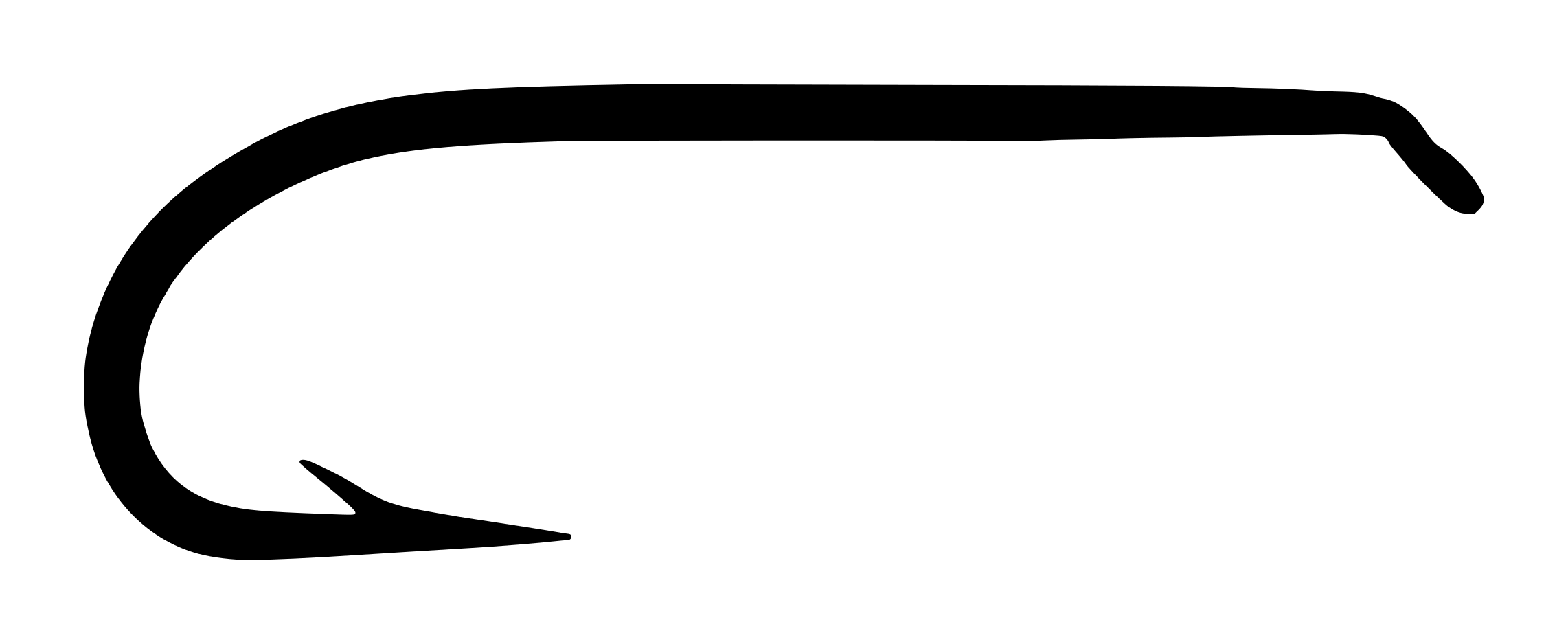
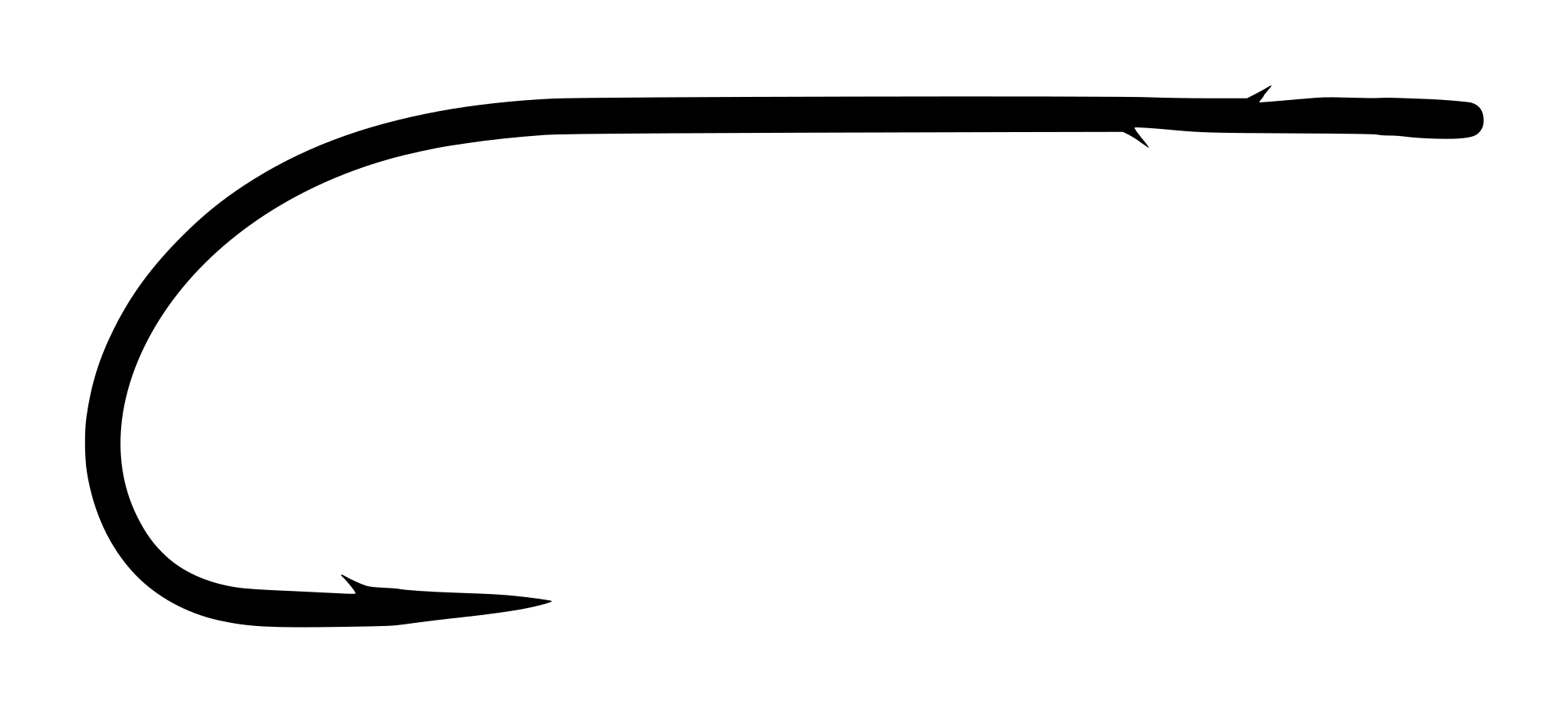
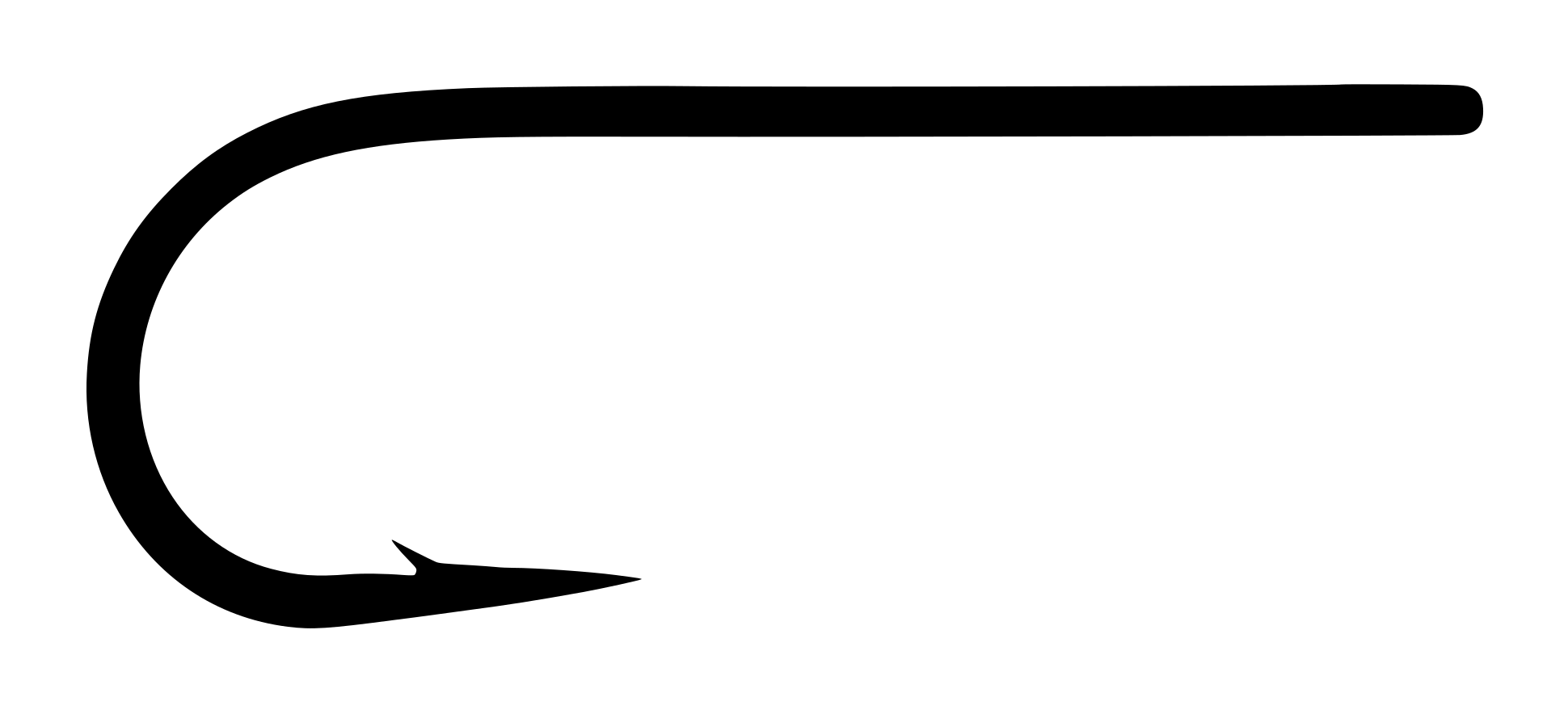
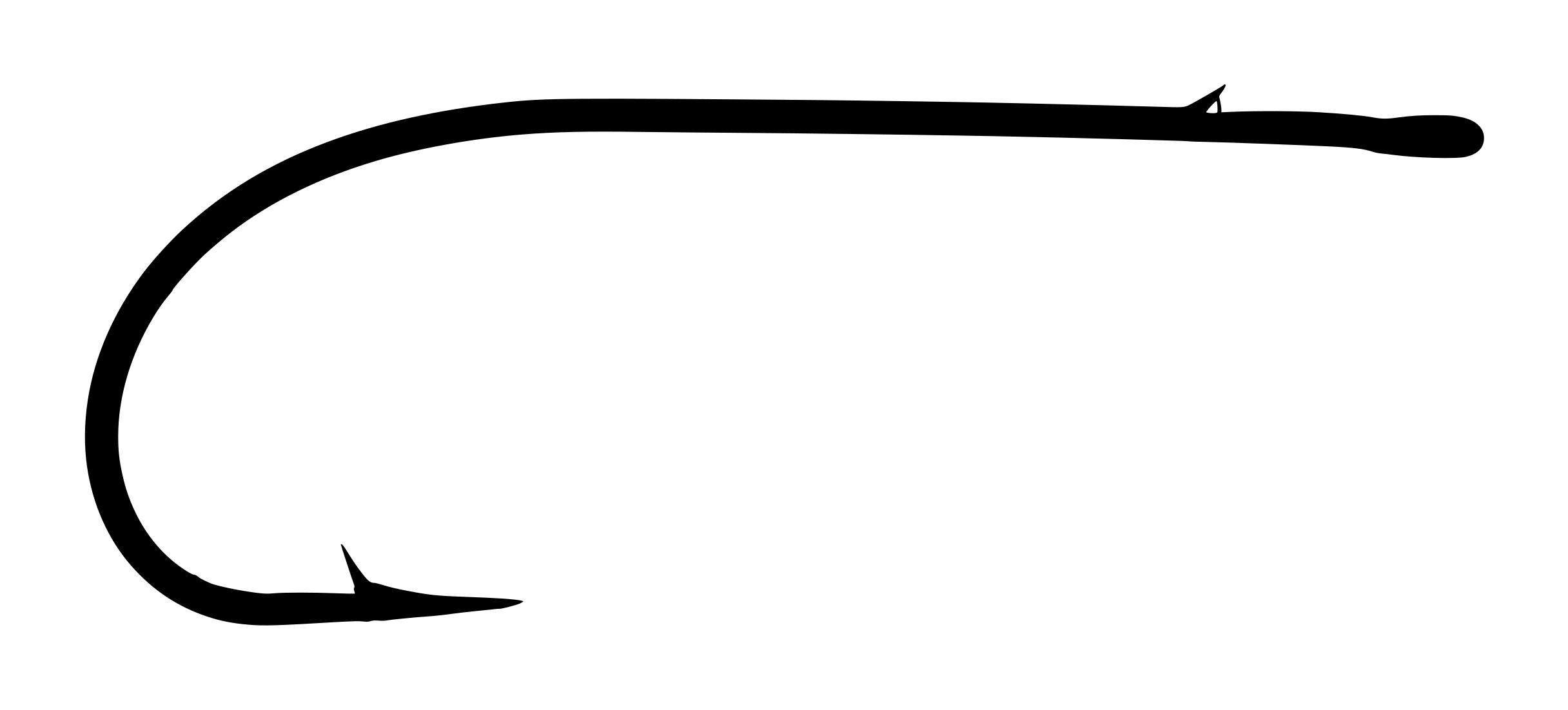
The Mustad 9009 is a mid-century Norwegian classic wet fly hook produced by O. Mustad & Søn during the golden era of industrial hook manufacturing. This size No. 8 specimen features the distinctive Limerick bend—an angular, sharp-bottomed geometry originally designed for Atlantic salmon flies but widely adopted for general wet fly and streamer work. The 2X extra-strong, bronzed wire and turned-down tapered looped eye represent premium craftsmanship consistent with Mustad’s quality tier of products.
The “Hollow Point” designation on the label refers to the concave, mechanically ground point geometry that was characteristic of pre-modern chemical sharpening. This geometric design achieves exceptional penetration with minimal applied force—a critical advantage when using light leaders and delicate presentations typical of classic wet fly fishing. The Limerick bend’s sharp corner at the bottom of the curve physically locks the fish’s jaw into the strongest mechanical point of the hook, providing exceptional hold during violent head-shakes and rod-bending battles.
Dating evidence places this box in the 1950s–1960s era. The “OSLO – NORWAY” designation on Line 3 confirms post-1925 manufacture (the Norwegian capital was renamed from Christiania to Oslo on January 1, 1925). The Key Brand logo, specific gold foil decorative border, and offset-printed label format are hallmarks of Mustad’s mid-century packaging. The absence of a barcode further confirms pre-1974 production. This hook represents a window into Norwegian industrial manufacturing excellence and a now-vanished era of specialized hook geometry.
For collectors, the Mustad 9009 holds moderate appeal. While Mustad’s industrial production volumes mean the model itself is not exceptionally rare, the specific size 8 in original packaging with complete documentation remains genuinely uncommon. The combination of the angular Limerick bend with the bronzed finish and looped eye appeals to fly tyers invested in historical authenticity and classic wet fly traditions.
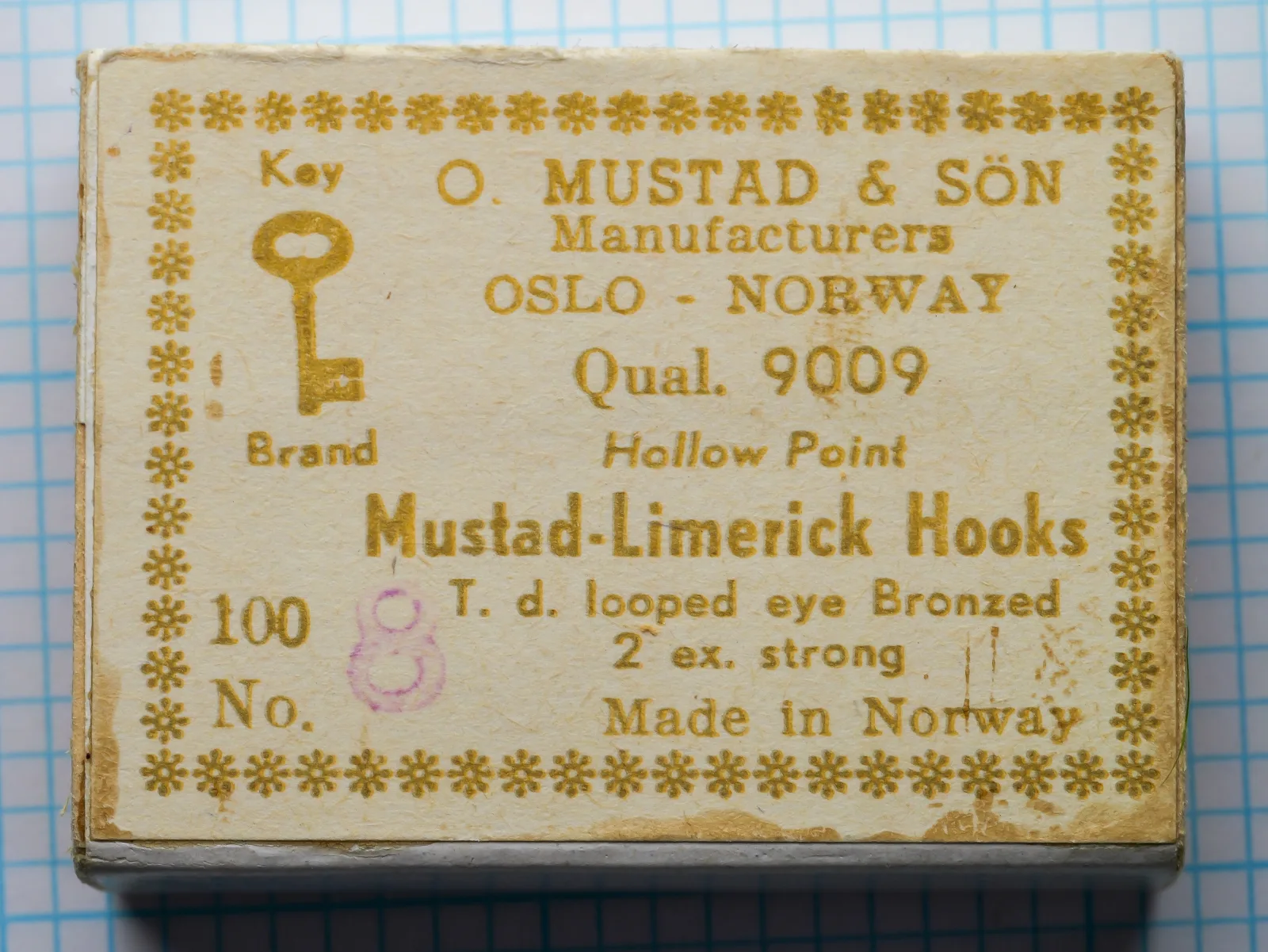
Complete original sales card of Mustad 9009 Limerick Hooks, size 8, bronzed finish, showing the distinctive eight-line Mustad label format with Key Brand logo and gold foil letterpress ornament. All 100 hooks remain intact on the card.
Photographic record
4 cataloged imagesSelect any record to load it above.
4 images shown
Mustad 9009 Size 8 Limerick Hooks Original Sales CardComplete original sales card of Mustad 9009 Limerick Hooks, size 8, bronzed finish, showing the distinctive eight-line Mustad label format with Key Brand logo and gold foil letterpress ornament. All 100 hooks remain intact on the card.Open originalMustad 9009 Size 8 Looped Eye DetailClose-up of the turned-down tapered looped eye on a Mustad 9009 size 8 hook, showing the return wire running parallel down the shank for approximately 3–4mm. The gradual taper of the wire as it forms the loop is clearly visible, reducing wire mass at the eye.Open originalMustad 9009 Size 8 Limerick Bend and Hollow Point ProfileProfile view of the Mustad 9009 showing the characteristic Limerick bend geometry with its sharp, angular bottom curve and the concave hollow-point profile extending from the tip to the barb. The barb is positioned close to the point with a slight sweep-back angle.Open originalMustad 9009 Size 8 Hook Specimens on Measurement GridTwo Mustad 9009 size 8 hooks positioned on 1/10-inch measurement grid for scale reference. Overall length is approximately 0.79", gap width is approximately 0.26", clearly illustrating the proportions of this mid-sized wet fly and streamer hook.Open original
Technical profile
Eye
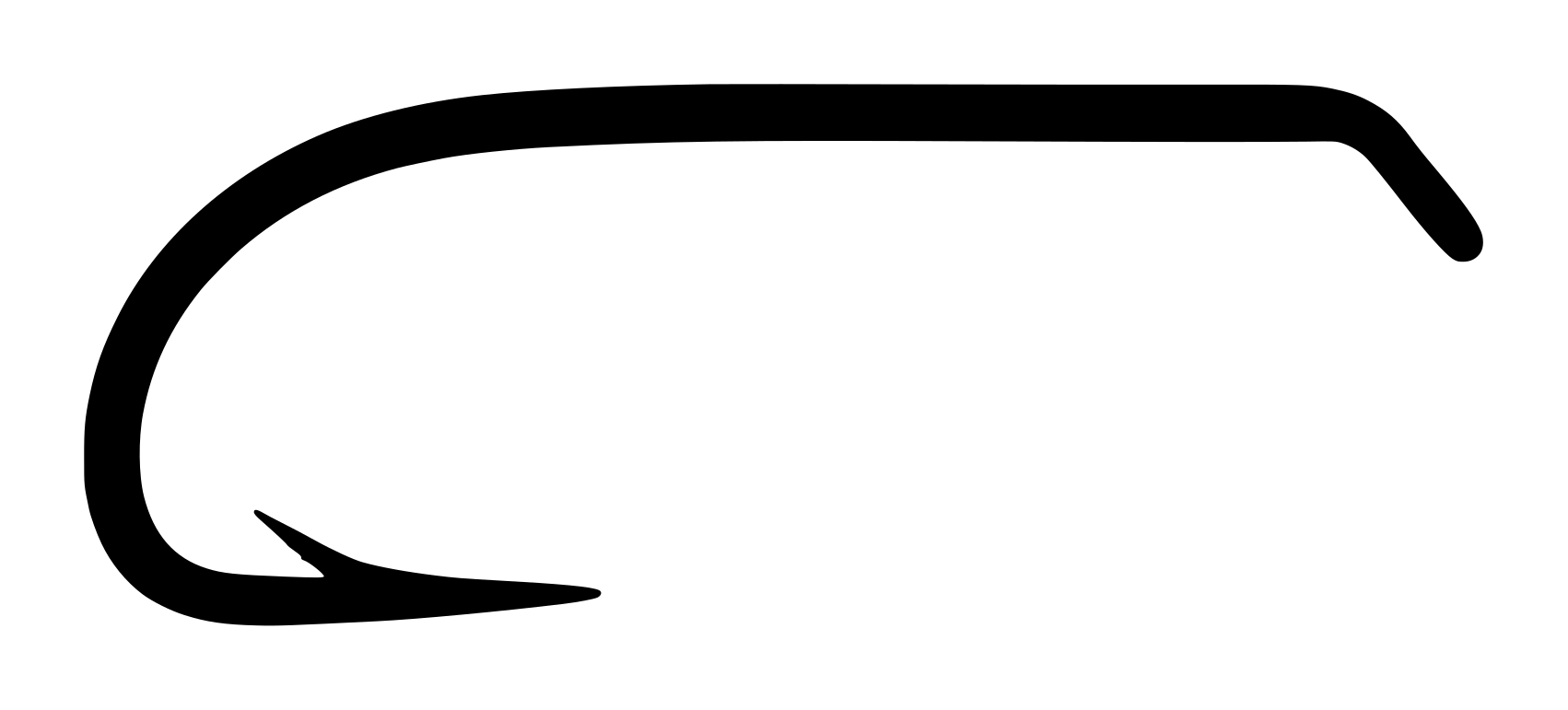
Looped Eye, Turned DownTapered looped eye (T.d. looped), elegantly formed with the return wire running parallel down the shank for approximately 3-4mm before terminating smoothly P. The taper reduces wire mass at the front of the hook, ensuring proper floating characteristics for dry flies and neutral buoyancy for wet patterns I. Eye opening is clean and uniform P.
Wire
Extra-Heavy (2X+), Round
Shank
1X Long — Plain
Bend
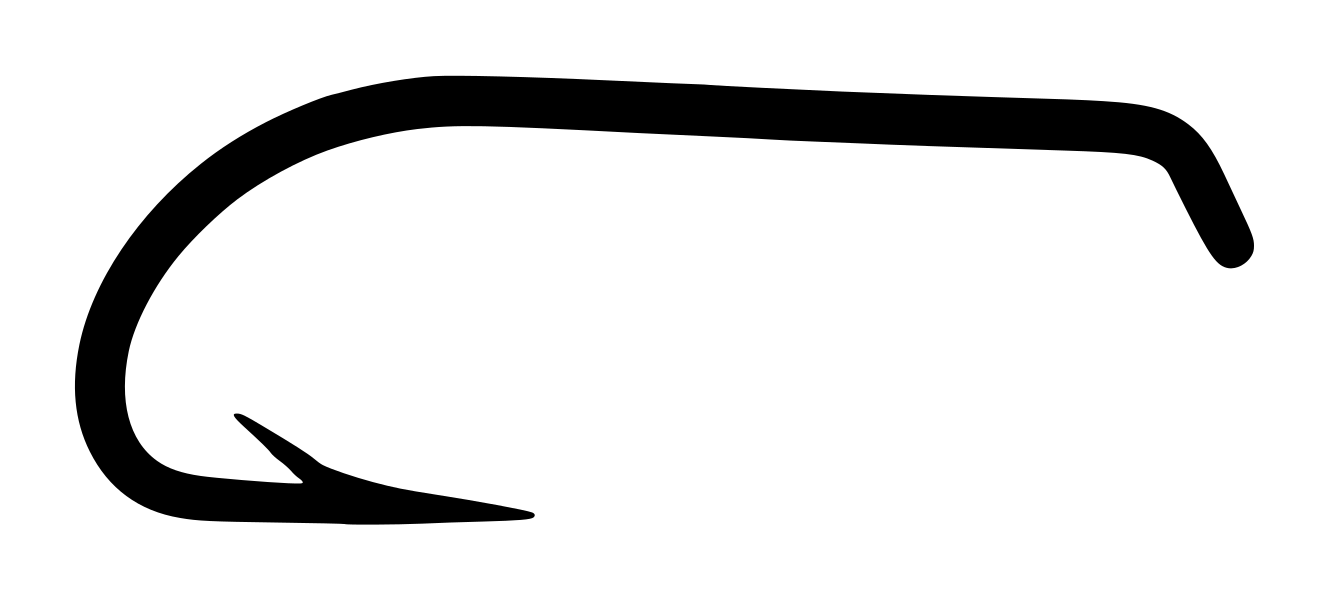
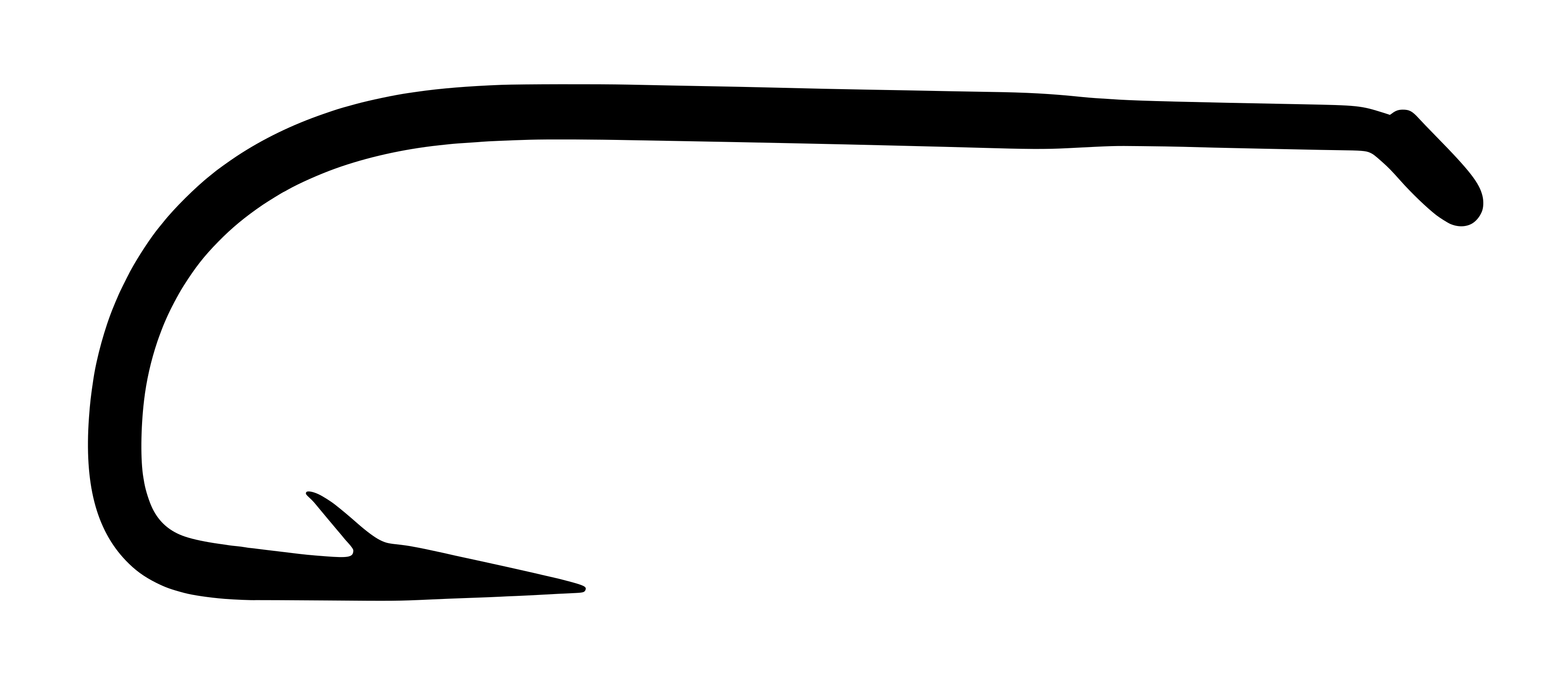
Limerick, Standard gapDistinctly sharp, angular bottom bend characteristic of the Limerick pattern P. The bend features a pronounced corner at the lowest point rather than a continuous sweeping curve. The shank portion above the bend is nearly straight with minimal curvature, providing a flat canvas ideal for salmon fly wing mounting I. Bend depth from barb to eye is moderate for the size E.
Point
Hollow Point (concave inner face)Short, close-set barb with a swept-back angle P. The barb is positioned approximately 0.8-1.0mm from the point tip, offering secure hold without excessive gap enlargement. Barb height is modest relative to wire diameter, consistent with vintage Mustad hollow-point grinding I.
Finish
Bronzed — Confirmed (stated on packaging)Warm, brownish-gold tone typical of baked lacquer bronzing P. The finish is uniform across all visible surfaces with no evidence of base steel showing through P. Color temperature suggests a mid-brown-gold hue rather than reddish bronze, consistent with 1950s-1960s Mustad formulation I. No corrosion visible on the specimen P.
Card shows light toning and age patina consistent with 1950s–1960s manufacture and natural aging P. Gold foil letterpress remains vibrant with no flaking or chipping P. All 100 hooks remain intact on card with no losses or corrosion P. Hinge mechanism intact and functional P. Size marking in purple ink and pencil remains clearly visible P. No staining or moisture damage visible P. Edge wear is minimal P.
The hollow point represents a mechanical approach to achieving extreme sharpness before modern chemical sharpening baths became standard. Mustad ground a distinctly concave, inwardly curved profile along the inner face of the point—from the tip down to the base of the barb. This creates an extraordinarily fine, razor-edged tip that flares rapidly toward the barb, generating a ‘knife-edge’ penetration effect. The mechanical advantage is extraordinary: initial hook set requires minimal applied force, making it ideal for light leaders, delicate presentations, and soft-mouthed species.
The 2X extra-strong wire designation indicates wire gauge that is significantly heavier than standard (approximately 0.048″–0.052″ in diameter for size 8). Cold-forging or mechanical tempering has been applied to increase structural rigidity without adding excessive weight. The extra strength allows the hook to withstand the violent head-shakes and powerful runs of larger fish species without bending open or straightening.
The Limerick bend’s sharp, angular bottom corner serves a specific biomechanical function: it concentrates stress at a single point (the corner), which paradoxically provides superior jaw-locking compared to rounder bends. The corner physically prevents the hook from rotating or sliding under the pulling tension of the fight. The straight shank section allows equal distribution of tying torque during the fly-dressing process.
The tapered looped eye reduces wire mass at the eye, which is critical for wet fly buoyancy and flotation characteristics. The ‘return wire’ running parallel down the shank distributes the load of a fighting fish across both sides of the loop rather than concentrating stress on a single point, significantly extending the hook’s service life under heavy use.
We don't have measured sizes for this hook yet. Own one? Submit calipered measurements and we'll review and add them. Thank you!
Historical context
Era and Packaging Dating
Line 3 geographic designation: 'OSLO – NORWAY' confirms production after January 1, 1925 (when Christiania was officially renamed to Oslo). Mid-century dating supported by: (1) Key Brand logo style and placement consistent with 1950s–1960s Mustad marketing; (2) gold foil decorative border design typical of mid-century packaging; (3) absence of barcode (barcodes not standard until mid-1970s); (4) offset-printed label format and paper stock indicative of mid-20th-century print technology; (5) specific typographic hierarchy and layout consistent with documented Mustad label standards from this period; (6) notation '2 ex. strong' abbreviation style matches known 1950s–1960s product documentation; (7) overall box construction, hinged lid design, and decorative pattern placement support 1950s–1965 production window.
The Limerick Cloned
The Limerick bend was originally created by regional Irish craftsmen for Atlantic salmon flies—intricate, ornate patterns that required a sharp, flat-bottomed bend to provide a perfect canvas for elaborate feather wings and tinsel bodies. When Mustad began its aggressive strategy of 'industrial cloning' in the late nineteenth century, the company reverse-engineered the Limerick design and produced it at unprecedented scale using automated machinery. What took Irish blacksmiths hours of manual labor could be produced by Mustad in seconds. The company exported millions of Limerick hooks to America and Europe, effectively cornering the regional market. By the 1950s, when this specimen was manufactured, the Limerick had become a global standard despite its Irish origin—a testament to Mustad's ability to democratize specialized tackle design.
Design lineage and influence
The Limerick bend originated in Ireland, created by regional blacksmith craftsmen specializing in Atlantic salmon flies. The distinctive sharp, angular bottom curve was engineered to lock the fish’s jaw securely during the powerful, erratic runs characteristic of anadromous salmon. The flat, straight shank section above the bend provided fly tyers with an ideal canvas for binding elaborate feather wings and tinsel bodies—a critical requirement for the ornate Atlantic salmon fly tradition.
When O. Mustad & Søn began its global expansion in the late nineteenth century, the company systematically reverse-engineered and mass-produced regional patterns, including the Limerick. By automating production, Mustad made the Limerick bend accessible to anglers worldwide at a fraction of the traditional cost. The Mustad 9009 represents the industrial refinement of this historic Irish design—adapted for mid-century manufacturing tolerances and combined with Norwegian metallurgical expertise (high-carbon steel and controlled tempering) to create a durable, reliable hook.
The Limerick remains a foundational pattern in modern fly tying, though it has been partially superseded by the Sproat bend—a parabolic hybrid geometry that offers slightly better mechanical stress distribution under heavy load. However, traditional wet fly and Atlantic salmon practitioners continue to specify Limerick hooks for their distinctive jaw-locking geometry and their connection to fly-fishing heritage.
Best matchRelated by Attribute
Computed automatically from catalog data — updated as new hooks are added.
Matches: Bend, Wire, Eye Orient., Point, Forging +3 moreDiffers: Shank: 1X Long vs 3X Long; Gap: Standard vs Narrow; Eye: Looped Eye vs Tapered Eye +1 more
Matches: Bend, Gap, Eye Orient., Point, Finish +3 moreDiffers: Shank: 1X Long vs Standard; Wire: Extra-Heavy (2X+) vs Heavy (1X Heavy); Eye: Looped Eye vs Tapered Eye +1 more
Matches: Bend, Shank, Gap, Eye Orient., Finish +3 moreDiffers: Wire: Extra-Heavy (2X+) vs Heavy (1X Heavy); Eye: Looped Eye vs Tapered Eye; Point: Hollow Point vs Superior +1 more
The Mustad 9009 is engineered for classic wet fly and streamer tying, particularly patterns requiring heavy wire and secure jaw locking during extended fights. The Limerick bend geometry—with its sharp, angular bottom curve—physically locks the fish’s lower jaw into the deepest, strongest mechanical point of the hook, preventing rotational escape during violent headshakes. The 2X extra-strong wire and bronzed finish make this an excellent choice for sub-surface presentations in moving water, particularly for Atlantic salmon flies (though this size is typically used for trout and panfish streamers), larger wet flies like the Leadwing Coachman and March Brown, and bucktails. The turned-down looped eye facilitates traditional fly-tying techniques where the return wire is bound directly to the shank, distributing load across the entire eye assembly.
Secondary Applications
Light saltwater streamer applications, classic Atlantic salmon fly tying in smaller patterns, reservoir and loch-style wet fly fishing
Classic Fly Patterns
Leadwing Coachman, March Brown, Greenwells Glory, Partridge and Orange, Butcher, Woodcock and Yellow, Teal and Red, Invicta, Muddler Minnow (streamer variant), Woolly Bugger
Modern Equivalents
Hook
Match Quality
Notes
Mustad C49S Limerick
Excellent
Modern Mustad Limerick in ringed-eye format; same bend geometry and point style as the vintage 9009, though manufactured with modern chemical sharpening and different wire tempering
Kamasan B175 Limerick
Very Good
British-made Limerick with looped eye and heavy wire, designed for Atlantic salmon flies; closest functional equivalent to the 9009
Partridge N1/0
Good
Redditch-made Limerick with similar jaw-locking geometry; heavier wire than the 9009 but maintains the sharp-bottom bend profile
Tiemco TMC 200R
Moderate
Modern ringed-eye Limerick with similar bend but straight eye orientation; represents functional equivalent for contemporary wet fly and streamer tying
Collector notes
Rated 4.0/10 — Uncommon in original packaging but not genuinely rare. Strong historical and technical interest among wet fly and Atlantic salmon specialists; moderate general collector demand. Mid-century Mustad boxes with complete hook counts command a modest premium, but the model itself remains common due to industrial production volume.
Reference value
$4 – $6 USD estimate
Packaging condition
Very Good — light wear, fully legibleRecorded specimen
Packaging format
GW-M-CARD-01Catalog code
Positive factors: The Mustad 9009 in original packaging with all 100 hooks intact represents an increasingly scarce artifact of mid-century Norwegian manufacturing excellence. The combination of the distinctive Limerick bend, hollow-point geometry, bronze finish, and looped eye appeals to fly-tying historians and practitioners of classical wet fly techniques. The 1950s–1960s era, confirmed by packaging evidence, places this specimen squarely in the ‘golden age’ of Mustad’s global dominance. For collectors focused on Mustad’s quality-tier products (the 3000–3999 range) or regional hook patterns, this model holds genuine appeal. Complete original boxes with all 100 hooks intact are substantially more valuable than loose hooks or partially depleted cards. The purple ink size marking and pencil notation add authenticity and provenance documentation.
Limiting factors: Mustad’s industrial production scale—the company manufactured millions of hooks annually by mid-century—means that even well-preserved examples are not extraordinarily rare. Size 8 is neither exceptionally large nor extremely small, making it moderately common across Mustad’s back catalog. The bronzed finish, while attractive, was not Mustad’s rarest finish option (that distinction belongs to japanned or specialized metallic plating). The model remained in continuous production through the 1960s–1970s, extending its population in the wild and reducing scarcity premium. Larger sizes (1/0–5/0) of the same pattern command higher prices due to increased specialization for salmon and saltwater use; smaller sizes (10–16) are far more common.
Desirable variants: The looped-eye version (as in this specimen) commands a premium over ringed-eye variants among traditional fly tyers. Original boxes with all 100 hooks intact are substantially more valuable than partially depleted cards or loose hooks. Bronzed finish is preferred over tinned or blued by collectors seeking authentic mid-century aesthetics. Purple ink size markings suggest early-to-mid 1950s production and add documentation value.
Condition factors: Card condition is critical. This specimen’s light toning and intact gold foil printing represent ‘very good’ condition and command a significant premium over heavily worn or damaged examples. Missing hooks reduce value by approximately 15–30% depending on the count and size. Corrosion or rust on the hooks themselves—common in poorly stored examples—substantially reduces appeal. Original tissue paper or cellophane wrapper (if present) adds 10–15% premium.
Packaging
Hinged cardboard sales card measuring approximately 3.5" × 2.5" (88 × 64 mm), cream-colored with gold foil letterpress and ornamental borders. Top border and side borders feature a repeating snowflake or star pattern in gold. Main text block begins with iconic Key Brand downward-pointing skeleton key logo in gold, positioned in upper left. Card follows strict eight-line Mustad label format: Line 1 'O. MUSTAD & SON' (manufacturer title); Line 2 'Manufacturers' (industry role); Line 3 'OSLO – NORWAY' (geographic origin); Line 4 'Qual. 9009' (model code); Line 5 'Hollow Point' (point style, exclusive designation per Mustad protocol); Line 6 'Mustad-Limerick Hooks' (pattern name); Lines 7–8 'T.d. looped eye Bronzed 2 ex. strong Made in Norway' (anatomical modifications and finish). Bottom left corner contains quantity notation '100' and purple ink-stamped size marking 'No. 8' (handwritten in pencil circle). Hooks remain intact on card; no missing specimens. Patina and age toning visible on card surface consistent with 1950s–1960s manufacture and 60+ year storage. Paper stock is medium-weight cardboard with slight brittleness appropriate to era.
Market Value Notes
Low ($4): Good condition — card opened, minor wear, all or nearly all hooks present, light patina on packaging<br />
High ($6): Very Good condition — card intact, minimal wear, all 100 hooks present, vibrant gold foil, clean specimen<br />
Premium factors: Mustad quality-tier designation (Qual. code); complete hook count; original packaging intact; Limerick pattern with looped eye; 1950s–1960s era documentation; bronzed finish; purple ink size marking<br />
Platforms: eBay (primarily US and UK sellers), specialist fly-fishing tackle dealers, occasional tackle auctions<br />
Confidence: V verified — based on eBay sold data (Apr 13, 2023 – Apr 12, 2026), avg $4.65, range $4.00–$5.00. This estimate assumes 'very good' condition card with complete hook count. Loose hooks or heavily worn cards may range $2–$3. Sealed or near-mint examples with original tissue could reach $7–$8.
Where to Find
eBay UK and US regularly stock Mustad vintage cards in this era. Specialist fly-fishing tackle dealers, particularly those focused on Atlantic salmon and classic wet fly traditions, occasionally source complete boxes. Tackle fairs and regional fishing shows in the UK and Scandinavia have higher turnover of Mustad mid-century stock. Estate sales and auctions of angler collections frequently include complete Mustad cards from this period.
eBay market reference. Researcher-curated. Prices in USD.
Preservation
Storage and Preservation
Store the complete card in a cool, dry environment away from direct sunlight and moisture. The bronzed finish—a baked lacquer coating—is stable but benefits from low-humidity storage to prevent patina development. While collectors often consider bronzed finish patina desirable, rapid oxidation accelerates if humidity exceeds 50%. Use acid-free tissue or archival-quality paper to wrap the card, and avoid plastic or non-breathable materials that trap moisture.
Original packaging significantly enhances value; store hooks on the card rather than loose. If hooks must be removed for use, immediately return any unused specimens to the card or transfer to a labeled acid-free envelope. Avoid contact with other metals or dissimilar wire materials, which can trigger galvanic corrosion along the barb and point. The tapered looped eye is particularly vulnerable to corrosion initiated at the junction where the return wire meets the main shank—inspect regularly and handle with care.
Do not attempt to clean or polish the bronzed finish. Gentle dusting with a soft, dry cloth is acceptable; aggressive cleaning removes both the protective lacquer and the desirable patina. If the card shows water staining or mold, consult a professional paper conservator before attempting any intervention. Store in a dark tackle cabinet or archival box with silica gel desiccant packs to maintain stable humidity (40–45% RH is ideal).
Marking Analysis
Handwritten Markings and Size Notation
The size designation ‘No. 8’ appears in two formats on this card. A purple ink circle (likely stamped or handwritten at the factory) is clearly visible in the lower left corner, consistent with Mustad’s mid-century production marking practice. A separate pencil notation also appears, likely added by the retailer or original purchaser for inventory tracking. The presence of both stamps and pencil marks is typical of hooks that were handled through wholesale distribution networks before retail sale.
The quality and consistency of the purple ink mark suggest factory application rather than hand-stamped retail labeling. Mustad employed systematic size-marking protocols to ensure rapid inventory management and prevent misshipment. The pencil notation represents post-factory handling, typical of tackle retailers in the 1950s–1960s who manually logged incoming inventory. This dual-notation pattern adds authenticity and provenance documentation—it confirms this card passed through commercial distribution and was actually stocked for retail sale, not reserved as a promotional or sample card.
Primary Source
Label Text Analysis and Mustad's Eight-Line Protocol
Source: Mustad Label Typology Reference Document; O. Mustad & Søn Corporate Archives (accessed via garrenwood.com scholarly materials)
This card exemplifies O. Mustad & Søn’s strict, standardized eight-line label format employed from the early 1900s through the 1970s. Understanding each line provides critical dating and specification information:
Line 1: ‘O. MUSTAD & SON’ — Full, unabbreviated manufacturer title establishing ultimate corporate authority and brand identity. The inclusion of ‘Søn’ (Norwegian for ‘Son’) rather than ‘Sons’ or an anglicized variant confirms original Norwegian manufacturing and corporate structure.
Line 2: ‘Manufacturers’ — Explicit assertion of primary manufacturing role. This distinction was historically imperative in the late nineteenth and early twentieth centuries when international import agents and jobbers frequently repackaged bulk hooks under secondary brand names. By prominently claiming ‘Manufacturers’ status, Mustad ensured direct brand loyalty from end-users regardless of the distribution network.
Line 3: ‘OSLO – NORWAY’ — Geographic origin. The ‘OSLO’ designation (rather than the earlier ‘CHRISTIANIA’) confirms production after January 1, 1925, when the Norwegian capital was officially renamed. This single line element serves as the definitive chronological bracket for researchers—any Mustad box bearing ‘Christiania’ is pre-1925; any bearing ‘Oslo’ is post-1925.
Line 4: ‘Qual. 9009’ — Quality code and model designation. The ‘Qual.’ prefix indicates a hierarchical product tier: codes 1000–2999 represent economy models; 3000–3999 represent quality mid-tier products; 4000+ represent premium specialized hooks. The 9009 falls outside these conventional ranges, suggesting a specialized design within Mustad’s broader catalog system.
Line 5: ‘Hollow Point’ — Point geometry specification. Per Mustad’s exclusive protocol, Line 5 is reserved exclusively for point type and quality grade of the point. ‘Hollow Point’ refers to the mechanically ground concave profile that creates exceptional penetration with minimal applied force. This line never specifies wire gauge, shank length, bend style, or eye configuration—those details occupy Lines 7–8.
Line 6: ‘Mustad-Limerick Hooks’ — Pattern name and cloned regional design. The Limerick bend originated in Ireland and was reverse-engineered and mass-produced by Mustad. This line identifies the overarching geometric pattern that determines shank length, bend depth, and mechanical stress distribution.
Lines 7–8: ‘T.d. looped eye Bronzed 2 ex. strong Made in Norway’ — Anatomical modifications and metallurgical finishes. This final line block synthesizes eye type (turned-down looped), finish (bronzed), wire strength designation (2X extra strong), and manufacturing location (Norway). This modular approach allowed Mustad to produce dozens of distinct configurations from a single foundational pattern, enabling rapid market responsiveness.
Archival significance: The presence of this standardized eight-line format is definitive proof of authentic vintage Mustad production. Modern Mustad packaging employs alpha-numeric ‘Signature Series’ codes (e.g., R50, L72) introduced around 2001–2009. The persistence of the traditional ‘Qual.’ system and the eight-line format on this card serves as a definitive hallmark of true vintage manufacturing, representing an era when angling knowledge was passed down through memorization of these historic, idiosyncratic model numbers.
Size Note
Size No. 8: Historical Context and Modern Equivalency
Size No. 8 in vintage Mustad bait and wet fly hooks occupies a distinct historical position. In modern fly-fishing scale systems (particularly standardized by American manufacturers in the 1970s onward), size designations run counter-intuitively: size 8 is typically considered ‘medium’ to ‘large’ for dry flies but ‘medium’ for wet flies and streamers. However, vintage Mustad sizing—particularly in regional bait hooks like Cincinnati patterns and traditional British wet flies—frequently utilized scaling metrics that differ significantly from modern, standardized fly hook gape measurements.
The Mustad 9009 in size 8 represents a moderate-sized wet fly or small streamer hook, appropriate for trout and panfish streamers, classical wet fly patterns like the Leadwing Coachman, and light saltwater presentations. The 0.26″ gap width and 0.79″ overall length place it comfortably in the wet fly range. Modern equivalents would typically be labeled as size 8 or 10 depending on the manufacturer’s specific gape conventions.
Importantly, vintage Mustad sizing was standardized internationally—the same ‘No. 8’ designation appears consistently across Oslo-manufactured hooks exported to America, Europe, and the British Commonwealth. This consistency, combined with the presence of the purple ink factory stamp and pencil notation, confirms this specimen represents genuine production-run documentation rather than a promotional or sample card.
Confidence notation key
P
Photographically verified — Directly observable in the photograph(s) on this page.
V
Verified by documentation — Confirmed by manufacturer catalog, spec sheet, or published reference.
I
Inferred — A logical deduction from observable or documented evidence, not directly stated.
E
Estimated — An approximation based on visual comparison, proportional analysis, or limited data.
S
Speculative — A reasoned hypothesis that cannot be confirmed from available evidence.
Claims with no notation are confirmed by multiple independent sources. All photographs on garrenwood.com are taken on a measurement grid where each square equals 1/10 inch (0.1″ / 2.54 mm).