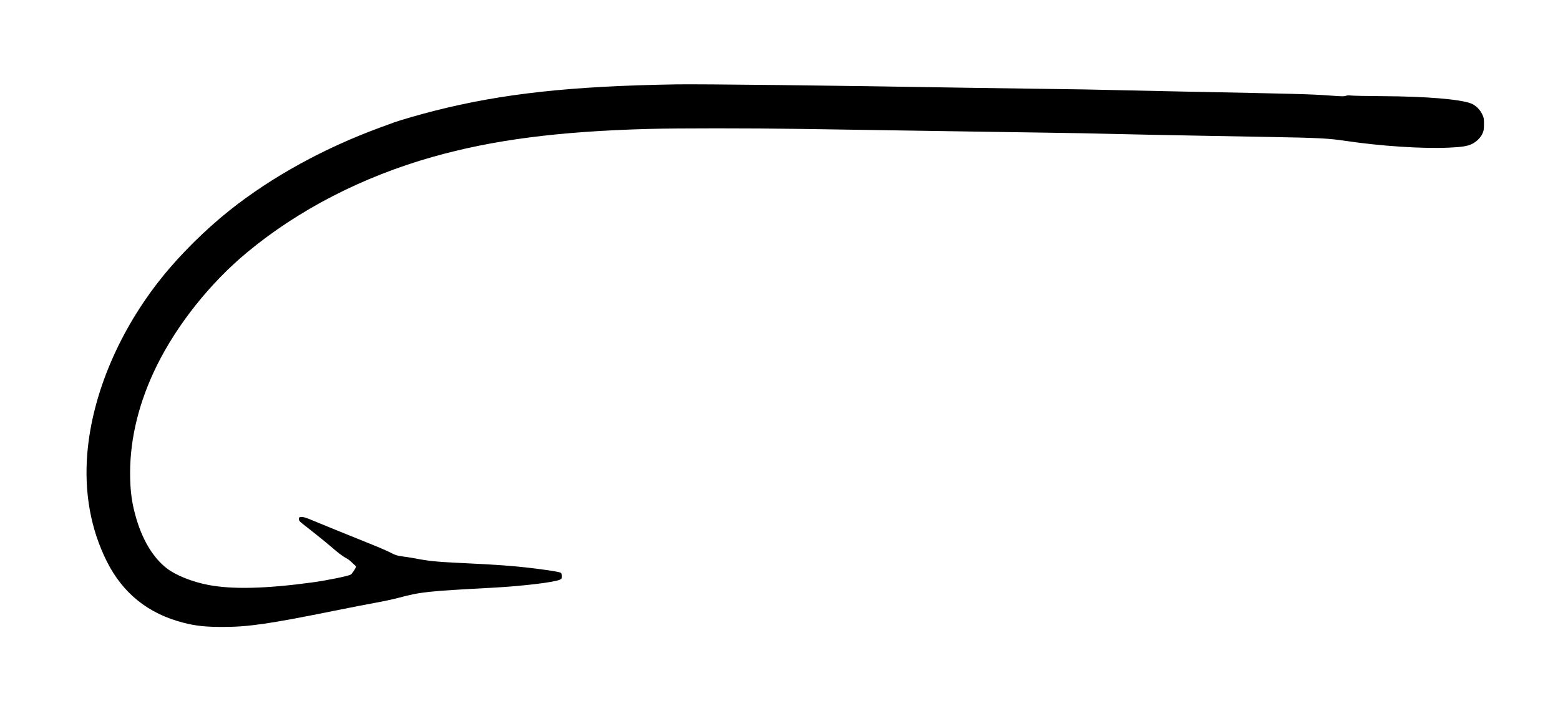
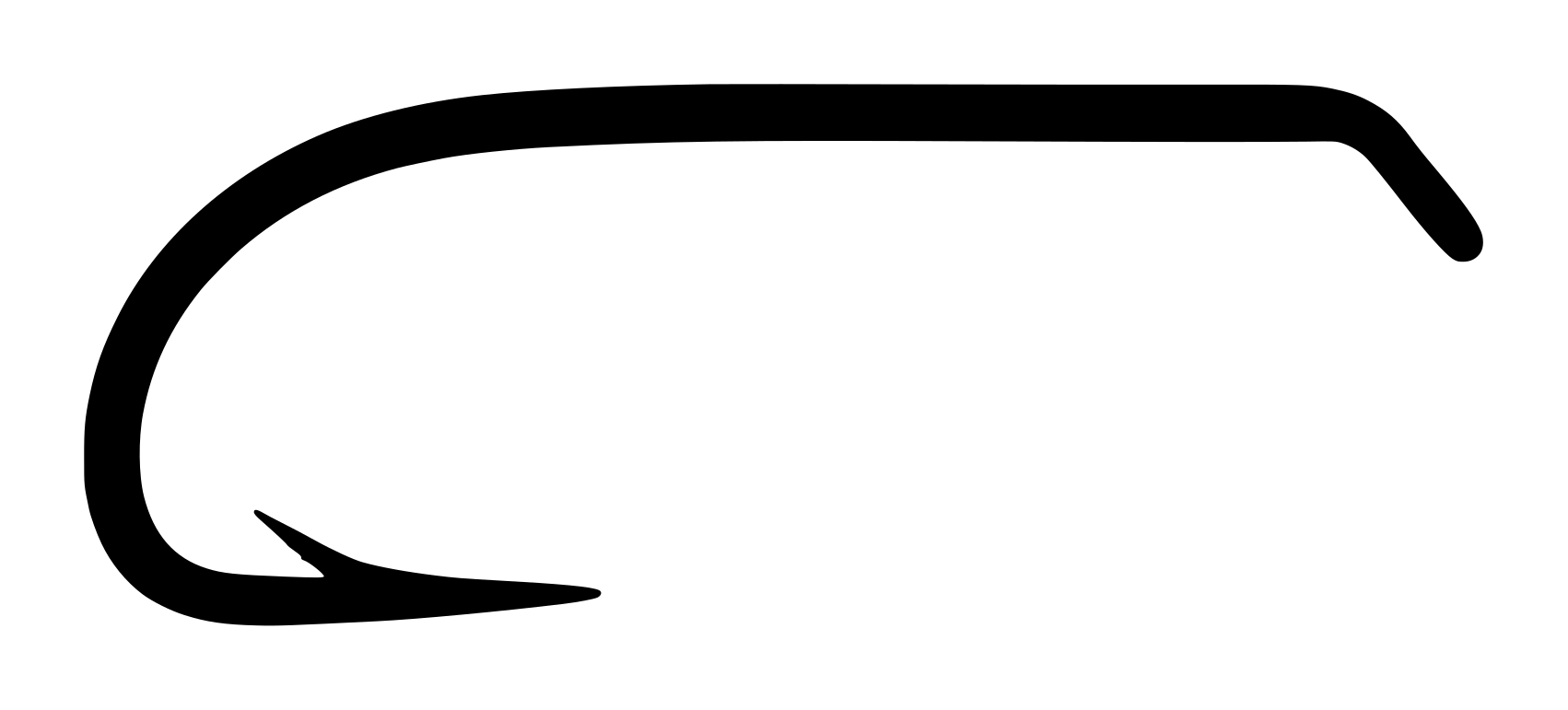
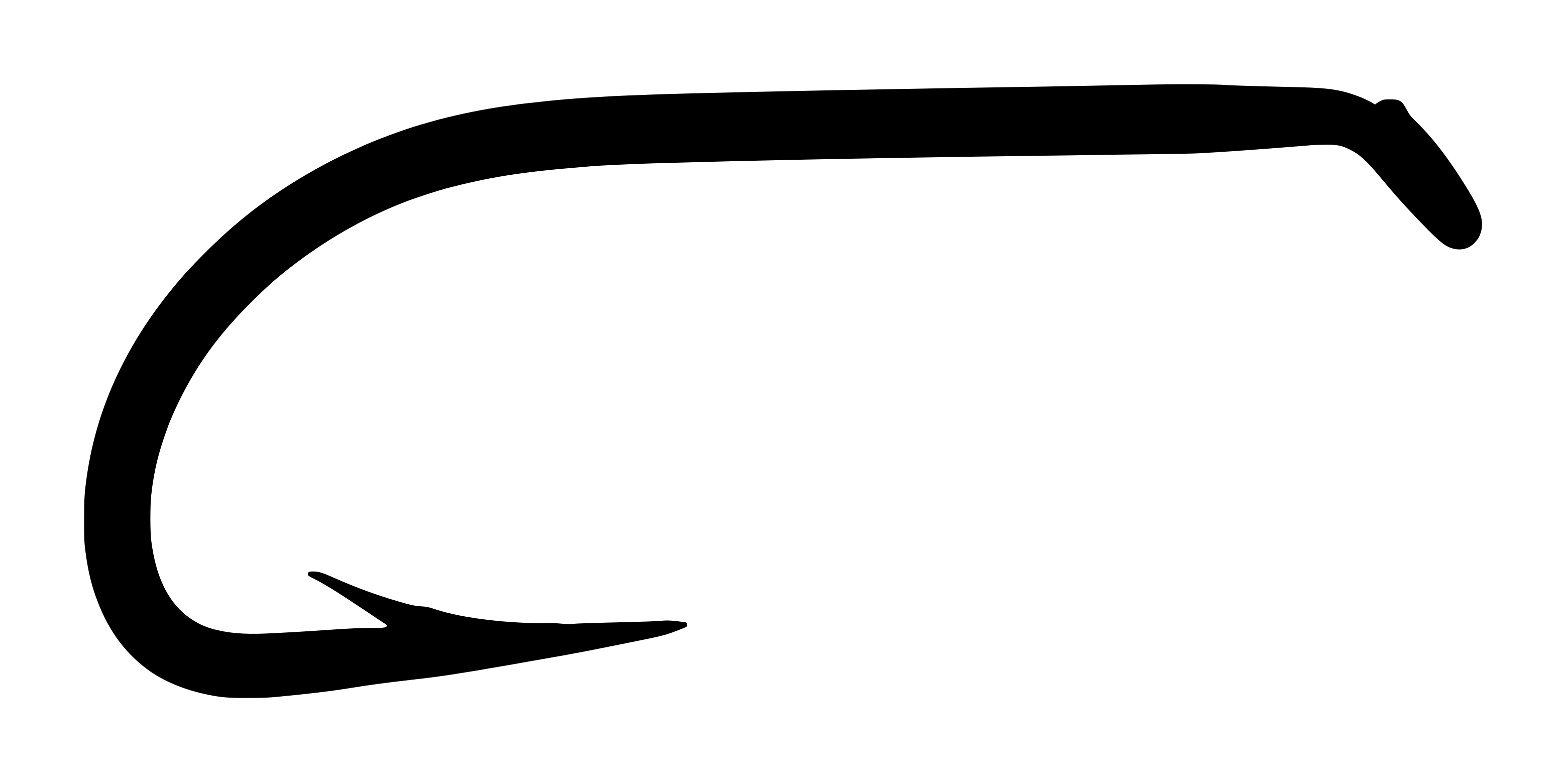
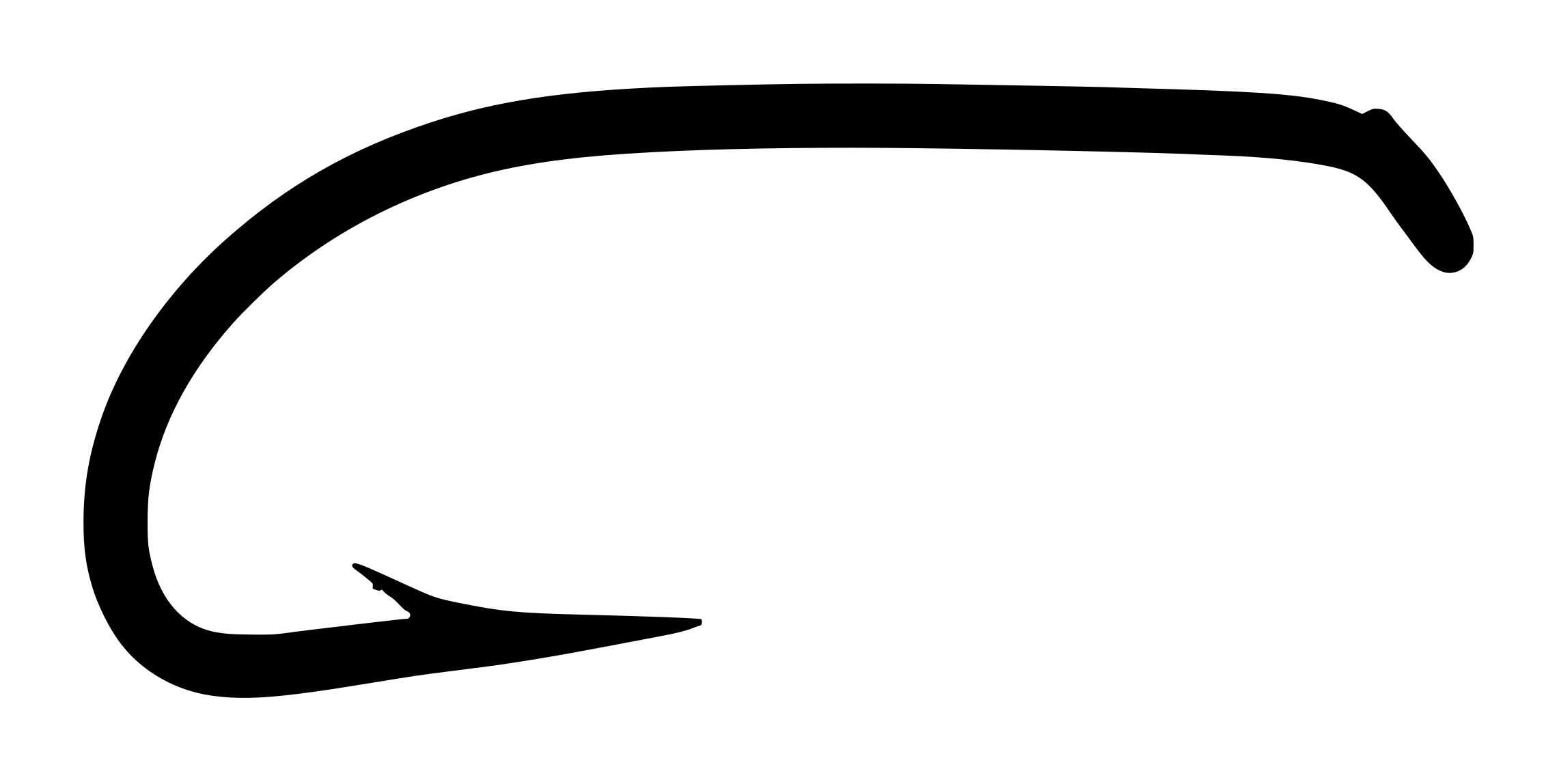
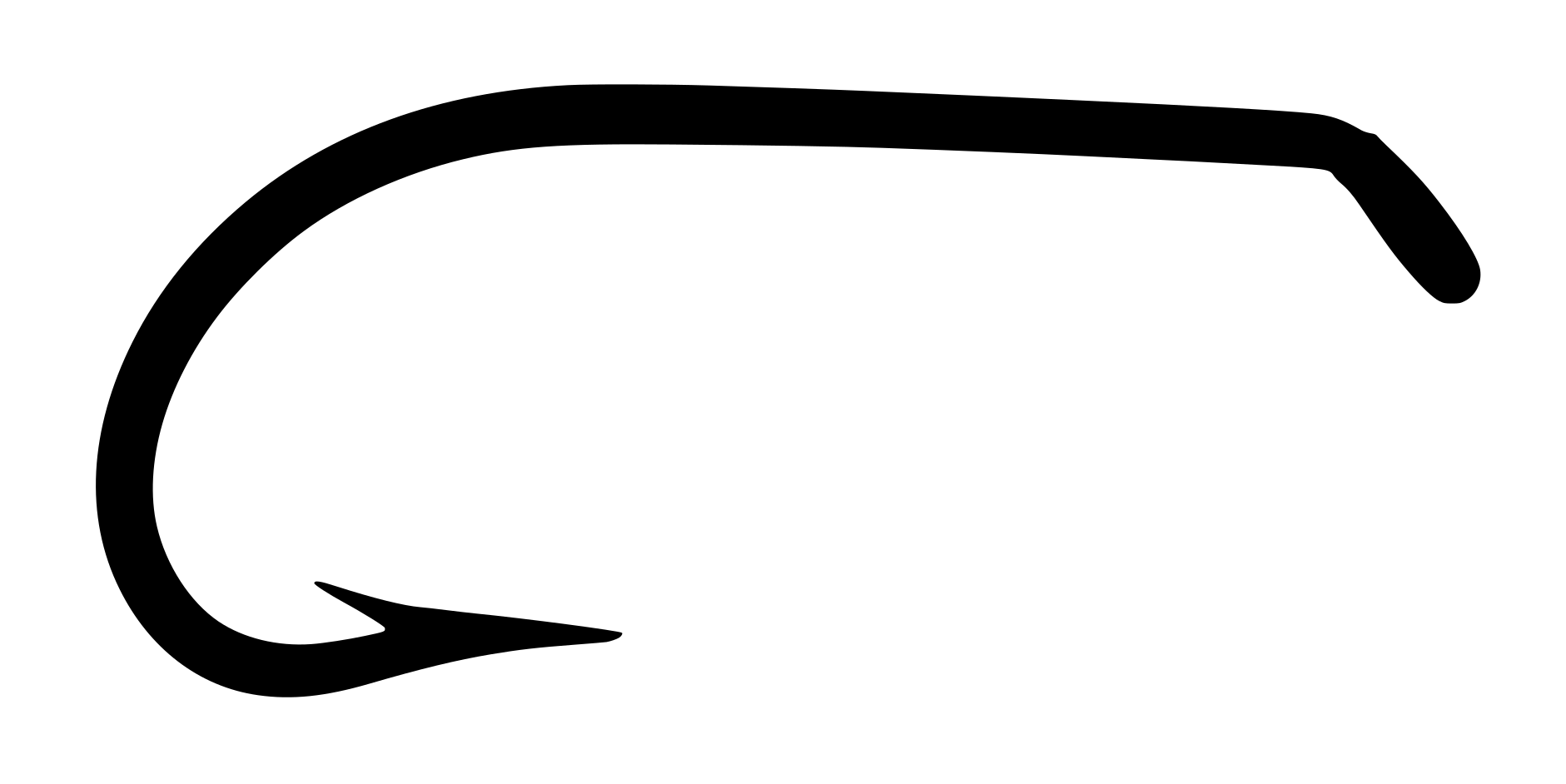
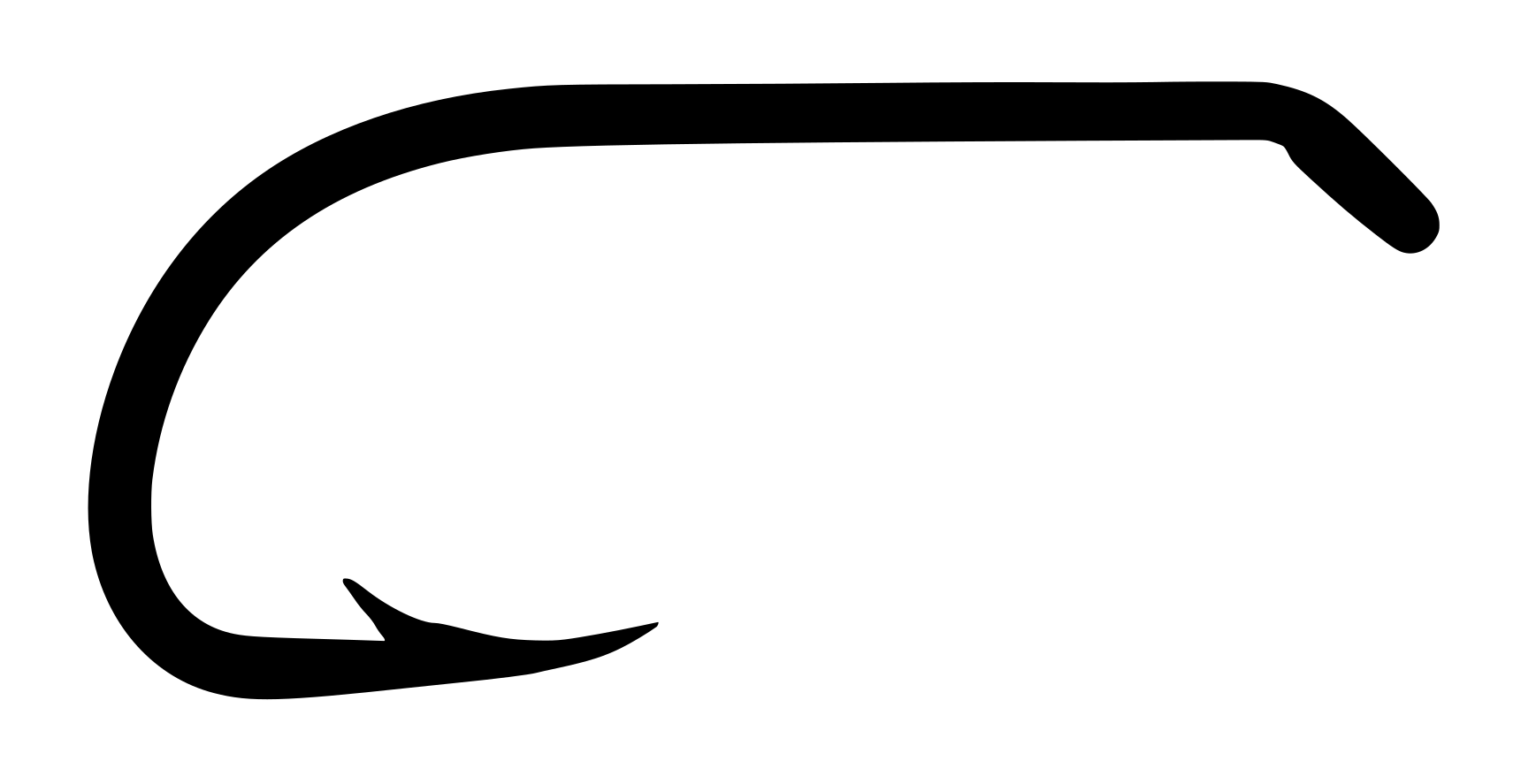
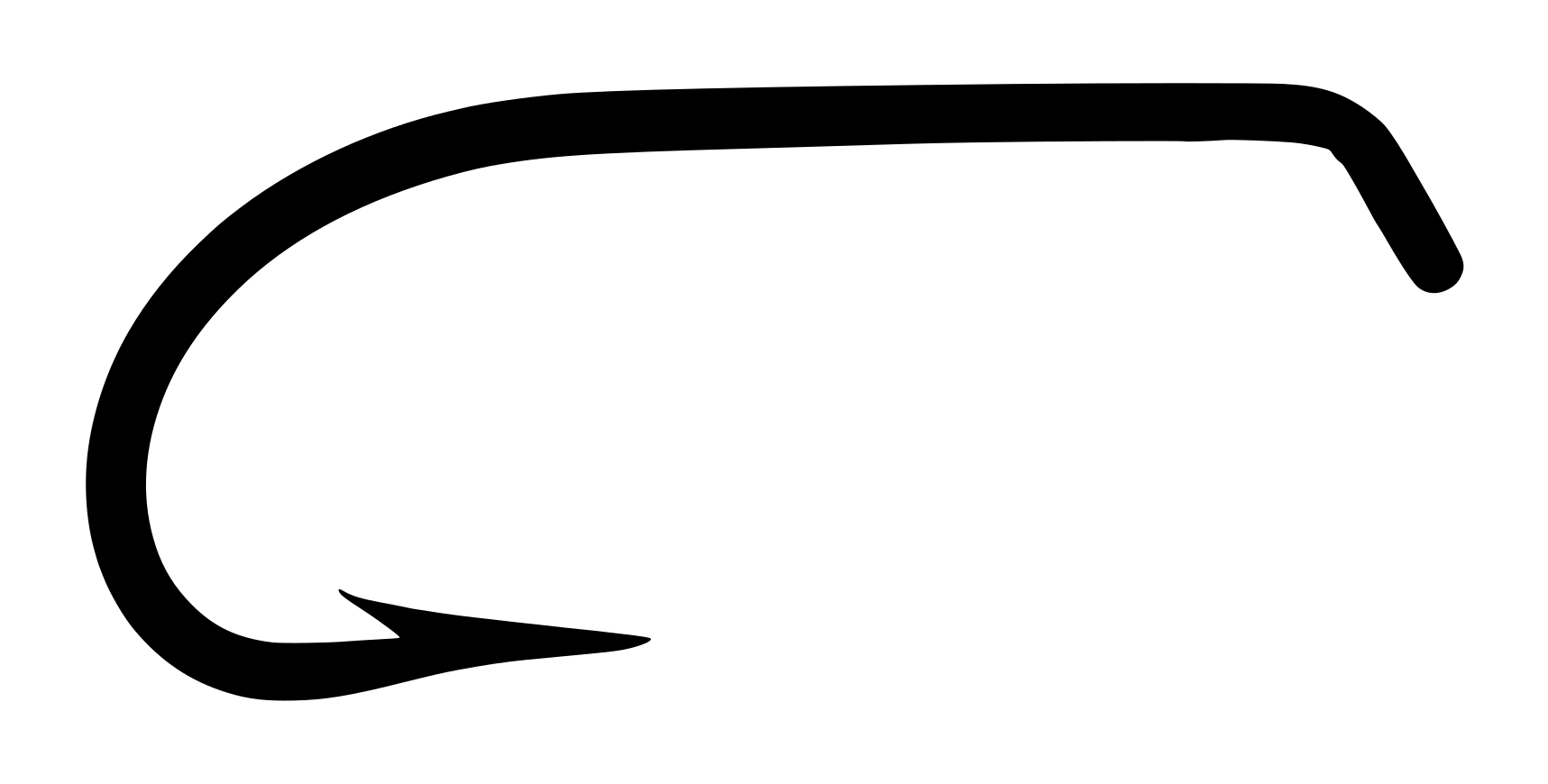
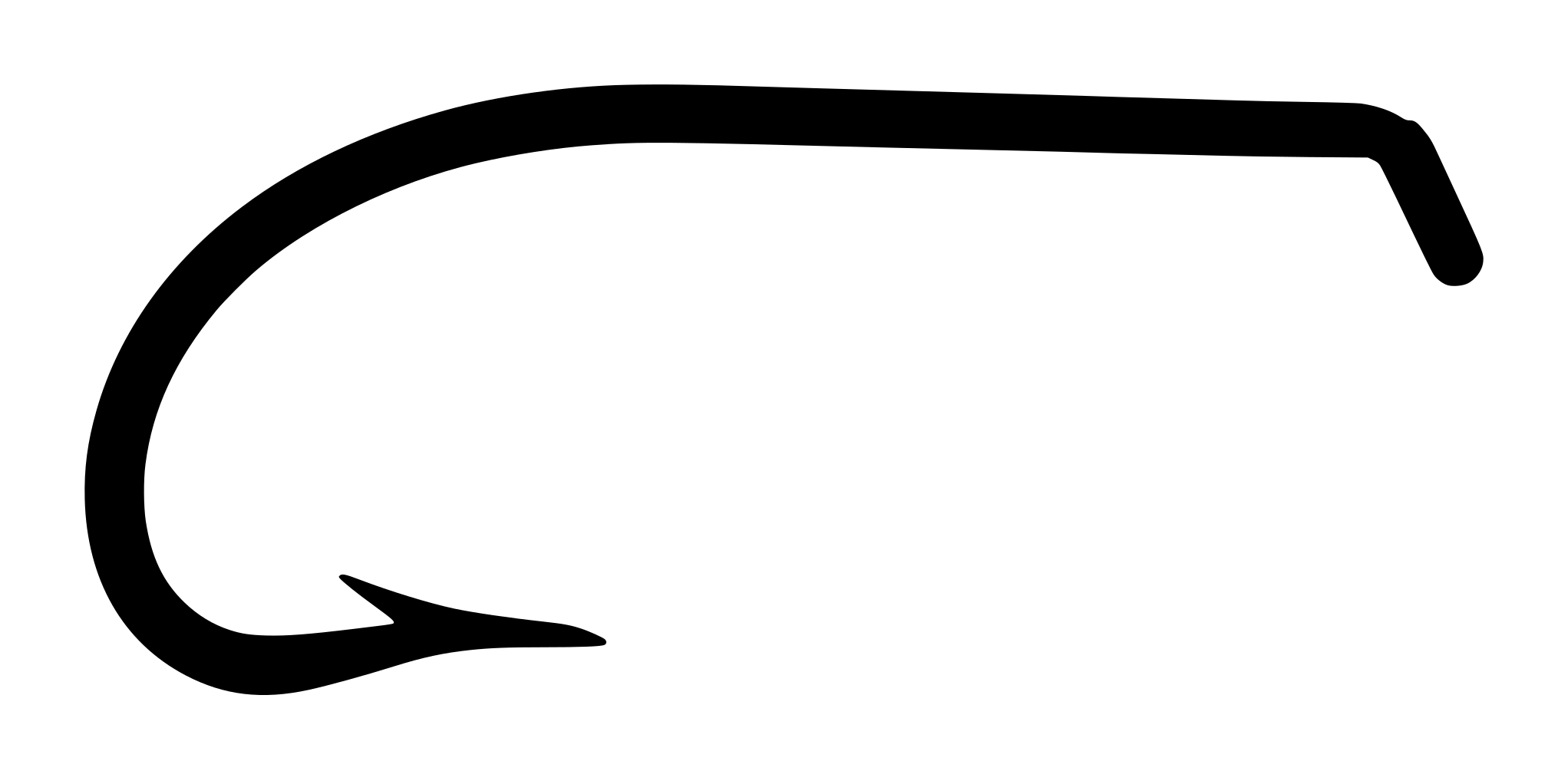
- Overall Length
- 23 mm
- Shank Length
- 9 mm
- Gap Width
- 9 mm
- Bend Depth
- 10 mm
- Shank-to-Gap Ratio
- ~1.0 : 1
- Confidence
- P Physical specimen
Grid-derived from photograph (1/10" grid)
Save this hook to your account to build a list you can come back to.
The Mustad 1921 R represents one of the most successful hook designs in angling history, featuring the classic Limerick bend with a reversed (offset) point for enhanced hooking capability. This short shank variant was specifically engineered for strength and compactness, making it ideal for both traditional wet fly fishing and natural bait presentation P.
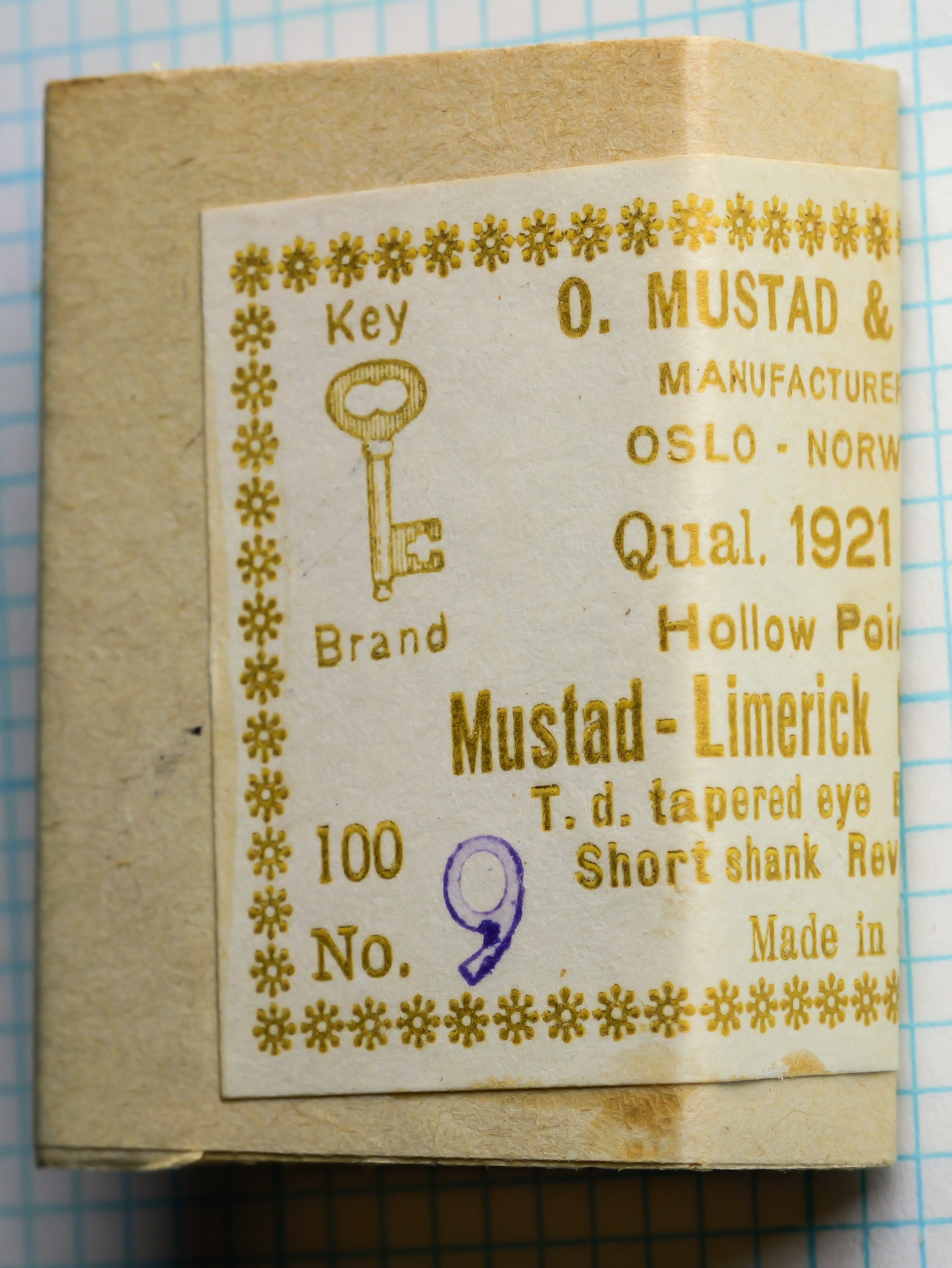
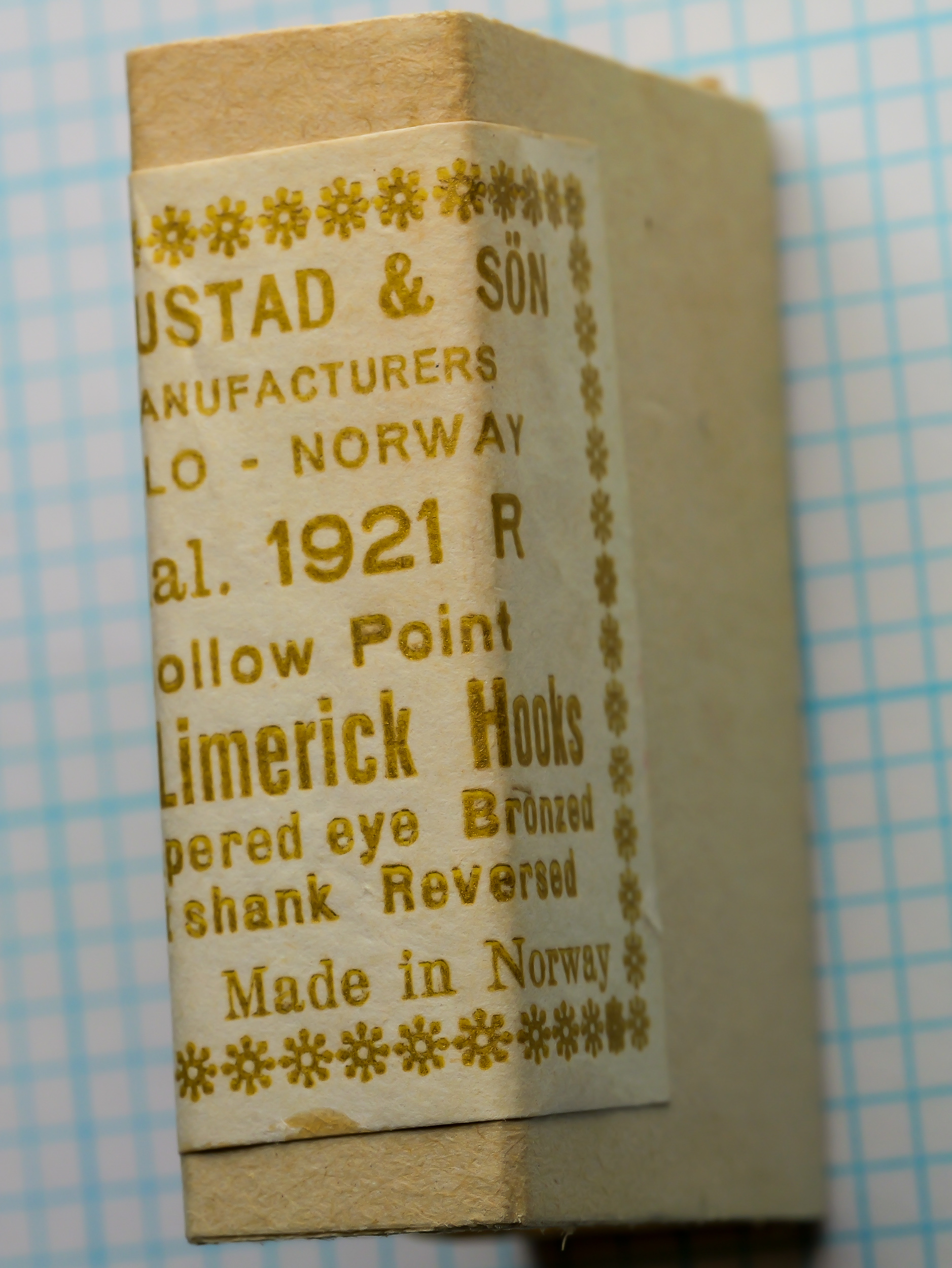
Manufactured by O. Mustad & Son in Oslo, Norway, during the mid-20th century (c. 1950-1965), this example showcases the company’s renowned ‘Key Brand’ quality standard. The gold foil label with decorative star border and Oslo address confirms the post-1925 era when Christiania was renamed V.
The combination of hollow point grinding, heavy wire construction, and bronzed finish made the 1921 R a favorite among European anglers. The reversed point geometry, clearly marked on the packaging, provided superior penetration for bait fishing while maintaining the structural integrity needed for larger fish P.
4 cataloged imagesSelect any record to load it above.
4 images shown
The hollow point grinding creates a concave inner face that concentrates penetration force at the tip while maintaining material strength at the barb P. The Limerick bend geometry provides maximum strength at the hook’s stress point through its angular bottom section, distributing load more effectively than rounded bends under heavy strain I. The reversed point offset increases hooking probability by creating an aggressive angle of attack when the hook rotates during the strike I.
Grid-derived from photograph (1/10" grid)
We don't have measured sizes for this hook yet. Own one? Submit calipered measurements and we'll review and add them. Thank you!
O. Mustad & Son was founded in 1832 by Ole Mustad in Gjøvik, Norway, initially as a nail and wire manufacturer. The company’s transition to fishhook production began in the 1870s under Hans Mustad, Ole’s son, who recognized the global market potential for quality steel hooks. By the early 1900s, Mustad had established itself as the world’s largest hook manufacturer, with operations spanning multiple continents.
The company’s Oslo facility, referenced on this packaging, served as a major distribution center for European markets. Mustad’s ‘Key Brand’ designation, prominently featured on this box, became synonymous with consistent quality and metallurgical excellence throughout the mid-20th century.
The 1921 series was introduced by Mustad in the early 1920s as a comprehensive line of general-purpose hooks. The standard 1921 featured a straight eye and became one of the most widely distributed hook patterns globally. The 1921 R variant, with its turned-down tapered eye and reversed point, was developed to meet specific European preferences for wet fly fishing and specimen angling.
This series remained in continuous production for over five decades, with minor manufacturing refinements but consistent core geometry. The 1921 R’s combination of Limerick bend strength and offset point efficiency made it particularly popular in British and Scandinavian markets, where it was often specified for salmon and sea trout applications.
Box shows 'Oslo' which indicates post-1925 (city renamed from Christiania). Gold foil label with star border pattern, specific Key Brand typography, and cardboard box construction are characteristic of Mustad's mid-20th century export packaging style. Absence of modern barcode or postal codes suggests pre-1970s production.
During the 1950s, Mustad advertised that they produced over 60,000 different hook patterns and sizes, making them the world's most comprehensive hook manufacturer. The 1921 series alone accounted for millions of hooks annually, with the 1921 R variant becoming particularly popular among British salmon anglers who appreciated its ability to hold large sea-run fish in powerful currents.
The Mustad 1921 R was designed as a versatile hook for both wet fly fishing and natural bait presentation. The short shank Limerick bend provided exceptional strength for larger trout and salmon, while the reversed (offset) point increased hooking efficiency. Popular for traditional wet flies like spiders and winged patterns, as well as bait fishing with worms or salmon eggs P.
Nymph patterns, small streamers, specimen fishing
Traditional wet flies, spider patterns, soft hackles
| Hook | Match Quality | Notes |
|---|---|---|
| Mustad 92620 | Good | Modern beak hook with similar offset geometry but different bend family |
| Kamasan B980 | Moderate | Specimen hook with offset point but heavier construction |
Historically significant as a classic Mustad pattern with excellent documentation, but production volume limits rarity appeal.
The 1921 R benefits from strong historical significance as one of Mustad’s most successful designs, with clear Oslo-era provenance and complete original packaging. The combination of hollow point technology and Limerick bend geometry represents important developments in 20th century hook manufacturing P.
However, the high production volumes and widespread distribution of the 1921 series limit its rarity value. Complete boxed examples command moderate collector interest, particularly among those specializing in Norwegian tackle or mid-century Mustad patterns I.
Small cardboard box with gold foil label featuring decorative star border pattern. White label with gold lettering shows full specifications: 'O. MUSTAD & SON MANUFACTURERS OSLO - NORWAY Qual. 1921 R Hollow Point Mustad - Limerick T.d. tapered eye Bronzed Short shank Reversed Made in Norway'. Purple ink stamp shows '9' for size marking. Box measures approximately 1.5 x 1.0 x 0.5 inches.
Boxed examples typically sell for $15-25, with premium pricing for mint condition packaging reaching $35. Individual hooks have minimal value.
eBay, European tackle collectors, Norwegian fishing memorabilia dealers
Look for the characteristic gold foil label with star border and ‘Oslo’ address. The purple size stamp and ‘Key Brand’ designation are authentication points. Reversed point should be clearly visible when viewed from above.
Store the original cardboard box in a cool, dry environment to prevent deterioration of the gold foil label. The bronzed finish on the hooks is relatively stable but can develop patina with humidity exposure. Keep hooks on original card rather than loose to maintain collector value. Avoid handling the gold foil label directly as oils can cause discoloration over time.
The purple ink stamp showing ‘9’ appears to be a factory size marking applied during packaging. The ink color and stamp style are consistent with Mustad’s quality control practices from the 1950s-1960s era. This marking method was used to verify size accuracy during the packaging process.
| P | Photographically verified — Directly observable in the photograph(s) on this page. |
| V | Verified by documentation — Confirmed by manufacturer catalog, spec sheet, or published reference. |
| I | Inferred — A logical deduction from observable or documented evidence, not directly stated. |
| E | Estimated — An approximation based on visual comparison, proportional analysis, or limited data. |
| S | Speculative — A reasoned hypothesis that cannot be confirmed from available evidence. |
Claims with no notation are confirmed by multiple independent sources. All photographs on garrenwood.com are taken on a measurement grid where each square equals 1/10 inch (0.1″ / 2.54 mm).
Your cart is empty.