The S. Allcock & Co. 1810 TDE is a classic British Limerick-bend hook for salmon and sea-trout wet-fly fishing, manufactured in Redditch, England. The model exemplifies mid-20th-century Redditch precision forging, featuring a tapered-down eye and hollow-point specification — both premium manufacturing features that distinguish it from mass-produced industrial hooks. The defining physical characteristic is the distinctly concave inner face of the hollow point, achieved through skilled die-forging and hand-finishing. This geometry is designed to concentrate pressure at the point tip for superior hook-set performance on hard-mouthed game fish.
Era evidence is strong: the cream cardstock packaging with letterpress printing, the absence of a barcode, the Allcock deer trademark logo, and the traditional card format all point to production between the 1920s and 1960s. The packaging’s design and typography are consistent with Allcock’s standard mid-20th-century presentation. The 100-hook count card represents the standard commercial format for Allcock wholesale distribution.
Collecting significance: The 1810 TDE is a scarce and highly desirable hook for collectors interested in Redditch manufacturing heritage, British fly-fishing tradition, and the craftsmanship of independent tackle makers. Complete original packaging with all hooks intact commands a substantial premium. The model represents an era when hook quality was defined by hand-finished precision work — skills and production methods that have largely disappeared from the industry. Allcock hooks are actively sought by fly-fishing historians, spey-casting enthusiasts, and collectors of industrial design heritage.
Original S. Allcock & Co. cream cardstock packaging for the 1810 TDE 'Best Hollow Point' Limerick hook, size 8, containing 100 bronzed hooks. Shows the deer trademark logo and classic Redditch manufacturer branding.
Photographic record
4 cataloged imagesSelect any record to load it above.
4 images shown
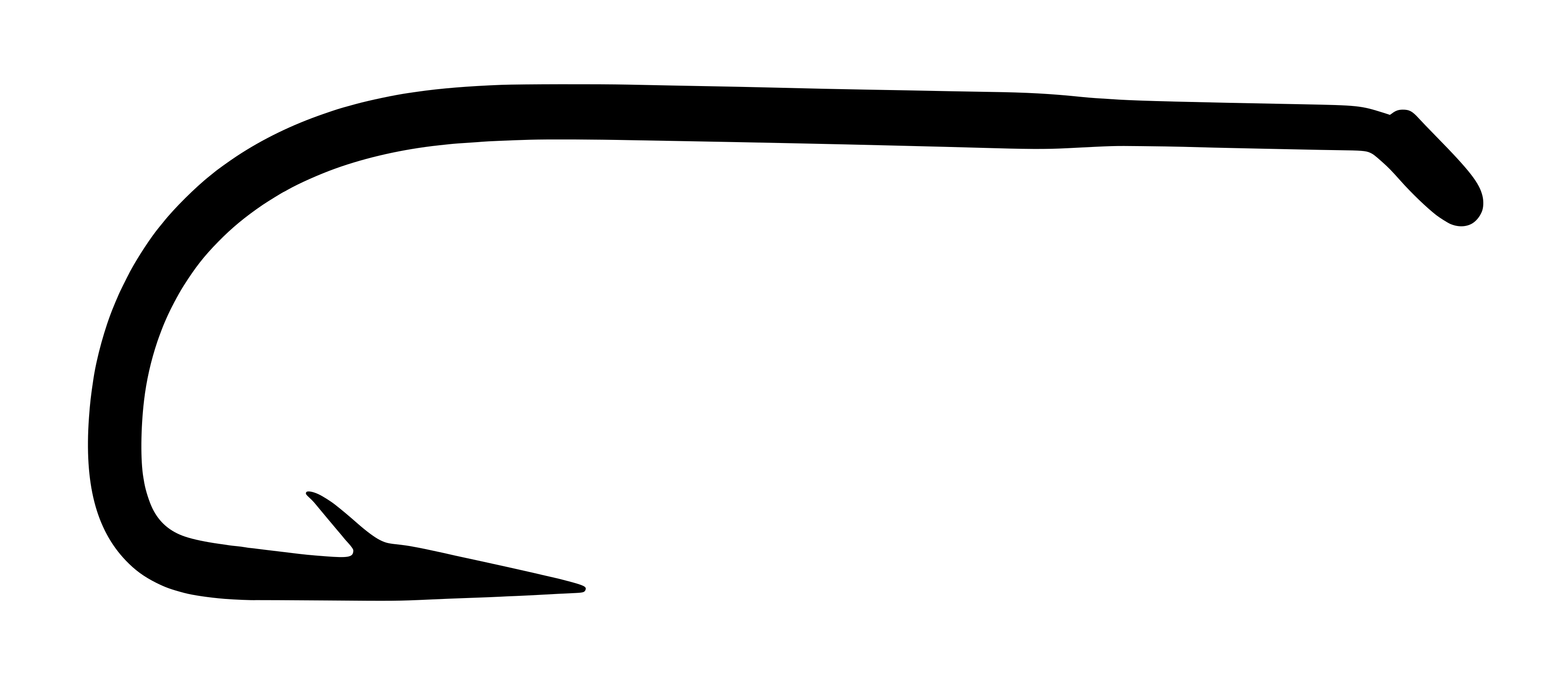
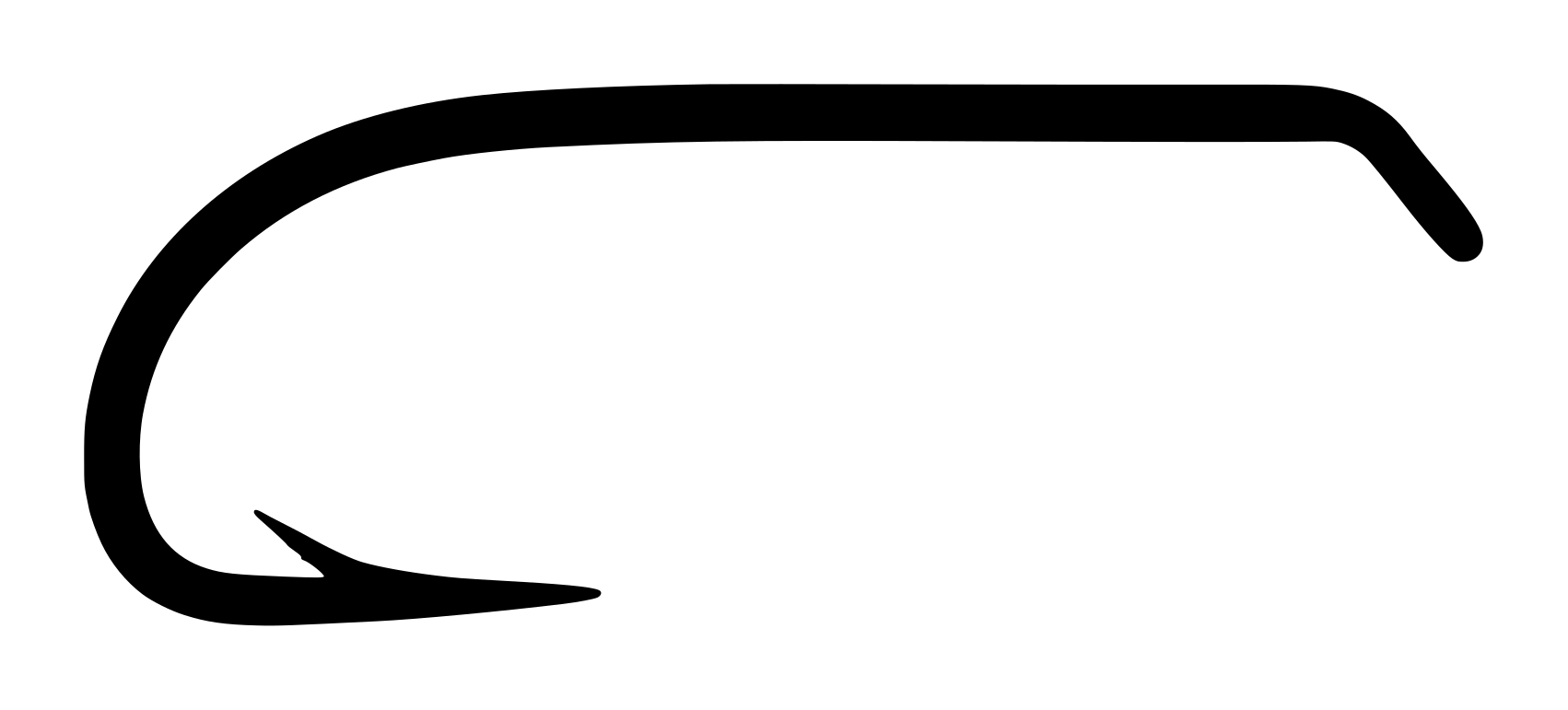
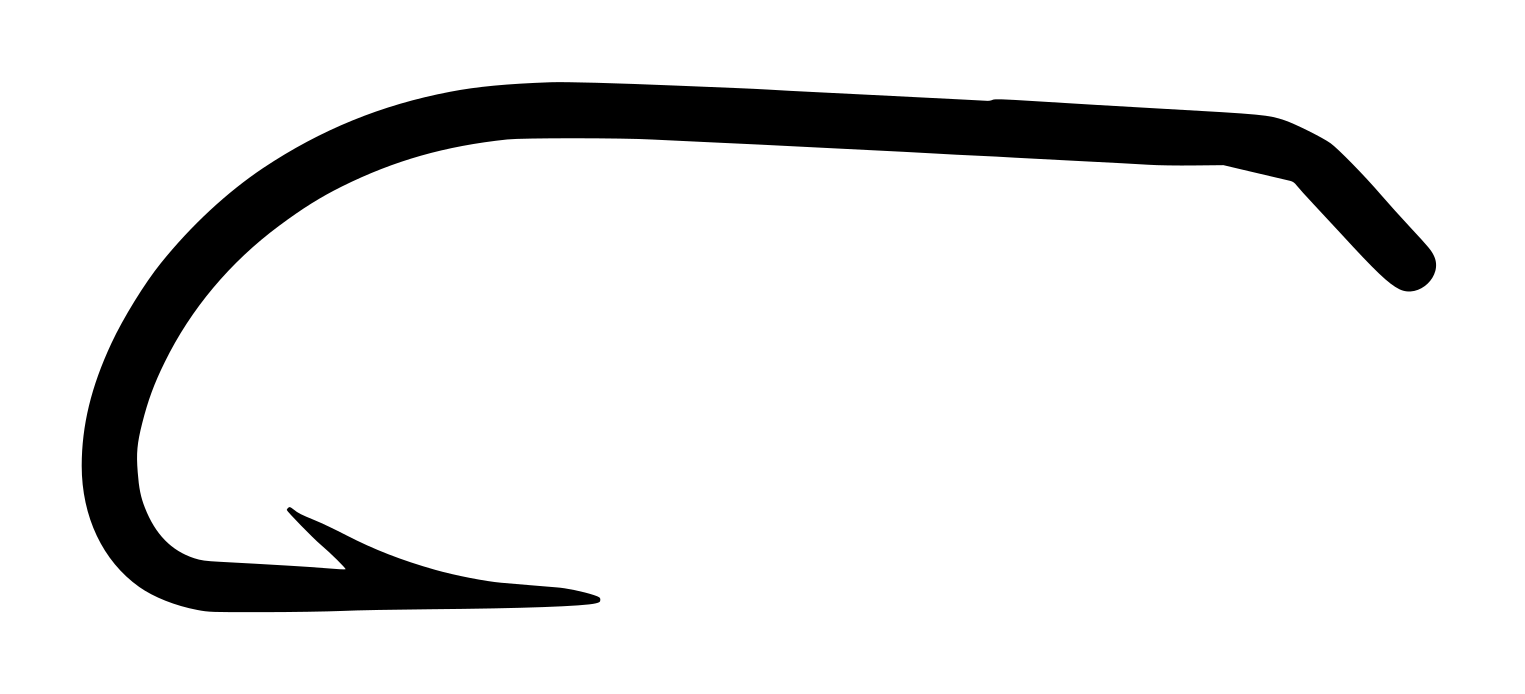
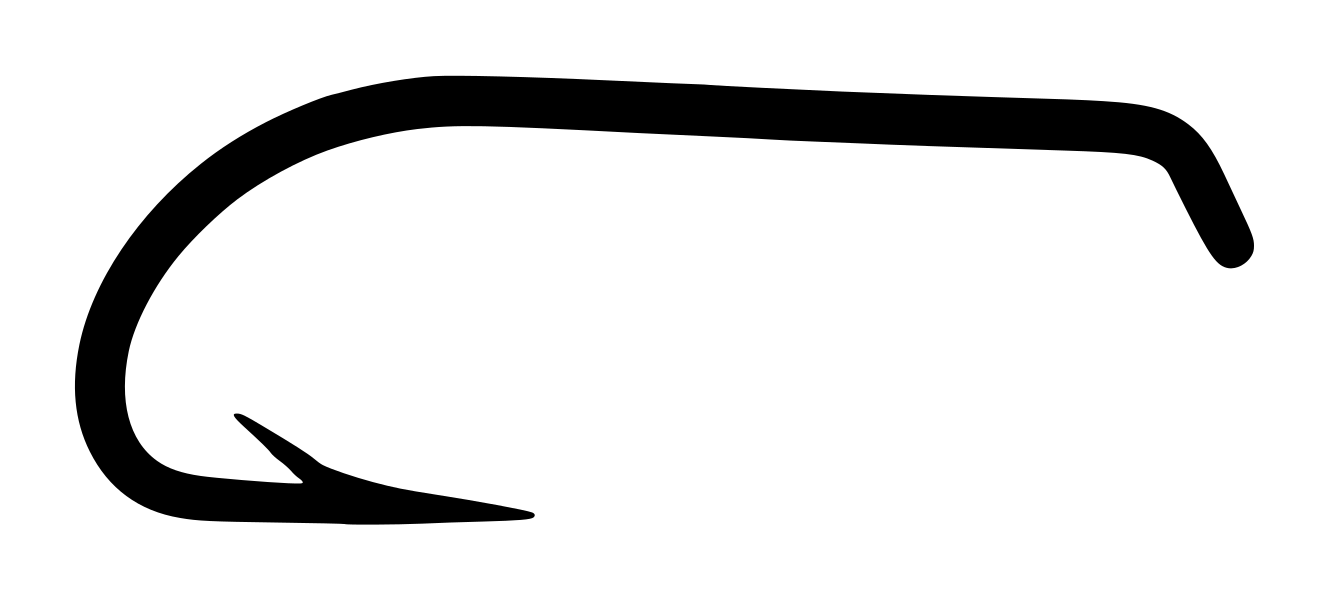
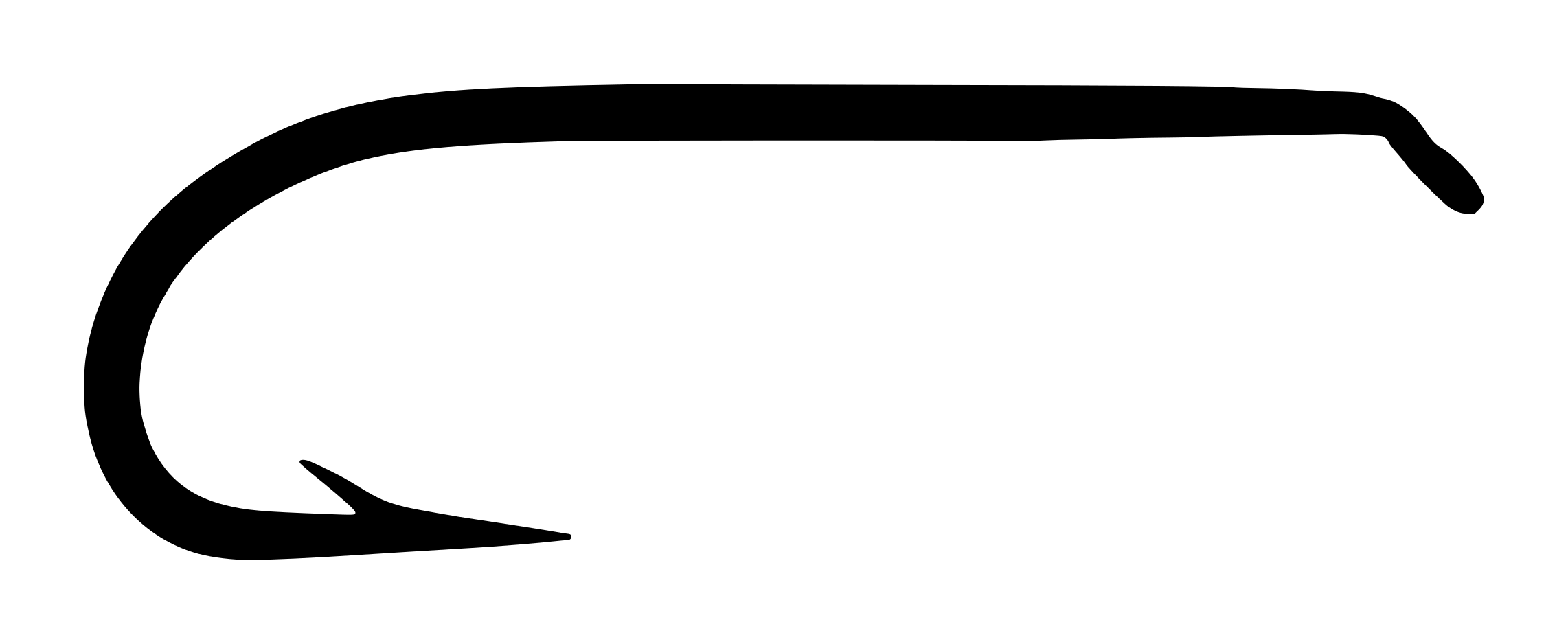
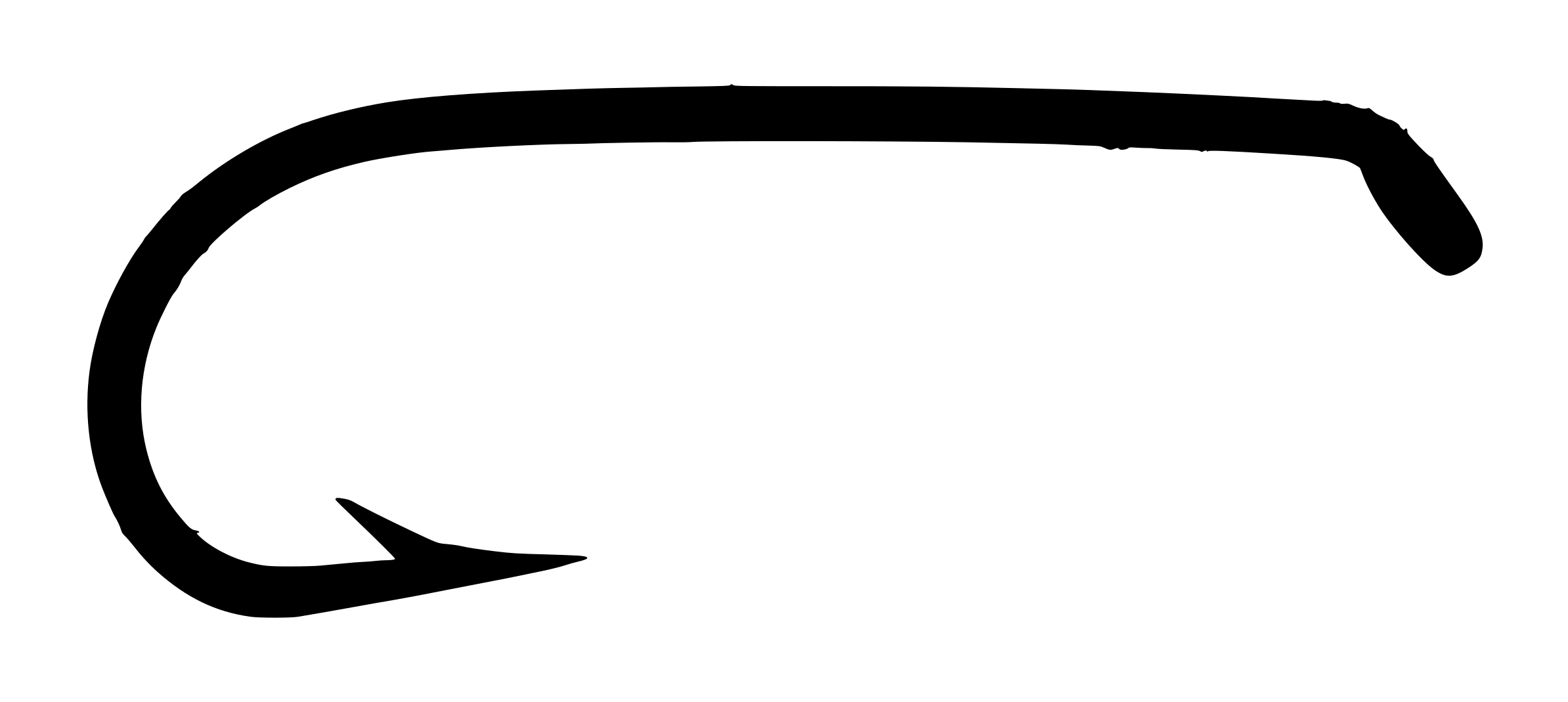
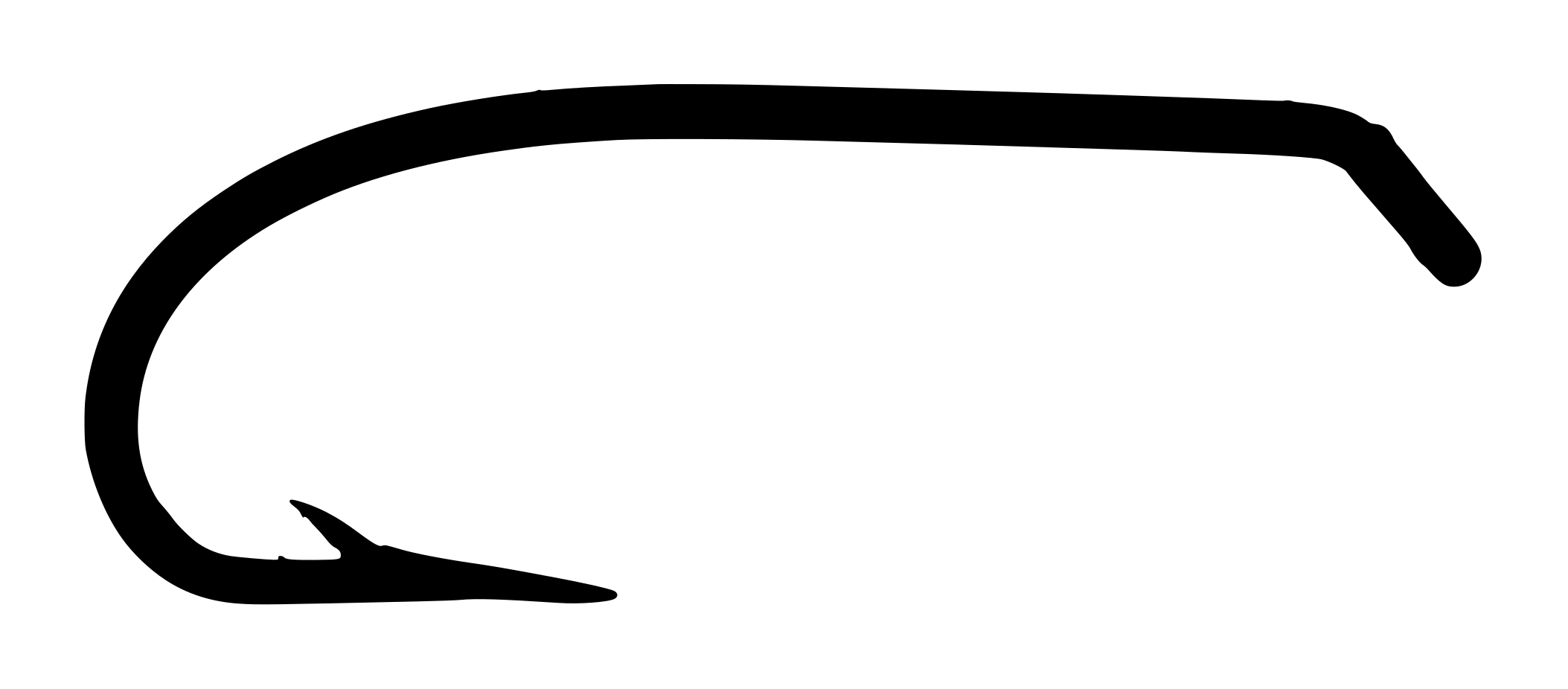
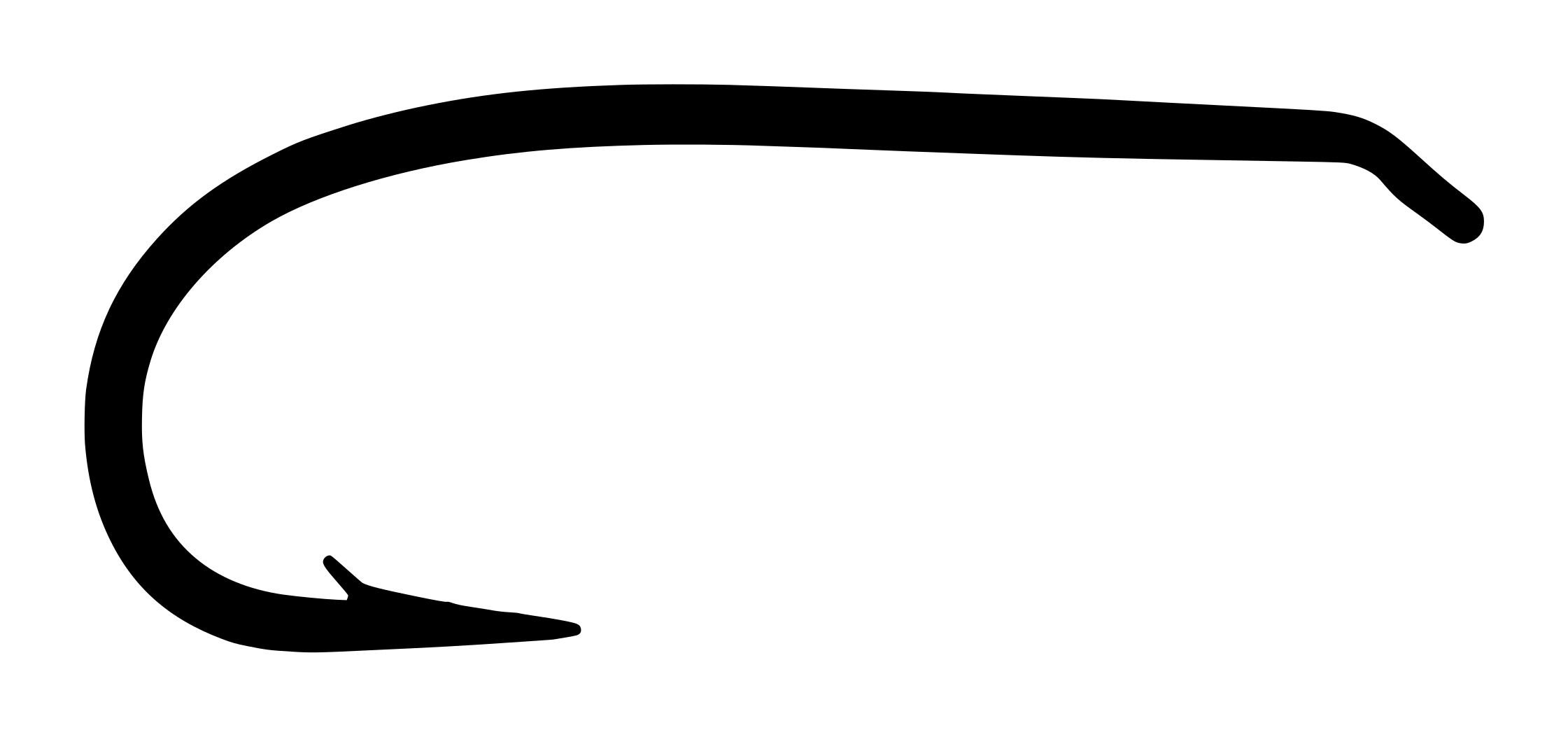
S Allcock 1810 TDE Box and Label Size 8Original S. Allcock & Co. cream cardstock packaging for the 1810 TDE 'Best Hollow Point' Limerick hook, size 8, containing 100 bronzed hooks. Shows the deer trademark logo and classic Redditch manufacturer branding.Open originalS Allcock 1810 TDE Hook Point Size 8Close-up of the 1810 TDE hook point showing the hollow point geometry and fine barb placement. The concave inner face and sharp taper are characteristic of Allcock's precision Redditch forging.Open originalS Allcock 1810 TDE Hook Size 8Side profile view of the 1810 TDE hook showing the angular limerick bend geometry and standard shank length. The bronzed finish and smooth wire profile are clearly visible.Open originalS Allcock 1810 TDE Hooks Size 8 ComparisonTwo 1810 TDE hooks, size 8, displayed for comparative geometry reference. Shows consistent bend profile, eye design, and bronzed finish across multiple specimens from the same production lot.Open original
Technical profile
Turned-Down Tapered Eye | Limerick Bend | Standard Shank | Standard Wire | Hollow Point | Bronzed Finish
Eye
Tapered Eye, Turned DownTapered-down eye (TDE) with smooth taper from eye loop to shank; no flatting or spade-end construction visible P. Eye is cleanly formed and proportional to shank diameter P. Researcher confirmation notes taper geometry as tapered, not blind-flatted V.
Wire
Extra-Heavy (2X+), Round
Shank
1X Long — Plain
Bend
Limerick, Standard gapAngular Limerick bend with rounded bottom and pronounced shoulder; characteristic of Allcock forging P. Bend is symmetrical and proportional to standard Limerick specification for size 8 P.
Point
Hollow Point (concave inner face)Short, close-cut barb positioned immediately adjacent to point taper; sharp angle characteristic of Redditch precision forging P. Barb size proportional to standard Limerick specification E.
Finish
Bronzed — Confirmed (stated on packaging)Warm brown bronzed tone visible throughout P. Finish is confirmed as bronzed by packaging specification V. No corrosion or patina darkening beyond normal aging; uniform coverage suggests factory bronzing rather than accumulated patina P.
Specimen card shows light cream aging patina and minor foxing consistent with decades of storage. All 100 hook slots appear intact and hook count appears complete. Hooks display even bronzed finish with no corrosion or pitting. Card edges show minor rounding and wear from handling but corners remain intact. Packaging text and graphics remain clear and legible.
The hollow point on the 1810 TDE is achieved through die-forging and hand-finishing. The forging process creates the characteristic concave inner face by striking the steel wire between shaped dies that form the point taper. The concavity serves both a mechanical and functional purpose: mechanically, it allows a sharper effective cutting edge by removing material from the inner face while maintaining structural integrity at the barb; functionally, the inward curve concentrates pressure at the point tip during hook-set, improving penetration through the jaw tissue of hard-mouthed fish such as salmon.
The tapered-down eye (TDE) is formed by hand-wrapping the eye around a mandrel and then tapering (drawing down) the wire as it approaches the shank, creating a smooth transition rather than an abrupt collar. This requires skilled eye-finishing work and is a signature of premium Redditch production. The taper reduces stress concentration at the eye-shank junction, a critical failure point when large heavy flies and hard-hitting fish are involved.
The Limerick bend geometry — with its pronounced angular bottom and relatively short shank — is optimized for wet-fly fishing in fast water. The bent configuration provides excellent hook-hold geometry and reduces tangling during casting and presentation. The short shank minimizes undesirable twist and rotation that can occur with longer-shanked patterns in moving water.
Wire gauge (standard/medium) was selected to balance strength (necessary for salmon) against point sharpness (required for reliable penetration). Finer wire would improve hook-set but risk breakage during the fight; heavier wire would provide durability but dull the point. The standard gauge represents Redditch’s empirical optimization for this hook class.
The 1810 TDE series represents S. Allcock & Co.’s core offering for salmon and sea-trout wet-fly fishing. The model designation ‘1810’ was part of Allcock’s internal catalog numbering system; the ‘TDE’ suffix explicitly denotes ‘Turned-Down Eye’ — a defining specification that distinguished the model from alternative eye constructions (blind-eye, loop-eye) within the broader Allcock portfolio.
The ‘Best Hollow Point’ branding was introduced to emphasize the hook’s point geometry and its claimed superiority for game-fish applications. The hollow point was a manufacturing specification — not a casual descriptor — achieved through precision forging that created a distinctly concave inner face. This geometry was marketed as providing a sharper effective cutting edge and more reliable hook set on hard-mouthed fish.
The 1810 TDE was available in a range of sizes from No. 2 (large salmon) through No. 16 (small trout patterns), with size 8 representing a mid-range offering suitable for general salmon and summer sea-trout work. The model was produced continuously from at least the 1920s through the 1950s-1960s, with no documented discontinuation date in available Allcock catalogs. Variants in bronzed, japanned, and likely nickelled finishes were offered, though bronzed remained the standard specification for game-fish hooks.
Era and Packaging Dating
Packaging evidence: S. Allcock & Co., Ltd., Redditch designation with traditional letterpress printing and period typography suggest pre-1960s production. The absence of a barcode strongly indicates production before 1974. The card format uses plain cream cardstock with black letterpress text — consistent with Allcock's production methods from the 1920s through 1950s. The deer trademark logo (visible on packaging) is consistent with Allcock branding from this era. The rounded corner card construction and hand-finished appearance are typical of mid-20th-century tackle manufacturing, before plastic clamshell packaging became standard in the 1960s-1970s.
The Redditch Hollow Point
The Redditch hook-making tradition emerged from the region's medieval nail-smithing industry. By the 18th century, skilled metalworkers adapted their forging skills to hook manufacturing, establishing Redditch as the world center of hook production. S. Allcock & Co. was one of the last independent Redditch makers to maintain in-house forging and hand-finishing throughout the 20th century. The company's emphasis on the 'Best Hollow Point' — a specification visible in microscopic detail on each hook — reflected the Redditch philosophy that fishing success depended on uncompromising precision in every dimension. Today, surviving Allcock hooks are sought by collectors as tangible evidence of a manufacturing tradition that has nearly disappeared from British industry.
Design lineage and influence
The 1810 TDE descends from the broader Limerick bend tradition established in Irish hook-making during the 18th century. The Limerick design — characterized by its angular, pronounced bend and relatively short shank — became the preferred pattern for salmon and large sea-trout flies throughout the British Isles. Allcock’s adoption of the Limerick geometry and subsequent refinement through precision forging elevated the design to a standard specification across British tackle makers.
The tapered-down eye (TDE) construction on the 1810 reflects Allcock’s innovation in eye design during the early-to-mid 20th century. Rather than the blind-flatted (spade) eye common on earlier 19th-century British hooks, the TDE provided a smoother transition from eye to shank, reducing knot-line stress and improving leader attachment security — a significant functional advantage for game-fish fly fishing.
The 1810 TDE competed directly with Partridge of Redditch’s Limerick designs and H. Milward & Sons’ offerings in the same category. The hollow-point specification was a direct response to demand for improved hook-set performance, particularly in Scottish and Irish salmon rivers where water conditions and fish behavior required reliable penetration.
Downstream influence: The 1810 TDE design pattern influenced later industrial manufacturers such as Mustad and Japanese makers like Tiemco, who adopted Limerick bend profiles and hollow-point specifications for their own game-fish hook lines. The design remains in limited production today by heritage manufacturers as a reference to the Redditch tradition.
Best matchRelated by Attribute
Computed automatically from catalog data — updated as new hooks are added.
Matches: Bend, Wire, Gap, Eye Orient., Point +6 moreDiffers: Shank: 1X Long vs 2X Long; Eye: Tapered Eye vs Ball Eye; Shank ratio: 70.2% vs 69.5% +2 more
Matches: Bend, Wire, Eye, Eye Orient., Point +4 moreDiffers: Shank: 1X Long vs 3X Long; Gap: Standard vs Narrow; Finish: Bronzed vs Black Japanned +1 more
The 1810 TDE is a classic British salmon and sea-trout wet fly hook, designed for traditional damp and sunk-fly fishing in Scottish and Irish rivers. The hollow point and tapered eye were standard specifications for holding larger flies and accommodating gut leaders without knot weakness. The standard shank length and limerick bend suit small to medium wet flies, particularly for summer fishing when lighter presentations are required.
Classic Fly Patterns
Not typically catalogued for specific fly patterns; used as a general-purpose salmon and sea trout wet fly hook
Modern Equivalents
Hook
Match Quality
Notes
Tiemco TMC 7999
Good
Modern Limerick-bend salmon hook with hollow point, closest equivalent in current production
Mustad 36890
Moderate
Industrial Limerick variant; lacks hand-finished hollow point and tapered eye precision of original
Collector notes
Rated 5.5/10 — Allcock specialty hooks are scarce within the broader vintage tackle market, and the 1810 TDE represents a respected Redditch craft design with established collector demand among fly-fishing historians. Size 8 in bronzed finish with complete original packaging is uncommon. The primary limiting factor is that Allcock hooks, while prized by specialists, lack the extreme rarity of single-maker craft patterns or exceptional point styles. Original sealed packaging commands a significant premium.
Reference value
$22 – $58 USD estimate
Packaging format
allcock-card-100Catalog code
The 1810 TDE is a highly collectible vintage hook for several reasons: (1) It represents S. Allcock & Co.’s reputation as a premier Redditch hook maker, with a direct lineage to the English fly-fishing tradition; (2) The hollow point specification and tapered eye are precision manufacturing features that require skilled hand-finishing — this craftsmanship appeals to collectors interested in industrial heritage; (3) Original packaging from Allcock is increasingly scarce, particularly complete cards with all 100 hooks intact; (4) The salmon/sea-trout application connects to an active collector subculture of traditional spey and damp-fly enthusiasts.
What limits the rating: Allcock hooks were produced in substantial volumes compared to single-maker craft pieces or rare foreign patterns. Size 8 is relatively common within Allcock’s range, though smaller sizes (10-14) and larger sizes (2-6) are genuinely scarce. Bronzed finish is standard for the series — japanned or nickelled variants would command higher premiums. Condition factors: a sealed, untouched 100-count card in excellent packaging can reach the high end; opened cards with missing hooks drop significantly. Hooks showing corrosion or finish loss reduce value by 20-40%. The specific variant most desirable to collectors is the complete original card in mint condition with crisp packaging graphics and all hooks present.
Packaging
Cream cardstock sales card, approximately 3.5" × 2.25" (8.9 × 5.7 cm), with die-cut hook slots and black letterpress text. Packaging displays S. Allcock & Co., Ltd. deer trademark logo (upper left), model designation '1810 TDE' and 'Best Hollow Point' (prominent centered text), full manufacturer name and address 'Redditch, England' (lower portion), and quantity '100 Hooks' with size designation '8' (hand-written in purple ink on specimen). Card exhibits cream-to-light-tan aging patina consistent with 1920s-1960s paper stock. The rounded corners and finished edges are hand-trimmed or die-cut, typical of pre-1970s tackle card production. No barcode present. All text is traditional serif letterpress — no modern offset printing visible.
Market Value Notes
Low ($22): Good condition — opened packaging, 90-95 hooks present, minor card wear, hooks show light oxidation patina consistent with age
High ($58): Excellent condition — sealed or near-sealed original card, all 100 hooks intact, packaging crisp with minimal tone, hooks bright or evenly bronzed
Premium factors: Complete 100-hook count, sealed packaging, crisp Allcock branding graphics, all hooks perfect (no bent/broken), original tissue or envelope wrapper if present
Platforms: eBay UK (primary source for Allcock hooks), specialist tackle dealers, Redditch collectibles auctions, fly-fishing memorabilia fairs
Confidence: E estimated — limited recent sale data for this specific model; range derived from comparable Allcock vintage cards and comparable Redditch specialists' sales 2020-2024
Where to Find
eBay UK (most reliable source for Allcock vintage cards), UK-based vintage tackle dealers specializing in Redditch makers, fly-fishing heritage dealers, Redditch antiques markets, specialist tackle auctions in the Midlands
Preservation
Storage and Preservation
Store the original packaged card in a cool, dry environment away from direct sunlight and humidity. The bronzed finish will develop a natural patina over time; this is expected and considered desirable by collectors. Do not attempt to polish or clean the finish — patina development is evidence of age authenticity.
Keep the card in its original packaging rather than removing hooks. The card itself is a primary collectible artifact, and its condition directly affects value. If the card must be stored separately, use acid-free tissue paper or archival-quality materials. Avoid contact with other metals or ferrous materials that might cause galvanic corrosion.
Maintain relative humidity below 50% to prevent rust and oxidation. If any hooks show signs of active corrosion (white rust or pitting), the entire card should be stored in a sealed container with silica gel desiccant. Do not use rubber bands or plastic sleeves that can trap moisture. Original tissue or envelope wrapping, if present, should be retained as evidence of original condition.
Primary Source
Packaging Text Analysis
Source: Original S. Allcock & Co. packaging label, specimen card, Size 8, Redditch, England
The packaging label displays the text ‘1810 TDE Best Hollow Point LIMERICK Manufactured by S. ALLCOCK & CO., LTD. Redditch, England 100 Hooks. Size 8.’ This inscription provides critical information: (1) The model designation ‘1810 TDE’ explicitly identifies the eye construction as ‘Turned-Down Eye’ — a specification that distinguishes this hook from blind-eye or loop-eye variants within Allcock’s range; (2) The phrase ‘Best Hollow Point’ is Allcock’s branded marketing language for their premium game-fish hooks, emphasizing point geometry as a key selling feature; (3) The ‘LIMERICK’ designation confirms the bend family; (4) The full ‘Manufactured by S. ALLCOCK & CO., LTD. Redditch, England’ attribution establishes provenance and manufacturing location; (5) The quantity ‘100 Hooks’ is standard for wholesale tackle cards of this era.
The purple handwritten ‘8’ on the specimen indicates the size marking was applied by hand, typical of older tackle card assembly methods before printing machinery could handle variable size designations on each card. This handwriting is consistent with early-to-mid 20th-century tackle shop documentation practices.
Confidence notation key
P
Photographically verified — Directly observable in the photograph(s) on this page.
V
Verified by documentation — Confirmed by manufacturer catalog, spec sheet, or published reference.
I
Inferred — A logical deduction from observable or documented evidence, not directly stated.
E
Estimated — An approximation based on visual comparison, proportional analysis, or limited data.
S
Speculative — A reasoned hypothesis that cannot be confirmed from available evidence.
Unnotated claims are the compiler’s synthesis; see Sources. All photographs on garrenwood.com are taken on a measurement grid where each square equals 1/10 inch (0.1″ / 2.54 mm).