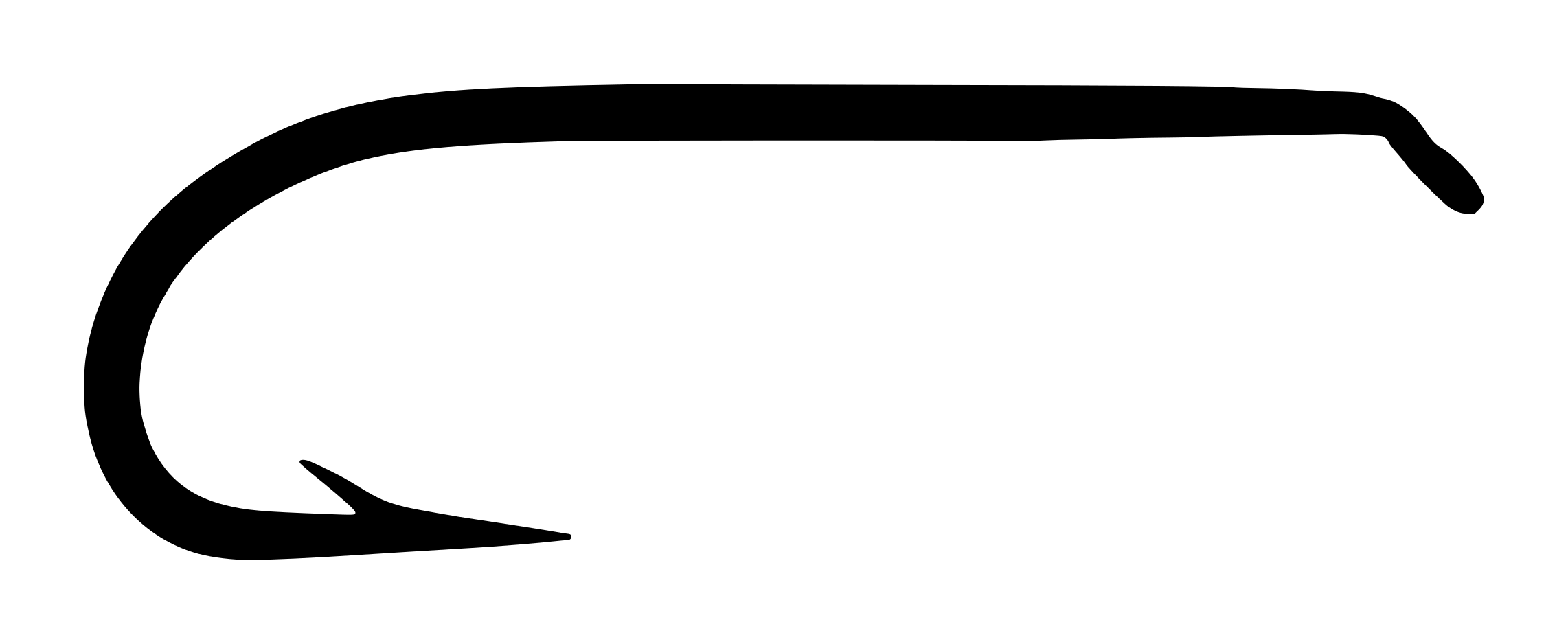
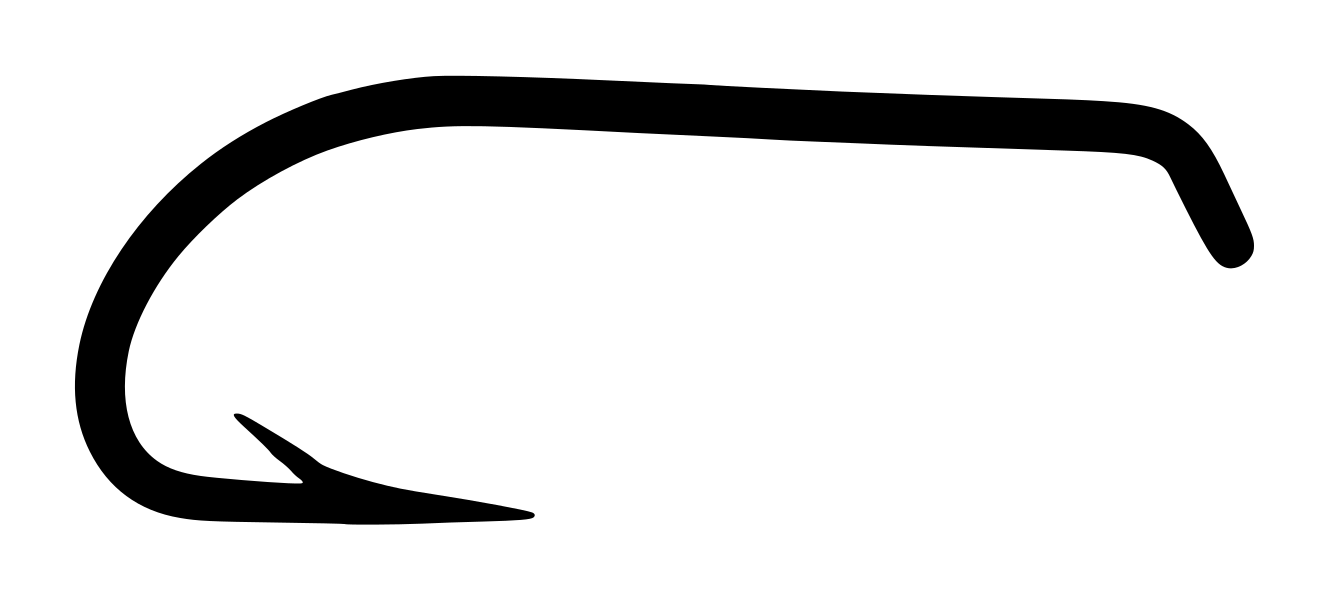
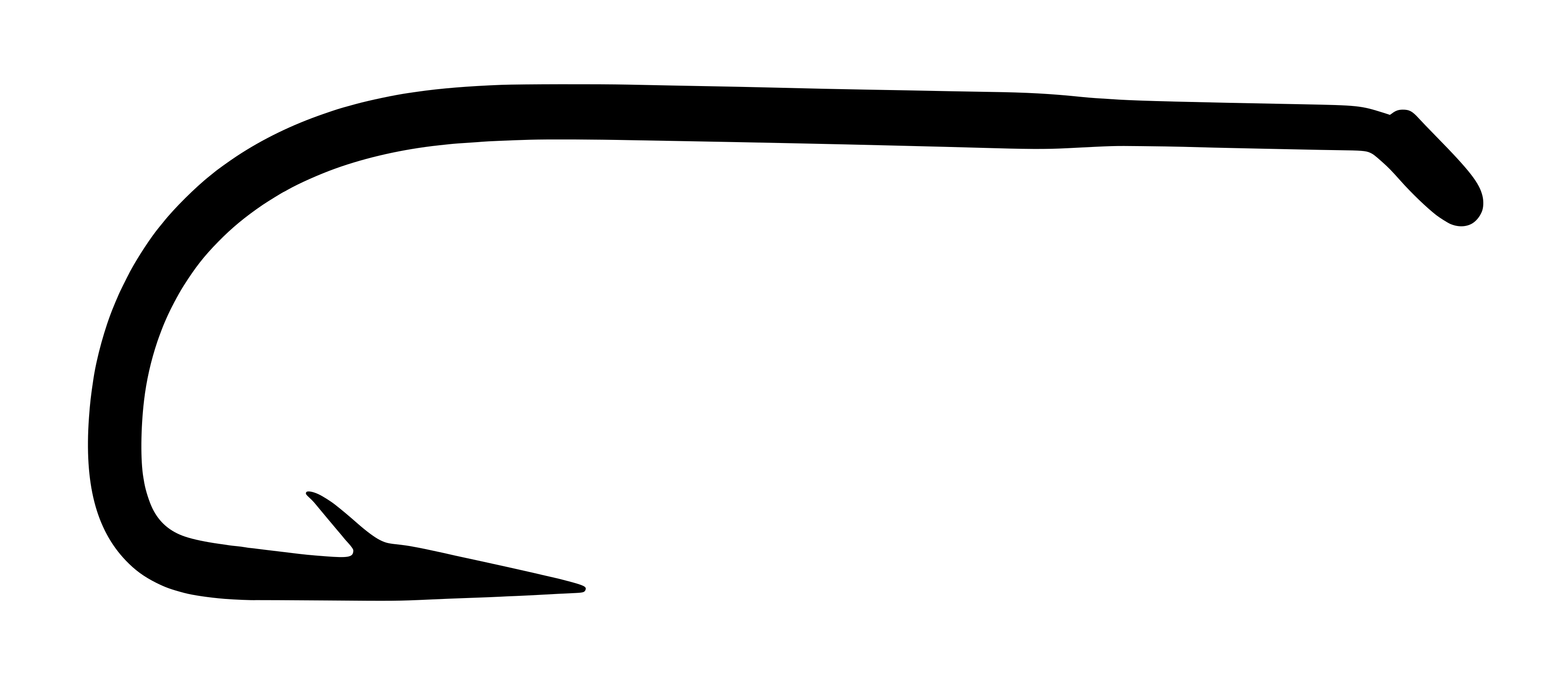
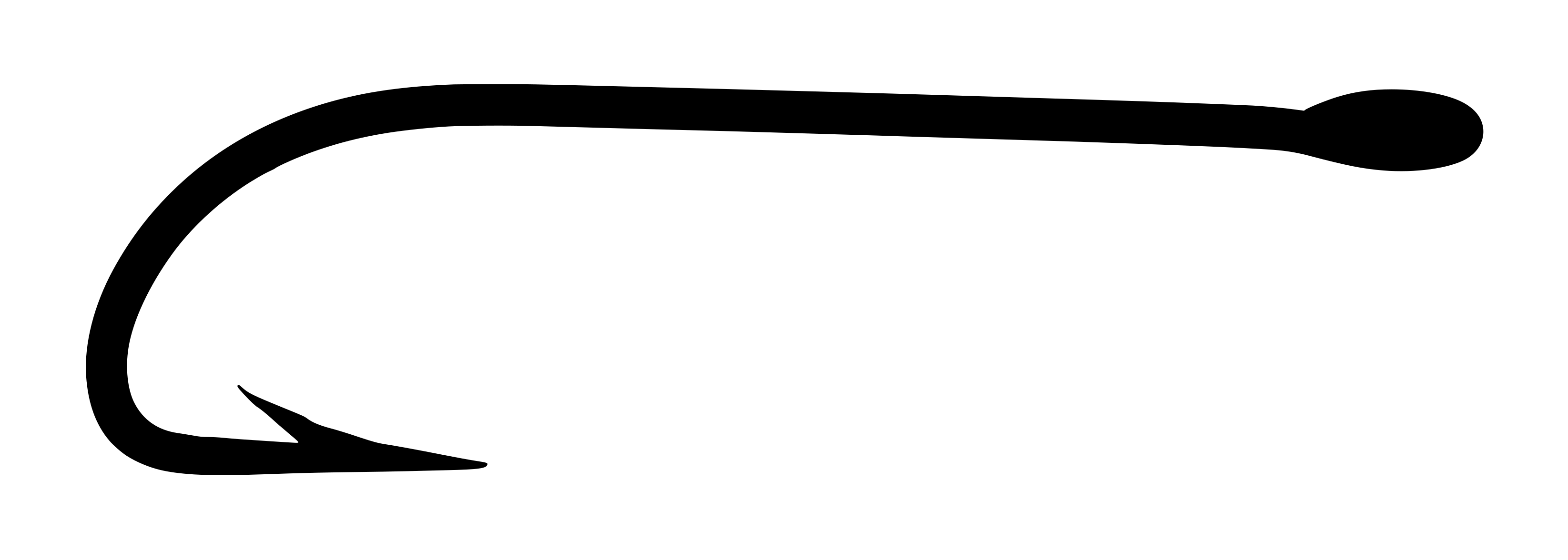
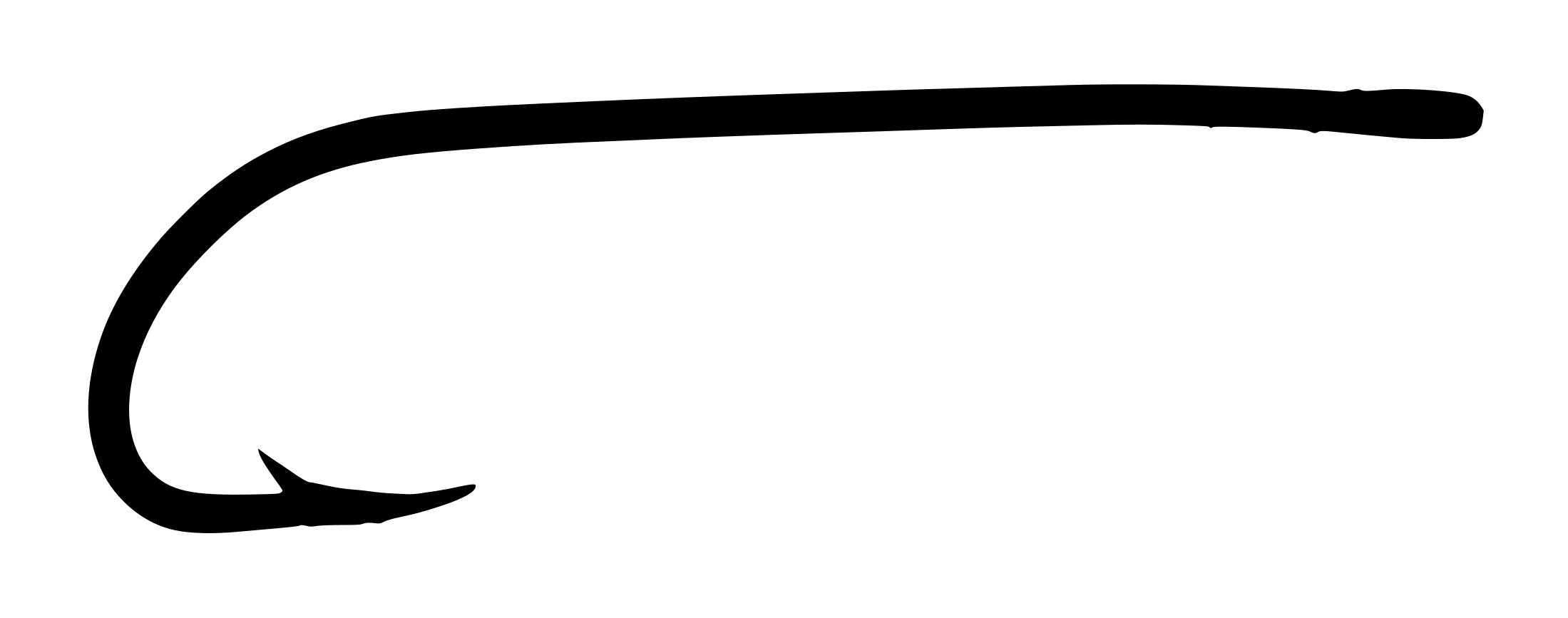
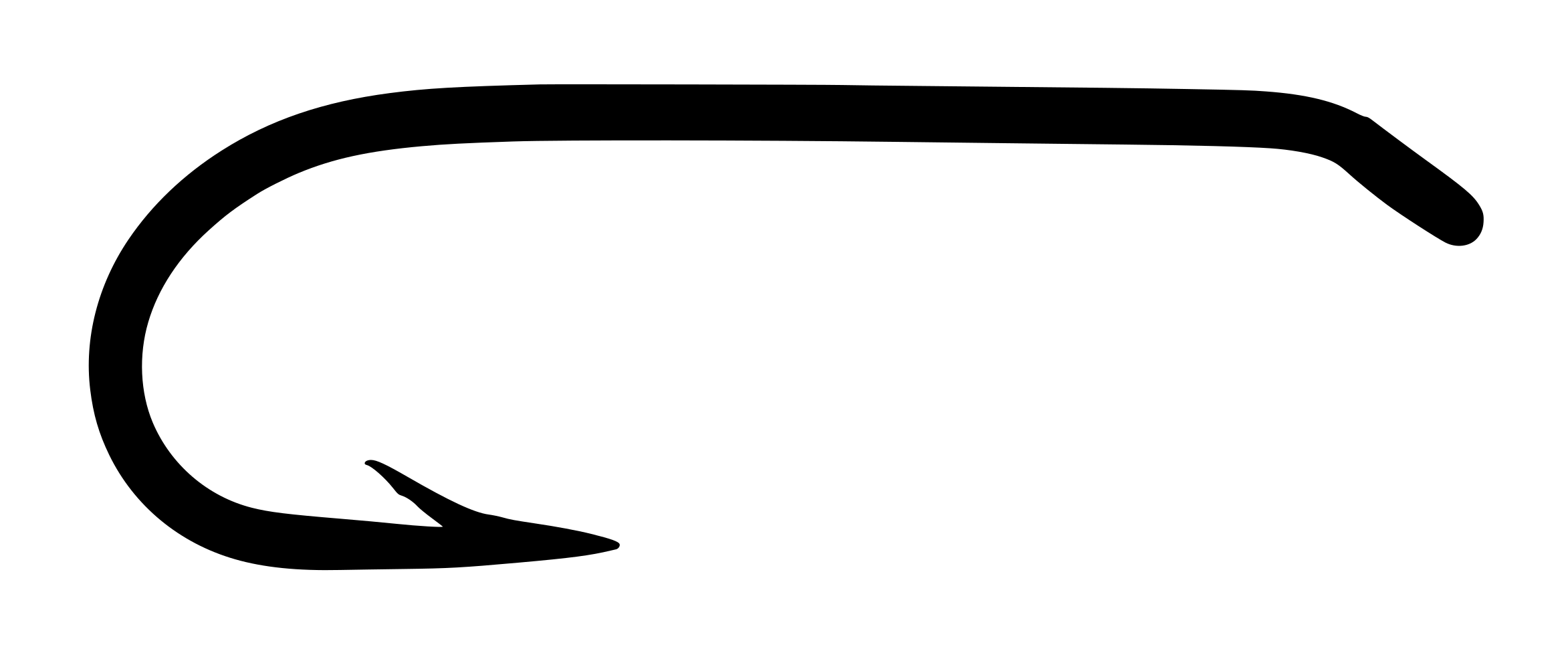
O. Mustad & Son model 9100, produced in Oslo, Norway. A rare commercial pattern combining Limerick bend geometry with 3X long shank, tapered eye, and extra-heavy oval wire. Black japanned finish throughout. Intended for nymph and wet fly construction.
The oval wire specification is the defining technical feature and a rarity in Mustad’s standard catalog. Most Mustad hooks from this era featured round wire; oval profiles were reserved for specialty patterns or saltwater hooks. Packaging evidence (no barcode, gold letterpress print on cream cardstock, Oslo address) indicates production in the 1950s-1970s window.
Collecting significance: The combination of Limerick bend, 3X shank, hollow point, and oval wire is uncommon in Mustad output. The complete original 100-hook box adds substantial value. Few examples survive with original manufacturer packaging intact.
Original manufacturer box label for O. Mustad & Son model 9100 Limerick Hooks, printed in gold letterpress on cream cardstock with decorative asterisk border. Text specifies oval wire, extra-heavy gauge, japanned finish, and tapered eye — key specifications for this rare pattern.
Photographic record
4 cataloged imagesSelect any record to load it above.
4 images shown
Mustad 9100 Limerick Hooks Box LabelOriginal manufacturer box label for O. Mustad & Son model 9100 Limerick Hooks, printed in gold letterpress on cream cardstock with decorative asterisk border. Text specifies oval wire, extra-heavy gauge, japanned finish, and tapered eye — key specifications for this rare pattern.Open originalMustad 9100 Size 6 Hook Profile ViewSide profile of a size 6 Mustad 9100 hook on measurement grid, showing the complete hook geometry from turned-down tapered eye through the Limerick bend and sharp point. The extra-heavy oval wire is visible as a flattened profile.Open originalMustad 9100 Size 6 Tapered Eye DetailClose-up detail of the tapered eye and eye loop of the size 6 Mustad 9100, showing the progressive wire taper into the eye, clean construction, and uniform glossy black japanned finish with no flaking or corrosion.Open originalMustad 9100 Size 6 Hollow Point DetailMagnified side view of the point end of a size 6 Mustad 9100, showing the concave inner taper of the hollow-point geometry, close-set barb positioned immediately behind the point, and the fine sharp point tip. The glossy black finish is maintained throughout.Open original
Technical profile
Turned Down Tapered Eye | Oval Wire | Limerick | 3X Long | Extra-Heavy (2X+) Wire | Hollow Point | Black Japanned
Eye
Tapered Eye, Turned DownTapered eye is well-formed with smooth transition from eye loop to shank, reducing bulk at the fly head P. The taper angle is gradual (not abrupt), suggesting hand-drawn or precision machine-formed construction. Eye diameter appears proportional to wire gauge — not oversized. The eye is glossy black japanned, matching the hook shaft finish. Wire butts neatly; no visible seam or overlap defects.
Wire
Extra-Heavy (2X+), Round
Shank
3X Long — Plain
Bend
Limerick, Narrow gapAngular Limerick geometry with sharp corner at the bend apex, characteristic of the pattern P. The bend is compact relative to the shank length, creating a pronounced "hook" shape — ideal for imitative nymphs. Bend depth is standard for Limerick type (not exaggerated). Wire set is clean with no visible kinks or asymmetries. The offset of the shank relative to the bend is minimal, producing an upright profile typical of this family.
Point
Hollow Point (concave inner face)Barb is close-set and sharp, typical of Mustad hollow-point specifications P. Positioned immediately behind the point, not swept far back. Barb height is moderate — neither a large swept barb nor a micro-barb. The barb geometry is consistent with wet-fly and nymph patterns of the period, where holding power was valued but extreme barb size was considered crude.
Finish
Black Japanned — Confirmed (stated on packaging)Black japanned finish is glossy and uniform throughout, with a warm undertone consistent with lacquer rather than cold-toned bluing P. The finish is intact with no flaking, pitting, or corrosion visible. Moderate light wear on the hook body is normal for aged japanned stock; no bare steel exposed. The finish was confirmed as japanned on the original packaging ("Japanned"), and the photograph's glossy black tone confirms black lacquer rather than oxide finish.
Specimen hooks in excellent condition: glossy black japanned finish uniform and intact, no corrosion or pitting visible P. Barb clean and sharp. Box lid shows age toning and light surface wear; lettering clear and complete. Original box intact with secure closure.
Hollow Point Geometry: The concave inner face of the hollow point creates a knife-edge effect at the point tip. This geometry reduces resistance when penetrating, making the hook feel sharper than a superior (near-straight) point of the same wire gauge. Hollow points are prone to dulling with use and were traditionally favored for wet flies and nymphs where the barb sits deep and blade-edge sharpness provided an advantage in setting into soft-mouthed fish.
Oval Wire: The conversion from round to oval cross-section increases the hook’s ability to resist bending loads on the horizontal axis (the direction of hook-set force) while maintaining lighter apparent gauge. Oval wire produces a slightly wider shank face and can accommodate more tying space for body materials without increasing absolute weight. The trade-off is slightly increased water resistance (drag) and a less-refined aesthetic compared to round wire, which is why oval-wire hooks were typically reserved for utility fishing rather than presentation patterns.
Tapered Eye: The wire narrows progressively into the eye, reducing bulk at the fly head and permitting finer leader knots. Tapered eyes required more precise drawing during manufacture and were more costly than ball eyes. They were marketed as a premium feature, particularly in British and Scandinavian hooks, and signaled attention to detail and quality.
Narrow Gap, 3X Shank: The narrow gap (0.294″ for size 6) relative to the extended shank (0.826″) produces a hook with pronounced underbody accommodation. This geometry allowed tyers to build impressionistic nymph bodies with substantial girth without relying on lead or weighted dubbing — the shank itself provides the bulk. The narrow gap also reduces fouling in weedy water and presents a smaller profile to the fish, which may have been a design goal for selective trout.
This pattern was made in sizes 2-16 (I). We have measurement for size 6. Know the others? Submit calipered measurements and we'll review and add them. Thank you!
Historical context
mustad
O. Mustad & Son (Ola Mustad & Søn) was founded in 1832 in Gjøvik, Norway, and became one of the world’s largest industrial fishhook manufacturers. The company expanded through the 19th and early 20th centuries, establishing production facilities across Scandinavia and opening international sales offices. By the 1950s, Mustad had established itself as the dominant supplier to tackle retailers globally, producing tens of millions of hooks annually across hundreds of patterns and specifications.
The Oslo address on this box reflects Mustad’s Gjøvik factory production but lists the sales/administrative headquarters. Model 9100 was part of Mustad’s commercial fly-hook line, marketed alongside cheaper models like the Aberdeen (9000 series) and premium patterns (Superior line). Mustad’s oval-wire hooks were typically custom orders or specialty runs, making the 9100 a less common entry in surviving dealer stock.
The “T.d. tapered eye Japanned” specification reflects Mustad’s technical nomenclature: “T.d.” = turned down; tapered eye was marketed as a refinement over ball-eye construction for finer leader connection. Japanning (glossy black lacquer) was a default finish for most Mustad nymph and wet patterns of the period, prized for corrosion resistance in freshwater and the aesthetic appeal of the black finish.
Series History
The Mustad-Limerick line appears to have been a mid-tier commercial pattern, distinct from the high-end Mustad Superior line and the economy Aberdeen. Limerick bends (angular, with pronounced barb set) were popular in British and Scandinavian tradition for nymph and wet flies, and Mustad’s adoption of the pattern reflected demand from European retailers and fly tyers.
Model 9100 was offered in sizes 2 through 16 (based on packaging text and standard Mustad sizing conventions), with 100-hook boxes as the primary commercial unit. The oval-wire variant was not a standard catalog option — this box represents either a specific order for a retailer or a limited production run. Mustad’s shifting toward round-wire hooks in the 1970s and the advent of modern nickel-plated finishes gradually displaced black japanned patterns like the 9100.
Surviving examples are scarce, particularly in complete original packaging. The combination of large format (100-hook box), narrow market appeal (specialty wire profile), and age has resulted in high attrition. Most surviving examples are opened, with varying hook counts.
Era and Packaging Dating
Packaging lacks barcode (introduced 1974): pre-1974 strong indicator. Text uses "SÖN" (Norwegian) not anglicized "SON", consistent with Gjøvik-era Mustad before 1970s rebranding. Address "OSLO - NORWAY" — Mustad moved production in 1970s. Letterpress gold-on-cream print typical of 1950s-1960s commercial boxes. No postal code format visible (ZIP codes uncommon on Norwegian packaging of this period). Handwritten size notation in purple ink and decay patterns consistent with 60-year-old stock. Combined: c. 1950-1970, likely 1960-1965.
Oval Wire: A Scandinavian Innovation
Oval-wire hooks were a Scandinavian innovation, perfected by Norwegian manufacturers to address the unique challenges of salmon and sea-trout fishing in rapid Nordic rivers. The flattened cross-section provided torsional strength without adding weight, a crucial advantage when fishing large patterns in strong currents. Mustad adopted oval wire selectively, primarily for saltwater and pike hooks, making its appearance on a freshwater nymph pattern like the 9100 remarkable. This suggests either a specific retailer request or an experimental batch — a small window into Mustad's willingness to innovate within its industrial constraints. Few tyers of the modern era are aware that oval-wire wet-fly hooks were ever produced, making surviving examples valuable documents of mid-century tackle development.
Design lineage and influence
The Limerick bend family originated in Limerick, Ireland, in the 19th century and became a standard design in the British Isles and Scandinavia. The bend is characterized by its angular shape, with the barb set slightly forward and the bend geometry providing a deep hook with compact gape — ideal for imitative nymphs and traditional wet patterns.
Competing Limerick patterns included the Allcock Limerick (English manufacture), Redditch craft-maker variants (Edgar Sealey, Partridge), and later Japanese producers (Daiichi, Tiemco). Mustad’s entry into the Limerick market came relatively late (mid-20th century) and targeted commercial retailers rather than specialist tyers. The 9100’s tapered-eye specification reflects influence from premium British hooks, which featured tapered eyes as a sign of craftsmanship and fine finish.
The oval-wire variant appears to have been a response to angler feedback regarding wire strength in heavier sizes — oval profiles offer greater torsional rigidity than round wire of the same nominal gauge, allowing finer apparent diameter while maintaining strength. This design choice connects the 9100 to later Mustad specialty patterns that incorporated technical innovations borrowed from saltwater and bait-fishing traditions.
Best matchRelated by Attribute
Computed automatically from catalog data — updated as new hooks are added.
Matches: Bend, Wire, Eye Orient., Point, Forging +2 moreDiffers: Shank: 3X Long vs 2X Long; Gap: Narrow vs Standard; Eye: Tapered Eye vs Ball Eye +2 more
Matches: Bend, Wire, Eye Orient., Point, Forging +3 moreDiffers: Shank: 3X Long vs 1X Long; Gap: Narrow vs Standard; Eye: Tapered Eye vs Looped Eye +1 more
Matches: Bend, Wire, Eye, Eye Orient., Point +3 moreDiffers: Shank: 3X Long vs 1X Long; Gap: Narrow vs Standard; Finish: Black Japanned vs Bronzed +1 more
Matches: Bend, Wire, Gap, Point, Forging +2 moreDiffers: Shank: 3X Long vs 4X Long; Eye: Tapered Eye vs Ball Eye; Eye Orient.: Turned Down vs Straight / Inline +2 more
Designed for nymph and wet fly construction. The 3X long shank accommodates larger bodies and extended abdomen patterns. Narrow gap and extra-heavy wire intended for subsurface work in moving water, where the longer shank provided tying space for buggy or impressionistic silhouettes without increasing hook weight proportionally.
Collector notes
Rated 7.5/10 — scarcity is the dominant factor. The complete original 100-hook box in good condition is genuinely scarce; few survivors exist with intact packaging. The oval-wire specification is uncommon even among Mustad specialists, and the size range (2-16) means smaller and larger sizes are harder to locate than size 8-10. Collector demand is specialized (Limerick enthusiasts, Mustad historians, vintage nymph tyers) but real. The manufacturer box format commands a significant premium over a loose card.
Reference value
$45 – $120 USD estimate
Packaging condition
Good — moderate wear, legibleRecorded specimen
Packaging format
GW-M-BOX-01Catalog code
Positive Factors: Complete 100-hook manufacturer box is inherently scarce — retail packaging of this scale survives in low numbers. The oval-wire specification is a rarity: Mustad’s catalog was dominated by round-wire patterns, and the oval variant suggests either a special order or limited production run. The 1950s-1960s era pre-dates modern hook manufacturing and carries historical significance for those studying mid-century tackle evolution. Black japanned finish is no longer produced by Mustad and is collectible in its own right. The tapered-eye specification signals hand-crafted refinement and appeals to traditionalist collectors.
Limiting Factors: Mustad’s industrial production volumes mean even rare patterns are less coveted than equivalent examples from Redditch craft makers (Allcock, Partridge, Edgar Sealey) or niche Japanese makers (Tiemco, Daiichi). The Limerick bend, while respected, is not as universally collected as Sproat or Aberdeen. Size 6 is a utilitarian size — extreme sizes (1/0, 20) command higher premiums. The box condition, while good, shows age toning; a sealed or mint condition box would command substantially higher value. Missing or damaged hooks would significantly reduce collectability.
Variants and Desirability: The most desirable variant would be size 2/0 or larger (rarer in production) or size 18+ (delicate and prone to loss). Sealed original boxes with complete counts are museum quality. Opened boxes with partial counts still hold value but lose the premium associated with original packaging integrity. The japanned finish variants (blued or nickelled alternatives, if they exist) would be worth comparing. Catalog documentation showing model 9100 specifications would significantly increase value to institutional collectors.
Packaging
Manufacturer box (rigid cardboard container with separate lid). Outer label on lid features decorative gold-printed asterisk border frame. Text printed in gold letterpress on cream/off-white cardstock. Legible lines: "O. MUSTAD & SÖN | MANUFACTURERS | OSLO - NORWAY | Qual. 9100 | Hollow Point | Mustad-Limerick Hooks | T.d. tapered eye Japanned | Oval wire Ex. ex. strong | Made in Norway | 100 No. [size handwritten in purple ink]". Lid exterior shows light wear, toning. Interior tissue and hook arrangement visible. Box dimensions consistent with 100-hook capacity. No barcode visible — pre-1974 manufacture indicator P.
Market Value Notes
Low ($45): Good condition — box opened, all 100 hooks present and intact, minor lid wear, japanned finish bright and even, no rust.<br />
High ($120): Excellent condition — box sealed or near-sealed, all 100 hooks untouched, minimal lid toning, complete tissue and packaging materials intact.<br />
Premium factors: Complete 100-hook box adds 2-3x multiplier over equivalent loose hooks. Sealed condition adds 30-40% premium. Oval-wire specification on Mustad Limerick is uncommon. Size 6 is standard utility size — extreme sizes would push higher. Original box text fully legible and condition is key value driver.<br />
Platforms: Specialty tackle auctions (Lawrencetown, UK auction houses), eBay UK and US for Mustad patterns, vintage fly-fishing dealer networks.<br />
Confidence: E estimated — limited eBay comparable data for sealed Mustad boxes of this era and specification. Values based on typical 100-hook manufacturer box prices ($30-150 range) and rarity adjustment for oval wire and Limerick combination. Exact sales history unavailable; recommend dealer consultation for high-value specimen.
Where to Find
Specialty vintage tackle auctions (UK Lawrencetown, European sales houses). eBay UK has occasional lots; US eBay shows rarer Mustad patterns. Vintage fly-fishing dealers in Scandinavia and UK. Mustad collector forums and swap groups. Antique tackle shows (Great Britain, occasional Nordic events). Rarely stocked by standard online retailers — requires active searching or dealer network contact.
Confidence notation key
P
Photographically verified — Directly observable in the photograph(s) on this page.
V
Verified by documentation — Confirmed by manufacturer catalog, spec sheet, or published reference.
I
Inferred — A logical deduction from observable or documented evidence, not directly stated.
E
Estimated — An approximation based on visual comparison, proportional analysis, or limited data.
S
Speculative — A reasoned hypothesis that cannot be confirmed from available evidence.
Claims with no notation are confirmed by multiple independent sources. All photographs on garrenwood.com are taken on a measurement grid where each square equals 1/10 inch (0.1″ / 2.54 mm).