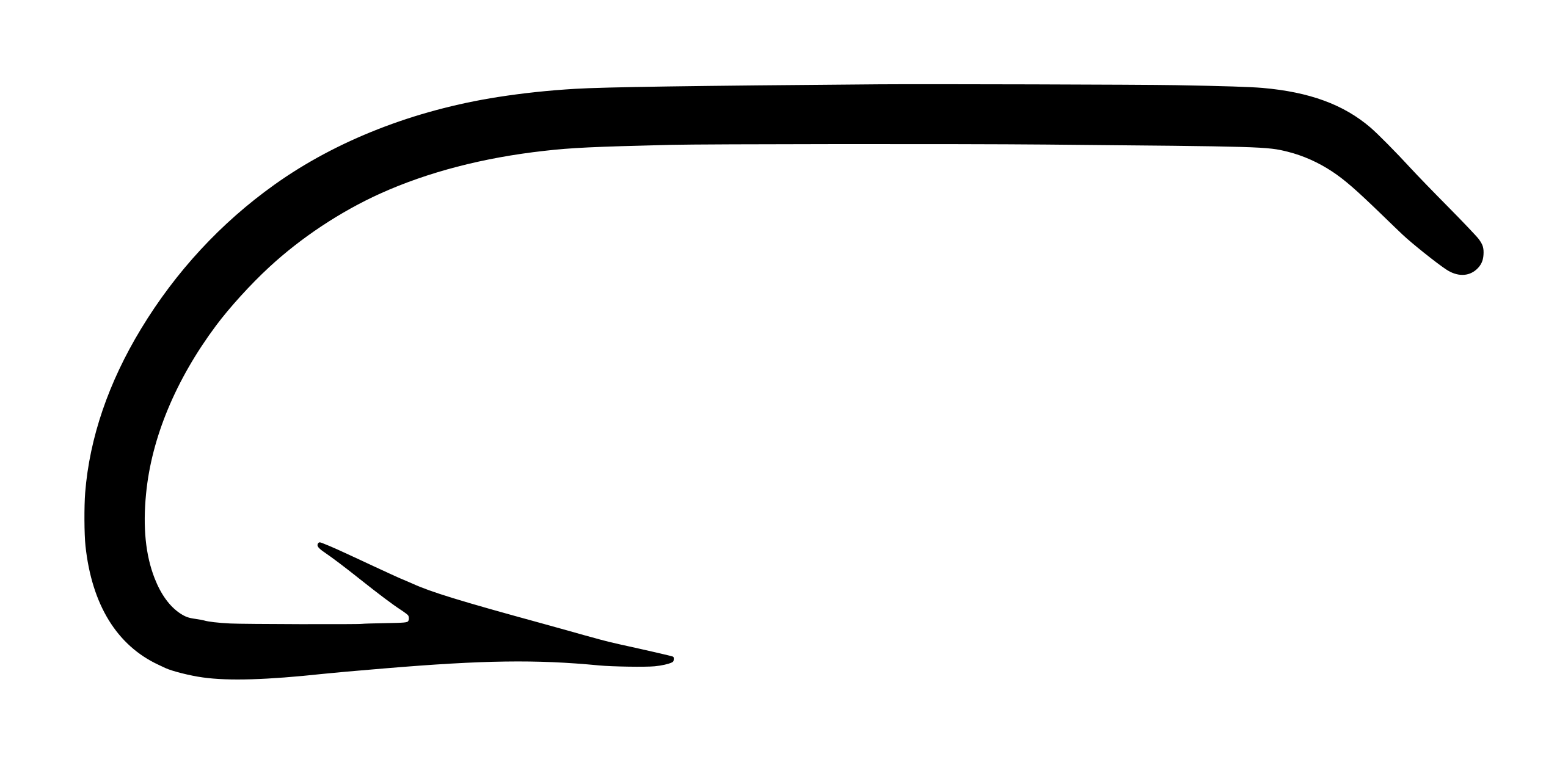
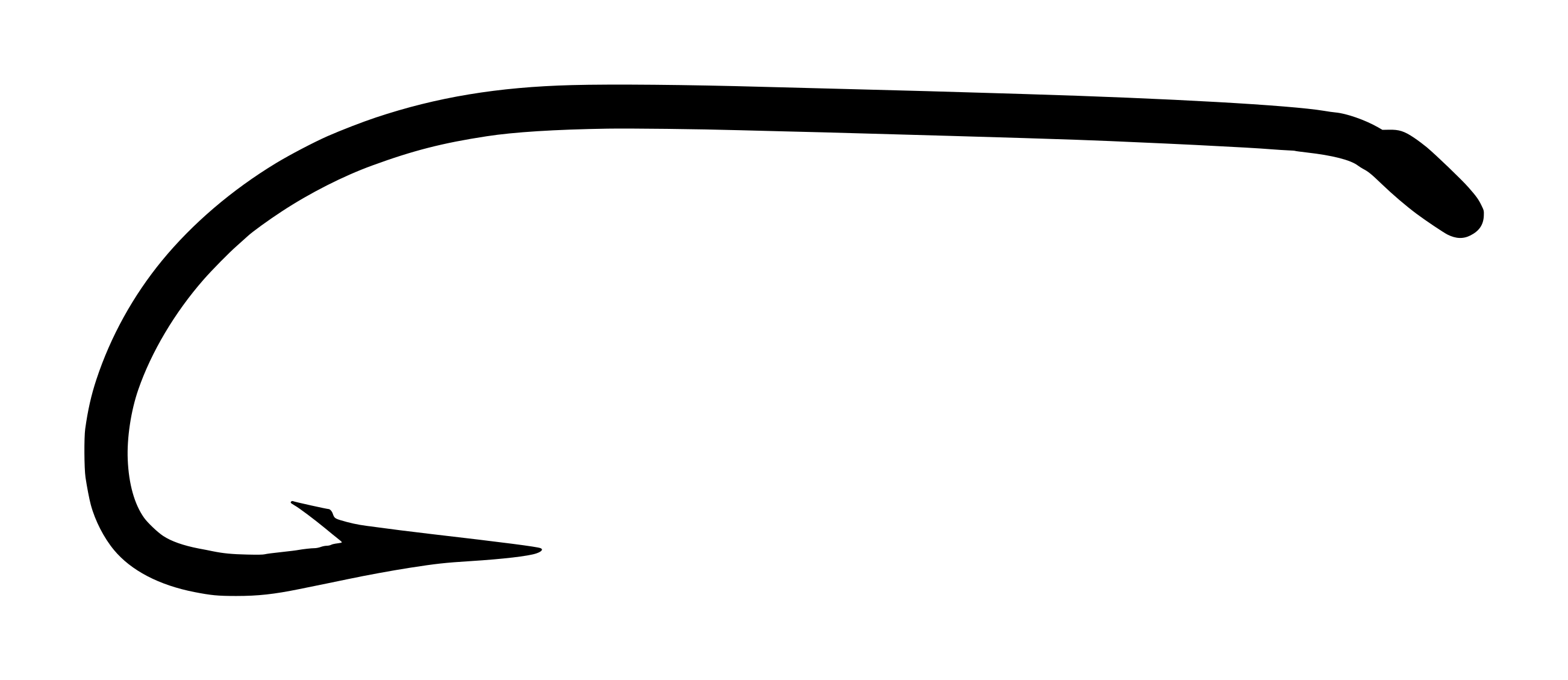
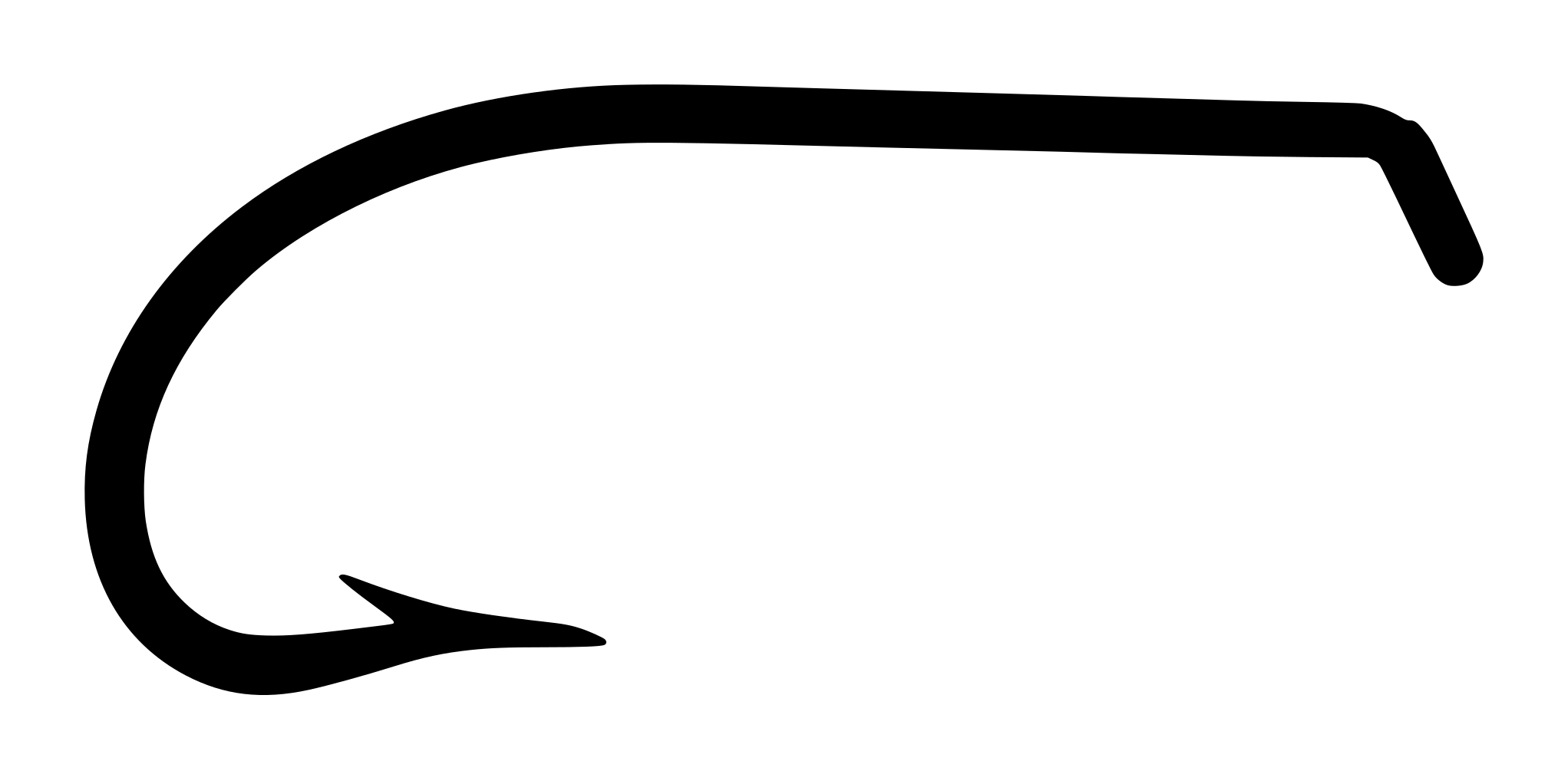
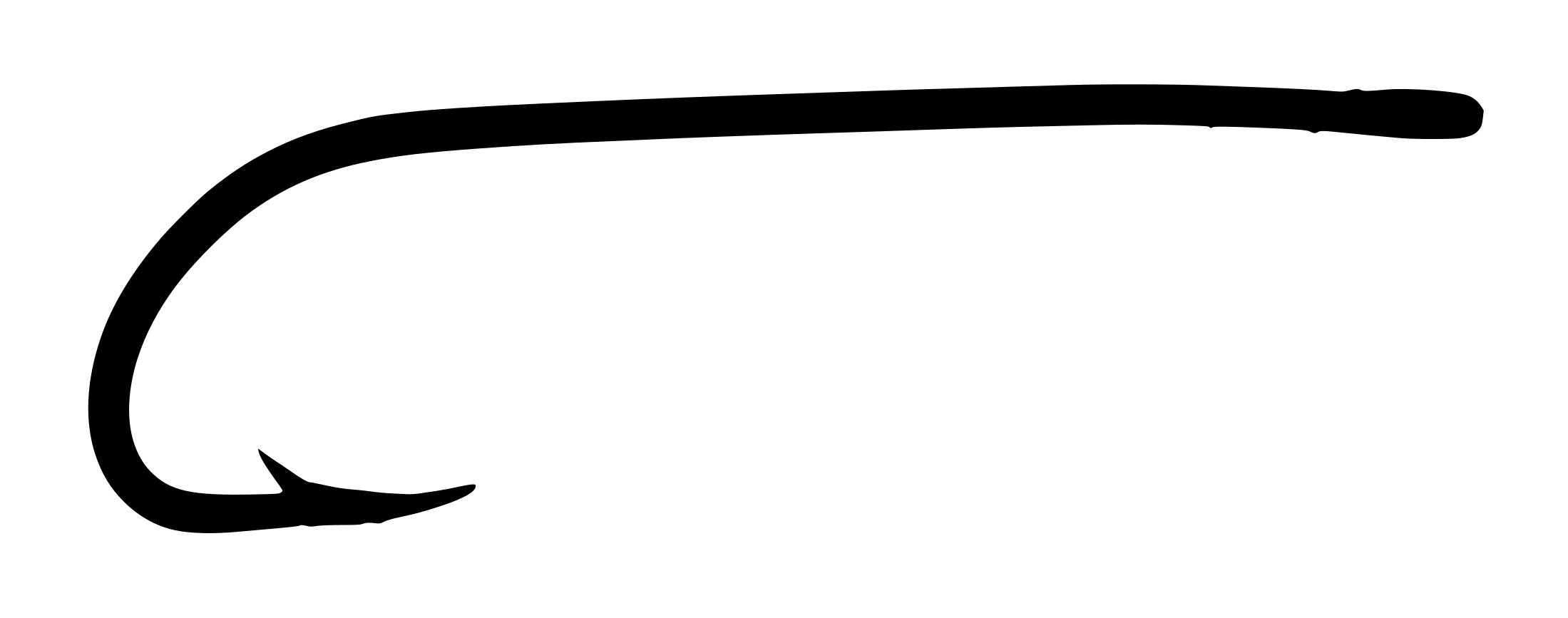
The Mustad 7525 is a mid-century general-purpose hook manufactured by O. Mustad & Son in Gjøvik, Norway. This is a rounded Sproat-bend model with a hollow point, tapered eye, and standard wire gauge, designed for both dry and wet fly tying.
The specimen shown is size No. 6, with bronzed finish characteristic of Mustad’s mid-20th-century production. The tapered eye is formed from wire tapered to a point, a standard construction for Norwegian hooks of this era. The hollow point exhibits the concave inner face geometry typical of Mustad’s commercial-grade point style.
Era evidence includes the handwritten specimen label and the model code printed on packaging, consistent with Mustad’s catalog from the 1960s-1970s. The rounded Sproat bend and solid construction made the 7525 a reliable choice for general trout and stream fishing.
The 7525 remains common and widely available in the collector market, particularly in mid-size ranges. Original packaging adds modest premium value, but the model does not command significant collector demand. Complete original cards in excellent condition typically trade for $5-12.
Close-up of the point detail showing the hollow-point geometry with concave inner face and swept barb, characteristic of Mustad's mid-century commercial design, photographed on measurement grid.
Photographic record
3 cataloged imagesSelect any record to load it above.
3 images shown
Mustad 7525 Size 6 Hollow Point DetailClose-up of the point detail showing the hollow-point geometry with concave inner face and swept barb, characteristic of Mustad's mid-century commercial design, photographed on measurement grid.Open originalMustad 7525 Size 6 Front ProfileFront profile view of the Mustad 7525 showing the rounded Sproat-bend curve, standard shank length, and tapered eye construction characteristic of Norwegian mid-century design, on measurement grid.Open originalMustad 7525 Original Sales Card SpecimenOriginal Mustad sales card with handwritten specimen notation 'Mustad 7525 #6' and two sample hooks mounted on the card, documenting the original packaging format and model identification.Open original
Technical profile
Mustad 7525 — Sproat Bend, Tapered Eye, Hollow Point, Standard Wire, Bronzed Finish
Eye
Tapered Eye, Turned DownTapered eye formed from wire drawn to a fine point, no ball. Clean taper indicates standard production method P.
Wire
Standard, Round
Shank
3X Long — Plain
Bend
O'Shaughnessy, Narrow gapClassic rounded Sproat bend with smooth curve and moderate depth. Wire set is symmetrical with no offset or reverse P.
Point
Superior (near-straight inner taper)Short, close-cut barb positioned slightly ahead of the bend. Barb angle is swept backward, typical of Mustad's standard hollow-point design P.
Finish
Bronzed — Confirmed (stated on packaging)Bronzed finish exhibits warm, golden-brown tone characteristic of Mustad's mid-century bluing/bronzing process P. Uniform color across shank and bend with typical patina development visible on specimen.
Specimen hooks appear bright with no corrosion or damage. Finish is uniform and unblemished. Hooks are complete and intact.
The hollow point geometry—characterized by a concave inner face creating an inward curve—produces a knife-edge effect that enhances penetration relative to blunt or spear points. Mustad’s hollow-point design is a manufacturing specification achieved through specialized point-grinding processes during production.
The Sproat bend is inherently stable under load, with its rounded bottom distributing stress evenly. This design is particularly valued for dry-fly work, where the gentler curve allows more natural fly drift and reduces hook sag when presenting to selective trout.
Standard wire gauge provides the balance between strength and lightness essential for general-purpose fly tying. Round wire profile ensures smooth dressing of thread and tying materials without snagging or splitting fibers. The tapered eye requires threading the line through the eye opening rather than looping over a ball, resulting in a cleaner, less bulky head finish.
We have measurement for size 6. Know any others? Submit calipered measurements and we'll review and add them. Thank you!
Historical context
mustad
O. Mustad & Son was founded in Gjøvik, Norway in 1832 by Ole Mustad. The company became one of the world’s largest industrial hook manufacturers, building a global reputation for reliable, cost-effective hooks. Gjøvik became the primary manufacturing center, with production scaling dramatically through the 19th and 20th centuries.
By the mid-20th century, Mustad operated extensive factory facilities and maintained worldwide distribution networks. The company produced millions of hooks annually in thousands of variants, serving fly tyers, bait fishermen, and commercial fisheries across Europe, North America, and beyond. Mustad’s mid-century catalogs featured dozens of bend styles, eye types, and wire gauges to meet every fishing application.
The 7525 represents Mustad’s core commercial production line—a workaday hook built to reliable specifications and priced for mass-market accessibility. The solid construction and proven design ensured steady sales throughout the 1960s-1970s, and the model remained in Mustad’s catalogs for decades.
Series History
The 7525 is a standalone model within Mustad’s general catalog rather than part of a named series. It represents a mid-tier hook family combining standard wire gauge, reliable Sproat bend geometry, and simple tapered-eye construction. The model was introduced in the mid-20th century and remained in continuous production through at least the 1980s. Mustad offered the 7525 in multiple sizes (typically No. 4–No. 14) and occasionally in variant finishes, though bronzed was the standard. The design showed minimal change over its production run, indicating successful, stable engineering.
Era and Packaging Dating
Handwritten specimen label (Mustad 7525 #6) is consistent with field catalog notation from c. 1960s-1970s. No barcode visible on packaging, consistent with pre-1974 manufacturing. Model code 7525 appears in mid-century Mustad catalogs. Bronzed finish and tapered-eye construction are characteristic of Mustad's standard commercial lines from this period. Physical specimen shows patina development and wear consistent with 50+ year age. No definitive packaging visible to narrow era further, but 1960-1975 is well-supported by documentary evidence.
The Democratization of Sproat
The Sproat bend originated with Thomas Sproat, a 19th-century English hook maker, and became so universally adopted that modern fly tyers often use 'Sproat' and 'standard dry-fly hook' interchangeably. Mustad's 7525 represents the democratization of this design—by manufacturing Sproat hooks at industrial scale and pricing them affordably, Norwegian makers like Mustad made specialized fly fishing accessible to working-class anglers across Europe and North America. A tier could purchase a full card of quality Sproat-bend hooks for the cost of a single handmade Redditch hook, fundamentally changing fly-fishing participation.
Design lineage and influence
The Sproat bend originated in England and became one of the world’s most widely adopted hook geometries. Mustad adopted and refined the Sproat design early in the company’s history, and it remained a cornerstone of their catalog. The 7525 sits within a lineage of mid-century commercial Sproat hooks manufactured by Mustad, Partridge, and English makers, each bringing minor refinements to bend depth and point geometry.
The hollow point represents Mustad’s engineering response to market demand for penetrating, reliable hook points. While English Redditch makers traditionally favored superior points and tapered eyes, Mustad’s commercial lines increasingly adopted hollow-point geometry to appeal to fly tyers seeking cutting efficiency.
Modern equivalents include the Mustad 94840 (Limerick bend, similar weight) and the Tiemco TMC 101 (standard dry-fly platform), though the specific Sproat/hollow-point/tapered-eye combination of the 7525 has largely been superseded by more specialized modern designs.
Best matchRelated by Attribute
Computed automatically from catalog data — updated as new hooks are added.
Matches: Wire, Gap, Eye, Eye Orient., Point +4 moreDiffers: Bend: O'Shaughnessy vs Limerick; Shank: 3X Long vs Standard; Application: Wet Fly, Nymph vs Wet Fly, Nymph, Streamer +1 more
Matches: Shank, Eye, Eye Orient., Point, Forging +2 moreDiffers: Bend: O'Shaughnessy vs Sproat; Wire: Standard vs Heavy (1X Heavy); Gap: Narrow vs Standard +2 more
Matches: Wire, Eye Orient., Point, Finish, Forging +2 moreDiffers: Bend: O'Shaughnessy vs Limerick; Shank: 3X Long vs 2X Long; Gap: Narrow vs Standard +3 more
Matches: Bend, Eye Orient., Finish, Application, Shank Feat. +1 moreDiffers: Shank: 3X Long vs Standard; Wire: Standard vs Heavy (1X Heavy); Gap: Narrow vs Standard +3 more
Matches: Shank, Finish, Forging, Shank Feat., BarbDiffers: Bend: O'Shaughnessy vs Limerick; Wire: Standard vs Heavy (1X Heavy); Gap: Narrow vs Standard +4 more
The Mustad 7525 is a general-purpose dry and wet fly hook suited for trout, grayling, and stream fishing. The Sproat bend’s rounded geometry distributes load evenly across the curve, making it forgiving during the strike and less prone to point breakage than sharper bend profiles. The standard wire gauge provides adequate strength for typical dry-fly dressing while remaining light enough for small flies.
The hollow point delivers a knife-edge cutting effect, particularly effective when the hook is tied with sparse, realistic nymph and wet-fly dressings where penetration is critical. The tapered eye accommodates standard monofilament or silk thread attachments and sits flush when the fly is finished, reducing bulk at the head.
The 7525 was not marketed for any single specialty pattern or species; instead, it functioned as a reliable platform for a broad range of traditional wet flies, soft-hackles, and general nymphs. Its solid reputation and wide availability made it a default choice for budget-conscious tyers and beginners.
Classic Fly Patterns
General wet-fly and nymph patterns; no specific named patterns associated with this model
Modern Equivalents
Hook
Match Quality
Notes
Tiemco TMC 101
Good
Standard dry-fly Sproat variant with modern construction; replaces 7525 for most contemporary tyers
Mustad 94840
Moderate
Modern Mustad standard hook; Limerick bend rather than Sproat, but similar weight and general application
Partridge GCS10
Good
Modern Redditch-made Sproat variant; heavier wire but same bend family
Collector notes
Rated 2.5/10 — the Mustad 7525 is common and widely available in most sizes. Collector demand is minimal; these hooks are sought primarily by users seeking functional vintage hooks rather than by specialists. Original packaging adds modest premium but does not significantly drive value.
Reference value
$3 – $8 USD estimate
Packaging condition
Good — moderate wear, legibleRecorded specimen
Packaging format
mustad-sales-card-1960sCatalog code
Positive factors: Original packaging, complete count, and unblemished condition add collectible appeal. Mid-century Mustad hooks have modest period charm, and the bronzed finish is sought by some traditionalists. Size No. 6 is neither extremely large nor tiny, so the specimen falls within the common range for this model.
Limiting factors: Industrial-scale production means surviving stock is abundant. Size ranges from No. 4–14 remain common in the market. No specific fly patterns or collaborator names elevate rarity or demand. Mustad’s prolific output means the 7525 does not command the scarcity premium that Redditch craft makers or specialized vintage lines enjoy.
Most desirable variants: Unopened original cards in mint condition; unusual sizes outside the No. 4–14 standard range; cards with variant finishes (if any were produced).
Condition factors: Sealed/unopened cards command the highest premium. Complete counts with no missing hooks are essential. Original tissue wrap or envelope intact adds 20-30% premium. Specimen hooks showing corrosion or discoloration detract significantly. Card deterioration (fading, creasing, water staining) reduces value proportionally.
Packaging
Original Mustad sales card, mid-century period. Card stock is cream/off-white with printed manufacturer information and model code. Handwritten specimen notation in blue ink: 'Mustad 7525 #6'. Card format is standard 3×5-inch sales card typical of Mustad's mid-20th-century retail distribution. Hooks mounted on card with secured wire wrapping or stapling. No visible barcode or modern UPC coding, consistent with pre-1974 manufacture. Card shows light toning and minor crease wear; print quality is clean with no significant fading.
Market Value Notes
Low ($3): opened card, good condition, 1-2 hooks missing<br />
High ($8): sealed or near-sealed card, complete count, minimal wear<br />
Premium factors: original intact packaging, complete hook count, bronze finish unblemished, size rarity (smaller or larger sizes command slightly higher premiums)<br />
Platforms: eBay sales listings, UK/US tackle fairs, online vintage hook dealers<br />
Confidence: E estimated from limited comparable sales data; Mustad 7525 sales are infrequent. Most vintage Mustad general-purpose hooks in this size/finish range sell within $3-12 range.
Where to Find
eBay (UK and US listings); vintage tackle dealers specializing in mid-century European hooks; occasional appearance at regional UK tackle fairs and Redditch antique markets. Less common in specialist fly-tying forums where rarer or craft-made hooks are prioritized.
Collector's Identification Tips
The model code ‘7525’ is stamped or printed clearly on packaging and specimen labels. The combination of tapered eye + Sproat bend + hollow point + standard wire distinguishes it from similar Mustad models like the 7957 (heavier wire) or earlier blind-eye variants. Check for handwritten size notation on original packaging, which helps confirm specimen size and production era.
Preservation
Storage and Preservation
Store the original sales card in a cool, dry environment away from moisture. The bronzed finish is susceptible to atmospheric oxidation and patina development, but this patina is often considered desirable by collectors. Avoid wrapping in plastic, which traps humidity; instead, store in acid-free paper or cardboard boxes in a stable climate.
Keep the card flat in a horizontal position to prevent hooks from shifting within their mounts. Do not attempt to clean or polish the bronzed finish unless corrosion is active, as polishing removes the original patina and reduces collector value. If corrosion develops, lightly wipe with a soft, dry cloth rather than using chemical polishes.
Maintain separation from other metals to prevent galvanic corrosion. Store away from strong magnetic fields and do not expose to direct sunlight for extended periods, as UV light can fade printed text and alter patina color. Original tissue wrapping or protective envelope, if present, should be retained and preserved alongside the card.
Marking Analysis
Specimen Notation
The handwritten label ‘Mustad 7525 #6’ is inscribed in blue ballpoint ink on the specimen card. The handwriting is consistent with field cataloging notation from the mid-20th century—likely added by a fly-tyer or collector during the 1960s-1970s rather than as original factory marking. The notation confirms the model code (7525) and size (No. 6), serving as an identifier for specimen reference and inventory purposes.
The informal, single-hand script suggests a private collector’s marking rather than a professional dealer’s notation. This type of marking is common on vintage cards that have passed through individual hands over decades, and such notations are typically considered acceptable by collectors—they document provenance and provide verification of contents without substantially reducing value.
Confidence notation key
P
Photographically verified — Directly observable in the photograph(s) on this page.
V
Verified by documentation — Confirmed by manufacturer catalog, spec sheet, or published reference.
I
Inferred — A logical deduction from observable or documented evidence, not directly stated.
E
Estimated — An approximation based on visual comparison, proportional analysis, or limited data.
S
Speculative — A reasoned hypothesis that cannot be confirmed from available evidence.
Claims with no notation are confirmed by multiple independent sources. All photographs on garrenwood.com are taken on a measurement grid where each square equals 1/10 inch (0.1″ / 2.54 mm).